Scored using Smartwatches Methodology v3.0
Smartwatches Methodology v3.0
Mathematical & Unbiased Scoring
Products in this category are scored under Frontum Smartwatches Methodology v3.0: the technical score from the specifications is the base, and independent expert and video reviews (up to ±0.5 points), owner opinions (up to ±0.3) and best-of lists (up to +0.3) move it up or down.
Explore Smartwatches Methodology v3.0

ZTE Nubia Red Magic Watch review: 127 specs compared

Avg. price:~£90Screen size:1.39 inchBattery life:15 daysDisplay type:AMOLED

ZTE Nubia Red Magic Watch Review: Compare 127 technical specifications and 4 expert and video reviews to see how this product ranks in the Smartwatches category and whether it is worth buying.
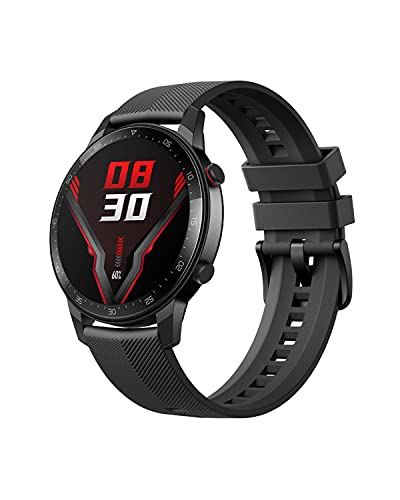
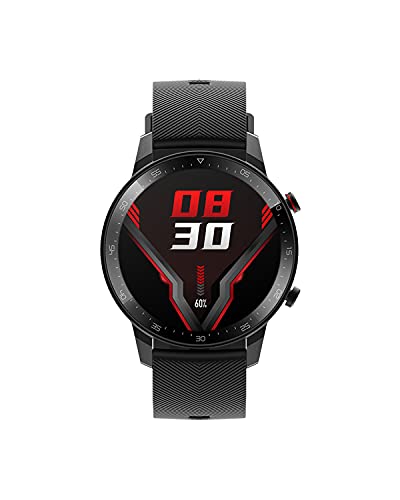
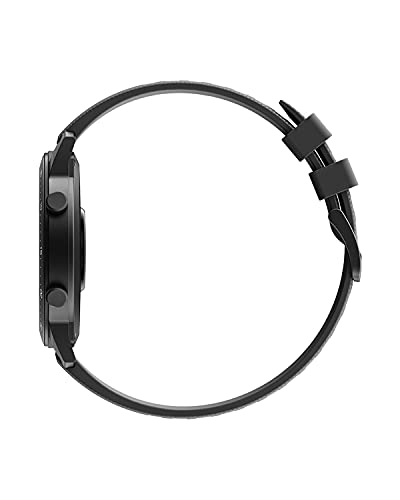
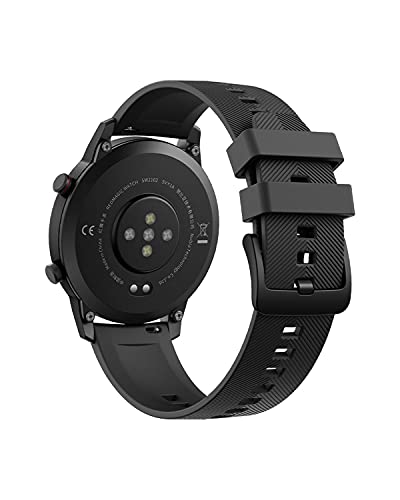
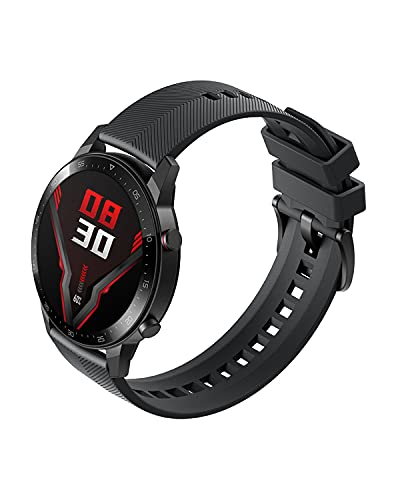
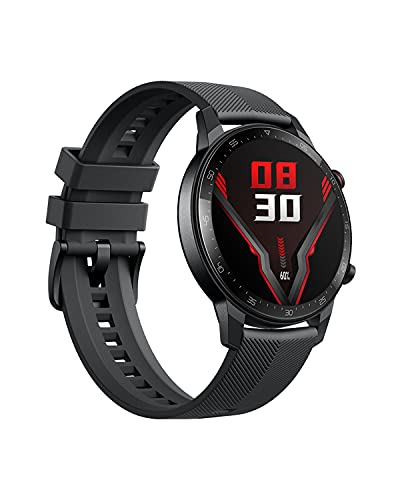
ZTE Nubia Red Magic Watch
6.8/10

Overall score

Score
6.8/ 10
✕
What it is
Our main score for this model, 1–10. It combines specs, best-of lists, expert reviews and owners.
How we count it
Parts: Technical score 35%, List score 30%, Reviews score 25%, Sentiment score 10%
Marks: Each part gets a mark out of 10. For reviews, lists and owners, a typical model in this category gets about 8 and the best one gets 10.
No data yet: A part with no data shows "?". It counts as the mark of a weaker model in this category (4 in 5 models with data score higher). This way, models with reviews, lists and owners usually come out ahead.
Score distribution
â–¼
<55-66-77-88-99-10
Score components

35%

6.5

Technical score

30%

?

List scoreNot enough data yet, so we use 7.5, the mark of a weaker model in this category

25%

6.5

Reviews score

10%

?

Sentiment scoreNot enough data yet, so we use 6.8, the mark of a weaker model in this category

â–¼Worse than 55% of smartwatches
7.8

Value for money

Value for money
7.8/ 10
✕
What it is
An indicator that combines the smartwatch's overall rating with its cost.
When it matters
When you are looking for a smartwatch with a good balance between quality and price.
Score distribution
â–¼
<55-66-77-88-99-10
Score components

70%

6.8

Overall score

30%

10

Price

â–¼Worse than 51%
6.5

Technical score

Technical score
6.5/ 10
✕
What it is
How good the specs are compared with the other models in this category, 1–10.
How we count it
Areas: We rate the specs in each area against the other models in this category.
Weighting: The areas that matter most to buyers count more. The shares are shown under Score components.
Share: The technical score is 35% of the overall score.
Score distribution
â–¼
<55-66-77-88-99-10
Score components

24%

5.4

Health

21%

8.0

Fitness

16%

8.7

Battery

14%

5.2

Smart features

12%

4.7

Connectivity

9%

8.0

Display & Design

4%

3.1

Hardware

â–²Better than 54%
6.5

Reviews score

Reviews score
6.5/ 10
✕
What it is
Average grade from independent test sites, magazines and video reviewers, 1–10.
How we count it
Grades: Each review's own score is converted to 1–10; without one, we grade the review ourselves. Every review counts the same: written or video, short or full test.
Score: The average grade is 80% of the review mark; the number of reviews is the other 20% (1 review = 5, the typical number in this category = 8, the most-reviewed model = 10).
Enough data: With few reviews, the average grade is pulled toward the typical grade of this category. No reviews yet: 7.4 for now.
Share: Reviews count 25% of the overall score.
Score distribution
â–¼
<55-66-77-88-99-10

6.5

Mark 6.7 is below the typical mark 7.9 of this category, so it cannot lift the score above the technical score

80%

6.8

Average grade

20%

6.4

Popularity

Grades by review (4)
2 reviews + 2 videos, average 5.0/10. We use 5 reviews; the 1 missing counts as the category's typical 8.0: (5.0 × 4 + 8.0 × 1) ÷ 5 = 5.6. Reviews count 25% of the overall score.
User ratings collected online are not part of this score.
â–¼Worse than 63%
?

List score

List score
7.5/ 10
✕
What it is
How often independent test sites, magazines and video reviewers put this model in their best-of lists for this category.
How we count it
Points: The model in the most lists of this category gets 10; the others get 8 to 10 in proportion. In no list yet: 7.5. Lists count 30% of the overall score.
Enough data: Every list counts, even a single one. With fewer than 5 best-of lists in the category, this part is left out.
Lists with this model (0)
Not in any best-of list yet, so this part counts as 7.5. Models in a list get 8 to 10.
Not in any best-of list yet

What reviewers say about the ZTE Nubia Red Magic Watch

Based on 2 · 2

Reviewers love the display, design and toughness, but the companion app lets the whole experience down.
Praised
Criticised
Pick a topic to see who said what
Loading...
Loading category ranking...

Technical Specifications of smartwatch ZTE Nubia Red Magic Watch

Technical score
Technical score
6.5/ 10
✕
What it is
How good the specs are compared with the other models in this category, 1–10.
How we count it
Areas: We rate the specs in each area against the other models in this category.
Weighting: The areas that matter most to buyers count more. The shares are shown under Score components.
Share: The technical score is 35% of the overall score.
Score distribution
â–¼
<55-66-77-88-99-10
Score components:

24%

5.4

Health

21%

8.0

Fitness

16%

8.7

Battery

14%

5.2

Smart features

12%

4.7

Connectivity

9%

8.0

Display & Design

4%

3.1

Hardware

6.5
Reviews score
6.5
List score
?
Value for money
Value for money
7.8/ 10
✕
What it is
An indicator that combines the smartwatch's overall rating with its cost.
When it matters
When you are looking for a smartwatch with a good balance between quality and price.
Score distribution
â–¼
<55-66-77-88-99-10
Score components:

70%

6.8

Overall score

30%

10

Price

7.8
Heart rate monitor
yes
This smartwatch includes a heart rate monitor. 9.5% of smartwatches include a heart rate monitor.
Blood oxygen monitoring
yes
This smartwatch supports blood oxygen monitoring. 30.4% of smartwatches support blood oxygen monitoring.
ECG
no
This smartwatch does not support ECG. 18.2% of smartwatches support ECG.
Irregular heart rate warnings
yes
This smartwatch supports irregular heart rate warnings. 49.5% of smartwatches support irregular heart rate warnings.
HRV tracking
no
This smartwatch does not support HRV tracking. 45.2% of smartwatches support HRV tracking.
Show more
Accelerometer
yes
This smartwatch includes an accelerometer. 0.5% of smartwatches include an accelerometer.
Barometer
yes
This smartwatch includes a barometer. 46.5% of smartwatches include a barometer.
Gyroscope
yes
This smartwatch includes a gyroscope. 28.9% of smartwatches include a gyroscope.
Cadence sensor
no
This smartwatch does not include a cadence sensor. 32.9% of smartwatches include a cadence sensor.
Distance tracking
yes
This smartwatch supports distance tracking. 3.7% of smartwatches support distance tracking.
Show more
Battery life
15 days
This smartwatch lasts 15 days on a charge, which is longer than 83% of Smartwatches and the same as 3.9% of Smartwatches.
Up to 23 days in power saving.
Battery life in training mode
50 h
This smartwatch records workouts for 50 h on a charge, which is longer than 91.5% of Smartwatches and the same as 2% of Smartwatches.
Battery life with GPS on
50 h
This smartwatch lasts 50 h with GPS on, which is longer than 92.4% of Smartwatches and the same as 2.1% of Smartwatches.
Battery power
460 mAh
This smartwatch has a 460 mAh battery, which is larger than 82.9% of Smartwatches and the same as 0.7% of Smartwatches.
Charge time
?
Show more
Operating system
Proprietary OS
This smartwatch runs Proprietary OS, which is less advanced than the system in 54.2% of Smartwatches and equal to 42% of Smartwatches.
Software update frequency
?
Third-party app support
no
This smartwatch does not support third-party apps. 51.6% of smartwatches support third-party apps.
Notifications
yes
This smartwatch supports notifications. 0.3% of smartwatches support notifications.
Voice assistant support
no
This smartwatch does not support voice assistants. 69.3% of smartwatches support voice assistants.
Show more
Cellular module
no
This smartwatch does not include a cellular module. 16.7% of smartwatches include a cellular module.
SIM cards
0
GPS
yes
This smartwatch supports GPS. 40.3% of smartwatches support GPS.
Galileo support
yes
This smartwatch supports Galileo navigation. 56.5% of smartwatches support Galileo navigation.
Dual-frequency GPS
no
This smartwatch does not support dual-frequency GPS. 15.1% of Smartwatches offer this.
Show more
Screen size
1.39 inch
This smartwatch has a 1.39 inch screen, which is smaller than 51.3% of Smartwatches and the same as 9% of Smartwatches.
Display type
AMOLED
This smartwatch uses AMOLED, which is more advanced than the screen in 46.9% of Smartwatches and equal to 53.1% of Smartwatches.
Resolution
454x 454
This smartwatch has a display resolution of 454x454 which is higher than that of 76.5% of smartwatches and equal to that of 7% of smartwatches.
Pixel density
462 ppi
This smartwatch has a pixel density of 462 ppi, which is higher than 91.7% of Smartwatches and equal to 4.6% of Smartwatches.
Display brightness
?
Show more
What reviewers say
CPU speed
?
Processor model
?
RAM
?
Internal storage
?
External memory slot
no
This smartwatch does not include an external memory slot. 0.3% of smartwatches include an external memory slot.
Show more

ZTE Nubia Red Magic Watch vs the average smartwatch

246810TotalHealthFitnessBatteryConnectivityDisplay & DesignSmart featuresHardware
  • Blood pressure monitoring
    This smartwatch supports blood pressure monitoring, the average smartwatch does not. 21.8% of smartwatches support blood pressure monitoring.
    Measurements are for wellness guidance, not medical diagnosis.
  • 8 days longer battery life
    This smartwatch runs longer per charge than the average smartwatch (15 days vs 7 days). The average smartwatch runs for 7 days on a charge.
    Up to 23 days in power saving.
    15 days vs 7 days
  • 29 h longer GPS battery life
    This smartwatch lasts longer with GPS on than the average smartwatch (50 h vs 21 h). The average smartwatch lasts 21 h with GPS on.
    50 h vs 21 h
  • 30 h longer training battery life
    This smartwatch lasts longer in training mode than the average smartwatch (50 h vs 20 h). The average smartwatch lasts 20 h in training mode.
    50 h vs 20 h
  • Galileo satellite support
    This smartwatch supports Galileo navigation, the average smartwatch does not. 43.6% of smartwatches support Galileo navigation.
  • 136 ppi sharper screen
    This smartwatch has a sharper screen than the average smartwatch (462 ppi vs 326 ppi). The average smartwatch has a pixel density of 326 ppi.
    462 ppi vs 326 ppi
  • 155 mAh larger battery capacity
    This smartwatch has a larger battery than the average smartwatch (460 mAh vs 305 mAh). The average smartwatch has a 305 mAh battery.
    460 mAh vs 305 mAh
  • 15 g lighter
    This smartwatch is lighter than the average smartwatch (30 g vs 45 g). The average smartwatch weighs 45 g.
    Weight refers to watch case without strap/band.
    30 g vs 45 g
  • Blood pressure monitoring
    This smartwatch supports blood pressure monitoring, the average smartwatch does not. 21.8% of smartwatches support blood pressure monitoring.
    Measurements are for wellness guidance, not medical diagnosis.
  • Water intake tracking
    This smartwatch tracks water intake, the average smartwatch does not. 44.1% of smartwatches track water intake.
  • Perspiration monitoring
    This smartwatch tracks perspiration, the average smartwatch does not. 15.1% of smartwatches track perspiration.
  • 8 days longer battery life
    This smartwatch runs longer per charge than the average smartwatch (15 days vs 7 days). The average smartwatch runs for 7 days on a charge.
    Up to 23 days in power saving.
    15 days vs 7 days
  • 29 h longer GPS battery life
    This smartwatch lasts longer with GPS on than the average smartwatch (50 h vs 21 h). The average smartwatch lasts 21 h with GPS on.
    50 h vs 21 h
  • 30 h longer training battery life
    This smartwatch lasts longer in training mode than the average smartwatch (50 h vs 20 h). The average smartwatch lasts 20 h in training mode.
    50 h vs 20 h
  • 155 mAh larger battery capacity
    This smartwatch has a larger battery than the average smartwatch (460 mAh vs 305 mAh). The average smartwatch has a 305 mAh battery.
    460 mAh vs 305 mAh
  • Galileo satellite support
    This smartwatch supports Galileo navigation, the average smartwatch does not. 43.6% of smartwatches support Galileo navigation.
  • 136 ppi sharper screen
    This smartwatch has a sharper screen than the average smartwatch (462 ppi vs 326 ppi). The average smartwatch has a pixel density of 326 ppi.
    462 ppi vs 326 ppi
  • 15 g lighter
    This smartwatch is lighter than the average smartwatch (30 g vs 45 g). The average smartwatch weighs 45 g.
    Weight refers to watch case without strap/band.
    30 g vs 45 g
  • Higher resolution
    This smartwatch has a display resolution of 454x454, while the average smartwatch reaches 360x360.
    454x454 vs 360x360
  • Better band material
    This smartwatch uses silicone, leather for the band material, while the average smartwatch uses silicone.
    silicone, leather vs silicone
  • No VO2 max measurement
    This smartwatch does not measure VO2 max, the average smartwatch does. 51.3% of smartwatches measure VO2 max.
  • No third-party apps
    This smartwatch does not support third-party apps, the average smartwatch does. 51.6% of smartwatches support third-party apps.
  • No stress monitoring
    This smartwatch does not support stress monitoring, the average smartwatch does. 68.7% of smartwatches support stress monitoring.
  • No automatic activity detection
    This smartwatch does not support automatic activity detection, the average smartwatch does. 81.8% of smartwatches support automatic activity detection.
  • No coaching features
    This smartwatch does not support coaching, the average smartwatch does. 58.8% of smartwatches support coaching.
  • No speaker
    This smartwatch does not include a built-in speaker, the average smartwatch does. 56.7% of smartwatches include a built-in speaker.
  • No voice assistant
    This smartwatch does not support voice assistants, the average smartwatch does. 69.2% of smartwatches support voice assistants.
  • No compass
    This smartwatch does not include a compass, the average smartwatch does. 56.7% of smartwatches include a compass.
  • 7.1% lower review score
    Reviews score
    6.5/ 10
    ✕
    What it is
    Average grade from independent test sites, magazines and video reviewers, 1–10.
    How we count it
    Grades: Each review's own score is converted to 1–10; without one, we grade the review ourselves. Every review counts the same: written or video, short or full test.
    Score: The average grade is 80% of the review mark; the number of reviews is the other 20% (1 review = 5, the typical number in this category = 8, the most-reviewed model = 10).
    Enough data: With few reviews, the average grade is pulled toward the typical grade of this category. No reviews yet: 7.4 for now.
    Share: Reviews count 25% of the overall score.
    Score distribution
    â–¼
    <55-66-77-88-99-10

    6.5

    Mark 6.7 is below the typical mark 7.9 of this category, so it cannot lift the score above the technical score

    80%

    6.8

    Average grade

    20%

    6.4

    Popularity

    Grades by review (4)
    2 reviews + 2 videos, average 5.0/10. We use 5 reviews; the 1 missing counts as the category's typical 8.0: (5.0 × 4 + 8.0 × 1) ÷ 5 = 5.6. Reviews count 25% of the overall score.
    User ratings collected online are not part of this score.
    6.5 vs 7.0
  • No VO2 max measurement
    This smartwatch does not measure VO2 max, the average smartwatch does. 51.3% of smartwatches measure VO2 max.
  • No stress monitoring
    This smartwatch does not support stress monitoring, the average smartwatch does. 68.7% of smartwatches support stress monitoring.
  • No smart scale support
    This smartwatch does not support smart scale compatibility, the average smartwatch does. 57.1% of smartwatches support smart scale compatibility.
  • No automatic activity detection
    This smartwatch does not support automatic activity detection, the average smartwatch does. 81.8% of smartwatches support automatic activity detection.
  • No coaching features
    This smartwatch does not support coaching, the average smartwatch does. 58.8% of smartwatches support coaching.
  • 74 fewer exercise types
    This smartwatch includes fewer exercise types than the average smartwatch (16 vs 90). The average smartwatch includes 90 exercise types.
    16 vs 90
  • No voice feedback
    This smartwatch does not support voice feedback, the average smartwatch does. 63.5% of smartwatches support voice feedback.
  • Basic battery type
    This smartwatch uses a Li-ion battery, while the average smartwatch uses Li-Po.
    Li-ion vs Li-Po
  • No compass
    This smartwatch does not include a compass, the average smartwatch does. 56.7% of smartwatches include a compass.
  • 0.7 mm thicker
    This smartwatch is thicker than the average smartwatch (12.4 mm vs 11.7 mm). The average smartwatch is 11.7 mm thick.
    12.4 mm vs 11.7 mm
  • 2.8 mm taller case
    This smartwatch has a taller case than the average smartwatch (47.8 mm vs 45 mm). The average smartwatch is 45 mm tall.
    47.8 mm vs 45 mm
  • 3.9 mm wider case
    This smartwatch has a wider case than the average smartwatch (46.4 mm vs 42.5 mm). The average smartwatch measures 42.5 mm across.
    46.4 mm vs 42.5 mm
  • 0.01 inch smaller display
    This smartwatch has a smaller screen than the average smartwatch (1.4 inch vs 1.4 inch). The average smartwatch has a 1.4 inch screen.
    1.39 inch vs 1.4 inch
  • No third-party apps
    This smartwatch does not support third-party apps, the average smartwatch does. 51.6% of smartwatches support third-party apps.
  • No voice assistant
    This smartwatch does not support voice assistants, the average smartwatch does. 69.2% of smartwatches support voice assistants.
  • No voice command support
    This smartwatch does not support voice commands, the average smartwatch does. 68.1% of smartwatches support voice commands.
  • No smart alarm
    This smartwatch does not support a smart alarm, the average smartwatch does. 50.6% of smartwatches support smart alarms.
  • No gesture control
    This smartwatch does not support gesture control, the average smartwatch does. 79.6% of smartwatches support gesture control.
  • No speaker
    This smartwatch does not include a built-in speaker, the average smartwatch does. 56.7% of smartwatches include a built-in speaker.
  • 1 fewer microphones
    This smartwatch has fewer microphones than the average smartwatch (0 vs 1). The average smartwatch has 1 microphones.
    0 vs 1

Video reviews

Hands-on testing, unboxing, and real-world video evaluations

5.0
Tecnoandroid
≈ estimated
20/11/2020
Hands-on review · design, software and app tests
Verdict
The ZTE Nubia Red Magic Watch has a distinctive design and build quality, but too few features and a restrictive system make it hard to recommend.
4.0
SmartWorld
≈ estimated
01/11/2020
Hands-on review · software, notifications and app tests
Verdict
The ZTE Nubia Red Magic Watch looks striking, but its immature, limited software makes it hard to recommend right now.
Not graded

Expert reviews

In-depth analysis and verdict from leading tech publications

4.0
techradar.com
✓ explicit
07/07/2021
Hands-on test · Phone-maker smartwatch
Verdict
ZTE Nubia Red Magic Watch has bright menus and two weeks of battery, but its GPS put workout routes about 10 miles off and a crash wiped its data.
7.0
tomshw.it
✓ explicit
08/06/2021
Hands-on test · Battery life
Verdict
The RedMagic Watch suits first-time smartwatch buyers who want days of battery life, but charging is fiddly and phone sync is unreliable.

Third-party reviews

What customers like about ZTE Nubia Red Magic Watch

  • Bright and vibrant 1.39-inch AMOLED display with high resolution
  • Excellent battery life, typically lasting 12 to 14 days on a single charge
  • Lightweight and comfortable design, weighing only about 30g
  • Affordable pricing compared to many flagship competitors
  • Visually appealing user interface with bold, colorful graphics
  • Water resistance up to 5 ATM, making it suitable for swimming

What customers don't like about ZTE Nubia Red Magic Watch

  • Highly inaccurate GPS tracking, often misreporting workout distances significantly
  • Poor software localization with numerous typos and awkward translations in the UI and app
  • Lack of advanced health features like stress monitoring or continuous SpO2 tracking
  • The Red Magic Sports app is basic and often fails to sync data immediately
  • No built-in microphone or speaker for taking calls
  • Software stability issues, with reports of occasional system crashes and data loss
  • Limited workout data insights compared to more established fitness ecosystems

Verdict

The ZTE Nubia Red Magic Watch is a lightweight (30g) circular smartwatch featuring a 1.39-inch AMOLED retina display with a 454x454 resolution and 5ATM water resistance. Its core characteristics include a 420mAh battery providing up to 15 days of life, built-in GPS, and comprehensive health sensors for 24-hour heart rate, SpO2, and sleep monitoring across 16 dedicated sports modes, including a unique football heatmap feature. Main pros include its vibrant, high-density screen, impressive battery longevity for its price point, and a comfortable, slender design. However, significant cons include reported inaccuracies with GPS tracking, a limited selection of sports modes compared to competitors, and occasional translation errors within the proprietary software interface.

Compare ZTE Nubia Red Magic Watch with other Smartwatches

1Product to compare no. 1
VS
2Product to compare no. 2
VS
3Product to compare no. 3 (optional)

Graphic comparison of ZTE Nubia Red Magic Watch and other Smartwatches

No results found