Scored using Smartphones Methodology v3.0
Smartphones Methodology v3.0
Mathematical & Unbiased Scoring
Products in this category are scored under Frontum Smartphones Methodology v3.0: the technical score from the specifications is the base, and independent expert and video reviews (up to ±0.5 points), owner opinions (up to ±0.3) and best-of lists (up to +0.3) move it up or down.
Explore Smartphones Methodology v3.0

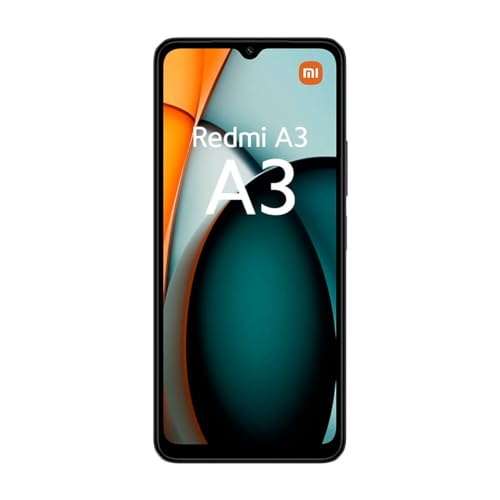
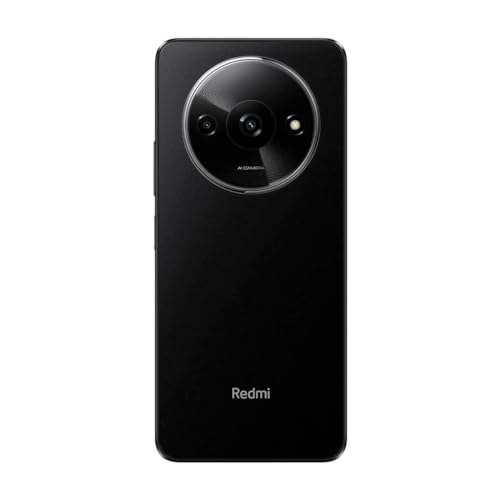
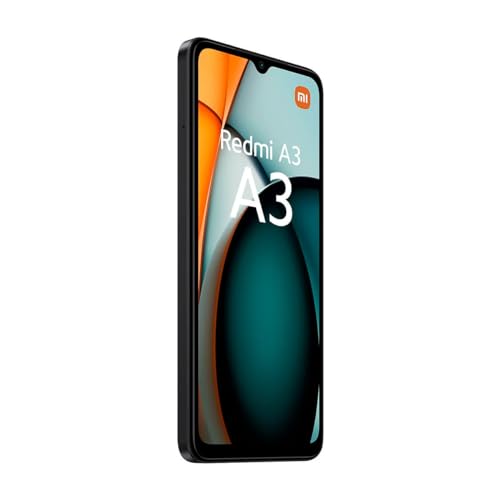
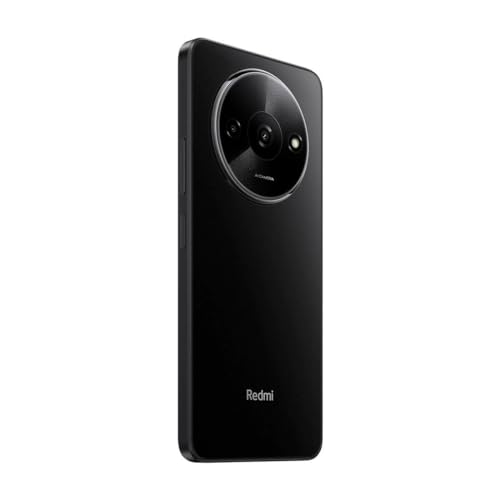
Xiaomi Redmi A3 (3GB + 64GB) review: 196 specs compared

Avg. price:~£70RAM capacity:3 GBInternal storage:64 GBScreen size:6.71 inchesMain camera megapixels:8 MP

Xiaomi Redmi A3 (3GB + 64GB) Review: Compare 196 technical specifications and 34 expert and video reviews to see how this product ranks in the Smartphones category and whether it is worth buying.
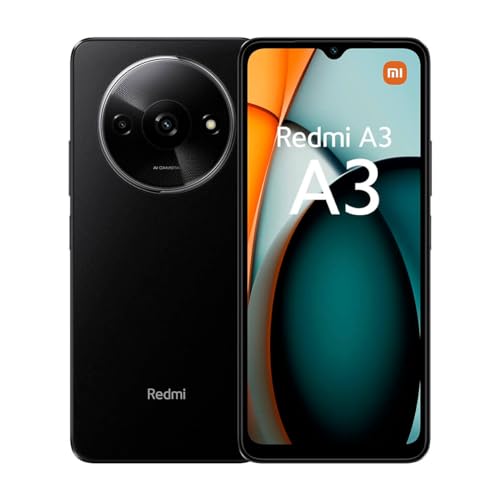
Xiaomi Redmi A3 (3GB + 64GB)
5.8/10

Overall score

Score
5.8/ 10
✕
What it is
Our main score for this model, 1–10. It combines specs, best-of lists, expert reviews and owners.
How we count it
Parts: Technical score 35%, List score 30%, Reviews score 25%, Sentiment score 10%
Marks: Each part gets a mark out of 10. For reviews, lists and owners, a typical model in this category gets about 8 and the best one gets 10.
No data yet: A part with no data shows "?". It counts as the mark of a weaker model in this category (4 in 5 models with data score higher). This way, models with reviews, lists and owners usually come out ahead.
Score distribution
â–¼
<55-66-77-88-99-10
Score components

35%

5.1

Technical score

30%

?

List scoreNot enough data yet, so we use 7.5, the mark of a weaker model in this category

25%

5.1

Reviews score

10%

5.1

Sentiment score

â–¼Worse than 99% of smartphones
7.1

Value for money

Value for money
7.1/ 10
✕
What it is
An indicator that combines the smartphone's overall rating with its cost.
When it matters
When you are looking for a smartphone with a good balance between quality and price.
Score distribution
â–¼
<55-66-77-88-99-10
Score components

70%

5.8

Overall score

30%

10

Price

â–¼Worse than 92%
5.1

Technical score

Technical score
5.1/ 10
✕
What it is
How good the specs are compared with the other models in this category, 1–10.
How we count it
Areas: We rate the specs in each area against the other models in this category.
Weighting: The areas that matter most to buyers count more. The shares are shown under Score components.
Share: The technical score is 35% of the overall score.
Score distribution
â–¼
<55-66-77-88-99-10
Score components

25%

4.5

Performance

18%

5.1

Camera

15%

3.9

Display

15%

5.1

Battery

10%

8.3

Software

10%

5.8

Connectivity

4%

1.9

Audio

3%

6.4

Design

â–¼Worse than 98%
5.1

Reviews score

Reviews score
5.1/ 10
✕
What it is
Average grade from independent test sites, magazines and video reviewers, 1–10.
How we count it
Grades: Each review's own score is converted to 1–10; without one, we grade the review ourselves. Big test sites count more, short reviews half as much as full tests. A video review counts half.
Score: The average grade is 80% of the review mark; the number of reviews is the other 20% (1 review = 5, the typical number in this category = 8, the most-reviewed model = 10).
Enough data: With few reviews, the average grade is pulled toward the typical grade of this category. No reviews yet: 7.5 for now.
Share: Reviews count 25% of the overall score.
Score distribution
â–¼
<55-66-77-88-99-10

5.1

Mark 7.3 is below the typical mark 7.9 of this category, so it cannot lift the score above the technical score

80%

7.0

Average grade

20%

8.5

Popularity

Grades by review (34)
3 reviews: 3 with a printed score, 0 estimated from the review. 31 video reviews, each counting half as much as a written test. Reviews count 25% of the overall score.
User ratings collected online are not part of this score.
â–¼Worse than 98%
?

List score

List score
7.5/ 10
✕
What it is
How often independent test sites, magazines and video reviewers put this model in their best-of lists for this category.
How we count it
Points: The model in the most lists of this category gets 10; the others get 8 to 10 in proportion. In no list yet: 7.5. Lists count 30% of the overall score.
Enough data: Every list counts, even a single one. With fewer than 5 best-of lists in the category, this part is left out.
Lists with this model (0)
Not in any best-of list yet, so this part counts as 7.5. Models in a list get 8 to 10.
Not in any best-of list yet

What reviewers say about the Xiaomi Redmi A3 (3GB + 64GB)

Based on 3 · 33

Reviewers love the long battery life and attractive design, but sluggish performance and very slow charging frustrate many.
Praised
Mixed views
Criticised
Pick a topic to see who said what

What owners say about the Xiaomi Redmi A3 (3GB + 64GB)

Based on 202 owners sharing their experience in online comments

36%positive10%mixed54%negative

Owners praise smooth performance, battery, and design, but many report severe lag, weak cameras, low volume, and software failures.

What owners dislike

  • Owners report frequent lag and freezing when opening apps, watching TikTok or switching between several apps, sometimes after a few months of use.47
  • Owners say photos and video come out blurry and poor, with the rear camera and front camera both weak in daily use.15
  • Videos at 50 or 60 frames per second stutter, and TikTok, Reels and some games like PUBG lag or fail to run smoothly.15
  • Some owners report sudden restarts and a black screen with English text, and say the phone stops working after a few months.12
  • Owners say the speaker is very quiet and distorted, so calls and voice notes are hard to hear outdoors or in noisy places.10
  • Owners say the phone lacks a built-in screenshot tool, screen recorder, gallery, file manager and sound recorder, so they must install extra apps.8
  • Owners say the screen looks dim and washed out, with poor colour quality and weak brightness compared with other phones.7
  • Owners report Wi-Fi and mobile data dropping often, and Bluetooth disconnecting so the phone must be restarted to reconnect.7
  • Some owners say the touchscreen stops responding for minutes at a time, and the proximity and auto-brightness sensors also fail.7
  • Owners say the battery charges very slowly, often taking two to three hours, and the battery drains quickly in heat or with heavy use.6

Points mentioned by at least 3 owners, most mentioned first.

Loading...
Loading category ranking...

Smartphones model ranking

Ranked #730 of 2,069 models in Smartphones (Overall score)

Technical Specifications of smartphone Xiaomi Redmi A3 (3GB + 64GB)

Technical score
Technical score
5.1/ 10
✕
What it is
How good the specs are compared with the other models in this category, 1–10.
How we count it
Areas: We rate the specs in each area against the other models in this category.
Weighting: The areas that matter most to buyers count more. The shares are shown under Score components.
Share: The technical score is 35% of the overall score.
Score distribution
â–¼
<55-66-77-88-99-10
Score components:

25%

4.5

Performance

18%

5.1

Camera

15%

3.9

Display

15%

5.1

Battery

10%

8.3

Software

10%

5.8

Connectivity

4%

1.9

Audio

3%

6.4

Design

5.1
Reviews score
5.1
List score
?
Value for money
Value for money
7.1/ 10
✕
What it is
An indicator that combines the smartphone's overall rating with its cost.
When it matters
When you are looking for a smartphone with a good balance between quality and price.
Score distribution
â–¼
<55-66-77-88-99-10
Score components:

70%

5.8

Overall score

30%

10

Price

7.1
Processor model
MediaTek Helio G36
This smartphone uses the MediaTek Helio G36 processor model which is slower than processors in 95% of smartphones and equal to processors in 0.3% of smartphones.
Storage type
eMMC
This smartphone uses eMMC storage, which is slower than the storage in 82.6% of smartphones and the same as in 17.4% of smartphones.
RAM capacity
3 GB
This smartphone has a RAM capacity of 3 GB which is smaller than the RAM capacity of 96.5% of smartphones and equal to that of 2% of smartphones.
Internal storage
64 GB
This smartphone has an internal storage capacity of 64 GB which is smaller than the storage of 89.5% of smartphones and equal to that of 7.9% of smartphones.
CPU boost clock speed
2.2 GHz
The CPU boost clock speed of this smartphone is 2.2 GHz which is lower than the boost speed of 68% of smartphones and equal to that of 14.1% of smartphones.
Show more
What reviewers say
Operating system
Android
This smartphone runs Android, which is more mainstream than the system in 4.8% of smartphones and the same as in 95.2% of smartphones.
Android 14
Android version
Android 14
This smartphone runs Android version Android 14 which is newer than that found in 49.5% of smartphones and equal to that in 21% of smartphones.
Direct OS updates
no
This smartphone does not support direct OS updates. 20.1% of smartphones offer this.
Promised software updates
?
Open-source OS
yes
This smartphone runs an open-source operating system. 5.2% of smartphones offer this.
Show more
What reviewers say
Multi-lens main camera
yes
This smartphone includes a multi-lens main camera system. 93.7% of smartphones include multi-lens setups.
Main camera megapixels
8 MP
This smartphone has a main camera resolution of 8 MP which is lower than that of 98.8% of smartphones and equal to that of 1% of smartphones.
Main camera aperture
f/2.0 & f/
This smartphone has a main camera aperture of f/2.0 & f/ which is narrower than that of 92.9% of smartphones and equal to that of 0.1% of smartphones.
Main camera sensor area
10 mm²
This smartphone has a main camera sensor area of 10 mm² which is smaller than the main camera sensor area of 98.8% of smartphones and equal to that of 0.5% of smartphones.
Main camera pixel size
1.12 µm
This smartphone has a main camera pixel size of 1.12 µm which is larger than in 78.1% of smartphones and equal to the size in 5.6% of smartphones.
Show more
What reviewers say
Number of SIM slots
2
This smartphone has 2 SIM slots, which is more than in 3.7% of smartphones and equal to the number in 96.2% of smartphones.
Cellular module
yes
This smartphone includes a cellular module. 100% of smartphones include cellular modules.
eSIM support
?
5G connectivity
no
This smartphone does not have 5G connectivity. 66.7% of smartphones offer this.
LTE support
yes
This smartphone supports LTE. 99.7% of smartphones include LTE connectivity.
Show more
What reviewers say
Screen size
6.71 inches
This smartphone has a screen size of 6.71 inches which is larger than the screens of 61.8% of smartphones and equal to those of 0.4% of smartphones.
Screen resolution
720x 1650 px
This smartphone has a screen resolution of 720x1650 px which is lower than that of 76.8% of smartphones and equal to that of 0.4% of smartphones.
Pixel density
268 ppi
This smartphone has a pixel density of 268 ppi which is lower than that of 85.4% of smartphones and equal to that of 0.4% of smartphones.
Display type
IPS LCD
This smartphone uses a IPS LCD display type. 0% of smartphones use this display technology.
Refresh rate
90 Hz
This smartphone supports a refresh rate of 90 Hz which is lower than in 65.7% of smartphones and equal to that in 18.6% of smartphones.
Show more
What reviewers say
Battery capacity
5,000 mAh
This smartphone has a battery capacity of 5,000 mAh which is larger than the batteries in 28.2% of smartphones and equal to those in 29% of smartphones.
Charging speed
10 W
This smartphone supports charging speeds of 10 W which is slower than in 93.7% of smartphones and equal to speeds in 5.8% of smartphones.
Fast charging
yes
This smartphone supports fast charging. 93.2% of smartphones support fast charging.
GSMArena full wired charge time
?
Wireless charging
no
This smartphone does not support wireless charging. 25.1% of smartphones support wireless charging.
Show more
What reviewers say
Stereo speakers
no
This smartphone does not have stereo speakers. 64.3% of smartphones offer this.
3.5 mm headphone jack
yes
This smartphone includes a 3.5 mm headphone jack. 45.1% of smartphones offer this port.
Number of microphones
1
This smartphone has 1 microphones, which is fewer than in 89.8% of smartphones and equal to the number in 10.2% of smartphones.
FM radio
yes
This smartphone includes an FM radio. 34.3% of smartphones offer FM radio functionality.
aptX Lossless
no
This smartphone does not support aptX Lossless Bluetooth audio. 12.5% of smartphones offer this.
Show more
What reviewers say
Height
168.3 mm
This smartphone has a height of 168.3 mm which is taller than 83.5% of smartphones and equal to that of 0.5% of smartphones.
Width
76.3 mm
This smartphone has a width of 76.3 mm which is wider than 58% of smartphones and equal to that of 1.9% of smartphones.
Thickness
8.3 mm
This smartphone has a thickness of 8.3 mm which is thinner than 44.9% of smartphones and equal to that of 6% of smartphones.
Weight
193 g
This smartphone weighs 193 g which is lighter than 56.8% of smartphones and equal to the weight of 1.9% of smartphones.
Device volume
107 cm³
This smartphone has a device volume of 107 cm³ which is larger than 63.9% of smartphones and equal to that of 3% of smartphones.
Show more
What reviewers say

Xiaomi Redmi A3 (3GB + 64GB) vs the average smartphone

246810TotalPerformanceSoftwareCameraConnectivityDisplayBatteryAudioDesign
  • 0.32 µm larger main camera pixel size
    This smartphone has a larger main camera pixel size than the average smartphone (1.1 µm vs 0.8 µm). The average pixel size is 0.8 µm.
    1.12 µm vs 0.8 µm
  • 1 more flash LEDs
    This smartphone has more flash LEDs than the average smartphone (2 vs 1). The average smartphone has 1 flash LEDs.
    2 vs 1
  • Newer Bluetooth version
    This smartphone supports a newer Bluetooth version than the average smartphone (5.4 vs 5.2). The average version is Bluetooth 5.2.
    5.4 vs 5.2
  • Has a 3.5 mm headphone jack
    This smartphone features a 3.5 mm headphone jack, the average smartphone does not. 45.1% of smartphones include a standard headphone jack.
  • 0.04 inches inch larger screen size
    This smartphone has a larger screen size than the average smartphone (6.7 inches vs 6.67 inches). The average smartphone screen is 6.67 inches.
    6.71 inches vs 6.67 inches
  • 3.71x cheaper
    Xiaomi Redmi A3 (3GB + 64GB) is cheaper than the average smartphone (£70 vs £260).
    £70 vs £260
  • Has FM radio
    This smartphone features an FM radio, the average smartphone does not. 34.3% of smartphones include an FM tuner.
  • 3.71x cheaper
    Xiaomi Redmi A3 (3GB + 64GB) is cheaper than the average smartphone (£70 vs £260).
    £70 vs £260
  • 0.32 µm larger main camera pixel size
    This smartphone has a larger main camera pixel size than the average smartphone (1.1 µm vs 0.8 µm). The average pixel size is 0.8 µm.
    1.12 µm vs 0.8 µm
  • 1 more flash LEDs
    This smartphone has more flash LEDs than the average smartphone (2 vs 1). The average smartphone has 1 flash LEDs.
    2 vs 1
  • Newer Bluetooth version
    This smartphone supports a newer Bluetooth version than the average smartphone (5.4 vs 5.2). The average version is Bluetooth 5.2.
    5.4 vs 5.2
  • 0.04 inches inch larger screen size
    This smartphone has a larger screen size than the average smartphone (6.7 inches vs 6.67 inches). The average smartphone screen is 6.67 inches.
    6.71 inches vs 6.67 inches
  • Has a 3.5 mm headphone jack
    This smartphone features a 3.5 mm headphone jack, the average smartphone does not. 45.1% of smartphones include a standard headphone jack.
  • Has FM radio
    This smartphone features an FM radio, the average smartphone does not. 34.3% of smartphones include an FM tuner.
  • Worse processor
    This smartphone uses a worse processor than the average smartphone (MediaTek Helio G36 vs Qualcomm Snapdragon 7 Gen 3).
    MediaTek Helio G36 vs Qualcomm Snapdragon 7 Gen 3
  • Inferior display type
    This smartphone has an inferior display type compared to the average smartphone (IPS LCD vs OLED/AMOLED). 0.00% of smartphones use the superior display type.
    IPS LCD vs OLED/AMOLED
  • Narrower main camera aperture
    This smartphone has a narrower main camera aperture than the average smartphone (f/2 & f/ vs f/1.8 & f/2.2 & f/2.4 & f/2.4). The average smartphone aperture is f/1.8 & f/2.2 & f/2.4 & f/2.4.
    f/2.0 & f/ vs f/1.8 & f/2.2 & f/2.4 & f/2.4
  • 30.1% lower review score
    Reviews score
    5.1/ 10
    ✕
    What it is
    Average grade from independent test sites, magazines and video reviewers, 1–10.
    How we count it
    Grades: Each review's own score is converted to 1–10; without one, we grade the review ourselves. Big test sites count more, short reviews half as much as full tests. A video review counts half.
    Score: The average grade is 80% of the review mark; the number of reviews is the other 20% (1 review = 5, the typical number in this category = 8, the most-reviewed model = 10).
    Enough data: With few reviews, the average grade is pulled toward the typical grade of this category. No reviews yet: 7.5 for now.
    Share: Reviews count 25% of the overall score.
    Score distribution
    â–¼
    <55-66-77-88-99-10

    5.1

    Mark 7.3 is below the typical mark 7.9 of this category, so it cannot lift the score above the technical score

    80%

    7.0

    Average grade

    20%

    8.5

    Popularity

    Grades by review (34)
    3 reviews: 3 with a printed score, 0 estimated from the review. 31 video reviews, each counting half as much as a written test. Reviews count 25% of the overall score.
    User ratings collected online are not part of this score.
    5.1 vs 7.3
  • Slower storage type
    This smartphone has slower storage than the average smartphone (eMMC vs UFS 3.1).
    eMMC vs UFS 3.1
  • 75% less storage
    This smartphone offers less internal storage than the average smartphone (64 GB vs 256 GB). The average smartphone includes 256 GB of internal storage.
    64 GB vs 256 GB
  • 2x larger process node
    This smartphone is manufactured on a larger process node than the average smartphone (12 nm vs 6 nm). The average smartphone uses a 6 nm process.
    12 nm vs 6 nm
  • No ultrawide rear camera
    This smartphone does not have an ultrawide rear camera, while the average smartphone does. 62.6% of smartphones offer this.
  • 30.1% lower review score
    Reviews score
    5.1/ 10
    ✕
    What it is
    Average grade from independent test sites, magazines and video reviewers, 1–10.
    How we count it
    Grades: Each review's own score is converted to 1–10; without one, we grade the review ourselves. Big test sites count more, short reviews half as much as full tests. A video review counts half.
    Score: The average grade is 80% of the review mark; the number of reviews is the other 20% (1 review = 5, the typical number in this category = 8, the most-reviewed model = 10).
    Enough data: With few reviews, the average grade is pulled toward the typical grade of this category. No reviews yet: 7.5 for now.
    Share: Reviews count 25% of the overall score.
    Score distribution
    â–¼
    <55-66-77-88-99-10

    5.1

    Mark 7.3 is below the typical mark 7.9 of this category, so it cannot lift the score above the technical score

    80%

    7.0

    Average grade

    20%

    8.5

    Popularity

    Grades by review (34)
    3 reviews: 3 with a printed score, 0 estimated from the review. 31 video reviews, each counting half as much as a written test. Reviews count 25% of the overall score.
    User ratings collected online are not part of this score.
    5.1 vs 7.3
  • 34.6% lower sentiment score
    5.1 vs 7.8
  • 8.5% worse value for money
    Xiaomi Redmi A3 (3GB + 64GB) has worse value for money than the average smartphone (7.06 vs 7.7).
    7.06 vs 7.66
  • Worse processor
    This smartphone uses a worse processor than the average smartphone (MediaTek Helio G36 vs Qualcomm Snapdragon 7 Gen 3).
    MediaTek Helio G36 vs Qualcomm Snapdragon 7 Gen 3
  • Slower storage type
    This smartphone has slower storage than the average smartphone (eMMC vs UFS 3.1).
    eMMC vs UFS 3.1
  • 75% less storage
    This smartphone offers less internal storage than the average smartphone (64 GB vs 256 GB). The average smartphone includes 256 GB of internal storage.
    64 GB vs 256 GB
  • 2x larger process node
    This smartphone is manufactured on a larger process node than the average smartphone (12 nm vs 6 nm). The average smartphone uses a 6 nm process.
    12 nm vs 6 nm
  • 5 GB less RAM
    This smartphone has less RAM than the average smartphone (3 GB vs 8 GB). The average smartphone has 8 GB of RAM.
    3 GB vs 8 GB
  • 75.6% lower Geekbench 6 single-core benchmark score
    This smartphone performs worse in Geekbench 6 single-core than the average smartphone (230 vs 942). The average smartphone scores 942 in the Geekbench 6 single-core test.
    230 vs 942
  • 31.6% slower GPU clock
    This smartphone has a lower GPU frequency than the average smartphone (650 MHz vs 950 MHz). The average smartphone has a GPU frequency of 950 MHz.
    650 MHz vs 950 MHz
  • 42.9% lower maximum RAM capacity
    This smartphone supports less maximum RAM than the average smartphone (8 GB vs 14 GB). The average smartphone supports 14 GB of RAM.
    8 GB vs 14 GB
  • 41.8% slower memory speed
    This smartphone has a lower memory speed than the average smartphone (1,600 MHz vs 2,750 MHz). The average smartphone has a memory speed of 2,750 MHz.
    1,600 MHz vs 2,750 MHz
  • 66.8% lower Geekbench 6 multi-core benchmark score
    This smartphone performs worse in Geekbench 6 multi-core than the average smartphone (840 vs 2,533). The average smartphone scores 2,533 in the Geekbench 6 multi-core test.
    840 vs 2,533
  • 45.7% lower memory bandwidth
    This smartphone has lower memory bandwidth than the average smartphone (13.9 GB/s vs 25.6 GB/s). The average smartphone has a bandwidth of 25.6 GB/s.
    13.9 GB/s vs 25.6 GB/s
  • 8.3% lower CPU boost clock speed
    This smartphone has a lower CPU boost clock speed than the average smartphone (2.2 GHz vs 2.4 GHz). The average smartphone has a boost clock speed of 2.4 GHz.
    2.2 GHz vs 2.4 GHz
  • Supports older OpenCL version
    This smartphone supports a lower OpenCL version than the average smartphone (1.2 vs 2). The average smartphone supports OpenCL version 2.
    1.2 vs 2
  • No live text recognition
    This smartphone does not support live text recognition, the average smartphone does. 51.3% of smartphones offer real-time text recognition.
  • Narrower main camera aperture
    This smartphone has a narrower main camera aperture than the average smartphone (f/2 & f/ vs f/1.8 & f/2.2 & f/2.4 & f/2.4). The average smartphone aperture is f/1.8 & f/2.2 & f/2.4 & f/2.4.
    f/2.0 & f/ vs f/1.8 & f/2.2 & f/2.4 & f/2.4
  • 68.8% smaller main camera sensor area
    This smartphone has a smaller main camera sensor area than the average smartphone (10 mm² vs 32 mm²). The average smartphone sensor area is 32 mm².
    10 mm² vs 32 mm²
  • Lower-resolution main camera
    This smartphone has a lower-resolution main camera than the average smartphone (8 MP vs 50 MP & 8 MP). The average smartphone has a 50 MP & 8 MP main camera.
    8 MP vs 50 MP & 8 MP
  • No ultrawide rear camera
    This smartphone does not have an ultrawide rear camera, while the average smartphone does. 62.6% of smartphones offer this.
  • Worse main camera video quality
    This smartphone records worse main camera video than the average smartphone. 11.80x of smartphones support 4K video recording.
    1080x30 fps vs 2160x30 fps
  • Lower front camera megapixels
    This smartphone has lower front camera megapixels than the average smartphone (5 MP vs 16 MP). The average smartphone has a 16 MP front camera.
    5 MP vs 16 MP
  • No 5G connectivity
    This smartphone does not support 5G connectivity, the average smartphone does. 66.6% of smartphones are 5G compatible.
  • No NFC
    This smartphone does not support NFC, the average smartphone does. 83.3% of smartphones feature NFC.
  • No gyroscope
    This smartphone does not have a gyroscope, the average smartphone does. 84.4% of smartphones feature a gyroscope.
  • No compass
    This smartphone does not have a compass, the average smartphone does. 93.2% of smartphones include a built-in compass.
  • Inferior display type
    This smartphone has an inferior display type compared to the average smartphone (IPS LCD vs OLED/AMOLED). 0.00% of smartphones use the superior display type.
    IPS LCD vs OLED/AMOLED
  • 25% lower refresh rate
    This smartphone has a lower refresh rate than the average smartphone (90 Hz vs 120 Hz). The average smartphone has a refresh rate of 120 Hz.
    90 Hz vs 120 Hz
  • 32.2% lower pixel density
    This smartphone has a lower pixel density than the average smartphone (268 ppi vs 395 ppi). The average smartphone has a pixel density of 395 ppi.
    268 ppi vs 395 ppi
  • 39.4% lower screen brightness
    This smartphone has a lower screen brightness than the average smartphone (400 nits vs 660 nits). The average smartphone has a brightness of 660 nits.
    400 nits vs 660 nits
  • 500 nits lower peak brightness
    This smartphone has a lower peak brightness than the average smartphone (500 nits vs 1,000 nits). The average smartphone peak brightness is 1,000 nits.
    500 nits vs 1,000 nits
  • Lower screen resolution
    This smartphone has a lower screen resolution than the average smartphone (720x1650 px vs 1080x2400 px). The average smartphone has a resolution of 1080x2400 px.
    720x1650 px vs 1080x2400 px
  • Lower contrast ratio
    This smartphone has a lower contrast ratio than the average smartphone (1500:1 vs 1000000:1). The average smartphone has a contrast ratio of 1000000:1.
    1,500:1 vs 1,000,000:1
  • 25% lower touch sampling rate
    This smartphone has a lower touch sampling rate than the average smartphone (180 Hz vs 240 Hz). The average smartphone has a sampling rate of 240 Hz.
    180 Hz vs 240 Hz
  • Worse display glass type
    This smartphone uses a worse display glass type than the average smartphone (Corning Gorilla Glass 3 vs Corning Gorilla Glass 5). 0.00% of smartphones use the better glass type.
    Corning Gorilla Glass 3 vs Corning Gorilla Glass 5
  • 69.7% slower charging speed
    This smartphone has a slower charging speed than the average smartphone (10 W vs 33 W). The average smartphone charges at 33 W.
    10 W vs 33 W
  • 31.8% lower PCMark Work 3.0 battery benchmark
    This smartphone scores lower in PCMark Work 3.0 battery benchmark than the average smartphone (536 min vs 786 min). The average smartphone scores 786 min.
    536 min vs 786 min
  • No stereo speakers
    This smartphone does not have stereo speakers, the average smartphone does. 64.3% of smartphones feature stereo speakers.
  • No LDAC support
    This smartphone does not support LDAC, the average smartphone does. 60.1% of smartphones support LDAC.
  • No aptX HD
    This smartphone does not support aptX HD, the average smartphone does. 50.2% of smartphones support aptX HD.
  • 1 fewer microphone/s
    This smartphone has fewer microphones than the average smartphone (1 vs 2). The average smartphone has 2 microphones.
    1 vs 2
  • Lower IP rating
    This smartphone has a lower IP rating than the average smartphone (IP52 vs IP67). 0.00% of smartphones have a higher IP rating.
    IP52 vs IP67
  • 4.7 mm taller
    This smartphone is taller than the average smartphone (168.3 mm vs 163.6 mm). The average smartphone has a height of 163.6 mm.
    168.3 mm vs 163.6 mm
  • 4.9% larger volume
    This smartphone has a larger volume than the average smartphone (107 cm³ vs 102 cm³). The average smartphone volume is 102 cm³.
    107 cm³ vs 102 cm³
  • 0.3 mm wider
    This smartphone is wider than the average smartphone (76.3 mm vs 76 mm). The average smartphone has a width of 76 mm.
    76.3 mm vs 76 mm

Video reviews

Hands-on testing, unboxing, and real-world video evaluations

9.0
The BiG Reviews
≈ estimated
20/11/2024
Hands-on review · design, battery and everyday use
Verdict
Xiaomi Redmi A3 offers a lot for the price, with good performance and value for everyday use.
5.0
Geano Tech Reviews
≈ estimated
04/10/2024
Long-term review · months of daily use and gaming test
Verdict
Xiaomi Redmi A3 looks good and has a long-lasting battery and loud speaker, but weak performance makes it hard to recommend.
6.0
Family Pop TV
✓ explicit
02/04/2024
Hands-on review · battery, gaming and camera tests
Verdict
Xiaomi Redmi A3 offers decent value: not a powerhouse, but it gets the job done for basic needs.
9.0
Oscarmini
≈ estimated
13/03/2024
Unboxing and review · design, display and battery
Verdict
Xiaomi Redmi A3 is a basic phone with a long-lasting battery and clean design, arguably the best at its price.
8.0
FweezyTech
≈ estimated
12/03/2024
Review · design, performance, camera and battery
Verdict
Xiaomi Redmi A3 is a clear step up from last year and suits basic use, light users and anyone who values battery life.
8.0
Eugoson Quorch
≈ estimated
07/03/2024
Hands-on review · performance, camera and battery tests
Verdict
Xiaomi Redmi A3 is a solid entry-level phone, best for basic use and modest expectations.
7.0
Mister Mobility
≈ estimated
06/03/2024
Hands-on review · design, display and performance
Verdict
Xiaomi Redmi A3 has a good design and build for an entry-level phone, but its processor holds it back.
7.0
Audu Buba
≈ estimated
04/03/2024
Unboxing and review · box contents, camera and battery tests
Verdict
Xiaomi Redmi A3 is an entry-level phone with good design and battery, but a weak camera and software, best as a backup phone.
6.0
Vaylen Tech Studios
≈ estimated
04/03/2024
Unboxing and review · performance, camera and battery tests
Verdict
Xiaomi Redmi A3 has a battery and camera that hold up for the price, but weak performance and instability make it hard to recommend.
8.0
Nobius Tech
≈ estimated
24/09/2024
Hands-on review · camera, performance and display tests
Verdict
Xiaomi Redmi A3 is fairly good for its price and a sensible first phone for beginners or older users.
7.0
VoloKin Project
≈ estimated
01/08/2024
Unboxing · first impressions and key feature checks
Verdict
Xiaomi Redmi A3 is not a daily driver, but it is a worthwhile buy for the money, with a decent screen.
4.0
WAY TO GAME •
≈ estimated
23/05/2024
Hands-on test · PUBG gaming performance and FPS
Verdict
Xiaomi Redmi A3 is laggy at low graphics in PUBG, around 20 FPS, so it is not suited to the game.
More graded video reviews (2)
creator’s own scoreestimated by us

Expert reviews

In-depth analysis and verdict from leading tech publications

6.4
notebookcheck.net
✓ explicit
21/06/2024
Hands-on review · Budget phone
Verdict
The Redmi A3 adds USB-C, a 90 Hz screen and a fingerprint sensor, but its dim display and blurry low-light photos keep it basic.
7.5
smartzone.de
✓ explicit
17/04/2024
Review · Budget phone
Verdict
The Redmi A3 handles everyday tasks, daytime photos and long battery life, but its 2018 chip, missing NFC and slow charging keep it modest.
3.8
chip.de
✓ explicit
20/12/2024
Lab test · Budget smartphone
Verdict
The Redmi A3 suits simple tasks, with a fingerprint sensor and long battery life, but slow performance and long charging hold it back.

Third-party reviews

What customers like about Xiaomi Redmi A3 (3GB + 64GB)

  • Premium-feeling design and good build quality, especially the glass or leather-like back options.
  • Affordable price and great value for money as a basic or secondary phone.
  • Large 5000mAh battery provides long endurance, often lasting a full day or two with moderate use.
  • Features a smooth 90Hz display (HD+ resolution) for its price segment.
  • Runs a near-stock or 'barebones' version of Android (Android 14 Go Edition), which some users prefer for its simplicity and lack of ads/bloatware.
  • Includes a 3.5mm headphone jack and a USB Type-C port.
  • Supports expandable storage via a dedicated microSD card slot (up to 1TB).
  • Side-mounted fingerprint sensor is reliable and convenient.
  • Promises 3 years of security updates.

What customers don't like about Xiaomi Redmi A3 (3GB + 64GB)

  • Performance is limited and often slow or laggy, struggling with multitasking, social media apps, and gaming due to the entry-level MediaTek Helio G36 processor and limited RAM options (2GB/3GB/4GB versions).
  • Camera quality is generally considered poor, especially in low light, producing blurry or low-quality photos and videos.
  • Slow 10W charging speed for the large capacity battery.
  • Display resolution is only HD+, which some users find disappointing compared to competitors.
  • Mono speaker sound quality is average, and the 3.5mm audio jack output is not very loud.
  • User experience can be negatively affected by pre-installed bloatware/ads in some regions or software versions.
  • Lacks NFC support.
  • Some users reported issues with call volume/clarity and occasional software glitches.

Verdict

The Xiaomi Redmi A3 (3GB + 64GB) is an entry-level smartphone featuring a large 6.71-inch display with a smooth 90Hz refresh rate and durable Corning Gorilla Glass 3 protection, powered by a MediaTek Helio G36 processor for basic performance. Its main advantages include a substantial 5000mAh battery for extended usage and a premium, stylish glass back design often found on more expensive devices. Potential drawbacks involve a basic 8MP main camera system that struggles in low light and the limitations inherent to its modest 3GB of RAM, which can affect multitasking capabilities.

Compare Xiaomi Redmi A3 (3GB + 64GB) with other smartphones

1Product to compare no. 1
VS
2Product to compare no. 2
VS
3Product to compare no. 3 (optional)

Graphic comparison of Xiaomi Redmi A3 (3GB + 64GB) and other smartphones

No results found