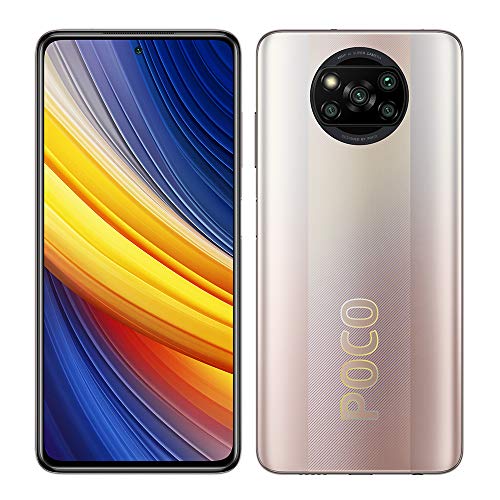
Poco X3 Pro (8GB + 256GB) review. Compare 197 technical specifications and user reviews to see how this product ranks in the Smartphones category and whether it is worth buying.
Overall score
What it is: An overall evaluation of the smartphone's quality, based on technical analyses and user reviews.
When it matters: When you need a quick reference to identify the best smartphones on the market.
Score components:
90.0%
Technical Score
10.0%
User score
Technical Score
What it is: An assessment of the smartphone's technical performance, covering eight key areas: performance & hardware, software, camera, connectivity, display, battery, audio, and design.
When it matters: When you want to compare smartphones based on technical performance and available features.
Score components:
25.0%
Performance & Hardware
18.0%
Camera
15.0%
Display
15.0%
Battery
10.0%
Software
10.0%
Connectivity
4.0%
Audio
3.0%
Design
User score
What it is: A rating that combines user reviews and the total number of reviews received by the smartphone
When it matters: When you want to know how a smartphone handles daily tasks and how reliable it remains over time according to user feedback.
Score components:
70.0%
User reviews
30.0%
Popularity

(Reviews last updated: August 2026)
Available: ranking among products currently available (including other versions of this product).
All: ranking among all products in the database.
#31 in Best Poco Smartphones
#368 in Best Smartphones Under £250
#408 in Best Battery Life Smartphones
#468 in Best Smartphones Under £300
#582 in Best Chinese Smartphones
#597 in Best Smartphones Under £400
#669 in Best Smartphones Under £500
#745 in Best Large-Screen Smartphones
#808 in Best NFC Smartphones
#843 in Best Android Smartphones
#850 in Best Value Smartphones
#885 in Best AI Smartphones
#888 in Best Smartphones
What it is: An assessment of the smartphone's technical performance, covering eight key areas: performance & hardware, software, camera, connectivity, display, battery, audio, and design.
When it matters: When you want to compare smartphones based on technical performance and available features.
Score components:
25.0%
Performance & Hardware
18.0%
Camera
15.0%
Display
15.0%
Battery
10.0%
Software
10.0%
Connectivity
4.0%
Audio
3.0%
Design
What it is: A rating that combines user reviews and the total number of reviews received by the smartphone
When it matters: When you want to know how a smartphone handles daily tasks and how reliable it remains over time according to user feedback.
Score components:
70.0%
User reviews
30.0%
Popularity
(Reviews last updated: August 2026)
What it is: An indicator that combines the smartphone's overall rating with its cost.
When it matters: When you are looking for a smartphone with a good balance between quality and price.
Score components:
60.0%
Overall score
40.0%
Price
Importance: LOW
Importance: HIGH
Importance: HIGH
Good value: >12 GB
Importance: MEDIUM
Good value: >256 GB
Importance: MEDIUM
Good value: >3.2 GHz
Importance: LOW
Importance: MEDIUM
Good value: >1500
Importance: LOW
Good value: >4000
Importance: LOW
Good value: 8+
Importance: LOW
Importance: LOW
Good value: >950 MHz
Importance: LOW
Good value: >700
Importance: LOW
Good value: >1000
Importance: LOW
Good value: >2500
Importance: MEDIUM
Good value: >6000
Importance: LOW
Good value: >8000
Importance: MEDIUM
Good value: >12000
Importance: LOW
Good value: >5000
Importance: LOW
Good value: >1800
Importance: LOW
Good value: >3200 MHz
Importance: LOW
Good value: 5
Importance: LOW
Good value: > 50 GB/s
Importance: LOW
Good value: 4
Importance: LOW
Good value: >16 GB
Importance: MEDIUM
Good value: <6 nm
Importance: MEDIUM
Good value: >9 W
Importance: LOW
Importance: LOW
Good value: >8192 KB
Importance: LOW
Good value: >2048 KB
Importance: LOW
Good value: >512 KB
Importance: LOW
Good value: >100000 million
Importance: LOW
Good value: 3.3
Importance: LOW
Good value: 3.2
Importance: LOW
Good value: 2.0/3.0
Importance: LOW
Importance: LOW
Importance: LOW
Importance: MEDIUM
Importance: LOW
Importance: LOW
Importance: LOW
Importance: LOW
Importance: LOW
Importance: LOW
Importance: LOW
Importance: LOW
Importance: LOW
Importance: LOW
Importance: LOW
Importance: LOW
Importance: LOW
Importance: LOW
Importance: LOW
Importance: LOW
Importance: LOW
Importance: LOW
Importance: LOW
Importance: LOW
Importance: LOW
Importance: LOW
Importance: LOW
Importance: LOW
Importance: LOW
Importance: LOW
Importance: LOW
Importance: LOW
Importance: LOW
Importance: LOW
Importance: LOW
Importance: LOW
Importance: LOW
Importance: MEDIUM
Good value: >50 MP
Importance: MEDIUM
Importance: HIGH
Good value: >60
Importance: LOW
Good value: ≥1.2 µm
Importance: MEDIUM
Good value: >2.5x
Importance: MEDIUM
Importance: LOW
Importance: LOW
Importance: LOW
Importance: LOW
Good value: ≥2
Importance: LOW
Importance: LOW
Importance: LOW
Importance: LOW
Good value: >16 MP
Importance: LOW
Importance: LOW
Importance: LOW
Importance: LOW
Importance: MEDIUM
Importance: LOW
Importance: LOW
Importance: LOW
Importance: LOW
Importance: LOW
Importance: LOW
Importance: LOW
Importance: LOW
Importance: LOW
Importance: LOW
Importance: LOW
Importance: LOW
Importance: LOW
Importance: LOW
Importance: LOW
Importance: LOW
Importance: LOW
Importance: LOW
Importance: LOW
Importance: LOW
Importance: LOW
Good value: >130
Importance: LOW
Good value: >120
Importance: LOW
Good value: ≥2
Importance: LOW
Importance: LOW
Importance: LOW
Importance: LOW
Importance: LOW
Importance: LOW
Good value: >5.2
Importance: LOW
Importance: LOW
Importance: LOW
Importance: LOW
Good value: 3.1/3.2
Importance: LOW
Importance: LOW
Importance: LOW
Good value: ≥2
Importance: LOW
Importance: LOW
Importance: LOW
Importance: LOW
Importance: LOW
Importance: LOW
Importance: LOW
Importance: LOW
Importance: LOW
Importance: LOW
Importance: LOW
Importance: LOW
Importance: LOW
Importance: LOW
Importance: LOW
Importance: LOW
Good value: ≥6.6 inches
Importance: MEDIUM
Importance: LOW
Good value: >400 ppi
Importance: MEDIUM
Importance: MEDIUM
Good value: ≥120 Hz
Importance: LOW
Importance: LOW
Good value: >300 Hz
Importance: LOW
Good value: >800 nits
Importance: LOW
Good value: >1300 nits
Importance: LOW
Good value: >1000 nits
Importance: LOW
Importance: LOW
Importance: LOW
Importance: LOW
Importance: LOW
Importance: LOW
Importance: LOW
Importance: LOW
Importance: HIGH
Good value: >5000 mAh
Importance: MEDIUM
Good value: >60 W
Importance: LOW
Importance: LOW
Good value: <45 min
Importance: LOW
Importance: LOW
Good value: >40 W
Importance: LOW
Importance: LOW
Good value: >10 W
Importance: LOW
Importance: LOW
Importance: MEDIUM
Importance: LOW
Good value: >800
Importance: LOW
Importance: LOW
Importance: LOW
Importance: LOW
Importance: LOW
Good value: ≥3
Importance: LOW
Importance: LOW
Importance: LOW
Importance: LOW
Importance: LOW
Importance: LOW
Importance: LOW
Good value: <162 mm
Importance: LOW
Good value: <75 mm
Importance: LOW
Good value: <8 mm
Importance: LOW
Good value: <190 g
Importance: LOW
Good value: <98cm³
Importance: LOW
Importance: LOW
Importance: LOW
Importance: LOW
Importance: LOW
Importance: LOW
Good value: ≥1.5 m
Importance: LOW
Importance: LOW
Good value: >8
Importance: LOW
Importance: LOW
Importance: MEDIUM
Good value: >9 W
Importance: MEDIUM
Good value: >3.2 GHz
Importance: LOW
Importance: LOW
Importance: MEDIUM
Importance: HIGH
Good value: >5000 mAh
Importance: LOW
Good value: ≥2
Importance: LOW
Importance: MEDIUM
Importance: LOW
Importance: LOW
Good value: >950 MHz
Importance: LOW
Importance: LOW
Importance: LOW
Importance: LOW
Importance: MEDIUM
Good value: >50 MP
(Reviews last updated: August 2026)
According to a Sypnotix review, the POCO X3 Pro offers near-flagship performance at a budget price of around $300, featuring a Snapdragon 860 chipset and a 120Hz FHD+ display. Pros include a large 5,160 mAh battery, 33W fast charging, a headphone jack, dual speakers, a side-mounted fingerprint sensor, and IP53 resistance. Cons are noted as average camera performance, MIUI 12 bloatware and bugs, and an IPS LCD display instead of AMOLED.
The Poco X3 Pro is defined by its exceptional performance for a budget device, featuring a Snapdragon 860 chipset and a 120Hz display that provides a smooth, high-end experience. Key advantages include the high-performance processor, solid battery life, and a 3.5mm headphone jack. Conversely, compromises include a lackluster 48Mp camera system, a bulky design with significant branding, and a lack of 5G connectivity. Despite these trade-offs, the device offers, at its price point, excellent value for users prioritizing raw power over camera quality.
The Poco X3 Pro is described as a "budget gaming monster" that excels in performance due to its Snapdragon 860 chipset and effective heat sink, offering incredible speed for demanding tasks. While it boasts a large 120Hz display, durable build with Gorilla Glass 6, a 3.5mm headphone jack, IR blaster, and a substantial 5160mAh battery, the hardware design is a "mixed bag" with a bulky weight and a poorly designed camera protrusion. The biggest drawbacks are the "horrible" MIUI software with bloatware and notification issues, and largely "useless" macro and depth camera sensors, though the main and ultrawide lenses perform "pretty well".
The Poco X3 Pro is described as a budget gaming phone, prioritizing performance with a Snapdragon 860 processor and UFS 3.1 storage. It features a 6.67-inch FHD+ LCD screen with a 120Hz refresh rate and a 5,160mAh battery providing over a day of heavy use, with 33W fast charging. Additional features include IP53 splash resistance, dual stereo speakers, a 3.5mm headphone jack, and an IR blaster. However, the camera hardware is a noted compromise compared to the previous model, offering acceptable daylight photos but struggling in low light. Other drawbacks include the lack of 5G connectivity, a bulky design, and pre-installed bloatware in the MIUI 12 software. For more details, visit Android Headlines.
The Poco X3 Pro is presented as a strong option for budget-conscious gamers, prioritizing performance with a Snapdragon 860 chipset that offers flagship-level speed. It features a 120Hz LCD and a 240Hz touch sampling rate for fluid interaction and responsive gaming. The phone boasts a large 5,120mAh battery lasting a full day with heavy use and supports 33W fast charging, while retaining features like a 3.5mm headphone jack and IP53 splash resistance. However, it is noted as heavy and bulky with a design some may find cheap. Significant compromises are found in the camera system, described as average with a 48MP main sensor that performs adequately in daylight but is a step down from the previous model. The software experience with MIUI 12 is a mixed bag due to bloatware and occasional interface issues.
Digital Camera World describes the Poco X3 Pro as a "budget beast" ideal for gamers and power users due to its fast Snapdragon 860 chipset and large 120Hz display. However, the device makes trade-offs in camera hardware, which is a downgrade from its predecessor, and features a bulky design with a prominent logo. Despite a long-lasting battery, fast charging, and practical features like a headphone jack, the phone includes bloatware with ads and lacks 5G connectivity.
The POCO X3 Pro is described as a "power-packed" device focused on raw performance for its budget price, featuring a Snapdragon 860 chipset and a 120Hz LCD display. While offering exceptional value, reliable two-day battery life, and practical features like a headphone jack and IP53 rating, it compromises in other areas. Notable drawbacks include a downgraded camera system producing unnatural results, limited outdoor display visibility, and a bulky plastic design.
TechRadar reviews the Xiaomi Poco X3 Pro as a "budget gaming monster" that provides strong performance due to its Snapdragon 860 processor and UFS 3.1 storage, making it suitable for demanding games and power users. Pros include its 120Hz display and excellent battery life, while cons are a downgraded camera compared to its predecessor, a bulky plastic build, lack of 5G, and a tendency to heat up during intense gaming.
The POCO X3 Pro is described as a budget performance leader built for gaming and power users, featuring a Snapdragon 860 chipset, 120Hz LCD panel, and stereo sound, though the display can suffer from ghosting. It offers strong battery life from its 5160mAh cell and includes practical features like an IP53 rating, headphone jack, and UFS 3.1 storage, supported by 33W fast charging. However, the device has a downgraded 48MP camera, lacks 5G, is bulky and heavy, and includes pre-installed bloatware.
The POCO X3 Pro is highlighted as a high-performance budget smartphone, driven by a flagship-level Snapdragon 860 processor and a 120Hz display, though it uses an LCD panel instead of AMOLED. The device features a large 5,160 mAh battery with 33W charging, a 3.5mm headphone jack, and microSD expansion, but is noted for its heavy, bulky design. While excellent for gaming, the phone's weaknesses include a mediocre camera system and significant pre-installed bloatware in the MIUI interface.
The ChinaMobileMag review characterizes the Poco X3 Pro as a high-performance, budget-friendly device, anchored by a powerful Snapdragon 860 chipset, fast UFS 3.1 storage, and a large 5,160mAh battery. Key strengths include the high-speed performance, a smooth 120Hz LCD panel, and solid construction with IP53 splash resistance. Significant compromises were made in the camera department, with the 48MP main sensor and 8MP ultra-wide delivering mediocre results compared to its predecessor. Other noted disadvantages include low display brightness (450 nits), the absence of 5G connectivity, and a plastic design. Software issues, specifically bugs within MIUI 12.5 causing screen refresh rate drops, and thermal throttling under heavy gaming loads were also highlighted as drawbacks. Overall, the review positions it as a "performance beast" that sacrifices camera quality and display brightness for raw power.
The Root-Nation review labels the POCO X3 Pro a "gaming monster" defined by its Snapdragon 860 chipset and 120Hz IPS display, prioritizing raw performance over all else. Despite its 215g bulk, the device offers functional durability with Gorilla Glass 6, an IP53 rating, and the continued inclusion of a 3.5mm headphone jack and microSD slot. While the 5,160mAh battery delivers all-day stamina, the review notes drawbacks including inconsistent auto-brightness, a bloatware-heavy MIUI 12, and an uninspiring camera system that serves as a downgrade from its predecessor. Ultimately, the review concludes that the X3 Pro is the undisputed, budget-friendly performance leader of its class.
The Phonandroid review positions the Xiaomi Poco X3 Pro as a performance-first device, highlighting its Snapdragon 860 chipset and fast UFS 3.1 storage as top-tier, budget-friendly features for gaming. While the 120Hz IPS LCD screen provides a smooth, responsive experience, the display technology lacks the contrast of AMOLED, and the design is described as heavy and utilitarian. Key drawbacks include an average 48MP camera, which represents a resolution downgrade from the previous model, and the absence of 5G connectivity. Despite these compromises, the device offers excellent, long-lasting battery life with 33W fast charging.
The Xiaomi Poco X3 Pro is highlighted as a high-performance, budget-friendly smartphone featuring a powerful Qualcomm Snapdragon 860 processor that excels in gaming and multitasking. While the 6.67-inch 120 Hz LCD display offers fluid navigation, it lacks the deep blacks of OLED panels. Key advantages include very good battery life from a 5,160 mAh cell and fast-charging capabilities, alongside a durable Gorilla Glass 6 front and a fast side-mounted fingerprint reader. However, the device is criticized for being bulky and heavy, with an average, inconsistent camera quality and mediocre video sound. For more details, visit Que Choisir.
The Planète Numérique review identifies the POCO X3 Pro as a budget gaming device, highlighting its top-tier Snapdragon 860 chipset, fast UFS 3.1 storage, and 120Hz display as standout performance features for the price. While offering exceptional speed, the device sacrifices camera quality with a 48MP main sensor that produces average images and a weak macro lens. The phone is noted for being heavy with a plastic design, alongside a bloated MIUI software experience, though the 5160mAh battery ensures long-lasting operation. Planète Numérique
The POCO X3 Pro is a budget-focused device, driven by the Snapdragon 860 chipset to deliver near-flagship performance and a responsive 120Hz display. While it excels in gaming, the phone features a less vibrant LCD panel and a downgraded camera system, resulting in underwhelming photo quality compared to its predecessor. Its bulky design, which includes a 215g frame and prominent branding, is balanced by practical features like a 3.5mm jack and IP53 resistance.
The Poco X3 Pro is defined by its powerful Snapdragon 860 chipset and 120Hz LCD screen, offering near-flagship performance for gamers, though it requires manual adjustments to achieve accurate color calibration. While the 5,160 mAh battery offers decent longevity and performance is exceptional for the price, the device makes compromises with a bulky, heavy design and lacks 5G, with the 48MP camera producing inconsistent, average-quality photos compared to its predecessor. Ultimately, the device is considered a niche, high-performance, budget-focused phone, with positives like IP53 resistance and a 3.5mm jack balanced against a lackluster photography experience. Les Numériques
The POCO X3 Pro is a performance-focused "budget flagship" featuring the Snapdragon 860 chipset and a 120Hz display, aiming to provide high-end gaming performance for under £200. While the device excels in processing power and display smoothness, it compromises with a downgraded 48MP main camera and disappointing auxiliary sensors, alongside a heavy, plastic, and bulky design. Despite these drawbacks, the phone includes a large 5,160mAh battery with 33W charging, stereo speakers, and a 3.5mm jack, though the user experience is hindered by MIUI 12's pre-installed apps and ads.
According to the Root-Nation review, the POCO X3 Pro is a performance-focused mid-ranger featuring a Snapdragon 860 chipset, 120Hz IPS display, and UFS 3.1 storage, offering top-tier gaming capabilities for its price point. It includes practical features like stereo speakers, 33W fast charging for the 5,160mAh battery, and IP53 protection, though it is quite heavy at 215g. While performance is a major pro, the camera system, featuring a 48MP main sensor, produces only average, sometimes soft, images, and the software includes notable bloatware.
The POCO X3 Pro focuses on high-performance hardware, featuring a Snapdragon 860 processor, UFS 3.1 storage, and a 120Hz LCD screen that delivers exceptional gaming and speed for its price point. While the 5,160mAh battery provides excellent longevity, the device is criticized for its bulky design and the absence of an AMOLED panel. Compromises are evident in the mediocre camera performance, particularly in low light, and a software experience cluttered with pre-installed bloatware and ads. For a detailed breakdown, visit Xataka Móvil at.
The Poco X3 Pro is highlighted as a "best buy" for its exceptional price-to-performance ratio, driven by a high-end Snapdragon 860 processor and a 120Hz IPS display. The device offers a substantial 5,160mAh battery with 33W charging, plus notable features like a 3.5mm headphone jack, stereo speakers, and durable Gorilla Glass 6. Key compromises for the low price point include a downgraded 48MP camera sensor that struggles in low light and a lack of 5G connectivity. Additionally, the phone is noted for being heavy, bulky, and containing software bloatware.
Andrea Galeazzi argues against labeling the POCO X3 Pro a "Best Buy," prioritizing balanced, all-around performance over the superior, raw, Snapdragon 860 processing power found in the X3 Pro compared to the original NFC version. While the Pro offers high-end performance, UFS 3.1 storage, and gaming excellence, it suffers from a dimmer display (440 LUX) and a downgraded 48MP camera, which are key compromises compared to the X3 NFC. Ultimately, the X3 Pro is described as an "unbalanced" device with a top-tier engine in a lesser body, leading to lower, inconsistent battery life and a poorer daily user experience than its predecessor.
The SmartWorld review identifies the POCO X3 Pro as a performance-first device, highlighting its Snapdragon 860 processor and fast UFS 3.1 storage as providing top-tier, flagship-level gaming and multitasking speed for a mid-range price. While the 6.67-inch 120Hz IPS LCD is praised for its fluidity, it lacks the deep blacks of AMOLED, and the maximum brightness is only average. Despite a heavy, bulky design (215g), the phone offers solid functionality, including a large 5,160 mAh battery, a 3.5mm jack, and an IR blaster, though camera performance is considered a downgrade from its predecessor.
The XiaomiToday.it review defines the POCO X3 Pro as a high-performance "budget beast" featuring a Snapdragon 860 processor that delivers flagship-level fluidity. Key advantages include a smooth 120Hz IPS display, a large 5160mAh battery with 33W charging, and premium components like UFS 3.1 storage. While performance is top-tier, the device compromises on camera quality, with the 48MP main sensor being strictly mid-range and accompanied by unnecessary secondary lenses. Furthermore, the phone is quite heavy and bulky at 215g, and the software experience is marred by pre-installed MIUI bloatware and ads. Conclusively, the review asserts that the POCO X3 Pro offers exceptional value for money by prioritizing raw power and battery longevity over a slim design or advanced photography capabilities. It is described as a device that is worth more than its cost.
The Poco X3 Pro is defined as a performance-first, budget-friendly device, centering on the high-end Snapdragon 860 chipset for gaming and multitasking. Key hardware features include a 120Hz LCD display and a 5,160mAh battery providing up to two days of moderate use. However, the device presents significant compromises to maintain its low price point, including a mediocre 48MP camera system, a 215-gram plastic build, and an IPS panel with limited sunlight visibility. The software, MIUI 12 for POCO, offers high functionality but is prone to bloatware and occasional instability. Ultimately, the device excels as a budget gaming machine, though it lacks 5G and premium display technology found in competitors. It is positioned as a specialized, rather than all-around, smartphone.
The Poco X3 Pro is defined by Root Nation as a "budget gaming monster" that prioritizes raw performance, driven by the Snapdragon 860 chipset and a 120Hz IPS display, over premium materials. Key pros include exceptional gaming capabilities, stereo speakers, a 3.5mm jack, and a large 5160mAh battery with 33W charging, though the plastic, bulky design lacks a premium feel. Significant tradeoffs include mediocre camera performance and a bloatware-heavy MIUI 12 interface, making it a device focused heavily on speed rather than luxury.
The April 2021 review from Il Fatto Quotidiano characterizes the POCO X3 Pro as an "almost perfect" budget device prioritizing raw power over photography. It features a Snapdragon 860 chipset for high-end performance, a 120Hz display, a 5160mAh battery, and added features like an IP53 rating, stereo speakers, and a headphone jack. Conversely, the, camera system is deemed underwhelming, with disappointing results from the 8MP ultrawide and 2MP macro sensors, coupled with a heavy 215g design and excessive MIUI bloatware.
Andrea Galeazzi defines the POCO X3 Pro as a performance-driven device with significant power from its Snapdragon 860 processor and UFS 3.1 storage, yet notes that this "horsepower" results in an unbalanced experience due to overheating and occasional micro-lags. The phone features a 6.67-inch 120Hz LCD display that is criticized for poor viewing angles, washed-out colors, and low brightness, alongside a heavy 215g, bulky chassis. While the 5,160 mAh battery offers variable performance, the 33W charging is a plus; however, the camera system is deemed underwhelming, with subpar low-light performance despite having decent stereo speakers and a 3.5mm headphone jack.

Compare