Scored using Smartphones Methodology v3.0
Smartphones Methodology v3.0
Mathematical & Unbiased Scoring
Products in this category are scored under Frontum Smartphones Methodology v3.0: the technical score from the specifications is the base, and independent expert and video reviews (up to ±0.5 points), owner opinions (up to ±0.3) and best-of lists (up to +0.3) move it up or down.
Explore Smartphones Methodology v3.0

Ulefone Armor 22 Pro review: 196 specs compared

Avg. price:~£?RAM capacity:16 GBInternal storage:?Screen size:6.58 inchesMain camera megapixels:?

Ulefone Armor 22 Pro Review: Compare 196 technical specifications and 4 expert and video reviews to see how this product ranks in the Smartphones category and whether it is worth buying.
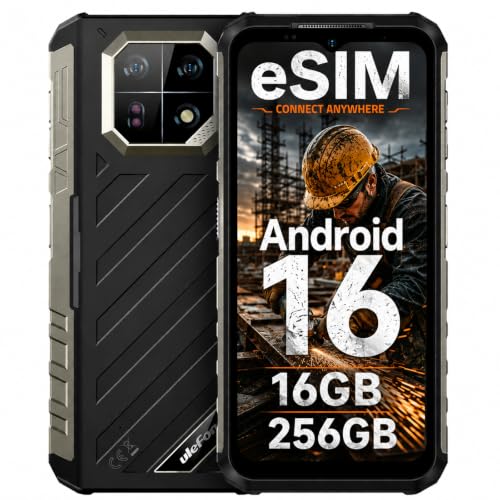
Ulefone Armor 22 Pro
7.3/10

Overall score

Score
7.3/ 10
✕
What it is
Our main score for this model, 1–10. It combines specs, best-of lists, expert reviews and owners.
How we count it
Parts: Technical score 40%, List score 30%, Reviews score 25%, Sentiment score 5%
Marks: Each part gets a mark out of 10. For reviews, lists and owners, a typical model in this category gets about 8 and the best one gets 10.
No data yet: A part with no data shows "?". It counts as the mark of a weaker model in this category (4 in 5 models with data score higher). This way, models with reviews, lists and owners usually come out ahead.
Score distribution
▼
<55-66-77-88-99-10
Score components

40%

6.8

Technical score

30%

?

List scoreNot enough data yet, so we use 7.5, the mark of a weaker model in this category

25%

7.9

Reviews score

5%

?

Sentiment scoreNot enough data yet, so we use 6.8, the mark of a weaker model in this category

▲Better than 54% of smartphones
?

Value for money

Value for money
✕
What it is
An indicator that combines the smartphone's overall rating with its cost.
When it matters
When you are looking for a smartphone with a good balance between quality and price.
Score distribution
▼
<55-66-77-88-99-10
Score components

70%

7.3

Overall score

30%

?

Price

Price not known yet
6.8

Technical score

Technical score
6.8/ 10
✕
What it is
How good the specs are compared with the other models in this category, 1–10.
How we count it
Areas: We rate the specs in each area against the other models in this category.
Weighting: The areas that matter most to buyers count more. The shares are shown under Score components.
Share: The technical score is 40% of the overall score.
Score distribution
▼
<55-66-77-88-99-10
Score components

25%

7.8

Performance

18%

6.3

Camera

15%

5.8

Display

15%

6.8

Battery

10%

7.9

Software

10%

7.1

Connectivity

4%

2.5

Audio

3%

5.7

Design

▲Better than 52%
7.9

Reviews score

Reviews score
7.9/ 10
✕
What it is
Average grade from independent test sites, magazines and video reviewers, 1–10.
How we count it
Grades: Each review's own score is converted to 1–10; without one, we grade the review ourselves. Big test sites count more, short reviews half as much as full tests. A video review counts half.
Score: The average grade is 80% of the review mark; the number of reviews is the other 20% (1 review = 5, the typical number in this category = 8, the most-reviewed model = 10).
Enough data: With few reviews, the average grade is pulled toward the typical grade of this category. No reviews yet: 7.5 for now.
Share: Reviews count 25% of the overall score.
Score distribution
▼
<55-66-77-88-99-10

80%

8.4

Average grade

20%

6.3

Popularity

Grades by review (4)
4 video reviews, each counting half as much as a written test. Reviews count 25% of the overall score.
User ratings collected online are not part of this score.
▲Better than 50%
?

Sentiment score

Sentiment score
6.8/ 10
✕
What it is
How positive owners are about this model in their comments under video reviews and on forums. We read each comment, keep only people who say they own the model, and sort them into positive, mixed or negative.
How we count it
Score: We compare how satisfied this model’s owners are with the other models in this category: the typical model gets 8, the most satisfied tenth 10, the least satisfied 4. This is 80% of the owner mark; the number of owners is the other 20%.
Enough data: A model counts with 10+ owners from 4+ different discussions. With fewer, the owner part changes nothing.
Share: Owners count 5% of the overall score (left out in categories where fewer than 10 models have enough owner comments).
Score distribution
▼
<55-66-77-88-99-10
Owners (0)
Not enough owner comments yet (10+ owners from 4+ discussions needed), so the owner part changes nothing.
Our own analysis of online owner opinions, not a rating from any website.
Not enough owner comments yet
?

List score

List score
7.5/ 10
✕
What it is
How often independent test sites, magazines and video reviewers put this model in their best-of lists for this category.
How we count it
Points: The model in the most lists of this category gets 10; the others get 8 to 10 in proportion. In no list yet: 7.5. Lists count 30% of the overall score.
Enough data: Every list counts, even a single one. With fewer than 5 best-of lists in the category, this part is left out.
Lists with this model (0)
Not in any best-of list yet, so this part counts as 7.5. Models in a list get 8 to 10.
Not in any best-of list yet

What reviewers say about the Ulefone Armor 22 Pro

Based on 0 · 4

Reviewers agree it is genuinely tough and praise the useful night vision camera, with no notable complaints raised.
Praised
Pick a topic to see who said what
Loading...
Loading category ranking...

Smartphones model ranking

Ranked #374 of 2,155 models in Smartphones (Overall score)

Technical Specifications of smartphone Ulefone Armor 22 Pro

Technical score
Technical score
6.8/ 10
✕
What it is
How good the specs are compared with the other models in this category, 1–10.
How we count it
Areas: We rate the specs in each area against the other models in this category.
Weighting: The areas that matter most to buyers count more. The shares are shown under Score components.
Share: The technical score is 40% of the overall score.
Score distribution
▼
<55-66-77-88-99-10
Score components:

25%

7.8

Performance

18%

6.3

Camera

15%

5.8

Display

15%

6.8

Battery

10%

7.9

Software

10%

7.1

Connectivity

4%

2.5

Audio

3%

5.7

Design

6.8
Reviews score
7.9
Sentiment score
?
List score
?
Value for money
Value for money
8.1/ 10
✕
What it is
An indicator that combines the smartphone's overall rating with its cost.
When it matters
When you are looking for a smartphone with a good balance between quality and price.
Score distribution
▼
<55-66-77-88-99-10
Score components:

70%

7.3

Overall score

30%

?

Price

8.1
Processor model
?
Storage type
UFS 2.2
This smartphone uses UFS 2.2 storage, which is slower than the storage in 54.1% of smartphones and the same as in 23.3% of smartphones.
RAM capacity
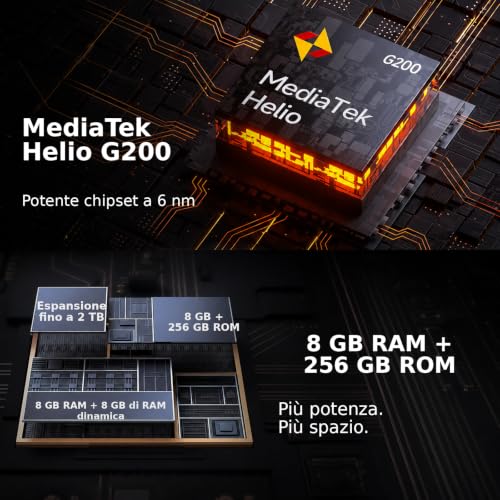
16 GB
This smartphone has a RAM capacity of 16 GB which is larger than the RAM capacity of 83.9% of smartphones and equal to that of 11.5% of smartphones.
Internal storage
?
CPU boost clock speed
2.2 GHz
The CPU boost clock speed of this smartphone is 2.2 GHz which is lower than the boost speed of 67.6% of smartphones and equal to that of 13.7% of smartphones.
Show more
Operating system
Android
This smartphone runs Android, which is more mainstream than the system in 4.9% of smartphones and the same as in 95.1% of smartphones.
Android version
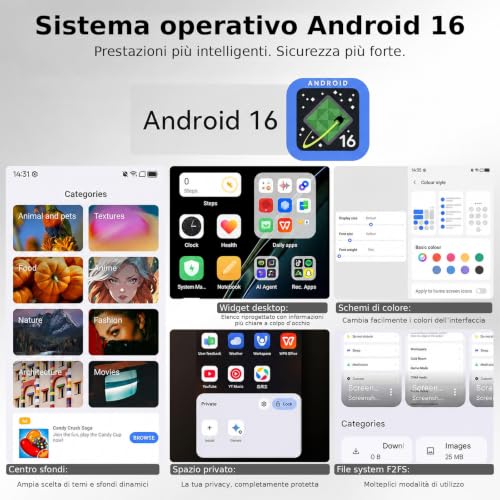
Android 16
This smartphone runs Android version Android 16 which is newer than that found in 94.4% of smartphones and equal to that in 5.7% of smartphones.
Direct OS updates
no
This smartphone does not support direct OS updates. 19.8% of smartphones offer this.
Promised software updates
?
Open-source OS
yes
This smartphone runs an open-source operating system. 5.3% of smartphones offer this.
Show more
Multi-lens main camera
yes
This smartphone includes a multi-lens main camera system. 93.9% of smartphones include multi-lens setups.
Main camera megapixels
?
Main camera aperture
?
Main camera sensor area
?
Main camera pixel size
0.8 µm
This smartphone has a main camera pixel size of 0.8 µm which is larger than in 35.3% of smartphones and equal to the size in 22% of smartphones.
Show more
Number of SIM slots
2
This smartphone has 2 SIM slots, which is more than in 3.6% of smartphones and equal to the number in 96.3% of smartphones.
Cellular module
yes
This smartphone includes a cellular module. 100% of smartphones include cellular modules.
eSIM support
yes
This smartphone has eSIM support. 79.5% of smartphones offer this.
5G connectivity
no
This smartphone does not have 5G connectivity. 65.8% of smartphones offer this.
LTE support
yes
This smartphone supports LTE. 99.7% of smartphones include LTE connectivity.
Show more
What reviewers say
Screen size
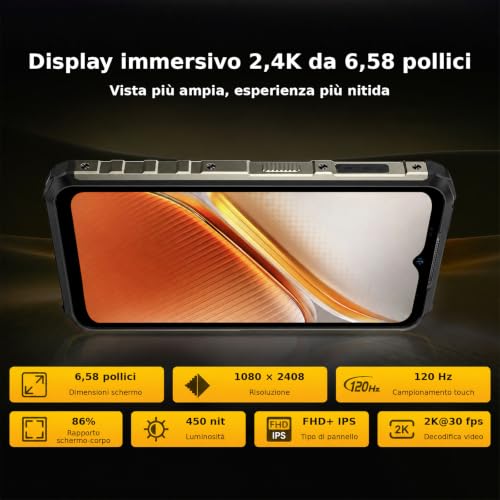
6.58 inches
This smartphone has a screen size of 6.58 inches which is smaller than the screens of 68% of smartphones and equal to those of 2.3% of smartphones.
Screen resolution
1080x 2408 px
This smartphone has a screen resolution of 1080x2408 px which is higher than that of 57.3% of smartphones and equal to that of 4.2% of smartphones.
Pixel density
401 ppi
This smartphone has a pixel density of 401 ppi which is higher than that of 58.9% of smartphones and equal to that of 2.8% of smartphones.
Display type
IPS LCD
This smartphone uses a IPS LCD display type. 0% of smartphones use this display technology.
Refresh rate
120 Hz
This smartphone supports a refresh rate of 120 Hz which is higher than in 34.9% of smartphones and equal to that in 55.3% of smartphones.
Show more
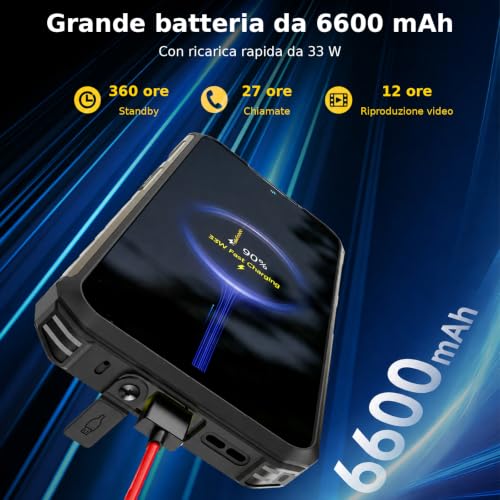
Battery capacity
6,600 mAh
This smartphone has a battery capacity of 6,600 mAh which is larger than the batteries in 85.1% of smartphones and equal to those in 0.3% of smartphones.
Charging speed
33 W
This smartphone supports charging speeds of 33 W which is faster than in 39.8% of smartphones and equal to speeds in 11.7% of smartphones.
Fast charging
yes
This smartphone supports fast charging. 93.4% of smartphones support fast charging.
GSMArena full wired charge time
?
Wireless charging
no
This smartphone does not support wireless charging. 24.8% of smartphones support wireless charging.
Show more
Stereo speakers
no
This smartphone does not have stereo speakers. 63.7% of smartphones offer this.
3.5 mm headphone jack
yes
This smartphone includes a 3.5 mm headphone jack. 45.3% of smartphones offer this port.
Number of microphones
2
This smartphone includes 2 microphones, which is more than in 10.2% of smartphones and equal to the number in 66.9% of smartphones.
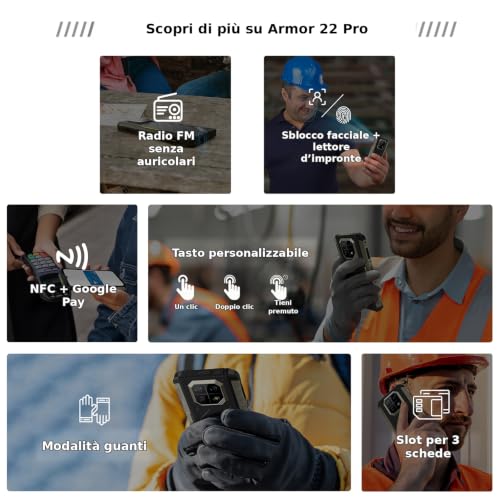
FM radio
yes
This smartphone includes an FM radio. 34.9% of smartphones offer FM radio functionality.
aptX Lossless
no
This smartphone does not support aptX Lossless Bluetooth audio. 12.1% of smartphones offer this.
Show more
Height
176.8 mm
This smartphone has a height of 176.8 mm which is taller than 96.1% of smartphones and equal to that of 0.2% of smartphones.
Width
84.9 mm
This smartphone has a width of 84.9 mm which is wider than 96.4% of smartphones and equal to that of 0.2% of smartphones.
Thickness
15 mm
This smartphone has a thickness of 15 mm which is thicker than 92.8% of smartphones and equal to that of 0.3% of smartphones.
Weight
324 g
This smartphone weighs 324 g which is heavier than 93.4% of smartphones and equal to the weight of 0.1% of smartphones.
Device volume
225,154.8 cm³
This smartphone has a device volume of 225,154.8 cm³ which is larger than 99.7% of smartphones.
Show more
What reviewers say

Ulefone Armor 22 Pro vs the average smartphone

246810TotalPerformanceSoftwareCameraConnectivityDisplayBatteryAudioDesign
  • 8 GB more RAM
    This smartphone has more RAM capacity than the average smartphone (16 GB vs 8 GB). The average smartphone has 8 GB of RAM.
    16 GB vs 8 GB
  • 32% larger battery capacity
    This smartphone has a larger battery capacity than the average smartphone (6,600 mAh vs 5,000 mAh). The average smartphone battery is 5,000 mAh.
    6,600 mAh vs 5,000 mAh
  • Supports eSIM
    This smartphone supports eSIM, while the average smartphone does not. 20.6% of smartphones support eSIM.
  • Better IP rating
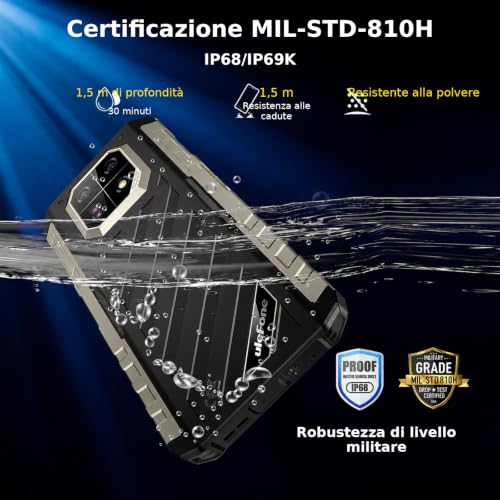
    This smartphone has a better IP rating than the average smartphone (IP68/IP69K vs IP67). The average IP rating is IP67.
    IP68/IP69K vs IP67
  • 1.5 m deeper water resistance
    This smartphone has a deeper water resistance rating than the average smartphone (1.5 m vs 0 m). The average depth rating is 0 m.
    1.5 m vs 0 m
  • Newer Android version
    This smartphone features a newer Android version than the average smartphone (Android 16 vs Android 14). The average version is Android 14.
    Android 16 vs Android 14
  • 2 year/s newer release date
    This smartphone has a newer release date than the average smartphone (2026 vs 2024). 2.00% of smartphones are released annually.
    2026 vs 2024
  • Has a rugged design
    This smartphone features a rugged design, the average smartphone does not. 8.3% of smartphones are built for durability.
  • 8.2% higher review score
    Reviews score
    7.9/ 10
    ✕
    What it is
    Average grade from independent test sites, magazines and video reviewers, 1–10.
    How we count it
    Grades: Each review's own score is converted to 1–10; without one, we grade the review ourselves. Big test sites count more, short reviews half as much as full tests. A video review counts half.
    Score: The average grade is 80% of the review mark; the number of reviews is the other 20% (1 review = 5, the typical number in this category = 8, the most-reviewed model = 10).
    Enough data: With few reviews, the average grade is pulled toward the typical grade of this category. No reviews yet: 7.5 for now.
    Share: Reviews count 25% of the overall score.
    Score distribution
    ▼
    <55-66-77-88-99-10

    80%

    8.4

    Average grade

    20%

    6.3

    Popularity

    Grades by review (4)
    4 video reviews, each counting half as much as a written test. Reviews count 25% of the overall score.
    User ratings collected online are not part of this score.
    7.9 vs 7.3
  • 6% better value for money
    Ulefone Armor 22 Pro has better value for money than the average smartphone (8.09 vs 7.6).
    8.09 vs 7.63
  • 8 GB more RAM
    This smartphone has more RAM capacity than the average smartphone (16 GB vs 8 GB). The average smartphone has 8 GB of RAM.
    16 GB vs 8 GB
  • 2 year/s newer release date
    This smartphone has a newer release date than the average smartphone (2026 vs 2024). 2.00% of smartphones are released annually.
    2026 vs 2024
  • Newer Android version
    This smartphone features a newer Android version than the average smartphone (Android 16 vs Android 14). The average version is Android 14.
    Android 16 vs Android 14
  • Supports eSIM
    This smartphone supports eSIM, while the average smartphone does not. 20.6% of smartphones support eSIM.
  • Has an infrared sensor
    This smartphone includes an infrared sensor, the average smartphone does not. 33% of smartphones feature an IR blaster.
  • Higher screen resolution
    This smartphone has a higher screen resolution than the average smartphone (1080x2408 px vs 1080x2400 px). The average smartphone resolution is 1080x2400 px.
    1080x2408 px vs 1080x2400 px
  • 1.5% higher pixel density
    This smartphone has a higher pixel density than the average smartphone (401 ppi vs 395 ppi). The average smartphone has a pixel density of 395 ppi.
    401 ppi vs 395 ppi
  • 32% larger battery capacity
    This smartphone has a larger battery capacity than the average smartphone (6,600 mAh vs 5,000 mAh). The average smartphone battery is 5,000 mAh.
    6,600 mAh vs 5,000 mAh
  • Has a 3.5 mm headphone jack
    This smartphone features a 3.5 mm headphone jack, the average smartphone does not. 45.3% of smartphones include a standard headphone jack.
  • Has FM radio
    This smartphone features an FM radio, the average smartphone does not. 34.9% of smartphones include an FM tuner.
  • Better IP rating
    This smartphone has a better IP rating than the average smartphone (IP68/IP69K vs IP67). The average IP rating is IP67.
    IP68/IP69K vs IP67
  • 1.5 m deeper water resistance
    This smartphone has a deeper water resistance rating than the average smartphone (1.5 m vs 0 m). The average depth rating is 0 m.
    1.5 m vs 0 m
  • Has a rugged design
    This smartphone features a rugged design, the average smartphone does not. 8.3% of smartphones are built for durability.
  • Inferior display type
    This smartphone has an inferior display type compared to the average smartphone (IPS LCD vs OLED/AMOLED). 0.00% of smartphones use the superior display type.
    IPS LCD vs OLED/AMOLED
  • No ultrawide rear camera
    This smartphone does not have an ultrawide rear camera, while the average smartphone does. 61.9% of smartphones offer this.
  • No 5G connectivity
    This smartphone does not support 5G connectivity, the average smartphone does. 65.8% of smartphones are 5G compatible.
  • No stereo speakers
    This smartphone does not have stereo speakers, the average smartphone does. 63.6% of smartphones feature stereo speakers.
  • No LDAC support
    This smartphone does not support LDAC, the average smartphone does. 59% of smartphones support LDAC.
  • Slower storage type
    This smartphone has slower storage than the average smartphone (UFS 2.2 vs UFS 3.1).
    UFS 2.2 vs UFS 3.1
  • Lacks focus mode
    This smartphone does not have a focus mode, the average smartphone does. 61.9% of smartphones include a dedicated focus mode.
  • Lower front camera megapixels
    This smartphone has lower front camera megapixels than the average smartphone (8 MP vs 16 MP). The average smartphone has a 16 MP front camera.
    8 MP vs 16 MP
  • Slower storage type
    This smartphone has slower storage than the average smartphone (UFS 2.2 vs UFS 3.1).
    UFS 2.2 vs UFS 3.1
  • 50% less L3 cache
    This smartphone has a smaller L3 cache than the average smartphone (2048 KB vs 4,096 KB). The average smartphone has an L3 cache of 4,096 KB.
    2,048 KB vs 4,096 KB
  • 8.3% lower CPU boost clock speed
    This smartphone has a lower CPU boost clock speed than the average smartphone (2.2 GHz vs 2.4 GHz). The average smartphone has a boost clock speed of 2.4 GHz.
    2.2 GHz vs 2.4 GHz
  • Lacks focus mode
    This smartphone does not have a focus mode, the average smartphone does. 61.9% of smartphones include a dedicated focus mode.
  • No Wi-Fi password sharing
    This smartphone does not support Wi-Fi password sharing, the average smartphone does. 58.5% of smartphones allow easy Wi-Fi sharing.
  • Lacks instant markup
    This smartphone does not support instant markup, the average smartphone does. 52.5% of smartphones include instant markup tools.
  • Does not allow app offloading
    This smartphone does not support app offloading, the average smartphone does. 52.7% of smartphones support app offloading to save space.
  • No ultrawide rear camera
    This smartphone does not have an ultrawide rear camera, while the average smartphone does. 61.9% of smartphones offer this.
  • Lower front camera megapixels
    This smartphone has lower front camera megapixels than the average smartphone (8 MP vs 16 MP). The average smartphone has a 16 MP front camera.
    8 MP vs 16 MP
  • No 5G connectivity
    This smartphone does not support 5G connectivity, the average smartphone does. 65.8% of smartphones are 5G compatible.
  • Inferior display type
    This smartphone has an inferior display type compared to the average smartphone (IPS LCD vs OLED/AMOLED). 0.00% of smartphones use the superior display type.
    IPS LCD vs OLED/AMOLED
  • 550 nits lower peak brightness
    This smartphone has a lower peak brightness than the average smartphone (450 nits vs 1,000 nits). The average smartphone peak brightness is 1,000 nits.
    450 nits vs 1,000 nits
  • 0.09 inches inch smaller screen size
    This smartphone has a smaller screen size than the average smartphone (6.6 inches vs 6.67 inches). The average smartphone has a screen size of 6.67 inches.
    6.58 inches vs 6.67 inches
  • No stereo speakers
    This smartphone does not have stereo speakers, the average smartphone does. 63.6% of smartphones feature stereo speakers.
  • No LDAC support
    This smartphone does not support LDAC, the average smartphone does. 59% of smartphones support LDAC.
  • 64.6% heavier
    This smartphone is heavier than the average smartphone (324 g vs 196.8 g). The average smartphone weighs 196.8 g.
    324 g vs 196.8 g
  • 8.9 mm wider
    This smartphone is wider than the average smartphone (84.9 mm vs 76 mm). The average smartphone has a width of 76 mm.
    84.9 mm vs 76 mm
  • 6.7 mm thicker
    This smartphone is thicker than the average smartphone (15 mm vs 8.3 mm). The average smartphone has a thickness of 8.3 mm.
    15 mm vs 8.3 mm
  • 2,185.97x larger volume
    This smartphone has a larger volume than the average smartphone (225,154.8 cm³ vs 103 cm³). The average smartphone volume is 103 cm³.
    225,154.8 cm³ vs 103 cm³
  • 13.2 mm taller
    This smartphone is taller than the average smartphone (176.8 mm vs 163.6 mm). The average smartphone has a height of 163.6 mm.
    176.8 mm vs 163.6 mm

Video reviews

Hands-on testing, unboxing, and real-world video evaluations

9.0
Eufracio López 502
≈ estimated
06/09/2026
Hands-on review · drop, water and camera tests
Verdict
Ulefone Armor 22 Pro is a rugged, versatile phone, recommended especially for people doing hard physical work.
9.5
L'angolo di Marco
≈ estimated
31/08/2026
Unboxing and tests · camera, gaming and waterproof
Verdict
Ulefone Armor 22 Pro earns very positive marks for its compact size, speed, 64MP camera and ability to keep working after submersion.
Overview video
Not graded
Overview video

Third-party reviews

What customers like about Ulefone Armor 22 Pro

  • 16 GB of RAM gives plenty of room for multitasking.
  • A 6600 mAh battery is a strong capacity for a body only 15 mm thick.
  • eSIM support lets a line be set up without a physical card.
  • The 120 Hz screen scrolls smoothly.
  • Rugged design suits work sites and outdoor use.
  • NFC is built in for quick taps.

What customers don't like about Ulefone Armor 22 Pro

  • At 450 nits the screen looks dim outdoors.
  • No optical image stabilization, so handheld video can blur.
  • No optical zoom, so distant subjects stay small in photos.
  • No wireless charging, so you need a cable every time.
  • It does not receive direct OS updates.

Verdict

Plenty of working memory is the headline on the Ulefone Armor 22 Pro, a rugged phone that keeps many apps open at once. The 6600 mAh battery fits in a body only 15 mm thick. It has eSIM, so a line can be set up without a physical card, and its 120 Hz screen scrolls smoothly. The 33 W charging is quick enough for a daily top-up. The trade-off is the screen: at 450 nits it looks dim in bright light. There is also no optical image stabilization, so handheld photos and video can blur. It suits a buyer who wants a rugged phone with plenty of memory for work and who does not shoot much video on the move or spend long hours in bright sun.

Compare Ulefone Armor 22 Pro with other smartphones

1Product to compare no. 1
VS
2Product to compare no. 2
VS
3Product to compare no. 3 (optional)

Graphic comparison of Ulefone Armor 22 Pro and other smartphones

No results found