Scored using Smartphones Methodology v3.0
Smartphones Methodology v3.0
Mathematical & Unbiased Scoring
Products in this category are scored under Frontum Smartphones Methodology v3.0: the technical score from the specifications is the base, and independent expert and video reviews (up to ±0.5 points), owner opinions (up to ±0.3) and best-of lists (up to +0.3) move it up or down.
Explore Smartphones Methodology v3.0

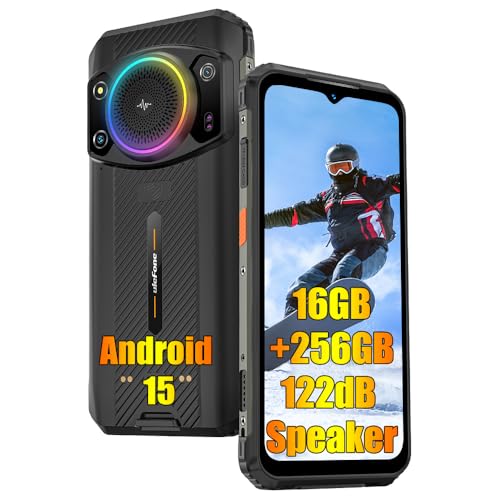
Ulefone Armor 21 (16GB + 256GB) review: 196 specs compared

Avg. price:~£210RAM capacity:16 GBInternal storage:256 GBScreen size:6.58 inchesMain camera megapixels:64 MP & 24 MP

Ulefone Armor 21 (16GB + 256GB) Review: Compare 196 technical specifications and 21 expert and video reviews to see how this product ranks in the Smartphones category and whether it is worth buying.

Ulefone Armor 21 (16GB + 256GB)
7.5/10

Overall score

Score
7.5/ 10
✕
What it is
Our main score for this model, 1–10. It combines specs, best-of lists, expert reviews and owners.
How we count it
Parts: Technical score 35%, List score 30%, Reviews score 25%, Sentiment score 10%
Marks: Each part gets a mark out of 10. For reviews, lists and owners, a typical model in this category gets about 8 and the best one gets 10.
No data yet: A part with no data shows "?". It counts as the mark of a weaker model in this category (4 in 5 models with data score higher). This way, models with reviews, lists and owners usually come out ahead.
Score distribution
â–¼
<55-66-77-88-99-10
Score components

35%

6.6

Technical score

30%

?

List scoreNot enough data yet, so we use 7.5, the mark of a weaker model in this category

25%

7.9

Reviews score

10%

9.5

Sentiment score

â–²Better than 64% of smartphones
8.1

Value for money

Value for money
8.1/ 10
✕
What it is
An indicator that combines the smartphone's overall rating with its cost.
When it matters
When you are looking for a smartphone with a good balance between quality and price.
Score distribution
â–¼
<55-66-77-88-99-10
Score components

70%

7.5

Overall score

30%

9.4

Price

â–²Better than 87%
6.6

Technical score

Technical score
6.6/ 10
✕
What it is
How good the specs are compared with the other models in this category, 1–10.
How we count it
Areas: We rate the specs in each area against the other models in this category.
Weighting: The areas that matter most to buyers count more. The shares are shown under Score components.
Share: The technical score is 35% of the overall score.
Score distribution
â–¼
<55-66-77-88-99-10
Score components

25%

6.7

Performance

18%

6.3

Camera

15%

6.0

Display

15%

7.0

Battery

10%

7.7

Software

10%

7.0

Connectivity

4%

4.0

Audio

3%

5.4

Design

â–¼Worse than 55%
7.9

Reviews score

Reviews score
7.9/ 10
✕
What it is
Average grade from independent test sites, magazines and video reviewers, 1–10.
How we count it
Grades: Each review's own score is converted to 1–10; without one, we grade the review ourselves. Big test sites count more, short reviews half as much as full tests. A video review counts half.
Score: The average grade is 80% of the review mark; the number of reviews is the other 20% (1 review = 5, the typical number in this category = 8, the most-reviewed model = 10).
Enough data: With few reviews, the average grade is pulled toward the typical grade of this category. No reviews yet: 7.5 for now.
Share: Reviews count 25% of the overall score.
Score distribution
â–¼
<55-66-77-88-99-10

80%

7.9

Average grade

20%

8.0

Popularity

Grades by review (21)
5 reviews: 3 with a printed score, 2 estimated from the review. 16 video reviews, each counting half as much as a written test. Reviews count 25% of the overall score.
User ratings collected online are not part of this score.
â–¼Worse than 51%
?

List score

List score
7.5/ 10
✕
What it is
How often independent test sites, magazines and video reviewers put this model in their best-of lists for this category.
How we count it
Points: The model in the most lists of this category gets 10; the others get 8 to 10 in proportion. In no list yet: 7.5. Lists count 30% of the overall score.
Enough data: Every list counts, even a single one. With fewer than 5 best-of lists in the category, this part is left out.
Lists with this model (0)
Not in any best-of list yet, so this part counts as 7.5. Models in a list get 8 to 10.
Not in any best-of list yet

What reviewers say about the Ulefone Armor 21 (16GB + 256GB)

Based on 5 · 16

Reviewers praise the loud speaker, strong battery and toughness, but agree it is heavy and bulky, with mixed views on photos.
Praised
Mixed views
Criticised
Pick a topic to see who said what

What owners say about the Ulefone Armor 21 (16GB + 256GB)

Based on 153 owners sharing their experience in online comments

63%positive12%mixed25%negative

Owners praise rugged durability, loud speakers, long battery, and cameras; heavy bulk and recurring hardware or software faults draw criticism.

What owners dislike

  • Owners say the phone is very heavy and bulky, about 350g, which makes it hard to hold for long.9
  • Owners say the speaker distorts or crackles after several months, and replacement parts are hard to find.9
  • Owners say the cameras are average, with slow focus, poor low-light flash, and video recording problems.9
  • Owners report software bugs such as screen freezes, Bluetooth and WiFi trouble, and slow Android updates.9
  • Owners say the screen cracks from a pocket-height drop, even though the phone is rugged elsewhere.7
  • Owners say charging is slow at 33W, and the charger is not included in some boxes.6
  • Owners say the side power button sits where the hand grips, and the side fingerprint sensor unlocks accidentally in pockets.6
  • Owners say demanding games lag or stutter, though lighter games play fine.5
  • Owners say water exposure caused failures, including a dark spot on the screen and a rebooting phone after dunking.5
  • Owners say WiFi is weak, and some report it failing to connect to certain networks.3

Points mentioned by at least 3 owners, most mentioned first.

Loading...
Loading category ranking...

Technical Specifications of smartphone Ulefone Armor 21 (16GB + 256GB)

Technical score
Technical score
6.6/ 10
✕
What it is
How good the specs are compared with the other models in this category, 1–10.
How we count it
Areas: We rate the specs in each area against the other models in this category.
Weighting: The areas that matter most to buyers count more. The shares are shown under Score components.
Share: The technical score is 35% of the overall score.
Score distribution
â–¼
<55-66-77-88-99-10
Score components:

25%

6.7

Performance

18%

6.3

Camera

15%

6.0

Display

15%

7.0

Battery

10%

7.7

Software

10%

7.0

Connectivity

4%

4.0

Audio

3%

5.4

Design

6.6
Reviews score
7.9
List score
?
Value for money
Value for money
8.1/ 10
✕
What it is
An indicator that combines the smartphone's overall rating with its cost.
When it matters
When you are looking for a smartphone with a good balance between quality and price.
Score distribution
â–¼
<55-66-77-88-99-10
Score components:

70%

7.5

Overall score

30%

9.4

Price

8.1
Processor model
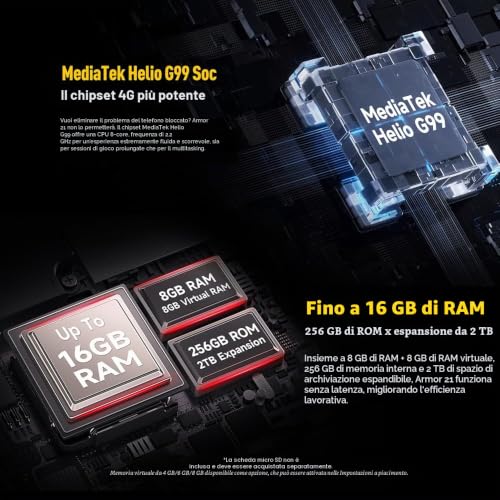
MediaTek Helio G99
This smartphone uses the MediaTek Helio G99 processor model which is slower than processors in 77.1% of smartphones and equal to processors in 3.8% of smartphones.
Storage type
UFS 2.2
This smartphone uses UFS 2.2 storage, which is slower than the storage in 54.9% of smartphones and the same as in 23.1% of smartphones.
RAM capacity
16 GB
This smartphone has a RAM capacity of 16 GB which is larger than the RAM capacity of 83.8% of smartphones and equal to that of 11.8% of smartphones.
Internal storage
256 GB
This smartphone has an internal storage capacity of 256 GB which is larger than the storage of 38.9% of smartphones and equal to that of 38.4% of smartphones.
CPU boost clock speed
2.2 GHz
The CPU boost clock speed of this smartphone is 2.2 GHz which is lower than the boost speed of 68% of smartphones and equal to that of 14.1% of smartphones.
Show more
What reviewers say
Operating system
Android
This smartphone runs Android, which is more mainstream than the system in 4.8% of smartphones and the same as in 95.2% of smartphones.
Android 13
Android version
Android 13
This smartphone runs Android version Android 13 which is older than that found in 50.6% of smartphones and equal to that in 16.5% of smartphones.
Direct OS updates
no
This smartphone does not support direct OS updates. 20.1% of smartphones offer this.
Promised software updates
?
Open-source OS
yes
This smartphone runs an open-source operating system. 5.2% of smartphones offer this.
Show more
What reviewers say
Multi-lens main camera
yes
This smartphone includes a multi-lens main camera system. 93.7% of smartphones include multi-lens setups.
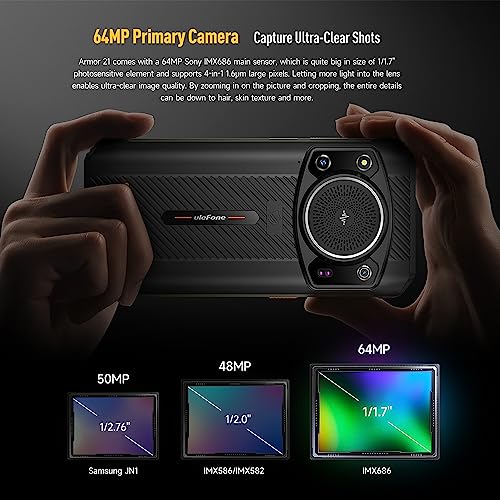
Main camera megapixels
64 MP & 24 MP
This smartphone has a main camera resolution of 64 MP & 24 MP which is higher than that of 85.3% of smartphones.
Main camera aperture
f/1.8 & f/1.9
This smartphone has a main camera aperture of f/1.8 & f/1.9 which is narrower than that of 52% of smartphones and equal to that of 0.1% of smartphones.
Main camera sensor area
41 mm²
This smartphone has a main camera sensor area of 41 mm² which is larger than the main camera sensor area of 54.1% of smartphones and equal to that of 5.9% of smartphones.
Main camera pixel size
0.8 µm
This smartphone has a main camera pixel size of 0.8 µm which is larger than in 35.5% of smartphones and equal to the size in 21.9% of smartphones.
1.6 binned
Show more
What reviewers say
Number of SIM slots
2
This smartphone has 2 SIM slots, which is more than in 3.7% of smartphones and equal to the number in 96.2% of smartphones.
Cellular module
yes
This smartphone includes a cellular module. 100% of smartphones include cellular modules.
eSIM support
no
This smartphone does not have eSIM support. 19.9% of smartphones offer this.
5G connectivity
no
This smartphone does not have 5G connectivity. 66.7% of smartphones offer this.
LTE support
yes
This smartphone supports LTE. 99.7% of smartphones include LTE connectivity.
Show more
What reviewers say
Screen size
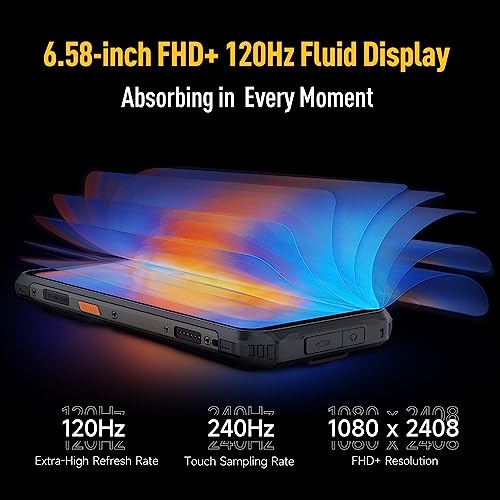
6.58 inches
This smartphone has a screen size of 6.58 inches which is smaller than the screens of 68.6% of smartphones and equal to those of 2.3% of smartphones.
Screen resolution
1080x 2408 px
This smartphone has a screen resolution of 1080x2408 px which is higher than that of 56.9% of smartphones and equal to that of 4.2% of smartphones.
Pixel density
401 ppi
This smartphone has a pixel density of 401 ppi which is higher than that of 58.7% of smartphones and equal to that of 2.9% of smartphones.
Display type
IPS LCD
This smartphone uses a IPS LCD display type. 0% of smartphones use this display technology.
Refresh rate
120 Hz
This smartphone supports a refresh rate of 120 Hz which is higher than in 34.4% of smartphones and equal to that in 55.6% of smartphones.
Show more
What reviewers say
Battery capacity
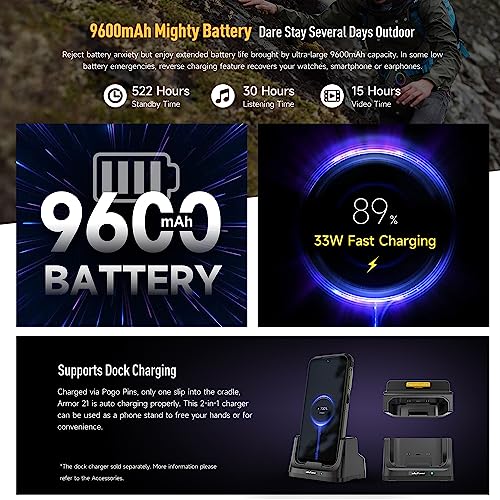
9,600 mAh
This smartphone has a battery capacity of 9,600 mAh which is larger than the batteries in 94.1% of smartphones and equal to those in 0.4% of smartphones.
Charging speed
33 W
This smartphone supports charging speeds of 33 W which is faster than in 38.9% of smartphones and equal to speeds in 12% of smartphones.
Fast charging
yes
This smartphone supports fast charging. 93.2% of smartphones support fast charging.
GSMArena full wired charge time
?
Wireless charging
no
This smartphone does not support wireless charging. 25.1% of smartphones support wireless charging.
Show more
What reviewers say
Stereo speakers
no
This smartphone does not have stereo speakers. 64.3% of smartphones offer this.
3.5 mm headphone jack
yes
This smartphone includes a 3.5 mm headphone jack. 45.1% of smartphones offer this port.
Number of microphones
2
This smartphone includes 2 microphones, which is more than in 10.3% of smartphones and equal to the number in 66.9% of smartphones.
FM radio
yes
This smartphone includes an FM radio. 34.3% of smartphones offer FM radio functionality.
aptX Lossless
no
This smartphone does not support aptX Lossless Bluetooth audio. 12.5% of smartphones offer this.
Show more
What reviewers say
Height
176 mm
This smartphone has a height of 176 mm which is taller than 95.8% of smartphones and equal to that of 0.1% of smartphones.
Width
81.6 mm
This smartphone has a width of 81.6 mm which is wider than 91.9% of smartphones and equal to that of 0.1% of smartphones.
Thickness
18.1 mm
This smartphone has a thickness of 18.1 mm which is thicker than 96.1% of smartphones.
Weight
400 g
This smartphone weighs 400 g which is heavier than 97.2% of smartphones and equal to the weight of 0.1% of smartphones.
Device volume
260 cm³
This smartphone has a device volume of 260 cm³ which is larger than 95.7% of smartphones and equal to that of 0.2% of smartphones.
Show more
What reviewers say

Ulefone Armor 21 (16GB + 256GB) vs the average smartphone

246810TotalPerformanceSoftwareCameraConnectivityDisplayBatteryAudioDesign
  • 8 GB more RAM
    This smartphone has more RAM capacity than the average smartphone (16 GB vs 8 GB). The average smartphone has 8 GB of RAM.
    16 GB vs 8 GB
  • 92% larger battery capacity
    This smartphone has a larger battery capacity than the average smartphone (9,600 mAh vs 5,000 mAh). The average smartphone battery is 5,000 mAh.
    9,600 mAh vs 5,000 mAh
  • 69.1% higher PCMark Work 3.0 battery benchmark
    This smartphone has a higher PCMark Work 3.0 battery benchmark score than the average smartphone (1,329 min vs 786 min). The average score is 786 min.
    1,329 min vs 786 min
  • Higher-resolution main camera
    This smartphone has a higher main camera resolution than the average smartphone (64 MP & 24 MP vs 50 MP & 8 MP). The average smartphone main camera has 50 MP & 8 MP megapixels.
    64 MP & 24 MP vs 50 MP & 8 MP
  • Supports reverse wireless charging
    This smartphone supports reverse wireless charging, the average smartphone does not. 23.4% of smartphones offer reverse wireless charging.
  • 55.1% faster memory speed
    This smartphone supports faster memory speed than the average smartphone (4,266 MHz vs 2,750 MHz). The average smartphone supports 2,750 MHz memory speed.
    4,266 MHz vs 2,750 MHz
  • 16.7% lower TDP
    This smartphone has a lower TDP than the average smartphone (5 W vs 6 W). The average TDP for smartphones is 6 W.
    5 W vs 6 W
  • 1.5 m deeper water resistance
    This smartphone has a deeper water resistance rating than the average smartphone (1.5 m vs 0 m). The average depth rating is 0 m.
    1.5 m vs 0 m
  • 21.8% higher sentiment score
    9.5 vs 7.8
  • 8.2% higher review score
    Reviews score
    7.9/ 10
    ✕
    What it is
    Average grade from independent test sites, magazines and video reviewers, 1–10.
    How we count it
    Grades: Each review's own score is converted to 1–10; without one, we grade the review ourselves. Big test sites count more, short reviews half as much as full tests. A video review counts half.
    Score: The average grade is 80% of the review mark; the number of reviews is the other 20% (1 review = 5, the typical number in this category = 8, the most-reviewed model = 10).
    Enough data: With few reviews, the average grade is pulled toward the typical grade of this category. No reviews yet: 7.5 for now.
    Share: Reviews count 25% of the overall score.
    Score distribution
    â–¼
    <55-66-77-88-99-10

    80%

    7.9

    Average grade

    20%

    8.0

    Popularity

    Grades by review (21)
    5 reviews: 3 with a printed score, 2 estimated from the review. 16 video reviews, each counting half as much as a written test. Reviews count 25% of the overall score.
    User ratings collected online are not part of this score.
    7.9 vs 7.3
  • 5.2% better value for money
    Ulefone Armor 21 (16GB + 256GB) has better value for money than the average smartphone (8.06 vs 7.7).
    8.06 vs 7.66
  • 8 GB more RAM
    This smartphone has more RAM capacity than the average smartphone (16 GB vs 8 GB). The average smartphone has 8 GB of RAM.
    16 GB vs 8 GB
  • 55.1% faster memory speed
    This smartphone supports faster memory speed than the average smartphone (4,266 MHz vs 2,750 MHz). The average smartphone supports 2,750 MHz memory speed.
    4,266 MHz vs 2,750 MHz
  • 16.7% lower TDP
    This smartphone has a lower TDP than the average smartphone (5 W vs 6 W). The average TDP for smartphones is 6 W.
    5 W vs 6 W
  • Higher-resolution main camera
    This smartphone has a higher main camera resolution than the average smartphone (64 MP & 24 MP vs 50 MP & 8 MP). The average smartphone main camera has 50 MP & 8 MP megapixels.
    64 MP & 24 MP vs 50 MP & 8 MP
  • 28.1% larger main camera sensor area
    This smartphone has a larger main camera sensor area than the average smartphone (41 mm² vs 32 mm²). The average main camera sensor area is 32 mm².
    41 mm² vs 32 mm²
  • Has a barometer
    This smartphone features a barometer, the average smartphone does not. 19.7% of smartphones include a barometer.
  • 1 more external displays supported
    This smartphone supports more external displays than the average smartphone (2 vs 1). The average smartphone supports 1 external displays.
    2 vs 1
  • Higher screen resolution
    This smartphone has a higher screen resolution than the average smartphone (1080x2408 px vs 1080x2400 px). The average smartphone resolution is 1080x2400 px.
    1080x2408 px vs 1080x2400 px
  • 1.5% higher pixel density
    This smartphone has a higher pixel density than the average smartphone (401 ppi vs 395 ppi). The average smartphone has a pixel density of 395 ppi.
    401 ppi vs 395 ppi
  • 92% larger battery capacity
    This smartphone has a larger battery capacity than the average smartphone (9,600 mAh vs 5,000 mAh). The average smartphone battery is 5,000 mAh.
    9,600 mAh vs 5,000 mAh
  • 69.1% higher PCMark Work 3.0 battery benchmark
    This smartphone has a higher PCMark Work 3.0 battery benchmark score than the average smartphone (1,329 min vs 786 min). The average score is 786 min.
    1,329 min vs 786 min
  • Supports reverse wireless charging
    This smartphone supports reverse wireless charging, the average smartphone does not. 23.4% of smartphones offer reverse wireless charging.
  • Has a 3.5 mm headphone jack
    This smartphone features a 3.5 mm headphone jack, the average smartphone does not. 45.1% of smartphones include a standard headphone jack.
  • Has FM radio
    This smartphone features an FM radio, the average smartphone does not. 34.3% of smartphones include an FM tuner.
  • 1.5 m deeper water resistance
    This smartphone has a deeper water resistance rating than the average smartphone (1.5 m vs 0 m). The average depth rating is 0 m.
    1.5 m vs 0 m
  • Has a rugged design
    This smartphone features a rugged design, the average smartphone does not. 7.9% of smartphones are built for durability.
  • Better IP rating
    This smartphone has a better IP rating than the average smartphone (IP68 vs IP67). The average IP rating is IP67.
    IP68 vs IP67
  • Worse processor
    This smartphone uses a worse processor than the average smartphone (MediaTek Helio G99 vs Qualcomm Snapdragon 7 Gen 3).
    MediaTek Helio G99 vs Qualcomm Snapdragon 7 Gen 3
  • Inferior display type
    This smartphone has an inferior display type compared to the average smartphone (IPS LCD vs OLED/AMOLED). 0.00% of smartphones use the superior display type.
    IPS LCD vs OLED/AMOLED
  • No 5G connectivity
    This smartphone does not support 5G connectivity, the average smartphone does. 66.6% of smartphones are 5G compatible.
  • No stereo speakers
    This smartphone does not have stereo speakers, the average smartphone does. 64.3% of smartphones feature stereo speakers.
  • Slower storage type
    This smartphone has slower storage than the average smartphone (UFS 2.2 vs UFS 3.1).
    UFS 2.2 vs UFS 3.1
  • Lacks focus mode
    This smartphone does not have a focus mode, the average smartphone does. 60.8% of smartphones include a dedicated focus mode.
  • Narrower main camera aperture
    This smartphone has a narrower main camera aperture than the average smartphone (f/1.8 & f/1.9 vs f/1.8 & f/2.2 & f/2.4 & f/2.4). The average smartphone aperture is f/1.8 & f/2.2 & f/2.4 & f/2.4.
    f/1.8 & f/1.9 vs f/1.8 & f/2.2 & f/2.4 & f/2.4
  • 2.04x heavier
    This smartphone is heavier than the average smartphone (400 g vs 196.2 g). The average smartphone weighs 196.2 g.
    400 g vs 196.2 g
  • Worse processor
    This smartphone uses a worse processor than the average smartphone (MediaTek Helio G99 vs Qualcomm Snapdragon 7 Gen 3).
    MediaTek Helio G99 vs Qualcomm Snapdragon 7 Gen 3
  • Slower storage type
    This smartphone has slower storage than the average smartphone (UFS 2.2 vs UFS 3.1).
    UFS 2.2 vs UFS 3.1
  • 24.1% lower Geekbench 6 single-core benchmark score
    This smartphone performs worse in Geekbench 6 single-core than the average smartphone (715 vs 942). The average smartphone scores 942 in the Geekbench 6 single-core test.
    715 vs 942
  • 77.6% lower 3DMark Steel Nomad benchmark
    This smartphone performs worse in 3DMark Steel Nomad than the average smartphone (136 vs 608). The average smartphone scores 608.
    136 vs 608
  • 8.3% lower CPU boost clock speed
    This smartphone has a lower CPU boost clock speed than the average smartphone (2.2 GHz vs 2.4 GHz). The average smartphone has a boost clock speed of 2.4 GHz.
    2.2 GHz vs 2.4 GHz
  • 50% less L2 cache
    This smartphone has a smaller L2 cache than the average smartphone (512 KB vs 1,024 KB). The average smartphone has an L2 cache of 1,024 KB.
    512 KB vs 1,024 KB
  • 14.3% lower maximum RAM capacity
    This smartphone supports less maximum RAM than the average smartphone (12 GB vs 14 GB). The average smartphone supports 14 GB of RAM.
    12 GB vs 14 GB
  • 22.5% lower Geekbench 6 multi-core benchmark score
    This smartphone performs worse in Geekbench 6 multi-core than the average smartphone (1962 vs 2,533). The average smartphone scores 2,533 in the Geekbench 6 multi-core test.
    average for the MediaTek Helio G99 SoC
    1,962 vs 2,533
  • 33.2% lower memory bandwidth
    This smartphone has lower memory bandwidth than the average smartphone (17.1 GB/s vs 25.6 GB/s). The average smartphone has a bandwidth of 25.6 GB/s.
    17.1 GB/s vs 25.6 GB/s
  • 1 year/s older release date
    This smartphone is an older model than the average smartphone (2023 vs 2024). 1.00% of smartphones were released more recently.
    May 2023
    2023 vs 2024
  • Lacks focus mode
    This smartphone does not have a focus mode, the average smartphone does. 60.8% of smartphones include a dedicated focus mode.
  • No Wi-Fi password sharing
    This smartphone does not support Wi-Fi password sharing, the average smartphone does. 58.3% of smartphones allow easy Wi-Fi sharing.
  • No battery health monitoring
    This smartphone lacks battery health monitoring, the average smartphone includes it. 67.2% of smartphones provide battery health stats.
  • Lacks instant markup
    This smartphone does not support instant markup, the average smartphone does. 52.5% of smartphones include instant markup tools.
  • Does not allow app offloading
    This smartphone does not support app offloading, the average smartphone does. 52.5% of smartphones support app offloading to save space.
  • Older Android version
    This smartphone runs an older Android version than the average smartphone (Android 13 vs Android 14). The average smartphone runs Android version Android 14.
    Android 13 vs Android 14
  • Narrower main camera aperture
    This smartphone has a narrower main camera aperture than the average smartphone (f/1.8 & f/1.9 vs f/1.8 & f/2.2 & f/2.4 & f/2.4). The average smartphone aperture is f/1.8 & f/2.2 & f/2.4 & f/2.4.
    f/1.8 & f/1.9 vs f/1.8 & f/2.2 & f/2.4 & f/2.4
  • No 5G connectivity
    This smartphone does not support 5G connectivity, the average smartphone does. 66.6% of smartphones are 5G compatible.
  • Inferior display type
    This smartphone has an inferior display type compared to the average smartphone (IPS LCD vs OLED/AMOLED). 0.00% of smartphones use the superior display type.
    IPS LCD vs OLED/AMOLED
  • Worse display glass type
    This smartphone uses a worse display glass type than the average smartphone (Corning Gorilla Glass vs Corning Gorilla Glass 5). 0.00% of smartphones use the better glass type.
    Corning Gorilla Glass vs Corning Gorilla Glass 5
  • 0.09 inches inch smaller screen size
    This smartphone has a smaller screen size than the average smartphone (6.6 inches vs 6.67 inches). The average smartphone has a screen size of 6.67 inches.
    6.58 inches vs 6.67 inches
  • 50% slower wireless charging speed
    This smartphone has a slower wireless charging speed than the average smartphone (10 W vs 20 W). The average smartphone wireless charging speed is 20 W.
    10 W vs 20 W
  • No stereo speakers
    This smartphone does not have stereo speakers, the average smartphone does. 64.3% of smartphones feature stereo speakers.
  • No aptX HD
    This smartphone does not support aptX HD, the average smartphone does. 50.2% of smartphones support aptX HD.
  • 2.04x heavier
    This smartphone is heavier than the average smartphone (400 g vs 196.2 g). The average smartphone weighs 196.2 g.
    400 g vs 196.2 g
  • 9.8 mm thicker
    This smartphone is thicker than the average smartphone (18.1 mm vs 8.3 mm). The average smartphone has a thickness of 8.3 mm.
    18.1 mm vs 8.3 mm
  • 2.55x larger volume
    This smartphone has a larger volume than the average smartphone (260 cm³ vs 102 cm³). The average smartphone volume is 102 cm³.
    260 cm³ vs 102 cm³
  • 5.6 mm wider
    This smartphone is wider than the average smartphone (81.6 mm vs 76 mm). The average smartphone has a width of 76 mm.
    81.6 mm vs 76 mm
  • 12.4 mm taller
    This smartphone is taller than the average smartphone (176 mm vs 163.6 mm). The average smartphone has a height of 163.6 mm.
    176 mm vs 163.6 mm

Video reviews

Hands-on testing, unboxing, and real-world video evaluations

6.0
MakeUseOf
≈ estimated
25/08/2023
Hands-on review · battery, camera, speaker and usability tests
Verdict
Ulefone Armor 21 is tough and long-lasting, but it is nothing special and its price may give buyers pause.
9.0
Ringway Manchester
≈ estimated
02/06/2023
Hands-on review · PTT apps and accessory tests
Verdict
Ulefone Armor 21 is very capable and impressive, a good everyday carry phone with PTT support.
9.5
HansTechTalk
≈ estimated
25/05/2023
Hands-on review · long battery test, gaming and camera comparison
Verdict
Ulefone Armor 21 is among the best rugged phones in its class, with a strong display and battery, though not for hardcore gamers.
8.0
ByGLG English
≈ estimated
24/07/2023
Short review · rugged design, speaker and gaming test
Verdict
Ulefone Armor 21 is a great deal for a phone aimed at a specific group, and very tempting for those buyers.
8.0
gizmochina
≈ estimated
25/05/2023
Review · design, camera, speaker and accessories
Verdict
Ulefone Armor 21 is good at most things, with a loud speaker and good photos, but performance is its weak point.
Overview video
Not graded
Brand video
Overview video
Hands-on video, no verdict
Overview video

Expert reviews

In-depth analysis and verdict from leading tech publications

6.0
makeuseof.com
✓ explicit
24/08/2023
Hands-on review · Rugged outdoor phone
Verdict
The Ulefone Armor 21 is tough to break and lasts two days per charge, but its bulk, unstable shape and mediocre speaker sound make it awkward to use.
9.0
gizmochina.com
≈ estimated
25/05/2023
Hands-on review · Rugged phone
Verdict
The Ulefone Armor 21 is a rugged phone with a loud speaker, microscope and endoscope add-ons and a 9600mAh battery, but its processor is only average.
8.8
smartzone.de
✓ explicit
27/07/2023
Hands-on test · Loud outdoor phone
Verdict
The Ulefone Armor 21 is a sturdy outdoor phone with a loud, light-ringed speaker and smooth 120Hz display, but its weight and poor readability in strong sun are drawbacks.
8.0
heise.de
✓ explicit
04/09/2023
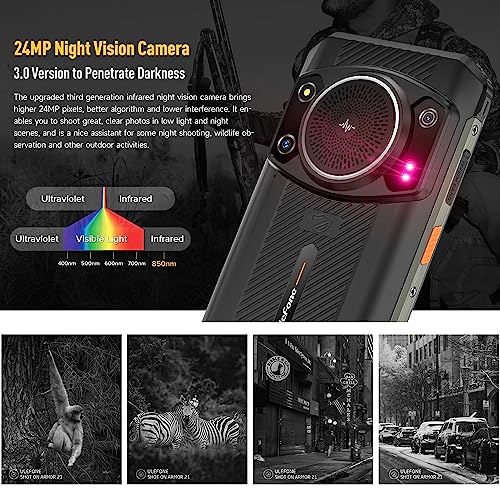
Lab test · Rugged night-vision phone
Verdict
The Ulefone Armor 21 is a sturdy, waterproof phone with infrared night vision and a very long battery, but its screen struggles in bright sun.
8.0
testluchs.de
≈ estimated
18/09/2025
Review · Battery-focused outdoor phone
Verdict
The Ulefone Armor 21 is a rugged, waterproof phone whose 9600mAh battery lasts three to four days, but its heavy body and mid-range daylight camera hold it back.

Third-party reviews

What customers like about Ulefone Armor 21 (16GB + 256GB)

  • Extremely durable and rugged construction with IP68/IP69K and MIL-STD-810H ratings, capable of surviving drops, high pressure, and submersion in water.
  • Exceptional battery life, with a 9600 mAh capacity that can last two to four days with normal to heavy use.
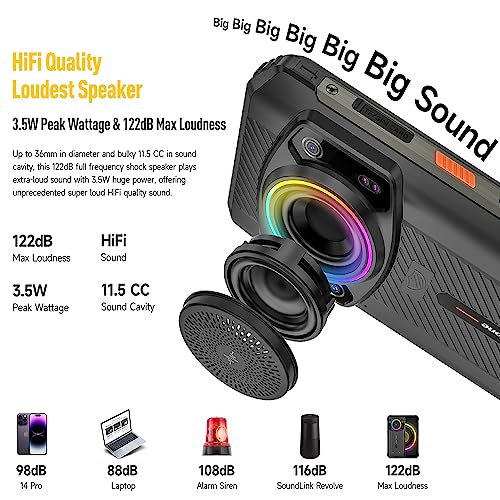
  • Very loud 122dB speaker that can make an external portable speaker redundant for outdoor use.
  • Good performance for a rugged phone, handling most modern apps and games on medium to low settings without issues thanks to the MediaTek Helio G99 chipset.
  • A clean, near-stock Android 13 (or 14 in some variants) experience with minimal changes.
  • Inclusion of a 3.5mm physical audio jack and an IR blaster, which are often missing on modern phones.
  • Decent camera quality in good lighting conditions, including a 64MP main sensor and a functional 24MP night vision camera.
  • A large, smooth 6.58-inch FHD+ 120Hz display that is great for watching videos and browsing.
  • Expandable storage (up to 2TB via microSD) and a custom programmable key for launching apps.
  • Supports 33W fast charging and optional pogo pin dock charging.

What customers don't like about Ulefone Armor 21 (16GB + 256GB)

  • The phone is very heavy and bulky (around 400g), making it uncomfortable for some users, especially those with small hands, and difficult to keep in a standard pocket.
  • The large rear speaker makes the phone unstable, preventing it from lying flat on a surface unless placed screen-side down.
  • Speaker sound quality is average, not truly 'Hi-Fi' as advertised, and can sound peaky or crackle at highest volumes.
  • Camera performance suffers indoors or in low light compared to some non-rugged competitors.
  • The included case is often seen as a disappointment, adding more bulk and having fragile attachments like the carabiner clip that can break easily.
  • Some users report minor software glitches and potential app incompatibilities, with the need for software updates to fix security issues or improve performance.
  • Requires waiting for the speaker to dry after being submerged in water before the volume returns to normal.
  • Does not support 5G connectivity.
  • Does not support wireless inductive charging, though dock charging is an option (dock sold separately).

Verdict

The Ulefone Armor 21 is a highly durable, rugged smartphone certified by IP68/IP69K and MIL-STD-810H standards, making it water, dust, and shock resistant. It features a large 6.58-inch FHD+ 120Hz display and runs on a MediaTek Helio G99 octa-core processor, paired with 16GB of RAM (via virtual expansion) and 256GB of internal storage, expandable up to 2TB via microSD. A main characteristic is its unprecedentedly loud 122dB Hi-Fi speaker with an "Infinite Halo" RGB light ring on the back, ideal for outdoor use. Other pros include a massive 9600mAh battery with 33W fast charging and reverse charging support, a 64MP main camera, a 24MP night vision camera, an IR remote control feature, and a uSmart expansion connector for accessories. Potential cons include its substantial weight and bulkiness, lack of 5G connectivity, potential for the camera software to hold back sensor quality in default mode, and the absence of wireless charging.

Compare Ulefone Armor 21 (16GB + 256GB) with other smartphones

1Product to compare no. 1
VS
2Product to compare no. 2
VS
3Product to compare no. 3 (optional)

Graphic comparison of Ulefone Armor 21 (16GB + 256GB) and other smartphones

No results found