Scored using Smartphones Methodology v3.0
Smartphones Methodology v3.0
Mathematical & Unbiased Scoring
Products in this category are scored under Frontum Smartphones Methodology v3.0: the technical score from the specifications is the base, and independent expert and video reviews (up to ±0.5 points), owner opinions (up to ±0.3) and best-of lists (up to +0.3) move it up or down.
Explore Smartphones Methodology v3.0

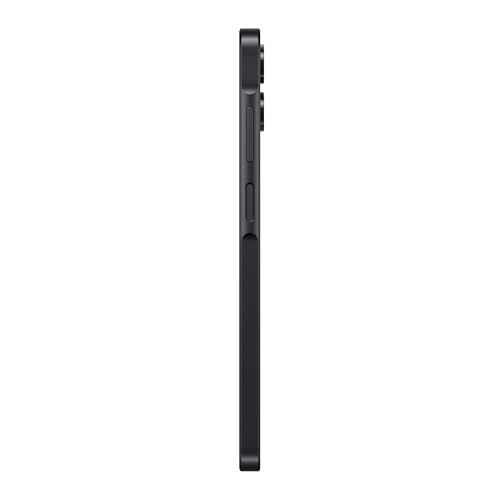
Samsung Galaxy A06 (4GB + 64GB) review: 196 specs compared

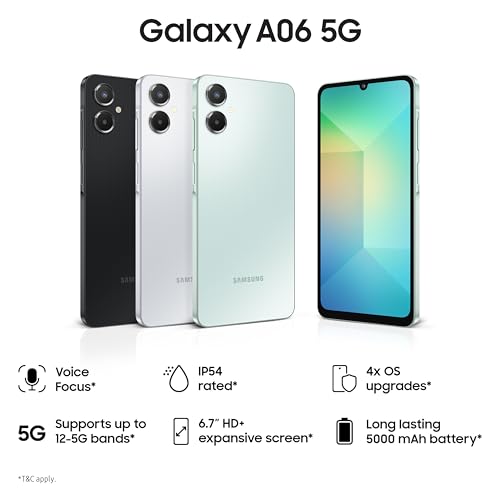
Avg. price:~£80RAM capacity:4 GBInternal storage:64 GBScreen size:6.7 inchesMain camera megapixels:50 MP & 2 MP

Samsung Galaxy A06 (4GB + 64GB) Review: Compare 196 technical specifications and 35 expert and video reviews to see how this product ranks in the Smartphones category and whether it is worth buying.
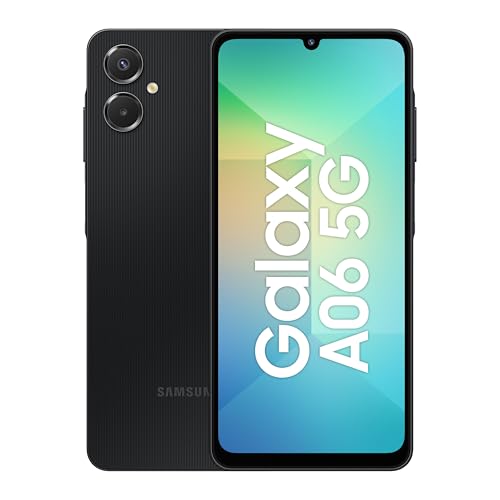
Samsung Galaxy A06 (4GB + 64GB)
5.8/10

Overall score

Score
5.8/ 10
✕
What it is
Our main score for this model, 1–10. It combines specs, best-of lists, expert reviews and owners.
How we count it
Parts: Technical score 35%, List score 30%, Reviews score 25%, Sentiment score 10%
Marks: Each part gets a mark out of 10. For reviews, lists and owners, a typical model in this category gets about 8 and the best one gets 10.
No data yet: A part with no data shows "?". It counts as the mark of a weaker model in this category (4 in 5 models with data score higher). This way, models with reviews, lists and owners usually come out ahead.
Score distribution
â–¼
<55-66-77-88-99-10
Score components

35%

5.1

Technical score

30%

?

List scoreNot enough data yet, so we use 7.5, the mark of a weaker model in this category

25%

5.1

Reviews score

10%

5.1

Sentiment score

â–¼Worse than 98% of smartphones
7.1

Value for money

Value for money
7.1/ 10
✕
What it is
An indicator that combines the smartphone's overall rating with its cost.
When it matters
When you are looking for a smartphone with a good balance between quality and price.
Score distribution
â–¼
<55-66-77-88-99-10
Score components

70%

5.8

Overall score

30%

10

Price

â–¼Worse than 92%
5.1

Technical score

Technical score
5.1/ 10
✕
What it is
How good the specs are compared with the other models in this category, 1–10.
How we count it
Areas: We rate the specs in each area against the other models in this category.
Weighting: The areas that matter most to buyers count more. The shares are shown under Score components.
Share: The technical score is 35% of the overall score.
Score distribution
â–¼
<55-66-77-88-99-10
Score components

25%

4.3

Performance

18%

5.1

Camera

15%

3.6

Display

15%

5.8

Battery

10%

8.3

Software

10%

5.9

Connectivity

4%

2.2

Audio

3%

7.0

Design

â–¼Worse than 97%
5.1

Reviews score

Reviews score
5.1/ 10
✕
What it is
Average grade from independent test sites, magazines and video reviewers, 1–10.
How we count it
Grades: Each review's own score is converted to 1–10; without one, we grade the review ourselves. Big test sites count more, short reviews half as much as full tests. A video review counts half.
Score: The average grade is 80% of the review mark; the number of reviews is the other 20% (1 review = 5, the typical number in this category = 8, the most-reviewed model = 10).
Enough data: With few reviews, the average grade is pulled toward the typical grade of this category. No reviews yet: 7.5 for now.
Share: Reviews count 25% of the overall score.
Score distribution
â–¼
<55-66-77-88-99-10

5.1

Mark 7.1 is below the typical mark 7.9 of this category, so it cannot lift the score above the technical score

80%

6.8

Average grade

20%

8.5

Popularity

Grades by review (35)
3 reviews: 2 with a printed score, 1 estimated from the review. 32 video reviews, each counting half as much as a written test. Reviews count 25% of the overall score.
User ratings collected online are not part of this score.
â–¼Worse than 98%
?

List score

List score
7.5/ 10
✕
What it is
How often independent test sites, magazines and video reviewers put this model in their best-of lists for this category.
How we count it
Points: The model in the most lists of this category gets 10; the others get 8 to 10 in proportion. In no list yet: 7.5. Lists count 30% of the overall score.
Enough data: Every list counts, even a single one. With fewer than 5 best-of lists in the category, this part is left out.
Lists with this model (0)
Not in any best-of list yet, so this part counts as 7.5. Models in a list get 8 to 10.
Not in any best-of list yet

What reviewers say about the Samsung Galaxy A06 (4GB + 64GB)

Based on 3 · 35

Battery life and software earn strong praise, but the display, performance and camera are widely criticized.
Praised
Mixed views
Criticised
Pick a topic to see who said what

What owners say about the Samsung Galaxy A06 (4GB + 64GB)

Based on 246 owners sharing their experience in online comments

45%positive8%mixed47%negative

Owners value the battery, smooth everyday use and affordability, but frequent lag, freezing, slow charging and weak cameras frustrate many.

What owners dislike

  • Owners report random freezes, touch that responds slowly, and the screen locking up until it is switched off and on again.54
  • Owners say photos and video look poor, the camera app is slow to open and take shots, and some get lines in pictures.17
  • Owners say calls sound muffled or distorted for the other person, and the single speaker is tinny and harsh at higher volume.16
  • Owners say a 25W charger takes one and a half to three hours for a full charge, and some report the phone refusing to charge.14
  • Owners say plugging in wired earphones makes the phone hang and the touch screen stick or act up, and it recovers once unplugged.10
  • Owners say RAM fills quickly, so only two or three apps like social and streaming can stay open before the phone slows.7
  • Owners say demanding games like Mobile Legends, Call of Duty and Truckers of Europe 3 stutter, lag or heat up the phone.7
  • Owners say fingerprint unlock fails in mobile wallet and bank apps, and some report the sensor failing within months.7
  • Owners say the battery drops quickly even when idle, loses 12 to 14 percent overnight, and in one case swelled after three months.6
  • Owners report weak signal, 4G that drops or stays slow, and mobile data that takes a long time to switch on.5

Points mentioned by at least 3 owners, most mentioned first.

Loading...
Loading category ranking...

Technical Specifications of smartphone Samsung Galaxy A06 (4GB + 64GB)

Technical score
Technical score
5.1/ 10
✕
What it is
How good the specs are compared with the other models in this category, 1–10.
How we count it
Areas: We rate the specs in each area against the other models in this category.
Weighting: The areas that matter most to buyers count more. The shares are shown under Score components.
Share: The technical score is 35% of the overall score.
Score distribution
â–¼
<55-66-77-88-99-10
Score components:

25%

4.3

Performance

18%

5.1

Camera

15%

3.6

Display

15%

5.8

Battery

10%

8.3

Software

10%

5.9

Connectivity

4%

2.2

Audio

3%

7.0

Design

5.1
Reviews score
5.1
List score
?
Value for money
Value for money
7.1/ 10
✕
What it is
An indicator that combines the smartphone's overall rating with its cost.
When it matters
When you are looking for a smartphone with a good balance between quality and price.
Score distribution
â–¼
<55-66-77-88-99-10
Score components:

70%

5.8

Overall score

30%

10

Price

7.1
Processor model
MediaTek Helio G85
This smartphone uses the MediaTek Helio G85 processor model which is slower than processors in 89.8% of smartphones and equal to processors in 1.5% of smartphones.
Storage type
eMMC
This smartphone uses eMMC storage, which is slower than the storage in 82.6% of smartphones and the same as in 17.4% of smartphones.
RAM capacity
4 GB
This smartphone has a RAM capacity of 4 GB which is smaller than the RAM capacity of 82.3% of smartphones and equal to that of 14.2% of smartphones.
Internal storage
64 GB
This smartphone has an internal storage capacity of 64 GB which is smaller than the storage of 89.5% of smartphones and equal to that of 7.9% of smartphones.
CPU boost clock speed
2 GHz
The CPU boost clock speed of this smartphone is 2 GHz which is lower than the boost speed of 83.9% of smartphones and equal to that of 8.3% of smartphones.
Show more
What reviewers say
Operating system
Android
This smartphone runs Android, which is more mainstream than the system in 4.8% of smartphones and the same as in 95.2% of smartphones.
Android 14
Android version
Android 14
This smartphone runs Android version Android 14 which is newer than that found in 49.5% of smartphones and equal to that in 21% of smartphones.
Direct OS updates
no
This smartphone does not support direct OS updates. 20.1% of smartphones offer this.
Promised software updates
?
Open-source OS
yes
This smartphone runs an open-source operating system. 5.2% of smartphones offer this.
Show more
What reviewers say
Multi-lens main camera
yes
This smartphone includes a multi-lens main camera system. 93.7% of smartphones include multi-lens setups.
Main camera megapixels
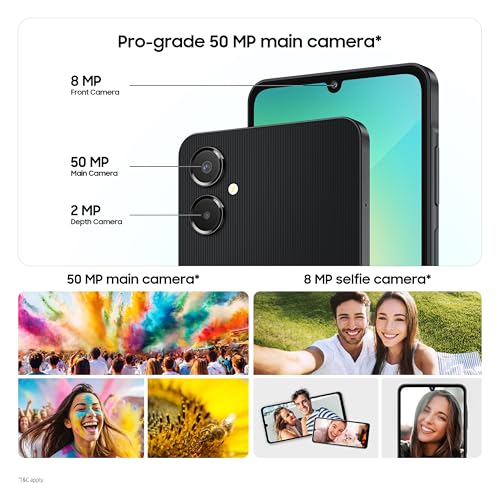
50 MP & 2 MP
This smartphone has a main camera resolution of 50 MP & 2 MP which is lower than that of 57.6% of smartphones and equal to that of 12.9% of smartphones.
Main camera aperture
f/1.8 & f/2.4
This smartphone has a main camera aperture of f/1.8 & f/2.4 which is narrower than that of 58% of smartphones and equal to that of 12.5% of smartphones.
Main camera sensor area
20.5 mm²
This smartphone has a main camera sensor area of 20.5 mm² which is smaller than the main camera sensor area of 76.2% of smartphones and equal to that of 12.9% of smartphones.
Main camera pixel size
0.64 µm
This smartphone has a main camera pixel size of 0.64 µm which is smaller than in 75.1% of smartphones and equal to the size in 18.7% of smartphones.
1.28 binned
Show more
What reviewers say
Number of SIM slots
2
This smartphone has 2 SIM slots, which is more than in 3.7% of smartphones and equal to the number in 96.2% of smartphones.
Cellular module
yes
This smartphone includes a cellular module. 100% of smartphones include cellular modules.
eSIM support
?
5G connectivity
no
This smartphone does not have 5G connectivity. 66.7% of smartphones offer this.
LTE support
yes
This smartphone supports LTE. 99.7% of smartphones include LTE connectivity.
Show more
What reviewers say
Screen size
6.7 inches
This smartphone has a screen size of 6.7 inches which is larger than the screens of 51.7% of smartphones and equal to those of 10.1% of smartphones.
Screen resolution
720x 1600 px
This smartphone has a screen resolution of 720x1600 px which is lower than that of 87.8% of smartphones and equal to that of 8.7% of smartphones.
Pixel density
262 ppi
This smartphone has a pixel density of 262 ppi which is lower than that of 91% of smartphones and equal to that of 1.4% of smartphones.
Display type
IPS LCD
This smartphone uses a IPS LCD display type. 0% of smartphones use this display technology.
Refresh rate
60 Hz
This smartphone supports a refresh rate of 60 Hz which is lower than in 84.3% of smartphones and equal to that in 15.7% of smartphones.
Show more
What reviewers say
Battery capacity
5,000 mAh
This smartphone has a battery capacity of 5,000 mAh which is larger than the batteries in 28.2% of smartphones and equal to those in 29% of smartphones.
Charging speed
25 W
This smartphone supports charging speeds of 25 W which is slower than in 66.9% of smartphones and equal to speeds in 5.3% of smartphones.
Fast charging
yes
This smartphone supports fast charging. 93.2% of smartphones support fast charging.
GSMArena full wired charge time
?
Wireless charging
no
This smartphone does not support wireless charging. 25.1% of smartphones support wireless charging.
Show more
What reviewers say
Stereo speakers
no
This smartphone does not have stereo speakers. 64.3% of smartphones offer this.
3.5 mm headphone jack
yes
This smartphone includes a 3.5 mm headphone jack. 45.1% of smartphones offer this port.
Number of microphones
2
This smartphone includes 2 microphones, which is more than in 10.3% of smartphones and equal to the number in 66.9% of smartphones.
FM radio
no
This smartphone does not have an FM radio. 34.3% of smartphones offer this.
aptX Lossless
no
This smartphone does not support aptX Lossless Bluetooth audio. 12.5% of smartphones offer this.
Show more
What reviewers say
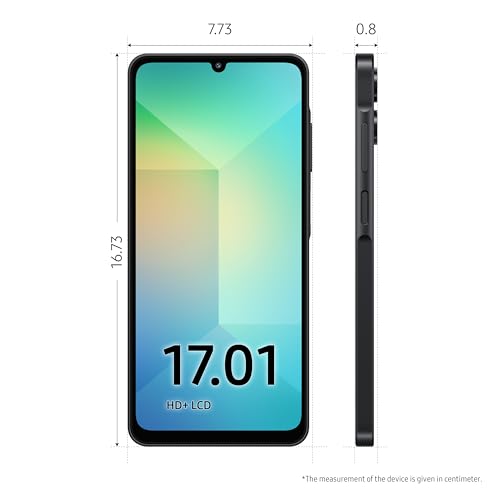
Height
167.3 mm
This smartphone has a height of 167.3 mm which is taller than 80.2% of smartphones and equal to that of 0.8% of smartphones.
Width
77.3 mm
This smartphone has a width of 77.3 mm which is wider than 76.4% of smartphones and equal to that of 0.8% of smartphones.
Thickness
8 mm
This smartphone has a thickness of 8 mm which is thinner than 63.6% of smartphones and equal to that of 6.8% of smartphones.
Weight
189 g
This smartphone weighs 189 g which is lighter than 68% of smartphones and equal to the weight of 1.9% of smartphones.
Device volume
103 cm³
This smartphone has a device volume of 103 cm³ which is larger than 50.7% of smartphones and equal to that of 3.3% of smartphones.
Show more
What reviewers say

Samsung Galaxy A06 (4GB + 64GB) vs the average smartphone

246810TotalPerformanceSoftwareCameraConnectivityDisplayBatteryAudioDesign
  • 16x more L1
    This smartphone has more L1 cache than the average smartphone (512 KB vs 32 KB). The average L1 cache is 32 KB.
    512 KB vs 32 KB
  • 16.7% lower TDP
    This smartphone has a lower TDP than the average smartphone (5 W vs 6 W). The average TDP for smartphones is 6 W.
    5 W vs 6 W
  • Has a 3.5 mm headphone jack
    This smartphone features a 3.5 mm headphone jack, the average smartphone does not. 45.1% of smartphones include a standard headphone jack.
  • 5.3% faster GPU clock
    This smartphone has a higher GPU frequency than the average smartphone (1,000 MHz vs 950 MHz). The average smartphone GPU frequency is 950 MHz.
    1,000 MHz vs 950 MHz
  • Wider front camera aperture
    This smartphone has a wider front camera aperture than the average smartphone (f/2 vs f/2.2). The average aperture is f/2.2.
    f/2.0 vs f/2.2
  • 3.25x cheaper
    Samsung Galaxy A06 (4GB + 64GB) is cheaper than the average smartphone (£80 vs £260).
    £80 vs £260
  • Newer Bluetooth version
    This smartphone supports a newer Bluetooth version than the average smartphone (5.3 vs 5.2). The average version is Bluetooth 5.2.
    5.3 vs 5.2
  • 0.03 inches inch larger screen size
    This smartphone has a larger screen size than the average smartphone (6.7 inches vs 6.67 inches). The average smartphone screen is 6.67 inches.
    6.7 inches vs 6.67 inches
  • 3.25x cheaper
    Samsung Galaxy A06 (4GB + 64GB) is cheaper than the average smartphone (£80 vs £260).
    £80 vs £260
  • 16x more L1
    This smartphone has more L1 cache than the average smartphone (512 KB vs 32 KB). The average L1 cache is 32 KB.
    512 KB vs 32 KB
  • 16.7% lower TDP
    This smartphone has a lower TDP than the average smartphone (5 W vs 6 W). The average TDP for smartphones is 6 W.
    5 W vs 6 W
  • 5.3% faster GPU clock
    This smartphone has a higher GPU frequency than the average smartphone (1,000 MHz vs 950 MHz). The average smartphone GPU frequency is 950 MHz.
    1,000 MHz vs 950 MHz
  • Wider front camera aperture
    This smartphone has a wider front camera aperture than the average smartphone (f/2 vs f/2.2). The average aperture is f/2.2.
    f/2.0 vs f/2.2
  • Newer Bluetooth version
    This smartphone supports a newer Bluetooth version than the average smartphone (5.3 vs 5.2). The average version is Bluetooth 5.2.
    5.3 vs 5.2
  • 0.03 inches inch larger screen size
    This smartphone has a larger screen size than the average smartphone (6.7 inches vs 6.67 inches). The average smartphone screen is 6.67 inches.
    6.7 inches vs 6.67 inches
  • Has a 3.5 mm headphone jack
    This smartphone features a 3.5 mm headphone jack, the average smartphone does not. 45.1% of smartphones include a standard headphone jack.
  • 3.7% lighter
    This smartphone is lighter than the average smartphone (189 g vs 196.2 g). The average smartphone weighs 196.2 g.
    189 g vs 196.2 g
  • 0.3 mm thinner
    This smartphone is thinner than the average smartphone (8 mm vs 8.3 mm). The average smartphone thickness is 8.3 mm.
    8 mm vs 8.3 mm
  • Worse processor
    This smartphone uses a worse processor than the average smartphone (MediaTek Helio G85 vs Qualcomm Snapdragon 7 Gen 3).
    MediaTek Helio G85 vs Qualcomm Snapdragon 7 Gen 3
  • Inferior display type
    This smartphone has an inferior display type compared to the average smartphone (IPS LCD vs OLED/AMOLED). 0.00% of smartphones use the superior display type.
    IPS LCD vs OLED/AMOLED
  • 50% lower refresh rate
    This smartphone has a lower refresh rate than the average smartphone (60 Hz vs 120 Hz). The average smartphone has a refresh rate of 120 Hz.
    60 Hz vs 120 Hz
  • 30.1% lower review score
    Reviews score
    5.1/ 10
    ✕
    What it is
    Average grade from independent test sites, magazines and video reviewers, 1–10.
    How we count it
    Grades: Each review's own score is converted to 1–10; without one, we grade the review ourselves. Big test sites count more, short reviews half as much as full tests. A video review counts half.
    Score: The average grade is 80% of the review mark; the number of reviews is the other 20% (1 review = 5, the typical number in this category = 8, the most-reviewed model = 10).
    Enough data: With few reviews, the average grade is pulled toward the typical grade of this category. No reviews yet: 7.5 for now.
    Share: Reviews count 25% of the overall score.
    Score distribution
    â–¼
    <55-66-77-88-99-10

    5.1

    Mark 7.1 is below the typical mark 7.9 of this category, so it cannot lift the score above the technical score

    80%

    6.8

    Average grade

    20%

    8.5

    Popularity

    Grades by review (35)
    3 reviews: 2 with a printed score, 1 estimated from the review. 32 video reviews, each counting half as much as a written test. Reviews count 25% of the overall score.
    User ratings collected online are not part of this score.
    5.1 vs 7.3
  • Slower storage type
    This smartphone has slower storage than the average smartphone (eMMC vs UFS 3.1).
    eMMC vs UFS 3.1
  • 75% less storage
    This smartphone offers less internal storage than the average smartphone (64 GB vs 256 GB). The average smartphone includes 256 GB of internal storage.
    64 GB vs 256 GB
  • 2x larger process node
    This smartphone is manufactured on a larger process node than the average smartphone (12 nm vs 6 nm). The average smartphone uses a 6 nm process.
    12 nm vs 6 nm
  • No ultrawide rear camera
    This smartphone does not have an ultrawide rear camera, while the average smartphone does. 62.6% of smartphones offer this.
  • 30.1% lower review score
    Reviews score
    5.1/ 10
    ✕
    What it is
    Average grade from independent test sites, magazines and video reviewers, 1–10.
    How we count it
    Grades: Each review's own score is converted to 1–10; without one, we grade the review ourselves. Big test sites count more, short reviews half as much as full tests. A video review counts half.
    Score: The average grade is 80% of the review mark; the number of reviews is the other 20% (1 review = 5, the typical number in this category = 8, the most-reviewed model = 10).
    Enough data: With few reviews, the average grade is pulled toward the typical grade of this category. No reviews yet: 7.5 for now.
    Share: Reviews count 25% of the overall score.
    Score distribution
    â–¼
    <55-66-77-88-99-10

    5.1

    Mark 7.1 is below the typical mark 7.9 of this category, so it cannot lift the score above the technical score

    80%

    6.8

    Average grade

    20%

    8.5

    Popularity

    Grades by review (35)
    3 reviews: 2 with a printed score, 1 estimated from the review. 32 video reviews, each counting half as much as a written test. Reviews count 25% of the overall score.
    User ratings collected online are not part of this score.
    5.1 vs 7.3
  • 34.6% lower sentiment score
    5.1 vs 7.8
  • 8.1% worse value for money
    Samsung Galaxy A06 (4GB + 64GB) has worse value for money than the average smartphone (7.09 vs 7.7).
    7.09 vs 7.66
  • Worse processor
    This smartphone uses a worse processor than the average smartphone (MediaTek Helio G85 vs Qualcomm Snapdragon 7 Gen 3).
    MediaTek Helio G85 vs Qualcomm Snapdragon 7 Gen 3
  • Slower storage type
    This smartphone has slower storage than the average smartphone (eMMC vs UFS 3.1).
    eMMC vs UFS 3.1
  • 75% less storage
    This smartphone offers less internal storage than the average smartphone (64 GB vs 256 GB). The average smartphone includes 256 GB of internal storage.
    64 GB vs 256 GB
  • 2x larger process node
    This smartphone is manufactured on a larger process node than the average smartphone (12 nm vs 6 nm). The average smartphone uses a 6 nm process.
    12 nm vs 6 nm
  • 4 GB less RAM
    This smartphone has less RAM than the average smartphone (4 GB vs 8 GB). The average smartphone has 8 GB of RAM.
    4 GB vs 8 GB
  • 56.3% lower Geekbench 6 single-core benchmark score
    This smartphone performs worse in Geekbench 6 single-core than the average smartphone (412 vs 942). The average smartphone scores 942 in the Geekbench 6 single-core test.
    412 vs 942
  • 75% less L3 cache
    This smartphone has a smaller L3 cache than the average smartphone (1,024 KB vs 4,096 KB). The average smartphone has an L3 cache of 4,096 KB.
    1,024 KB vs 4,096 KB
  • 42.9% lower maximum RAM capacity
    This smartphone supports less maximum RAM than the average smartphone (8 GB vs 14 GB). The average smartphone supports 14 GB of RAM.
    8 GB vs 14 GB
  • 16.7% lower CPU boost clock speed
    This smartphone has a lower CPU boost clock speed than the average smartphone (2 GHz vs 2.4 GHz). The average smartphone has a boost clock speed of 2.4 GHz.
    2 GHz vs 2.4 GHz
  • 34.5% slower memory speed
    This smartphone has a lower memory speed than the average smartphone (1,800 MHz vs 2,750 MHz). The average smartphone has a memory speed of 2,750 MHz.
    1,800 MHz vs 2,750 MHz
  • 49.6% lower Geekbench 6 multi-core benchmark score
    This smartphone performs worse in Geekbench 6 multi-core than the average smartphone (1,276 vs 2,533). The average smartphone scores 2,533 in the Geekbench 6 multi-core test.
    1,276 vs 2,533
  • 84.6% lower 3DMark Wild Life Extreme benchmark
    This smartphone scores lower in 3DMark Wild Life Extreme than the average smartphone (188 vs 1,224.5). The average smartphone scores 1,224.5.
    188 vs 1,224.5
  • 47.6% lower memory bandwidth
    This smartphone has lower memory bandwidth than the average smartphone (13.4 GB/s vs 25.6 GB/s). The average smartphone has a bandwidth of 25.6 GB/s.
    13.41 GB/s vs 25.6 GB/s
  • 68.8% less L2 cache
    This smartphone has a smaller L2 cache than the average smartphone (320 KB vs 1,024 KB). The average smartphone has an L2 cache of 1,024 KB.
    320 KB vs 1,024 KB
  • 81.3% fewer shader units
    This smartphone includes fewer shader units than the average smartphone (48 vs 256). The average smartphone has 256 shader units.
    48 vs 256
  • Lower CPU base clock speed
    This smartphone has a lower CPU base clock speed than the average smartphone (2x2 GHz & 6x1.8 GHz vs 2x2.2 GHz & 6x2 GHz). The average smartphone has a base clock speed of 2x2.2 GHz & 6x2 GHz.
    2x2 GHz & 6x1.8 GHz vs 2x2.2 GHz & 6x2 GHz
  • No live text recognition
    This smartphone does not support live text recognition, the average smartphone does. 51.3% of smartphones offer real-time text recognition.
  • No ultrawide rear camera
    This smartphone does not have an ultrawide rear camera, while the average smartphone does. 62.6% of smartphones offer this.
  • Worse main camera video quality
    This smartphone records worse main camera video than the average smartphone. 11.80x of smartphones support 4K video recording.
    1080x30 fps vs 2160x30 fps
  • Narrower main camera aperture
    This smartphone has a narrower main camera aperture than the average smartphone (f/1.8 & f/2.4 vs f/1.8 & f/2.2 & f/2.4 & f/2.4). The average smartphone aperture is f/1.8 & f/2.2 & f/2.4 & f/2.4.
    f/1.8 & f/2.4 vs f/1.8 & f/2.2 & f/2.4 & f/2.4
  • 35.9% smaller main camera sensor area
    This smartphone has a smaller main camera sensor area than the average smartphone (20.5 mm² vs 32 mm²). The average smartphone sensor area is 32 mm².
    20.5 mm² vs 32 mm²
  • Lower front camera megapixels
    This smartphone has lower front camera megapixels than the average smartphone (8 MP vs 16 MP). The average smartphone has a 16 MP front camera.
    8 MP vs 16 MP
  • 0.16 µm smaller main camera pixel size
    This smartphone has a smaller main camera pixel size than the average smartphone (0.6 µm vs 0.8 µm). The average smartphone has a pixel size of 0.8 µm.
    1.28 binned
    0.64 µm vs 0.8 µm
  • Lower-resolution main camera
    This smartphone has a lower-resolution main camera than the average smartphone (50 MP & 2 MP vs 50 MP & 8 MP). The average smartphone has a 50 MP & 8 MP main camera.
    50 MP & 2 MP vs 50 MP & 8 MP
  • No 5G connectivity
    This smartphone does not support 5G connectivity, the average smartphone does. 66.6% of smartphones are 5G compatible.
  • No NFC
    This smartphone does not support NFC, the average smartphone does. 83.3% of smartphones feature NFC.
  • No gyroscope
    This smartphone does not have a gyroscope, the average smartphone does. 84.4% of smartphones feature a gyroscope.
  • Inferior display type
    This smartphone has an inferior display type compared to the average smartphone (IPS LCD vs OLED/AMOLED). 0.00% of smartphones use the superior display type.
    IPS LCD vs OLED/AMOLED
  • 50% lower refresh rate
    This smartphone has a lower refresh rate than the average smartphone (60 Hz vs 120 Hz). The average smartphone has a refresh rate of 120 Hz.
    60 Hz vs 120 Hz
  • 33.7% lower pixel density
    This smartphone has a lower pixel density than the average smartphone (262 ppi vs 395 ppi). The average smartphone has a pixel density of 395 ppi.
    262 ppi vs 395 ppi
  • Lower screen resolution
    This smartphone has a lower screen resolution than the average smartphone (720x1600 px vs 1080x2400 px). The average smartphone has a resolution of 1080x2400 px.
    720x1600 px vs 1080x2400 px
  • 330 nits lower GSMArena max display brightness
    This smartphone has a lower GSMArena max display brightness than the average smartphone (564 nits vs 894 nits). The average smartphone scores 894 nits.
    564 nits vs 894 nits
  • Lower contrast ratio
    This smartphone has a lower contrast ratio than the average smartphone (1500:1 vs 1000000:1). The average smartphone has a contrast ratio of 1000000:1.
    1,500:1 vs 1,000,000:1
  • 436 nits lower peak brightness
    This smartphone has a lower peak brightness than the average smartphone (564 nits vs 1,000 nits). The average smartphone peak brightness is 1,000 nits.
    564 nits vs 1,000 nits
  • 14.5% lower screen brightness
    This smartphone has a lower screen brightness than the average smartphone (564 nits vs 660 nits). The average smartphone has a brightness of 660 nits.
    564 nits vs 660 nits
  • 24.2% slower charging speed
    This smartphone has a slower charging speed than the average smartphone (25 W vs 33 W). The average smartphone charges at 33 W.
    25 W vs 33 W
  • No stereo speakers
    This smartphone does not have stereo speakers, the average smartphone does. 64.3% of smartphones feature stereo speakers.
  • No LDAC support
    This smartphone does not support LDAC, the average smartphone does. 60.1% of smartphones support LDAC.
  • No aptX HD
    This smartphone does not support aptX HD, the average smartphone does. 50.2% of smartphones support aptX HD.
  • 1.3 mm wider
    This smartphone is wider than the average smartphone (77.3 mm vs 76 mm). The average smartphone has a width of 76 mm.
    77.3 mm vs 76 mm
  • 3.7 mm taller
    This smartphone is taller than the average smartphone (167.3 mm vs 163.6 mm). The average smartphone has a height of 163.6 mm.
    167.3 mm vs 163.6 mm

Video reviews

Hands-on testing, unboxing, and real-world video evaluations

8.0
We Do Tech
≈ estimated
28/09/2025
Hands-on review · daily use, battery and camera tests
Verdict
Samsung Galaxy A06 is a fine daily driver for a first or backup phone, but a poor upgrade over its predecessor.
8.0
Brian Abuga
≈ estimated
11/08/2025
Long-term everyday use · calls, battery and durability
Verdict
Samsung Galaxy A06 is a good phone for simple everyday use if you accept weak water resistance and easy scratches.
8.0
Sharii Tech
≈ estimated
09/03/2025
Long-term test: four months of daily use
Verdict
Samsung Galaxy A06 is worth considering for most buyers, though heavy multitasking causes lag and the front camera is weak.
8.0
Mister Mobility
≈ estimated
27/01/2025
Camera test · sample photos from both cameras
Verdict
Samsung Galaxy A06's selfie camera is limited, but the main camera is decent for the price.
5.0
TechDaily
≈ estimated
07/01/2025
Hands-on review · unboxing and first impressions
Verdict
Samsung Galaxy A06 is not worth upgrading from the A05; it only suits buyers with older phones who want recent updates.
7.0
Mr Raza
≈ estimated
10/12/2024
Long-term test: camera, speaker and gaming checks
Verdict
Samsung Galaxy A06 is decent for its price, though the 60 Hz screen and single speaker hold it back.
8.0
Udi Shoots
≈ estimated
27/09/2024
Hands-on review: camera samples and feature check
Verdict
Samsung Galaxy A06 is only a minor refresh, but a solid budget pick for buyers who want long software support.
7.0
Izzi Boye
≈ estimated
23/09/2024
Hands-on review: daily performance, camera and battery
Verdict
Samsung Galaxy A06 is worth picking for its software, build quality and battery life, but expect sluggish performance and keep expectations low.
5.0
Audu Buba
≈ estimated
18/09/2024
Hands-on review: photos, software, performance and battery
Verdict
Samsung Galaxy A06 is hard to recommend; its software is the best part, and rivals offer more.
8.0
Shane Symonds
≈ estimated
16/09/2024
First impressions · unboxing and three days of use
Verdict
Samsung Galaxy A06 is a good phone for the price, especially for battery life and a large screen.
7.0
TechStraight
≈ estimated
24/09/2026
Overview: pros, cons and fingerprint demo
Verdict
Samsung Galaxy A06 is affordable and reasonably usable, but its weak performance and camera limit it to basic-use buyers.
5.0
Isa Marcial Global
≈ estimated
12/04/2025
Short review · pros, cons and RAM concerns
Verdict
Samsung Galaxy A06 offers strong software support and battery life, but its 4 GB of RAM makes it hard to recommend.
More graded video reviews (8)
creator’s own scoreestimated by us

Expert reviews

In-depth analysis and verdict from leading tech publications
7.0
gadgetbytenepal.com
✓ explicit
03/02/2026
Hands-on review · Budget Samsung
Verdict
The Samsung Galaxy A06 is a light phone with a long-lasting battery for basic use, but its ghosting screen and slow software make it hard to recommend.
6.4
gsmarena.com
✓ explicit
03/08/2026
Lab-tested review · Cheapest A-series
Verdict
The Samsung Galaxy A06 is nearly last year's A05 with new colors and a side fingerprint reader, so its basic HD+ screen and modest chip still limit it.
7.0
droidafrica.net
≈ estimated
13/02/2025
Full review · Entry-level Samsung
Verdict
The Samsung Galaxy A06 works as a backup phone with long battery life and a sturdy plastic body, but its soft camera and occasional stutters hold it back.

Third-party reviews

What customers like about Samsung Galaxy A06 (4GB + 64GB)

  • Large 6.7-inch immersive display suitable for media consumption
  • Strong 5,000 mAh battery life that typically lasts a full day
  • Support for 25W fast charging, which is competitive for the budget segment
  • Fast and accurate side-mounted fingerprint sensor
  • Clean and intuitive software experience with Samsung's One UI and guaranteed updates
  • Solid build quality that feels sturdy despite the plastic construction

What customers don't like about Samsung Galaxy A06 (4GB + 64GB)

  • Occasional performance lags and UI stutters, especially during multitasking
  • Lower-resolution 720p HD+ display with a standard 60Hz refresh rate (on 4G models)
  • Mediocre camera performance in low-light conditions and lack of video stabilization
  • Single mono bottom-firing speaker lacks depth and stereo sound
  • Absence of NFC for contactless payments in many regions
  • Minimal differences compared to the previous Galaxy A05 model, making it a poor upgrade

Verdict

The Samsung Galaxy A06 (4GB RAM, 64GB storage, expandable via microSDXC) is an entry-level 4G smartphone featuring a 6.7-inch HD+ PLS LCD display with a standard 60Hz refresh rate. It is powered by the MediaTek Helio G85 processor and runs on Android 14 with One UI Core. The dual rear camera system boasts a 50MP main sensor and a 2MP depth lens, complemented by an 8MP front camera. A substantial 5,000mAh battery offering 25W fast charging support is a major characteristic. Key pros include excellent battery life that can last over a day, the inclusion of a 3.5mm headphone jack, a modern design with a side-mounted fingerprint sensor, and a respectable 50MP main camera for its price point. However, the phone's performance can be sluggish with noticeable UI slowdowns due to the modest chipset and eMMC 5.1 storage, the display has a low resolution and ghosting issues, there is only a single, unimpressive bottom-firing speaker, and the device lacks an official IP rating for water/dust resistance.

Compare Samsung Galaxy A06 (4GB + 64GB) with other smartphones

1Product to compare no. 1
VS
2Product to compare no. 2
VS
3Product to compare no. 3 (optional)

Graphic comparison of Samsung Galaxy A06 (4GB + 64GB) and other smartphones

No results found