Scored using Smartphones Methodology v3.0
Smartphones Methodology v3.0
Mathematical & Unbiased Scoring
Products in this category are scored under Frontum Smartphones Methodology v3.0: the technical score from the specifications is the base, and independent expert and video reviews (up to ±0.5 points), owner opinions (up to ±0.3) and best-of lists (up to +0.3) move it up or down.
Explore Smartphones Methodology v3.0

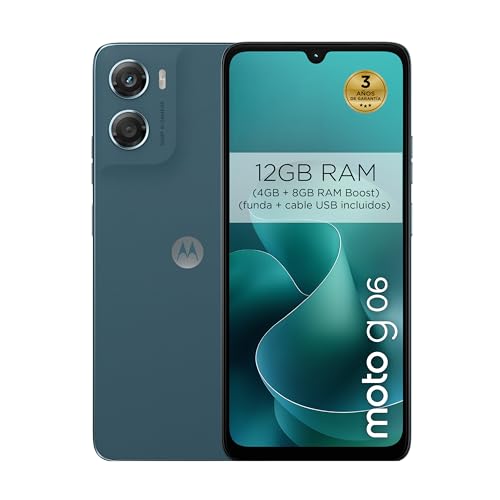
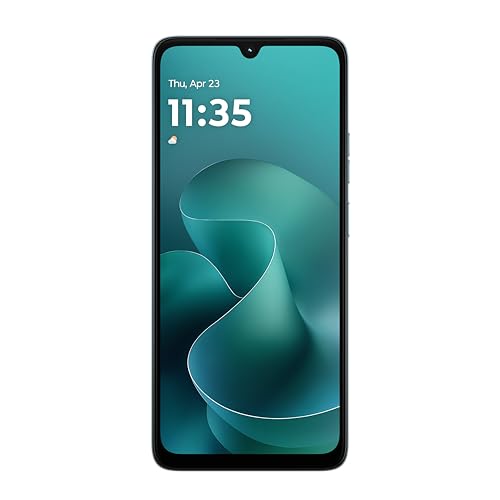
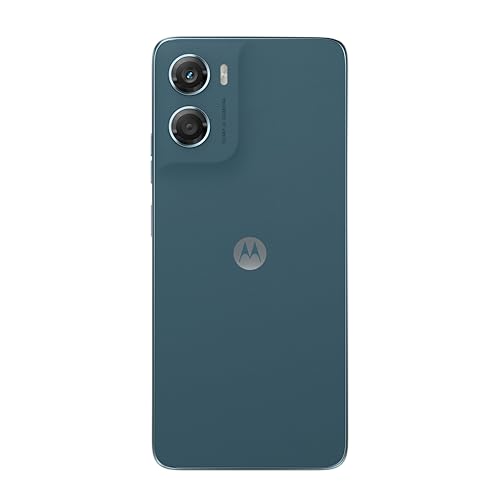
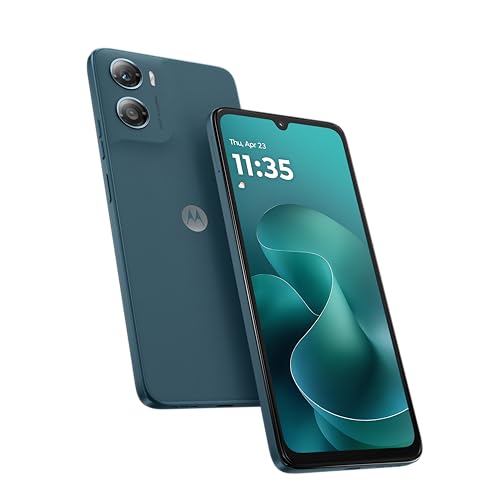
Motorola Moto G06 (4GB + 64GB) review: 196 specs compared

Avg. price:~£?RAM capacity:4 GBInternal storage:64 GBScreen size:6.88 inchesMain camera megapixels:50 MP

Motorola Moto G06 (4GB + 64GB) Review: Compare 196 technical specifications, 23 expert and video reviews and 100 owner opinions to see how this product ranks in the Smartphones category and whether it is worth buying.

Motorola Moto G06 (4GB + 64GB)
6.2/10

Overall score

Score
6.2/ 10
✕
What it is
Our main score for this model, 1–10. It combines specs, best-of lists, expert reviews and owners.
How we count it
Parts: Technical score 40%, List score 30%, Reviews score 25%, Sentiment score 5%
Marks: Each part gets a mark out of 10. For reviews, lists and owners, a typical model in this category gets about 8 and the best one gets 10.
No data yet: A part with no data shows "?". It counts as the mark of a weaker model in this category (4 in 5 models with data score higher). This way, models with reviews, lists and owners usually come out ahead.
Score distribution
â–¼
<55-66-77-88-99-10
Score components

40%

5.4

Technical score

30%

?

List scoreNot enough data yet, so we use 7.5, the mark of a weaker model in this category

25%

5.4

Reviews score

5%

9.1

Sentiment score

â–¼Worse than 90% of smartphones
?

Value for money

Value for money
✕
What it is
An indicator that combines the smartphone's overall rating with its cost.
When it matters
When you are looking for a smartphone with a good balance between quality and price.
Score distribution
â–¼
<55-66-77-88-99-10
Score components

70%

6.2

Overall score

30%

?

Price

Price not known yet
5.4

Technical score

Technical score
5.4/ 10
✕
What it is
How good the specs are compared with the other models in this category, 1–10.
How we count it
Areas: We rate the specs in each area against the other models in this category.
Weighting: The areas that matter most to buyers count more. The shares are shown under Score components.
Share: The technical score is 40% of the overall score.
Score distribution
â–¼
<55-66-77-88-99-10
Score components

25%

3.9

Performance

18%

6.1

Camera

15%

5.5

Display

15%

4.6

Battery

10%

8.5

Software

10%

6.6

Connectivity

4%

4.8

Audio

3%

5.1

Design

â–¼Worse than 91%
5.4

Reviews score

Reviews score
5.4/ 10
✕
What it is
Average grade from independent test sites, magazines and video reviewers, 1–10.
How we count it
Grades: Each review's own score is converted to 1–10; without one, we grade the review ourselves. Big test sites count more, short reviews half as much as full tests. A video review counts half.
Score: The average grade is 80% of the review mark; the number of reviews is the other 20% (1 review = 5, the typical number in this category = 8, the most-reviewed model = 10).
Enough data: With few reviews, the average grade is pulled toward the typical grade of this category. No reviews yet: 7.5 for now.
Share: Reviews count 25% of the overall score.
Score distribution
â–¼
<55-66-77-88-99-10

5.4

Mark 7.3 is below the typical mark 7.9 of this category, so it cannot lift the score above the technical score

80%

7.1

Average grade

20%

8.0

Popularity

Grades by review (23)
11 reviews: 10 with a printed score, 1 estimated from the review. 12 video reviews, each counting half as much as a written test. Reviews count 25% of the overall score.
User ratings collected online are not part of this score.
â–¼Worse than 95%
9.1

Sentiment score

Sentiment score
9.1/ 10
✕
What it is
How positive owners are about this model in their comments under video reviews and on forums. We read each comment, keep only people who say they own the model, and sort them into positive, mixed or negative.
How we count it
Score: We compare how satisfied this model’s owners are with the other models in this category: the typical model gets 8, the most satisfied tenth 10, the least satisfied 4. This is 80% of the owner mark; the number of owners is the other 20%.
Enough data: A model counts with 10+ owners from 4+ different discussions. With fewer, the owner part changes nothing.
Share: Owners count 5% of the overall score (left out in categories where fewer than 10 models have enough owner comments).
Score distribution
â–¼
<55-66-77-88-99-10

80%

9.5

Satisfaction

20%

7.5

Popularity

Owners (100)
100 owners from 16 online discussions
64% positive
14% mixed
22% negative
Category average: 51% positive
Our own analysis of online owner opinions, not a rating from any website.
â–²Better than 75%
?

List score

List score
7.5/ 10
✕
What it is
How often independent test sites, magazines and video reviewers put this model in their best-of lists for this category.
How we count it
Points: The model in the most lists of this category gets 10; the others get 8 to 10 in proportion. In no list yet: 7.5. Lists count 30% of the overall score.
Enough data: Every list counts, even a single one. With fewer than 5 best-of lists in the category, this part is left out.
Lists with this model (0)
Not in any best-of list yet, so this part counts as 7.5. Models in a list get 8 to 10.
Not in any best-of list yet

What reviewers say about the Motorola Moto G06 (4GB + 64GB)

Based on 0 · 14

Reviewers like the solid build, decent battery and good audio, but agree performance and multitasking are slow, with sluggish charging too.
Praised
Mixed views
Criticised
Pick a topic to see who said what

What owners say about the Motorola Moto G06 (4GB + 64GB)

Based on 100 owners sharing their experience in online comments

64%positive14%mixed22%negative

Owners value its everyday performance and battery life, while lag and slow charging are the main frustrations.

What owners dislike

  • Several owners report lag, stutters and freezing after weeks or months of use, sometimes when opening apps after idle, and say a software update helped.15
  • Owners find the camera slow to respond, with no handheld video stabilisation, a prompt that gets stuck when shooting photos, and a weak selfie camera.6
  • Reliability problems on some units6
  • Owners say the phone gets no major Android upgrades, only security patches, and some say it stays stuck on Android 15.4
  • Owners find the screen dim compared with rival phones, with a yellowish tint that stays even after switching to cool colour settings, and limited sharpness.4
  • Owners find charging slow, with a full charge taking around an hour or more, and some say the phone is limited to about ten watts.3
  • Owners report setup getting stuck on the language screen, and phones that ask for an account or old password, blocking access after a reset.3

Points mentioned by at least 3 owners, most mentioned first.

Loading...
Loading category ranking...

Technical Specifications of smartphone Motorola Moto G06 (4GB + 64GB)

Technical score
Technical score
5.4/ 10
✕
What it is
How good the specs are compared with the other models in this category, 1–10.
How we count it
Areas: We rate the specs in each area against the other models in this category.
Weighting: The areas that matter most to buyers count more. The shares are shown under Score components.
Share: The technical score is 40% of the overall score.
Score distribution
â–¼
<55-66-77-88-99-10
Score components:

25%

3.9

Performance

18%

6.1

Camera

15%

5.5

Display

15%

4.6

Battery

10%

8.5

Software

10%

6.6

Connectivity

4%

4.8

Audio

3%

5.1

Design

5.4
Reviews score
5.4
Sentiment score
9.1
List score
?
Value for money
Value for money
7.4/ 10
✕
What it is
An indicator that combines the smartphone's overall rating with its cost.
When it matters
When you are looking for a smartphone with a good balance between quality and price.
Score distribution
â–¼
<55-66-77-88-99-10
Score components:

70%

6.2

Overall score

30%

?

Price

7.4
Processor model
MediaTek Helio G81 Ultra
This smartphone uses the MediaTek Helio G81 Ultra processor model which is slower than processors in 91.7% of smartphones and equal to processors in 1% of smartphones.
Storage type
eMMC
This smartphone uses eMMC storage, which is slower than the storage in 82% of smartphones and the same as in 18% of smartphones.
RAM capacity
4 GB
This smartphone has a RAM capacity of 4 GB which is smaller than the RAM capacity of 81.6% of smartphones and equal to that of 14.5% of smartphones.
Internal storage
64 GB
This smartphone has an internal storage capacity of 64 GB which is smaller than the storage of 88.8% of smartphones and equal to that of 8.2% of smartphones.
CPU boost clock speed
2 GHz
The CPU boost clock speed of this smartphone is 2 GHz which is lower than the boost speed of 83.1% of smartphones and equal to that of 8.6% of smartphones.
Show more
What reviewers say
Operating system
Android
This smartphone runs Android, which is more mainstream than the system in 4.9% of smartphones and the same as in 95.1% of smartphones.
Android version
Android 15
This smartphone runs Android version Android 15 which is newer than that found in 69.4% of smartphones and equal to that in 24.9% of smartphones.
Direct OS updates
no
This smartphone does not support direct OS updates. 19.8% of smartphones offer this.
Promised software updates
?
Open-source OS
yes
This smartphone runs an open-source operating system. 5.3% of smartphones offer this.
Show more
What reviewers say
Multi-lens main camera
yes
This smartphone includes a multi-lens main camera system. 93.9% of smartphones include multi-lens setups.
Main camera megapixels
50 MP
This smartphone has a main camera resolution of 50 MP which is lower than that of 71.3% of smartphones and equal to that of 2.8% of smartphones.
Main camera aperture
f/1.8
This smartphone has a main camera aperture of f/1.8 which is narrower than that of 71.8% of smartphones and equal to that of 5.1% of smartphones.
Main camera sensor area
?
Main camera pixel size
0.64 µm
This smartphone has a main camera pixel size of 0.64 µm which is smaller than in 75.1% of smartphones and equal to the size in 18.6% of smartphones.
Show more
What reviewers say
Number of SIM slots
2
This smartphone has 2 SIM slots, which is more than in 3.6% of smartphones and equal to the number in 96.3% of smartphones.
Cellular module
yes
This smartphone includes a cellular module. 100% of smartphones include cellular modules.
eSIM support
no
This smartphone does not have eSIM support. 20.6% of smartphones offer this.
5G connectivity
no
This smartphone does not have 5G connectivity. 65.8% of smartphones offer this.
LTE support
yes
This smartphone supports LTE. 99.7% of smartphones include LTE connectivity.
Show more
Screen size
6.88 inches
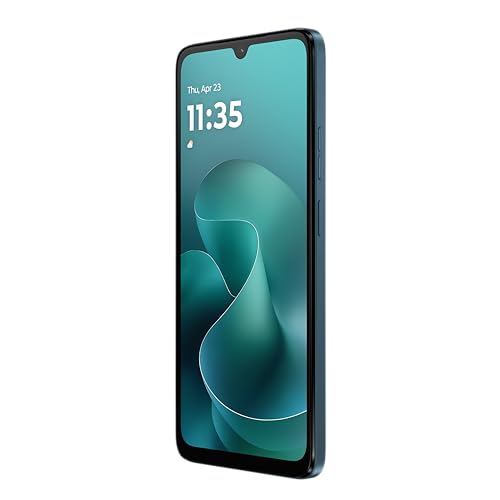
This smartphone has a screen size of 6.88 inches which is larger than the screens of 91.8% of smartphones and equal to those of 1.5% of smartphones.
Screen resolution
720x 1640 px
This smartphone has a screen resolution of 720x1640 px which is lower than that of 76% of smartphones and equal to that of 1.8% of smartphones.
Pixel density
260 ppi
This smartphone has a pixel density of 260 ppi which is lower than that of 92.7% of smartphones and equal to that of 4.5% of smartphones.
Display type
IPS LCD
This smartphone uses a IPS LCD display type. 0% of smartphones use this display technology.
Refresh rate
120 Hz
This smartphone supports a refresh rate of 120 Hz which is higher than in 34.9% of smartphones and equal to that in 55.3% of smartphones.
Show more
What reviewers say
Battery capacity
5,200 mAh
This smartphone has a battery capacity of 5,200 mAh which is larger than the batteries in 64.2% of smartphones and equal to those in 2.4% of smartphones.
Charging speed
10 W
This smartphone supports charging speeds of 10 W which is slower than in 93.1% of smartphones and equal to speeds in 6.2% of smartphones.
Fast charging
yes
This smartphone supports fast charging. 93.4% of smartphones support fast charging.
GSMArena full wired charge time
?
Wireless charging
no
This smartphone does not support wireless charging. 24.8% of smartphones support wireless charging.
Show more
What reviewers say
Stereo speakers
yes
This smartphone includes stereo speakers. 63.6% of smartphones provide stereo audio.
3.5 mm headphone jack
yes
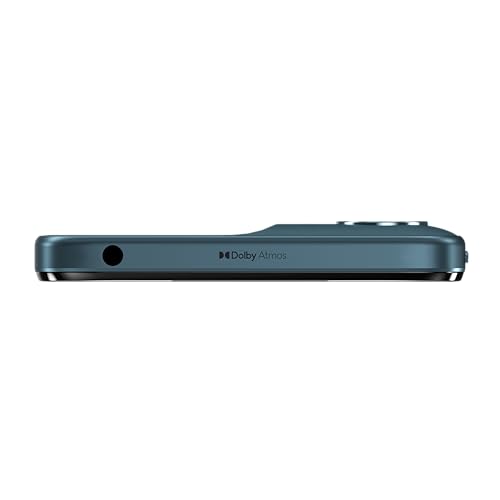
This smartphone includes a 3.5 mm headphone jack. 45.3% of smartphones offer this port.
Number of microphones
1
This smartphone has 1 microphones, which is fewer than in 89.8% of smartphones and equal to the number in 10.2% of smartphones.
FM radio
no
This smartphone does not have an FM radio. 34.9% of smartphones offer this.
aptX Lossless
no
This smartphone does not support aptX Lossless Bluetooth audio. 12.1% of smartphones offer this.
Show more
What reviewers say
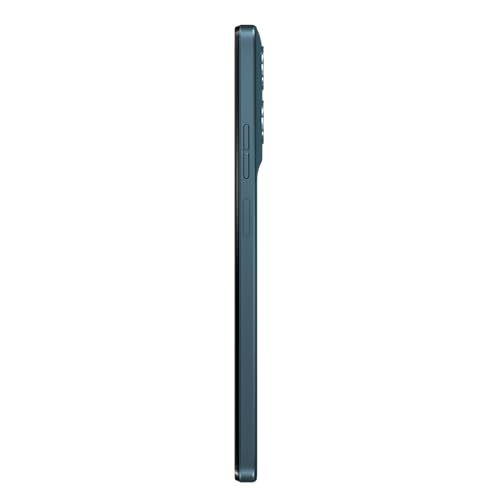
Height
171.4 mm
This smartphone has a height of 171.4 mm which is taller than 89.3% of smartphones and equal to that of 0.1% of smartphones.
Width
77.5 mm
This smartphone has a width of 77.5 mm which is wider than 77.5% of smartphones and equal to that of 1.1% of smartphones.
Thickness
8.3 mm
This smartphone has a thickness of 8.3 mm which is thinner than 45.4% of smartphones and equal to that of 6% of smartphones.
Weight
194 g
This smartphone weighs 194 g which is lighter than 55% of smartphones and equal to the weight of 1.8% of smartphones.
Device volume
110,253.05 cm³
This smartphone has a device volume of 110,253.05 cm³ which is larger than 98.6% of smartphones.
Show more
What reviewers say

Motorola Moto G06 (4GB + 64GB) vs the average smartphone

246810TotalPerformanceSoftwareCameraConnectivityDisplayBatteryAudioDesign
  • 0.21 inches inch larger screen size
    This smartphone has a larger screen size than the average smartphone (6.9 inches vs 6.67 inches). The average smartphone screen is 6.67 inches.
    6.88 inches vs 6.67 inches
  • 4% larger battery capacity
    This smartphone has a larger battery capacity than the average smartphone (5,200 mAh vs 5,000 mAh). The average smartphone battery is 5,000 mAh.
    5,200 mAh vs 5,000 mAh
  • 1 more flash LEDs
    This smartphone has more flash LEDs than the average smartphone (2 vs 1). The average smartphone has 1 flash LEDs.
    2 vs 1
  • Allows manual shutter speed
    This smartphone allows manual shutter speed control, the average smartphone does not. 34.2% of smartphones include this.
  • 16.7% lower TDP
    This smartphone has a lower TDP than the average smartphone (5 W vs 6 W). The average TDP for smartphones is 6 W.
    5 W vs 6 W
  • Has a dual-tone LED flash
    This smartphone features a dual-tone LED flash, the average smartphone does not. 40% of smartphones include dual-tone flash.
  • Newer Bluetooth version
    This smartphone supports a newer Bluetooth version than the average smartphone (5.4 vs 5.2). The average version is Bluetooth 5.2.
    5.4 vs 5.2
  • Supports aptX HD
    This smartphone supports aptX HD, the average smartphone does not. 44% of smartphones include aptX HD support.
  • 16.7% higher sentiment score
    Sentiment score
    9.1/ 10
    ✕
    What it is
    How positive owners are about this model in their comments under video reviews and on forums. We read each comment, keep only people who say they own the model, and sort them into positive, mixed or negative.
    How we count it
    Score: We compare how satisfied this model’s owners are with the other models in this category: the typical model gets 8, the most satisfied tenth 10, the least satisfied 4. This is 80% of the owner mark; the number of owners is the other 20%.
    Enough data: A model counts with 10+ owners from 4+ different discussions. With fewer, the owner part changes nothing.
    Share: Owners count 5% of the overall score (left out in categories where fewer than 10 models have enough owner comments).
    Score distribution
    â–¼
    <55-66-77-88-99-10

    80%

    9.5

    Satisfaction

    20%

    7.5

    Popularity

    Owners (100)
    100 owners from 16 online discussions
    64% positive
    14% mixed
    22% negative
    Category average: 51% positive
    Our own analysis of online owner opinions, not a rating from any website.
    9.1 vs 7.8
  • 16.7% lower TDP
    This smartphone has a lower TDP than the average smartphone (5 W vs 6 W). The average TDP for smartphones is 6 W.
    5 W vs 6 W
  • 2x more L1
    This smartphone has more L1 cache than the average smartphone (64 KB vs 32 KB). The average L1 cache is 32 KB.
    64 KB vs 32 KB
  • 1 year/s newer release date
    This smartphone has a newer release date than the average smartphone (2025 vs 2024). 1.00% of smartphones are released annually.
    September 2025
    2025 vs 2024
  • Newer Android version
    This smartphone features a newer Android version than the average smartphone (Android 15 vs Android 14). The average version is Android 14.
    Android 15 vs Android 14
  • 1 more flash LEDs
    This smartphone has more flash LEDs than the average smartphone (2 vs 1). The average smartphone has 1 flash LEDs.
    2 vs 1
  • Allows manual shutter speed
    This smartphone allows manual shutter speed control, the average smartphone does not. 34.2% of smartphones include this.
  • Has a dual-tone LED flash
    This smartphone features a dual-tone LED flash, the average smartphone does not. 40% of smartphones include dual-tone flash.
  • Wider front camera aperture
    This smartphone has a wider front camera aperture than the average smartphone (f/2 vs f/2.2). The average aperture is f/2.2.
    f/2.0 vs f/2.2
  • Newer Bluetooth version
    This smartphone supports a newer Bluetooth version than the average smartphone (5.4 vs 5.2). The average version is Bluetooth 5.2.
    5.4 vs 5.2
  • 0.21 inches inch larger screen size
    This smartphone has a larger screen size than the average smartphone (6.9 inches vs 6.67 inches). The average smartphone screen is 6.67 inches.
    6.88 inches vs 6.67 inches
  • 4% larger battery capacity
    This smartphone has a larger battery capacity than the average smartphone (5,200 mAh vs 5,000 mAh). The average smartphone battery is 5,000 mAh.
    5,200 mAh vs 5,000 mAh
  • Supports aptX HD
    This smartphone supports aptX HD, the average smartphone does not. 44% of smartphones include aptX HD support.
  • Has a 3.5 mm headphone jack
    This smartphone features a 3.5 mm headphone jack, the average smartphone does not. 45.3% of smartphones include a standard headphone jack.
  • Supports aptX
    This smartphone supports aptX, the average smartphone does not. 49.2% of smartphones are aptX compatible.
  • Worse processor
    This smartphone uses a worse processor than the average smartphone (MediaTek Helio G81 Ultra vs Qualcomm Snapdragon 7 Gen 3).
    MediaTek Helio G81 Ultra vs Qualcomm Snapdragon 7 Gen 3
  • Inferior display type
    This smartphone has an inferior display type compared to the average smartphone (IPS LCD vs OLED/AMOLED). 0.00% of smartphones use the superior display type.
    IPS LCD vs OLED/AMOLED
  • Slower storage type
    This smartphone has slower storage than the average smartphone (eMMC vs UFS 3.1).
    eMMC vs UFS 3.1
  • 26.0% lower review score
    Reviews score
    5.4/ 10
    ✕
    What it is
    Average grade from independent test sites, magazines and video reviewers, 1–10.
    How we count it
    Grades: Each review's own score is converted to 1–10; without one, we grade the review ourselves. Big test sites count more, short reviews half as much as full tests. A video review counts half.
    Score: The average grade is 80% of the review mark; the number of reviews is the other 20% (1 review = 5, the typical number in this category = 8, the most-reviewed model = 10).
    Enough data: With few reviews, the average grade is pulled toward the typical grade of this category. No reviews yet: 7.5 for now.
    Share: Reviews count 25% of the overall score.
    Score distribution
    â–¼
    <55-66-77-88-99-10

    5.4

    Mark 7.3 is below the typical mark 7.9 of this category, so it cannot lift the score above the technical score

    80%

    7.1

    Average grade

    20%

    8.0

    Popularity

    Grades by review (23)
    11 reviews: 10 with a printed score, 1 estimated from the review. 12 video reviews, each counting half as much as a written test. Reviews count 25% of the overall score.
    User ratings collected online are not part of this score.
    5.4 vs 7.3
  • 75% less storage
    This smartphone offers less internal storage than the average smartphone (64 GB vs 256 GB). The average smartphone includes 256 GB of internal storage.
    64 GB vs 256 GB
  • Narrower main camera aperture
    This smartphone has a narrower main camera aperture than the average smartphone (f/1.8 vs f/1.8 & f/2.2 & f/2.4 & f/2.4). The average smartphone aperture is f/1.8 & f/2.2 & f/2.4 & f/2.4.
    f/1.8 vs f/1.8 & f/2.2 & f/2.4 & f/2.4
  • No ultrawide rear camera
    This smartphone does not have an ultrawide rear camera, while the average smartphone does. 61.9% of smartphones offer this.
  • 45 fewer endurance points
    This smartphone has a lower GSMArena battery endurance score than the average smartphone (54 vs 99). The average smartphone scores 99.
    54 vs 99
  • 26.0% lower review score
    Reviews score
    5.4/ 10
    ✕
    What it is
    Average grade from independent test sites, magazines and video reviewers, 1–10.
    How we count it
    Grades: Each review's own score is converted to 1–10; without one, we grade the review ourselves. Big test sites count more, short reviews half as much as full tests. A video review counts half.
    Score: The average grade is 80% of the review mark; the number of reviews is the other 20% (1 review = 5, the typical number in this category = 8, the most-reviewed model = 10).
    Enough data: With few reviews, the average grade is pulled toward the typical grade of this category. No reviews yet: 7.5 for now.
    Share: Reviews count 25% of the overall score.
    Score distribution
    â–¼
    <55-66-77-88-99-10

    5.4

    Mark 7.3 is below the typical mark 7.9 of this category, so it cannot lift the score above the technical score

    80%

    7.1

    Average grade

    20%

    8.0

    Popularity

    Grades by review (23)
    11 reviews: 10 with a printed score, 1 estimated from the review. 12 video reviews, each counting half as much as a written test. Reviews count 25% of the overall score.
    User ratings collected online are not part of this score.
    5.4 vs 7.3
  • 3.6% worse value for money
    Motorola Moto G06 (4GB + 64GB) has worse value for money than the average smartphone (7.37 vs 7.6).
    7.37 vs 7.63
  • Worse processor
    This smartphone uses a worse processor than the average smartphone (MediaTek Helio G81 Ultra vs Qualcomm Snapdragon 7 Gen 3).
    MediaTek Helio G81 Ultra vs Qualcomm Snapdragon 7 Gen 3
  • Slower storage type
    This smartphone has slower storage than the average smartphone (eMMC vs UFS 3.1).
    eMMC vs UFS 3.1
  • 75% less storage
    This smartphone offers less internal storage than the average smartphone (64 GB vs 256 GB). The average smartphone includes 256 GB of internal storage.
    64 GB vs 256 GB
  • 2x larger process node
    This smartphone is manufactured on a larger process node than the average smartphone (12 nm vs 6 nm). The average smartphone uses a 6 nm process.
    12 nm vs 6 nm
  • 4 GB less RAM
    This smartphone has less RAM than the average smartphone (4 GB vs 8 GB). The average smartphone has 8 GB of RAM.
    4 GB vs 8 GB
  • 56.7% lower Geekbench 6 single-core benchmark score
    This smartphone performs worse in Geekbench 6 single-core than the average smartphone (408 vs 942). The average smartphone scores 942 in the Geekbench 6 single-core test.
    408 vs 942
  • 79.7% lower 3DMark Wild Life benchmark
    This smartphone performs worse in the 3DMark Wild Life benchmark than the average smartphone (632 vs 3,115). The average smartphone scores 3,115 in this benchmark.
    632 vs 3,115
  • 75% less L3 cache
    This smartphone has a smaller L3 cache than the average smartphone (1,024 KB vs 4,096 KB). The average smartphone has an L3 cache of 4,096 KB.
    1,024 KB vs 4,096 KB
  • 13.7% slower GPU clock
    This smartphone has a lower GPU frequency than the average smartphone (820 MHz vs 950 MHz). The average smartphone has a GPU frequency of 950 MHz.
    820 MHz vs 950 MHz
  • 16.7% lower CPU boost clock speed
    This smartphone has a lower CPU boost clock speed than the average smartphone (2 GHz vs 2.4 GHz). The average smartphone has a boost clock speed of 2.4 GHz.
    2 GHz vs 2.4 GHz
  • 34.5% slower memory speed
    This smartphone has a lower memory speed than the average smartphone (1,800 MHz vs 2,750 MHz). The average smartphone has a memory speed of 2,750 MHz.
    1,800 MHz vs 2,750 MHz
  • 86.1% lower 3DMark Wild Life Extreme benchmark
    This smartphone scores lower in 3DMark Wild Life Extreme than the average smartphone (170 vs 1,224). The average smartphone scores 1,224.
    170 vs 1,224
  • 88.3% lower 3DMark Steel Nomad benchmark
    This smartphone performs worse in 3DMark Steel Nomad than the average smartphone (69 vs 589.5). The average smartphone scores 589.5.
    69 vs 589.5
  • 45.3% lower Geekbench 6 multi-core benchmark score
    This smartphone performs worse in Geekbench 6 multi-core than the average smartphone (1,391 vs 2,545). The average smartphone scores 2,545 in the Geekbench 6 multi-core test.
    1,391 vs 2,545
  • 16.1% lower PCMark Work 3.0 Performance benchmark
    This smartphone performs worse in PCMark Work 3.0 than the average smartphone (8,963 vs 10,683). The average smartphone scores 10,683 in PCMark Work 3.0.
    8,963 vs 10,683
  • 43.8% lower memory bandwidth
    This smartphone has lower memory bandwidth than the average smartphone (14.4 GB/s vs 25.6 GB/s). The average smartphone has a bandwidth of 25.6 GB/s.
    14.4 GB/s vs 25.6 GB/s
  • 81.3% fewer shader units
    This smartphone includes fewer shader units than the average smartphone (48 vs 256). The average smartphone has 256 shader units.
    48 vs 256
  • Lower CPU base clock speed
    This smartphone has a lower CPU base clock speed than the average smartphone (2x2 GHz & 6x1.7 GHz vs 2x2.2 GHz & 6x2 GHz). The average smartphone has a base clock speed of 2x2.2 GHz & 6x2 GHz.
    2x2.0 GHz & 6x1.7 GHz vs 2x2.2 GHz & 6x2 GHz
  • No battery health monitoring
    This smartphone lacks battery health monitoring, the average smartphone includes it. 67.4% of smartphones provide battery health stats.
  • Does not allow app offloading
    This smartphone does not support app offloading, the average smartphone does. 52.7% of smartphones support app offloading to save space.
  • Narrower main camera aperture
    This smartphone has a narrower main camera aperture than the average smartphone (f/1.8 vs f/1.8 & f/2.2 & f/2.4 & f/2.4). The average smartphone aperture is f/1.8 & f/2.2 & f/2.4 & f/2.4.
    f/1.8 vs f/1.8 & f/2.2 & f/2.4 & f/2.4
  • No ultrawide rear camera
    This smartphone does not have an ultrawide rear camera, while the average smartphone does. 61.9% of smartphones offer this.
  • Worse main camera video quality
    This smartphone records worse main camera video than the average smartphone. 11.80x of smartphones support 4K video recording.
    1080x30 fps vs 2160x30 fps
  • Lower front camera megapixels
    This smartphone has lower front camera megapixels than the average smartphone (8 MP vs 16 MP). The average smartphone has a 16 MP front camera.
    8 MP vs 16 MP
  • Lower-resolution main camera
    This smartphone has a lower-resolution main camera than the average smartphone (50 MP vs 50 MP & 8 MP). The average smartphone has a 50 MP & 8 MP main camera.
    50 MP vs 50 MP & 8 MP
  • 0.16 µm smaller main camera pixel size
    This smartphone has a smaller main camera pixel size than the average smartphone (0.6 µm vs 0.8 µm). The average smartphone has a pixel size of 0.8 µm.
    0.64 µm vs 0.8 µm
  • No 5G connectivity
    This smartphone does not support 5G connectivity, the average smartphone does. 65.8% of smartphones are 5G compatible.
  • Inferior display type
    This smartphone has an inferior display type compared to the average smartphone (IPS LCD vs OLED/AMOLED). 0.00% of smartphones use the superior display type.
    IPS LCD vs OLED/AMOLED
  • 34.2% lower pixel density
    This smartphone has a lower pixel density than the average smartphone (260 ppi vs 395 ppi). The average smartphone has a pixel density of 395 ppi.
    260 ppi vs 395 ppi
  • Lower contrast ratio
    This smartphone has a lower contrast ratio than the average smartphone (1770:1 vs 1000000:1). The average smartphone has a contrast ratio of 1000000:1.
    1,770:1 vs 1,000,000:1
  • Lower screen resolution
    This smartphone has a lower screen resolution than the average smartphone (720x1640 px vs 1080x2400 px). The average smartphone has a resolution of 1080x2400 px.
    720x1640 px vs 1080x2400 px
  • Worse display glass type
    This smartphone uses a worse display glass type than the average smartphone (Corning Gorilla Glass 3 vs Corning Gorilla Glass 5). 0.00% of smartphones use the better glass type.
    Corning Gorilla Glass 3 vs Corning Gorilla Glass 5
  • 45 fewer endurance points
    This smartphone has a lower GSMArena battery endurance score than the average smartphone (54 vs 99). The average smartphone scores 99.
    54 vs 99
  • 69.7% slower charging speed
    This smartphone has a slower charging speed than the average smartphone (10 W vs 33 W). The average smartphone charges at 33 W.
    10 W vs 33 W
  • No reverse wired charging
    This smartphone does not support reverse wired charging, the average smartphone does. 62.4% of smartphones support reverse wired charging.
  • No LDAC support
    This smartphone does not support LDAC, the average smartphone does. 59% of smartphones support LDAC.
  • 1 fewer microphone/s
    This smartphone has fewer microphones than the average smartphone (1 vs 2). The average smartphone has 2 microphones.
    1 vs 2
  • 47.7% lower French repairability index
    This smartphone has a lower French repairability index than the average smartphone (4.1 vs 7.9). The average smartphone scores 7.9.
    4.13 vs 7.9
  • 1,070.42x larger volume
    This smartphone has a larger volume than the average smartphone (110,253.1 cm³ vs 103 cm³). The average smartphone volume is 103 cm³.
    110,253.05 cm³ vs 103 cm³
  • 7.8 mm taller
    This smartphone is taller than the average smartphone (171.4 mm vs 163.6 mm). The average smartphone has a height of 163.6 mm.
    171.4 mm vs 163.6 mm
  • 1.5 mm wider
    This smartphone is wider than the average smartphone (77.5 mm vs 76 mm). The average smartphone has a width of 76 mm.
    77.5 mm vs 76 mm
  • Lower IP rating
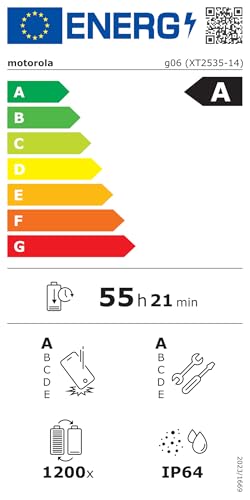
    This smartphone has a lower IP rating than the average smartphone (IP64 vs IP67). 0.00% of smartphones have a higher IP rating.
    IP64 vs IP67

Video reviews

Hands-on testing, unboxing, and real-world video evaluations

7.0
Alex Kidman
≈ estimated
01/12/2025
Hands-on review · performance, battery and updates tested
Verdict
Motorola Moto G06 is decent enough as a low-cost basic phone, but the lack of meaningful upgrades over its predecessor disappoints.
9.0
My Tech Channel
≈ estimated
15/10/2025
Full review · battery drain test and daily use
Verdict
Motorola Moto G06 is good value for the money, with strong battery life and a clean software experience.
7.0
Ash Does Tech
≈ estimated
03/02/2026
Unboxing · first look and setup
Verdict
Motorola Moto G06 feels decent so far for the price; these are early impressions, with a full review still to come.
Shop video
Shop video
Not graded

Third-party reviews

What customers like about Motorola Moto G06 (4GB + 64GB)

  • The 6.88 inch screen gives plenty of room for video and web pages.
  • The 120 Hz refresh rate makes scrolling and animations smooth.
  • The 5200 mAh battery gives a long time between charges.
  • Peak brightness of 1000 nits helps the screen stay readable outdoors.
  • The main camera has 50 MP and more than one lens.
  • The MediaTek Helio G81 Ultra chip handles everyday messaging and browsing.

What customers don't like about Motorola Moto G06 (4GB + 64GB)

  • 4 GB of RAM leaves less room for apps running in the background.
  • 64 GB of storage fills up fast with photos and apps.
  • Charging at 10 W is slow, and there is no wireless charging.
  • A Geekbench 6 multi-core score of 1391 means heavy apps and games run slowly.
  • There is one microphone, so calls in noisy places may be harder to hear.

Verdict

A 6.88 inch screen and a 5200 mAh battery are the reasons to look at the Motorola Moto G06. The 120 Hz refresh rate keeps scrolling smooth, and the screen reaches 1000 nits at peak. The battery lasts a long day of messages, maps and video. The chip is the weak side. Its multi-core score of 1391 in Geekbench 6 is low, so heavy games and many open apps will slow it down. The 4 GB of RAM and 64 GB of storage are small, so you will clear space often. Charging takes its time at 10 W, and there is no wireless charging. It suits someone who wants a big screen and a phone that lasts through the day for calls, chat and video, and who does not play demanding games.

Compare Motorola Moto G06 (4GB + 64GB) with other smartphones

1Product to compare no. 1
VS
2Product to compare no. 2
VS
3Product to compare no. 3 (optional)

Graphic comparison of Motorola Moto G06 (4GB + 64GB) and other smartphones

No results found