Scored using Smartphones Methodology v3.0
Smartphones Methodology v3.0
Mathematical & Unbiased Scoring
Products in this category are scored under Frontum Smartphones Methodology v3.0: the technical score from the specifications is the base, and independent expert and video reviews (up to ±0.5 points), owner opinions (up to ±0.3) and best-of lists (up to +0.3) move it up or down.
Explore Smartphones Methodology v3.0

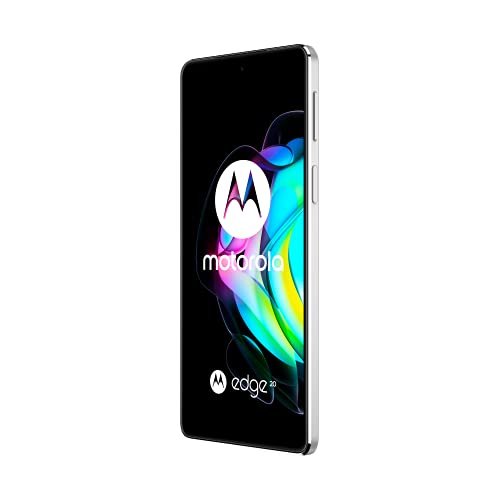
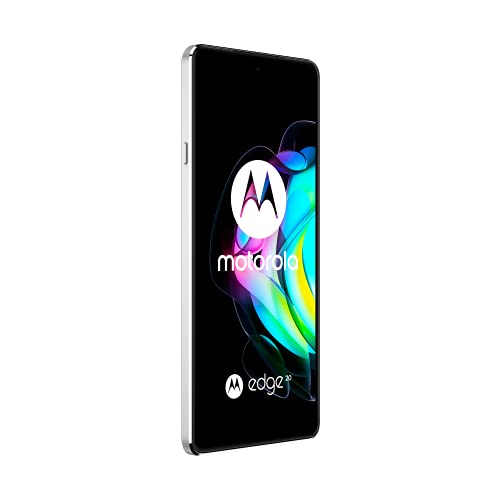
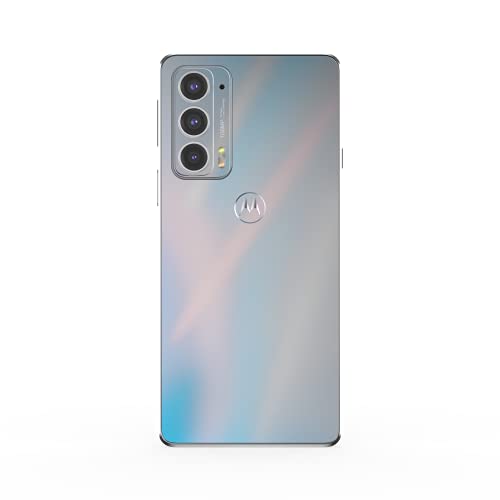
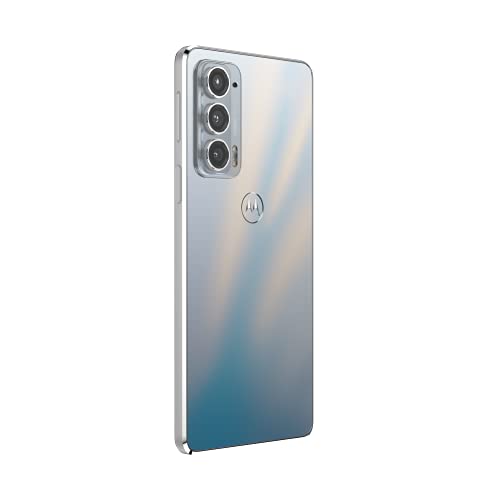
Motorola Edge 20 (6GB + 128GB) review: 196 specs compared

Avg. price:~£170RAM capacity:6 GBInternal storage:128 GBScreen size:6.7 inchesMain camera megapixels:108 MP & 8 MP & 16 MP

Motorola Edge 20 (6GB + 128GB) Review: Compare 196 technical specifications and 77 expert and video reviews to see how this product ranks in the Smartphones category and whether it is worth buying.
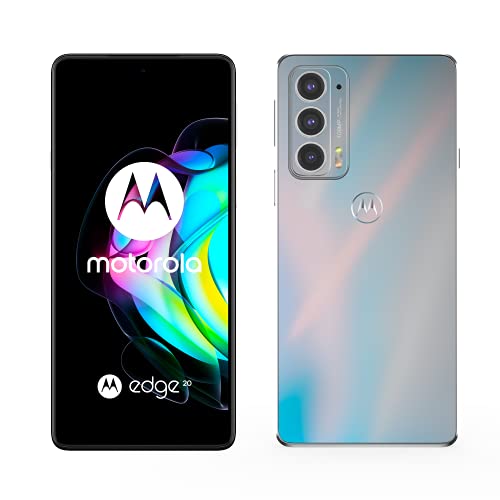
Motorola Edge 20 (6GB + 128GB)
7.4/10

Overall score

Score
7.4/ 10
✕
What it is
Our main score for this model, 1–10. It combines specs, best-of lists, expert reviews and owners.
How we count it
Parts: Technical score 35%, List score 30%, Reviews score 25%, Sentiment score 10%
Marks: Each part gets a mark out of 10. For reviews, lists and owners, a typical model in this category gets about 8 and the best one gets 10.
No data yet: A part with no data shows "?". It counts as the mark of a weaker model in this category (4 in 5 models with data score higher). This way, models with reviews, lists and owners usually come out ahead.
Score distribution
â–¼
<55-66-77-88-99-10
Score components

35%

6.3

Technical score

30%

?

List scoreNot enough data yet, so we use 7.5, the mark of a weaker model in this category

25%

8.4

Reviews score

10%

8.7

Sentiment score

â–²Better than 61% of smartphones
8.1

Value for money

Value for money
8.1/ 10
✕
What it is
An indicator that combines the smartphone's overall rating with its cost.
When it matters
When you are looking for a smartphone with a good balance between quality and price.
Score distribution
â–¼
<55-66-77-88-99-10
Score components

70%

7.4

Overall score

30%

9.6

Price

â–²Better than 87%
6.3

Technical score

Technical score
6.3/ 10
✕
What it is
How good the specs are compared with the other models in this category, 1–10.
How we count it
Areas: We rate the specs in each area against the other models in this category.
Weighting: The areas that matter most to buyers count more. The shares are shown under Score components.
Share: The technical score is 35% of the overall score.
Score distribution
â–¼
<55-66-77-88-99-10
Score components

25%

6.0

Performance

18%

8.2

Camera

15%

7.1

Display

15%

4.3

Battery

10%

4.8

Software

10%

7.2

Connectivity

4%

6.1

Audio

3%

6.8

Design

â–¼Worse than 63%
8.4

Reviews score

Reviews score
8.4/ 10
✕
What it is
Average grade from independent test sites, magazines and video reviewers, 1–10.
How we count it
Grades: Each review's own score is converted to 1–10; without one, we grade the review ourselves. Big test sites count more, short reviews half as much as full tests. A video review counts half.
Score: The average grade is 80% of the review mark; the number of reviews is the other 20% (1 review = 5, the typical number in this category = 8, the most-reviewed model = 10).
Enough data: With few reviews, the average grade is pulled toward the typical grade of this category. No reviews yet: 7.5 for now.
Share: Reviews count 25% of the overall score.
Score distribution
â–¼
<55-66-77-88-99-10

80%

8.2

Average grade

20%

9.2

Popularity

Grades by review (77)
37 reviews: 22 with a printed score, 15 estimated from the review. 40 video reviews, each counting half as much as a written test. Reviews count 25% of the overall score.
User ratings collected online are not part of this score.
â–²Better than 82%
?

List score

List score
7.5/ 10
✕
What it is
How often independent test sites, magazines and video reviewers put this model in their best-of lists for this category.
How we count it
Points: The model in the most lists of this category gets 10; the others get 8 to 10 in proportion. In no list yet: 7.5. Lists count 30% of the overall score.
Enough data: Every list counts, even a single one. With fewer than 5 best-of lists in the category, this part is left out.
Lists with this model (0)
Not in any best-of list yet, so this part counts as 7.5. Models in a list get 8 to 10.
Not in any best-of list yet

What reviewers say about the Motorola Edge 20 (6GB + 128GB)

Based on 37 · 42

Reviewers love the sharp display and light, slim body, but most criticize the weak speakers and the build finish.
Praised
Mixed views
Criticised
Pick a topic to see who said what

What owners say about the Motorola Edge 20 (6GB + 128GB)

Based on 171 owners sharing their experience in online comments

57%positive6%mixed37%negative

Owners praise fast performance, bright displays and rapid charging, while cameras, battery life, audio and updates draw complaints.

What owners dislike

  • Owners say the main camera is weak in low light, and the front camera produces blurry, noisy selfies.20
  • Owners say the speaker is mono, quiet, and distorts at high volume at events.13
  • Owners say the 4,000 mAh battery drains fast, often needing a second charge a day, especially at 144 Hz.11
  • Owners say the microphone makes recorded voices sound muffled, distorted or underwater in videos and voice notes.7
  • Owners say videos recorded on the phone look blurry or muffled, with poor audio and dropped frames in 4K.6
  • Owners report a faint Motorola watermark, yellowish tint, vertical lines in low light, and scratches on the screen.6
  • Owners say repairs and warranty service were poor, with some phones returned to repair several times.6
  • Owners say Motorola has been slow or failed to deliver promised Android updates, leaving some phones on Android 11 or 12.5
  • Owners report weak Wi-Fi, with speeds dropping a short distance from the router and slow, unstable connections.5
  • Owners report the phone restarting or switching off by itself, often during video calls, streaming or photos.5

Points mentioned by at least 3 owners, most mentioned first.

Loading...
Loading category ranking...

Smartphones model ranking

Ranked #286 of 2,069 models in Smartphones (Overall score)

Technical Specifications of smartphone Motorola Edge 20 (6GB + 128GB)

Technical score
Technical score
6.3/ 10
✕
What it is
How good the specs are compared with the other models in this category, 1–10.
How we count it
Areas: We rate the specs in each area against the other models in this category.
Weighting: The areas that matter most to buyers count more. The shares are shown under Score components.
Share: The technical score is 35% of the overall score.
Score distribution
â–¼
<55-66-77-88-99-10
Score components:

25%

6.0

Performance

18%

8.2

Camera

15%

7.1

Display

15%

4.3

Battery

10%

4.8

Software

10%

7.2

Connectivity

4%

6.1

Audio

3%

6.8

Design

6.3
Reviews score
8.4
List score
?
Value for money
Value for money
8.1/ 10
✕
What it is
An indicator that combines the smartphone's overall rating with its cost.
When it matters
When you are looking for a smartphone with a good balance between quality and price.
Score distribution
â–¼
<55-66-77-88-99-10
Score components:

70%

7.4

Overall score

30%

9.6

Price

8.1
Processor model
Qualcomm Snapdragon 778G 5G
This smartphone uses the Qualcomm Snapdragon 778G 5G processor which is faster than processors in 62.7% of smartphones and equal to processors in 1% of smartphones.
Storage type
?
RAM capacity
6 GB
This smartphone has a RAM capacity of 6 GB which is smaller than the RAM capacity of 71.5% of smartphones and equal to that of 10.8% of smartphones.
Internal storage
128 GB
This smartphone has an internal storage capacity of 128 GB which is smaller than the storage of 61.1% of smartphones and equal to that of 28.4% of smartphones.
CPU boost clock speed
2.4 GHz
The CPU boost clock speed of this smartphone is 2.4 GHz which is higher than the boost speed of 37.1% of smartphones and equal to that of 13.3% of smartphones.
Show more
What reviewers say
Operating system
Android
This smartphone runs Android, which is more mainstream than the system in 4.8% of smartphones and the same as in 95.2% of smartphones.
Android 11
Android version
Android 11
This smartphone runs Android version Android 11 which is older than that found in 80.3% of smartphones and equal to that in 8.5% of smartphones.
Direct OS updates
no
This smartphone does not support direct OS updates. 20.1% of smartphones offer this.
Promised software updates
?
Open-source OS
yes
This smartphone runs an open-source operating system. 5.2% of smartphones offer this.
Show more
What reviewers say
Multi-lens main camera
yes
This smartphone includes a multi-lens main camera system. 93.7% of smartphones include multi-lens setups.
Main camera megapixels
108 MP & 8 MP & 16 MP
This smartphone has a main camera resolution of 108 MP & 8 MP & 16 MP which is higher than that of 95.6% of smartphones and equal to that of 0.1% of smartphones.
Main camera aperture
f/1.9 & f/2.2 & f/2.4
This smartphone has a main camera aperture of f/1.9 & f/2.2 & f/2.4 which is narrower than that of 83% of smartphones and equal to that of 3.3% of smartphones.
Main camera sensor area
52.9 mm²
This smartphone has a main camera sensor area of 52.9 mm² which is larger than the main camera sensor area of 82.3% of smartphones and equal to that of 2.8% of smartphones.
Main camera pixel size
0.7 µm
This smartphone has a main camera pixel size of 0.7 µm which is smaller than in 64.6% of smartphones and equal to the size in 10.4% of smartphones.
2.1 binned
Show more
What reviewers say
Number of SIM slots
2
This smartphone has 2 SIM slots, which is more than in 3.7% of smartphones and equal to the number in 96.2% of smartphones.
Cellular module
yes
This smartphone includes a cellular module. 100% of smartphones include cellular modules.
eSIM support
no
This smartphone does not have eSIM support. 19.9% of smartphones offer this.
5G connectivity
yes
This smartphone supports 5G connectivity. 66.6% of smartphones support 5G.
LTE support
yes
This smartphone supports LTE. 99.7% of smartphones include LTE connectivity.
Show more
What reviewers say
Screen size
6.7 inches
This smartphone has a screen size of 6.7 inches which is larger than the screens of 51.7% of smartphones and equal to those of 10.1% of smartphones.
Screen resolution
1080x 2400 px
This smartphone has a screen resolution of 1080x2400 px which is higher than that of 36.3% of smartphones and equal to that of 20.4% of smartphones.
Pixel density
385 ppi
This smartphone has a pixel density of 385 ppi which is lower than that of 71.9% of smartphones and equal to that of 1.8% of smartphones.
Display type
OLED/AMOLED
This smartphone uses a OLED/AMOLED display type. 58.4% of smartphones use this display technology.
Refresh rate
144 Hz
This smartphone supports a refresh rate of 144 Hz which is higher than in 90% of smartphones and equal to that in 8.4% of smartphones.
Show more
What reviewers say
Battery capacity
4,000 mAh
This smartphone has a battery capacity of 4,000 mAh which is smaller than the batteries in 90.2% of smartphones and equal to those in 2.6% of smartphones.
Charging speed
30 W
This smartphone supports charging speeds of 30 W which is slower than in 61.1% of smartphones and equal to speeds in 4.7% of smartphones.
Fast charging
yes
This smartphone supports fast charging. 93.2% of smartphones support fast charging.
GSMArena full wired charge time
?
Wireless charging
no
This smartphone does not support wireless charging. 25.1% of smartphones support wireless charging.
Show more
What reviewers say
Stereo speakers
no
This smartphone does not have stereo speakers. 64.3% of smartphones offer this.
3.5 mm headphone jack
no
This smartphone does not have a headphone jack. 45.1% of smartphones offer this.
Number of microphones
3
This smartphone includes 3 microphones, which is more than in 77.2% of smartphones and equal to the number in 19.7% of smartphones.
FM radio
no
This smartphone does not have an FM radio. 34.3% of smartphones offer this.
aptX Lossless
?
Show more
What reviewers say
Height
163 mm
This smartphone has a height of 163 mm which is shorter than 57.9% of smartphones and equal to that of 1.2% of smartphones.
Width
76 mm
This smartphone has a width of 76 mm which is narrower than 47.8% of smartphones and equal to that of 3.1% of smartphones.
Thickness
7 mm
This smartphone has a thickness of 7 mm which is thinner than 96.1% of smartphones and equal to that of 0.3% of smartphones.
Weight
163 g
This smartphone weighs 163 g which is lighter than 96% of smartphones and equal to the weight of 0.4% of smartphones.
Device volume
87 cm³
This smartphone has a device volume of 87 cm³ which is smaller than 92.7% of smartphones and equal to that of 1.3% of smartphones.
Show more
What reviewers say

Motorola Edge 20 (6GB + 128GB) vs the average smartphone

246810TotalPerformanceSoftwareCameraConnectivityDisplayBatteryAudioDesign
  • 3 x higher optical zoom
    This smartphone offers stronger optical zoom than the average smartphone (3 x vs 0 x). The average smartphone's optical zoom is 0 x.
    3 x vs 0 x
  • 65.3% larger main camera sensor area
    This smartphone has a larger main camera sensor area than the average smartphone (52.9 mm² vs 32 mm²). The average main camera sensor area is 32 mm².
    52.9 mm² vs 32 mm²
  • Has optical image stabilization
    This smartphone has optical image stabilization (OIS), the average smartphone does not. 48.4% of smartphones feature OIS.
  • Higher-resolution main camera
    This smartphone has a higher main camera resolution than the average smartphone (108 MP & 8 MP & 16 MP vs 50 MP & 8 MP). The average smartphone main camera has 50 MP & 8 MP megapixels.
    108 MP & 8 MP & 16 MP vs 50 MP & 8 MP
  • 2.4x higher touch sampling rate
    This smartphone has a higher touch sampling rate than the average smartphone (576 Hz vs 240 Hz). The average touch sampling rate is 240 Hz.
    576 Hz vs 240 Hz
  • 20% higher refresh rate
    This smartphone has a higher refresh rate than the average smartphone (144 Hz vs 120 Hz). The average smartphone refresh rate is 120 Hz.
    144 Hz vs 120 Hz
  • Supports HDR10 support
    This smartphone supports HDR10, the average smartphone does not. 42.6% of smartphones are HDR10 compatible.
  • Supports RAW photo capture
    This smartphone supports RAW photo capture, the average smartphone does not. 37.3% of smartphones allow RAW files.
  • 15.1% higher review score
    Reviews score
    8.4/ 10
    ✕
    What it is
    Average grade from independent test sites, magazines and video reviewers, 1–10.
    How we count it
    Grades: Each review's own score is converted to 1–10; without one, we grade the review ourselves. Big test sites count more, short reviews half as much as full tests. A video review counts half.
    Score: The average grade is 80% of the review mark; the number of reviews is the other 20% (1 review = 5, the typical number in this category = 8, the most-reviewed model = 10).
    Enough data: With few reviews, the average grade is pulled toward the typical grade of this category. No reviews yet: 7.5 for now.
    Share: Reviews count 25% of the overall score.
    Score distribution
    â–¼
    <55-66-77-88-99-10

    80%

    8.2

    Average grade

    20%

    9.2

    Popularity

    Grades by review (77)
    37 reviews: 22 with a printed score, 15 estimated from the review. 40 video reviews, each counting half as much as a written test. Reviews count 25% of the overall score.
    User ratings collected online are not part of this score.
    8.4 vs 7.3
  • 5.7% better value for money
    Motorola Edge 20 (6GB + 128GB) has better value for money than the average smartphone (8.1 vs 7.7).
    8.1 vs 7.66
  • 11.5% higher sentiment score
    8.7 vs 7.8
  • 52.9% cheaper
    Motorola Edge 20 (6GB + 128GB) is cheaper than the average smartphone (£170 vs £260).
    £170 vs £260
  • Newer DDR memory version
    This smartphone supports a newer DDR version than the average smartphone (5 vs 4). The average DDR version is 4.
    5 vs 4
  • 2x more L2 cache
    This smartphone has more L2 cache than the average smartphone (2048 KB vs 1,024 KB). The average L2 cache is 1,024 KB.
    2,048 KB vs 1,024 KB
  • 16.7% lower TDP
    This smartphone has a lower TDP than the average smartphone (5 W vs 6 W). The average TDP for smartphones is 6 W.
    5 W vs 6 W
  • 14.3% higher maximum RAM
    This smartphone supports more maximum RAM than the average smartphone (16 GB vs 14 GB). The average smartphone supports 14 GB RAM.
    16 GB vs 14 GB
  • 2x more shader units
    This smartphone features more shader units than the average smartphone (512 vs 256). The average smartphone has 256 shader units.
    512 vs 256
  • 16.4% faster memory speed
    This smartphone supports faster memory speed than the average smartphone (3,200 MHz vs 2,750 MHz). The average smartphone supports 2,750 MHz memory speed.
    3,200 MHz vs 2,750 MHz
  • Higher CPU base clock speed
    This smartphone has a higher CPU base clock speed than the average smartphone (1x2.4 GHz & 3x2.2 GHz & 4x1.9 GHz vs 2x2.2 GHz & 6x2 GHz). The average smartphone has a base clock speed of 2x2.2 GHz & 6x2 GHz.
    1x2.4 GHz & 3x2.2 GHz & 4x1.9 GHz vs 2x2.2 GHz & 6x2 GHz
  • 6.6% higher Geekbench 6 single-core benchmark score
    This smartphone scores better in Geekbench 6 single-core than the average smartphone (1,004 vs 942). The average smartphone scores 942 in single-core.
    1,004 vs 942
  • 3 x higher optical zoom
    This smartphone offers stronger optical zoom than the average smartphone (3 x vs 0 x). The average smartphone's optical zoom is 0 x.
    3 x vs 0 x
  • 65.3% larger main camera sensor area
    This smartphone has a larger main camera sensor area than the average smartphone (52.9 mm² vs 32 mm²). The average main camera sensor area is 32 mm².
    52.9 mm² vs 32 mm²
  • Has optical image stabilization
    This smartphone has optical image stabilization (OIS), the average smartphone does not. 48.4% of smartphones feature OIS.
  • Higher-resolution main camera
    This smartphone has a higher main camera resolution than the average smartphone (108 MP & 8 MP & 16 MP vs 50 MP & 8 MP). The average smartphone main camera has 50 MP & 8 MP megapixels.
    108 MP & 8 MP & 16 MP vs 50 MP & 8 MP
  • Supports RAW photo capture
    This smartphone supports RAW photo capture, the average smartphone does not. 37.3% of smartphones allow RAW files.
  • Has a multi-lens front camera
    This smartphone features a multi-lens front camera, the average smartphone does not. 17.4% of smartphones have multiple front lenses.
  • 1 more flash LEDs
    This smartphone has more flash LEDs than the average smartphone (2 vs 1). The average smartphone has 1 flash LEDs.
    2 vs 1
  • Supports HDR10 video recording
    This smartphone supports HDR10 video recording, the average smartphone does not. 35.7% of smartphones support HDR10.
  • Has a dual-tone LED flash
    This smartphone features a dual-tone LED flash, the average smartphone does not. 40.8% of smartphones include dual-tone flash.
  • Higher front camera megapixels
    This smartphone has more front camera megapixels than the average smartphone (32 MP vs 16 MP). The average front camera has 16 MP megapixels.
    32 MP vs 16 MP
  • Newer Wi-Fi version
    This smartphone has more advanced Wi-Fi than the average smartphone (Wi-Fi 6 (802.11ax), Wi-Fi 5 (802.11ac), Wi-Fi 4 (802.11n) vs Wi-Fi 5 (802.11ac), Wi-Fi 4 (802.11n)).
    Wi-Fi 6 (802.11ax), Wi-Fi 5 (802.11ac), Wi-Fi 4 (802.11n) vs Wi-Fi 5 (802.11ac), Wi-Fi 4 (802.11n)
  • 2.4x higher touch sampling rate
    This smartphone has a higher touch sampling rate than the average smartphone (576 Hz vs 240 Hz). The average touch sampling rate is 240 Hz.
    576 Hz vs 240 Hz
  • 20% higher refresh rate
    This smartphone has a higher refresh rate than the average smartphone (144 Hz vs 120 Hz). The average smartphone refresh rate is 120 Hz.
    144 Hz vs 120 Hz
  • Supports HDR10 support
    This smartphone supports HDR10, the average smartphone does not. 42.6% of smartphones are HDR10 compatible.
  • 0.03 inches inch larger screen size
    This smartphone has a larger screen size than the average smartphone (6.7 inches vs 6.67 inches). The average smartphone screen is 6.67 inches.
    6.7 inches vs 6.67 inches
  • 1 more microphone/s
    This smartphone has more microphones than the average smartphone (3 vs 2). The average smartphone has 2 microphones.
    3 vs 2
  • 16.9% lighter
    This smartphone is lighter than the average smartphone (163 g vs 196.2 g). The average smartphone weighs 196.2 g.
    163 g vs 196.2 g
  • 1.3 mm thinner
    This smartphone is thinner than the average smartphone (7 mm vs 8.3 mm). The average smartphone thickness is 8.3 mm.
    7 mm vs 8.3 mm
  • 14.7% smaller volume
    This smartphone has a smaller device volume than the average smartphone (87 cm³ vs 102 cm³). The average smartphone volume is 102 cm³.
    87 cm³ vs 102 cm³
  • Narrower main camera aperture
    This smartphone has a narrower main camera aperture than the average smartphone (f/1.9 & f/2.2 & f/2.4 vs f/1.8 & f/2.2 & f/2.4 & f/2.4). The average smartphone aperture is f/1.8 & f/2.2 & f/2.4 & f/2.4.
    f/1.9 & f/2.2 & f/2.4 vs f/1.8 & f/2.2 & f/2.4 & f/2.4
  • 48.4% slower GPU clock
    This smartphone has a lower GPU frequency than the average smartphone (490 MHz vs 950 MHz). The average smartphone has a GPU frequency of 950 MHz.
    490 MHz vs 950 MHz
  • 50% less storage
    This smartphone offers less internal storage than the average smartphone (128 GB vs 256 GB). The average smartphone includes 256 GB of internal storage.
    128 GB vs 256 GB
  • No stereo speakers
    This smartphone does not have stereo speakers, the average smartphone does. 64.3% of smartphones feature stereo speakers.
  • 20% smaller battery capacity
    This smartphone has a smaller battery capacity than the average smartphone (4,000 mAh vs 5,000 mAh). The average smartphone has a capacity of 5,000 mAh.
    4,000 mAh vs 5,000 mAh
  • No live text recognition
    This smartphone does not support live text recognition, the average smartphone does. 51.3% of smartphones offer real-time text recognition.
  • No location privacy controls
    This smartphone does not offer location privacy controls, the average smartphone does. 88.4% of smartphones include location privacy features.
  • No memory card slot
    This smartphone does not have a memory card slot, the average smartphone does. 53.7% of smartphones feature expandable storage.
  • 48.4% slower GPU clock
    This smartphone has a lower GPU frequency than the average smartphone (490 MHz vs 950 MHz). The average smartphone has a GPU frequency of 950 MHz.
    490 MHz vs 950 MHz
  • 50% less storage
    This smartphone offers less internal storage than the average smartphone (128 GB vs 256 GB). The average smartphone includes 256 GB of internal storage.
    128 GB vs 256 GB
  • 2 GB less RAM
    This smartphone has less RAM than the average smartphone (6 GB vs 8 GB). The average smartphone has 8 GB of RAM.
    6 GB vs 8 GB
  • 3 year/s older release date
    This smartphone is an older model than the average smartphone (2021 vs 2024). 3.00% of smartphones were released more recently.
    August 2021
    2021 vs 2024
  • 62.8% lower 3DMark Steel Nomad benchmark
    This smartphone performs worse in 3DMark Steel Nomad than the average smartphone (226 vs 608). The average smartphone scores 608.
    226 vs 608
  • 35% lower 3DMark Wild Life Unlimited benchmark
    This smartphone scores lower in 3DMark Wild Life Unlimited than the average smartphone (2,486 vs 3,827). The average smartphone scores 3,827.
    2,486 vs 3,827
  • 43.8% lower 3DMark Wild Life Extreme benchmark
    This smartphone scores lower in 3DMark Wild Life Extreme than the average smartphone (688 vs 1,224.5). The average smartphone scores 1,224.5.
    688 vs 1,224.5
  • Worse processor
    This smartphone uses a worse processor than the average smartphone (Qualcomm Snapdragon 778G 5G vs Qualcomm Snapdragon 7 Gen 3).
    Qualcomm Snapdragon 778G 5G vs Qualcomm Snapdragon 7 Gen 3
  • No live text recognition
    This smartphone does not support live text recognition, the average smartphone does. 51.3% of smartphones offer real-time text recognition.
  • No location privacy controls
    This smartphone does not offer location privacy controls, the average smartphone does. 88.4% of smartphones include location privacy features.
  • No camera/mic privacy toggles
    This smartphone lacks camera and microphone privacy toggles, the average smartphone includes them. 87.5% of smartphones offer these toggles.
  • Lacks app tracking protection
    This smartphone does not have app tracking protection, the average smartphone does. 71.1% of smartphones include app tracking protection.
  • Lacks focus mode
    This smartphone does not have a focus mode, the average smartphone does. 60.8% of smartphones include a dedicated focus mode.
  • Older Android version
    This smartphone runs an older Android version than the average smartphone (Android 11 vs Android 14). The average smartphone runs Android version Android 14.
    Android 11 vs Android 14
  • No Wi-Fi password sharing
    This smartphone does not support Wi-Fi password sharing, the average smartphone does. 58.3% of smartphones allow easy Wi-Fi sharing.
  • No battery health monitoring
    This smartphone lacks battery health monitoring, the average smartphone includes it. 67.2% of smartphones provide battery health stats.
  • Lacks instant markup
    This smartphone does not support instant markup, the average smartphone does. 52.5% of smartphones include instant markup tools.
  • No scrolling screenshot support
    This smartphone does not support scrolling screenshots, the average smartphone does. 81.7% of smartphones allow scrolling screenshots.
  • Does not allow app offloading
    This smartphone does not support app offloading, the average smartphone does. 52.5% of smartphones support app offloading to save space.
  • No theme customization
    This smartphone does not support theme customization, the average smartphone does. 91.3% of smartphones allow theme customization.
  • No offline voice commands
    This smartphone does not support offline voice commands, the average smartphone does. 90.7% of smartphones offer offline voice control.
  • No voice command support
    This smartphone does not support voice commands, the average smartphone does. 98.9% of smartphones include voice command support.
  • Does not allow play while downloading
    This smartphone cannot play games while downloading, the average smartphone can. 78.2% of smartphones support play-while-downloading.
  • No dynamic theme support
    This smartphone does not support dynamic themes, the average smartphone does. 82.5% of smartphones support dynamic theming.
  • Lacks extra dim mode
    This smartphone does not have extra dim mode, the average smartphone does. 83.1% of smartphones offer extra dimming features.
  • Narrower main camera aperture
    This smartphone has a narrower main camera aperture than the average smartphone (f/1.9 & f/2.2 & f/2.4 vs f/1.8 & f/2.2 & f/2.4 & f/2.4). The average smartphone aperture is f/1.8 & f/2.2 & f/2.4 & f/2.4.
    f/1.9 & f/2.2 & f/2.4 vs f/1.8 & f/2.2 & f/2.4 & f/2.4
  • 0.1 µm smaller main camera pixel size
    This smartphone has a smaller main camera pixel size than the average smartphone (0.7 µm vs 0.8 µm). The average smartphone has a pixel size of 0.8 µm.
    2.1 binned
    0.7 µm vs 0.8 µm
  • Narrower front camera aperture
    This smartphone has a narrower front camera aperture than the average smartphone (f/2.3 vs f/2.2). The average smartphone front aperture is f/2.2.
    f/2.3 vs f/2.2
  • No memory card slot
    This smartphone does not have a memory card slot, the average smartphone does. 53.7% of smartphones feature expandable storage.
  • 2.5% lower pixel density
    This smartphone has a lower pixel density than the average smartphone (385 ppi vs 395 ppi). The average smartphone has a pixel density of 395 ppi.
    385 ppi vs 395 ppi
  • 350 nits lower peak brightness
    This smartphone has a lower peak brightness than the average smartphone (650 nits vs 1,000 nits). The average smartphone peak brightness is 1,000 nits.
    650 nits vs 1,000 nits
  • 20% smaller battery capacity
    This smartphone has a smaller battery capacity than the average smartphone (4,000 mAh vs 5,000 mAh). The average smartphone has a capacity of 5,000 mAh.
    4,000 mAh vs 5,000 mAh
  • 29.8% lower PCMark Work 3.0 battery benchmark
    This smartphone scores lower in PCMark Work 3.0 battery benchmark than the average smartphone (552 min vs 786 min). The average smartphone scores 786 min.
    552 min vs 786 min
  • 13.5 fewer endurance points
    This smartphone has a lower GSMArena battery endurance score than the average smartphone (86 vs 99.5). The average smartphone scores 99.5.
    86 vs 99.5
  • No reverse wired charging
    This smartphone does not support reverse wired charging, the average smartphone does. 61.5% of smartphones support reverse wired charging.
  • 9.1% slower charging speed
    This smartphone has a slower charging speed than the average smartphone (30 W vs 33 W). The average smartphone charges at 33 W.
    30 W vs 33 W
  • No stereo speakers
    This smartphone does not have stereo speakers, the average smartphone does. 64.3% of smartphones feature stereo speakers.
  • Lower IP rating
    This smartphone has a lower IP rating than the average smartphone (IP52 vs IP67). 0.00% of smartphones have a higher IP rating.
    IP52 vs IP67

Video reviews

Hands-on testing, unboxing, and real-world video evaluations

Not graded yet
Not graded yet
Not graded yet
Not graded yet
Not graded yet
Not graded yet
Not graded yet
Not graded yet
Not graded yet
Not graded yet
Not graded yet
Not graded yet

Expert reviews

In-depth analysis and verdict from leading tech publications
7.0
techradar.com
✓ explicit
13/12/2021
Hands-on review · Slim large-screen phone
Verdict
The Motorola Edge 20 is a slim 6.7-inch phone with a bright OLED screen, but its small battery makes it a poor fit for heavy users.
8.0
techadvisor.com
✓ explicit
14/01/2022
Full review · Mid-range phone
Verdict
The Motorola Edge 20 has a bright 144Hz screen, good battery life and clean software, but its plastic build and blurry low-light photos hold it back.
8.0
expertreviews.co.uk
✓ explicit
06/05/2022
Lab test · Versatile mid-range
Verdict
The Motorola Edge 20 suits most buyers with its versatile cameras, good screen and long battery life, though its mono speaker and lack of water resistance are drawbacks.
8.8
gadgetguy.com.au
✓ explicit
01/09/2021
Hands-on test · Mid-range Android
Verdict
The Motorola Edge 20 is a sensible mid-range pick with a strong screen, fast Wi-Fi and a reliable battery, though its mono speaker and slow USB port hold it back.
8.0
pickr.com.au
✓ explicit
03/11/2021
Hands-on review · Mid-range value
Verdict
The Motorola Edge 20 is a well-rounded phone whose big 108MP camera and near two-day battery make it good value, though slow shutter and weak low light let it down.
7.0
radiotimes.com
✓ explicit
08/10/2021
Week-long test · Mid-range Android
Verdict
The Motorola Edge 20 is a reliable, attractive mid-range phone with a smooth OLED screen, but its wobbly camera bump and average battery keep it from being exciting.
8.2
gsmarena.com
✓ explicit
15/06/2024
Lab tests · Mid-range phone
Verdict
The Motorola Edge 20 is the balanced middle model of its range: 144Hz OLED screen and 30W charging, but a single speaker and smaller battery than rivals.
7.0
trustedreviews.com
✓ explicit
01/09/2021
Hands-on test · Rival comparison
Verdict
The Motorola Edge 20 is a tidy mid-range phone with a smooth 144Hz screen, but rivals like the OnePlus Nord 2 are faster at gaming and cost less.
8.4
notebookcheck.net
✓ explicit
12/11/2021
Lab tests · Slim mid-range phone
Verdict
The Motorola Edge 20 is a slim, light phone with good Wi-Fi speeds and clear calls, but it lacks a headphone jack, microSD slot and main camera stabilisation.
9.0
pocket-lint.com
✓ explicit
08/10/2021
Week-long test · Mid-range phone
Verdict
The Motorola Edge 20 is a slim phone with clean Android and a bright 144Hz screen, but its high-set buttons and camera bump are a nuisance.
8.0
andreagaleazzi.com
✓ explicit
04/10/2021
Personal review · Balanced mid-range
Verdict
The Motorola Edge 20 is a balanced, lightweight phone with a battery that handles daily use easily, but its cameras are a step below premium rivals.
9.0
smartworld.it
≈ estimated
07/10/2021
Full review · Thin mid-range Android
Verdict
The Motorola Edge 20 is thin, light and well-equipped, with a 144Hz screen and a battery that lasts a day, but weak cameras and a high launch price hold it back.
8.0
tomshw.it
✓ explicit
13/10/2021
Hands-on review · Substance over style
Verdict
The Motorola Edge 20 trades the first Edge's unusual look for a thin, light body, a 144Hz OLED and reliable battery, though its cameras and bulging module disappoint.
9.0
androidiani.com
≈ estimated
21/11/2021
Hands-on review · Balanced all-rounder
Verdict
The Motorola Edge 20 is a balanced, well-built phone with a smooth 144Hz OLED, long daily battery and good gaming, but its cameras need more polish.
7.0
global.techradar.com
✓ explicit
18/08/2022
Quick review · Slim design focus
Verdict
The Motorola Edge 20 is one of the slimmest Android phones with a large screen, but its camera, mono speaker and battery capacity fall short of rivals.
8.0
evosmart.it
≈ estimated
06/10/2021
Full review · Reliable mid-range Motorola
Verdict
The Motorola Edge 20 is a reliable phone with excellent performance and a good screen, but mono audio, a flat design and average photos hold it back.
9.0
it.root-nation.com
≈ estimated
28/09/2021
Hands-on review · Design and screen
Verdict
The Motorola Edge 20 is a light, slim phone with a fast 144 Hz screen, but its protruding camera block makes it wobble on a table.
9.0
androidworld.it
≈ estimated
07/10/2021
Hands-on review · Thin midrange phone
Verdict
The Motorola Edge 20 is a thin, light phone with a battery that lasts a full day, but its camera and high launch price hold it back.
9.0
mistergadget.tech
≈ estimated
29/09/2021
Review · Balanced midrange
Verdict
The Motorola Edge 20 is a thin, light phone with a strong screen and night photos, good value for the money, though its battery runs tight.
8.0
hwupgrade.it
≈ estimated
Not Dated
Hands-on test · Thin midrange
Verdict
The Motorola Edge 20 is a thin phone with clean software and a vivid screen, but it is only satisfactory in sunlight and its camera bump is awkward.

Third-party reviews

What customers like about Motorola Edge 20 (6GB + 128GB)

  • Extremely slim (7mm) and lightweight (163g) design that is easy to handle
  • Vibrant 6.7-inch OLED display with a high 144Hz refresh rate and 576Hz touch sampling for smooth interaction
  • Clean, near-stock Android software experience with useful 'Moto Actions' and gestures
  • Versatile camera system featuring a 108MP main sensor and a rare 3x optical zoom for its price class
  • Reliable performance from the Snapdragon 778G chipset, suitable for smooth multitasking and casual gaming
  • Ready For platform support, allowing for desktop-like use on external displays

What customers don't like about Motorola Edge 20 (6GB + 128GB)

  • Mediocre 4,000mAh battery capacity that struggles to last through a full day of heavy use
  • Lack of stereo speakers; the single bottom-firing mono speaker sounds thin and lacks depth
  • Large camera bump causes the device to wobble significantly when placed on a flat surface
  • No 3.5mm headphone jack or microSD card slot for storage expansion
  • Inconsistent low-light camera performance with noticeable noise and slower processing
  • Software update policy is perceived as slow or limited compared to some competitors

Verdict

The Motorola Edge 20 (6GB + 128GB) is a remarkably slim 5G smartphone focused on delivering speed and a high-quality display. It features a large 6.7-inch OLED screen with a smooth 144Hz refresh rate, powered by a capable Snapdragon 778G processor for quick performance. Its main strength lies in its versatile triple-camera system, including a sharp 108MP main sensor and an 8MP telephoto lens with 3x optical zoom. A primary drawback, however, is its relatively small 4000mAh battery, which may struggle to last a full heavy-use day despite its fast charging support.

Compare Motorola Edge 20 (6GB + 128GB) with other smartphones

1Product to compare no. 1
VS
2Product to compare no. 2
VS
3Product to compare no. 3 (optional)

Graphic comparison of Motorola Edge 20 (6GB + 128GB) and other smartphones

No results found