
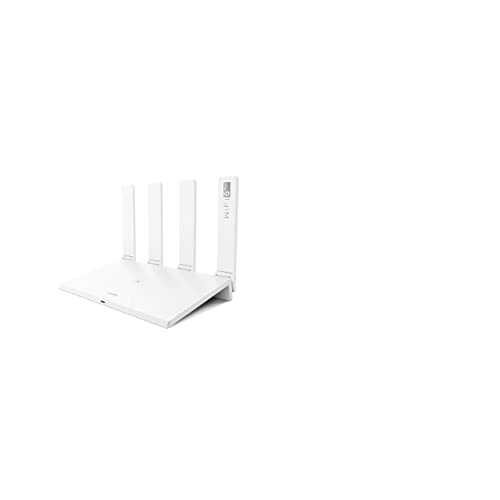
Are Huawei routers good?
Huawei routers have an average overall score of 7.3, ranking #9 among all router brands, and a user rating of 8.7, placing them at #15 based on user reviews.
Huawei routers are reliable and perform well for most home and small business needs. They deliver fast Wi-Fi speeds and stable connections.
Many models support modern standards like Wi-Fi 6 for better performance in crowded networks. The hardware is durable, and the software is user-friendly with easy setup. Huawei routers often include robust security features like firewalls and encryption to protect your network. They handle multiple devices well, which suits busy households or small offices.
However, Huawei routers have some limitations. Their firmware updates can be inconsistent, which may affect long-term performance. Some users report compatibility issues with certain devices or ISPs.
The best Huawei routers are as follows.
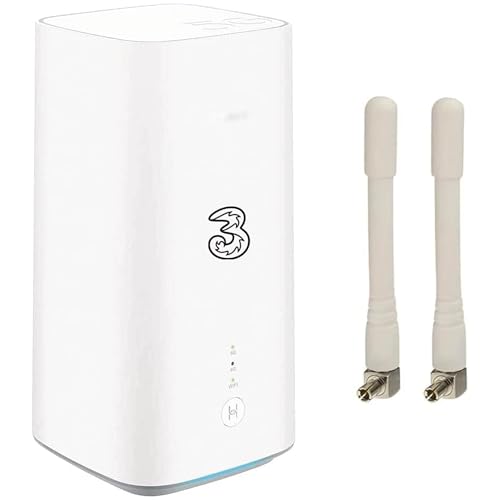
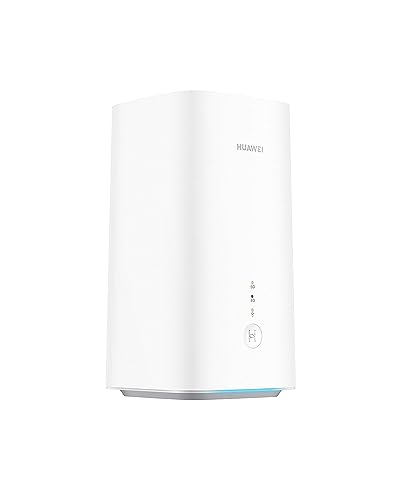
- Huawei 5G CPE (Overall score: 7.86 points)
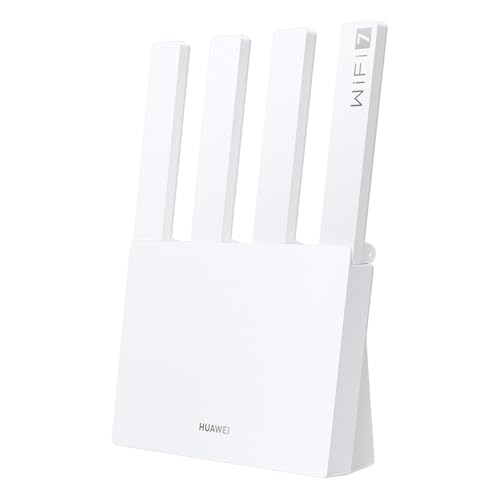
- Huawei WiFi BE3 (Overall score: 7.39 points)
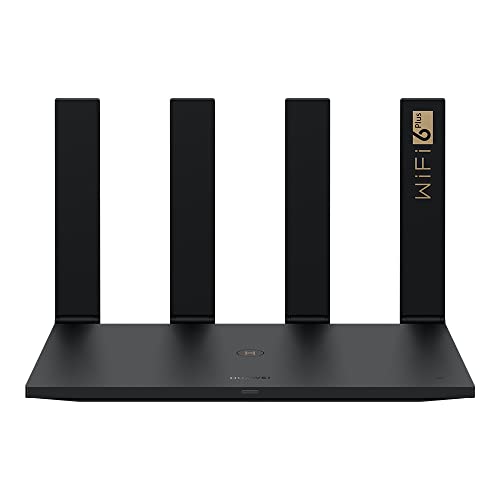
- Huawei AX3 WS7200 Quad Core (Overall score: 7.36 points)
The chart below ranks router brands by average overall score.
[horizontal-chart-12358809363490758653123200512821428302133513557861]
What are the main advantages of Huawei routers?
The main advantages of Huawei routers are as follows.
- High-speed connectivity: Huawei routers support Wi-Fi 6 with speeds up to 3 Gbps, which improves streaming, gaming, and large file transfers. They also manage multiple devices at once with low latency.
- Strong coverage: Many models use multiple antennas and beamforming technology, so they extend coverage in houses up to 200 m². Some units also support mesh networking for stable connections across larger areas.
- Advanced security: Huawei integrates AI-based firewalls and parental control features, which block malicious sites and track internet usage. WPA3 encryption enhances protection against unauthorized access.
- Smart network management: The Huawei AI Life app gives direct control over connected devices, speed monitoring, and guest networks. Users can set priority for gaming or work traffic.
- Hardware power: Huawei routers use quad-core processors with up to 1.4 GHz clock speed and 256 MB RAM, which keeps performance stable under heavy use with more than 100 devices connected.
- Energy efficiency: Many Huawei routers adapt power consumption based on traffic load, which lowers electricity use by around 20% compared to standard models.
What are the main disadvantages of Huawei routers?
The main disadvantages of Huawei routers are as follows.
- Limited ecosystem: Huawei routers often work best with Huawei devices (such as smartphones and smart home products), so compatibility may be weaker with other brands.
- Software updates: Firmware updates can be less frequent outside of China, so some models receive slower security or feature improvements.
- Restricted features: Certain functions like parental controls or advanced VPN may vary between models, so not all users get the same feature set.
- Regional availability: Some Huawei routers are not officially sold in Europe or the US, so importing may cause warranty or support issues.
- Privacy concerns: Since Huawei is a Chinese brand, some users raise concerns about data handling and long-term security.

Who makes Huawei routers?
Huawei routers are made by Huawei Technologies Co., Ltd., a Chinese multinational founded in 1987 by Ren Zhengfei in Shenzhen.
The company designs and manufactures networking equipment, consumer devices, and telecommunications infrastructure. Huawei employs more than 190,000 people worldwide and operates in over 170 countries, with a strong presence in both consumer and enterprise networking markets.
Huawei entered the consumer router market in the 2000s and expanded its product line to include 4G and 5G routers, Wi-Fi 6 models, and enterprise-grade solutions. It is one of the largest suppliers of telecom equipment globally, alongside companies like Ericsson and Nokia.
How popular are Huawei routers?
Huawei routers are among the larger global vendors, with shipments in 2024 estimated at around 12 million units and a global market share close to 8 %, which placed the brand in the top 5 worldwide. Huawei focused on Wi-Fi 6 and Wi-Fi 7 routers such as the AX3 and the Huawei Mesh series, and it also supplied large volumes of 4G/5G CPE routers through telecom operators.
Huawei performed strongest in China, where its share exceeded 25 %, while in Europe it stayed near 5 % and in North America it was almost absent because of trade restrictions.
What are the main Huawei router series?
The main Huawei router series are as follows.
- AX Series: Focused on Wi-Fi 6 and Wi-Fi 6E technology, this series supports high speeds, lower latency, and stronger multi-device connectivity. It is designed for both home and office networks and includes models with advanced security features.
- WS Series: Aimed at home use, the WS routers combine simple setup with stable performance. They often integrate with Huawei’s AI Life app and support Huawei Mesh for better whole-home coverage.
- 5G CPE Series: These routers use 5G mobile networks to deliver high-speed internet without fixed-line connections. They are suitable for areas with limited fiber access and can support multiple users at once.
- Enterprise AR Series: Built for businesses, these routers integrate routing, switching, VPN, and security in one platform. They are widely used in enterprise and branch office networks.
- NetEngine Series: High-performance routers designed for telecom operators and large enterprises. They support high traffic loads, advanced routing protocols, and carrier-grade reliability.
- CloudEngine Series: Developed for data centers and cloud environments, these routers deliver high bandwidth and support software-defined networking. They are used by operators and enterprises with complex IT infrastructures.
How much do Huawei routers cost?
Huawei routers cost between £35 and £430 depending on the model and its specifications.
Entry-level routers for home use start around £35 to £70 with basic Wi-Fi coverage and simple setup. Mid-range devices cost between £90 and £170 and include dual-band Wi-Fi, faster speeds, and better range.
High-end Huawei routers can cost from £220 up to £430 because they include advanced features such as Wi-Fi 6 support, multiple antennas for stronger connections, and high data transfer rates.
The following chart shows the price distribution of Huawei routers.
[vertical-chart-02988936024637327968081653841149197285770401912144]
What should you consider while choosing the best Huawei router?
When choosing the best Huawei router, you should consider the following factors:
- Wireless standards: The router's wireless capabilities determine connection speeds and device compatibility. Huawei's WiFi 6+ routers like the AX6 support 802.11ax standard with speeds up to 7200Mbps, while the AX3 series supports WiFi 6 with speeds up to 2976Mbps. The newer WiFi 6+ technology in the AX6 series delivers 140% higher rates compared to AX3 Pro.
- Processor: The processing power affects router performance and multitasking capabilities. The AX3 features a dual-core 1.2GHz processor, while the AX3 Pro uses a quad-core processor that handles more simultaneous connections and advanced features better. Higher-end models like the AX6 include more powerful processors to support demanding applications.
- Coverage and antenna: The antenna setup determines signal strength and coverage area. The AX6 features 4 external high-gain antennas with 8 signal amplifiers, while basic models typically have fewer antennas. Dual-band 4×4 MIMO configuration in premium models like the AX6 provides better coverage and eliminates dead zones compared to 2×2 MIMO in entry-level models.
- Security features: Advanced security protocols protect your network from threats. Huawei routers include WPA3 encryption, built-in firewalls, guest WiFi networks, and automatic security updates. Premium models also feature advanced AI anti-jamming technology that intelligently avoids Wi-Fi interference.
- Connectivity: The number and type of ports determine device connectivity flexibility. Most Huawei routers include one WAN port and three to four Gigabit LAN ports, while 5G models like the CPE Win include specialized ports for outdoor installations. Enterprise models feature additional port configurations for business needs.
- Specialized features: Advanced models include smart management capabilities that enhance user experience. The AX6 series features HarmonyOS integration, GameTurbo 2.0 technology that reduces gaming latency by 20%, and visual intelligent diagnosis. The 5G CPE Win includes Smart Antenna Switching technology that accelerates speed by 20%.
The chart below shows the Wi-Fi speed distribution of Huawei routers.
[vertical-chart-00768246090735299919008526676657386476082718420558]