Are Rowenta robot vacuums good?
Rowenta robot vacuums have an average overall score of 6.9, ranking #16 among comparable robot vacuum brands, and a user rating of 8, placing them at #16 based on user reviews.
Rowenta robot vacuums are strongest for buyers who want a wide choice between slim, affordable vacuum-and-mop robots and laser-mapped models with app zoning. Serie 60 and 130 AI reach under lower furniture, while 75 S+ and 220+ packages add self-emptying for less bin handling.
Rowenta robot vacuums are less uniform than the shared X-Plorer name suggests: entry generations may use gyro or sensor routing, most older Aqua models drag a static pad, and only selected plus bundles include an evacuation dock. Check the full RR reference, mapping system and station contents.
The chart below compares robot vacuum brands by average overall score.
[horizontal-chart-15406096130061009453140888914513010987580044587466]
What are the main advantages of Rowenta robot vacuums?
The main advantages of Rowenta robot vacuums are as follows:
- Broad range of cleaning systems: Rowenta spans simple Smart Force and early X-Plorer robots, ultra-slim models, laser-mapped machines and self-emptying packages. Buyers can pay for the navigation and station level they need instead of being forced into one premium platform.
- Strong low-profile options: X-Plorer Serie 60 is only 6 cm high, while Serie 130 AI combines laser navigation with an 8 cm body. These designs can reach beneath furniture that blocks taller turret robots, provided the available clearance is measured first.
- Useful mapping and personalisation: Compatible Serie 75, 120, 130, 220 and related models support permanent maps, room cleaning, restricted zones and app scheduling. AI generations can also suggest cleaning routines or no-go zones from usage patterns rather than offering only manual remote control.
- Vacuum-and-mop choice: Aqua and 4-in-1 models combine brushing, vacuuming and a wet pad, while Serie 220 and 240 move to larger vibrating mop hardware. Selected S+ and 220+ bundles add automatic dust emptying, reducing direct contact with debris between cleaning cycles.
- Repair and support infrastructure: Rowenta publishes model-specific manuals, care guidance, accessories and repair channels under the exact RR reference. Eligible current products are covered by Groupe SEB's 15-year repairability commitment, although buyers should confirm the logo and regional terms for the chosen model.
What are the main disadvantages of Rowenta robot vacuums?
The main disadvantages of Rowenta robot vacuums are as follows:
- Overlapping names and regional references: Smart Force, Explorer, X-Plorer, Serie numbers, Animal, Aqua, S and S+ labels cover several unrelated hardware generations. Two products with similar names can use different navigation, brushes, mop tanks or docks, so the complete RR code matters.
- Navigation quality varies widely: Entry Smart Force and lower X-Plorer models may use infrared sensors or gyroscope-led routing without reusable room maps. Laser, camera and AI systems arrive higher in the range, and obstacle avoidance remains a separate capability from basic mapping.
- Wet cleaning is often maintenance wiping: Many Aqua and 4-in-1 models pull a static damp pad and do not lift it automatically over carpet. Vibrating systems on newer upper series improve scrubbing, but rugs, sensitive wood and dried stains still require model-specific settings or manual preparation.
- Hands-free automation is limited to selected bundles: A normal charging base does not empty the bin, and an S or plus suffix does not guarantee mop washing or water refilling. Auto-empty docks also need bags, floor space and periodic cleaning, and their evacuation cycles are much louder than routine vacuuming.
- Connected functions have conditions: Advanced maps and remote controls depend on the Rowenta Robots app, a compatible regional account and usually 2.4 GHz Wi-Fi. Older or imported models can also use different filters, brushes, pads and bags, making local consumable availability worth checking before purchase.
Who makes Rowenta robot vacuums?
Rowenta robot vacuums are sold under Rowenta, a German-origin home-appliance brand owned by France-based Groupe SEB. Industrialist Robert Weintraud founded Weintraud & Co. in Offenbach in 1884 and registered the Rowenta name in December 1909; the brand entered vacuum cleaners in the 1970s.
Groupe SEB acquired Rowenta and its eight subsidiaries in 1988. The parent company, whose headquarters moved to Écully, France, in 1976, now operates Rowenta within a broad small-domestic-appliance portfolio while preserving its separate consumer brand, product support and regional sales channels.
Rowenta develops its robot-vacuum offer as the X-Plorer family, combining floor-care hardware with the Rowenta Robots app and Groupe SEB service network. Official model pages, manuals and spare-parts channels remain tied to exact RR references, and eligible current products carry the group's 15-year repairability commitment; this makes the reference code essential for support and consumables.
What are the main Rowenta robot vacuum series?
The main Rowenta robot vacuum series are as follows:
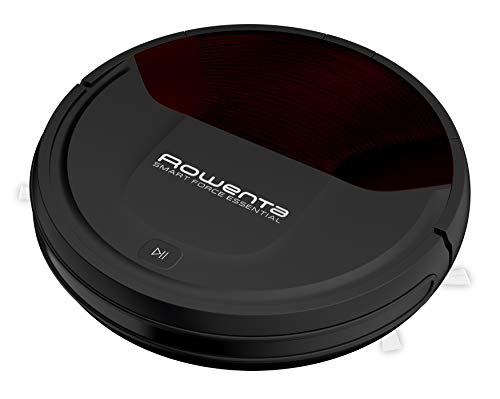
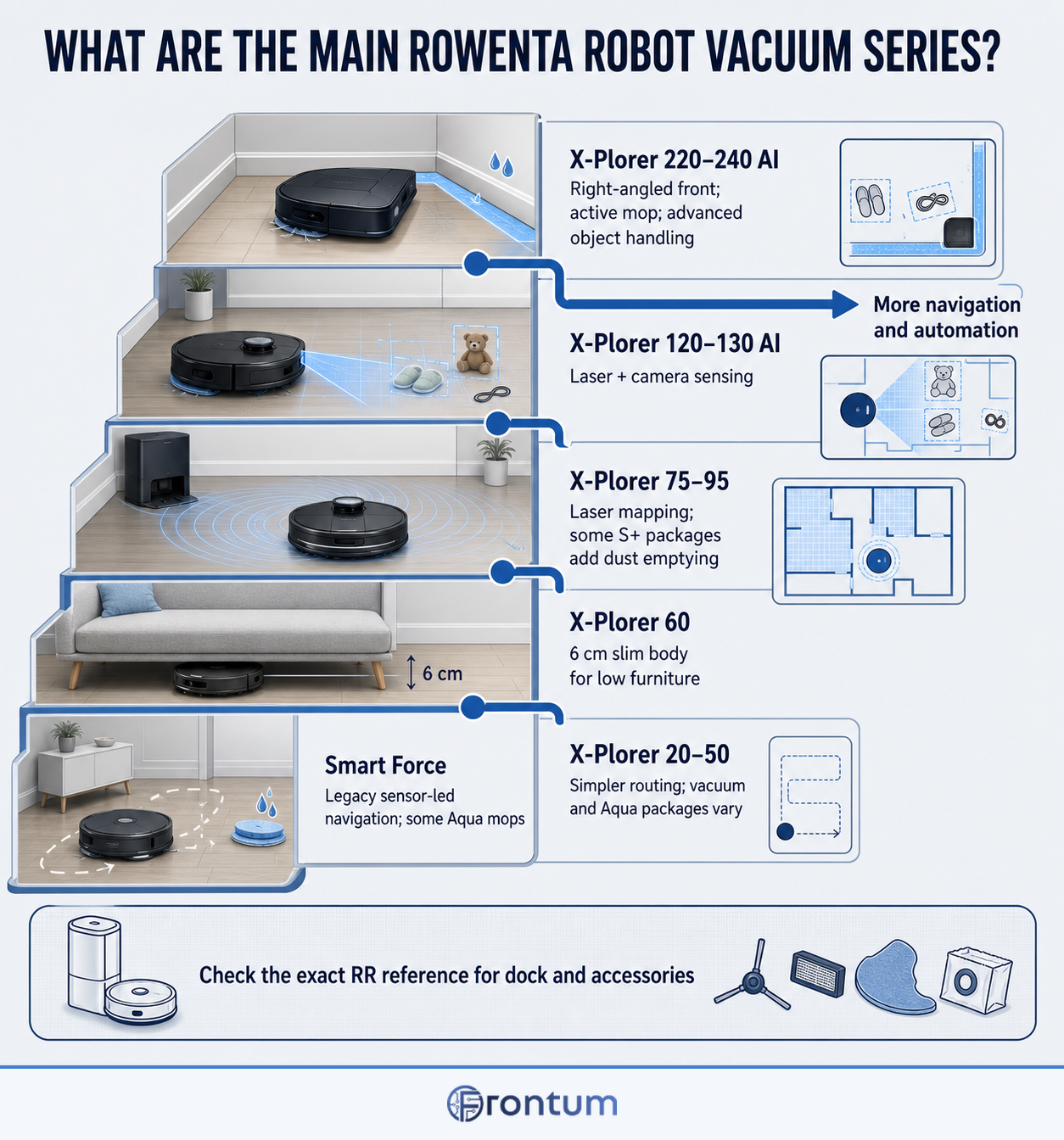
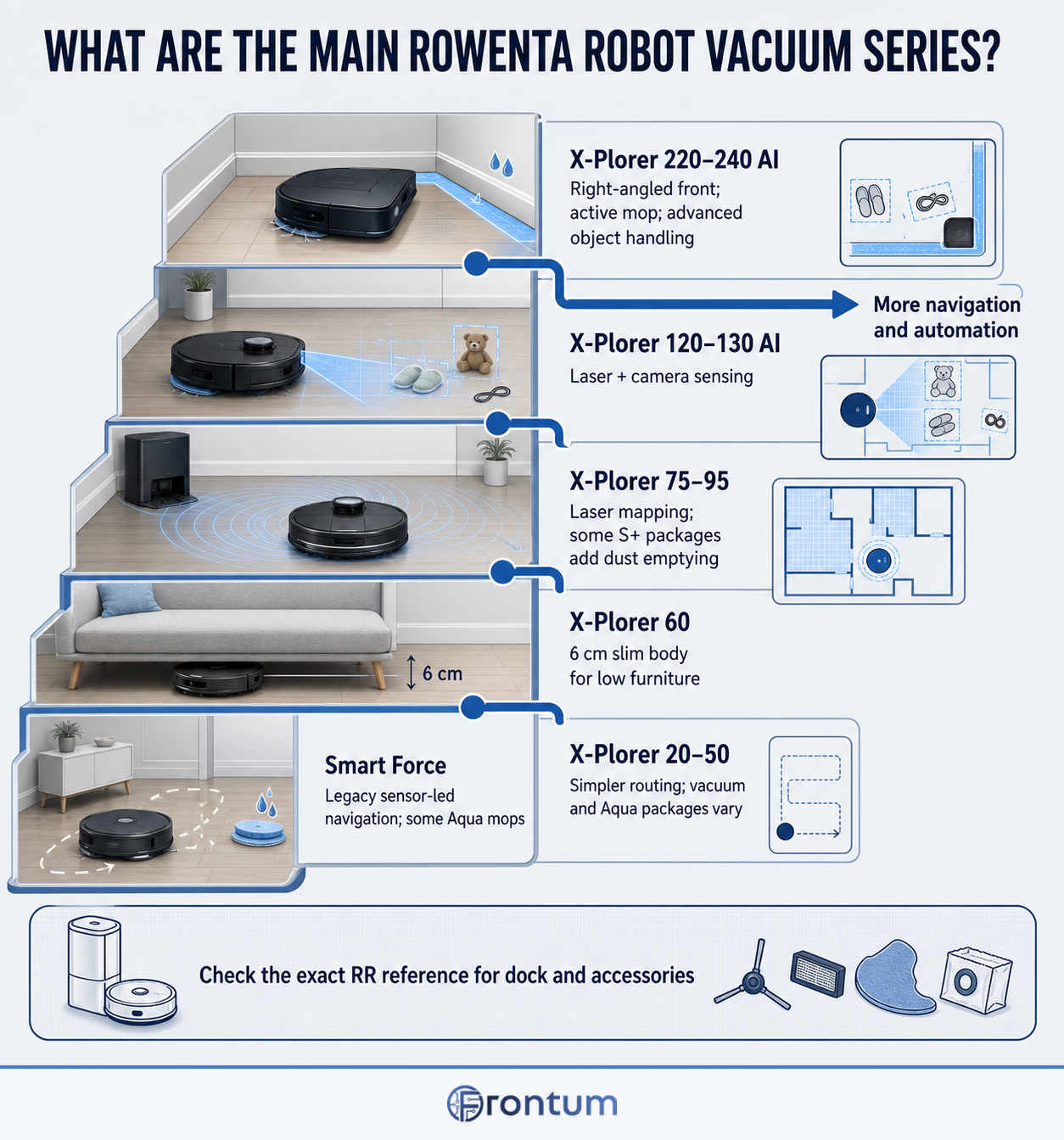
- Smart Force Essential and earlier Smart Force: These legacy families focus on routine vacuuming with infrared or sensor-led navigation, while Essential Aqua variants add a simple damp mop. They suit uncluttered, single-level floors when low price matters more than saved maps, precise room selection or an automated dock.
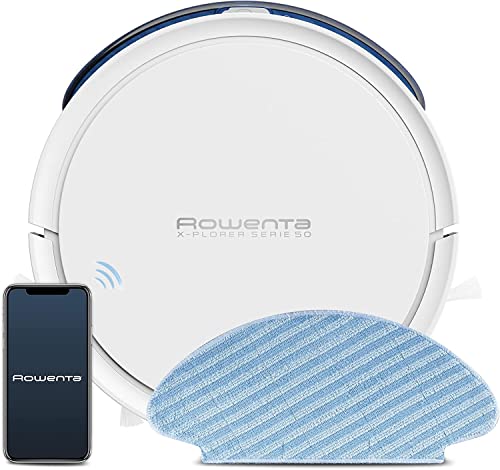
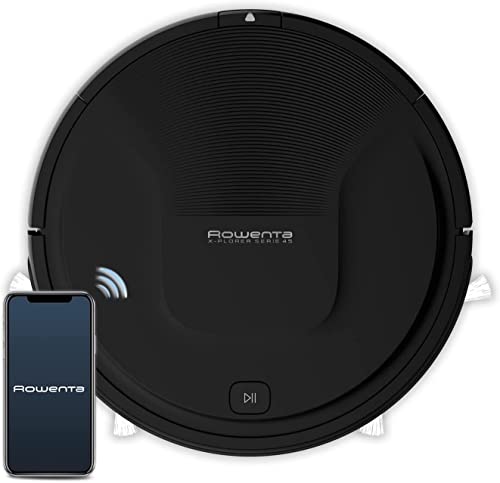
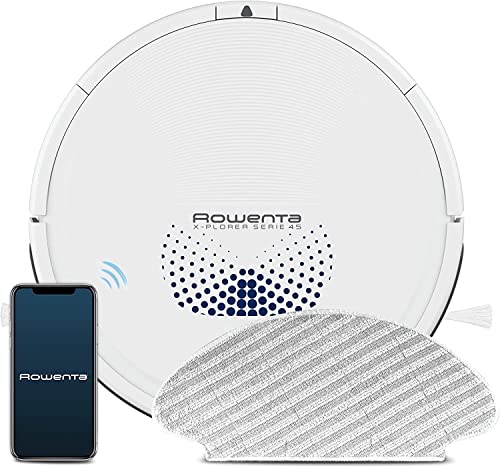
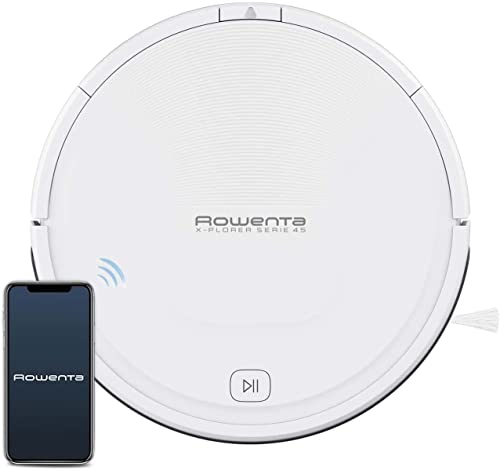
- X-Plorer Serie 20, 40, 45 and 50: These lower-number generations use sensor or gyroscope routing and mix vacuum-only, Aqua and Animal Care configurations. App control and mopping vary by RR reference, but persistent laser maps and sophisticated obstacle recognition should not be assumed.
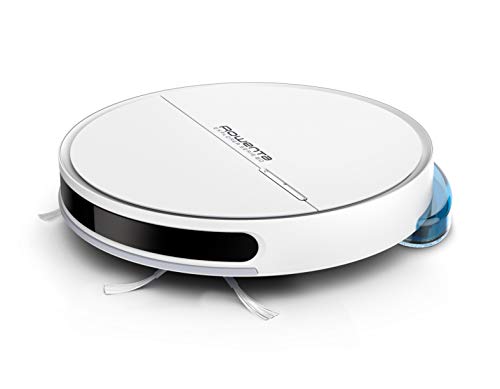
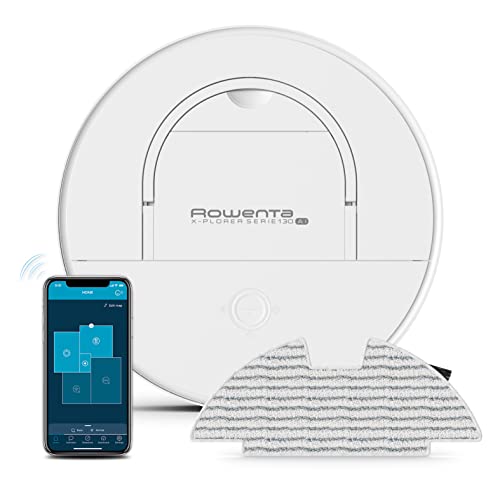
- X-Plorer Serie 60: Serie 60 is the distinctive ultra-slim 4-in-1 line, with a 6 cm body intended to clean beneath low furniture. Its compactness is the main attraction; navigation and wet cleaning remain simpler than on later laser-mapped X-Plorer families.
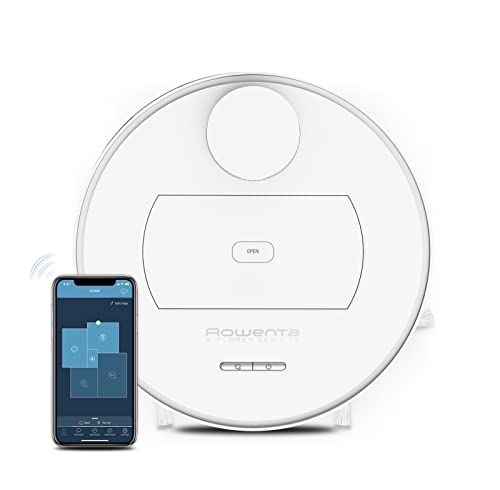
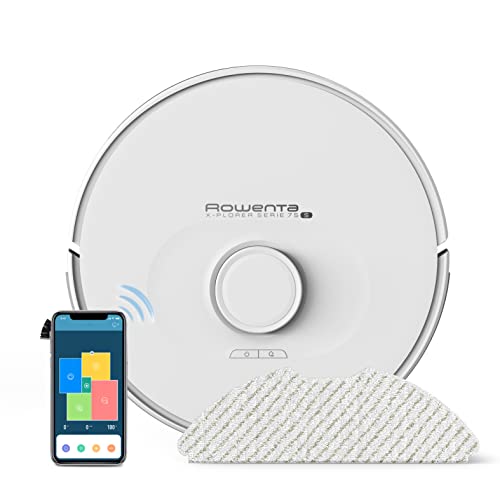
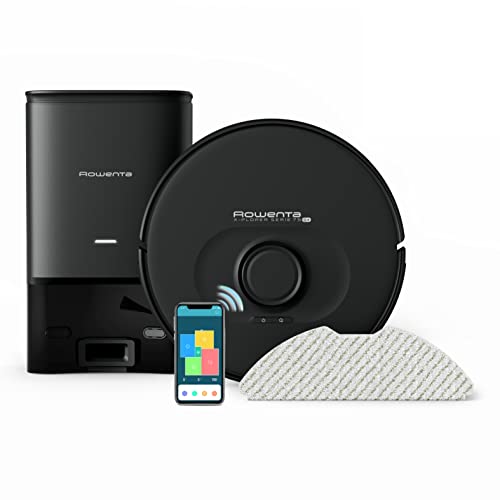
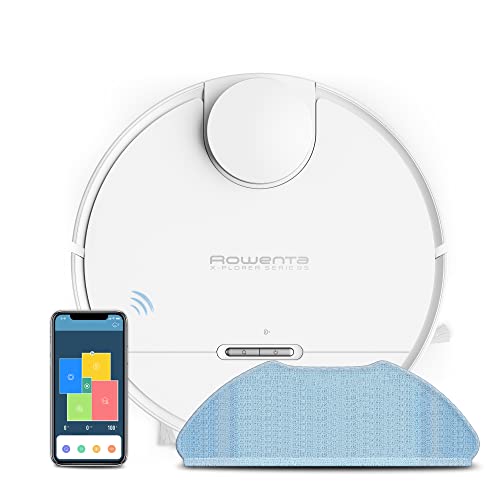
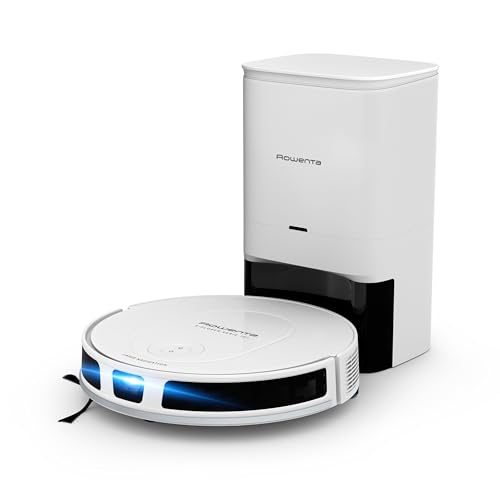
- X-Plorer Serie 75, 75 S and 75 S+: These models form the accessible laser-navigation tier, adding permanent maps, room controls and Smart Aqua Power cleaning. S+ packages pair the robot with automatic dust emptying for up to 60 days, while standard 75 and 75 S bundles may include only a charging base.
- X-Plorer Serie 80 and 95: Serie 80 combines laser and camera sensing in a performance-focused 4-in-1 platform, while Serie 95 raises suction to an official headline of up to 8,000 Pa. These are powerful mapped robots, but dock automation, brush kit and Animal or Total Care accessories depend on the exact package.
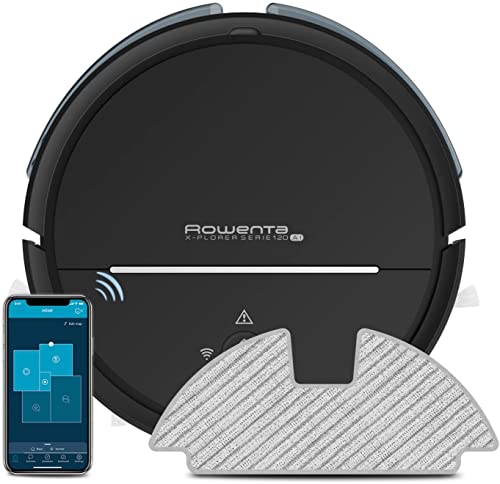
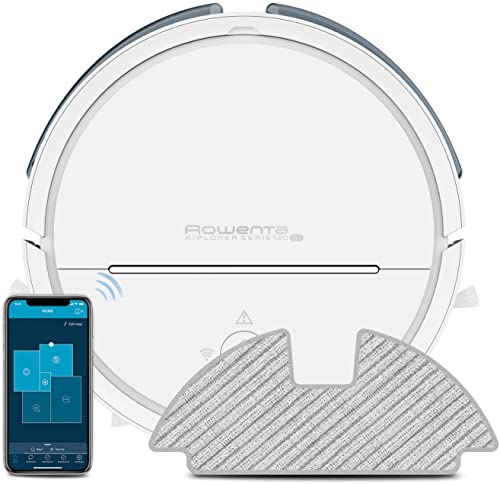
- X-Plorer Serie 120 and 130 AI: Serie 120 AI uses laser-plus-camera sensing to detect low obstacles and personalise cleaning, while Serie 130 AI packages laser mapping and AI services into an 8 cm body. Both target buyers who want better object handling and app-guided routines without moving to the newer right-angled chassis.
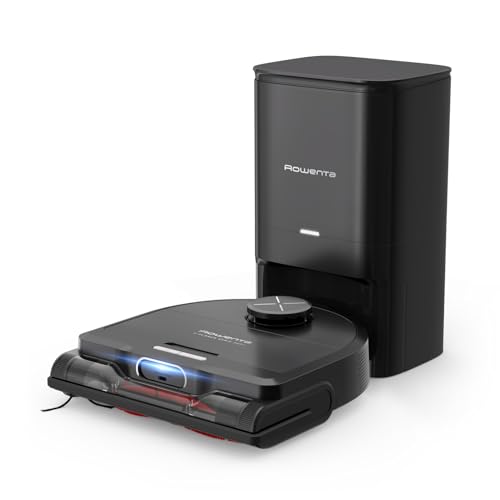
- X-Plorer Serie 220, 220+ and 240 AI: These upper families use a right-angled front, large electro-brush and active vibrating mop to improve edge and stain cleaning. Serie 220+ adds smart dust emptying, while Serie 240 AI adds 3D vision and more advanced object recognition; station contents still vary by RR reference.
How much do Rowenta robot vacuums cost?
Rowenta robot vacuums generally cost about £130-£730 new, although older-generation availability varies by country. Smart Force and X-Plorer Serie 20, 45 and 50 models commonly occupy £130-£260, with sensor or gyroscope routing, manual bin emptying and vacuum-only or basic Aqua cleaning. Slim Serie 60 and mapped Serie 75 variants often sit around £240-£390, depending on brush kit and dock.
Higher-spec Serie 80, 95, 120 and 130 AI robots and newer Serie 220 packages generally cost about £340-£730. The premium should buy better obstacle sensing, active mopping, a low-profile or right-angled chassis, or an S+ or 220+ self-empty station; check box contents because robot-only and dock bundles can share similar names. Filters, brushes, mop pads and dust bags add ongoing cost.
The chart below shows the price distribution of Rowenta robot vacuums.
[vertical-chart-01197039551102218015015806846460308971551801854671]
What should you consider when choosing a Rowenta robot vacuum?
Use the following checks to choose the right Rowenta X-Plorer series and package:
- Series: The X-Plorer range runs from simpler gyro or infrared robots to LiDAR and camera-equipped upper models. Serie 60 is notably slim, Serie 95 emphasises suction, Serie 130 AI adds more advanced sensing, and S+ or + packages include self-emptying; the RR reference identifies the exact robot and accessory bundle.
- Mapping: Serie 20, 40, 45 and 50 models use simpler sensor or gyro routing for uncomplicated floors, while Serie 75 and 95 add permanent laser maps and room controls. Serie 120 or 130 AI improves low-obstacle handling, and Serie 240 AI adds 3D vision for buyers who need the strongest object recognition in the Rowenta range.
- Height: Measure the lowest sofa, bed or cabinet opening and leave a little spare clearance. Serie 60 is about 6 cm high and Serie 130 AI about 8 cm, while turret and right-angled models are commonly nearer 9.5–10 cm.
- Pet hair: Animal Care versions of the lower X-Plorer families add pet-oriented brush and filter bundles, while Serie 95 combines a stronger motorised head with an official suction headline of up to 8,000 Pa. Serie 220 and 240 use a large front electro-brush for broader pickup, making them the more relevant comparison for carpet-heavy homes.
- Mopping: Essential Aqua and lower X-Plorer models use a static pad for light wiping, Serie 75 adds Smart Aqua Power control, and Serie 220 or 240 moves to an active vibrating mop for tougher marks. Older families generally need carpet zones or manual pad removal, while the upper right-angled models provide the more capable mixed-floor setup.
- Runtime and dock: Serie 60, 75 and 95 models generally suit medium floors around the 120-minute class, while selected 120, 130 and upper 220 or 240 models move closer to the longer-runtime end of the range. A 75 S+ or 220+ package reduces bin handling, whereas the corresponding standard model keeps the smaller charging setup.
- App and repairs: Lower Smart Force and early X-Plorer generations offer fewer map controls than Serie 75 and later laser models, while AI functions are concentrated in Serie 120, 130 and 240. The RR reference also determines the correct Animal kit, mop pad, brush and S+ bag, so two products with the same series name may not share parts or app features.