Scored using Graphics cards Methodology v3.0
Graphics cards Methodology v3.0
Mathematical & Unbiased Scoring
Products in this category are scored under Frontum Graphics cards Methodology v3.0: the technical score from the specifications is the base, and independent expert and video reviews (up to ±0.5 points), owner opinions (up to ±0.3) and best-of lists (up to +0.3) move it up or down.
Explore Graphics cards Methodology v3.0

Elsa GeForce RTX 4070 S.A.C review: 117 specs compared

Avg. price:~£620VRAM:12 GBMemory bus width:192 bitThermal Design Power (TDP):200 W

Elsa GeForce RTX 4070 S.A.C Review: Compare 117 technical specifications to see how this product ranks in the Graphics cards category and whether it is worth buying.
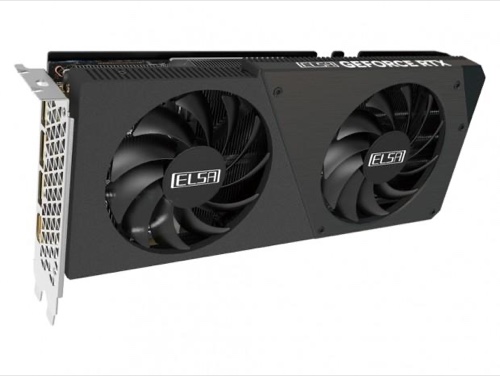
Elsa GeForce RTX 4070 S.A.C
7.6/10

Overall score

Score
7.6/ 10
✕
What it is
Our main score for this model, 1–10. It combines specs, expert reviews, best-of lists and owners.
How we count it
Parts: Technical score 40%, Reviews score 25%, List score 25%, Sentiment score 10%
Marks: Each part gets a mark out of 10. For reviews, lists and owners, a typical model in this category gets about 8 and the best one gets 10.
No data yet: A part with no data shows "?". It counts as the mark of a weaker model in this category (4 in 5 models with data score higher). This way, models with reviews, lists and owners usually come out ahead.
Score distribution
â–¼
<55-66-77-88-99-10
Score components

40%

7.4

Technical score

25%

?

Reviews scoreNot enough data yet, so we use 7.6, the mark of a weaker model in this category

25%

?

List scoreNot enough data yet, so we use 7.5, the mark of a weaker model in this category

10%

9.3

Sentiment score

â–²Better than 59% of graphics cards
7.5

Value for money

Value for money
7.5/ 10
✕
What it is
An indicator that combines the graphics card's overall rating with its cost.
When it matters
When you are looking for a graphics card that offers a strong balance of performance, features, and price.
Score distribution
â–¼
<55-66-77-88-99-10
Score components

70%

7.6

Overall score

30%

7.2

Price

â–²Better than 54%
7.4

Technical score

Technical score
7.4/ 10
✕
What it is
How good the specs are compared with the other models in this category, 1–10.
How we count it
Areas: We rate the specs in each area against the other models in this category.
Weighting: The areas that matter most to buyers count more. The shares are shown under Score components.
Share: The technical score is 40% of the overall score.
Score distribution
â–¼
<55-66-77-88-99-10
Score components

44%

6.9

Performance

24%

6.2

Memory

12%

7.9

Power

11%

9.7

Features

5%

9.2

Design

4%

9.6

Connectivity

â–²Better than 58%
?

Reviews score

Reviews score
✕
What it is
Average grade from independent test sites, magazines and video reviewers, 1–10.
How we count it
Grades: Each review's own score is converted to 1–10; without one, we grade the review ourselves. Big test sites count more, short reviews half as much as full tests. A video review counts half.
Score: The average grade is 80% of the review mark; the number of reviews is the other 20% (1 review = 5, the typical number in this category = 8, the most-reviewed model = 10).
Enough data: With few reviews, the average grade is pulled toward the typical grade of this category. No reviews yet: 7.6 for now.
Share: Reviews count 25% of the overall score.
Score distribution
â–¼
<55-66-77-88-99-10
Grades by review (0)
We have not found an independent test of this model yet. Until we do, its review part counts as 7.6.
User ratings collected online are not part of this score.
No expert tests yet
?

List score

List score
7.5/ 10
✕
What it is
How often independent test sites, magazines and video reviewers put this model in their best-of lists for this category.
How we count it
Points: The model in the most lists of this category gets 10; the others get 8 to 10 in proportion. In no list yet: 7.5. Lists count 25% of the overall score.
Enough data: Every list counts, even a single one. With fewer than 5 best-of lists in the category, this part is left out.
Lists with this model (0)
Not in any best-of list yet, so this part counts as 7.5. Models in a list get 8 to 10.
Not in any best-of list yet

What owners say about the Elsa GeForce RTX 4070 S.A.C

Based on 202 owners sharing their experience in online comments

80%positive10%mixed10%negative

Owners praise its fast, efficient gaming and DLSS gains, while VRAM limits and uneven results remain the main frustrations.

What owners dislike

  • Some owners find it can't hold 60 fps at max settings with ray tracing in demanding AAA games, especially at 4K or in Cyberpunk Overdrive.4
  • Owners say the 8GB limit causes memory shortfalls in some games, and 12GB can limit 4K in newer AAA titles, so DLSS helps.3
  • Some owners report hotspot near 95°C at 4K, memory near 100°C on some cards, and laptop versions throttling in thin chassis.3

Points mentioned by at least 3 owners, most mentioned first.

Loading...
Loading category ranking...

Graphics cards model ranking

Ranked #1774 of 2,260 models in Graphics cards (Overall score)

Technical Specifications of graphics card Elsa GeForce RTX 4070 S.A.C

Technical score
Technical score
7.4/ 10
✕
What it is
How good the specs are compared with the other models in this category, 1–10.
How we count it
Areas: We rate the specs in each area against the other models in this category.
Weighting: The areas that matter most to buyers count more. The shares are shown under Score components.
Share: The technical score is 40% of the overall score.
Score distribution
â–¼
<55-66-77-88-99-10
Score components:

44%

6.9

Performance

24%

6.2

Memory

12%

7.9

Power

11%

9.7

Features

5%

9.2

Design

4%

9.6

Connectivity

7.4
Reviews score
7.6
List score
?
Value for money
Value for money
7.5/ 10
✕
What it is
An indicator that combines the graphics card's overall rating with its cost.
When it matters
When you are looking for a graphics card that offers a strong balance of performance, features, and price.
Score distribution
â–¼
<55-66-77-88-99-10
Score components:

70%

7.6

Overall score

30%

7.2

Price

7.5
3DMark Time Spy benchmark score
17,000 points
This graphics card scores 17,000 points in 3DMark Time Spy, which is higher than 55.3% of graphics cards and equal to 1.7% of graphics cards.
3DMark Port Royal score
?
PassMark (G3D) result
26,919 points
This graphics card scores 26,919 points in PassMark G3D, which is higher than 63.7% of graphics cards and equal to 0.5% of graphics cards.
PassMark (DirectCompute) result
14,671 points
This graphics card scores 14,671 points in PassMark DirectCompute, which is higher than 59.5% of graphics cards and equal to 0.1% of graphics cards.
FP32 performance
29.15 TFLOPS
This graphics card delivers 29.15 TFLOPS FP32 performance, which is higher than that of 57.6% of graphics cards and equal to that of 1.2% of graphics cards.
Show more
VRAM
12 GB
This graphics card has 12 GB of VRAM, which is more than 46% of graphics cards and equal to 16% of graphics cards.
Memory type
GDDR6X
This graphics card uses GDDR6X memory, which is newer than on 57.1% of graphics cards and equal to 22.4% of graphics cards.
Memory bus width
192 bit
This graphics card uses a 192 bit memory bus, which is wider than that of 31.9% of graphics cards and equal to that of 18.7% of graphics cards.
Maximum memory bandwidth
504.2 GB/s
This graphics card reaches 504.2 GB/s memory bandwidth, which is higher than that of 56.7% of graphics cards and equal to that of 4.2% of graphics cards.
Effective memory speed
21,000 MHz
This graphics card reaches an effective memory speed of 21,000 MHz, which is faster than that of 61.2% of graphics cards and equal to that of 12.4% of graphics cards.
Show more
PCI Express (PCIe) version
4
This graphics card supports PCIe 4, which is newer than on 22.5% of graphics cards and equal to 50.5% of graphics cards.
PCIe lanes
x16
This graphics card uses x16 PCIe lanes, which is more than 24.1% of graphics cards and equal to 75.9% of graphics cards.
DirectX version
12 Ultimate
This graphics card supports DirectX 12 Ultimate, which is more advanced than on 22.8% of graphics cards and equal to 77.2% of graphics cards.
Vulkan version
1.4
This graphics card supports Vulkan 1.4, which is more advanced than on 20.8% of graphics cards and equal to 79.2% of graphics cards.
OpenGL version
4.6
This graphics card supports OpenGL 4.6, which is more advanced than on 2% of graphics cards and equal to 98% of graphics cards.
Show more
Max displays supported
4
This graphics card supports up to 4 displays, which is more than 9% of graphics cards and equal to 88.2% of graphics cards.
Max digital resolution
7680x4320
This graphics card supports a maximum digital resolution of 7680x4320, which is higher than that of 9.2% of graphics cards and equal to that of 90.9% of graphics cards.
DisplayPort outputs
3
This graphics card offers 3 DisplayPort outputs, which is more than 21.7% of graphics cards and equal to 76% of graphics cards.
DisplayPort version
1.4a
This graphics card supports DisplayPort 1.4a, which is more advanced than on 19.3% of graphics cards and equal to 46.3% of graphics cards.
DisplayPort link rates
32.4 Gbps
This graphics card supports DisplayPort link rates up to 32.4 Gbps, which is faster than on 56.6% of graphics cards and equal to 20.9% of graphics cards.
Show more
Thermal Design Power (TDP)
200 W
This graphics card has a TDP of 200 W, which is lower than that of 50.6% of graphics cards and equal to that of 3.7% of graphics cards.
Power consumption while under peak load
200 W
This graphics card draws 200 W under peak load, which is lower than 53.4% of graphics cards and equal to 3.6% of graphics cards.
Recommended PSU wattage
650 W
This graphics card recommends a 650 W PSU, which is lower than that of 39.2% of graphics cards and equal to that of 13.9% of graphics cards.
Board power limit
220 W
This graphics card has a board power limit of 220 W, which is lower than that of 49.5% of graphics cards and equal to that of 2.7% of graphics cards.
PCIe power spec
200 W
Show more
Size
250x 113x 40 mm
Length
250 mm
This graphics card is 250 mm long, which is shorter than 67.6% of graphics cards and equal in length to 1.4% of graphics cards.
Height
118 mm
This graphics card is 118 mm tall, which is shorter than 66.1% of graphics cards and equal in height to 1.8% of graphics cards.
Slot width
2 slot/s
This graphics card occupies 2 slot/s, which is slimmer than 52.4% of graphics cards and equal in width to 43.4% of graphics cards.
Weight
?
Show more

Elsa GeForce RTX 4070 S.A.C vs the average graphics card

246810TotalPerformanceMemoryFeaturesConnectivityPowerDesign
  • 80 more AI cores
    This graphics card has more AI cores than the average graphics card (224 vs 144). The average graphics card has 144 AI cores.
    224 vs 144
  • 0.5 slot/s slimmer design
    This graphics card occupies fewer slots than the average graphics card (2 slot/s vs 2.5 slot/s). The average graphics card occupies 2.5 slot/s.
    2 slot/s vs 2.5 slot/s
  • 40 more TMUs
    This graphics card has more TMUs than the average graphics card (224 vs 184). The average graphics card has 184 TMUs.
    224 vs 184
  • 10.5% faster memory speed
    This graphics card has a higher effective memory speed than the average graphics card (21,000 MHz vs 19,000 MHz). The average graphics card reaches an effective memory speed of 19,000 MHz.
    21,000 MHz vs 19,000 MHz
  • 12.5% higher memory bandwidth
    This graphics card has a higher memory bandwidth than the average graphics card (504.2 GB/s vs 448 GB/s). The average graphics card has a memory bandwidth of 448 GB/s.
    504.2 GB/s vs 448 GB/s
  • 32.2 mm shorter card length
    This graphics card is shorter than the average graphics card (250 mm vs 282.2 mm). The average graphics card has a length of 282.2 mm.
    250 mm vs 282.2 mm
  • 19.2% higher sentiment score
    9.3 vs 7.8
  • 50% larger L2 cache
    This graphics card has more L2 cache than the average graphics card (36 MB vs 24 MB). The average graphics card has 24 MB L2 cache.
    36 MB vs 24 MB
  • 19.2% higher sentiment score
    9.3 vs 7.8
  • 80 more AI cores
    This graphics card has more AI cores than the average graphics card (224 vs 144). The average graphics card has 144 AI cores.
    224 vs 144
  • 40 more TMUs
    This graphics card has more TMUs than the average graphics card (224 vs 184). The average graphics card has 184 TMUs.
    224 vs 184
  • 20.5% higher texture rate
    This graphics card has a higher texture rate than the average graphics card (455.4 GTexel/s vs 378 GTexel/s). The average graphics card has a texture rate of 378 GTexel/s.
    455.4 GTexel/s vs 378 GTexel/s
  • 6 more compute units
    This graphics card has more compute units than the average graphics card (46 vs 40). The average graphics card has 40 compute units.
    46 vs 40
  • 29% higher FP32 performance
    This graphics card has a higher FP32 performance than the average graphics card (29.2 TFLOPS vs 22.6 TFLOPS). The average graphics card has FP32 performance of 22.6 TFLOPS.
    29.15 TFLOPS vs 22.6 TFLOPS
  • 10.5% faster memory speed
    This graphics card has a higher effective memory speed than the average graphics card (21,000 MHz vs 19,000 MHz). The average graphics card reaches an effective memory speed of 19,000 MHz.
    21,000 MHz vs 19,000 MHz
  • 12.5% higher memory bandwidth
    This graphics card has a higher memory bandwidth than the average graphics card (504.2 GB/s vs 448 GB/s). The average graphics card has a memory bandwidth of 448 GB/s.
    504.2 GB/s vs 448 GB/s
  • 50% larger L2 cache
    This graphics card has more L2 cache than the average graphics card (36 MB vs 24 MB). The average graphics card has 24 MB L2 cache.
    36 MB vs 24 MB
  • 0.5 slot/s slimmer design
    This graphics card occupies fewer slots than the average graphics card (2 slot/s vs 2.5 slot/s). The average graphics card occupies 2.5 slot/s.
    2 slot/s vs 2.5 slot/s
  • 32.2 mm shorter card length
    This graphics card is shorter than the average graphics card (250 mm vs 282.2 mm). The average graphics card has a length of 282.2 mm.
    250 mm vs 282.2 mm
  • 7 mm lower card height
    This graphics card is shorter than the average graphics card (118 mm vs 125 mm). The average graphics card has a height of 125 mm.
    118 mm vs 125 mm
  • 1 fewer fans
    This graphics card has fewer fans than the average graphics card (2 vs 3).
    2 vs 3
  • No dual BIOS
    This graphics card does not include dual BIOS, the average graphics card does.
  • Less advanced frame generation
    This graphics card has less advanced frame generation than the average graphics card (frame generation vs multi frame generation).
    frame generation vs multi frame generation
  • 25% slower VRAM clock
    This graphics card has a lower VRAM clock than the average graphics card (1,313 MHz vs 1,750 MHz). The average graphics card runs its VRAM at 1,750 MHz.
    1,313 MHz vs 1,750 MHz
  • 1.2% lower boost clock speed
    This graphics card has a lower boost GPU clock than the average graphics card (2,475 MHz vs 2,505 MHz). The average graphics card has a boost GPU clock of 2,505 MHz.
    2,475 MHz vs 2,505 MHz
  • 5 °C lower thermal ceiling
    This graphics card has a lower thermal ceiling than the average graphics card (100 °C vs 95 °C). The average graphics card has a thermal ceiling of 95 °C.
    100 °C vs 95 °C
  • Older NVDEC generation
    This graphics card has a lower NVDEC generation than the average graphics card (5 vs 6). The average graphics card offers NVDEC generation 6.
    5 vs 6
  • 1.2% lower boost clock speed
    This graphics card has a lower boost GPU clock than the average graphics card (2,475 MHz vs 2,505 MHz). The average graphics card has a boost GPU clock of 2,505 MHz.
    2,475 MHz vs 2,505 MHz
  • 25% slower VRAM clock
    This graphics card has a lower VRAM clock than the average graphics card (1,313 MHz vs 1,750 MHz). The average graphics card runs its VRAM at 1,750 MHz.
    1,313 MHz vs 1,750 MHz
  • Less advanced frame generation
    This graphics card has less advanced frame generation than the average graphics card (frame generation vs multi frame generation).
    frame generation vs multi frame generation
  • Older NVDEC generation
    This graphics card has a lower NVDEC generation than the average graphics card (5 vs 6). The average graphics card offers NVDEC generation 6.
    5 vs 6
  • 1 fewer fans
    This graphics card has fewer fans than the average graphics card (2 vs 3).
    2 vs 3
  • No dual BIOS
    This graphics card does not include dual BIOS, the average graphics card does.
  • 5 °C lower thermal ceiling
    This graphics card has a lower thermal ceiling than the average graphics card (100 °C vs 95 °C). The average graphics card has a thermal ceiling of 95 °C.
    100 °C vs 95 °C

Third-party reviews

What customers like about Elsa GeForce RTX 4070 S.A.C

  • Compact two-slot design (250mm length) fits easily in most cases and small form factor builds
  • Highly efficient dual-fan 'S.A.C 5' cooling system developed with Inno3D for low noise and temperatures
  • Exceptional power efficiency with a low 200W TDP, often requiring only a single 8-pin power connector
  • Includes a 2-year product warranty, which is longer than some competing brands in its region
  • Strong 1440p gaming performance, roughly on par with the previous generation's RTX 3080 flagship
  • Full support for advanced features like DLSS 3 Frame Generation, Ray Reconstruction, and AV1 encoding

What customers don't like about Elsa GeForce RTX 4070 S.A.C

  • 12GB VRAM capacity may be a limiting factor for long-term 4K gaming as modern games become more memory-intensive
  • The 192-bit memory bus is narrower than previous-gen 70-series cards, impacting high-resolution scaling
  • Generational performance increase in raw rasterization is modest compared to the price jump from the RTX 3070
  • Pricing in certain markets can be less competitive compared to AMD alternatives like the RX 7800 XT
  • Relatively basic aesthetics without RGB lighting, which may not appeal to users seeking a 'flashy' build

Verdict

The Elsa GeForce RTX 4070 S.A.C. is a performance-oriented graphics card based on the Ada Lovelace architecture, featuring 7,168 CUDA cores and 12GB of GDDR6X memory on a 192-bit bus. It is equipped with a compact 'S.A.C. 5' dual-fan cooler measuring 250mm in length and utilizing a two-slot thickness, making it suitable for a wide range of PC cases. Main pros include exceptional 1440p gaming performance, high power efficiency with a 220W TDP, and support for advanced features like DLSS 3 frame generation and ray tracing. Notable cons include its relatively high price and the memory bus width, which may limit performance in memory-intensive 4K gaming scenarios compared to higher-end models.

Compare Elsa GeForce RTX 4070 S.A.C with other products in the Graphics cards category

1Product to compare no. 1
VS
2Product to compare no. 2
VS
3Product to compare no. 3 (optional)

Graphic comparison of Elsa GeForce RTX 4070 S.A.C and other products in the Graphics cards category

No results found