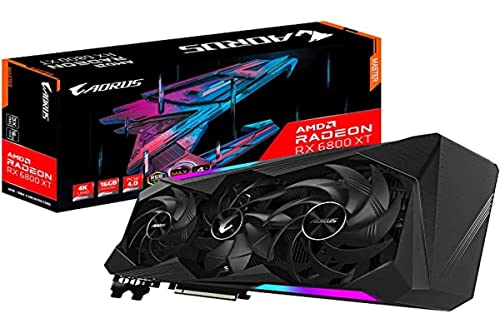
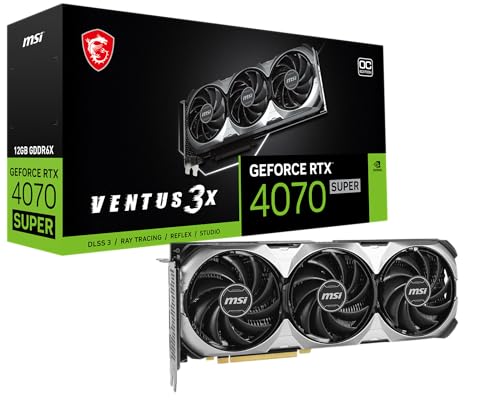
GIGABYTE Radeon RX 6800 XT Review | 118 Data compared

double-arrow
  • Avg. price in UK: ~£640
  • Avg. price in US: ~$850
  • VRAM: 16 GB
  • Memory bus width: 256 bit
  • Thermal Design Power (TDP): 300 W

GIGABYTE Radeon RX 6800 XT review. Compare 118 technical specifications and user reviews to see how it ranks among graphics cards and if it is worth buying.

7.6

Overall score

What it is: An overall evaluation of the graphics card's quality, based on technical analyses and user reviews.

When it matters: When you need a quick reference to identify the best graphics cards on the market.

Score components:

90.0%

7.5

Technical Score

10.0%

8.3

User score

Very good
7.5

Technical Score

What it is: An assessment of the graphics card's technical performance, covering key areas such as gaming and rendering performance, ray tracing, memory configuration, power efficiency, cooling, connectivity, features, and build quality.

When it matters: When you want to compare graphics cards based on technical performance and available features.

Score components:

44.0%

7.8

Performance

24.0%

6.3

Memory

12.0%

8.2

Power & Cooling

11.0%

8.6

Platform & Features

5.0%

6.6

Design

4.0%

7.9

Connectivity & Media

Very good
8.3

User score

What it is: A rating that combines user reviews and the total number of reviews received by the graphics card.

When it matters: When you want to understand how a graphics card performs in real use and how reliable it is in terms of performance, temperatures, noise, stability, and long-term ownership.

Score components:

70.0%

8.2

User reviews

30.0%

8.6

Popularity

User score:
United Kingdom
amazon
4.2
(145)
amazon
3.7
(47)
amazon
4.1
(17)
United States
Amazon_logo.png
3.8
(42)

(Reviews last updated: June 2026)

Excellent
  • 5.8
    Gaming

    Score components:

    45.0%

    4.3

    Floating-point performance

    25.0%

    5.2

    VRAM

    20.0%

    8.3

    Ray tracing cores / units

    10.0%

    8.8

    PCI Express (PCIe) version

  • 6.2
    Video editing

    Score components:

    35.0%

    7.0

    AV1 encode

    30.0%

    5.2

    VRAM

    20.0%

    4.3

    Floating-point performance

    15.0%

    8.8

    PCI Express (PCIe) version

  • 5.4
    1080p

    Score components:

    55.0%

    4.3

    Floating-point performance

    25.0%

    5.2

    VRAM

    10.0%

    8.3

    Ray tracing cores / units

    10.0%

    8.8

    PCI Express (PCIe) version

  • 5.4
    1440p

    Score components:

    50.0%

    4.3

    Floating-point performance

    30.0%

    5.2

    VRAM

    15.0%

    8.3

    Ray tracing cores / units

    5.0%

    8.8

    PCI Express (PCIe) version

  • 5.7
    4K

    Score components:

    40.0%

    4.3

    Floating-point performance

    35.0%

    5.2

    VRAM

    20.0%

    8.3

    Ray tracing cores / units

    5.0%

    8.8

    PCI Express (PCIe) version

  • gigabyte-radeon-rx-6800-xt
gigabyte-radeon-rx-6800-xt

Best prices in UK

Best rankings

?

Available: ranking among products currently available (including other versions of this product).
All: ranking among all products in the database.

Verdict

The Gigabyte Radeon RX 6800 XT is a high-performance graphics card built on the RDNA 2 architecture with 4608 stream processors, 72 ray accelerators, and a substantial 16GB of GDDR6 memory on a 256-bit bus. It features a boost clock of up to 2285 MHz on Gaming OC models and utilizes a 128MB AMD Infinity Cache to significantly enhance memory bandwidth for 4K gaming. Key strengths include its excellent 1440p and 4K rasterization performance that rivals high-end competitors, the efficient Windforce 3X cooling system with alternate spinning fans, and a solid build quality featuring a protective metal backplate and dual BIOS. However, it lacks the superior ray tracing and AI-upscaling performance (DLSS) found in rival NVIDIA cards, can be physically large at 2.5 to 2.9 slots thick, and may exhibit audible fan noise or coil whine under heavy load.

Technical Specifications of GIGABYTE Radeon RX 6800 XT

Technical Score

What it is: An assessment of the graphics card's technical performance, covering key areas such as gaming and rendering performance, ray tracing, memory configuration, power efficiency, cooling, connectivity, features, and build quality.

When it matters: When you want to compare graphics cards based on technical performance and available features.

Score components:

44.0%

7.8

Performance

24.0%

6.3

Memory

12.0%

8.2

Power & Cooling

11.0%

8.6

Platform & Features

5.0%

6.6

Design

4.0%

7.9

Connectivity & Media

7.5
GIGABYTE Radeon RX 6800 XT has a technical score of 7.51 points, which is higher than that of 71.2% of products in this category.
User score

What it is: A rating that combines user reviews and the total number of reviews received by the graphics card.

When it matters: When you want to understand how a graphics card performs in real use and how reliable it is in terms of performance, temperatures, noise, stability, and long-term ownership.

Score components:

70.0%

8.2

User reviews

30.0%

8.6

Popularity

User score:
United Kingdom
amazon
4.2
(145)
amazon
3.7
(47)
amazon
4.1
(17)
United States
Amazon_logo.png
3.8
(42)

(Reviews last updated: June 2026)

8.3
GIGABYTE Radeon RX 6800 XT has a user score of 8.28 points, which is higher than that of 68.4% of products in this category.
Popularity
What it is: An indicator based on the number of reviews received by the graphics card.
When it matters: When you prefer a graphics card that has already been chosen and reviewed by many other users.
8.6
GIGABYTE Radeon RX 6800 XT has a popularity of 8.6 points, which is higher than 74.3% of products in this category.
Ratio quality/price

What it is: An indicator that combines the graphics card's overall rating with its cost.

When it matters: When you are looking for a graphics card that offers a strong balance of performance, features, and price.

Score components:

60.0%

7.6

Overall score

40.0%

7.1

Price

7.5
GIGABYTE Radeon RX 6800 XT has a quality-to-price ratio of 7.5 points, which is higher than 88% of products in this category.
3DMark Time Spy benchmark score
What it is: Benchmark result from 3DMark Time Spy, a synthetic DirectX 12 test often used as a quick gaming-performance reference.
When it matters: When you need a fast rough performance sort before digging into game-specific reviews and frame-rate data.

Importance: LOW

?
3DMark Port Royal score
What it is: Benchmark result from 3DMark Port Royal, a synthetic test focused on ray tracing performance.
When it matters: When ray tracing matters in the games you actually play and you want one quick way to separate stronger and weaker RT cards.

Importance: LOW

?
PassMark (G3D) result
What it is: Overall GPU performance score in PassMark G3D benchmark
When it matters: When you need one broad score to sort cards into rough performance tiers.

Importance: LOW

?
PassMark (DirectCompute) result
What it is: PassMark score for DirectCompute performance tests
When it matters: When compute workloads matter alongside gaming performance.

Importance: LOW

?
Floating-point performance
What it is: Theoretical floating-point compute performance of the GPU.
When it matters: When rendering, AI, or heavy compute work needs strong single-precision throughput.

Importance: LOW

21.06 TFLOPS
GIGABYTE Radeon RX 6800 XT delivers 21.06 TFLOPS floating-point performance, which is lower than that of 58% of graphics cards.
Show more
VRAM
What it is: Total video memory available on the graphics card
When it matters: When you play at high settings, use texture mods, or work with large creative projects.

Importance: HIGH

16 GB
GIGABYTE Radeon RX 6800 XT has 16 GB of VRAM, which is more than 61.4% of graphics cards and equal to 28.7% of graphics cards.
Memory type
What it is: Type of graphics memory used (GDDR6, HBM2e, etc.)
When it matters: When memory technology is part of the buying decision because it affects bandwidth class, power use, and product positioning.

Importance: LOW

GDDR6
GDDR version
What it is: Generation of GDDR memory used by the graphics card.
When it matters: When you want to separate older memory generations from newer ones before comparing bandwidth, power behavior, and market tier.

Importance: LOW

GDDR6
GIGABYTE Radeon RX 6800 XT uses GDDR6 memory, which is newer than on 16.6% of graphics cards and equal to 39.1% of graphics cards.
Memory bus width
What it is: Width of the memory interface bus in bits
When it matters: When you care about steadier performance at higher resolutions, heavier texture settings, or ray-traced workloads that stress memory traffic.

Importance: HIGH

256 bit
GIGABYTE Radeon RX 6800 XT uses a 256 bit memory bus, which is wider than that of 49.5% of graphics cards and equal to that of 36.1% of graphics cards.
Maximum memory bandwidth
What it is: Maximum data transfer rate between GPU and its memory
When it matters: When 4K gaming, ray tracing, or creator work can choke a slower memory subsystem.

Importance: HIGH

512 GB/s
GIGABYTE Radeon RX 6800 XT reaches 512 GB/s memory bandwidth, which is higher than that of 60.2% of graphics cards and equal to that of 1.8% of graphics cards.
Show more
PCI Express (PCIe) version
What it is: Version of PCI Express interface supported
When it matters: When you are pairing the card with an older motherboard and want to avoid leaving bandwidth or future compatibility on the table.

Importance: LOW

4.0
GIGABYTE Radeon RX 6800 XT supports PCIe 4.0, which is newer than on 22.5% of graphics cards and equal to 52% of graphics cards.
PCIe lanes
What it is: Number of PCI Express lanes used for communication
When it matters: When limited lane width could bottleneck the card in some systems.

Importance: LOW

x16
GIGABYTE Radeon RX 6800 XT uses x16 PCIe lanes, which is more than 31.5% of graphics cards and equal to 68.6% of graphics cards.
DirectX version
What it is: Highest supported DirectX API version
When it matters: When you play newer Windows games that depend on the latest graphics features.

Importance: LOW

12 Ultimate
GIGABYTE Radeon RX 6800 XT supports DirectX 12 Ultimate, which is more advanced than on 12.5% of graphics cards and equal to 87.5% of graphics cards.
Vulkan version
What it is: Highest supported Vulkan API version
When it matters: When modern games, emulators, or creative apps lean on Vulkan support.

Importance: LOW

?
OpenGL version
What it is: Highest supported OpenGL API version
When it matters: When older games or pro apps still depend on OpenGL compatibility.

Importance: LOW

4.6
GIGABYTE Radeon RX 6800 XT supports OpenGL 4.6, which is more advanced than on 4.8% of graphics cards and equal to 95.2% of graphics cards.
Show more
Max displays supported
What it is: Total number of external displays supported simultaneously
When it matters: When you run a multi-monitor desk for sim racing, trading, or editing.

Importance: LOW

4
GIGABYTE Radeon RX 6800 XT supports up to 4 displays, which is more than 7.8% of graphics cards and equal to 89.2% of graphics cards.
Max digital resolution
What it is: Maximum supported digital display resolution
When it matters: When you plan to drive 4K or 8K panels at their native resolution.

Importance: LOW

?
DisplayPort outputs
What it is: Number of DisplayPort video outputs
When it matters: When your setup needs several high-refresh monitors without adapters.

Importance: LOW

2
GIGABYTE Radeon RX 6800 XT offers 2 DisplayPort outputs, which is fewer than 79.2% of graphics cards and equal to 10.2% of graphics cards.
DisplayPort version
What it is: Version of DisplayPort standard supported
When it matters: When your monitor setup depends on newer DisplayPort features for higher refresh rates, higher resolution, or better cable flexibility.

Importance: LOW

?
DisplayPort link rates
What it is: Supported data link rates for DisplayPort connections
When it matters: When you are pushing high resolution and refresh rate over DisplayPort.

Importance: LOW

8.1 Gbps
GIGABYTE Radeon RX 6800 XT supports DisplayPort link rates up to 8.1 Gbps, which is slower than on 50.4% of graphics cards and equal to 40.5% of graphics cards.
Show more
Thermal Design Power (TDP)
What it is: Typical power consumption under full load (TDP)
When it matters: When you need a realistic idea of power draw before choosing a PSU or case.

Importance: MEDIUM

300 W
GIGABYTE Radeon RX 6800 XT has a TDP of 300 W, which is higher than that of 71.6% of graphics cards and equal to that of 6.3% of graphics cards.
Power consumption while under peak load
What it is: Peak power draw of the graphics card under maximum load.
When it matters: When transient-heavy gaming loads could stress your power supply.

Importance: LOW

325 W
GIGABYTE Radeon RX 6800 XT draws 325 W under peak load, which is higher than 83.4% of graphics cards and equal to 0.1% of graphics cards.
Recommended PSU wattage
What it is: Recommended wattage of the system power supply
When it matters: When you are checking whether your current power supply is enough.

Importance: LOW

750 W
GIGABYTE Radeon RX 6800 XT recommends a 750 W PSU, which is higher than that of 62.5% of graphics cards and equal to that of 17.5% of graphics cards.
Board power limit
What it is: Maximum configurable power limit for the GPU board
When it matters: When you care about how far the card can be pushed through tuning or factory power settings.

Importance: LOW

345 W
GIGABYTE Radeon RX 6800 XT has a board power limit of 345 W, which is higher than that of 81.5% of graphics cards and equal to that of 0.3% of graphics cards.
PCIe power spec
What it is: PCIe power delivery specification followed
When it matters: When you are checking whether the slot and external cables match the card's intended power-delivery standard.

Importance: LOW

?
Show more
Size
What it is: Physical size of the GPU card
When it matters: When you need the card to fit a compact case without blocking nearby hardware.

Importance: LOW

?
Length
What it is: Physical length of the GPU card
When it matters: When front radiators or drive cages leave only limited GPU clearance.

Importance: LOW

286 mm
GIGABYTE Radeon RX 6800 XT is 286 mm long, which is longer than 50.1% of graphics cards and equal in length to 0.4% of graphics cards.
Height
What it is: Physical height of the GPU card
When it matters: When side panels, brackets, or tight case layouts reduce vertical clearance.

Importance: LOW

118 mm
GIGABYTE Radeon RX 6800 XT is 118 mm tall, which is shorter than 73.3% of graphics cards and equal in height to 1.9% of graphics cards.
Slot width
What it is: Number of PCIe slots occupied by the card
When it matters: When you need room for another PCIe card or better airflow under the GPU.

Importance: LOW

3 slot/s
GIGABYTE Radeon RX 6800 XT occupies 3 slot/s, which is wider than 69.8% of graphics cards and equal in width to 16.6% of graphics cards.
Weight
What it is: Total weight of the graphics card
When it matters: When sag, bracket support, or shipping stress matters in your build.

Importance: LOW

?
Show more

GIGABYTE Radeon RX 6800 XT vs the average graphics card

  • 64 more ROPs
    GIGABYTE Radeon RX 6800 XT has more ROPs than the average graphics card (128 vs 64). The average graphics card has 64 ROPs.
    What it is: Total number of render output units on the GPU
    When it matters: When you want more context on pixel output capacity, especially for high-resolution play and older raster-heavy engines.

    Importance: HIGH

    GIGABYTE Radeon RX 6800 XT has more ROPs than the average graphics card (128 vs 64). The average graphics card has 64 ROPs.128 vs 64
  • 32 more compute units
    GIGABYTE Radeon RX 6800 XT has more compute units than the average graphics card (72 vs 40). The average graphics card has 40 compute units.
    What it is: Total number of shader multiprocessors or compute units
    When it matters: When you want a better sense of the GPU's overall parallel hardware resources before relying on game benchmarks alone.

    Importance: HIGH

    GIGABYTE Radeon RX 6800 XT has more compute units than the average graphics card (72 vs 40). The average graphics card has 40 compute units.72 vs 40
  • 24 more ray tracing cores
    GIGABYTE Radeon RX 6800 XT has more ray tracing cores than the average graphics card (72 vs 48). The average graphics card has 48 ray tracing cores.
    What it is: Number of dedicated ray tracing processing cores or units
    When it matters: When you care about ray-traced lighting, reflections, and shadows in newer games.

    Importance: HIGH

    GIGABYTE Radeon RX 6800 XT has more ray tracing cores than the average graphics card (72 vs 48). The average graphics card has 48 ray tracing cores.72 vs 48
  • 104 more TMUs
    GIGABYTE Radeon RX 6800 XT has more TMUs than the average graphics card (288 vs 184). The average graphics card has 184 TMUs.
    What it is: Total count of texture mapping units on the GPU
    When it matters: When texture-heavy gaming performance matters and you want extra hardware context behind texture-rate claims.

    Importance: HIGH

    GIGABYTE Radeon RX 6800 XT has more TMUs than the average graphics card (288 vs 184). The average graphics card has 184 TMUs.288 vs 184
  • 74.3% higher pixel rate
    GIGABYTE Radeon RX 6800 XT has a higher pixel rate than the average graphics card (288 GPixel/s vs 165.2 GPixel/s). The average graphics card has a pixel rate of 165.2 GPixel/s.
    What it is: Number of pixels the GPU can render per second
    When it matters: When you play at high resolutions or care about older raster-heavy games.

    Importance: MEDIUM

    GIGABYTE Radeon RX 6800 XT has a higher pixel rate than the average graphics card (288 GPixel/s vs 165.2 GPixel/s). The average graphics card has a pixel rate of 165.2 GPixel/s.288 GPixel/s vs 165.2 GPixel/s
  • 72% higher texture rate
    GIGABYTE Radeon RX 6800 XT has a higher texture rate than the average graphics card (648 GTexel/s vs 376.8 GTexel/s). The average graphics card has a texture rate of 376.8 GTexel/s.
    What it is: Number of textured pixels the GPU can process per second
    When it matters: When fast texture handling matters in high-refresh gaming workloads.

    Importance: HIGH

    GIGABYTE Radeon RX 6800 XT has a higher texture rate than the average graphics card (648 GTexel/s vs 376.8 GTexel/s). The average graphics card has a texture rate of 376.8 GTexel/s.648 GTexel/s vs 376.8 GTexel/s
  • 4 GB more VRAM
    GIGABYTE Radeon RX 6800 XT has more VRAM than the average graphics card (16 GB vs 12 GB). The average graphics card has 12 GB VRAM.
    What it is: Total video memory available on the graphics card
    When it matters: When you play at high settings, use texture mods, or work with large creative projects.

    Importance: HIGH

    GIGABYTE Radeon RX 6800 XT has more VRAM than the average graphics card (16 GB vs 12 GB). The average graphics card has 12 GB VRAM.16 GB vs 12 GB
  • Includes dual BIOS
    GIGABYTE Radeon RX 6800 XT includes dual BIOS, the average graphics card does not.
    What it is: Includes dual BIOS for redundancy or overclocking profiles
    When it matters: When you want a safer recovery path after tweaking fan curves or overclock settings, or you need separate quiet and performance profiles.

    Importance: LOW

    GIGABYTE Radeon RX 6800 XT includes dual BIOS, the average graphics card does not.
  • 64 more ROPs
    GIGABYTE Radeon RX 6800 XT has more ROPs than the average graphics card (128 vs 64). The average graphics card has 64 ROPs.
  • 32 more compute units
    GIGABYTE Radeon RX 6800 XT has more compute units than the average graphics card (72 vs 40). The average graphics card has 40 compute units.
  • 24 more ray tracing cores
    GIGABYTE Radeon RX 6800 XT has more ray tracing cores than the average graphics card (72 vs 48). The average graphics card has 48 ray tracing cores.
  • 104 more TMUs
    GIGABYTE Radeon RX 6800 XT has more TMUs than the average graphics card (288 vs 184). The average graphics card has 184 TMUs.
  • 74.3% higher pixel rate
    GIGABYTE Radeon RX 6800 XT has a higher pixel rate than the average graphics card (288 GPixel/s vs 165.2 GPixel/s). The average graphics card has a pixel rate of 165.2 GPixel/s.
  • 72% higher texture rate
    GIGABYTE Radeon RX 6800 XT has a higher texture rate than the average graphics card (648 GTexel/s vs 376.8 GTexel/s). The average graphics card has a texture rate of 376.8 GTexel/s.
  • Better FP64 ratio
    GIGABYTE Radeon RX 6800 XT has a better FP64 ratio than the average graphics card (1:16 vs 1:64).
  • 2.83x higher FP64 performance
    GIGABYTE Radeon RX 6800 XT has a higher FP64 performance than the average graphics card (1.3 TFLOPS vs 0.4651 TFLOPS). The average graphics card has FP64 performance of 0.4651 TFLOPS.
  • 4 GB more VRAM
    GIGABYTE Radeon RX 6800 XT has more VRAM than the average graphics card (16 GB vs 12 GB). The average graphics card has 12 GB VRAM.
  • 2x more Infinity Cache
    GIGABYTE Radeon RX 6800 XT has more Infinity Cache than the average graphics card (128 MB vs 64 MB). The average graphics card has 64 MB Infinity Cache.
  • 14.3% higher memory bandwidth
    GIGABYTE Radeon RX 6800 XT has a higher memory bandwidth than the average graphics card (512 GB/s vs 448 GB/s). The average graphics card has a memory bandwidth of 448 GB/s.
  • 14.3% faster VRAM clock
    GIGABYTE Radeon RX 6800 XT has a higher VRAM clock than the average graphics card (2,000 MHz vs 1,750 MHz). The average graphics card runs its VRAM at 1,750 MHz.
  • Includes dual BIOS
    GIGABYTE Radeon RX 6800 XT includes dual BIOS, the average graphics card does not.
  • 9 mm lower card height
    GIGABYTE Radeon RX 6800 XT is shorter than the average graphics card (118 mm vs 127 mm). The average graphics card has a height of 127 mm.
  • 8.6% lower boost clock speed
    GIGABYTE Radeon RX 6800 XT has a lower boost GPU clock than the average graphics card (2,285 MHz vs 2,500 MHz). The average graphics card has a boost GPU clock of 2,500 MHz.
  • 7.9% lower FP32 performance
    GIGABYTE Radeon RX 6800 XT has a lower FP32 performance than the average graphics card (21.1 TFLOPS vs 22.86 TFLOPS). The average graphics card has FP32 performance of 22.86 TFLOPS.
  • 87.5% smaller L2 cache
    GIGABYTE Radeon RX 6800 XT has fewer L2 cache than the average graphics card (4 MB vs 32 MB). The average graphics card has 32 MB L2 cache.
  • 15.8% slower memory speed
    GIGABYTE Radeon RX 6800 XT has a lower effective memory speed than the average graphics card (16,000 MHz vs 19,000 MHz). The average graphics card reaches an effective memory speed of 19,000 MHz.
  • No DLSS support
    GIGABYTE Radeon RX 6800 XT does not support DLSS, the average graphics card does.
  • 40% larger process node
    GIGABYTE Radeon RX 6800 XT has a higher process node than the average graphics card (7 nm vs 5 nm). The average graphics card uses a process node of 5 nm.
  • 3 older
    GIGABYTE Radeon RX 6800 XT was released earlier than the average graphics card (2,020 vs 2,023).
  • Older OpenCL version
    GIGABYTE Radeon RX 6800 XT supports an older OpenCL version than the average graphics card (2.1 vs 3.0).
  • 70.9% larger GPU die
    GIGABYTE Radeon RX 6800 XT has a higher GPU die size than the average graphics card (520 mm² vs 304.25 mm²). The average graphics card has a GPU die size of 304.25 mm².
  • No AV1 encoding
    GIGABYTE Radeon RX 6800 XT does not support AV1 encoding, the average graphics card does.
  • 1 fewer DisplayPort outputs
    GIGABYTE Radeon RX 6800 XT has fewer DisplayPort outputs than the average graphics card (2 vs 3). The average graphics card has 3 DisplayPort outputs.
  • Narrower decode codec support
    GIGABYTE Radeon RX 6800 XT supports narrower hardware decode codec support than the average graphics card (H.264 vs H.264/H.265/AV1/VP9).
  • 39.5% higher TDP
    GIGABYTE Radeon RX 6800 XT has a higher TDP than the average graphics card (300 W vs 215 W). The average graphics card has a TDP of 215 W.
  • 15.4% higher PSU requirement
    GIGABYTE Radeon RX 6800 XT has a higher PSU requirement than the average graphics card (750 W vs 650 W). The average graphics card has a PSU requirement of 650 W.
  • 56.8% higher board power limit
    GIGABYTE Radeon RX 6800 XT has a higher board power limit than the average graphics card (345 W vs 220 W). The average graphics card has a board power limit of 220 W.
  • 17 °C lower thermal ceiling
    GIGABYTE Radeon RX 6800 XT has a lower thermal ceiling than the average graphics card (110 °C vs 93 °C). The average graphics card has a thermal ceiling of 93 °C.
  • 47.7% higher peak power draw
    GIGABYTE Radeon RX 6800 XT has a higher peak power draw than the average graphics card (325 W vs 220 W). The average graphics card has a peak power draw of 220 W.
  • 1 slot/s wider design
    GIGABYTE Radeon RX 6800 XT occupies more slots than the average graphics card (3 slot/s vs 2 slot/s). The average graphics card occupies 2 slot/s.
  • No DLSS support
    GIGABYTE Radeon RX 6800 XT does not support DLSS, the average graphics card does.
    What it is: Supports NVIDIA DLSS upscaling technology
    When it matters: When you play NVIDIA-supported games and want better frame rates at higher settings.

    Importance: LOW

    GIGABYTE Radeon RX 6800 XT does not support DLSS, the average graphics card does.
  • 8.6% lower boost clock speed
    GIGABYTE Radeon RX 6800 XT has a lower boost GPU clock than the average graphics card (2,285 MHz vs 2,500 MHz). The average graphics card has a boost GPU clock of 2,500 MHz.
    What it is: Maximum boost frequency the GPU can reach under load
    When it matters: When you want a rough idea of peak advertised frequency, while knowing real sustained clocks still depend on cooling and power limits.

    Importance: HIGH

    GIGABYTE Radeon RX 6800 XT has a lower boost GPU clock than the average graphics card (2,285 MHz vs 2,500 MHz). The average graphics card has a boost GPU clock of 2,500 MHz.2285 MHz vs 2500 MHz
  • 1 slot/s wider design
    GIGABYTE Radeon RX 6800 XT occupies more slots than the average graphics card (3 slot/s vs 2 slot/s). The average graphics card occupies 2 slot/s.
    What it is: Number of PCIe slots occupied by the card
    When it matters: When you need room for another PCIe card or better airflow under the GPU.

    Importance: LOW

    GIGABYTE Radeon RX 6800 XT occupies more slots than the average graphics card (3 slot/s vs 2 slot/s). The average graphics card occupies 2 slot/s.3 slot/s vs 2 slot/s
  • 40% larger process node
    GIGABYTE Radeon RX 6800 XT has a higher process node than the average graphics card (7 nm vs 5 nm). The average graphics card uses a process node of 5 nm.
    What it is: Size of the manufacturing process in nanometers
    When it matters: When process node differences may affect power, heat, and overall efficiency.

    Importance: MEDIUM

    GIGABYTE Radeon RX 6800 XT has a higher process node than the average graphics card (7 nm vs 5 nm). The average graphics card uses a process node of 5 nm.7 nm vs 5 nm
  • 39.5% higher TDP
    GIGABYTE Radeon RX 6800 XT has a higher TDP than the average graphics card (300 W vs 215 W). The average graphics card has a TDP of 215 W.
    What it is: Typical power consumption under full load (TDP)
    When it matters: When you need a realistic idea of power draw before choosing a PSU or case.

    Importance: MEDIUM

    GIGABYTE Radeon RX 6800 XT has a higher TDP than the average graphics card (300 W vs 215 W). The average graphics card has a TDP of 215 W.300 W vs 215 W
  • No AV1 encoding
    GIGABYTE Radeon RX 6800 XT does not support AV1 encoding, the average graphics card does.
    What it is: Supports hardware encoding of AV1 video codec
    When it matters: When you stream or export video and want efficient AV1 encoding on the GPU.

    Importance: LOW

    GIGABYTE Radeon RX 6800 XT does not support AV1 encoding, the average graphics card does.No vs yes
  • 1 fewer DisplayPort outputs
    GIGABYTE Radeon RX 6800 XT has fewer DisplayPort outputs than the average graphics card (2 vs 3). The average graphics card has 3 DisplayPort outputs.
    What it is: Number of DisplayPort video outputs
    When it matters: When your setup needs several high-refresh monitors without adapters.

    Importance: LOW

    GIGABYTE Radeon RX 6800 XT has fewer DisplayPort outputs than the average graphics card (2 vs 3). The average graphics card has 3 DisplayPort outputs.2 vs 3
  • 87.5% smaller L2 cache
    GIGABYTE Radeon RX 6800 XT has fewer L2 cache than the average graphics card (4 MB vs 32 MB). The average graphics card has 32 MB L2 cache.
    What it is: Total size of the GPU’s L2 cache memory
    When it matters: When cache size can help the GPU feed data faster in demanding scenes.

    Importance: LOW

    GIGABYTE Radeon RX 6800 XT has fewer L2 cache than the average graphics card (4 MB vs 32 MB). The average graphics card has 32 MB L2 cache.4 MB vs 32 MB

Graphic comparison of GIGABYTE Radeon RX 6800 XT and

Attribute category
Attribute
No results found

Third-party reviews

United States

(Reviews last updated: June 2026)

What customers like about GIGABYTE Radeon RX 6800 XT?

  • Excellent raw rasterization performance, capable of high frame rates at 1440p and competitive with the RTX 3080 in non-raytracing workloads.
  • Efficient WINDFORCE 3X cooling system that keeps temperatures stable, with many users reporting peak temperatures staying around or below 70-76°C.
  • Silent operation during low-load tasks thanks to semi-passive 3D Active Fans that stop spinning when the GPU is idle.
  • Dual BIOS feature provides a 'Silent' mode for quieter acoustics and extra safety when experimenting with overclocking.
  • Generous 16GB of VRAM helps prevent performance bottlenecks and visual artifacts at higher resolutions compared to cards with less memory.
  • Sturdy build quality featuring a protective metal backplate and RGB Fusion 2.0 for customizable lighting synchronization.

What customers dislike about GIGABYTE Radeon RX 6800 XT?

  • Significant performance drop in raytracing compared to equivalent NVIDIA GeForce RTX cards.
  • Lack of a mature DLSS alternative (at launch) can limit high-resolution gaming performance in demanding titles with raytracing enabled.
  • Notable coil whine reported by some users when the card is pushed to high utilization levels in demanding games.
  • Large physical dimensions (2.9-slot thickness) may cause clearance issues in smaller cases or interfere with motherboard components like PCH fans.
  • Historical driver stability issues, such as aggressive downclocking in lighter titles causing occasional stuttering, which may require manual tuning.
  • Gigabyte's RMA and customer support systems have been described by some users as difficult to navigate or unresponsive.

Expert reviews

E
eteknix.com
27/01/2021

The eTeknix review of the Gigabyte RX 6800 XT Gaming OC 16G concludes that the graphics card delivers exceptional 4K and 1440p gaming performance by combining AMD’s efficient RDNA2 architecture with a custom factory overclock. A major highlight of this specific custom model is its robust Windforce 3X cooling system, which utilizes alternate spinning fans, an extended screen-cooling...Read more

P
pcgamer.com
08/01/2021

The Gigabyte Radeon RX 6800 XT Gaming OC is a triple-slot, factory-overclocked graphics card designed for users seeking solid performance without overly flashy aesthetics. It features a compact height profile that makes it easier to fit into slimmer cases, though its 286mm length rules it out for small ITX builds. Equipped with AMD's Navi 21 architecture and 16GB of GDDR6 memory,...Read more

E
eteknix.com
27/01/2021

The Gigabyte RX 6800 XT Gaming OC 16G is highly praised by eTeknix as a fantastic, competitive graphics card that stands strong against more expensive, extreme enthusiast models. Built on the AMD RDNA 2 architecture, its core strengths lie in its excellent out-of-the-box clock speeds, low operating temperatures, and remarkably quiet acoustics even under heavy loads. Structurally, it...Read more

E
eteknix.com
27/01/2021

The eTeknix review of the Gigabyte RX 6800 XT Gaming OC 16G highlights it as an excellent custom-cooled variant of AMD’s RDNA 2 high-end graphics card. The pros of this card center around its robust Windforce 3X cooling system and factory overclock. The cooler utilizes three alternate-spinning unique blade fans, an extended screen-cooling design, and a large copper plate with six...Read more

H
hardwareluxx.de
20/12/2020

The Gigabyte Radeon RX 6800 XT Gaming OC delivers solid factory-overclocked performance using AMD's "Big Navi" architecture, offering a slightly boosted game clock of 2,045 MHz and a boost clock of 2,285 MHz compared to the reference model. Equipped with 16 GB of GDDR6 memory on a 256-bit interface and 128 MB of Infinity Cache, the graphics card provides great baseline specs for...Read more

Video reviews

Compare GIGABYTE Radeon RX 6800 XT with

VS
VS

Compare