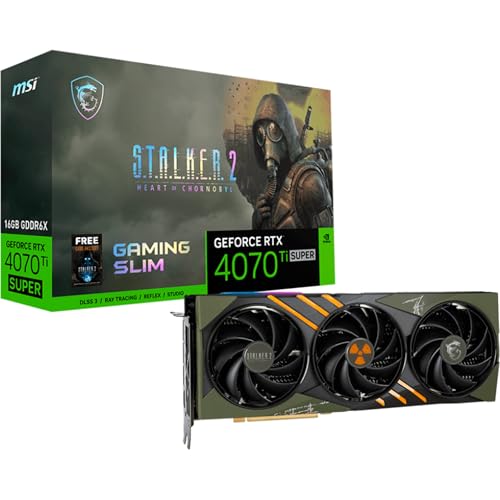
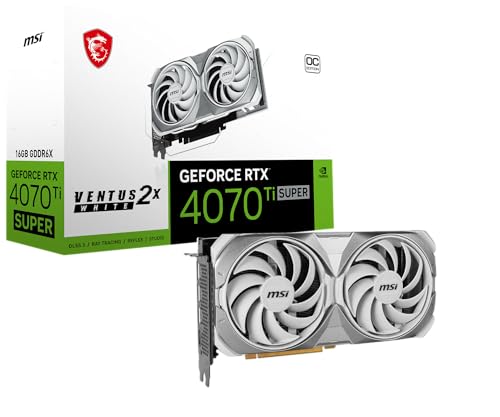
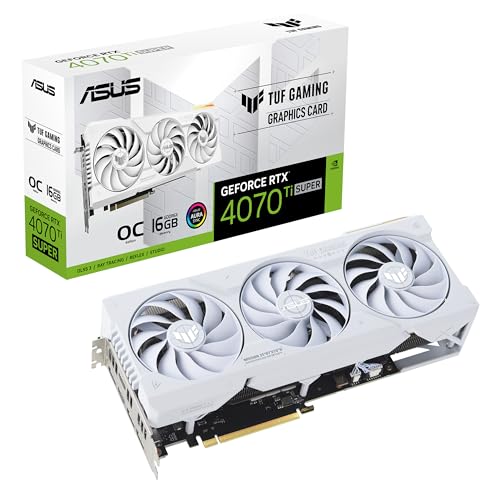
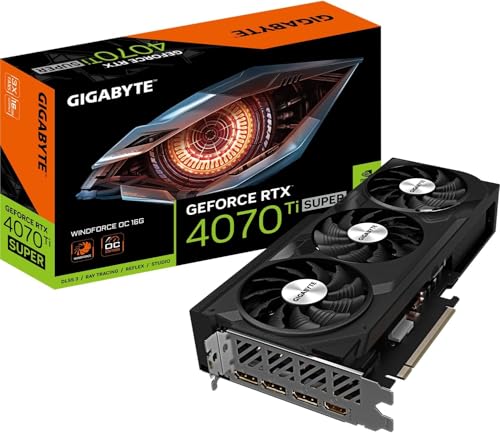
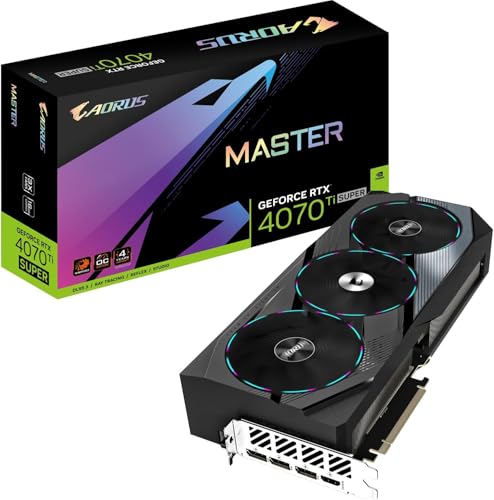
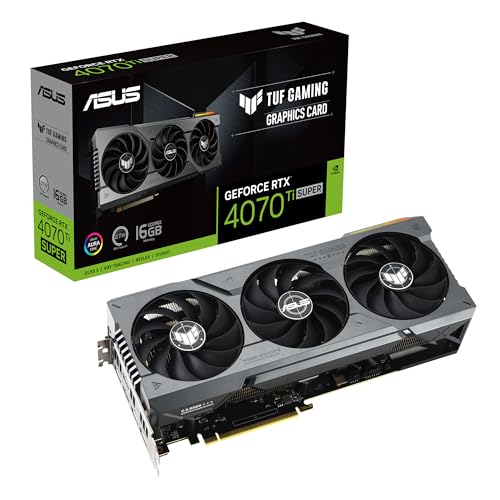
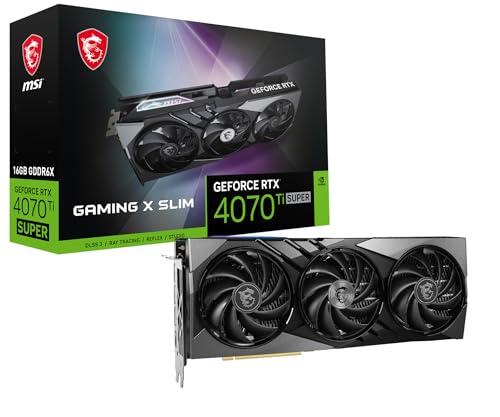
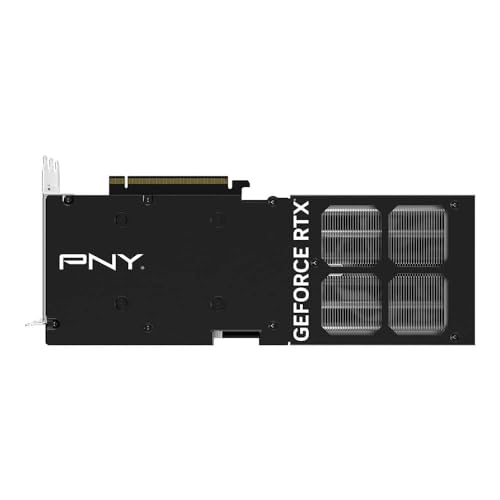
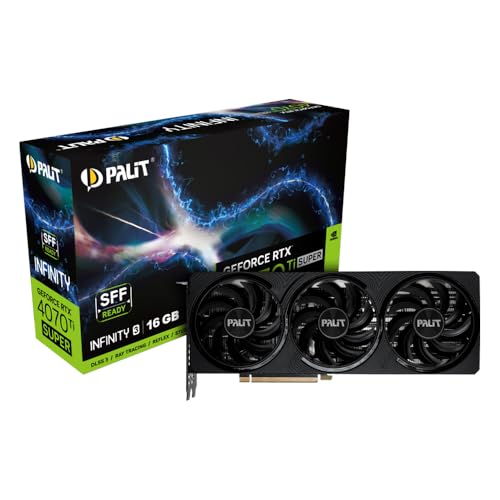
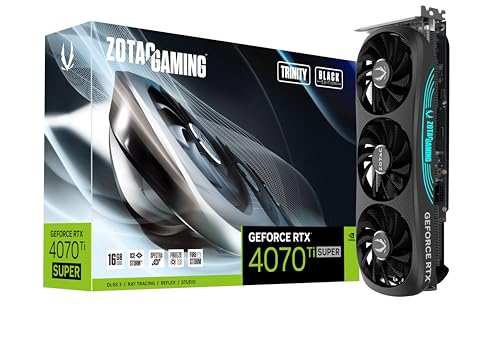
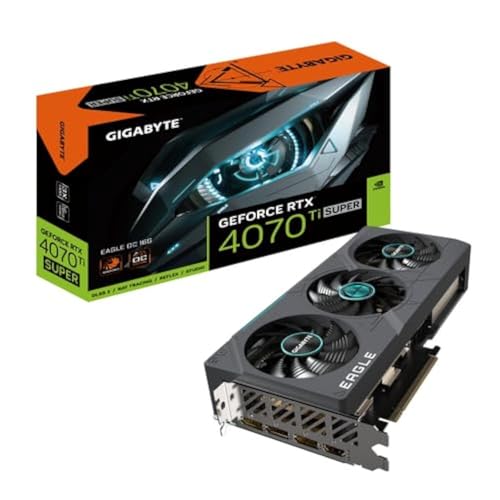
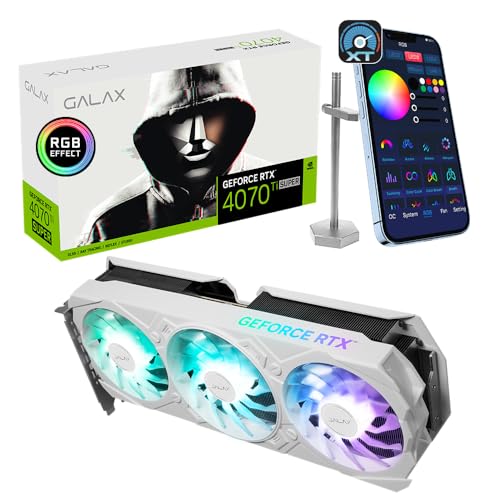
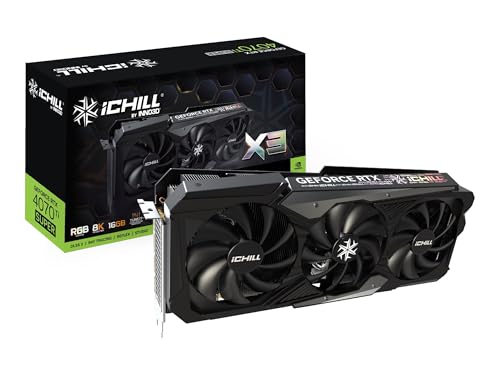
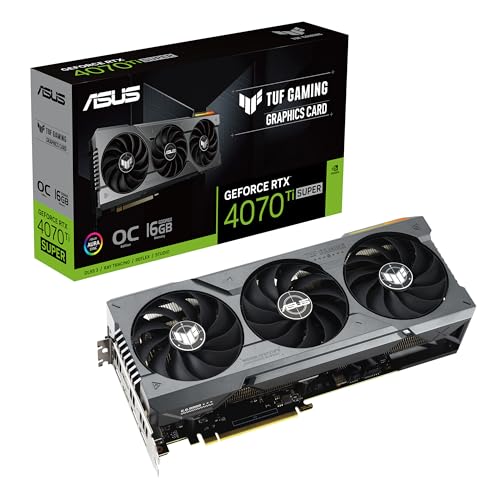
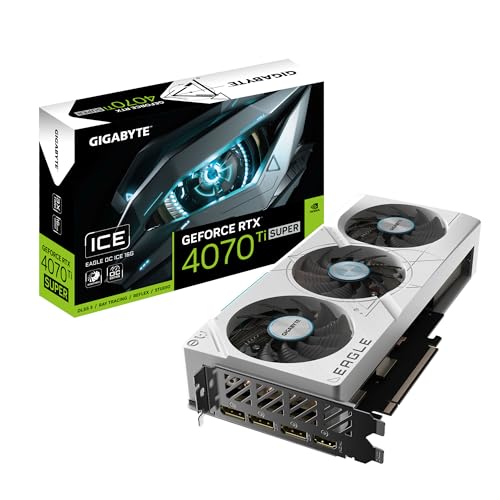
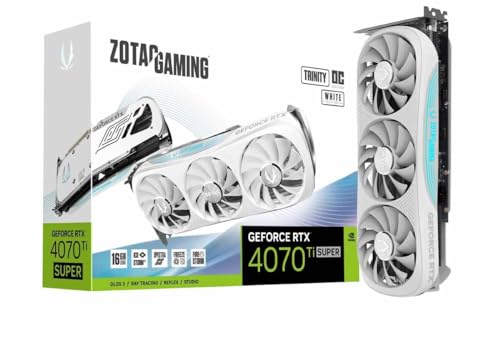
What is the RTX 4070?
The RTX 4070 is a broad Nvidia GeForce graphics card family built mainly on Ada Lovelace for buyers who want upper-midrange to premium gaming GPU power above the RTX 4060 tier and below the 4080 class. The most common form is still a 12 GB GDDR6X configuration on a 192-bit bus with modern RTX features and broad partner coverage.
That makes the RTX 4070 a performance-oriented GeForce step rather than an entry or budget option. Buyers usually consider it when they want stronger 1440p headroom, better ray tracing potential, and a more ambitious all-around gaming card than the lower RTX tiers.
Who should buy the RTX 4070?
The RTX 4070 is best for buyers who want a serious upgrade for 1440p gaming, stronger ray tracing, and more long-term headroom than the RTX 4060 class usually offers, but who do not want to move into the heavier price and power demands of the 4080 tier. It is a very good fit for players who want modern Nvidia features in a class that still feels practical for a normal gaming build.
It is a weaker fit for buyers who want the simplest possible product family or the lowest possible cost, because the wider 4070 range can include several variants and premium partner cards can rise quickly in price. If your budget is tighter or your workload stays mostly at straightforward 1080p, a lower tier is usually easier to justify.
Is the RTX 4070 a good graphics card?
RTX 4070 graphics cards are good for buyers who want a premium-leaning 1440p GeForce card with modern Nvidia features and more controlled system demands than the heavier upper tiers.
The main appeal of the RTX 4070 is that it gives buyers modern Nvidia features such as DLSS, ray tracing, AV1 support, and strong overall gaming performance without forcing the system into 4080 or 4090-class power, size, and pricing.
The main caution is that this tier must stay priced correctly. If a specific RTX 4070 climbs too close to stronger 4070 Ti, 4070 Super, or 4080-class options, the value case gets weaker quickly.
The chart below compares RTX 4070 brands by average overall score.
[horizontal-chart-10978768218091038512177539237548956195000220280788]
What are the main advantages of the RTX 4070?
The main advantages of the RTX 4070 are as follows:
- Balanced 1440p specification: The RTX 4070 combines 12 GB of memory with a 192-bit bus, which gives it a stronger technical base than mainstream lower tiers and makes it a clean fit for high-quality 1440p gaming.
- Excellent efficiency for the class: Around the 200 W level, the RTX 4070 is much easier to cool and power than bigger enthusiast cards. That keeps noise, case demands, and PSU pressure more under control.
- Useful Ada feature set: DLSS 3, frame generation support, ray tracing, and AV1 media support give the RTX 4070 a more modern feature package than older Ampere or Turing alternatives.
- Better fit for ordinary high-end builds: For many buyers, the RTX 4070 is the point where premium gaming performance still fits normal tower sizes and normal power supplies. It is easier to integrate than a 4080-class card.
- Wide partner and size choice: This tier is available in compact dual-fan designs, quieter triple-fan versions, and heavier factory-overclocked cards, so buyers can match the GPU more closely to the case and cooling plan.
What are the main disadvantages of the RTX 4070?
The RTX 4070 has the following disadvantages:
- 12 GB is not a halo memory tier: Twelve gigabytes is enough for strong 1440p use, but it is much less comfortable for heavy creator work, bigger AI experiments, or longer-horizon 4K planning than 16 GB and 24 GB cards.
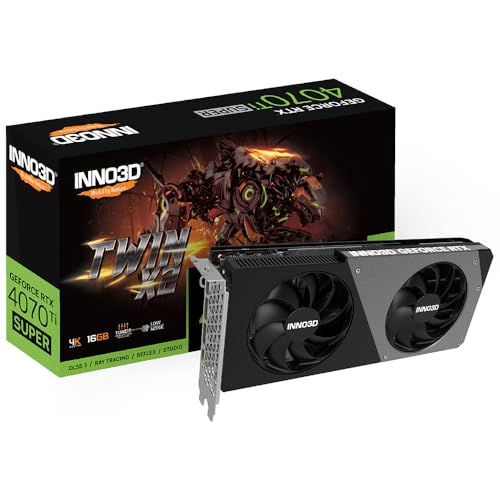
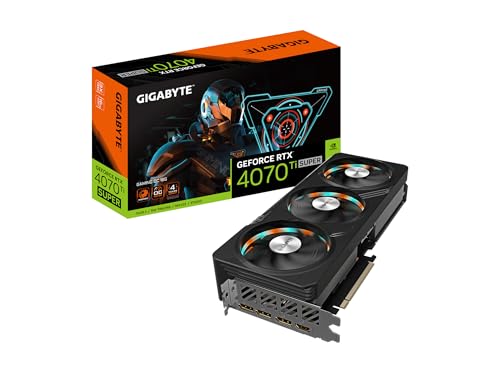
- Naming overlap inside the 4070 family: RTX 4070, 4070 Super, 4070 Ti, and 4070 Ti Super are not the same product class. Buyers who shop only by the 4070 label can blur meaningful differences.
- Less convincing for native 4K: The RTX 4070 can reach 4K gaming, especially with DLSS help, but it is more naturally a 1440p card than a clean no-compromise 4K solution.
- Premium pricing can still creep in: Once you move into heavier partner coolers and higher factory overclocks, some RTX 4070 cards start to lose the value advantage that makes this tier attractive in the first place.
- Not the best buy for simple 1080p use: If you mainly play competitive 1080p titles, the RTX 4070 can be more GPU than you need, which makes it easy to pay for performance you will not fully use.
How much does the RTX 4070 cost?
RTX 4070 graphics cards usually cost about £480 to £1,410, with many mainstream custom cards sitting closer to roughly £600-£820.
The lower and middle part of that range is usually where the more sensible RTX 4070 options sit. Once you move higher, the extra money often goes into larger coolers, factory overclocks, quieter operation, or stronger variants within the wider 4070 family rather than into a completely different class of GPU. That is why it is important to check whether you are paying for a better card or simply for a more expensive version of the same idea.
This chart visualizes RTX 4070 graphics card prices.
[vertical-chart-03335616114249181708090573005009583408731630314883]
How does the RTX 4070 compare with the RTX 4060?
The RTX 4070 sits above the RTX 4060 as a clearly stronger 1440p-oriented tier rather than as a minor step up. A typical RTX 4070 gives you 12 GB of GDDR6X memory on a 192-bit bus, while the mainstream RTX 4060 profile is usually 8 GB of GDDR6 on a 128-bit bus.
The RTX 4070 also asks more from the whole build. It is usually a 200-285 W-class card depending on the exact variant, with larger coolers and much higher pricing, while the RTX 4060 is easier to power, easier to cool, and easier to justify for buyers who mainly target efficient 1080p gaming.
The RTX 4070 is the better fit when you want stronger 1440p headroom, better ray tracing margin, and a more ambitious long-term gaming card. The RTX 4060 is usually the smarter choice if lower cost, lower power draw, and mainstream value matter more.
What should you consider while choosing the RTX 4070?
You should consider the following factors when choosing the RTX 4070:
- Exact variant: Check whether the card is a standard RTX 4070, RTX 4070 Super, RTX 4070 Ti, or RTX 4070 Ti Super, because those versions do not belong to the same performance or price class even though they share part of the name.
- Resolution and workload target: The RTX 4070 makes the most sense for strong 1440p gaming, useful ray tracing, and mixed gaming-plus-creator use. If your real target is mostly 1080p gaming, this tier can become more expensive than necessary.
- VRAM and memory subsystem: A typical RTX 4070 gives you 12 GB of GDDR6X on a 192-bit bus. That is a clear step above the mainstream 4060 profile, but you should still decide whether this is the right middle ground or whether your workload points lower or higher.
- Power, size, and thermals: Standard RTX 4070-class cards often sit around 200-220 W, while stronger variants can move closer to 250-285 W. Check PSU headroom, connector type, case clearance, and airflow before treating the upgrade as routine.
- Cooler quality and acoustics: Two RTX 4070 cards can use the same GPU but differ a lot in noise and temperatures. Heatsink size, fan tuning, and board-partner cooler design often matter more than small factory-clock differences.
- Price discipline against nearby tiers: The RTX 4070 sits between the cheaper RTX 4060 class and the heavier RTX 4080 tier. If a specific 4070 climbs too high in price, compare carefully against those neighboring classes instead of looking at the label alone.