Scored using Drones Methodology v3.0
Drones Methodology v3.0
Mathematical & Unbiased Scoring
Products in this category are scored under Frontum Drones Methodology v3.0: the technical score from the specifications is the base, and independent expert and video reviews (up to ±0.5 points), owner opinions (up to ±0.3) and best-of lists (up to +0.3) move it up or down.
Explore Drones Methodology v3.0

Potensic ATOM 3 review: 97 specs compared

Avg. price:~£330Max flight time:40 minVideo resolution:4K/60 fpsMax transmission distance:16 km

Potensic ATOM 3 Review: Compare 97 technical specifications, 28 expert and video reviews and 5 best-of lists to see how this product ranks in the Drones category and whether it is worth buying.
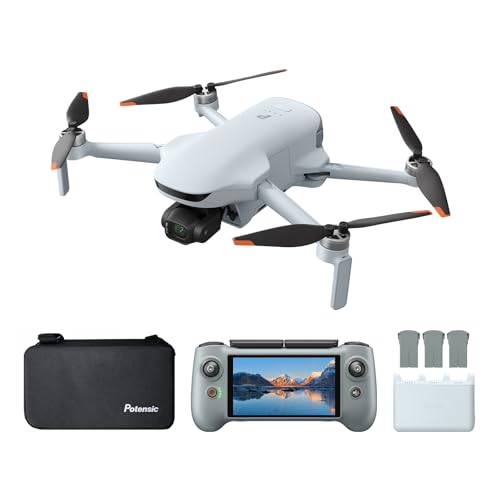
Potensic ATOM 3
8.3/10

Overall score

Score
8.3/ 10
✕
What it is
Our main score for this model, 1–10. It combines specs, best-of lists, expert reviews and owners.
How we count it
Parts: Technical score 40%, List score 30%, Reviews score 25%, Sentiment score 5%
Marks: Each part gets a mark out of 10. For reviews, lists and owners, a typical model in this category gets about 8 and the best one gets 10.
No data yet: A part with no data shows "?". It counts as the mark of a weaker model in this category (4 in 5 models with data score higher). This way, models with reviews, lists and owners usually come out ahead.
Score distribution
<55-66-77-88-99-10
Score components

40%

8.2

Technical score

30%

8.3

List score

25%

8.5

Reviews score

5%

8.8

Sentiment score

▲Better than 89% of drones
8.5

Value for money

Value for money
8.5/ 10
✕
What it is
An indicator that combines the drone's overall rating with its cost.
When it matters
When you are looking for a drone with a good balance between flight quality, camera features, and price.
Score distribution
<55-66-77-88-99-10
Score components

70%

8.3

Overall score

30%

8.8

Price

★Better than 96%
8.2

Technical score

Technical score
8.2/ 10
✕
What it is
How good the specs are compared with the other models in this category, 1–10.
How we count it
Areas: We rate the specs in each area against the other models in this category.
Weighting: The areas that matter most to buyers count more. The shares are shown under Score components.
Share: The technical score is 40% of the overall score.
Score distribution
<55-66-77-88-99-10
Score components

26%

8.5

Flight

24%

7.6

Camera

20%

7.4

Safety

16%

9.0

Connectivity

14%

8.6

Battery & Design

▲Better than 85%
8.5

Reviews score

Reviews score
8.5/ 10
✕
What it is
Average grade from independent test sites, magazines and video reviewers, 1–10.
How we count it
Grades: Each review's own score is converted to 1–10; without one, we grade the review ourselves. Every review counts the same: written or video, short or full test.
Score: The average grade is 80% of the review mark; the number of reviews is the other 20% (1 review = 5, the typical number in this category = 8, the most-reviewed model = 10).
Enough data: With few reviews, the average grade is pulled toward the typical grade of this category. No reviews yet: 7.5 for now.
Share: Reviews count 25% of the overall score.
Score distribution
<55-66-77-88-99-10

80%

8.4

Average grade

20%

8.5

Popularity

Grades by review (28)
7 reviews + 21 videos, average 8.5/10. Reviews count 25% of the overall score.
User ratings collected online are not part of this score.
▲Better than 78%
8.3

List score

List score
8.3/ 10
✕
What it is
How often independent test sites, magazines and video reviewers put this model in their best-of lists for this category.
How we count it
Points: The model in the most lists of this category gets 10; the others get 8 to 10 in proportion. In no list yet: 7.5. Lists count 30% of the overall score.
Enough data: Every list counts, even a single one. With fewer than 10 best-of lists in the category, this part is left out.
Lists with this model (5)
List score: in 5 of 56 lists (9%)
▲Better than 82%
  • potensic-atom-3
  • potensic-atom-3
  • potensic-atom-3
  • potensic-atom-3
  • potensic-atom-3
  • potensic-atom-3
  • potensic-atom-3
  • potensic-atom-3
potensic-atom-3
potensic-atom-3
potensic-atom-3
potensic-atom-3
potensic-atom-3
potensic-atom-3
potensic-atom-3
potensic-atom-3
Where to buy
*As an Amazon Associate, we earn from qualifying purchases.
Best rankings
Available: ranking among products currently available (including other versions of this product).All: ranking among all products in the database.

What reviewers say about the Potensic ATOM 3

Based on 7 · 28

Reviewers love the image quality and intuitive controller and app, but the lack of obstacle sensing is the clear drawback.
Praised
Mixed views
Criticised
Pick a topic to see who said what

What owners say about the Potensic ATOM 3

Based on 71 owners sharing their experience in online comments

61%positive9%mixed30%negative

Owners praise the camera, easy flying, and value, while short signal range and inconsistent image quality remain the biggest frustrations.

What owners dislike

  • Owners report signal range falls short of advertised, with dropouts, controller disconnects and interference, sometimes at only a few hundred yards.9
  • Owners say the camera trails DJI models, with flat dynamic range in video and a smaller sensor giving weaker picture quality.4
  • The camera struggles in bright sun and at dusk, night mode looks overexposed, and auto settings can distort colors.4
  • Owners say it drifts in the air, moves around while hovering, and altitude readings can get confused when elevation changes.3
  • The transmitter is slippery and can slide out of hands, the sticks feel hard, and the controller is too small for a tablet.3

Points mentioned by at least 3 owners, most mentioned first.

Loading...
Loading category ranking...

Technical Specifications of drone Potensic ATOM 3

Technical score
Technical score
8.2/ 10
✕
What it is
How good the specs are compared with the other models in this category, 1–10.
How we count it
Areas: We rate the specs in each area against the other models in this category.
Weighting: The areas that matter most to buyers count more. The shares are shown under Score components.
Share: The technical score is 40% of the overall score.
Score distribution
<55-66-77-88-99-10
Score components:

26%

8.5

Flight

24%

7.6

Camera

20%

7.4

Safety

16%

9.0

Connectivity

14%

8.6

Battery & Design

8.2
Reviews score
8.5
List score
8.3
Value for money
Value for money
8.5/ 10
✕
What it is
An indicator that combines the drone's overall rating with its cost.
When it matters
When you are looking for a drone with a good balance between flight quality, camera features, and price.
Score distribution
<55-66-77-88-99-10
Score components:

70%

8.3

Overall score

30%

8.8

Price

8.5
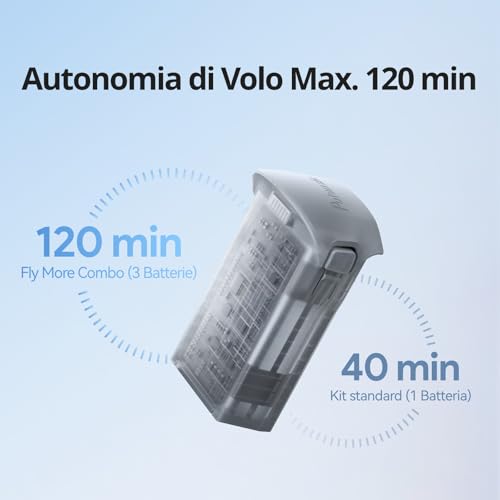
Max flight time
40 min
This drone has a max flight time of 40 min, longer than 88% of drones and equal to 4.5% of drones.
Max flight distance
?
Max flight speed
16 m/s
This drone has a max flight speed of 16 m/s, faster than 54.4% of drones and equal to 10.8% of drones.
Max wind resistance
10.7 m/s
This drone has max wind resistance of 10.7 m/s, higher than 48.9% of drones and equal to 23.7% of drones.
Max service ceiling (ASL)
4,000 m
This drone has a max service ceiling of 4,000 m, higher than 50.8% of drones and equal to 13.4% of drones.
Show more
What reviewers say
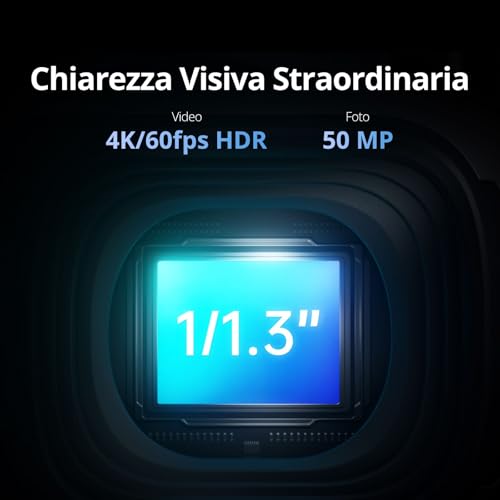
Video resolution
4K/60 fps
This drone records video at 4K/60 fps, higher than 79.2% of drones and equal to 6.4% of drones.
4K camera
yes
This drone supports 4K video. 46% of drones support 4K video.
Sensor size
1/1.3"
This drone has a sensor size of 1/1.3", larger than 67.6% of drones and equal to 10.2% of drones.
Main camera megapixels
50 MP
This drone has a main camera resolution of 50 MP, higher than 94.7% of drones and equal to 3.3% of drones.
Max movie bitrate
?
Show more
What reviewers say
Obstacle detection
no
This drone does not support obstacle detection. 31% of drones support obstacle detection.
Return to Home (RTH)
yes
This drone supports Return-to-Home (RTH). 33% of drones support Return-to-Home (RTH).
GPS
yes
This drone supports GPS. 35.3% of drones support GPS.
GNSS systems supported
GPS, GLONASS, Galileo, BeiDou
This drone supports GPS, GLONASS, Galileo, BeiDou GNSS systems, which are more comprehensive than those of 82.4% and the same as those of 17.6%.
Obstacle sensing directions
downward
This drone senses obstacles in downward directions, which is more comprehensive than that of 57.3% and the same as that of 12.1%.
Show more
What reviewers say
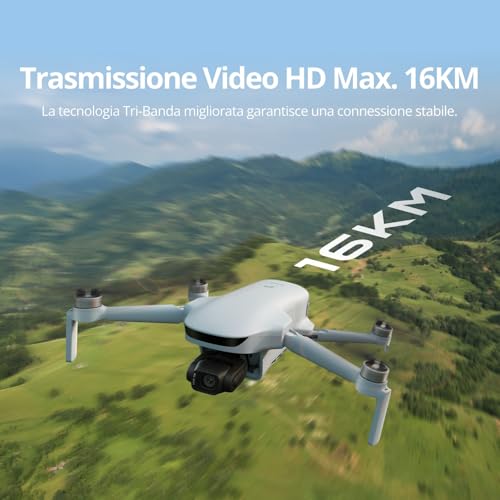
Max transmission distance
16 km
This drone has a max transmission distance of 16 km, farther than 95.4% of drones.
Transmission latency
120 ms
This drone has transmission latency of 120 ms, lower than 59.2% of drones and equal to 28.2% of drones.
Video transmission system
PixSync 5.0
This drone uses PixSync 5.0 for video transmission, which is more advanced than the system used by 82.6%.
Live view quality
1080p@60 fps
This drone offers live view quality of 1080p@60 fps, higher-quality than 80.2% of drones and equal to 12.5% of drones.
Remote control
yes
This drone has a handheld remote controller. 5% of drones offer this.
Show more
What reviewers say
Battery capacity
?
Battery energy
?
Charging time
90 min
This drone charges in 90 min, faster than 43.8% of drones and equal to 18.8% of drones.
Weight
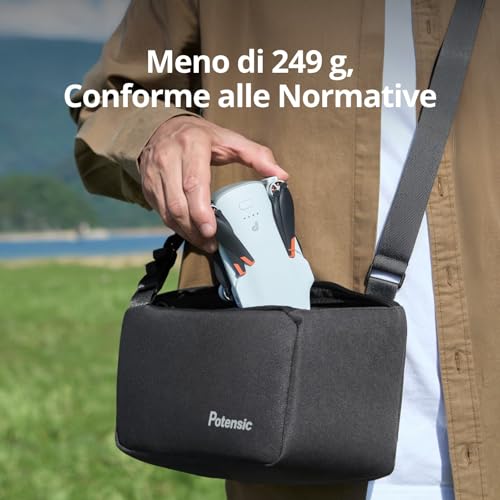
249 g
This drone weighs 249 g, heavier than 51% of drones and equal to 11.3% of drones.
Removable battery
yes
This drone has a removable battery. 0.5% of drones have a removable battery.
Show more
What reviewers say

Potensic ATOM 3 vs the average drone

246810TotalFlightCameraSafetyConnectivityBattery & Design
  • 20 min longer flight time
    This drone offers longer max flight time than the average drone (40 min vs 20 min). The average drone offers 20 min of max flight time.
    40 min vs 20 min
  • 15 km longer transmission range
    This drone has a longer max transmission distance than the average drone (16 km vs 1 km). The average drone reaches 1 km of transmission distance.
    16 km vs 1 km
  • 3 more gimbal axes
    This drone has more gimbal axes than the average drone (3 vs 0). The average drone has 0 gimbal axes.
    3 vs 0
  • Supports low-light mode
    This drone supports low-light mode, while the average drone does not.
  • Larger sensor size
    This drone has a larger sensor than the average drone (1/1.3" vs 1/2.3"). The average drone uses a sensor of 1/2.3".
    1/1.3" vs 1/2.3"
  • More video codec options
    This drone supports H.264/AVC, H.265/HEVC video codecs, while the average drone supports H.264/AVC.
    H.264/AVC, H.265/HEVC vs H.264/AVC
  • Built-in display
    This drone has a built-in display, while the average drone does not.
  • More modern charging port
    This drone uses USB-C for charging, while the average drone uses micro-USB.
    USB-C vs micro-USB
  • 7.6% higher review score
    Reviews score
    8.5/ 10
    ✕
    What it is
    Average grade from independent test sites, magazines and video reviewers, 1–10.
    How we count it
    Grades: Each review's own score is converted to 1–10; without one, we grade the review ourselves. Every review counts the same: written or video, short or full test.
    Score: The average grade is 80% of the review mark; the number of reviews is the other 20% (1 review = 5, the typical number in this category = 8, the most-reviewed model = 10).
    Enough data: With few reviews, the average grade is pulled toward the typical grade of this category. No reviews yet: 7.5 for now.
    Share: Reviews count 25% of the overall score.
    Score distribution
    <55-66-77-88-99-10

    80%

    8.4

    Average grade

    20%

    8.5

    Popularity

    Grades by review (28)
    7 reviews + 21 videos, average 8.5/10. Reviews count 25% of the overall score.
    User ratings collected online are not part of this score.
    8.5 vs 7.9
  • 11.3% better value for money
    Potensic ATOM 3 has better value for money than the average drone (8.45 vs 7.6).
    8.45 vs 7.59
  • 20 min longer flight time
    This drone offers longer max flight time than the average drone (40 min vs 20 min). The average drone offers 20 min of max flight time.
    40 min vs 20 min
  • 3 years newer release date
    This drone is newer than the average drone (2026 vs 2023). The average drone was released in 2023.
    2026 vs 2023
  • 1 m/s faster flight speed
    This drone reaches a higher max flight speed than the average drone (16 m/s vs 15 m/s). The average drone reaches 15 m/s.
    16 m/s vs 15 m/s
  • 3 more gimbal axes
    This drone has more gimbal axes than the average drone (3 vs 0). The average drone has 0 gimbal axes.
    3 vs 0
  • Supports low-light mode
    This drone supports low-light mode, while the average drone does not.
  • Larger sensor size
    This drone has a larger sensor than the average drone (1/1.3" vs 1/2.3"). The average drone uses a sensor of 1/2.3".
    1/1.3" vs 1/2.3"
  • More video codec options
    This drone supports H.264/AVC, H.265/HEVC video codecs, while the average drone supports H.264/AVC.
    H.264/AVC, H.265/HEVC vs H.264/AVC
  • 38 MP more camera resolution
    This drone has more main camera megapixels than the average drone (50 MP vs 12 MP). The average drone has 12 MP on the main camera.
    50 MP vs 12 MP
  • Captures RAW photos
    This drone can capture RAW photos, while the average drone cannot.
  • More color profile options
    This drone supports Normal, P-Log, HDR color profiles, while the average drone supports Normal.
    Normal, P-Log, HDR vs Normal
  • More advanced stabilization
    This drone uses 3-Axis Mechanical image stabilization, while the average drone uses EIS (Digital).
    3-Axis Mechanical vs EIS (Digital)
  • Richer manual controls
    This drone offers full manual camera controls, while the average drone offers no.
    full vs no
  • Supports slow-motion mode
    This drone supports slow-motion mode, while the average drone does not.
  • Supports HDR mode
    This drone supports HDR mode, while the average drone does not.
  • Higher photo resolution
    This drone offers higher photo resolution than the average drone (8192x6144 px vs 4096x3072 px). The average drone offers a photo resolution of 4096x3072 px.
    8192x6144 px vs 4096x3072 px
  • Supports burst mode
    This drone supports burst mode, while the average drone does not.
  • Supports panorama mode
    This drone supports panorama mode, while the average drone does not.
  • 384 GB higher memory card limit
    This drone supports more external storage than the average drone (512 GB vs 128 GB). The average drone supports up to 128 GB of external storage.
    512 GB vs 128 GB
  • Supports waypoint flight
    This drone supports waypoint flight, while the average drone does not.
  • Supports QuickShots
    This drone supports QuickShots, while the average drone does not.
  • 3 more flight modes
    This drone offers more intelligent flight modes than the average drone (7 vs 4). The average drone offers 4 intelligent flight modes.
    7 vs 4
  • Remote ID
    This drone supports Remote ID, while the average drone does not.
  • Less restrictive EU class
    This drone is rated as C0 under the EU drone class system, while the average drone is rated as None.
    C0 vs None
  • 15 km longer transmission range
    This drone has a longer max transmission distance than the average drone (16 km vs 1 km). The average drone reaches 1 km of transmission distance.
    16 km vs 1 km
  • Built-in display
    This drone has a built-in display, while the average drone does not.
  • More frequency bands
    This drone supports 2.4 GHz, 5.2 GHz, 5.8 GHz operating frequency bands, while the average drone supports 2.4 GHz, 5.8 GHz.
    2.4 GHz, 5.2 GHz, 5.8 GHz vs 2.4 GHz, 5.8 GHz
  • Better live view quality
    This drone has better live view quality than the average drone (1080p@60 fps vs 1080p@25 fps). The average drone offers live view quality of 1080p@25 fps.
    1080p@60 fps vs 1080p@25 fps
  • 10 ms lower latency
    This drone has lower transmission latency than the average drone (120 ms vs 130 ms). The average drone has transmission latency of 130 ms.
    120 ms vs 130 ms
  • More polished companion app
    This drone uses the Potensic Eve companion app, while the average drone uses HS FPV.
    Potensic Eve vs HS FPV
  • More capable transmission system
    This drone uses PixSync 5.0 for video transmission, while the average drone uses SkyLink 2.0.
    PixSync 5.0 vs SkyLink 2.0
  • More modern charging port
    This drone uses USB-C for charging, while the average drone uses micro-USB.
    USB-C vs micro-USB
  • No POI mode
    This drone does not support POI mode, while the average drone does.
  • More basic controller
    This drone uses the PTD 2 controller, while the average drone uses LiteRadio 4 SE.
    PTD 2 vs LiteRadio 4 SE
  • No headless mode
    This drone does not support headless mode, while the average drone does.
  • Lower video resolution
    This drone offers lower video resolution than the average drone (4K/60 fps vs 4K/100 fps). The average drone offers a video resolution of 4K/100 fps.
    4K/60 fps vs 4K/100 fps
  • 1.2% higher weight
    This drone is heavier than the average drone (249 g vs 246 g). The average drone weighs 246 g.
    249 g vs 246 g
  • 65% more expensive
    Potensic ATOM 3 is more expensive than the average drone (£330 vs £200).
    £330 vs £200
  • 65% more expensive
    Potensic ATOM 3 is more expensive than the average drone (£330 vs £200).
    £330 vs £200
  • Lower video resolution
    This drone offers lower video resolution than the average drone (4K/60 fps vs 4K/100 fps). The average drone offers a video resolution of 4K/100 fps.
    4K/60 fps vs 4K/100 fps
  • No POI mode
    This drone does not support POI mode, while the average drone does.
  • No headless mode
    This drone does not support headless mode, while the average drone does.
  • More basic controller
    This drone uses the PTD 2 controller, while the average drone uses LiteRadio 4 SE.
    PTD 2 vs LiteRadio 4 SE
  • 1.2% higher weight
    This drone is heavier than the average drone (249 g vs 246 g). The average drone weighs 246 g.
    249 g vs 246 g

Video reviews

Hands-on testing, unboxing, and real-world video evaluations

8.0
Chad B.
≈ estimated
21/10/2026
Real-time flight test · aerial footage and battery use
Verdict
Potensic ATOM 3 flew several times without problems and shot good footage, but without obstacle avoidance it needs careful flying.
9.0
Random Tech
≈ estimated
02/09/2026
Hands-on review · storm flight and camera test
Verdict
Potensic ATOM 3 is definitely worth it and enjoyable to fly, and it beats the Mavic 3 in some ways.
9.0
Chad B.
≈ estimated
29/08/2026
Hands-on review · travel test with low-light footage
Verdict
Potensic ATOM 3 is a strong, lightweight travel drone that is not perfect, mainly because it has no obstacle avoidance.
9.0
Toronto RC
≈ estimated
19/08/2026
Range test · 5 km flight over water
Verdict
Potensic ATOM 3 flew 5 km over water and returned with about 30% battery, with no problems.
8.0
DroneDJ
≈ estimated
06/07/2026
Hands-on review · real-world flight test and cinematic modes
Verdict
Potensic ATOM 3 is an easy beginner drone with good footage, but persistent transmission issues hold it back.
7.0
CAPTAIN DRONE
≈ estimated
26/06/2026
Camera review · daylight footage, photos and night mode
Verdict
Potensic ATOM 3 is quite good and close to DJI's Mini drones, best for casual shooting where obstacle avoidance is not needed.
8.0
Toronto RC
≈ estimated
25/06/2026
Hands-on review · tracking speed test with an e-scooter
Verdict
Potensic ATOM 3 tracks a fast e-scooter well, losing the subject only around 30 km/h.
7.0
CAPTAIN DRONE
≈ estimated
22/06/2026
Hands-on review · QuickShots and waypoints test
Verdict
Potensic ATOM 3's QuickShots look good and the waypoint feature is a neat addition, but setup is confusing.
6.0
CAPTAIN DRONE
≈ estimated
19/06/2026
Tracking test · follow mode, low altitude and obstacles
Verdict
Potensic ATOM 3 tracks well in open spaces, but it is not trustworthy near obstacles, so keep it there.
8.0
CAPTAIN DRONE
≈ estimated
17/06/2026
Range and return-to-home test · Fly More kit
Verdict
Potensic ATOM 3 has excellent range and signal, but its return-to-home landing is hit or miss.
8.0
Roo's Reviews
≈ estimated
11/06/2026
Hands-on review · flight time, range and tracking tests
Verdict
Potensic ATOM 3 flies well, has a decent camera and strong features for its class, but tracking lags.
9.0
Momentum Productions
≈ estimated
11/06/2026
Hands-on review · camera, flight and wind tests
Verdict
Potensic ATOM 3 is a clear upgrade over the Atom 2 and a very good buy, especially in the Fly More combo.
More graded video reviews (8)
creator’s own scoreestimated by us

Expert reviews

In-depth analysis and verdict from leading tech publications

9.0
dronexl.co
≈ estimated
10/06/2026
First impressions · Compact 4K drone
Verdict
The Potensic ATOM 3 flies much like a DJI Mini, with a larger 1/1.3-inch sensor and 4K60 HDR video, though its claimed flight time is still unconfirmed.
8.0
mightygadget.com
✓ explicit
10/06/2026
Launch review · Sub-249g 4K drone
Verdict
Potensic Atom 3 shoots 4K 60fps under 249g with a 1/1.3-inch sensor, but its f/2.8 lens gathers less light and it has no obstacle avoidance.
8.0
t3.com
✓ explicit
05/07/2026
Hands-on review · Sub-250g 4K drone
Verdict
Potensic Atom 3 flies steadily and quietly with stabilised 4K footage, but it has no onboard storage and no obstacle avoidance.
8.0
drohnen.de
≈ estimated
Not Dated
Multi-day field test · Landscape flying
Verdict
The Potensic ATOM 3 holds detail in bright highlights, which suits lake landscapes, but its only obstacle sensors face downward.
9.2
toptechnews.de
✓ explicit
13/06/2026
Hands-on test · Compact camera drone
Verdict
Potensic Atom 3 is a small foldable drone under 249g that suits travellers wanting 4K/60 footage and P-Log editing without feeling like a toy.
8.0
global.techradar.com
✓ explicit
15/09/2026
Hands-on review · DJI Mini rival
Verdict
The Potensic ATOM 3 is the brand's best drone and a real DJI alternative, but it has no obstacle sensors, and DJI's Lito X1 is more polished.

Third-party reviews

What customers like about Potensic ATOM 3

  • 1/1.3-inch 50 MP sensor on a three-axis gimbal
  • 4K at 60 fps with HDR and a P-Log profile
  • PixSync 5.0 link rated up to 16 km
  • Around 40 minutes per battery at 249 g
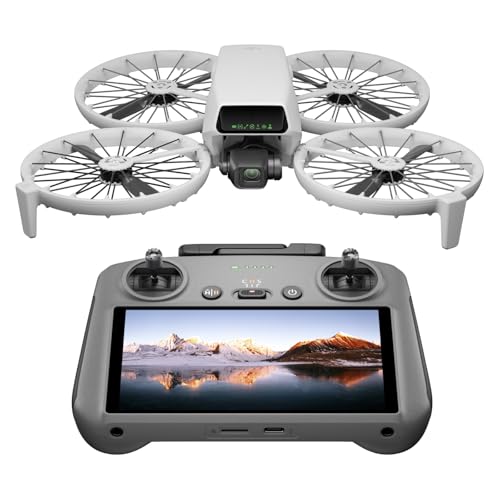
  • Combo remote with a 5.5-inch screen

What customers don't like about Potensic ATOM 3

  • No forward or side obstacle avoidance
  • App and editing tools less mature than DJI's
  • Screen remote only in the more expensive combo
  • Smaller accessory ecosystem than DJI

Verdict

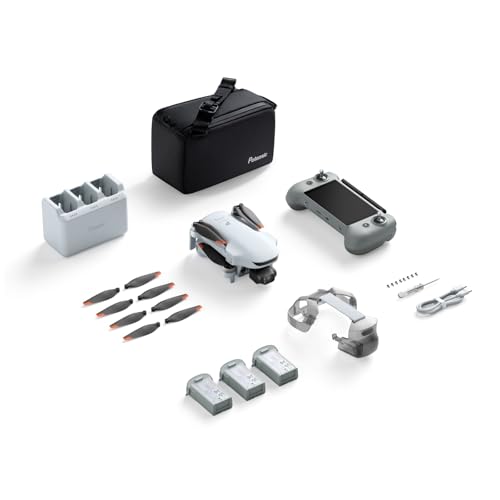
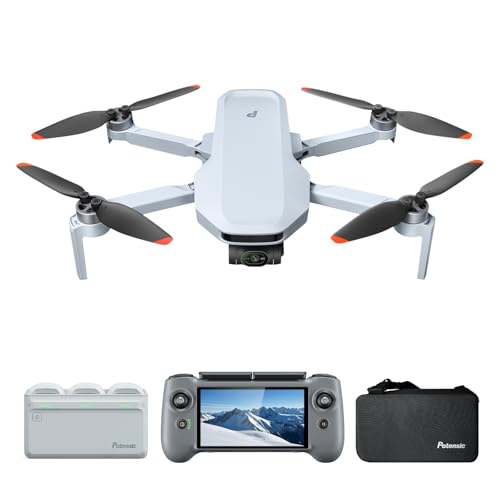
The Potensic ATOM 3 is a 249 g foldable camera drone that aims squarely at DJI's Mini series. Its 1/1.3-inch 50 MP sensor sits on a three-axis gimbal and records 4K at 60 fps, with HDR and a flat P-Log profile for colour grading. Potensic's PixSync 5.0 link is rated up to 16 km, and the Fly More Combo includes the PTD 2 remote with its own 5.5-inch screen. A battery is rated for around 40 minutes, while GPS powers return-to-home, subject tracking and waypoint missions. Slow-motion recording adds creative options. Downward sensing helps with landing, but there is no forward or side obstacle avoidance, which DJI's rivals offer. For pilots who want a large sensor, smooth 4K/60 and a screen remote at a lower price than the market leader, the Atom 3 is a strong alternative.

Compare Potensic ATOM 3 with other drones

1Product to compare no. 1
VS
2Product to compare no. 2
VS
3Product to compare no. 3 (optional)

Graphic comparison of Potensic ATOM 3 and other drones

No results found