Scored using Drones Methodology v3.0
Drones Methodology v3.0
Mathematical & Unbiased Scoring
Products in this category are scored under Frontum Drones Methodology v3.0: the technical score from the specifications is the base, and independent expert and video reviews (up to ±0.5 points), owner opinions (up to ±0.3) and best-of lists (up to +0.3) move it up or down.
Explore Drones Methodology v3.0

X-Verse KF100MAX review: 97 specs compared

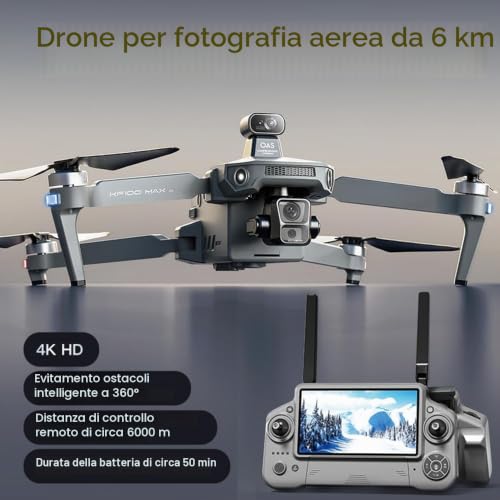
Avg. price:~£320Max flight time:50 minVideo resolution:4KMax transmission distance:6 km

X-Verse KF100MAX Review: Compare 97 technical specifications to see how this product ranks in the Drones category and whether it is worth buying.
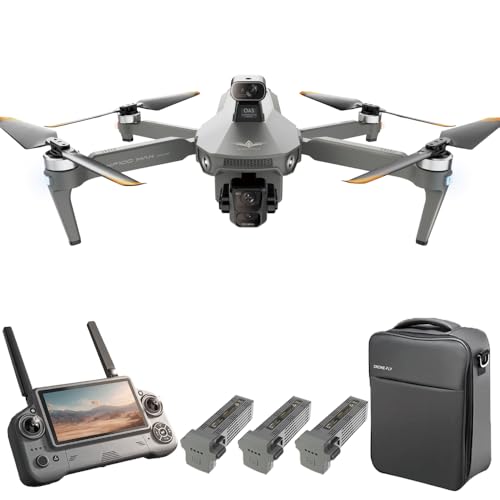
X-Verse KF100MAX
7.3/10

Overall score

Score
7.3/ 10
✕
What it is
Our main score for this model, 1–10. It combines specs, best-of lists, expert reviews and owners.
How we count it
Parts: Technical score 35%, List score 30%, Reviews score 25%, Sentiment score 10%
Marks: Each part gets a mark out of 10. For reviews, lists and owners, a typical model in this category gets about 8 and the best one gets 10.
No data yet: A part with no data shows "?". It counts as the mark of a weaker model in this category (4 in 5 models with data score higher). This way, models with reviews, lists and owners usually come out ahead.
Score distribution
â–¼
<55-66-77-88-99-10
Score components

35%

7.0

Technical score

30%

?

List scoreNot enough data yet, so we use 7.5, the mark of a weaker model in this category

25%

?

Reviews scoreNot enough data yet, so we use 7.5, the mark of a weaker model in this category

10%

?

Sentiment scoreNot enough data yet, so we use 6.8, the mark of a weaker model in this category

â–²Better than 60% of drones
7.7

Value for money

Value for money
7.7/ 10
✕
What it is
An indicator that combines the drone's overall rating with its cost.
When it matters
When you are looking for a drone with a good balance between flight quality, camera features, and price.
Score distribution
â–¼
<55-66-77-88-99-10
Score components

70%

7.3

Overall score

30%

8.8

Price

â–²Better than 62%
7.0

Technical score

Technical score
7.0/ 10
✕
What it is
How good the specs are compared with the other models in this category, 1–10.
How we count it
Areas: We rate the specs in each area against the other models in this category.
Weighting: The areas that matter most to buyers count more. The shares are shown under Score components.
Share: The technical score is 35% of the overall score.
Score distribution
â–¼
<55-66-77-88-99-10
Score components

26%

7.3

Flight

24%

6.7

Camera

20%

7.5

Safety

16%

6.9

Connectivity

14%

6.7

Battery & Design

â–²Better than 68%
?

Reviews score

Reviews score
✕
What it is
Average grade from independent test sites, magazines and video reviewers, 1–10.
How we count it
Grades: Each review's own score is converted to 1–10; without one, we grade the review ourselves. Every review counts the same: written or video, short or full test.
Score: The average grade is 80% of the review mark; the number of reviews is the other 20% (1 review = 5, the typical number in this category = 8, the most-reviewed model = 10).
Enough data: With few reviews, the average grade is pulled toward the typical grade of this category. No reviews yet: 7.5 for now.
Share: Reviews count 25% of the overall score.
Score distribution
â–¼
<55-66-77-88-99-10
Grades by review (0)
We have not found an independent test of this model yet. Until we do, its review part counts as 7.5.
User ratings collected online are not part of this score.
No expert tests yet
?

List score

List score
7.5/ 10
✕
What it is
How often independent test sites, magazines and video reviewers put this model in their best-of lists for this category.
How we count it
Points: The model in the most lists of this category gets 10; the others get 8 to 10 in proportion. In no list yet: 7.5. Lists count 30% of the overall score.
Enough data: Every list counts, even a single one. With fewer than 5 best-of lists in the category, this part is left out.
Lists with this model (0)
Not in any best-of list yet, so this part counts as 7.5. Models in a list get 8 to 10.
Not in any best-of list yet
  • x-verse-kf100max
  • x-verse-kf100max
  • x-verse-kf100max
  • x-verse-kf100max
  • x-verse-kf100max
  • x-verse-kf100max
  • x-verse-kf100max
x-verse-kf100max
x-verse-kf100max
x-verse-kf100max
x-verse-kf100max
x-verse-kf100max
x-verse-kf100max
x-verse-kf100max
Where to buy
*As an Amazon Associate, we earn from qualifying purchases.
Best rankings
Available: ranking among products currently available (including other versions of this product).All: ranking among all products in the database.
Loading...
Loading category ranking...

Technical Specifications of drone X-Verse KF100MAX

Technical score
Technical score
7.0/ 10
✕
What it is
How good the specs are compared with the other models in this category, 1–10.
How we count it
Areas: We rate the specs in each area against the other models in this category.
Weighting: The areas that matter most to buyers count more. The shares are shown under Score components.
Share: The technical score is 35% of the overall score.
Score distribution
â–¼
<55-66-77-88-99-10
Score components:

26%

7.3

Flight

24%

6.7

Camera

20%

7.5

Safety

16%

6.9

Connectivity

14%

6.7

Battery & Design

7.0
Reviews score
7.5
List score
?
Value for money
Value for money
7.7/ 10
✕
What it is
An indicator that combines the drone's overall rating with its cost.
When it matters
When you are looking for a drone with a good balance between flight quality, camera features, and price.
Score distribution
â–¼
<55-66-77-88-99-10
Score components:

70%

7.3

Overall score

30%

8.8

Price

7.7
Max flight time
50 min
This drone has a max flight time of 50 min, longer than 99.5% of drones.
Max flight distance
6 km
This drone has a max flight distance of 6 km, farther than 64.6% of drones and equal to 3.9% of drones.
Limited by the controller range.
Max flight speed
11 m/s
This drone has a max flight speed of 11 m/s, slower than 57.6% of drones.
Value reflects maximum mode speed (for example Sport/Manual mode).
Max wind resistance
10.7 m/s
This drone has max wind resistance of 10.7 m/s, higher than 48.9% of drones and equal to 23.7% of drones.
Derived from the drone's Level 5 wind-resistance rating.
Max service ceiling (ASL)
4,500 m
This drone has a max service ceiling of 4,500 m, higher than 64.9% of drones and equal to 2.2% of drones.
Show more
Video resolution
4K
This drone records video at 4K, higher than 45.5% of drones and equal to 10.4% of drones.
4K camera
yes
This drone supports 4K video. 46% of drones support 4K video.
Sensor size
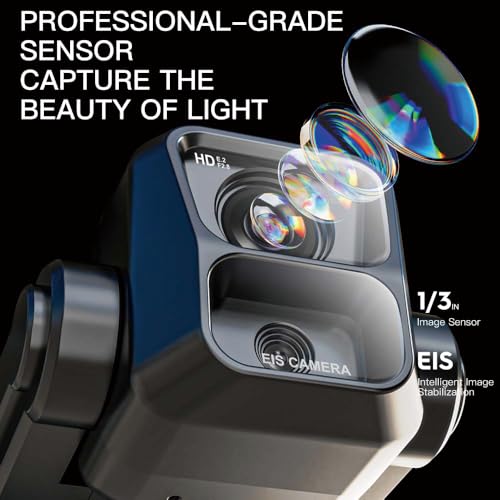
1/3.2"
This drone has a sensor size of 1/3.2", smaller than 81.5% of drones and equal to 2.8% of drones.
Main camera megapixels
8 MP
This drone has a main camera resolution of 8 MP, lower than 66% of drones and equal to 8.7% of drones.
Max movie bitrate
?
Show more
Obstacle detection
yes
This drone supports obstacle detection. 69.5% of drones support obstacle detection.
Return to Home (RTH)
yes
This drone supports Return-to-Home (RTH). 33% of drones support Return-to-Home (RTH).
GPS
yes
This drone supports GPS. 35.3% of drones support GPS.
GNSS systems supported
GPS, GLONASS
This drone supports GPS, GLONASS GNSS systems, which are more comprehensive than those of 49.8% and the same as those of 17.1%.
Obstacle sensing directions
forward/backward/left/right
This drone senses obstacles in forward/backward/left/right directions, which is more comprehensive than that of 70.9% and the same as that of 2%.
Show more
Max transmission distance
6 km
This drone has a max transmission distance of 6 km, farther than 62.8% of drones and equal to 5.1% of drones.
Transmission latency
?
Video transmission system
Digital Transmission
This drone uses Digital Transmission for video transmission, which is more advanced than the system used by 58.5% and the same as that used by 8.7%.
Live view quality
720p@30 fps
This drone offers live view quality of 720p@30 fps, lower-quality than 56.8% of drones and equal to 22.9% of drones.
Remote control
yes
This drone has a handheld remote controller. 5% of drones offer this.
Show more
Battery capacity
5,200 mAh
This drone has a battery capacity of 5,200 mAh, larger than 91.7% of drones.
Battery energy
59.28 Wh
This drone has battery energy of 59.28 Wh, higher than 82.9% of drones.
Charging time
360 min
This drone charges in 360 min, slower than 96.9% of drones and equal to 1.9% of drones.
Weight
750 g
This drone weighs 750 g, heavier than 79.4% of drones and equal to 1.6% of drones.
Removable battery
yes
This drone has a removable battery. 0.5% of drones have a removable battery.
Show more

X-Verse KF100MAX vs the average drone

246810TotalFlightCameraSafetyConnectivityBattery & Design
  • 30 min longer flight time
    This drone offers longer max flight time than the average drone (50 min vs 20 min). The average drone offers 20 min of max flight time.
    50 min vs 20 min
  • Supports obstacle detection
    This drone supports obstacle detection, while the average drone does not.
  • More advanced stabilization
    This drone uses 3-Axis Mechanical + EIS image stabilization, while the average drone uses EIS (Digital).
    3-Axis Mechanical + EIS vs EIS (Digital)
  • 3,000 mAh more battery capacity
    This drone has a larger battery capacity than the average drone (5,200 mAh vs 2,200 mAh). The average drone battery has a capacity of 2,200 mAh.
    5,200 mAh vs 2,200 mAh
  • 3 more gimbal axes
    This drone has more gimbal axes than the average drone (3 vs 0). The average drone has 0 gimbal axes.
    3 vs 0
  • Supports low-light mode
    This drone supports low-light mode, while the average drone does not.
  • 42.1 Wh more battery energy
    This drone has higher battery energy than the average drone (59.3 Wh vs 17.18 Wh). The average drone battery has 17.18 Wh of energy.
    59.28 Wh vs 17.18 Wh
  • Built-in display
    This drone has a built-in display, while the average drone does not.
  • 30 min longer flight time
    This drone offers longer max flight time than the average drone (50 min vs 20 min). The average drone offers 20 min of max flight time.
    50 min vs 20 min
  • 5 km longer flight distance
    This drone has a longer max flight distance than the average drone (6 km vs 1 km). The average drone can fly up to 1 km.
    Limited by the controller range.
    6 km vs 1 km
  • 1 m/s faster ascent speed
    This drone climbs faster than the average drone (6 m/s vs 5 m/s). The average drone climbs at 5 m/s.
    6 m/s vs 5 m/s
  • 1,000 m higher service ceiling
    This drone can fly at a higher max service ceiling than the average drone (4,500 m vs 3,500 m). The average drone reaches 3,500 m.
    4,500 m vs 3,500 m
  • More advanced stabilization
    This drone uses 3-Axis Mechanical + EIS image stabilization, while the average drone uses EIS (Digital).
    3-Axis Mechanical + EIS vs EIS (Digital)
  • 3 more gimbal axes
    This drone has more gimbal axes than the average drone (3 vs 0). The average drone has 0 gimbal axes.
    3 vs 0
  • Supports low-light mode
    This drone supports low-light mode, while the average drone does not.
  • 47 x higher digital zoom
    This drone offers more digital zoom than the average drone (50 x vs 3 x). The average drone offers 3 x of digital zoom.
    50 x vs 3 x
  • More color profile options
    This drone supports Normal, Vivid, Soft color profiles, while the average drone supports Normal.
    Normal, Vivid, Soft vs Normal
  • Supports panorama mode
    This drone supports panorama mode, while the average drone does not.
  • 20 ° wider field of view
    This drone has a wider field of view than the average drone (110 ° vs 90 °). The average drone has a field of view of 90 °.
    110 ° vs 90 °
  • Higher photo resolution
    This drone offers higher photo resolution than the average drone (7680x4320 px vs 4096x3072 px). The average drone offers a photo resolution of 4096x3072 px.
    7680x4320 px vs 4096x3072 px
  • Supports obstacle detection
    This drone supports obstacle detection, while the average drone does not.
  • 3.01x lower takeoff weight
    This drone has a lower max takeoff weight than the average drone (750 g vs 249 g). The average drone has a max takeoff weight of 249 g.
    750 g vs 249 g
  • Built-in display
    This drone has a built-in display, while the average drone does not.
  • 5 km longer transmission range
    This drone has a longer max transmission distance than the average drone (6 km vs 1 km). The average drone reaches 1 km of transmission distance.
    6 km vs 1 km
  • Supports smartphone control
    This drone supports smartphone control, while the average drone does not.
  • 3,000 mAh more battery capacity
    This drone has a larger battery capacity than the average drone (5,200 mAh vs 2,200 mAh). The average drone battery has a capacity of 2,200 mAh.
    5,200 mAh vs 2,200 mAh
  • 42.1 Wh more battery energy
    This drone has higher battery energy than the average drone (59.3 Wh vs 17.18 Wh). The average drone battery has 17.18 Wh of energy.
    59.28 Wh vs 17.18 Wh
  • More modern charging port
    This drone uses USB-C for charging, while the average drone uses micro-USB.
    USB-C vs micro-USB
  • Lower video resolution
    This drone offers lower video resolution than the average drone (4K vs 4K/100 fps). The average drone offers a video resolution of 4K/100 fps.
    4K vs 4K/100 fps
  • Fewer GNSS systems
    This drone supports GPS, GLONASS GNSS systems, while the average drone supports GPS, GLONASS, Galileo, BeiDou.
    GPS, GLONASS vs GPS, GLONASS, Galileo, BeiDou
  • 270 min longer charging time
    This drone charges more slowly than the average drone (360 min vs 90 min). The average drone charges in 90 min.
    360 min vs 90 min
  • Smaller sensor size
    This drone has a smaller sensor than the average drone (1/3.2" vs 1/2.3"). The average drone uses a sensor of 1/2.3".
    1/3.2" vs 1/2.3"
  • 3.05x higher weight
    This drone is heavier than the average drone (750 g vs 246 g). The average drone weighs 246 g.
    750 g vs 246 g
  • Fewer photo format options
    This drone supports JPEG photo formats, while the average drone supports JPEG, DNG (RAW).
    JPEG vs JPEG, DNG (RAW)
  • More basic transmission system
    This drone uses Digital Transmission for video transmission, while the average drone uses SkyLink 2.0.
    Digital Transmission vs SkyLink 2.0
  • Narrower tilt range
    This drone has a narrower tilt range than the average drone (-80 to 0 ° vs -90 to 20 °).
    -80 to 0 ° vs -90 to 20 °
  • 60% more expensive
    X-Verse KF100MAX is more expensive than the average drone (£320 vs £200).
    £320 vs £200
  • 4 m/s slower flight speed
    This drone reaches a lower max flight speed than the average drone (11 m/s vs 15 m/s). The average drone reaches 15 m/s.
    Value reflects maximum mode speed (for example Sport/Manual mode).
    11 m/s vs 15 m/s
  • 0.5 m/s slower descent speed
    This drone descends more slowly than the average drone (3.5 m/s vs 4 m/s). The average drone descends at 4 m/s.
    3.5 m/s vs 4 m/s
  • Lower video resolution
    This drone offers lower video resolution than the average drone (4K vs 4K/100 fps). The average drone offers a video resolution of 4K/100 fps.
    4K vs 4K/100 fps
  • Smaller sensor size
    This drone has a smaller sensor than the average drone (1/3.2" vs 1/2.3"). The average drone uses a sensor of 1/2.3".
    1/3.2" vs 1/2.3"
  • Fewer photo format options
    This drone supports JPEG photo formats, while the average drone supports JPEG, DNG (RAW).
    JPEG vs JPEG, DNG (RAW)
  • Narrower tilt range
    This drone has a narrower tilt range than the average drone (-80 to 0 ° vs -90 to 20 °).
    -80 to 0 ° vs -90 to 20 °
  • 4 MP less camera resolution
    This drone has fewer main camera megapixels than the average drone (8 MP vs 12 MP). The average drone has 12 MP on the main camera.
    8 MP vs 12 MP
  • Narrower aperture
    This drone has a narrower aperture than the average drone (f/2.15 vs f/2). The average drone uses an aperture of f/2.
    f/2.15 vs f/2
  • Fewer GNSS systems
    This drone supports GPS, GLONASS GNSS systems, while the average drone supports GPS, GLONASS, Galileo, BeiDou.
    GPS, GLONASS vs GPS, GLONASS, Galileo, BeiDou
  • 1 fewer flight modes
    This drone offers fewer intelligent flight modes than the average drone (3 vs 4). The average drone offers 4 intelligent flight modes.
    Follow Me, POI, TapFly
    3 vs 4
  • More basic transmission system
    This drone uses Digital Transmission for video transmission, while the average drone uses SkyLink 2.0.
    Digital Transmission vs SkyLink 2.0
  • Lower live view quality
    This drone has worse live view quality than the average drone (720p@30 fps vs 1080p@25 fps). The average drone offers live view quality of 1080p@25 fps.
    720p@30 fps vs 1080p@25 fps
  • Basic companion app
    This drone uses the X-DRONE companion app, while the average drone uses HS FPV.
    X-DRONE vs HS FPV
  • Fewer frequency bands
    This drone supports 2.4 GHz, 5 GHz operating frequency bands, while the average drone supports 2.4 GHz, 5.8 GHz.
    2.4 GHz, 5 GHz vs 2.4 GHz, 5.8 GHz
  • 270 min longer charging time
    This drone charges more slowly than the average drone (360 min vs 90 min). The average drone charges in 90 min.
    360 min vs 90 min
  • 3.05x higher weight
    This drone is heavier than the average drone (750 g vs 246 g). The average drone weighs 246 g.
    750 g vs 246 g
  • 179 mm wider width
    This drone is wider than the average drone (420 mm vs 241 mm). The average drone width is 241 mm.
    420 mm vs 241 mm
  • 65.5 mm taller body height
    This drone is taller than the average drone (128 mm vs 62.5 mm). The average drone is 62.5 mm tall.
    128 mm vs 62.5 mm
  • 145 mm longer body length
    This drone is longer than the average drone (420 mm vs 275 mm). The average drone is 275 mm long.
    420 mm vs 275 mm

Third-party reviews

What customers like about X-Verse KF100MAX

  • Impressive flight endurance with a battery life rated for 35 to 50 minutes of flight time.
  • Equipped with a 3-axis mechanical gimbal and EIS for smoother, more stable video recording.
  • Powerful 2206 brushless motors provide better stability and performance in windy conditions.
  • Extended digital video transmission and remote control range of up to 6 kilometers.
  • Features professional-level capabilities like GPS tracking and 4K video at a budget-friendly price point.

What customers don't like about X-Verse KF100MAX

  • Software connectivity issues are common, with users reporting difficulty connecting to the app or maintaining Wi-Fi signals.
  • GPS return-to-home accuracy is not always 100%, often landing several feet away from the takeoff point.
  • Build materials can feel less premium or 'dinky' compared to high-end brands like DJI.
  • Obstacle avoidance sensors can be inconsistent, particularly outdoors where sunlight may interfere with infrared performance.
  • General reliability concerns typical of 'Mavic clones,' including potential hardware defects out of the box.

Verdict

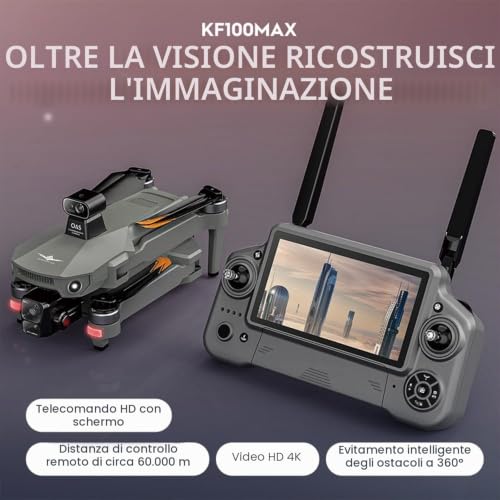
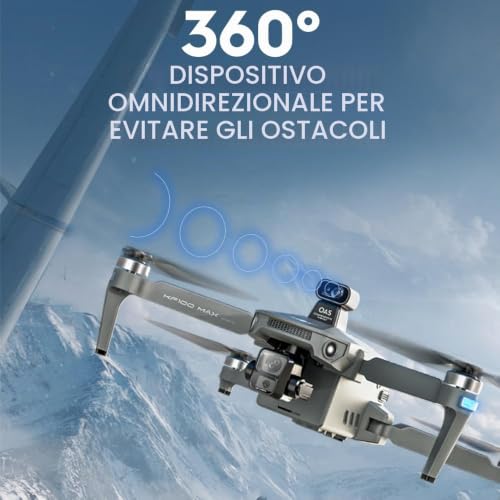
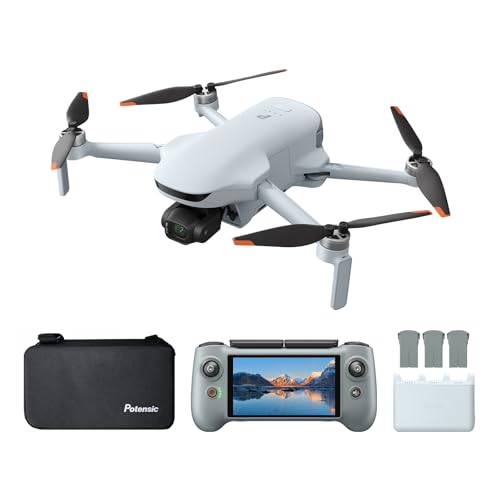
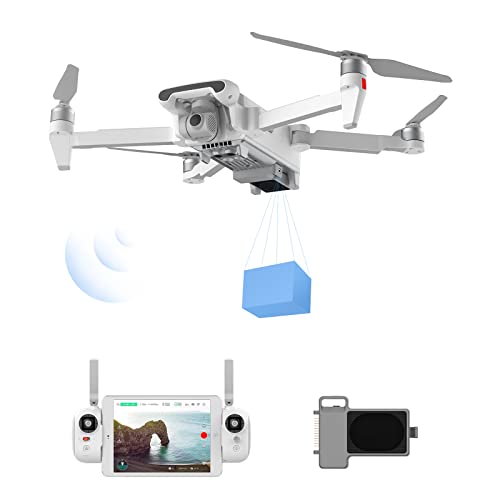
The X-Verse KF100MAX is a professional-grade foldable quadcopter featuring an upgraded 4K camera stabilized by a 3-axis gimbal and EIS for high-definition aerial content. Key specifications include a massive 11.4V 5200mAh battery providing an impressive flight time of approximately 50 minutes, a 6 km digital transmission range, and 360-degree intelligent obstacle avoidance for enhanced safety. Its main pros are the integrated 5.5-inch high-definition screen on the remote control, which removes the need for a smartphone, and unique features like a bottom-mounted gift-dropping mechanism and night vision lights. Potential cons include a long battery charging time of about 6 to 8 hours and a relatively heavy take-off weight of 750g, which exceeds common registration-free limits.

Compare X-Verse KF100MAX with other drones

1Product to compare no. 1
VS
2Product to compare no. 2
VS
3Product to compare no. 3 (optional)

Graphic comparison of X-Verse KF100MAX and other drones

No results found