Scored using Drones Methodology v2.0
Drones Methodology v2.0
Mathematical & Unbiased Scoring
Products in this category are scored under Frontumo Drones Methodology v2.0: technical specifications plus grades from 1,023 independent expert reviews and 2,622 video reviews, with 0% commercial bias.
Explore Drones Methodology v2.0

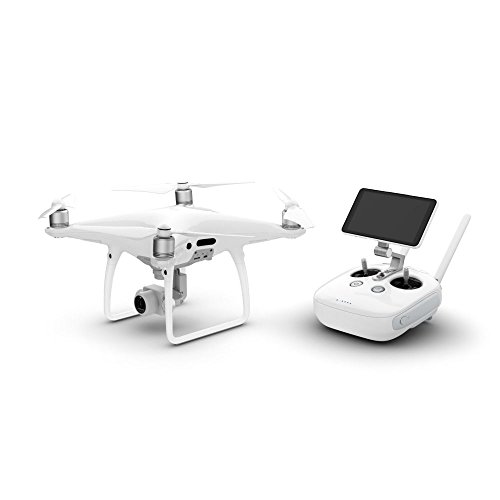
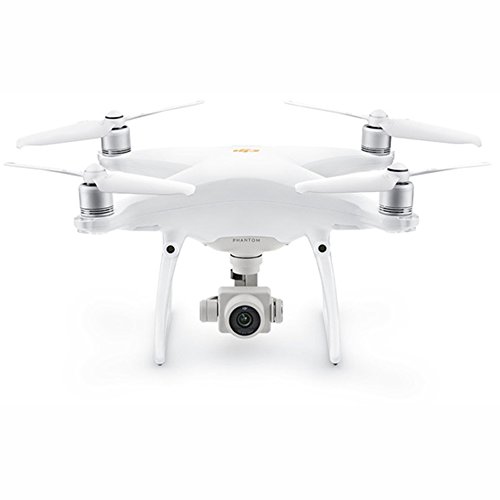
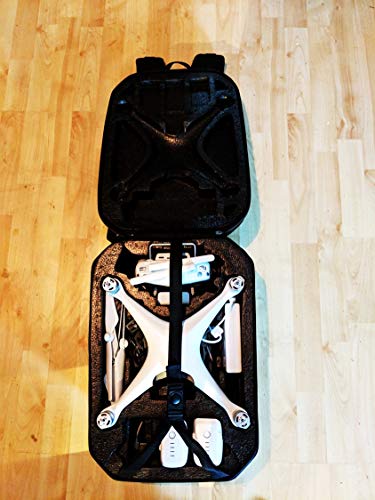
DJI Phantom 4 Pro Review | 97 Data compared

Avg. price:~£1,500Max flight time:30 minVideo resolution:4K/60 fpsMax transmission distance:7 km

DJI Phantom 4 Pro Review: Compare 97 technical specifications and 22 expert and video reviews to see how this product ranks in the Drones category and whether it is worth buying.

7.4

Overall score

Score
7.4/ 10
✕
What it is
An overall evaluation of the drone's quality, based on technical analyses and grades from independent expert reviews.
When it matters
When you need a quick reference to identify the best drones on the market.
Score distribution
â–¼
<55-66-77-88-99-10
Score components

85%

7.2

Technical score

15%

8.7

Review score ( 8 · 14)

Review score 15% · 8.7 · based on 22 independent reviews
Every model in this category gets the same split: reviews 15%, technical score 85%. This model has enough reviews, so its review score is the weighted average of their grades. 1 more review is not scored yet.
â–²Better than 73% of drones
7.2

Technical score

Technical score
7.2/ 10
✕
What it is
An assessment of the drone's technical performance, covering key areas such as flight performance, camera quality, transmission, safety features, battery life, and design.
When it matters
When you want to compare drones based on technical performance and available features.
Score distribution
â–¼
<55-66-77-88-99-10
Score components

26%

7.0

Flight

24%

7.3

Camera

20%

8.2

Safety

16%

6.2

Connectivity

14%

7.1

Battery & Design

â–²Better than 71% of drones
8.7

Review score

Review score
8.7/ 10
✕
What it is
Average grade from independent test sites, magazines and video reviewers, 1–10.
How we count it
Grades: Each review's own score is converted to 1–10; without one, we grade the review ourselves.
Weighting: Big test sites count more, short reviews half as much as full tests. A video review counts half.
Share: Reviews are 15% of the overall score for every model in this category; each of the 4 needed reviews that is missing counts as 7/10.
Score distribution
â–¼
<55-66-77-88-99-10
Grades by review (22)
8 reviews: 2 with a printed score, 6 estimated from the review. 14 video reviews, each counting half as much as a written test. Share in the overall score: 15%, the same for every model in this category.
Text reviews 7
✓ explicit
2

9.6%

9.0

pcmag.com

9.6%

8.5

cnet.com

≈ estimated
5
Video reviews 5
estimated from the review
Shop star ratings are not part of this score.
â–²Better than 86% of drones
  • dji-phantom-4-pro
  • dji-phantom-4-pro
  • dji-phantom-4-pro
  • dji-phantom-4-pro
  • dji-phantom-4-pro
  • dji-phantom-4-pro
  • dji-phantom-4-pro
  • dji-phantom-4-pro
dji-phantom-4-pro
dji-phantom-4-pro
dji-phantom-4-pro
dji-phantom-4-pro
dji-phantom-4-pro
dji-phantom-4-pro
dji-phantom-4-pro
dji-phantom-4-pro

Best prices

*As an Amazon Associate, we earn from qualifying purchases.
Loading...
Loading category ranking...

Technical Specifications of drone DJI Phantom 4 Pro

Technical score
Technical score
7.2/ 10
✕
What it is
An assessment of the drone's technical performance, covering key areas such as flight performance, camera quality, transmission, safety features, battery life, and design.
When it matters
When you want to compare drones based on technical performance and available features.
Score distribution
â–¼
<55-66-77-88-99-10
Score components:

26%

7.0

Flight

24%

7.3

Camera

20%

8.2

Safety

16%

6.2

Connectivity

14%

7.1

Battery & Design

7.2
Review score
Review score
8.7/ 10
✕
What it is
Average grade from independent test sites, magazines and video reviewers, 1–10.
How we count it
Grades: Each review's own score is converted to 1–10; without one, we grade the review ourselves.
Weighting: Big test sites count more, short reviews half as much as full tests. A video review counts half.
Share: Reviews are 15% of the overall score for every model in this category; each of the 4 needed reviews that is missing counts as 7/10.
Score distribution
â–¼
<55-66-77-88-99-10
Grades by review (22)
8 reviews: 2 with a printed score, 6 estimated from the review. 14 video reviews, each counting half as much as a written test. Share in the overall score: 15%, the same for every model in this category.
Text reviews 7
✓ explicit
2

9.6%

9.0

pcmag.com

9.6%

8.5

cnet.com

≈ estimated
5
Video reviews 5
estimated from the review
Shop star ratings are not part of this score.
8.7
Popularity
Popularity
6.1/ 10
✕
What it is
An indicator based on the number of reviews received by the drone.
When it matters
When you prefer to choose a drone reviewed and selected by many other buyers.
Score distribution
â–¼
<55-66-77-88-99-10
Popularity:
DJI Phantom 4 Pro has a popularity score of 6.1 points, which is lower than that of 53.5% of products in this category.
6.1
Value for money
Value for money
6.0/ 10
✕
What it is
An indicator that combines the drone's overall rating with its cost.
When it matters
When you are looking for a drone with a good balance between flight quality, camera features, and price.
Score distribution
â–¼
<55-66-77-88-99-10
Score components:

60%

7.4

Overall score

40%

2.6

Price

6.0
Max flight time
30 min
Max flight time
30 min
This drone has a max flight time of 30 min, longer than 65% of drones and equal to 6% of drones.
Max flight distance
3.5 km
Max flight distance
3.5 km
This drone has a max flight distance of 3.5 km, farther than 59.1% of drones and equal to 0.6% of drones.
Maximum range varies by region (for example FCC vs CE).
Max flight speed
20 m/s
Max flight speed
20 m/s
This drone has a max flight speed of 20 m/s, faster than 81.7% of drones and equal to 6.3% of drones.
Value reflects maximum mode speed (for example Sport/Manual mode).
Max wind resistance
10 m/s
Max wind resistance
10 m/s
This drone has max wind resistance of 10 m/s, lower than 59.7% of drones and equal to 5% of drones.
Max service ceiling (ASL)
6,000 m
Max service ceiling (ASL)
6,000 m
This drone has a max service ceiling of 6,000 m, higher than 81.3% of drones and equal to 12.7% of drones.
Show more
What reviewers say
Video resolution
4K/60 fps
Video resolution
4K/60 fps
This drone records video at 4K/60 fps, higher than 79.2% of drones and equal to 6.4% of drones.
4K camera
yes
4K camera
yes
This drone supports 4K video. 46% of drones support 4K video.
Sensor size
1"
Sensor size
1"
This drone has a sensor size of 1", larger than 84.3% of drones and equal to 8.3% of drones.
Main camera megapixels
20 MP
Main camera megapixels
20 MP
This drone has a main camera resolution of 20 MP, higher than 64% of drones and equal to 9.3% of drones.
Max movie bitrate
100 Mbps
Max movie bitrate
100 Mbps
This drone has a max movie bitrate of 100 Mbps, higher than 30.3% of drones and equal to 29% of drones.
Show more
What reviewers say
Obstacle detection
yes
Obstacle detection
yes
This drone supports obstacle detection. 69.5% of drones support obstacle detection.
Return to Home (RTH)
yes
Return to Home (RTH)
yes
This drone supports Return-to-Home (RTH). 33% of drones support Return-to-Home (RTH).
GPS
yes
GPS
yes
This drone supports GPS. 35.3% of drones support GPS.
GNSS systems supported
GPS, GLONASS
GNSS systems supported
GPS, GLONASS
This drone supports GPS, GLONASS GNSS systems, which are more comprehensive than those of 49.8% and the same as those of 17.1%.
Obstacle sensing directions
forward/backward/downward/left/right
Obstacle sensing directions
forward/backward/downward/left/right
This drone senses obstacles in forward/backward/downward/left/right directions, which is more comprehensive than that of 81.9% and the same as that of 0.5%.
Show more
What reviewers say
Max transmission distance
7 km
Max transmission distance
7 km
This drone has a max transmission distance of 7 km, farther than 68.4% of drones and equal to 1.5% of drones.
Maximum range varies by region; CE/SRRC/MIC limits can be lower.
Transmission latency
220 ms
Transmission latency
220 ms
This drone has transmission latency of 220 ms, higher than 87.3% of drones and equal to 5.6% of drones.
Video transmission system
Lightbridge
Video transmission system
Lightbridge
This drone uses Lightbridge for video transmission, which is more advanced than the system used by 69.2% and the same as that used by 0.5%.
Live view quality
720p@30 fps
Live view quality
720p@30 fps
This drone offers live view quality of 720p@30 fps, lower-quality than 56.8% of drones and equal to 22.9% of drones.
Remote control
yes
Remote control
yes
This drone has a handheld remote controller. 5% of drones offer this.
Show more
What reviewers say
Battery capacity
5,870 mAh
Battery capacity
5,870 mAh
This drone has a battery capacity of 5,870 mAh, larger than 92.2% of drones and equal to 1% of drones.
Battery energy
89.2 Wh
Battery energy
89.2 Wh
This drone has battery energy of 89.2 Wh, higher than 95.9% of drones and equal to 1.2% of drones.
Charging time
90 min
Charging time
90 min
This drone charges in 90 min, faster than 43.8% of drones and equal to 18.8% of drones.
Weight
1,388 g
Weight
1,388 g
This drone weighs 1,388 g, heavier than 97.9% of drones.
Removable battery
yes
Removable battery
yes
This drone has a removable battery. 0.5% of drones have a removable battery.
Show more
What reviewers say

DJI Phantom 4 Pro vs the average drone

246810TotalFlightCameraSafetyConnectivityBattery & Design
  • Larger sensor size
    Sensor size
    1"
    This drone has a larger sensor than the average drone (1" vs 1/2.3"). The average drone uses a sensor of 1/2.3".
    1" vs 1/2.3"
  • Supports obstacle detection
    Obstacle detection
    yes
    This drone supports obstacle detection, while the average drone does not.
  • 72.02 Wh more battery energy
    Battery energy
    89.2 Wh
    This drone has higher battery energy than the average drone (89.2 Wh vs 17.18 Wh). The average drone battery has 17.18 Wh of energy.
    89.2 Wh vs 17.18 Wh
  • 3,670 mAh more battery capacity
    Battery capacity
    5,870 mAh
    This drone has a larger battery capacity than the average drone (5870 mAh vs 2200 mAh). The average drone battery has a capacity of 2200 mAh.
    5,870 mAh vs 2,200 mAh
  • 3 more gimbal axes
    Gimbal axes
    3
    This drone has more gimbal axes than the average drone (3 vs 0). The average drone has 0 gimbal axes.
    3 vs 0
  • 5 m/s faster flight speed
    Max flight speed
    20 m/s
    This drone reaches a higher max flight speed than the average drone (20 m/s vs 15 m/s). The average drone reaches 15 m/s.
    Value reflects maximum mode speed (for example Sport/Manual mode).
    20 m/s vs 15 m/s
  • 10 min longer flight time
    Max flight time
    30 min
    This drone offers longer max flight time than the average drone (30 min vs 20 min). The average drone offers 20 min of max flight time.
    30 min vs 20 min
  • More video codec options
    Video codecs supported
    H.264/AVC, H.265/HEVC
    This drone supports H.264/AVC, H.265/HEVC video codecs, while the average drone supports H.264/AVC.
    H.264/AVC, H.265/HEVC vs H.264/AVC
  • 5 m/s faster flight speed
    Max flight speed
    20 m/s
    This drone reaches a higher max flight speed than the average drone (20 m/s vs 15 m/s). The average drone reaches 15 m/s.
    Value reflects maximum mode speed (for example Sport/Manual mode).
    20 m/s vs 15 m/s
  • 10 min longer flight time
    Max flight time
    30 min
    This drone offers longer max flight time than the average drone (30 min vs 20 min). The average drone offers 20 min of max flight time.
    30 min vs 20 min
  • 2,500 m higher service ceiling
    Max service ceiling (ASL)
    6,000 m
    This drone can fly at a higher max service ceiling than the average drone (6000 m vs 3500 m). The average drone reaches 3500 m.
    6,000 m vs 3,500 m
  • 2.5 km longer flight distance
    Max flight distance
    3.5 km
    This drone has a longer max flight distance than the average drone (3.5 km vs 1 km). The average drone can fly up to 1 km.
    Maximum range varies by region (for example FCC vs CE).
    3.5 km vs 1 km
  • 1 m/s faster ascent speed
    Max ascent speed
    6 m/s
    This drone climbs faster than the average drone (6 m/s vs 5 m/s). The average drone climbs at 5 m/s.
    Value reflects maximum ascent speed in higher-performance flight mode.
    6 m/s vs 5 m/s
  • Larger sensor size
    Sensor size
    1"
    This drone has a larger sensor than the average drone (1" vs 1/2.3"). The average drone uses a sensor of 1/2.3".
    1" vs 1/2.3"
  • 3 more gimbal axes
    Gimbal axes
    3
    This drone has more gimbal axes than the average drone (3 vs 0). The average drone has 0 gimbal axes.
    3 vs 0
  • More color profile options
    Color profiles
    Normal, D-Cinelike, D-Log
    This drone supports Normal, D-Cinelike, D-Log color profiles, while the average drone supports Normal.
    Normal, D-Cinelike, D-Log vs Normal
  • More video codec options
    Video codecs supported
    H.264/AVC, H.265/HEVC
    This drone supports H.264/AVC, H.265/HEVC video codecs, while the average drone supports H.264/AVC.
    H.264/AVC, H.265/HEVC vs H.264/AVC
  • Captures RAW photos
    RAW photo capture
    yes
    This drone can capture RAW photos, while the average drone cannot.
  • Mechanical shutter
    Mechanical shutter
    yes
    This drone has a mechanical shutter, while the average drone does not.
  • More advanced stabilization
    Image stabilization type
    3-Axis Mechanical
    This drone uses 3-Axis Mechanical image stabilization, while the average drone uses EIS (Digital).
    3-Axis Mechanical vs EIS (Digital)
  • Richer manual controls
    Manual camera controls
    full
    This drone offers full manual camera controls, while the average drone offers no.
    full vs no
  • More video format options
    Video formats
    MP4, MOV
    This drone supports MP4, MOV video formats, while the average drone supports MP4.
    MP4, MOV vs MP4
  • Supports slow-motion mode
    Slow-motion mode
    yes
    This drone supports slow-motion mode, while the average drone does not.
  • More capable focus system
    Focus system
    autofocus + manual focus
    This drone uses autofocus + manual focus for focusing, while the average drone uses fixed focus.
    autofocus + manual focus vs fixed focus
  • Supports burst mode
    Burst mode
    yes
    This drone supports burst mode, while the average drone does not.
  • 8 MP more camera resolution
    Main camera megapixels
    20 MP
    This drone has more main camera megapixels than the average drone (20 MP vs 12 MP). The average drone has 12 MP on the main camera.
    20 MP vs 12 MP
  • Supports panorama mode
    Panorama mode
    yes
    This drone supports panorama mode, while the average drone does not.
  • 6,400 ISO higher max ISO
    Max ISO
    12,800 ISO
    This drone reaches a higher max ISO than the average drone (12800 ISO vs 6400 ISO). The average drone reaches 6400 ISO.
    12,800 ISO vs 6,400 ISO
  • Supports obstacle detection
    Obstacle detection
    yes
    This drone supports obstacle detection, while the average drone does not.
  • Supports waypoint flight
    Waypoint flight
    yes
    This drone supports waypoint flight, while the average drone does not.
  • Supports TapFly
    TapFly
    yes
    This drone supports TapFly, while the average drone does not.
  • 4 more flight modes
    N. of intelligent flight modes
    8
    This drone offers more intelligent flight modes than the average drone (8 vs 4). The average drone offers 4 intelligent flight modes.
    ActiveTrack, POI, Waypoint Flight, TapFly, Terrain Follow, Course Lock, Home Lock, Draw
    8 vs 4
  • 5.57x lower takeoff weight
    Max takeoff weight
    1,388 g
    This drone has a lower max takeoff weight than the average drone (1388 g vs 249 g). The average drone has a max takeoff weight of 249 g.
    1,388 g vs 249 g
  • 6 km longer transmission range
    Max transmission distance
    7 km
    This drone has a longer max transmission distance than the average drone (7 km vs 1 km). The average drone reaches 1 km of transmission distance.
    Maximum range varies by region; CE/SRRC/MIC limits can be lower.
    7 km vs 1 km
  • More polished companion app
    Companion app
    DJI GO 4
    This drone uses the DJI GO 4 companion app, while the average drone uses HS FPV.
    DJI GO 4 vs HS FPV
  • 72.02 Wh more battery energy
    Battery energy
    89.2 Wh
    This drone has higher battery energy than the average drone (89.2 Wh vs 17.18 Wh). The average drone battery has 17.18 Wh of energy.
    89.2 Wh vs 17.18 Wh
  • 3,670 mAh more battery capacity
    Battery capacity
    5,870 mAh
    This drone has a larger battery capacity than the average drone (5870 mAh vs 2200 mAh). The average drone battery has a capacity of 2200 mAh.
    5,870 mAh vs 2,200 mAh
  • More modern charging port
    Charging interface
    proprietary
    This drone uses proprietary for charging, while the average drone uses micro-USB.
    proprietary vs micro-USB
  • 5.64x higher weight
    Weight
    1,388 g
    This drone is heavier than the average drone (1388 g vs 246 g). The average drone weighs 246 g.
    1,388 g vs 246 g
  • Fewer GNSS systems
    GNSS systems supported
    GPS, GLONASS
    This drone supports GPS, GLONASS GNSS systems, while the average drone supports GPS, GLONASS, Galileo, BeiDou.
    GPS, GLONASS vs GPS, GLONASS, Galileo, BeiDou
  • 90 ms higher latency
    Transmission latency
    220 ms
    This drone has higher transmission latency than the average drone (220 ms vs 130 ms). The average drone has transmission latency of 130 ms.
    220 ms vs 130 ms
  • 0.7 m/s lower wind resistance
    Max wind resistance
    10 m/s
    This drone handles weaker wind than the average drone (10 m/s vs 10.7 m/s). The average drone handles wind up to 10.7 m/s.
    10 m/s vs 10.7 m/s
  • Narrower aperture
    Aperture
    f/2.8-f/11
    This drone has a narrower aperture than the average drone (f/2.8-f/11 vs f/2). The average drone uses an aperture of f/2.
    f/2.8-f/11 vs f/2
  • Lower live view quality
    Live view quality
    720p@30 fps
    This drone has worse live view quality than the average drone (720p@30 fps vs 1080p@25 fps). The average drone offers live view quality of 1080p@25 fps.
    720p@30 fps vs 1080p@25 fps
  • 7 years older release date
    Release date
    2016
    This drone is older than the average drone (2016 vs 2023). The average drone was released in 2023.
    November 2016
    2016 vs 2023
  • 227.5 mm taller body height
    Height
    290 mm
    This drone is taller than the average drone (290 mm vs 62.5 mm). The average drone is 62.5 mm tall.
    290 mm vs 62.5 mm
  • 18.2% worse value for money
    DJI Phantom 4 Pro has worse value for money than the average drone (5.97 vs 7.1).
    5.97 vs 7.06
  • 7.5x more expensive
    DJI Phantom 4 Pro is more expensive than the average drone (£1,500 vs £200).
    £1,500 vs £200
  • 0.7 m/s lower wind resistance
    Max wind resistance
    10 m/s
    This drone handles weaker wind than the average drone (10 m/s vs 10.7 m/s). The average drone handles wind up to 10.7 m/s.
    10 m/s vs 10.7 m/s
  • 7 years older release date
    Release date
    2016
    This drone is older than the average drone (2016 vs 2023). The average drone was released in 2023.
    November 2016
    2016 vs 2023
  • Non-foldable design
    Foldable design
    no
    This drone does not have a foldable design, while the average drone does.
  • Narrower aperture
    Aperture
    f/2.8-f/11
    This drone has a narrower aperture than the average drone (f/2.8-f/11 vs f/2). The average drone uses an aperture of f/2.
    f/2.8-f/11 vs f/2
  • Lower video resolution
    Video resolution
    4K/60 fps
    This drone offers lower video resolution than the average drone (4K/60 fps vs 4K/100 fps). The average drone offers a video resolution of 4K/100 fps.
    4K/60 fps vs 4K/100 fps
  • 6 ° narrower field of view
    Field of view
    84 °
    This drone has a narrower field of view than the average drone (84 ° vs 90 °). The average drone has a field of view of 90 °.
    84 ° vs 90 °
  • Fewer GNSS systems
    GNSS systems supported
    GPS, GLONASS
    This drone supports GPS, GLONASS GNSS systems, while the average drone supports GPS, GLONASS, Galileo, BeiDou.
    GPS, GLONASS vs GPS, GLONASS, Galileo, BeiDou
  • No headless mode
    Headless mode
    no
    This drone does not support headless mode, while the average drone does.
  • 90 ms higher latency
    Transmission latency
    220 ms
    This drone has higher transmission latency than the average drone (220 ms vs 130 ms). The average drone has transmission latency of 130 ms.
    220 ms vs 130 ms
  • Lower live view quality
    Live view quality
    720p@30 fps
    This drone has worse live view quality than the average drone (720p@30 fps vs 1080p@25 fps). The average drone offers live view quality of 1080p@25 fps.
    720p@30 fps vs 1080p@25 fps
  • More basic transmission system
    Video transmission system
    Lightbridge
    This drone uses Lightbridge for video transmission, while the average drone uses SkyLink 2.0.
    Lightbridge vs SkyLink 2.0
  • 5.64x higher weight
    Weight
    1,388 g
    This drone is heavier than the average drone (1388 g vs 246 g). The average drone weighs 246 g.
    1,388 g vs 246 g
  • 227.5 mm taller body height
    Height
    290 mm
    This drone is taller than the average drone (290 mm vs 62.5 mm). The average drone is 62.5 mm tall.
    290 mm vs 62.5 mm
  • 109 mm wider width
    Width
    350 mm
    This drone is wider than the average drone (350 mm vs 241 mm). The average drone width is 241 mm.
    350 mm vs 241 mm
  • 75 mm longer body length
    Length
    350 mm
    This drone is longer than the average drone (350 mm vs 275 mm). The average drone is 275 mm long.
    350 mm vs 275 mm

Video reviews

Hands-on testing, unboxing, and real-world video evaluations

9.0
Streaming Media
≈ estimated
16/01/2020
Hands-on review · flight stability, controller and image quality
Verdict
DJI Phantom 4 Pro flies well overall, with the most stable hover of any DJI drone tested, despite soft image edges.
7.0
WetalkUAV
≈ estimated
08/05/2018
Hands-on review · flight, footage and noise test
Verdict
DJI Phantom 4 Pro flies and films very well, but offers few real upgrades over the previous model.
8.0
Dustin Dunnill
≈ estimated
24/04/2017
Full flight test · sensor, tracking and obstacle avoidance checks
Verdict
DJI Phantom 4 Pro is a solid drone; its new sensors and camera work well, though Active Track once failed to relock.
9.0
JRESHOW
≈ estimated
13/02/2017
Hands-on review · feature walkthrough and intelligent flight modes
Verdict
DJI Phantom 4 Pro is easy to fly and shoots striking photos and video, though it is mainly an upgrade for professionals.
4.0
Billy Kyle
≈ estimated
19/07/2020
Comparison with Mavic 2 Pro · 2020 buying advice
Verdict
DJI Phantom 4 Pro is still capable, but at the same price the Mavic 2 Pro is the better buy, so skip it.
Shop video
Hands-on video, no verdict

What reviewers agree on

Based on 12 · 14

Reviewers praise the image quality, obstacle sensing and mechanical shutter, but find it bulky and awkward to carry around.
Praised
Mixed views
Criticised
Pick a topic to see who said what

Expert reviews

In-depth analysis and verdict from leading tech publications

9.0
pcmag.com
✓ explicit
14/12/2016
Review · Long-range 4K drone
Verdict
The DJI Phantom 4 Pro delivers excellent image quality and reliable long-distance flight, but it's less portable than foldable drones.
9.0
photoshopcafe.com
≈ estimated
15/11/2016
Review · Low-light camera drone
Verdict
The DJI Phantom 4 Pro shoots well in low light and offers 360-degree obstacle avoidance, but it's large and its side sensors switch off at full speed.
9.0
cined.com
≈ estimated
13/03/2017
Expert review · Aerial camera
Verdict
DJI Phantom 4 Pro is a top camera drone for pros, with a large 1-inch sensor, but it's bulky and doesn't fold.
9.0
techgeartalk.com
≈ estimated
18/02/2018
Hands-on review · Obsidian edition
Verdict
DJI Phantom 4 Pro Obsidian is a stable camera drone with 4K 60fps video and 30-minute flight time, but its non-folding body is bulky.
9.5
mashable.com
≈ estimated
15/11/2016
Expert review · Pro+ with screen
Verdict
DJI Phantom 4 Pro+ is an advanced drone with 360-degree obstacle avoidance and a bright built-in screen, though a propeller sometimes shows up in footage.
8.5
cnet.com
✓ explicit
13/03/2017
Expert review · Pro photography drone
Verdict
DJI Phantom 4 Pro is a top pick for professional photographers, with a sharp 1-inch camera and five-direction sensing, but its bulky, non-folding frame is less portable.
9.5
slrlounge.com
≈ estimated
14/02/2018
Practical review · Photographer's field test
Verdict
DJI Phantom 4 Pro boots quickly, hovers steadily and has a sharp 1-inch sensor, but its fast-reacting motors need tuning for smooth video.
9.0
unepat.fr
≈ estimated
28/12/2025
Expert review · Pro aerial photography
Verdict
DJI Phantom 4 Pro is a strong choice for professional aerial photography, with a 1-inch sensor and 4K 60fps video, but it's less portable than folding drones.

Third-party reviews

What we like about DJI Phantom 4 Pro

  • Professional-grade 1-inch 20MP sensor with 4K video at 60fps
  • Mechanical shutter that eliminates rolling shutter distortion
  • Five-direction obstacle avoidance for enhanced flight safety
  • Excellent stability even in moderately windy conditions
  • Long transmission range (up to 4.3 miles) with Lightbridge/OcuSync technology
  • Advanced automated flight modes like ActiveTrack and TapFly

What we don't like about DJI Phantom 4 Pro

  • Large, non-foldable design makes it less portable than the Mavic series
  • High cost of both the unit and additional proprietary batteries
  • Side sensors are only functional in specific flight modes (Beginner/Tripod)
  • Integrated screen on the 'Plus' model can be prone to software lag
  • Fixed landing gear and under-slung camera can be vulnerable during rough starts or landings
  • Occasional reports of compass calibration errors and yaw drifting

Verdict

The DJI Phantom 4 Pro is a professional-grade quadcopter featuring a 1-inch 20MP CMOS sensor capable of shooting 4K video at 60fps and 20-megapixel stills with an adjustable aperture of f/2.8 to f/11. Its robust magnesium alloy airframe supports a maximum flight time of approximately 30 minutes and a top speed of 45 mph (72 kph) in Sport mode, while the FlightAutonomy system provides five-direction obstacle sensing and four-direction avoidance. Main pros include its high-resolution camera with a mechanical shutter to eliminate rolling shutter distortion, a long 4.3-mile (7km) transmission range via Lightbridge technology, and a variety of intelligent flight modes like ActiveTrack and TapFly. However, notable cons include its bulky, non-folding design which limits portability compared to the Mavic series, the high cost of proprietary replacement batteries, and the fact that its side sensors are only functional in specific flight modes like Tripod or Beginner mode.

Compare DJI Phantom 4 Pro with other drones

1Product to compare no. 1
VS
2Product to compare no. 2
VS
3Product to compare no. 3 (optional)

Graphic comparison of DJI Phantom 4 Pro and other drones

No results found