Scored using Drones Methodology v2.0
Drones Methodology v2.0
Mathematical & Unbiased Scoring
Products in this category are scored under Frontumo Drones Methodology v2.0: technical specifications plus grades from 1,023 independent expert reviews and 2,622 video reviews, with 0% commercial bias.
Explore Drones Methodology v2.0

Autel EVO II Review | 97 Data compared

Avg. price:~£2,200Max flight time:40 minVideo resolution:8K/25 fpsMax transmission distance:9 km

Autel EVO II Review: Compare 97 technical specifications and 13 expert and video reviews to see how this product ranks in the Drones category and whether it is worth buying.

8.5

Overall score

Score
8.5/ 10
✕
What it is
An overall evaluation of the drone's quality, based on technical analyses and grades from independent expert reviews.
When it matters
When you need a quick reference to identify the best drones on the market.
Score distribution
â–¼
<55-66-77-88-99-10
Score components

85%

8.5

Technical score

15%

8.5

Review score ( 7 · 6)

Review score 15% · 8.5 · based on 13 independent reviews
Every model in this category gets the same split: reviews 15%, technical score 85%. This model has enough reviews, so its review score is the weighted average of their grades.
★Better than 93% of drones
8.5

Technical score

Technical score
8.5/ 10
✕
What it is
An assessment of the drone's technical performance, covering key areas such as flight performance, camera quality, transmission, safety features, battery life, and design.
When it matters
When you want to compare drones based on technical performance and available features.
Score distribution
â–¼
<55-66-77-88-99-10
Score components

26%

9.8

Flight

24%

8.1

Camera

20%

8.7

Safety

16%

8.1

Connectivity

14%

7.3

Battery & Design

★Better than 92% of drones
8.5

Review score

Review score
8.5/ 10
✕
What it is
Average grade from independent test sites, magazines and video reviewers, 1–10.
How we count it
Grades: Each review's own score is converted to 1–10; without one, we grade the review ourselves.
Weighting: Big test sites count more, short reviews half as much as full tests. A video review counts half.
Share: Reviews are 15% of the overall score for every model in this category; each of the 4 needed reviews that is missing counts as 7/10.
Score distribution
â–¼
<55-66-77-88-99-10
Grades by review (13)
7 reviews: 4 with a printed score, 3 estimated from the review. 6 video reviews, each counting half as much as a written test. Share in the overall score: 15%, the same for every model in this category.
Text reviews 4
✓ explicit
3
≈ estimated
1
Video reviews 2
estimated from the review
Shop star ratings are not part of this score.
â–²Better than 79% of drones
  • autel-evo-ii
  • autel-evo-ii
  • autel-evo-ii
  • autel-evo-ii
  • autel-evo-ii
  • autel-evo-ii
  • autel-evo-ii
  • autel-evo-ii
  • autel-evo-ii
autel-evo-ii
autel-evo-ii
autel-evo-ii
autel-evo-ii
autel-evo-ii
autel-evo-ii
autel-evo-ii
autel-evo-ii
autel-evo-ii

Best prices

*As an Amazon Associate, we earn from qualifying purchases.

Best rankings

Available: ranking among products currently available (including other versions of this product).All: ranking among all products in the database.
Loading...
Loading category ranking...

Technical Specifications of drone Autel EVO II

Technical score
Technical score
8.5/ 10
✕
What it is
An assessment of the drone's technical performance, covering key areas such as flight performance, camera quality, transmission, safety features, battery life, and design.
When it matters
When you want to compare drones based on technical performance and available features.
Score distribution
â–¼
<55-66-77-88-99-10
Score components:

26%

9.8

Flight

24%

8.1

Camera

20%

8.7

Safety

16%

8.1

Connectivity

14%

7.3

Battery & Design

8.5
Review score
Review score
8.5/ 10
✕
What it is
Average grade from independent test sites, magazines and video reviewers, 1–10.
How we count it
Grades: Each review's own score is converted to 1–10; without one, we grade the review ourselves.
Weighting: Big test sites count more, short reviews half as much as full tests. A video review counts half.
Share: Reviews are 15% of the overall score for every model in this category; each of the 4 needed reviews that is missing counts as 7/10.
Score distribution
â–¼
<55-66-77-88-99-10
Grades by review (13)
7 reviews: 4 with a printed score, 3 estimated from the review. 6 video reviews, each counting half as much as a written test. Share in the overall score: 15%, the same for every model in this category.
Text reviews 4
✓ explicit
3
≈ estimated
1
Video reviews 2
estimated from the review
Shop star ratings are not part of this score.
8.5
Popularity
Popularity
3.9/ 10
✕
What it is
An indicator based on the number of reviews received by the drone.
When it matters
When you prefer to choose a drone reviewed and selected by many other buyers.
Score distribution
â–¼
<55-66-77-88-99-10
Popularity:
Autel EVO II has a popularity score of 3.9 points, which is lower than that of 66.8% of products in this category.
3.9
Value for money
Value for money
6.3/ 10
✕
What it is
An indicator that combines the drone's overall rating with its cost.
When it matters
When you are looking for a drone with a good balance between flight quality, camera features, and price.
Score distribution
â–¼
<55-66-77-88-99-10
Score components:

60%

8.5

Overall score

40%

1.0

Price

6.3
Max flight time
40 min
Max flight time
40 min
This drone has a max flight time of 40 min, longer than 88% of drones and equal to 4.5% of drones.
Max flight distance
25 km
Max flight distance
25 km
This drone has a max flight distance of 25 km, farther than 90.6% of drones and equal to 3.3% of drones.
Distance can vary by region standard (for example FCC vs CE).
Max flight speed
20 m/s
Max flight speed
20 m/s
This drone has a max flight speed of 20 m/s, faster than 81.7% of drones and equal to 6.3% of drones.
Value reflects maximum mode speed (for example Sport/Manual mode).
Max wind resistance
12 m/s
Max wind resistance
12 m/s
This drone has max wind resistance of 12 m/s, higher than 75.5% of drones and equal to 15.1% of drones.
Max service ceiling (ASL)
7,000 m
Max service ceiling (ASL)
7,000 m
This drone has a max service ceiling of 7,000 m, higher than 94.8% of drones and equal to 5.2% of drones.
Show more
What reviewers say
Video resolution
8K/25 fps
Video resolution
8K/25 fps
This drone records video at 8K/25 fps, higher than 97% of drones and equal to 2% of drones.
4K camera
yes
4K camera
yes
This drone supports 4K video. 46% of drones support 4K video.
Sensor size
1/2"
Sensor size
1/2"
This drone has a sensor size of 1/2", larger than 48.2% of drones and equal to 17.6% of drones.
Main camera megapixels
48 MP
Main camera megapixels
48 MP
This drone has a main camera resolution of 48 MP, higher than 76% of drones and equal to 18% of drones.
Max movie bitrate
120 Mbps
Max movie bitrate
120 Mbps
This drone has a max movie bitrate of 120 Mbps, higher than 60.5% of drones and equal to 11.8% of drones.
Show more
What reviewers say
Obstacle detection
yes
Obstacle detection
yes
This drone supports obstacle detection. 69.5% of drones support obstacle detection.
Return to Home (RTH)
yes
Return to Home (RTH)
yes
This drone supports Return-to-Home (RTH). 33% of drones support Return-to-Home (RTH).
GPS
yes
GPS
yes
This drone supports GPS. 35.3% of drones support GPS.
GNSS systems supported
GPS, GLONASS, Galileo, BeiDou
GNSS systems supported
GPS, GLONASS, Galileo, BeiDou
This drone supports GPS, GLONASS, Galileo, BeiDou GNSS systems, which are more comprehensive than those of 82.4% and the same as those of 17.6%.
Obstacle sensing directions
omnidirectional
Obstacle sensing directions
omnidirectional
This drone senses obstacles in omnidirectional directions, which is more comprehensive than that of 83.4% and the same as that of 16.6%.
Show more
What reviewers say
Max transmission distance
9 km
Max transmission distance
9 km
This drone has a max transmission distance of 9 km, farther than 71.9% of drones and equal to 3.1% of drones.
Maximum range varies by region; FCC-region limits can be higher.
Transmission latency
120 ms
Transmission latency
120 ms
This drone has transmission latency of 120 ms, lower than 59.2% of drones and equal to 28.2% of drones.
Video transmission system
SkyLink 2.0
Video transmission system
SkyLink 2.0
This drone uses SkyLink 2.0 for video transmission, which is more advanced than the system used by 77.4% and the same as that used by 2.6%.
Live view quality
1080p@30 fps
Live view quality
1080p@30 fps
This drone offers live view quality of 1080p@30 fps, higher-quality than 60.9% of drones and equal to 18.8% of drones.
Remote control
yes
Remote control
yes
This drone has a handheld remote controller. 5% of drones offer this.
Show more
What reviewers say
Battery capacity
7,100 mAh
Battery capacity
7,100 mAh
This drone has a battery capacity of 7,100 mAh, larger than 96.9% of drones and equal to 2.6% of drones.
Battery energy
82 Wh
Battery energy
82 Wh
This drone has battery energy of 82 Wh, higher than 92.4% of drones and equal to 2.9% of drones.
Charging time
90 min
Charging time
90 min
This drone charges in 90 min, faster than 43.8% of drones and equal to 18.8% of drones.
Weight
1,127 g
Weight
1,127 g
This drone weighs 1,127 g, heavier than 92.3% of drones.
Removable battery
yes
Removable battery
yes
This drone has a removable battery. 0.5% of drones have a removable battery.
Show more
What reviewers say

Autel EVO II vs the average drone

246810TotalFlightCameraSafetyConnectivityBattery & Design
  • 24 km longer flight distance
    Max flight distance
    25 km
    This drone has a longer max flight distance than the average drone (25 km vs 1 km). The average drone can fly up to 1 km.
    Distance can vary by region standard (for example FCC vs CE).
    25 km vs 1 km
  • 20 min longer flight time
    Max flight time
    40 min
    This drone offers longer max flight time than the average drone (40 min vs 20 min). The average drone offers 20 min of max flight time.
    40 min vs 20 min
  • Supports obstacle detection
    Obstacle detection
    yes
    This drone supports obstacle detection, while the average drone does not.
  • 4,900 mAh more battery capacity
    Battery capacity
    7,100 mAh
    This drone has a larger battery capacity than the average drone (7100 mAh vs 2200 mAh). The average drone battery has a capacity of 2200 mAh.
    7,100 mAh vs 2,200 mAh
  • 64.82 Wh more battery energy
    Battery energy
    82 Wh
    This drone has higher battery energy than the average drone (82 Wh vs 17.18 Wh). The average drone battery has 17.18 Wh of energy.
    82 Wh vs 17.18 Wh
  • 3 more gimbal axes
    Gimbal axes
    3
    This drone has more gimbal axes than the average drone (3 vs 0). The average drone has 0 gimbal axes.
    3 vs 0
  • Supports low-light mode
    Low light mode
    yes
    This drone supports low-light mode, while the average drone does not.
  • 5 m/s faster flight speed
    Max flight speed
    20 m/s
    This drone reaches a higher max flight speed than the average drone (20 m/s vs 15 m/s). The average drone reaches 15 m/s.
    Value reflects maximum mode speed (for example Sport/Manual mode).
    20 m/s vs 15 m/s
  • 24 km longer flight distance
    Max flight distance
    25 km
    This drone has a longer max flight distance than the average drone (25 km vs 1 km). The average drone can fly up to 1 km.
    Distance can vary by region standard (for example FCC vs CE).
    25 km vs 1 km
  • 20 min longer flight time
    Max flight time
    40 min
    This drone offers longer max flight time than the average drone (40 min vs 20 min). The average drone offers 20 min of max flight time.
    40 min vs 20 min
  • 5 m/s faster flight speed
    Max flight speed
    20 m/s
    This drone reaches a higher max flight speed than the average drone (20 m/s vs 15 m/s). The average drone reaches 15 m/s.
    Value reflects maximum mode speed (for example Sport/Manual mode).
    20 m/s vs 15 m/s
  • 1.3 m/s higher wind resistance
    Max wind resistance
    12 m/s
    This drone handles stronger wind than the average drone (12 m/s vs 10.7 m/s). The average drone handles wind up to 10.7 m/s.
    12 m/s vs 10.7 m/s
  • 3 m/s faster ascent speed
    Max ascent speed
    8 m/s
    This drone climbs faster than the average drone (8 m/s vs 5 m/s). The average drone climbs at 5 m/s.
    Value reflects maximum ascent speed in higher-performance flight mode.
    8 m/s vs 5 m/s
  • 3,500 m higher service ceiling
    Max service ceiling (ASL)
    7,000 m
    This drone can fly at a higher max service ceiling than the average drone (7000 m vs 3500 m). The average drone reaches 3500 m.
    7,000 m vs 3,500 m
  • 3 more gimbal axes
    Gimbal axes
    3
    This drone has more gimbal axes than the average drone (3 vs 0). The average drone has 0 gimbal axes.
    3 vs 0
  • Supports low-light mode
    Low light mode
    yes
    This drone supports low-light mode, while the average drone does not.
  • More video codec options
    Video codecs supported
    H.264/AVC, H.265/HEVC
    This drone supports H.264/AVC, H.265/HEVC video codecs, while the average drone supports H.264/AVC.
    H.264/AVC, H.265/HEVC vs H.264/AVC
  • Captures RAW photos
    RAW photo capture
    yes
    This drone can capture RAW photos, while the average drone cannot.
  • More capable focus system
    Focus system
    hybrid AF (PDAF + CDAF)
    This drone uses hybrid AF (PDAF + CDAF) for focusing, while the average drone uses fixed focus.
    hybrid AF (PDAF + CDAF) vs fixed focus
  • More advanced stabilization
    Image stabilization type
    3-Axis Mechanical
    This drone uses 3-Axis Mechanical image stabilization, while the average drone uses EIS (Digital).
    3-Axis Mechanical vs EIS (Digital)
  • Richer manual controls
    Manual camera controls
    full
    This drone offers full manual camera controls, while the average drone offers no.
    full vs no
  • More video format options
    Video formats
    MP4, MOV
    This drone supports MP4, MOV video formats, while the average drone supports MP4.
    MP4, MOV vs MP4
  • Supports slow-motion mode
    Slow-motion mode
    yes
    This drone supports slow-motion mode, while the average drone does not.
  • 36 MP more camera resolution
    Main camera megapixels
    48 MP
    This drone has more main camera megapixels than the average drone (48 MP vs 12 MP). The average drone has 12 MP on the main camera.
    48 MP vs 12 MP
  • 8 GB more internal storage
    Internal storage
    8 GB
    This drone has more internal storage than the average drone (8 GB vs 0 GB). The average drone has 0 GB of internal storage.
    8 GB vs 0 GB
  • 20 Mbps higher video bitrate
    Max movie bitrate
    120 Mbps
    This drone supports a higher maximum video bitrate than the average drone (120 Mbps vs 100 Mbps). The average drone supports a maximum video bitrate of 100 Mbps.
    120 Mbps vs 100 Mbps
  • Higher video resolution
    Video resolution
    8K/25 fps
    This drone offers higher video resolution than the average drone (8K/25 fps vs 4K/100 fps). The average drone offers a video resolution of 4K/100 fps.
    8K/25 fps vs 4K/100 fps
  • Supports HDR mode
    HDR mode
    yes
    This drone supports HDR mode, while the average drone does not.
  • Larger sensor size
    Sensor size
    1/2"
    This drone has a larger sensor than the average drone (1/2" vs 1/2.3"). The average drone uses a sensor of 1/2.3".
    1/2" vs 1/2.3"
  • Wider aperture
    Aperture
    f/1.8
    This drone has a wider aperture than the average drone (f/1.8 vs f/2). The average drone uses an aperture of f/2.
    f/1.8 vs f/2
  • 5 x higher digital zoom
    Digital zoom
    8 x
    This drone offers more digital zoom than the average drone (8 x vs 3 x). The average drone offers 3 x of digital zoom.
    8 x vs 3 x
  • Supports burst mode
    Burst mode
    yes
    This drone supports burst mode, while the average drone does not.
  • Higher photo resolution
    Photo resolution
    8000 x 6000 px
    This drone offers higher photo resolution than the average drone (8000x6000 px vs 4096x3072 px). The average drone offers a photo resolution of 4096x3072 px.
    8000x6000 px vs 4096x3072 px
  • Supports panorama mode
    Panorama mode
    yes
    This drone supports panorama mode, while the average drone does not.
  • Supports obstacle detection
    Obstacle detection
    yes
    This drone supports obstacle detection, while the average drone does not.
  • Supports waypoint flight
    Waypoint flight
    yes
    This drone supports waypoint flight, while the average drone does not.
  • 8.03x lower takeoff weight
    Max takeoff weight
    1999 g
    This drone has a lower max takeoff weight than the average drone (1999 g vs 249 g). The average drone has a max takeoff weight of 249 g.
    1,999 g vs 249 g
  • Less restrictive EU class
    EU class marking
    C2
    This drone is rated as C2 under the EU drone class system, while the average drone is rated as None.
    C2 vs None
  • 8 km longer transmission range
    Max transmission distance
    9 km
    This drone has a longer max transmission distance than the average drone (9 km vs 1 km). The average drone reaches 1 km of transmission distance.
    Maximum range varies by region; FCC-region limits can be higher.
    9 km vs 1 km
  • More frequency bands
    Operating frequency bands
    900 MHz, 2.4 GHz, 5.8 GHz
    This drone supports 900 MHz, 2.4 GHz, 5.8 GHz operating frequency bands, while the average drone supports 2.4 GHz, 5.8 GHz.
    900 MHz, 2.4 GHz, 5.8 GHz vs 2.4 GHz, 5.8 GHz
  • 10 ms lower latency
    Transmission latency
    120 ms
    This drone has lower transmission latency than the average drone (120 ms vs 130 ms). The average drone has transmission latency of 130 ms.
    120 ms vs 130 ms
  • More polished companion app
    Companion app
    Autel Explorer
    This drone uses the Autel Explorer companion app, while the average drone uses HS FPV.
    Autel Explorer vs HS FPV
  • Better live view quality
    Live view quality
    1080p@30 fps
    This drone has better live view quality than the average drone (1080p@30 fps vs 1080p@25 fps). The average drone offers live view quality of 1080p@25 fps.
    1080p@30 fps vs 1080p@25 fps
  • 4,900 mAh more battery capacity
    Battery capacity
    7,100 mAh
    This drone has a larger battery capacity than the average drone (7100 mAh vs 2200 mAh). The average drone battery has a capacity of 2200 mAh.
    7,100 mAh vs 2,200 mAh
  • 64.82 Wh more battery energy
    Battery energy
    82 Wh
    This drone has higher battery energy than the average drone (82 Wh vs 17.18 Wh). The average drone battery has 17.18 Wh of energy.
    82 Wh vs 17.18 Wh
  • More modern charging port
    Charging interface
    proprietary
    This drone uses proprietary for charging, while the average drone uses micro-USB.
    proprietary vs micro-USB
  • 4.58x higher weight
    Weight
    1,127 g
    This drone is heavier than the average drone (1127 g vs 246 g). The average drone weighs 246 g.
    1,127 g vs 246 g
  • 113 mm wider width
    Width
    354 mm
    This drone is wider than the average drone (354 mm vs 241 mm). The average drone width is 241 mm.
    354 mm vs 241 mm
  • 47.5 mm taller body height
    Height
    110 mm
    This drone is taller than the average drone (110 mm vs 62.5 mm). The average drone is 62.5 mm tall.
    110 mm vs 62.5 mm
  • 149 mm longer body length
    Length
    424 mm
    This drone is longer than the average drone (424 mm vs 275 mm). The average drone is 275 mm long.
    424 mm vs 275 mm
  • 11x more expensive
    Autel EVO II is more expensive than the average drone (£2,200 vs £200).
    £2,200 vs £200
  • 3 years older release date
    Release date
    2020
    This drone is older than the average drone (2020 vs 2023). The average drone was released in 2023.
    January 2020
    2020 vs 2023
  • 12.4% worse value for money
    Autel EVO II has worse value for money than the average drone (6.28 vs 7.1).
    6.28 vs 7.06
  • No headless mode
    Headless mode
    no
    This drone does not support headless mode, while the average drone does.
  • 11x more expensive
    Autel EVO II is more expensive than the average drone (£2,200 vs £200).
    £2,200 vs £200
  • 12.4% worse value for money
    Autel EVO II has worse value for money than the average drone (6.28 vs 7.1).
    6.28 vs 7.06
  • 64.6% less popular
    Autel EVO II is less popular than the average drone (3.93 vs 6.5).
    3.93 vs 6.47
  • 3 years older release date
    Release date
    2020
    This drone is older than the average drone (2020 vs 2023). The average drone was released in 2023.
    January 2020
    2020 vs 2023
  • 11 ° narrower field of view
    Field of view
    79 °
    This drone has a narrower field of view than the average drone (79 ° vs 90 °). The average drone has a field of view of 90 °.
    79 ° vs 90 °
  • No headless mode
    Headless mode
    no
    This drone does not support headless mode, while the average drone does.
  • 4.58x higher weight
    Weight
    1,127 g
    This drone is heavier than the average drone (1127 g vs 246 g). The average drone weighs 246 g.
    1,127 g vs 246 g
  • 113 mm wider width
    Width
    354 mm
    This drone is wider than the average drone (354 mm vs 241 mm). The average drone width is 241 mm.
    354 mm vs 241 mm
  • 47.5 mm taller body height
    Height
    110 mm
    This drone is taller than the average drone (110 mm vs 62.5 mm). The average drone is 62.5 mm tall.
    110 mm vs 62.5 mm
  • 149 mm longer body length
    Length
    424 mm
    This drone is longer than the average drone (424 mm vs 275 mm). The average drone is 275 mm long.
    424 mm vs 275 mm
  • Plainer color finish
    Color
    gray, orange
    This drone comes in gray, orange, while the average drone comes in gray.
    gray, orange vs gray

Video reviews

Hands-on testing, unboxing, and real-world video evaluations

9.0
CAPTAIN DRONE
≈ estimated
05/05/2020
Full review · features, focus, controller and kit walkthrough
Verdict
Autel EVO II is a strong drone overall, though its body looks quite plastic.
9.0
Billy Kyle
≈ estimated
27/04/2020
Range test · urban flight with signal and return-home checks
Verdict
Autel EVO II has impressive range and clear video in a city, though losing control briefly is worrying.
9.0
Billy Kyle
≈ estimated
25/04/2020
First flight · first impressions and footage
Verdict
Autel EVO II offers strong flight performance and is a serious DJI rival, though it is a bit slow and touchy.
Shop video
Shop video

What reviewers agree on

Based on 7 · 7

Reviewers praise the camera and long flight time, but the controller and app draw frequent complaints.
Praised
Mixed views
Criticised
Pick a topic to see who said what

Expert reviews

In-depth analysis and verdict from leading tech publications

9.0
digitalcameraworld.com
✓ explicit
27/07/2020
Expert review · 8K camera drone
Verdict
Autel EVO II suits photographers who want 8K detail with room to crop and 360-degree obstacle avoidance, though digital zoom is weak and there are no automatic panorama modes.
8.0
cameralabs.com
✓ explicit
24/08/2020
Expert review · 8K camera
Verdict
The Autel EVO II flies steadily, sees obstacles all around and records sharp 8K, but the controller screen is hard to read in sun and some automatic shot modes are missing.
9.0
dronelife.com
≈ estimated
12/08/2020
Expert review · Modular camera
Verdict
The Autel EVO II is a steady, long-flying drone with a swappable camera and no geofencing, held back by a clumsy app and a cheap-feeling controller.
10
remoteflyer.com
✓ explicit
20/03/2021
Hands-on review · 8K camera
Verdict
The Autel EVO II has a strong camera with 8K, 4x lossless zoom and a screen built into the controller, but it is big and heavy and has no panorama mode.
8.0
dronezine.it
≈ estimated
20/06/2020
Hands-on test · Windy first flight
Verdict
The Autel EVO II 8K holds steady in strong gusts and records 8K, but it is heavy and needs a powerful computer to edit the footage.
9.0
dronezine.it
≈ estimated
11/07/2020
Field test · Obstacle avoidance
Verdict
The Autel EVO II 8K is very good at following a subject while dodging obstacles, even through thick trees, though its movements while doing so are not smooth.
10
dronewatch.nl
✓ explicit
09/04/2020
Review summary · 8K camera
Verdict
The Autel EVO II 8K offers detailed 8K video, swappable cameras and long flight times, but its app and tracking are less polished than rivals'.

Third-party reviews

What we like about Autel EVO II

  • No geofencing allows for easier flight in restricted areas without complex unlocking processes
  • Excellent image quality from the 1-inch sensor, providing 6K video and 20MP Raw stills
  • Long battery life with real-world flight times often exceeding 30 minutes
  • Omnidirectional obstacle avoidance sensors provide 360-degree protection
  • Controller includes a built-in screen, enabling phone-free flight
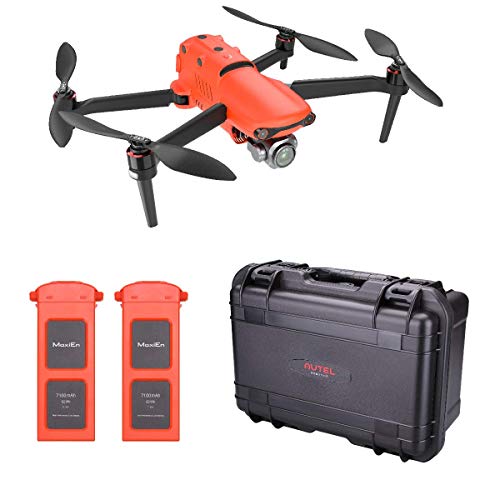
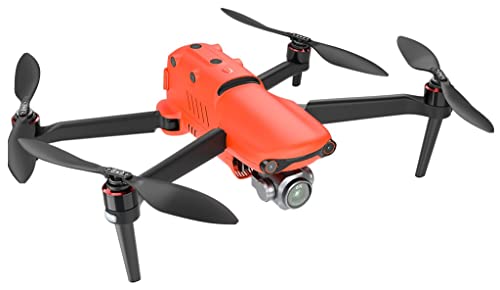
  • Highly visible bright orange finish makes the drone easier to spot in the sky
  • Modular camera system allows for swapping between different camera units

What we don't like about Autel EVO II

  • High price point compared to competitors with similar features
  • Mobile app is less polished and mature than the leading competitor's version
  • Large and heavy airframe makes it less portable than smaller folding drones
  • Noticeable input lag or 'sticky' controls reported by some users
  • Video feed to the controller can suffer from occasional hitching or low quality
  • Proprietary charging system for batteries is slower than some competitors
  • Certain advanced camera settings still require a connected smartphone app

Verdict

The Autel EVO II is a high-performance foldable drone series distinguished by its modular camera system, offering an 8K standard model with a 1/2-inch 48MP sensor, a 6K Pro version with a 1-inch 20MP sensor and adjustable f/2.8–f/11 aperture, and a Dual 640T thermal variant. Its primary characteristics include an industry-leading flight time of up to 40 minutes, a top speed of 45 mph (20 m/s), and a 9 km (5.6-mile) transmission range, all supported by a massive 7,100 mAh battery. Key pros include the absence of restrictive geofencing, a 360-degree omnidirectional obstacle avoidance system using 12 visual sensors, and 10-bit color depth for professional post-production flexibility. However, notable cons include its relatively large and heavy build compared to competitors, occasional reports of jerky controller signal responses, and a limited 120 Mbps bitrate that may restrict the full potential of its 8K video output.

Compare Autel EVO II with other drones

1Product to compare no. 1
VS
2Product to compare no. 2
VS
3Product to compare no. 3 (optional)

Graphic comparison of Autel EVO II and other drones

No results found