Scored using Drones Methodology v3.0
Drones Methodology v3.0
Mathematical & Unbiased Scoring
Products in this category are scored under Frontum Drones Methodology v3.0: the technical score from the specifications is the base, and independent expert and video reviews (up to ±0.5 points), owner opinions (up to ±0.3) and best-of lists (up to +0.3) move it up or down.
Explore Drones Methodology v3.0

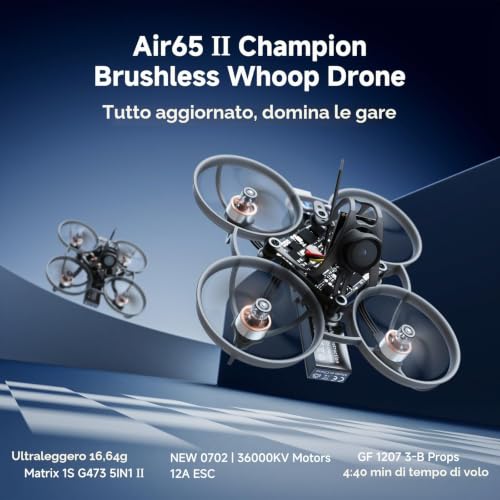
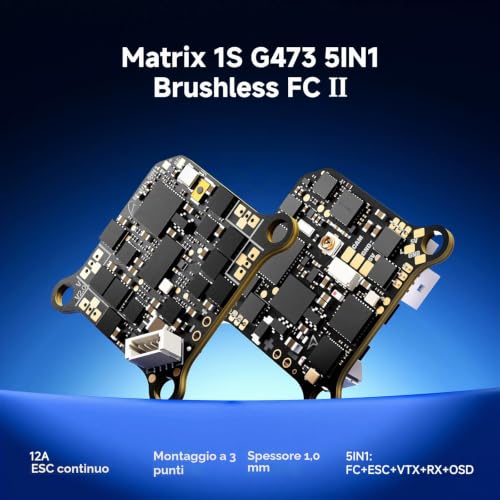
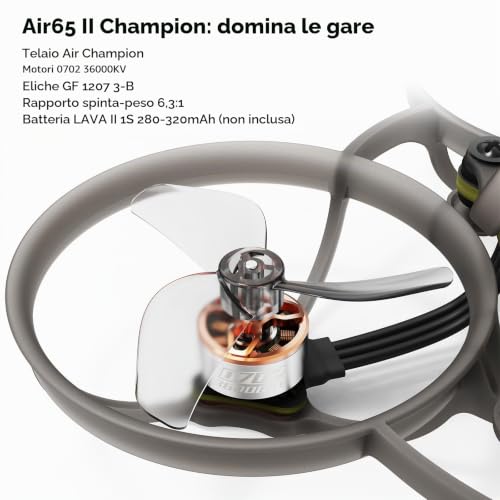
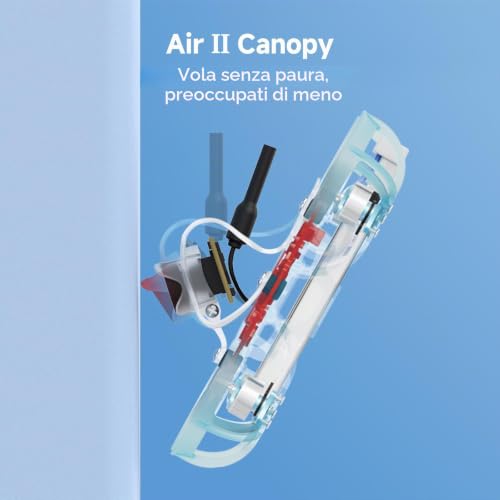
BETAFPV Air65 II review: 97 specs compared

Avg. price:~£110Max flight time:4 minVideo resolution:N/AMax transmission distance:?

BETAFPV Air65 II Review: Compare 97 technical specifications and 30 expert and video reviews to see how this product ranks in the Drones category and whether it is worth buying.
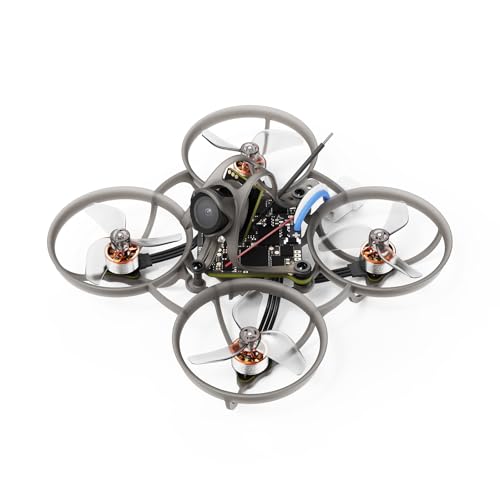
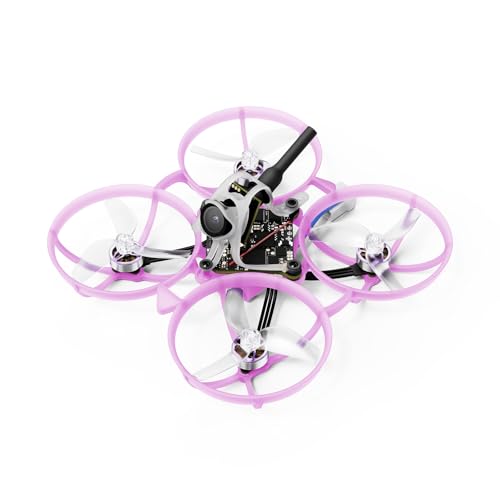
BETAFPV Air65 II
7.1/10

Overall score

Score
7.1/ 10
✕
What it is
Our main score for this model, 1–10. It combines specs, best-of lists, expert reviews and owners.
How we count it
Parts: Technical score 40%, List score 30%, Reviews score 25%, Sentiment score 5%
Marks: Each part gets a mark out of 10. For reviews, lists and owners, a typical model in this category gets about 8 and the best one gets 10.
No data yet: A part with no data shows "?". It counts as the mark of a weaker model in this category (4 in 5 models with data score higher). This way, models with reviews, lists and owners usually come out ahead.
Score distribution
<55-66-77-88-99-10
Score components

40%

5.7

Technical score

30%

?

List scoreNot enough data yet, so we use 7.5, the mark of a weaker model in this category

25%

8.6

Reviews score

5%

9.2

Sentiment score

â–²Better than 57% of drones
8.0

Value for money

Value for money
8.0/ 10
✕
What it is
An indicator that combines the drone's overall rating with its cost.
When it matters
When you are looking for a drone with a good balance between flight quality, camera features, and price.
Score distribution
<55-66-77-88-99-10
Score components

70%

7.1

Overall score

30%

9.9

Price

â–²Better than 83%
5.7

Technical score

Technical score
5.7/ 10
✕
What it is
How good the specs are compared with the other models in this category, 1–10.
How we count it
Areas: We rate the specs in each area against the other models in this category.
Weighting: The areas that matter most to buyers count more. The shares are shown under Score components.
Share: The technical score is 40% of the overall score.
Score distribution
<55-66-77-88-99-10
Score components

26%

6.1

Flight

24%

5.6

Camera

20%

4.0

Safety

16%

6.1

Connectivity

14%

7.3

Battery & Design

â–¼Worse than 62%
8.6

Reviews score

Reviews score
8.6/ 10
✕
What it is
Average grade from independent test sites, magazines and video reviewers, 1–10.
How we count it
Grades: Each review's own score is converted to 1–10; without one, we grade the review ourselves. Every review counts the same: written or video, short or full test.
Score: The average grade is 80% of the review mark; the number of reviews is the other 20% (1 review = 5, the typical number in this category = 8, the most-reviewed model = 10).
Enough data: With few reviews, the average grade is pulled toward the typical grade of this category. No reviews yet: 7.5 for now.
Share: Reviews count 25% of the overall score.
Score distribution
<55-66-77-88-99-10

80%

8.6

Average grade

20%

8.6

Popularity

Grades by review (30)
4 reviews + 26 videos, average 8.7/10. Reviews count 25% of the overall score.
User ratings collected online are not part of this score.
â–²Better than 83%
?

List score

List score
7.5/ 10
✕
What it is
How often independent test sites, magazines and video reviewers put this model in their best-of lists for this category.
How we count it
Points: The model in the most lists of this category gets 10; the others get 8 to 10 in proportion. In no list yet: 7.5. Lists count 30% of the overall score.
Enough data: Every list counts, even a single one. With fewer than 10 best-of lists in the category, this part is left out.
Lists with this model (0)
Not in any best-of list yet, so this part counts as 7.5. Models in a list get 8 to 10.
Not in any best-of list yet
  • betafpv-air65-ii
  • betafpv-air65-ii
  • betafpv-air65-ii
  • betafpv-air65-ii
  • betafpv-air65-ii
  • betafpv-air65-ii
  • betafpv-air65-ii
  • betafpv-air65-ii
  • betafpv-air65-ii
betafpv-air65-ii
betafpv-air65-ii
betafpv-air65-ii
betafpv-air65-ii
betafpv-air65-ii
betafpv-air65-ii
betafpv-air65-ii
betafpv-air65-ii
betafpv-air65-ii
Where to buy
    N/A~ £110
Best rankings
Available: ranking among products currently available (including other versions of this product).All: ranking among all products in the database.

What reviewers say about the BETAFPV Air65 II

Based on 3 · 28

Reviewers praise the precise handling and punchy speed, but short battery life and weak video are common complaints.
Praised
Mixed views
Criticised
Pick a topic to see who said what

What owners say about the BETAFPV Air65 II

Based on 129 owners sharing their experience in online comments

57%positive17%mixed26%negative

Owners love its lively, beginner-friendly flight, but recurring board failures and fragile parts undermine confidence.

What owners dislike

  • Flight controller or AIO board often fails after a few weeks or heavy use, and some owners have needed several replacements.11
  • Flight time is short, around 2 to 3 minutes on 320 mAh packs, and performance fades noticeably after the first minute.10
  • Motor wires and plugs often come loose or break after crashes, and factory solder joints can fail and need re-soldering.9
  • Canopies crack or break within a few packs of normal flying, especially in crashes, so owners keep spares on hand.6
  • Motors are too powerful indoors, making it hard to control near walls and under obstacles, so some owners swap to lower-kv motors.4
  • ELRS receiver chip often stops working after crashes, sometimes failing to bind, and owners often re-solder or replace it.4
  • Motors wear out or burn out within weeks of regular flying, often after hard crashes, and bells and bushings wear down.4
  • Video drops or breaks up after one wall or a few crashes, and some owners blame the VTX antenna placement.3
  • Camera lens scratches and chips easily, and camera modules can die after crashes, sometimes needing replacement.3
  • Frames crack after repeated crashes, with one owner noticing a weak spot likely to split and others going through spare frames.3

Points mentioned by at least 3 owners, most mentioned first.

Loading...
Loading category ranking...

Technical Specifications of drone BETAFPV Air65 II

Technical score
Technical score
5.7/ 10
✕
What it is
How good the specs are compared with the other models in this category, 1–10.
How we count it
Areas: We rate the specs in each area against the other models in this category.
Weighting: The areas that matter most to buyers count more. The shares are shown under Score components.
Share: The technical score is 40% of the overall score.
Score distribution
<55-66-77-88-99-10
Score components:

26%

6.1

Flight

24%

5.6

Camera

20%

4.0

Safety

16%

6.1

Connectivity

14%

7.3

Battery & Design

5.7
Reviews score
8.6
List score
?
Value for money
Value for money
8.0/ 10
✕
What it is
An indicator that combines the drone's overall rating with its cost.
When it matters
When you are looking for a drone with a good balance between flight quality, camera features, and price.
Score distribution
<55-66-77-88-99-10
Score components:

70%

7.1

Overall score

30%

9.9

Price

8.0
Max flight time
4 min
This drone has a max flight time of 4 min, shorter than 100% of drones.
Max flight distance
?
Max flight speed
?
Max wind resistance
?
Max service ceiling (ASL)
?
Show more
What reviewers say
Video resolution
N/A
4K camera
no
This drone does not support 4K video. 54.6% of drones support 4K video.
Sensor size
?
Main camera megapixels
N/A
Max movie bitrate
?
Show more
What reviewers say
Obstacle detection
no
This drone does not support obstacle detection. 31% of drones support obstacle detection.
Return to Home (RTH)
no
This drone does not support Return-to-Home (RTH). 67.5% of drones support Return-to-Home (RTH).
GPS
no
This drone does not support GPS. 65.2% of drones support GPS.
GNSS systems supported
none
This drone supports none GNSS systems, which are less comprehensive than those of 65.8% and the same as those of 34.2%.
Obstacle sensing directions
N/A
Show more
What reviewers say
Max transmission distance
?
Transmission latency
?
Video transmission system
Analog
This drone uses Analog for video transmission, which is less advanced than the system used by 92.3% and the same as that used by 3.1%.
Live view quality
?
Remote control
no
This drone does not have a handheld remote controller. 95.5% of drones offer this.
Show more
Battery capacity
300 mAh
This drone has a battery capacity of 300 mAh, smaller than 93.3% of drones and equal to 3.1% of drones.
Battery energy
?
Charging time
?
Weight
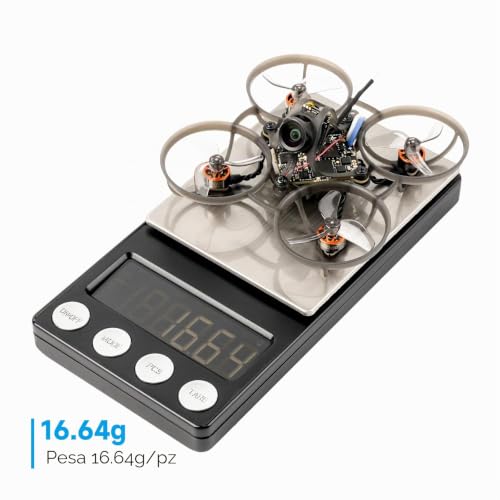
16.6 g
This drone weighs 16.6 g, lighter than 100% of drones.
Removable battery
yes
This drone has a removable battery. 0.5% of drones have a removable battery.
Show more
What reviewers say

BETAFPV Air65 II vs the average drone

246810TotalFlightCameraSafetyConnectivityBattery & Design
  • 93.3% lower weight
    This drone is lighter than the average drone (16.6 g vs 246 g). The average drone weighs 246 g.
    16.6 g vs 246 g
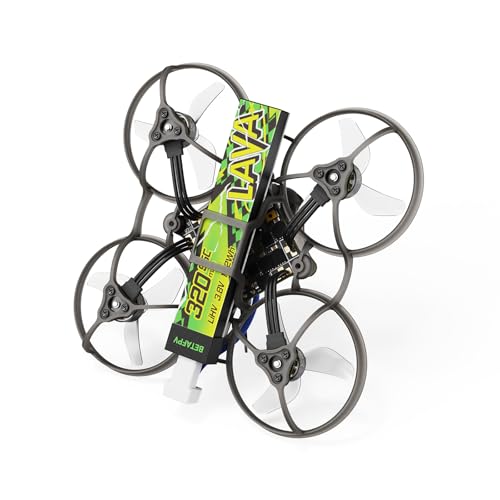
  • Includes propeller guards
    This drone has propeller guards, while the average drone does not. 33.3% of drones offer them.
  • 190 mm shorter body length
    This drone is shorter than the average drone (85 mm vs 275 mm). The average drone is 275 mm long.
    85 mm vs 275 mm
  • 156 mm narrower width
    This drone is narrower than the average drone (85 mm vs 241 mm). The average drone width is 241 mm.
    85 mm vs 241 mm
  • FPV camera
    This drone has an FPV camera, while the average drone does not.
  • 32.5 mm lower body height
    This drone is shorter than the average drone (30 mm vs 62.5 mm). The average drone is 62.5 mm tall.
    30 mm vs 62.5 mm
  • 3 years newer release date
    This drone is newer than the average drone (2026 vs 2023). The average drone was released in 2023.
    2026 vs 2023
  • More modern charging port
    This drone uses proprietary for charging, while the average drone uses micro-USB.
    proprietary vs micro-USB
  • 8.9% higher review score
    Reviews score
    8.6/ 10
    ✕
    What it is
    Average grade from independent test sites, magazines and video reviewers, 1–10.
    How we count it
    Grades: Each review's own score is converted to 1–10; without one, we grade the review ourselves. Every review counts the same: written or video, short or full test.
    Score: The average grade is 80% of the review mark; the number of reviews is the other 20% (1 review = 5, the typical number in this category = 8, the most-reviewed model = 10).
    Enough data: With few reviews, the average grade is pulled toward the typical grade of this category. No reviews yet: 7.5 for now.
    Share: Reviews count 25% of the overall score.
    Score distribution
    <55-66-77-88-99-10

    80%

    8.6

    Average grade

    20%

    8.6

    Popularity

    Grades by review (30)
    4 reviews + 26 videos, average 8.7/10. Reviews count 25% of the overall score.
    User ratings collected online are not part of this score.
    8.6 vs 7.9
  • 5.1% better value for money
    BETAFPV Air65 II has better value for money than the average drone (7.98 vs 7.6).
    7.98 vs 7.59
  • 3 years newer release date
    This drone is newer than the average drone (2026 vs 2023). The average drone was released in 2023.
    2026 vs 2023
  • FPV camera
    This drone has an FPV camera, while the average drone does not.
  • Includes propeller guards
    This drone has propeller guards, while the average drone does not. 33.3% of drones offer them.
  • 93.3% lower weight
    This drone is lighter than the average drone (16.6 g vs 246 g). The average drone weighs 246 g.
    16.6 g vs 246 g
  • 190 mm shorter body length
    This drone is shorter than the average drone (85 mm vs 275 mm). The average drone is 275 mm long.
    85 mm vs 275 mm
  • 156 mm narrower width
    This drone is narrower than the average drone (85 mm vs 241 mm). The average drone width is 241 mm.
    85 mm vs 241 mm
  • 32.5 mm lower body height
    This drone is shorter than the average drone (30 mm vs 62.5 mm). The average drone is 62.5 mm tall.
    30 mm vs 62.5 mm
  • More modern charging port
    This drone uses proprietary for charging, while the average drone uses micro-USB.
    proprietary vs micro-USB
  • Fewer GNSS systems
    This drone supports none GNSS systems, while the average drone supports GPS, GLONASS, Galileo, BeiDou.
    none vs GPS, GLONASS, Galileo, BeiDou
  • More basic transmission system
    This drone uses Analog for video transmission, while the average drone uses SkyLink 2.0.
    Analog vs SkyLink 2.0
  • 16 min shorter flight time
    This drone offers shorter max flight time than the average drone (4 min vs 20 min). The average drone offers 20 min of max flight time.
    4 min vs 20 min
  • No subject tracking
    This drone cannot track subjects, while the average drone can.
  • No return-to-home (RTH)
    This drone does not support return-to-home (RTH), while the average drone does.
  • No GPS
    This drone does not have GPS, while the average drone does.
  • 1,900 mAh less battery capacity
    This drone has a smaller battery capacity than the average drone (300 mAh vs 2,200 mAh). The average drone battery has a capacity of 2,200 mAh.
    300 mAh vs 2,200 mAh
  • Fewer photo format options
    This drone supports none photo formats, while the average drone supports JPEG, DNG (RAW).
    none vs JPEG, DNG (RAW)
  • 16 min shorter flight time
    This drone offers shorter max flight time than the average drone (4 min vs 20 min). The average drone offers 20 min of max flight time.
    4 min vs 20 min
  • Non-foldable design
    This drone does not have a foldable design, while the average drone does.
  • Fewer photo format options
    This drone supports none photo formats, while the average drone supports JPEG, DNG (RAW).
    none vs JPEG, DNG (RAW)
  • Narrower tilt range
    This drone has a narrower tilt range than the average drone (manual only ° vs -90 to 20 °).
    manual only ° vs -90 to 20 °
  • Fewer video codec options
    This drone supports none video codecs, while the average drone supports H.264/AVC.
    none vs H.264/AVC
  • No memory card slot
    This drone does not have a memory card slot, while the average drone does.
  • Fewer video format options
    This drone supports none video formats, while the average drone supports MP4.
    none vs MP4
  • 3 x lower digital zoom
    This drone offers less digital zoom than the average drone (0 x vs 3 x). The average drone offers 3 x of digital zoom.
    0 x vs 3 x
  • No 4K video
    This drone does not support 4K video, while the average drone does.
  • 128 GB lower memory card limit
    This drone supports less external storage than the average drone (0 GB vs 128 GB). The average drone supports up to 128 GB of external storage.
    0 GB vs 128 GB
  • Fewer GNSS systems
    This drone supports none GNSS systems, while the average drone supports GPS, GLONASS, Galileo, BeiDou.
    none vs GPS, GLONASS, Galileo, BeiDou
  • No subject tracking
    This drone cannot track subjects, while the average drone can.
  • No return-to-home (RTH)
    This drone does not support return-to-home (RTH), while the average drone does.
  • No GPS
    This drone does not have GPS, while the average drone does.
  • No POI mode
    This drone does not support POI mode, while the average drone does.
  • 4 fewer flight modes
    This drone offers fewer intelligent flight modes than the average drone (0 vs 4). The average drone offers 4 intelligent flight modes.
    0 vs 4
  • No compass
    This drone does not have a compass, while the average drone does.
  • 92% higher takeoff weight
    This drone has a higher max takeoff weight than the average drone (20 g vs 249 g). The average drone has a max takeoff weight of 249 g.
    20 g vs 249 g
  • No headless mode
    This drone does not support headless mode, while the average drone does.
  • No beginner mode
    This drone does not support beginner mode, while the average drone does.
  • No altitude hold
    This drone does not support altitude hold, while the average drone does.
  • More basic transmission system
    This drone uses Analog for video transmission, while the average drone uses SkyLink 2.0.
    Analog vs SkyLink 2.0
  • No handheld remote
    This drone does not have a handheld remote controller, while the average drone does. 95.1% of drones offer one.
  • Basic companion app
    This drone uses the None companion app, while the average drone uses HS FPV.
    None vs HS FPV
  • No wireless file transfer
    This drone does not support wireless file transfer, while the average drone does.
  • 1,900 mAh less battery capacity
    This drone has a smaller battery capacity than the average drone (300 mAh vs 2,200 mAh). The average drone battery has a capacity of 2,200 mAh.
    300 mAh vs 2,200 mAh

Video reviews

Hands-on testing, unboxing, and real-world video evaluations

9.0
Drones & Dogs
≈ estimated
20/10/2026
First flight · outdoor durability test
Verdict
BETAFPV Air65 II is durable, handles crashes well, and flies nicely, especially in open areas.
8.0
FPV Evan
≈ estimated
05/10/2026
Wind flight test · analog video and crash checks
Verdict
BETAFPV Air65 II is a fun, crash-forgiving whoop, though wind, analog link drops and a broken canopy were real problems.
9.0
The Best Breakdown
≈ estimated
27/09/2026
Hands-on review · racing version with flight and battery tests
Verdict
BETAFPV Air65 II is a fast, versatile quad the reviewer would buy again, though wind pushes it around.
9.0
Shauny D
≈ estimated
25/06/2026
Hands-on review · first five batteries and beginner test
Verdict
BETAFPV Air65 II is a fun, zippy freestyle whoop that suits beginners well, though it needs spare batteries and better props.
9.5
Justin Bainbridge
≈ estimated
18/06/2026
Hands-on review · freestyle flying indoors and outdoors
Verdict
BETAFPV Air65 II feels very powerful for its tiny size and flies well almost anywhere.
9.5
One Man Unmanned
≈ estimated
16/05/2026
Hands-on review · durability, range and flight tests
Verdict
BETAFPV Air65 II is among the best tiny whoops to date, better than the original and noticeably more durable.
9.0
Mads Tech
≈ estimated
13/04/2026
Hands-on review · flying impressions, camera and spare parts
Verdict
BETAFPV Air65 II is a small quad that flies well out of the box, with few complaints.
9.5
Gareth Dix
≈ estimated
25/03/2026
Hands-on review · flying impressions and durability notes
Verdict
BETAFPV Air65 II is one of the best ready-to-fly whoops available, with a durable freestyle build.
9.0
FPV Evan
≈ estimated
22/03/2026
Hands-on review · outdoor and indoor flight tests
Verdict
BETAFPV Air65 II is very fun to fly indoors and outdoors and suits beginners and advanced pilots, though it could be better.
9.5
The Drone Geek
≈ estimated
20/03/2026
Hands-on review · two months of almost daily flying
Verdict
BETAFPV Air65 II replaces its predecessor as the favourite tiny whoop and is highly recommended, though not ideal for beginners.
8.0
Thomas More
≈ estimated
04/03/2026
Durability test · warehouse crash abuse and frame damage
Verdict
BETAFPV Air65 II has strong motors, a capable flight controller and camera, but the frame broke and some boards have quality issues.
9.5
Rimzler
≈ estimated
30/01/2026
Hands-on review · two flights and a final opinion
Verdict
BETAFPV Air65 II is excellent for its size, though the camera cuts out if the battery is over-discharged.
More graded video reviews (7)
creator’s own scoreestimated by us

Expert reviews

In-depth analysis and verdict from leading tech publications
9.0
blog.unmanned.tech
≈ estimated
16/04/2026
Hands-on test · Analog FPV drone
Verdict
The BetaFPV Air65 II is a tiny FPV drone that flies well straight out of the box in Acro, though its Angle mode feels awkward.
9.0
oscarliang.com
≈ estimated
01/02/2026
Hands-on test · Tiny whoop racing
Verdict
The BetaFPV Air65 II Champion is one of the lightest and most aggressive 1S whoops around; beginners will find the Freestyle or Racing versions easier to fly.
7.0
wearefpv.fr
≈ estimated
25/02/2026
Hands-on test · Tiny whoop racing
Verdict
The BetaFPV Air65 II Racing is a punchy tiny whoop that copes with outdoor wind, but its short battery life and twitchy motors make it a poor pick for beginners.

Third-party reviews

What customers like about BETAFPV Air65 II

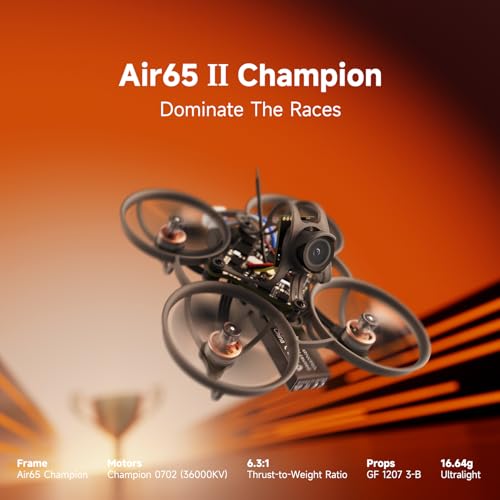
  • Ultra-light 16.6 g whoop for fast indoor racing
  • Brushless motors for strong punch and precise control
  • Low-latency analog FPV video
  • Ducted frame handles light bumps
  • Competition-focused design

What customers don't like about BETAFPV Air65 II

  • No remote included, radio and goggles needed
  • No altitude hold or GPS, not for beginners
  • Short flight times
  • No camera recording for footage

Verdict

The BETAFPV Air65 II is a tiny brushless whoop for FPV pilots who want to fly fast and precise indoors. At just 16.6 g, it can race through living rooms and around furniture, and its ducted frame shrugs off light bumps. An analog video system sends a low-latency feed to goggles, which is what racers and freestyle pilots value most at this size. Brushless motors give it far more punch and control than toy drones. This is not a beginner product, though: there is no altitude hold, GPS or self-levelling assistance beyond what the flight controller modes provide, and no remote is included, so buyers need their own radio and goggles. Flight times are short, as is normal for whoops. For experienced or ambitious FPV pilots who want a competition-ready micro quad, it is a focused tool.

Compare BETAFPV Air65 II with other drones

1Product to compare no. 1
VS
2Product to compare no. 2
VS
3Product to compare no. 3 (optional)

Graphic comparison of BETAFPV Air65 II and other drones

No results found