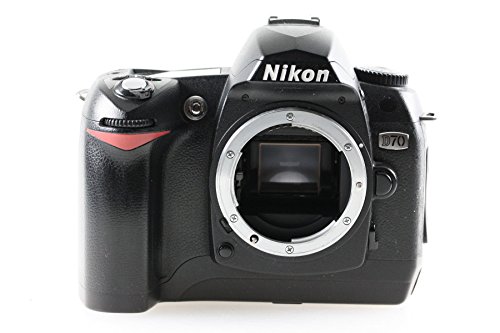
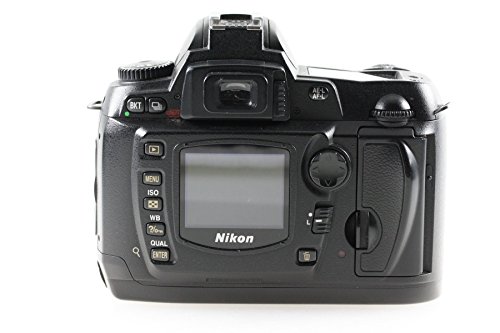
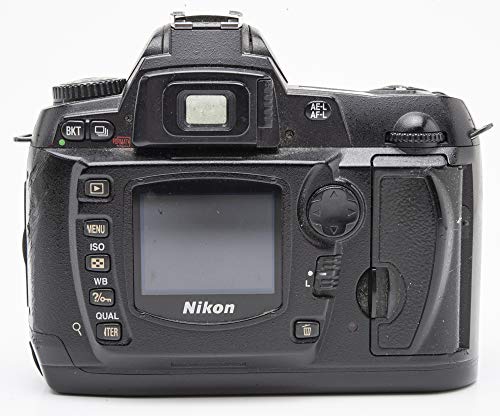
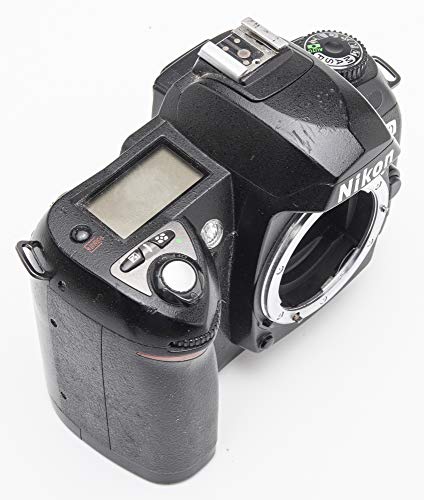
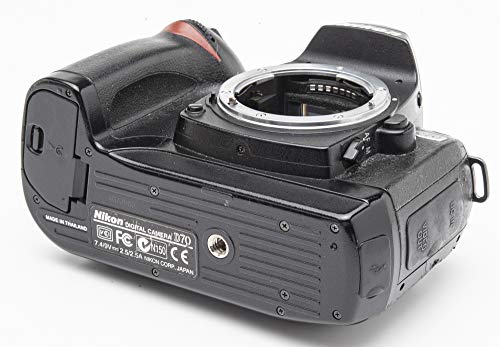
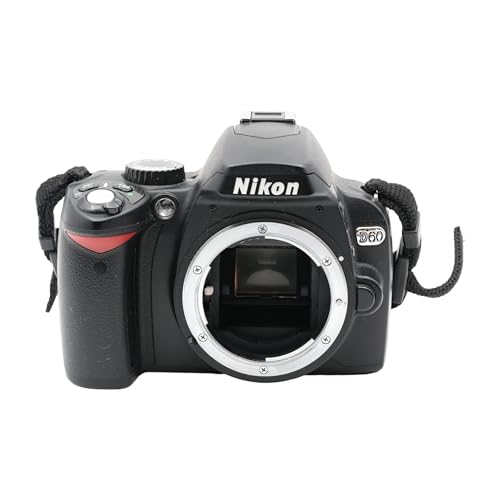
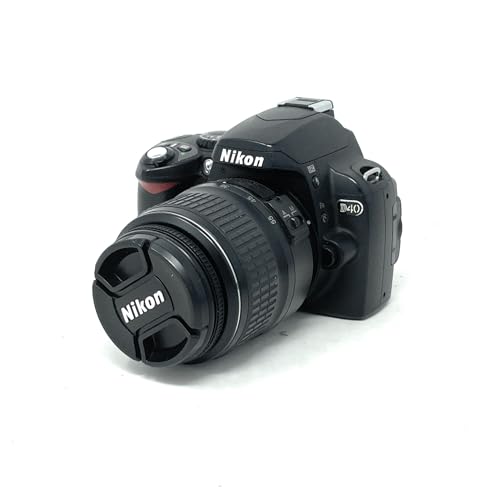
Nikon D70 Review | 108 Data compared

double-arrow
  • Avg. price: ~£25
  • Sensor size: APS-C
  • Lens mount: Nikon F
  • Main camera pixel size: 7.85 µm
  • Weight: 679 g
  • Battery life (CIPA): 400 shots

Nikon D70 review. Compare 108 technical specifications and user reviews to see how it ranks among cameras and if it is worth buying.

4.4

Overall score

What it is: An overall evaluation of the camera's quality, based on technical analyses and user reviews.

When it matters: When you need a quick reference to identify the best cameras on the market.

Score components:

90.0%

4.0

Technical Score

10.0%

7.7

User score

Poor
4.0

Technical Score

What it is: An assessment of the camera's technical performance, covering eight key areas: image quality, autofocus, video features, stabilization, lens compatibility, connectivity, battery, and design.

When it matters: When you want to compare cameras based on technical performance and available features.

Score components:

28.0%

4.7

Sensor & Image

25.0%

4.7

Photo Features

18.0%

2.2

Video & Audio

14.0%

3.3

Display & Design

8.0%

6.4

Battery & Power

7.0%

2.0

Connectivity & Storage

Poor
7.7

User score

What it is: A rating that combines user reviews and the total number of reviews received by the camera.

When it matters: When real-world owner satisfaction and review volume matter to your decision.

Score components:

70.0%

7.8

User reviews

30.0%

7.4

Popularity

User score:
United Kingdom
amazon
3.4
(19)
amazon
4.5
(17)

(Reviews last updated: July 2026)

Very good
  • 5.4
    Professional photography

    Score components:

    25.0%

    8.8

    Sensor size

    20.0%

    4.1

    Main camera megapixels

    20.0%

    1.0

    Dual card slots

    15.0%

    1.1

    N. of focus points

    10.0%

    10

    RAW photo capture

    10.0%

    10

    Phase-detection autofocus (photos)

  • 3.8
    Travel

    Score components:

    35.0%

    4.3

    Weight

    30.0%

    6.4

    Battery life (CIPA)

    20.0%

    1.0

    Sensor-shift stabilization

    15.0%

    1.0

    GPS

  • 7.2
    Beginners

    Score components:

    30.0%

    10

    Price

    20.0%

    4.3

    Weight

    20.0%

    10

    AF tracking

    20.0%

    6.4

    Battery life (CIPA)

    10.0%

    1.0

    Touchscreen

  • 6.6
    Landscape photography

    Score components:

    30.0%

    4.1

    Main camera megapixels

    25.0%

    8.8

    Sensor size

    20.0%

    10

    Main camera pixel size

    15.0%

    1.0

    Sensor-shift stabilization

    10.0%

    10

    RAW photo capture

  • 3.9
    Street photography

    Score components:

    30.0%

    4.3

    Weight

    25.0%

    4.2

    Thickness

    20.0%

    6.7

    AF low-light sensitivity

    15.0%

    1.0

    Sensor-shift stabilization

    10.0%

    1.0

    Eye detection AF (human)

  • 6.1
    Portraits

    Score components:

    30.0%

    8.8

    Sensor size

    25.0%

    10

    Main camera pixel size

    20.0%

    1.0

    Eye detection AF (human)

    15.0%

    4.1

    Main camera megapixels

    10.0%

    1.0

    Sensor-shift stabilization

  • 3.7
    Hiking

    Score components:

    30.0%

    4.3

    Weight

    25.0%

    6.4

    Battery life (CIPA)

    20.0%

    2.8

    Min operating temperature

    15.0%

    1.0

    Sensor-shift stabilization

    10.0%

    1.0

    GPS

  • nikon-d70
  • nikon-d70
  • nikon-d70
  • nikon-d70
  • nikon-d70
nikon-d70
nikon-d70
nikon-d70
nikon-d70
nikon-d70

Best prices in UK

Best rankings

?

Available: ranking among products currently available (including other versions of this product).
All: ranking among all products in the database.

Verdict

The Nikon D70 is a mid-size enthusiast DSLR featuring a 6.1-megapixel APS-C DX-format CCD sensor and the Nikon F lens mount. Released in 2004, it offers an ISO range of 200–1600, a 5-point phase-detection autofocus system, and a 3 fps continuous shooting speed. Key characteristics include a fast maximum shutter speed of 1/8000s and a notable 1/500s flash sync speed facilitated by its hybrid shutter. Major pros include its vibrant color rendition from the CCD sensor, excellent battery life, rapid start-up time, and compatibility with older screw-drive AF lenses. However, it has several cons: it lacks video recording capabilities, features a small and low-resolution 1.8-inch LCD screen, uses slow USB 1.1 data transfer speeds, and can be prone to moiré and aliasing artifacts due to its weak anti-aliasing filter.

Technical Specifications of Nikon D70

Technical Score

What it is: An assessment of the camera's technical performance, covering eight key areas: image quality, autofocus, video features, stabilization, lens compatibility, connectivity, battery, and design.

When it matters: When you want to compare cameras based on technical performance and available features.

Score components:

28.0%

4.7

Sensor & Image

25.0%

4.7

Photo Features

18.0%

2.2

Video & Audio

14.0%

3.3

Display & Design

8.0%

6.4

Battery & Power

7.0%

2.0

Connectivity & Storage

4.0
Nikon D70 has a technical score of 4.01 points, which is lower than 87.3% of cameras.
User score

What it is: A rating that combines user reviews and the total number of reviews received by the camera.

When it matters: When real-world owner satisfaction and review volume matter to your decision.

Score components:

70.0%

7.8

User reviews

30.0%

7.4

Popularity

User score:
United Kingdom
amazon
3.4
(19)
amazon
4.5
(17)

(Reviews last updated: July 2026)

7.7
Nikon D70 has a user score of 7.72 points, which is lower than 89.7% of cameras.
Popularity
What it is: An indicator based on the number of reviews received by the camera.
When it matters: When you want to see which cameras attract the most buyer attention and review activity.
7.4
Nikon D70 has a popularity of 7.4 points, which is higher than 62% of products in this category.
Ratio quality/price

What it is: An indicator that combines the camera's overall rating with its cost.

When it matters: When you want to know how much overall quality you get for the price.

Score components:

60.0%

4.4

Overall score

40.0%

10

Price

6.1
Nikon D70 has a quality-to-price ratio of 6.1 points, which is lower than 62% of products in this category.
Sensor size
What it is: The sensor format value describes the physical light-collecting area.
When it matters: When you shoot in more difficult lighting.

Importance: HIGH

Good value: Full frame or larger

APS-C
Nikon D70 uses a sensor classified as APS-C; it is larger than the sensor in 57.4% of cameras and the same size as the sensor in 25.7% of cameras.
Main camera megapixels
What it is: The effective resolution of the camera sensor, measured in megapixels (MP). Higher megapixels can capture more detail.
When it matters: When you want high-resolution photos that allow more cropping or larger prints.

Importance: HIGH

Good value: At least 20 MP

6.1 MP
Nikon D70 has a main camera resolution of 6.1 MP, which is lower than that of 99.3% of cameras and equal to that of 0.3% of cameras.
Main camera pixel size
What it is: The physical size of individual pixels on the camera sensor, measured in micrometers. Larger pixels typically capture more light for better low-light performance.
When it matters: When you shoot in low light and want reduced noise in your photos.

Importance: HIGH

Good value: At least 3.5 µm

7.85 µm
Nikon D70 has a main camera pixel size of 7.85 µm which is larger than in 98.8% of cameras and equal to the size in 0.2% of cameras.
Base ISO
What it is: The native ISO setting that delivers the sensor’s standard balance of image quality and dynamic range.
When it matters: When you want the best native image quality and compare cameras at their most optimal sensitivity setting.

Importance: LOW

200
Nikon D70 has a base ISO of 200 which is higher than that of 84.9% of cameras and equal to that of 14.2% of cameras.
Max ISO
What it is: The ISO ceiling shows the highest sensor sensitivity available for darker scenes.
When it matters: When you shoot in more difficult lighting.

Importance: MEDIUM

Good value: At least ISO 25,600

1,600
Nikon D70 reaches a maximum sensitivity of ISO 1,600, which is lower than that of 85.9% of cameras and equal to that of 13.3% of cameras.
Show more
Lens mount
What it is: The mechanical and electronic interface that determines which interchangeable lenses the camera can use.
When it matters: When lens availability, upgrade options, and long-term system compatibility are central to your buying decision.

Importance: LOW

Nikon F
Built-in focus motor
What it is: Indicates whether the camera body includes an internal autofocus motor for driving compatible lenses.
When it matters: When you plan to use older or budget lenses that depend on the camera body for autofocus drive.

Importance: LOW

yes
Nikon D70 has a built-in focus motor. 10.9% of cameras have a built-in focus motor.
N. of focus points
What it is: The total number of selectable autofocus points available for positioning and tracking focus.
When it matters: When you want more flexibility in placing focus precisely or tracking subjects across the frame.

Importance: HIGH

Good value: At least 200 points

5
Nikon D70 has 5 focus points, fewer than the number offered by 93.8% of cameras and equal to the number offered by 0.7% of cameras.
Phase-detection autofocus (photos)
What it is: Autofocus technology that measures phase differences to lock focus quickly and accurately for still photography.
When it matters: When you want faster and more reliable autofocus for still photos, especially with moving subjects.

Importance: HIGH

yes
Nikon D70 supports phase-detection autofocus for photos. 37.3% of cameras support phase-detection autofocus for photos.
AF tracking
What it is: An autofocus mode that continuously follows a moving subject to keep it sharp during shooting.
When it matters: When your subjects move unpredictably and you need the camera to keep focus on them automatically.

Importance: MEDIUM

yes
Nikon D70 supports AF tracking. This feature is available on 88% of cameras.
Show more
Max video resolution
What it is: The highest video resolution the camera can record, defining the maximum level of captured image detail.
When it matters: When you care about recording the highest level of detail for cropping, editing, or future-proof video work.

Importance: HIGH

Good value: At least 3840 px

N/A
Video bitrate
What it is: The amount of video data recorded per second, which affects file size and potential recording quality.
When it matters: When you compare potential video quality and want fewer compression artifacts in demanding scenes.

Importance: MEDIUM

Good value: At least 200 Mbps

N/A
Video bit depth
What it is: The number of bits used per color channel in recorded video, affecting gradation smoothness and editing flexibility.
When it matters: When you color grade video and want smoother gradients with fewer banding issues.

Importance: MEDIUM

Good value: At least 10-bit

N/A
Video chroma subsampling
What it is: The color sampling format used in video recording, indicating how much color detail is retained relative to brightness detail.
When it matters: When color grading, keying, or serious post-production work is important in your video workflow.

Importance: LOW

N/A
Video codecs
What it is: The video compression formats the camera can use when recording, affecting compatibility, efficiency, and workflow.
When it matters: When compatibility, editing performance, and file efficiency matter in the way you handle video.

Importance: LOW

N/A
Show more
Type
What it is: The camera type identifies the overall design, such as mirrorless, DSLR, compact, or bridge.
When it matters: When you want a camera style that matches how you shoot, carry, and swap lenses.

Importance: LOW

dslr
Weight
What it is: The total weight of the camera body, which affects comfort while carrying and shooting.
When it matters: When you carry the camera all day, travel often, or prefer a lighter setup.

Importance: MEDIUM

Good value: 500 g or less

679 g
Nikon D70 weighs 679 g which is heavier than 81.4% of cameras and equal to the weight of 0.1% of cameras.
Width
What it is: The width of the camera body, measured from side to side.
When it matters: When compact packing, grip comfort, or bag fit matters to you.

Importance: LOW

140 mm
Nikon D70 has a width of 140 mm which is wider than 88.2% of cameras and equal to that of 0.1% of cameras.
Height
What it is: The height of the camera body, measured from top to bottom.
When it matters: When you care about how compact the camera feels in a bag or in hand.

Importance: LOW

111 mm
Nikon D70 has a height of 111 mm which is taller than 92.8% of cameras.
Thickness
What it is: The depth of the device profile, excluding the camera bump unless specified.
When it matters: When you prefer a sleek, slim profile that slides easily into tight pockets.

Importance: LOW

78 mm
Nikon D70 has a thickness of 78 mm which is thicker than 74.6% of cameras and equal to that of 0.4% of cameras.
Show more
Battery life (CIPA)
What it is: The official battery endurance estimate measured under CIPA test methodology, usually expressed in shots per charge.
When it matters: When you need realistic expectations for how many shots you can take before carrying a spare battery.

Importance: MEDIUM

Good value: At least 400 shots

400 shots
Nikon D70 has a CIPA-rated battery life of 400 shots, which is longer than that of 66.9% of cameras and equal to that of 3.5% of cameras.
Battery capacity
What it is: The amount of electric charge the battery can hold, measured in milliampere-hours (mAh).
When it matters: When you want a general idea of how large the battery is physically.

Importance: LOW

Good value: At least 1,500 mAh

1,400 mAh
Nikon D70 has a battery capacity of 1,400 mAh which is larger than the batteries in 71.5% of cameras and equal to those in 0.2% of cameras.
Removable battery
What it is: Indicates whether the flight battery can be removed and swapped by the user.
When it matters: When you want to swap batteries quickly between flights.

Importance: LOW

yes
Nikon D70 has a removable battery, and 98.7% of cameras include one.
USB Power Delivery (PD)
What it is: Support for the USB Power Delivery standard for higher-power charging or external power supply over USB-C.
When it matters: When you want faster USB-C charging or the ability to power the camera externally for longer sessions.

Importance: LOW

no
Nikon D70 does not support USB Power Delivery. 10.1% of cameras support USB Power Delivery.
Wi-Fi connectivity
What it is: Indicates whether the camera has built-in Wi-Fi for image transfer, remote control, or network features.
When it matters: When you want to transfer photos wirelessly, control the camera from a phone, or use supported network workflows.

Importance: LOW

no
Nikon D70 does not support Wi-Fi. 47.9% of cameras include this feature.
Wi-Fi version
What it is: The specific generation of Wi-Fi standards supported (e.g., Wi-Fi 6, Wi-Fi 7), determining maximum speed and efficiency.
When it matters: When you have a high-speed router and want faster downloads with less congestion.

Importance: LOW

N/A
Bluetooth connectivity
What it is: Indicates whether the camera supports Bluetooth for pairing, remote control, or file transfer.
When it matters: When you want quick wireless pairing with a phone, remote control, or location syncing.

Importance: LOW

no
Nikon D70 does not have Bluetooth. 22.7% of cameras support Bluetooth.
Bluetooth version
What it is: The Bluetooth version supported by the camera for wireless pairing and low-power connections.
When it matters: When you want more efficient wireless pairing, better range, or newer Bluetooth features.

Importance: LOW

N/A
USB Type-C
What it is: A modern, reversible connector used for charging, data transfer, and sometimes audio or video output.
When it matters: When you want a reversible cable that handles charging, data, and accessories universally.

Importance: LOW

no
Nikon D70 does not include USB Type-C. 14.6% of cameras use USB-C.
Show more

Nikon D70 vs the average camera

  • Phase-detect AF for photos
    Nikon D70 supports phase-detection autofocus for photos, the average camera does not.
    What it is: Autofocus technology that measures phase differences to lock focus quickly and accurately for still photography.
    When it matters: When you want faster and more reliable autofocus for still photos, especially with moving subjects.

    Importance: HIGH

    Nikon D70 supports phase-detection autofocus for photos, the average camera does not.
  • 4.51 µm larger main-camera pixels
    Nikon D70 has a higher main camera pixel size than the average camera (7.9 µm vs 3.34 µm). The average camera has a main camera pixel size of 3.34 µm.
    What it is: The physical size of individual pixels on the camera sensor, measured in micrometers. Larger pixels typically capture more light for better low-light performance.
    When it matters: When you shoot in low light and want reduced noise in your photos.

    Importance: HIGH

    Good value: At least 3.5 µm

    Nikon D70 has a higher main camera pixel size than the average camera (7.9 µm vs 3.34 µm). The average camera has a main camera pixel size of 3.34 µm.7.85 µm vs 3.34 µm
  • Better viewfinder type
    Nikon D70 uses a more advanced viewfinder than the average camera (optical vs none).
    Pentamirror optical viewfinder.
    What it is: The type of viewfinder the camera uses to frame the shot, such as optical, electronic, hybrid, or none.
    When it matters: When you strongly prefer the clarity of an optical finder, the preview benefits of an electronic one, or no viewfinder at all.

    Importance: MEDIUM

    Nikon D70 uses a more advanced viewfinder than the average camera (optical vs none).optical vs none
  • Built-in AF motor
    Nikon D70 has a built-in focus motor, the average camera does not.
    What it is: Indicates whether the camera body includes an internal autofocus motor for driving compatible lenses.
    When it matters: When you plan to use older or budget lenses that depend on the camera body for autofocus drive.

    Importance: LOW

    Nikon D70 has a built-in focus motor, the average camera does not.
  • 70 shots longer battery life
    Nikon D70 has longer battery life than the average camera (400 shots vs 330 shots). The average camera delivers 330 shots per charge.
    What it is: The official battery endurance estimate measured under CIPA test methodology, usually expressed in shots per charge.
    When it matters: When you need realistic expectations for how many shots you can take before carrying a spare battery.

    Importance: MEDIUM

    Good value: At least 400 shots

    Nikon D70 has longer battery life than the average camera (400 shots vs 330 shots). The average camera delivers 330 shots per charge.400 shots vs 330 shots
  • 280 mAh larger battery capacity
    Nikon D70 has a higher battery capacity than the average camera (1,400 mAh vs 1,120 mAh). The average camera has a battery capacity of 1,120 mAh.
    What it is: The amount of electric charge the battery can hold, measured in milliampere-hours (mAh).
    When it matters: When you want a general idea of how large the battery is physically.

    Importance: LOW

    Good value: At least 1,500 mAh

    Nikon D70 has a higher battery capacity than the average camera (1,400 mAh vs 1,120 mAh). The average camera has a battery capacity of 1,120 mAh.1400 mAh vs 1120 mAh
  • 11.6x cheaper
    Nikon D70 is cheaper than the average camera (£25 vs £290).
    Nikon D70 is cheaper than the average camera (£25 vs £290).£25 vs £290
  • 7.43x more popular
    Nikon D70 is more popular than the average camera (7.43 vs 1.000).
    What it is: An indicator based on the number of reviews received by the camera.
    When it matters: When you want to see which cameras attract the most buyer attention and review activity.
    Nikon D70 is more popular than the average camera (7.43 vs 1.000).7.43 vs 1
  • Better viewfinder type
    Nikon D70 uses a more advanced viewfinder than the average camera (optical vs none).
  • 4.51 µm larger main-camera pixels
    Nikon D70 has a higher main camera pixel size than the average camera (7.9 µm vs 3.34 µm). The average camera has a main camera pixel size of 3.34 µm.
  • Phase-detect AF for photos
    Nikon D70 supports phase-detection autofocus for photos, the average camera does not.
  • Built-in AF motor
    Nikon D70 has a built-in focus motor, the average camera does not.
  • 70 shots longer battery life
    Nikon D70 has longer battery life than the average camera (400 shots vs 330 shots). The average camera delivers 330 shots per charge.
  • 280 mAh larger battery capacity
    Nikon D70 has a higher battery capacity than the average camera (1,400 mAh vs 1,120 mAh). The average camera has a battery capacity of 1,120 mAh.
  • 1.2 in smaller screen
    Nikon D70 has a smaller screen than the average camera (1.8 in vs 3 in). The average camera has a screen size of 3 in.
  • 5 % lower viewfinder coverage
    Nikon D70 has a lower viewfinder coverage than the average camera (95% vs 100%). The average camera has viewfinder coverage of 100%.
  • 71.9% heavier
    Nikon D70 is heavier than the average camera (679 g vs 395 g). The average camera weighs 395 g.
  • 37.1 mm taller body
    Nikon D70 is taller than the average camera (111 mm vs 73.9 mm). The average camera has a height of 73.9 mm.
  • 20.1 mm wider
    Nikon D70 is wider than the average camera (140 mm vs 119.9 mm). The average camera has a width of 119.9 mm.
  • 32 mm thicker
    Nikon D70 is thicker than the average camera (78 mm vs 46 mm). The average camera has a thickness of 46 mm.
  • 3.8% lower magnification
    Nikon D70 has a lower viewfinder magnification than the average camera (0.8x vs 0.78x). The average camera has a viewfinder magnification of 0.78x.
  • 10.1 MP lower resolution on the main camera
    Nikon D70 has a lower main camera resolution than the average camera (6.1 MP vs 16.2 MP). The average camera has a main camera resolution of 16.2 MP.
  • Lacks HDR mode
    Nikon D70 does not support HDR mode, the average camera does. 55.1% of cameras include HDR mode.
  • Lower RAW bit depth
    Nikon D70 supports lower RAW bit depth than the average camera (12-bit vs 14-bit). The average camera supports 14-bit RAW capture.
  • Lower DxOMark portrait score
    Nikon D70 has a lower DxOMark portrait score than the average camera (20.4 vs 23.0). The average camera scores 23.0.
  • 23 points lower DxOMark sensor score
    Nikon D70 has a lower DxOMark sensor score than the average camera (50 points vs 73 points). The average camera has a DxOMark sensor score of 73 points.
  • 23,700 lower expanded ISO
    Nikon D70 has a lower expanded ISO than the average camera (1,600 vs 25,300). The average camera reaches an expanded ISO of 25,300.
  • 4,800 lower max ISO
    Nikon D70 has a lower max ISO than the average camera (1,600 vs 6,400). The average camera reaches a max ISO of 6,400.
  • 313 points lower DxOMark Sports score
    Nikon D70 has a lower DxOMark sports score than the average camera (529 points vs 842 points). The average camera has a DxOMark sports score of 842 points.
  • 9 older
    Nikon D70 is older than the average camera (2004 vs 2013). The average camera was released in 2013.
    March 2004
  • Worse low-light autofocus
    Nikon D70 has a worse low-light AF sensitivity than the average camera (-1 EV vs -4 EV). The average camera reaches a low-light AF sensitivity of -4 EV.
  • 2.7 fps slower mechanical burst
    Nikon D70 has a slower mechanical burst rate than the average camera (3 fps vs 5.7 fps). The average camera shoots at 5.7 fps.
  • 18 fewer AF points
    Nikon D70 has fewer focus points than the average camera (5 vs 23). The average camera offers 23 focus points.
  • 50,000 fewer shutter cycles
    Nikon D70 has a lower shutter durability than the average camera (50,000 vs 100,000). The average camera is rated for 100,000 shutter cycles.
  • 2 fewer microphones
    Nikon D70 has fewer microphones than the average camera (0 vs 2). The average camera has 2 microphones.
  • No continuous video AF
    Nikon D70 does not support continuous autofocus in video, the average camera does.
    no video recording
  • No HDMI output
    Nikon D70 does not support HDMI output, the average camera does. 78.7% of cameras support HDMI output.
  • 10.1 MP lower resolution on the main camera
    Nikon D70 has a lower main camera resolution than the average camera (6.1 MP vs 16.2 MP). The average camera has a main camera resolution of 16.2 MP.
    What it is: The effective resolution of the camera sensor, measured in megapixels (MP). Higher megapixels can capture more detail.
    When it matters: When you want high-resolution photos that allow more cropping or larger prints.

    Importance: HIGH

    Good value: At least 20 MP

    Nikon D70 has a lower main camera resolution than the average camera (6.1 MP vs 16.2 MP). The average camera has a main camera resolution of 16.2 MP.6.1 MP vs 16.2 MP
  • Worse low-light autofocus
    Nikon D70 has a worse low-light AF sensitivity than the average camera (-1 EV vs -4 EV). The average camera reaches a low-light AF sensitivity of -4 EV.
    What it is: The lowest light level at which the autofocus system is rated to work reliably.
    When it matters: When you shoot in dim environments and need autofocus that still locks confidently after dark.

    Importance: MEDIUM

    Nikon D70 has a worse low-light AF sensitivity than the average camera (-1 EV vs -4 EV). The average camera reaches a low-light AF sensitivity of -4 EV.-1 vs -4
  • 1.2 in smaller screen
    Nikon D70 has a smaller screen than the average camera (1.8 in vs 3 in). The average camera has a screen size of 3 in.
    What it is: The physical diagonal measurement of the display area, usually expressed in inches.
    When it matters: When you want a larger display for reviewing shots, using menus, or shooting from awkward angles.

    Importance: MEDIUM

    Good value: At least 3 in

    Nikon D70 has a smaller screen than the average camera (1.8 in vs 3 in). The average camera has a screen size of 3 in.1.8 in vs 3 in
  • 2 fewer microphones
    Nikon D70 has fewer microphones than the average camera (0 vs 2). The average camera has 2 microphones.
    What it is: The number of built-in microphones used to capture audio while recording video.
    When it matters: More built-in microphones can capture broader, clearer sound when you record without an external microphone.

    Importance: LOW

    Good value: At least 2 microphones

    Nikon D70 has fewer microphones than the average camera (0 vs 2). The average camera has 2 microphones.0 vs 2
  • 5 % lower viewfinder coverage
    Nikon D70 has a lower viewfinder coverage than the average camera (95% vs 100%). The average camera has viewfinder coverage of 100%.
    What it is: The percentage of the final image area that is visible through the viewfinder when composing a shot.
    When it matters: When you want the framed view to closely match what will actually appear in the final photo.

    Importance: LOW

    Good value: 100%

    Nikon D70 has a lower viewfinder coverage than the average camera (95% vs 100%). The average camera has viewfinder coverage of 100%.95 % vs 100 %
  • Lacks HDR mode
    Nikon D70 does not support HDR mode, the average camera does. 55.1% of cameras include HDR mode.
    What it is: High Dynamic Range mode for photos, which combines multiple exposures to retain detail in both shadows and highlights.
    When it matters: When you take photos in high-contrast scenes, like a bright sky against a dark landscape.

    Importance: LOW

    Nikon D70 does not support HDR mode, the average camera does. 55.1% of cameras include HDR mode.
  • No continuous video AF
    Nikon D70 does not support continuous autofocus in video, the average camera does.
    no video recording
    What it is: The ability of the camera to keep adjusting focus automatically while video recording is in progress.
    When it matters: When you film while subjects or camera distance keep changing and manual refocusing is impractical.

    Importance: LOW

    Nikon D70 does not support continuous autofocus in video, the average camera does.
  • Lower RAW bit depth
    Nikon D70 supports lower RAW bit depth than the average camera (12-bit vs 14-bit). The average camera supports 14-bit RAW capture.
    What it is: The number of bits used to encode color and tonal information in RAW files captured by the camera.
    When it matters: When you heavily edit RAW photos and want more tonal information for aggressive adjustments.

    Importance: MEDIUM

    Good value: At least 14-bit

    Nikon D70 supports lower RAW bit depth than the average camera (12-bit vs 14-bit). The average camera supports 14-bit RAW capture.12-bit vs 14-bit

Graphic comparison of Nikon D70 and

Attribute category
Attribute
No results found

Third-party reviews

(Reviews last updated: July 2026)

What customers like about Nikon D70?

  • Instant startup time and minimal shutter lag
  • High flash sync speed (up to 1/500s or higher with non-dedicated flashes)
  • Excellent battery life, often lasting for weeks on a single charge
  • Solid build quality and comfortable, professional ergonomics
  • Exceptional 18-70mm kit lens that is considered well-built and sharp
  • CCD sensor provides unique, 'film-like' color rendition
  • Large range of manual controls and customization options

What customers dislike about Nikon D70?

  • Small and low-resolution 1.8-inch or 2.0-inch LCD screen by modern standards
  • Limited dynamic range compared to newer CMOS sensors
  • Noticeable noise at higher ISO settings (800 and 1600)
  • Small buffer size, especially when shooting in RAW format
  • Occasional moiré and aliasing artifacts in high-frequency patterns
  • Lack of a vertical battery grip option
  • Slow USB 1.1 transfer speeds despite being labeled as USB 2.0

Expert reviews

K
kenrockwell.com
01/02/2004

Ken Rockwell praises the Nikon D70 as a brilliant, user-friendly DSLR delivering exceptional, sharp, and well-saturated image quality capable of producing large prints. Key advantages highlighted include an intuitive, button-driven layout that eliminates menu-diving and a superior 1/500 flash sync speed that outperforms many competitors. Conversely, the review notes significant...Read more

N
naturfotograf.com
27/03/2004

The ⁠Nikon D70 Digital Camera Review by Bjørn Rørslett highlights the camera as a small, neat, and highly affordable entry point into digital SLR photography. A major pro noted by the reviewer is its compelling price-to-performance ratio, costing less than a third of the professional D2H camera of its time, while still generating high-volume consumer interest and delivering...Read more

N
nikonians.org
04/05/2026

The Nikon D70 is a 6.1-megapixel consumer digital SLR camera designed as a direct competitor to Canon's 300D. Built as a "real photographer's tool," the camera features exceptional speed, offering near-instantaneous responsiveness, minimal shutter lag, and a continuous shooting rate of up to three frames per second for JPEG images. The camera excels in build quality, showcasing a...Read more

O
outbackphoto.com
27/06/2004

The review diary by Uwe Steinmueller on Digital Outback Photo frames the Nikon D70 as a highly competitive, entry-level 6-megapixel digital SLR that serves as a solid variant of the older D100. Tested heavily during real-world walks in Los Gatos and San Francisco, the camera is praised for producing the best image quality among older Nikon DSLRs like the D1, D1x, and D100. It stands...Read more

N
naturfotograf.com
28/07/2004

Overview of the Nikon D70 Review The Nikon D70 is a neat, lightweight, and competitively priced digital camera designed primarily for keen amateurs, though it shares many similarities with its predecessor, the D100. Built with a polycarbonate molded casing instead of a professional-grade frame, it features a 6.1 MPix CCD sensor, fast shutter response times, and supports modern AFS...Read more

C
chromamine.com
22/04/2024

The author evaluates his experience dusting off a 6-megapixel Nikon D70 DSLR camera in 2024 to see how it compares against a modern iPhone. Assuming the perspective of a returning amateur hobbyist shooting primarily in outdoor and bright conditions, the review highlights that the smartphone outperforms the older DSLR for the "average photo" due to massive technological advances. The...Read more

D
dpreview.com
30/03/2017

The Nikon D70, a pivotal 2004 six-megapixel CCD digital SLR, is reviewed for its impact on the consumer market, featuring excellent performance from its MultiCAM 900 autofocus system and superior image quality over competitors. Its strengths included robust build quality, extensive manual controls, and high value compared to the Canon EOS 300D. DPReview Conversely, the D70 utilized...Read more

D
digitalkamera.de
22/06/2004

The digitalkamera.de review highlights the Nikon D70 as a solid, user-friendly DSLR for enthusiasts, praising its intuitive dual-dial operational design, rapid setting adjustments, and excellent, illuminated, and informative LCD displays. While noting the camera's overall photographic performance, the review also highlights that the system effectively remembers menu settings,...Read more

C
chip.de
06/02/2004

summary of the Nikon D70 review: Review Summary The Nikon D70 is an interchangeable-lens digital SLR camera priced around €1,100 for the body alone, launching as a direct competitor to the Canon EOS 300D. Despite its plastic body construction, the camera offers high-quality craftsmanship, a professional feel, and excellent ergonomics. A standout feature is its exceptional speed; it...Read more

F
fotowissen.eu
21/01/2025

The review from *fotowissen highly praises the vintage Nikon D70 as a "camera jewel" that remains an excellent, budget-friendly option for beginners and young photography enthusiasts. A major pro highlighted in the article is the F-mount compatibility paired with an integrated focus motor, allowing photographers to utilize both older analogue and newer autofocus lenses. On the...Read more

G
galaxus.at
09/06/2023

A Galaxus review reveals that a 2004 Nikon D70, when used alongside a modern Nikon D7500, produced acceptable results for web-optimized, professional editorial work, highlighting the surprising usability of vintage cameras. The 6-megapixel, 5-autofocus point body shows its age through severe limitations, including a minuscule LCD screen that makes on-site focus checking impossible,...Read more

F
fotovideotec.de
23/07/2026

The review outlines that the Nikon D200 is built for professionals and advanced users, featuring a durable, weather-sealed metal body, high continuous shooting speed (5 fps), and extensive manual configuration options. Its main advantages include a large buffer memory for 22 RAW files, support for older AI lenses, a true mirror lock-up, and quick access through direct control...Read more

D
digicammuseum.de
23/07/2026

The Nikon D70, introduced in March 2004 as an affordable alternative to the mid-range D100, is a highly successful early consumer DSLR built around a 6.1-megapixel APS-C CCD sensor. Despite its all-plastic body, the camera is praised for its excellent ergonomics, high-quality tactile feel, and an intuitive control scheme featuring dual command dials and a dedicated top-plate LCD. A...Read more

L
lesnumeriques.com
23/12/2004

The ⁠Les Numériques review awards the Nikon D70 a perfect 5 out of 5 stars, framing it as a well-crafted, affordable digital SLR designed to help Nikon film users transition to digital without replacing their existing lenses. The camera is highly praised for its robust, premium black body, which feels significantly more upscale, sturdy, and heavy in hand compared to its direct...Read more

C
camerarace.com
05/04/2004

The Camerarace review highlights the Nikon D70 as an affordable, lightweight (679g) DSLR featuring excellent ergonomics, a 1/8000s max shutter speed, and wide compatibility with Nikon F-mount lenses. While offering great value, the camera is limited by a 6.1-megapixel CCD sensor, a narrow ISO 200-1600 range, and a small 1.8-inch screen, limiting its performance by modern standards....Read more

C
claude.oudard.free.fr
Sans date

The Nikon D70 is a 6.1-megapixel digital SLR camera featuring a DX-format CCD sensor, offering a native sensitivity range from ISO 200 to 1600 and a fast shutter speed reaching 1/8000 second. Its standard Nikon F-mount provides broad compatibility with the vast majority of Nikkor lenses, including G- and D-type glass which fully support the camera's feature set and depth-of-field...Read more

D
dxomark.fr
Janvier 2004

The DXOMARK review of the Nikon D70 covers a camera sensor launched in January 2004. The camera achieves an overall sensor score of 50. Its Portrait (color depth) score is 20.4. Its Landscape (dynamic range) score is 10.3. It secures a Sports (low-light ISO) score of 529. A key sensor performance pro is beating the Panasonic DMC FZ28 in portrait capability. It also beats the...Read more

T
tecnicaparaaudiovisuales.wordpress.com
09/07/2015

The Canon EOS 10D is highly praised for astro-photography because its CMOS sensor delivers a genuine, unfiltered RAW format that accurately captures the sensor's signal and simplifies deep-sky pre-processing. It exhibits significantly lower thermal noise, minimal dark signal (0.5 ADU/second), and virtually no electroluminescence issues. Its primary pros include true RAW output,...Read more

D
dzoom.org.es
21/03/2011

This guide explains how to identify and diagnose Front Focus and Back Focus issues in camera lenses, specifically focusing on the author's real-world testing experience with a Nikon D7000 and different lenses. The author details two distinct testing methods to check autofocus calibration: placing three household batteries diagonally to observe which one remains in sharp focus, or...Read more

R
radojuva.com
11/10/2013

The Radojuva review of the Nikon D70, a 6.1-megapixel CCD DSLR, praises the camera for its robust build, dual command dials, and built-in autofocus motor for compatibility with older AF Nikkor lenses. A key advantage highlighted is the support for the Nikon Creative Lighting System (CLS), which allows the internal flash to control external speedlights. Conversely, the review...Read more

N
nadir.it
Aprile 2004

The Nikon D70 is an entry-level digital SLR camera that delivers a compact, lightweight body weighing 679 grams, offering a comfortable grip for users without overly large hands. It features a high-performing 6.1-megapixel CCD sensor and a fast Multi-CAM900 autofocus system, which outclasses its predecessor, the D100. The camera offers excellent battery life, capable of capturing...Read more

N
nikonland.it
28/05/2025

This vintage review highlights a photographer's transition from the entry-level Nikon D70 to the prosumer Nikon D200, emphasizing that the D200 represents a massive leap forward in build quality, usability, and functionality. The author praises the D200’s robust magnesium alloy body, which replaces the D70’s plastic shell, and its significantly improved ergonomic grip. Major...Read more

D
digitec.ch
09/06/2023

Author David Lee successfully used a 2004 6-megapixel Nikon D70 to take product photos for a modern camera review, demonstrating that vintage equipment can produce acceptable results. By utilizing a tripod and low ISO settings to minimize noise, the images blended seamlessly into a modern article, proving that technical limitations can be overcome under controlled conditions. While...Read more

Video reviews

Compare Nikon D70 with

VS
VS

Compare