Scored using Cameras Methodology v3.0
Cameras Methodology v3.0
Mathematical & Unbiased Scoring
Products in this category are scored under Frontum Cameras Methodology v3.0: the technical score from the specifications is the base, and independent expert and video reviews (up to ±0.5 points), owner opinions (up to ±0.3) and best-of lists (up to +0.3) move it up or down.
Explore Cameras Methodology v3.0

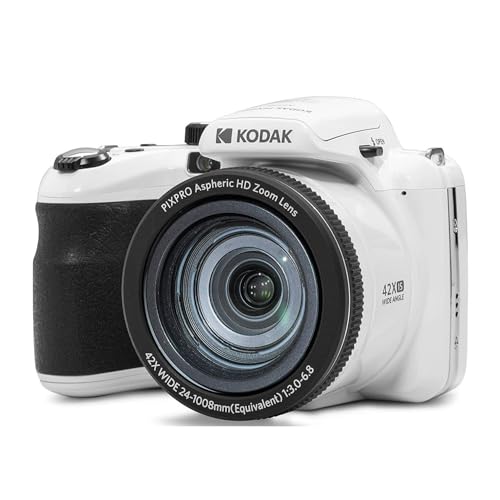
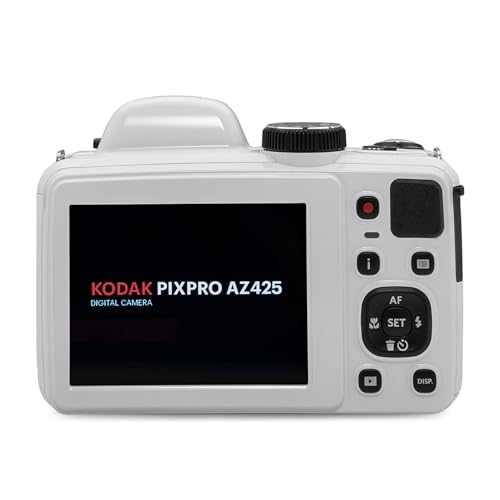
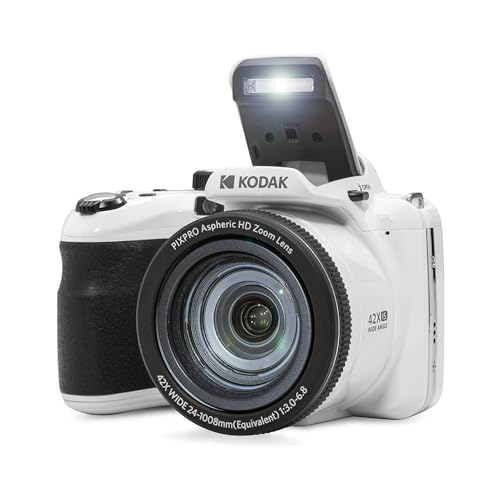
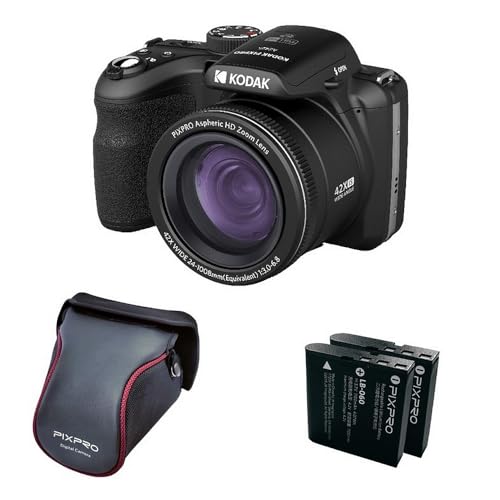
Kodak PIXPRO AZ425 review: 112 specs compared

Avg. price:~£290Sensor size:1/2.3"Weight:444 gBattery life (CIPA):240 shots

Kodak PIXPRO AZ425 Review: Compare 112 technical specifications, 7 expert and video reviews and 1 best-of list to see how this product ranks in the Cameras category and whether it is worth buying.
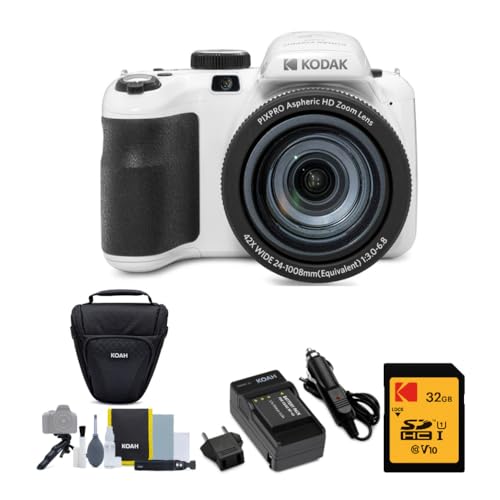
Kodak PIXPRO AZ425
4.5/10

Overall score

Score
4.5/ 10
✕
What it is
Our main score for this model, 1–10. It combines specs, best-of lists, expert reviews and owners.
How we count it
Parts: Technical score 35%, List score 30%, Reviews score 25%, Sentiment score 10%
Marks: Each part gets a mark out of 10. For reviews, lists and owners, a typical model in this category gets about 8 and the best one gets 10.
No data yet: A part with no data shows "?". It counts as the mark of a weaker model in this category (4 in 5 models with data score higher). This way, models with reviews, lists and owners usually come out ahead.
Score distribution
▼
<55-66-77-88-99-10
Score components

35%

4.2

Technical score

30%

4.2

List score

25%

4.2

Reviews score

10%

?

Sentiment scoreNot enough data yet, so we use 7.1, the mark of a weaker model in this category

▼Worse than 99% of cameras
5.8

Value for money

Value for money
5.8/ 10
✕
What it is
An indicator that combines the camera's overall rating with its cost.
When it matters
When you want to know how much overall quality you get for the price.
Score distribution
▼
<55-66-77-88-99-10
Score components

70%

4.5

Overall score

30%

9.0

Price

▼Worse than 93%
4.2

Technical score

Technical score
4.2/ 10
✕
What it is
How good the specs are compared with the other models in this category, 1–10.
How we count it
Areas: We rate the specs in each area against the other models in this category.
Weighting: The areas that matter most to buyers count more. The shares are shown under Score components.
Share: The technical score is 35% of the overall score.
Score distribution
▼
<55-66-77-88-99-10
Score components

28%

4.5

Sensor & Image

25%

3.6

Photo Features

18%

5.0

Video & Audio

14%

4.3

Display & Design

8%

3.9

Battery & Power

7%

2.7

Connectivity & Storage

▼Worse than 80%
4.2

Reviews score

Reviews score
4.2/ 10
✕
What it is
Average grade from independent test sites, magazines and video reviewers, 1–10.
How we count it
Grades: Each review's own score is converted to 1–10; without one, we grade the review ourselves. Big test sites count more, short reviews half as much as full tests. A video review counts half.
Score: The average grade is 80% of the review mark; the number of reviews is the other 20% (1 review = 5, the typical number in this category = 8, the most-reviewed model = 10).
Enough data: With few reviews, the average grade is pulled toward the typical grade of this category. No reviews yet: 7.5 for now.
Share: Reviews count 25% of the overall score.
Score distribution
▼
<55-66-77-88-99-10

4.2

Mark 7.4 is below the typical mark 7.9 of this category, so it cannot lift the score above the technical score

80%

7.5

Average grade

20%

7.0

Popularity

Grades by review (7)
4 reviews: 3 with a printed score, 1 estimated from the review. 3 video reviews, each counting half as much as a written test. Reviews count 25% of the overall score.
User ratings collected online are not part of this score.
▼Worse than 85%
4.2

List score

List score
4.2/ 10
✕
What it is
How often independent test sites, magazines and video reviewers put this model in their best-of lists for this category.
How we count it
Points: The model in the most lists of this category gets 10; the others get 8 to 10 in proportion. In no list yet: 7.5. Lists count 30% of the overall score.
Enough data: Every list counts, even a single one. With fewer than 5 best-of lists in the category, this part is left out.
Lists with this model (1)
List score: in 1 of 147 lists (1%)
▲Better than 76%
  • kodak-pixpro-az425
  • kodak-pixpro-az425
  • kodak-pixpro-az425
  • kodak-pixpro-az425
  • kodak-pixpro-az425
  • kodak-pixpro-az425
  • kodak-pixpro-az425
kodak-pixpro-az425
kodak-pixpro-az425
kodak-pixpro-az425
kodak-pixpro-az425
kodak-pixpro-az425
kodak-pixpro-az425
kodak-pixpro-az425
Where to buy
*As an Amazon Associate, we earn from qualifying purchases.
Best rankings
Available: ranking among products currently available (including other versions of this product).All: ranking among all products in the database.

What reviewers say about the Kodak PIXPRO AZ425

Based on 4 · 3

The huge zoom range and simple operation impress, but the screen, low-light shots and connectivity let it down.
Praised
Criticised
Pick a topic to see who said what
Loading...
Loading category ranking...

Cameras model ranking

Ranked #479 of 975 models in Cameras (Overall score)

Technical Specifications of camera Kodak PIXPRO AZ425

Technical score
Technical score
4.2/ 10
✕
What it is
How good the specs are compared with the other models in this category, 1–10.
How we count it
Areas: We rate the specs in each area against the other models in this category.
Weighting: The areas that matter most to buyers count more. The shares are shown under Score components.
Share: The technical score is 35% of the overall score.
Score distribution
▼
<55-66-77-88-99-10
Score components:

28%

4.5

Sensor & Image

25%

3.6

Photo Features

18%

5.0

Video & Audio

14%

4.3

Display & Design

8%

3.9

Battery & Power

7%

2.7

Connectivity & Storage

4.2
Reviews score
4.2
List score
4.2
Value for money
Value for money
5.8/ 10
✕
What it is
An indicator that combines the camera's overall rating with its cost.
When it matters
When you want to know how much overall quality you get for the price.
Score distribution
▼
<55-66-77-88-99-10
Score components:

70%

4.5

Overall score

30%

9.0

Price

5.8
Sensor size
1/2.3"
This camera has a sensor size of 1/2.3", which is smaller than 59.1% of cameras and the same as 39.1% of cameras.
Sensor resolution
20 MP
This camera captures images at 20 MP, which is higher than 60.1% of cameras and equal to 1.3% of cameras.
Sensor pixel size
1.2 µm
This camera has sensor pixels measuring 1.2 µm, which are smaller than those in 93.8% of cameras and the same size as those in 0.7% of cameras.
Base ISO
100
This camera has a base ISO of 100, which is lower than 26.7% of cameras and equal to 53.4% of cameras.
Max ISO
ISO 3200 ISO
This camera reaches ISO 3,200, which is lower than 61.5% of cameras and equal to 23.8% of cameras.
Show more
What reviewers say
Lens mount
N/A
Built-in focus motor
N/A
N. of focus points
42
This camera has a focus-point count of 42, which is higher than 60% of cameras.
Phase-detection autofocus (photos)
no
This camera does not support phase-detection autofocus for photos. 36.6% of cameras support phase-detection autofocus for photos.
AF tracking
yes
This camera supports AF tracking. This feature is available on 87.4% of cameras.
Show more
What reviewers say
Max video resolution
1920 px
This camera records at 1920 px, which is higher than the resolution in 28.7% of cameras and the same as in 46.7% of cameras.
Video bitrate
?
Video bit depth
8 bit
This camera records in 8 bit, which is higher than the colour depth in 8.2% of cameras and the same as in 79.8% of cameras.
Video chroma subsampling
4:2:0
This camera records with 4:2:0, which is better than the chroma sampling in 8.2% of cameras and the same as in 70% of cameras.
Video codecs
MPEG-4
Show more
Type
bridge
Weight
444 g
This camera weighs 444 g, which is heavier than 56.7% of cameras and equal to 0.1% of cameras.
Width
112.7 mm
This camera is 112.7 mm wide, which is narrower than 59.9% of cameras and equal to 0.3% of cameras.
Height
81.6 mm
This camera is 81.6 mm tall, which is taller than 58.8% of cameras and equal to 0.3% of cameras.
Thickness
84 mm
This camera is 84 mm thick, which is thicker than 82.6% of cameras and equal to 0.5% of cameras.
Show more
What reviewers say
Battery life (CIPA)
240 shots
This camera lasts for 240 shots per charge, which is shorter than 75.8% of cameras and equal to 2.3% of cameras.
Battery capacity
1,100 mAh
This camera has 1,100 mAh battery capacity, which is smaller than 51.6% of cameras and equal to 1.5% of cameras.
Removable battery
yes
This camera has a removable battery, and 97.8% of cameras include one.
USB Power Delivery (PD)
no
This camera does not support USB Power Delivery. 10.6% of cameras support USB Power Delivery.
Wi-Fi connectivity
no
This camera does not support Wi-Fi. 48.2% of cameras include this feature.
Wi-Fi version
N/A
Bluetooth connectivity
no
This camera does not have Bluetooth. 24.1% of cameras support Bluetooth.
Bluetooth version
N/A
USB Type-C
no
This camera does not include USB Type-C. 16.4% of cameras use USB-C.
Show more
What reviewers say

Kodak PIXPRO AZ425 vs the average camera

246810TotalDisplay & DesignSensor & ImagePhoto FeaturesVideo & AudioBattery & PowerConnectivity & Storage
  • Uses a BSI sensor
    This camera uses a BSI sensor, the average camera does not. 35.7% of cameras use a BSI sensor.
  • Supports slow-motion video
    This camera supports slow-motion video, the average camera does not.
  • 9 years newer
    This camera was released more recently than the average camera (2023 vs 2014). The average camera was released in 2014.
    2,023 vs 2,014
  • More megapixels
    This camera has more megapixels than the average camera (20 MP vs 16.2 MP). The average camera's sensor resolution is 16.2 MP.
    20 MP vs 16.2 MP
  • 19 more focus points
    This camera has a higher focus-point count than the average camera (42 vs 23). The average camera has a count of 23.
    42 vs 23
  • 6.46x more optical zoom
    This camera offers more optical zoom than the average camera (42 x vs 6.5 x). The average camera offers 6.5 x.
    42 x vs 6.5 x
  • In-camera panorama mode
    This camera includes an in-camera panorama mode, the average camera does not.
  • Uses a BSI sensor
    This camera uses a BSI sensor, the average camera does not. 35.7% of cameras use a BSI sensor.
  • 9 years newer
    This camera was released more recently than the average camera (2023 vs 2014). The average camera was released in 2014.
    2,023 vs 2,014
  • More megapixels
    This camera has more megapixels than the average camera (20 MP vs 16.2 MP). The average camera's sensor resolution is 16.2 MP.
    20 MP vs 16.2 MP
  • 19 more focus points
    This camera has a higher focus-point count than the average camera (42 vs 23). The average camera has a count of 23.
    42 vs 23
  • In-camera panorama mode
    This camera includes an in-camera panorama mode, the average camera does not.
  • 6.46x more optical zoom
    This camera offers more optical zoom than the average camera (42 x vs 6.5 x). The average camera offers 6.5 x.
    42 x vs 6.5 x
  • Supports slow-motion video
    This camera supports slow-motion video, the average camera does not.
  • 41.7% lower list score
    List score
    4.2/ 10
    ✕
    What it is
    How often independent test sites, magazines and video reviewers put this model in their best-of lists for this category.
    How we count it
    Points: The model in the most lists of this category gets 10; the others get 8 to 10 in proportion. In no list yet: 7.5. Lists count 30% of the overall score.
    Enough data: Every list counts, even a single one. With fewer than 5 best-of lists in the category, this part is left out.
    Lists with this model (1)
    List score: in 1 of 147 lists (1%)
    4.2 vs 7.2
  • Smaller image sensor
    This camera has a smaller sensor than the average camera (1/2.3" vs 2/3"). The average camera's sensor size is 2/3".
    1/2.3" vs 2/3"
  • 35.4% lower review score
    Reviews score
    4.2/ 10
    ✕
    What it is
    Average grade from independent test sites, magazines and video reviewers, 1–10.
    How we count it
    Grades: Each review's own score is converted to 1–10; without one, we grade the review ourselves. Big test sites count more, short reviews half as much as full tests. A video review counts half.
    Score: The average grade is 80% of the review mark; the number of reviews is the other 20% (1 review = 5, the typical number in this category = 8, the most-reviewed model = 10).
    Enough data: With few reviews, the average grade is pulled toward the typical grade of this category. No reviews yet: 7.5 for now.
    Share: Reviews count 25% of the overall score.
    Score distribution
    ▼
    <55-66-77-88-99-10

    4.2

    Mark 7.4 is below the typical mark 7.9 of this category, so it cannot lift the score above the technical score

    80%

    7.5

    Average grade

    20%

    7.0

    Popularity

    Grades by review (7)
    4 reviews: 3 with a printed score, 1 estimated from the review. 3 video reviews, each counting half as much as a written test. Reviews count 25% of the overall score.
    User ratings collected online are not part of this score.
    4.2 vs 6.5
  • 1.84 µm smaller sensor pixels
    This camera has smaller sensor pixels than the average camera (1.2 µm vs 3.04 µm). The average sensor pixel size is 3.04 µm.
    1.2 µm vs 3.04 µm
  • No hot shoe
    This camera does not have a hot shoe, the average camera does.
  • No RAW photo capture
    This camera does not support RAW photo capture, the average camera does. 61% of cameras support RAW formats.
  • 22,400 ISO lower expanded sensitivity
    This camera extends sensitivity to a lower ISO than the average camera (3,200 ISO vs 25,600 ISO). The average camera extends sensitivity to 25,600 ISO.
    3,200 ISO vs 25,600 ISO
  • 90 shots shorter battery life
    This camera lasts shorter per charge than the average camera (240 shots vs 330 shots). The average camera lasts for 330 shots.
    240 shots vs 330 shots
  • 41.7% lower list score
    List score
    4.2/ 10
    ✕
    What it is
    How often independent test sites, magazines and video reviewers put this model in their best-of lists for this category.
    How we count it
    Points: The model in the most lists of this category gets 10; the others get 8 to 10 in proportion. In no list yet: 7.5. Lists count 30% of the overall score.
    Enough data: Every list counts, even a single one. With fewer than 5 best-of lists in the category, this part is left out.
    Lists with this model (1)
    List score: in 1 of 147 lists (1%)
    4.2 vs 7.2
  • 35.4% lower review score
    Reviews score
    4.2/ 10
    ✕
    What it is
    Average grade from independent test sites, magazines and video reviewers, 1–10.
    How we count it
    Grades: Each review's own score is converted to 1–10; without one, we grade the review ourselves. Big test sites count more, short reviews half as much as full tests. A video review counts half.
    Score: The average grade is 80% of the review mark; the number of reviews is the other 20% (1 review = 5, the typical number in this category = 8, the most-reviewed model = 10).
    Enough data: With few reviews, the average grade is pulled toward the typical grade of this category. No reviews yet: 7.5 for now.
    Share: Reviews count 25% of the overall score.
    Score distribution
    ▼
    <55-66-77-88-99-10

    4.2

    Mark 7.4 is below the typical mark 7.9 of this category, so it cannot lift the score above the technical score

    80%

    7.5

    Average grade

    20%

    7.0

    Popularity

    Grades by review (7)
    4 reviews: 3 with a printed score, 1 estimated from the review. 3 video reviews, each counting half as much as a written test. Reviews count 25% of the overall score.
    User ratings collected online are not part of this score.
    4.2 vs 6.5
  • 18.3% worse value for money
    Kodak PIXPRO AZ425 has a worse value-for-money score than the average camera (5.82 vs 6.9).
    5.82 vs 6.88
  • No hot shoe
    This camera does not have a hot shoe, the average camera does.
  • 38.1 mm thicker
    This camera is thicker than the average camera (84 mm vs 45.9 mm). The average camera is 45.9 mm thick.
    84 mm vs 45.9 mm
  • 54.5 g heavier
    This camera is heavier than the average camera (444 g vs 389.5 g). The average camera weighs 389.5 g.
    444 g vs 389.5 g
  • 7.9 mm taller body
    This camera is taller than the average camera (81.6 mm vs 73.7 mm). The average camera is 73.7 mm tall.
    81.6 mm vs 73.7 mm
  • Smaller image sensor
    This camera has a smaller sensor than the average camera (1/2.3" vs 2/3"). The average camera's sensor size is 2/3".
    1/2.3" vs 2/3"
  • 1.84 µm smaller sensor pixels
    This camera has smaller sensor pixels than the average camera (1.2 µm vs 3.04 µm). The average sensor pixel size is 3.04 µm.
    1.2 µm vs 3.04 µm
  • 22,400 ISO lower expanded sensitivity
    This camera extends sensitivity to a lower ISO than the average camera (3,200 ISO vs 25,600 ISO). The average camera extends sensitivity to 25,600 ISO.
    3,200 ISO vs 25,600 ISO
  • 3,200 ISO lower maximum sensitivity
    This camera reaches a lower maximum ISO than the average camera (3,200 ISO vs 6,400 ISO). The average camera's maximum ISO is 6,400 ISO.
    3,200 ISO vs 6,400 ISO
  • No RAW photo capture
    This camera does not support RAW photo capture, the average camera does. 61% of cameras support RAW formats.
  • No manual focus mode
    This camera does not support manual focus, the average camera does. 71.4% of cameras include a manual focus mode.
  • 0.6 fps slower mechanical burst
    This camera has a slower mechanical burst than the average camera (5 fps vs 5.6 fps). The average camera reaches 5.6 fps.
    5 fps vs 5.6 fps
  • 90 shots shorter battery life
    This camera lasts shorter per charge than the average camera (240 shots vs 330 shots). The average camera lasts for 330 shots.
    240 shots vs 330 shots

Video reviews

Hands-on testing, unboxing, and real-world video evaluations

5.0
Apryl's Lane
≈ estimated
03/04/2025
Daily vlog test · one day of real-world use
Verdict
Kodak PIXPRO AZ425 is heavy to carry and slow to transfer footage, which leaves doubts about daily use.
7.0
TheartofEmman
≈ estimated
17/08/2024
Pros and cons · handling, controls and limitations
Verdict
Kodak PIXPRO AZ425 gets the job done for what you need, though it is not a professional DSLR and has clear limits.
Not graded
Overview video
Hands-on video, no verdict
Overview video
Overview video
Overview video
Overview video
Overview video
Overview video
Not graded

Expert reviews

In-depth analysis and verdict from leading tech publications

7.0
digitalcameraworld.com
✓ explicit
20/08/2023
Hands-on review · Superzoom bridge
Verdict
Kodak PIXPRO AZ425 offers 42x reach in one body, but its small sensor keeps results at point-and-shoot level.
7.0
lensandshutter.com
≈ estimated
22/06/2026
Hands-on review · Bridge superzoom
Verdict
Kodak PIXPRO AZ425 is a 42x zoom bridge for travel and family shots in good light, held back by slow autofocus and weak results above ISO 800.
6.9
appareil-photo-numerique.fr
✓ explicit
09/06/2026
Hands-on test · Bridge superzoom
Verdict
Kodak PIXPRO AZ425 is a light bridge with a stabilised 42x zoom and P, S, A, M modes, but has no wireless connection and its lens dims at full zoom.
8.0
diapola.fr
✓ explicit
04/03/2025
Hands-on test · Zoom bridge
Verdict
Kodak PIXPRO AZ425 suits beginners and hikers who want 42x reach in a 445g body, though noise shows in dim light.

Third-party reviews

What customers like about Kodak PIXPRO AZ425

  • A 42 x optical zoom brings distant subjects close.
  • 4 stop stabilization steadies shots at full zoom.
  • Tracking autofocus keeps a moving subject sharp.
  • Continuous shooting at 5 fps catches a short run of action.
  • HDR mode balances bright skies and dark shadows in one frame.
  • Two microphones are built in for video sound.

What customers don't like about Kodak PIXPRO AZ425

  • Small 1.2 µm pixels make low-light pictures grainy.
  • Battery life of 240 shots is short for a full day out.
  • At 444 g it is heavy to carry on long walks.
  • There is no manual focus, so you cannot set focus by hand.
  • No weather sealing and no waterproofing mean rain is a risk.

Verdict

With a 42 x optical zoom, the Kodak PIXPRO AZ425 pulls distant subjects close, whether that is a bird in a tree or a player across a football pitch. The 4 stop image stabilization helps at full reach, where a small shake turns into a blurry shot. Tracking autofocus keeps a moving dog or child sharp, and the camera shoots 5 fps while you hold the button. Its 1.2 µm pixels are small, so the pictures get noisy once the light drops, and the top sensitivity is 3200 ISO. The battery lasts 240 shots, so pack a spare. At 444 g and 84 mm thick, it sits in a bag rather than a pocket. It suits a day-out photographer who wants one camera for far-away scenes and does not mind a bigger body.

Compare Kodak PIXPRO AZ425 with other products in the Cameras category

1Product to compare no. 1
VS
2Product to compare no. 2
VS
3Product to compare no. 3 (optional)

Graphic comparison of Kodak PIXPRO AZ425 and other products in the Cameras category

No results found