Canon PowerShot Zoom review. Compare 108 technical specifications and user reviews to see how it ranks among cameras and if it is worth buying.
Overall score
What it is: An overall evaluation of the camera's quality, based on technical analyses and user reviews.
When it matters: When you need a quick reference to identify the best cameras on the market.
Score components:
90.0%
Technical Score
10.0%
User score
Technical Score
What it is: An assessment of the camera's technical performance, covering eight key areas: image quality, autofocus, video features, stabilization, lens compatibility, connectivity, battery, and design.
When it matters: When you want to compare cameras based on technical performance and available features.
Score components:
28.0%
Sensor & Image
25.0%
Photo Features
18.0%
Video & Audio
14.0%
Display & Design
8.0%
Battery & Power
7.0%
Connectivity & Storage
User score
What it is: A rating that combines user reviews and the total number of reviews received by the camera.
When it matters: When real-world owner satisfaction and review volume matter to your decision.
Score components:
70.0%
User reviews
30.0%
Popularity

(Reviews last updated: July 2026)
Score components:
25.0%
Sensor size
20.0%
Main camera megapixels
20.0%
Dual card slots
15.0%
N. of focus points
10.0%
RAW photo capture
10.0%
Phase-detection autofocus (photos)
Score components:
35.0%
Weight
30.0%
Battery life (CIPA)
20.0%
Sensor-shift stabilization
15.0%
GPS
Score components:
30.0%
Price
20.0%
Weight
20.0%
AF tracking
20.0%
Battery life (CIPA)
10.0%
Touchscreen
Score components:
30.0%
Main camera megapixels
25.0%
Sensor size
20.0%
Main camera pixel size
15.0%
Sensor-shift stabilization
10.0%
RAW photo capture
Score components:
30.0%
Weight
25.0%
Thickness
20.0%
AF low-light sensitivity
15.0%
Sensor-shift stabilization
10.0%
Eye detection AF (human)
Score components:
30.0%
Sensor size
25.0%
Main camera pixel size
20.0%
Eye detection AF (human)
15.0%
Main camera megapixels
10.0%
Sensor-shift stabilization
Score components:
30.0%
Weight
25.0%
Battery life (CIPA)
20.0%
Min operating temperature
15.0%
Sensor-shift stabilization
10.0%
GPS
Available: ranking among products currently available (including other versions of this product).
All: ranking among all products in the database.
#21 in Best Canon Compact Cameras
#73 in Best Canon Digital Cameras
#96 in Best Compact Cameras
#96 in Best Point & Shoot Cameras
#127 in Best Cameras under £500
#188 in Best Cameras under £200
#241 in Best Cameras under £300
#307 in Best Cameras
#307 in Best Digital Cameras
#351 in Best Cameras for Hiking
#354 in Best Travel Cameras
What it is: An assessment of the camera's technical performance, covering eight key areas: image quality, autofocus, video features, stabilization, lens compatibility, connectivity, battery, and design.
When it matters: When you want to compare cameras based on technical performance and available features.
Score components:
28.0%
Sensor & Image
25.0%
Photo Features
18.0%
Video & Audio
14.0%
Display & Design
8.0%
Battery & Power
7.0%
Connectivity & Storage
What it is: A rating that combines user reviews and the total number of reviews received by the camera.
When it matters: When real-world owner satisfaction and review volume matter to your decision.
Score components:
70.0%
User reviews
30.0%
Popularity

(Reviews last updated: July 2026)
What it is: An indicator that combines the camera's overall rating with its cost.
When it matters: When you want to know how much overall quality you get for the price.
Score components:
60.0%
Overall score
40.0%
Price
Importance: HIGH
Good value: Full frame or larger
Importance: HIGH
Good value: At least 20 MP
Importance: HIGH
Good value: At least 3.5 µm
Importance: LOW
Importance: MEDIUM
Good value: At least ISO 25,600
Importance: MEDIUM
Importance: MEDIUM
Good value: At least 14-bit
Importance: LOW
Importance: LOW
Importance: LOW
Importance: LOW
Importance: LOW
Importance: LOW
Importance: LOW
Importance: LOW
Importance: MEDIUM
Importance: LOW
Importance: LOW
Importance: LOW
Importance: LOW
Importance: LOW
Importance: HIGH
Good value: At least 200 points
Importance: HIGH
Importance: MEDIUM
Importance: LOW
Importance: LOW
Importance: MEDIUM
Importance: MEDIUM
Importance: HIGH
Good value: At least 5 stops
Importance: LOW
Importance: MEDIUM
Good value: At least 10 fps
Importance: LOW
Importance: LOW
Importance: LOW
Importance: LOW
Importance: LOW
Importance: LOW
Importance: LOW
Importance: LOW
Importance: LOW
Importance: LOW
Importance: LOW
Importance: LOW
Importance: LOW
Importance: LOW
Importance: LOW
Importance: LOW
Good value: At least 200,000 actuations
Importance: LOW
Good value: At least 10x
Importance: HIGH
Good value: At least 3840 px
Importance: MEDIUM
Good value: At least 200 Mbps
Importance: MEDIUM
Good value: At least 10-bit
Importance: LOW
Importance: LOW
Importance: LOW
Importance: LOW
Importance: LOW
Importance: LOW
Importance: LOW
Good value: At least 30 min
Importance: LOW
Importance: LOW
Importance: LOW
Importance: LOW
Importance: LOW
Good value: At least 2 microphones
Importance: LOW
Importance: LOW
Importance: LOW
Importance: LOW
Importance: MEDIUM
Good value: 500 g or less
Importance: LOW
Importance: LOW
Importance: LOW
Importance: MEDIUM
Importance: MEDIUM
Good value: At least 2.36 million dots
Importance: LOW
Good value: 100%
Importance: LOW
Importance: LOW
Good value: At least 120 Hz
Importance: MEDIUM
Good value: At least 3 in
Importance: LOW
Importance: LOW
Importance: LOW
Importance: LOW
Importance: LOW
Importance: LOW
Importance: LOW
Good value: At least 10 m
Importance: LOW
Importance: LOW
Importance: LOW
Importance: LOW
Importance: MEDIUM
Good value: At least 400 shots
Importance: LOW
Good value: At least 1,500 mAh
Importance: LOW
Importance: LOW
Importance: LOW
Importance: LOW
Importance: LOW
Importance: LOW
Importance: LOW
Importance: LOW
Importance: LOW
Importance: LOW
Importance: LOW
Importance: LOW
Importance: LOW
Importance: LOW
Importance: LOW
Importance: LOW
Importance: LOW
Importance: LOW
Importance: MEDIUM
Importance: LOW
Importance: MEDIUM
Good value: 500 g or less
Importance: LOW
Importance: LOW
Importance: LOW
Importance: LOW
Importance: LOW
Importance: HIGH
Good value: Full frame or larger
Importance: HIGH
Good value: At least 3.5 µm
Importance: HIGH
Good value: At least 20 MP
Importance: LOW
Importance: LOW
Importance: MEDIUM
Good value: At least 400 shots
Importance: HIGH
Good value: At least 200 points
Importance: LOW
(Reviews last updated: July 2026)
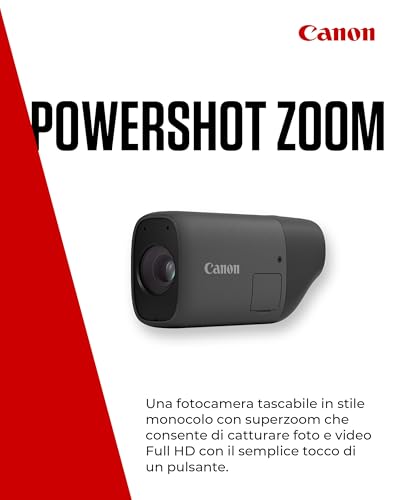
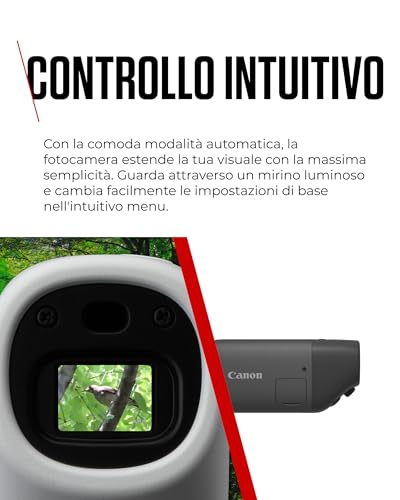
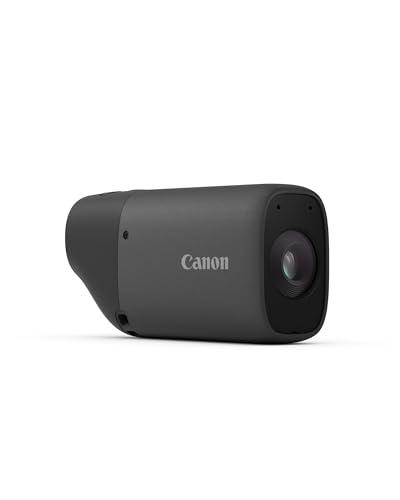
The Canon PowerShot Zoom is a compact, monocular-style camera with a 12MP 1/3-inch sensor and a switchable 100mm/400mm equivalent optical lens, featuring an 800mm digital option. Key strengths include effective optical image stabilization, a clear 2.36M-dot EVF, and built-in USB-C charging for casual wildlife and travel viewing. Conversely, the small sensor and slow f/5.6–6.3 aperture restrict performance to bright daylight, and the lack of RAW shooting limits post-processing. Additionally, the device exhibits limited battery life (roughly 70 minutes of viewing) and produces JPEGs that often lack the sharpness seen in the EVF.
Geoffrey Morrison's Forbes review of the Canon PowerShot Zoom highlights it as a unique, highly portable "compact telephoto monocular" rather than a traditional camera. Key advantages include its lightweight design, exceptional OLED viewfinder, instant power-on, and impressive zoom capabilities, offering 100mm and 400mm optical options plus 800mm digital reach for capturing distant subjects. However, the review cites significant drawbacks, including average image quality from its 12.1-megapixel sensor that is often surpassed by top-tier smartphones, along with a slow f/5.6-f/6.3 aperture. Furthermore, the device is limited by 1080p at 30fps video, positioning it as a specialized, fun, and accessible gadget for enthusiasts rather than a replacement for professional gear.
The Canon PowerShot Zoom is a unique, pocketable digital spyglass offering a lightweight 5.1-ounce design with dual telephoto angles, making it ideal for casual bird watching and nature viewing. Pros include a sharp electronic viewfinder (EVF), excellent portability, and versatile connectivity via Bluetooth and USB-C. However, significant cons limit its utility, as the small sensor produces noisy images that lag behind modern smartphones, particularly in low light. Furthermore, the device is hindered by restricted 1080p video, noticeable handheld jitter, and poor battery life.
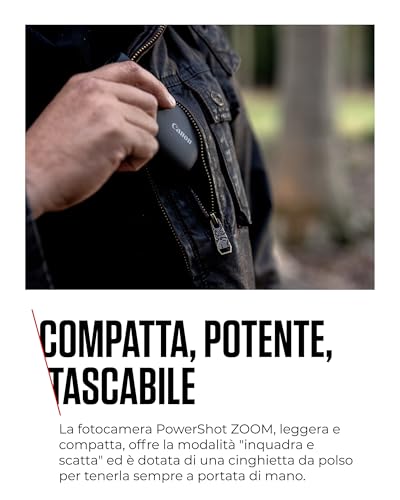
The Canon PowerShot Zoom is a pocket-sized monocular camera designed primarily for casual users like birdwatchers, hikers, and hobbyists. It features a unique, clean, and highly lightweight 145g design that easily fits into a pocket or can be worn comfortably around the neck. The device utilizes a 12.1MP 1/3-inch CMOS sensor with a Digic 8 processor and offers three distinct, fixed zoom settings: 100mm, 400mm (optical), and a 800mm digital crop. Operating entirely via an automatic mode, it includes a 10fps burst rate capable of tracking moving subjects and features built-in optical 4-axis image stabilization alongside Wi-Fi and Bluetooth connectivity for smartphone image pairing. Several key pros and cons define the performance of this photographic gadget. On the positive side, it packs an impressive 100-800mm telephoto range into an incredibly easy-to-use form factor, ensuring users never miss a far-away shot. However, its major cons include average image quality with compromised fidelity and a noticeable lack of detail due to the small, low-resolution sensor and small apertures. Additionally, the camera offers no manual exposure control, lacks a tripod mount, limits video...
The Canon PowerShot Zoom is a compact, lightweight (145 grams) hybrid device functioning as digital monocular binoculars and a pocket-sized telephoto camera with an effective focal range of 100mm, 400mm, and a digital extension to 800mm. It is highly praised as a convenient outdoor gadget for nature lovers due to its small size (just over 10 cm long), built-in four-axis optical image stabilization, and simple one-handed operation. The device features a 12-megapixel CMOS sensor capturing JPEG images, records Full-HD video with a built-in stereo microphone, and includes an electronic OLED viewfinder, USB-C charging, and smartphone connectivity via WiFi and Bluetooth. The main advantages (pros) of the PowerShot Zoom are its extreme compactness, low weight, excellent image stabilization at 400mm, and overall fun-to-use gadget appeal for quick observations and outdoor activities. However, it comes with notable disadvantages (cons); the image quality is highly dependent on having abundant ambient light, and the overall image quality suffers drastically when pushed to the 800mm digital zoom setting. Additionally, the button layout on the bottom of the device is tightly clustered, which requires some dexterity...
The BirdGuides review highlights the Canon PowerShot ZOOM as a highly portable, lightweight digital monocular ideal for casual, on-the-go wildlife observation. Its core strengths include a versatile three-step zoom system (100mm, 400mm, 800mm equivalent) and the ability to instantly capture 12MP photos and 1080p video, making it a convenient tool for record shots. However, the review notes significant limitations, specifically subpar image quality that lacks the contrast and crispness required by serious photographers, serving mostly for basic identification. Additionally, while USB-C charging is a positive, the battery life requires management during longer outings, and it is not a replacement for dedicated optics.
The Canon Powershot Zoom is a compact, pocket-sized 144g optoelectronic monocular made in Japan that functions as a basic digital camera. It features a 12.1MP CMOS sensor, a 2.3 million dot electronic viewfinder (EVF) operating at 60fps, built-in optical image stabilisation, autofocus, and face tracking. Priced at £230.00, it provides three fixed, cyclical zoom increments: 100mm, 400mm, and a digital 800mm step, translating to 1.2x, 4.6x, and 9.2x magnification equivalents. It lacks manual exposure adjustments aside from a basic +/- 3 stop exposure compensation option, and captures full HD 1080p video alongside JPEG-only images. The primary advantages of the device are its extreme portability, highly intuitive button layout, efficient wireless sharing via Wi-Fi or Bluetooth, and its utility as an alternative digi-scoping tool when held up to standard binocular eyepieces. However, it suffers from several severe performance flaws: it cannot shoot at focal lengths between the fixed increments, features an inferior JPEG output compared to RAW files, and performs poorly in dim environments, delivering noticeably dimmer views than traditional binoculars. Additionally, battery life is restricted to roughly 60 to 80...
The Canon PowerShot Zoom is a pocket-sized, palm-shaped monocular digital camera that acts as an effective bridge between smartphones and professional cameras on safaris and hikes. It features an impressive fixed observation focal range that circulates from 100mm to 400mm, with a digital extension up to 800mm. Its point-and-shoot mechanism is exceptionally simple to master within minutes. Key advantages include its lightweight, highly portable design, easy smartphone photo downloading via Bluetooth/Wi-Fi, and a highly accessible price point that makes losing or damaging it less stressful than a mobile phone. It is highly useful for quick bird and wildlife identification when swapping heavy lenses on a primary camera isn't feasible. However, the camera comes with several notable limitations, including a rapid decline in image quality under low-light conditions and a tedious Bluetooth pairing process if multiple people share the device. The physical build requires a two-handed grip for a steady, clear shot when utilizing the maximum zoom. Additionally, its very small buttons can be difficult for people with large fingers to navigate, and the nano-SIM card slot presents similar handling difficulties....
The Canon PowerShot Zoom is a pocket-sized digital monocular weighing just 145g that functions like a compact camera with a unique multi-step telephoto lens, offering 100mm and 400mm optical focal lengths alongside an 800mm digital zoom. It features a high-quality 2.36 million-dot electronic viewfinder (EVF), a 12.1MP CMOS sensor, and full HD video recording that permits focus adjustments during filming. Equipped with Bluetooth and Wi-Fi capability, it pairs smoothly with the Canon Camera Connect app to view live footage and download photos directly to smartphones for easy wildlife identification. However, because of its narrow maximum apertures (f/5.6 at 100mm and f/6.3 at 400mm) and severe image noise at high ISO settings, the device is strictly limited to daytime use and is entirely unsuitable for astronomy or stargazing. The monocular offers several notable advantages, including a digitally enhanced 800mm zoom that excels at identifying faraway birds, a tiny lightweight design, built-in image stabilization, and seamless wireless connectivity. On the downside, image quality drops significantly at the 800mm digital zoom range—producing soft, low-resolution snaps—and the camera is limited to capturing JPEGs only....
The Canon PowerShot Zoom is a tiny, lightweight digital monocular that weighs just 5.11 ounces (145 grams) and fits easily in the palm of your hand. It works like a small digital camera with a 12.1-megapixel CMOS sensor and can jump between 100mm, 400mm, and digitally enhanced 800mm focal lengths. Reviewers found it highly rewarding for outdoor activities like birdwatching and sporting events because its image stabilization and fast tracking focus help identify distant objects quickly. It also features full HD video recording, built-in Wi-Fi and Bluetooth to easily send photos to a smartphone, and a clear 2.36 million-dot electronic viewfinder. However, the device has several design and quality drawbacks. The control buttons on the body are packed so tightly together that users frequently turn off the unit by mistake while trying to zoom. While photos taken at 400mm look good, images pushed to the 800mm digital zoom are soft, low-resolution, and restricted to JPEG-only capture. Additionally, the monocular is not waterproof or dustproof, lacks any protective lens covers or a tripod attachment, and its internal 800 mAh battery only...
The Canon PowerShot Zoom is an innovative, pocket-friendly "digital spyglass" camera designed specifically to capture distant subjects that mainstream smartphones cannot reach comfortably. Operating as a one-handed, lightweight 5.1-ounce device, it functions as a 4x and 8x magnification companion to a mobile phone. The camera features a sharp, 2.4-million-dot electronic viewfinder (EVF), a unique lens system that toggles between 100mm and 400mm optical views (reaching up to an 800mm digital zoom), and seamless wireless connectivity via Bluetooth, Wi-Fi, and USB-C. It saves 12MP photos and 1080p video to a microSDXC card slot, and users can connect it to the Canon Camera Connect app for remote viewing and media sharing. Despite its clever design concept, the camera earned a mediocre 3.0 out of 5 rating because its technical limitations keep it from competing with mainstream alternatives. On the positive side, its major pros include its highly portable, easy-to-pocket form factor, snappy autofocus in bright sunlight, and dual telephoto angles. However, these perks are heavily weighed down by significant cons, most notably its small 1/3-inch CMOS sensor and modest aperture (f/5.6 to...
The DPReview TV review describes the Canon PowerShot Zoom as a unique, pocket-sized digital monocular optimized for casual viewing, rather than a traditional camera. It features a lightweight design, a crisp 2.36M-dot EVF, effective four-axis stabilization, and 100mm/400mm (plus 2x digital) telephoto steps, making it superior to smartphones for distant spotting. DPReview ·DPReview TV However, the device suffers from poor image quality due to a small 1/3-inch sensor and slow apertures, along with frustrating navigation, a non-removable battery with short life, and a 4.5-meter minimum focus distance. While capable of 10fps 12MP stills and 1080p video, the reviewer concludes it functions better as a viewing tool than a primary camera. Watch the full review at dpreview.com. DPReview
The Canon PowerShot Zoom is a pocket-sized, lightweight digital monocular camera designed primarily for wildlife watching, sports spectators, and family days out. Priced at a recommended retail price (RRP) of £289.99, it offers a quick point-and-shoot mechanism that works straight out of the box, featuring a fast three-step optical zoom that jumps between fixed 100mm, 400mm, and 800mm focal lengths. While it captures 12.1-megapixel photos and Full HD video, its capture quality is limited to a maximum of 30p, which falls short of the higher standards expected from modern standalone cameras or premium smartphones like the iPhone 14 Pro. The main advantages (pros) of this device are its highly compact, portable design and its incredibly easy, user-friendly point-and-shoot functionality. However, the review highlights several drawbacks (cons), noting that adjusting advanced settings can be fiddly and requires a smartphone connection. Additionally, it has limited overall capabilities compared to an SLR camera, lacks smooth manual zoom control due to its fixed focal distances, and suffers from instability issues at maximum zoom despite having built-in 4-axis stabilization. Ultimately, the reviewer rates it 3...
The Digitec review of the Canon PowerShot Zoom identifies the device as a pocket-sized, 100-400mm (800mm digital) telephoto monocular, optimized for rapid, handheld target acquisition via an electronic viewfinder. It excels in ease of use and stabilization, allowing for quick, shaky-free shots of distant subjects that smartphones cannot capture. However, the 1/3-inch sensor produces disappointing image quality suitable only for casual, low-resolution snapshots, leading the reviewer to deem it "small, but not very fine". Major drawbacks include frustrating user controls, a lack of continuous zoom, and a high price point that does not justify the limited, non-professional output.
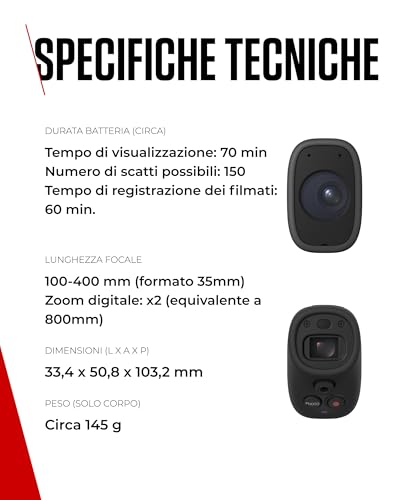
The Canon PowerShot ZOOM is a unique, pocket-sized digital monocular camera reviewed by krone.at, praised for its innovation but critiqued for its execution. On the positive side, the device boasts an incredibly compact form factor, measuring just 33.4 x 50.8 x 103.2 mm and weighing a mere 145 grams, making it highly portable. Its operation is exceptionally simple and intuitive, featuring single-button toggles between preset 100mm, 400mm (optical), and 800mm (digital) focal lengths. The camera also features an accurate autofocus system with tracking and a built-in 4-axis optical image stabilizer that assists handheld use. This straightforward interface makes it ideal for rapid target acquisition in outdoor settings like sports stadiums, nature trails, or theaters. However, the reviewer highlights significant drawbacks regarding image quality and overall usability. Equipped with a tiny 1/3-inch CMOS sensor, a maximum sensitivity of ISO 3200, and a relatively slow f/5.6–6.3 aperture, the camera struggles immensely in poor lighting, resulting in noisy, blurry, and washed-out textures. Furthermore, there is virtually no creative freedom, as the device operates entirely on full automatic mode. The featherweight design backfires by...
The Canon PowerShot Zoom is an innovative, pocket-sized digital monocular that functions as a hybrid between a compact camera and a stabilized spyglass. Weighing just 144 grams, this lightweight device is built for easy handling and casual observation, offering quick access to fixed focal lengths of 100mm and 400mm, alongside an 800mm digital extension. Reviewers highlight its excellent build quality, precise physical stabilization, and a highly efficient 10 frames-per-second burst mode that helps capture fast-moving subjects. Additionally, it features a comfortable, high-resolution 2.36 million-dot electronic viewfinder that excels during daytime viewing. However, the device is severely restricted by its small 1/3-inch sensor, which produces soft, underwhelming image files and limits video capturing to standard Full HD at a maximum of 30 frames per second. Its greatest weakness is its poor low-light performance; when ambient light drops, the electronic viewfinder becomes heavily pixelated, and the camera becomes virtually unusable. Other notable drawbacks include a narrow zooming flexibility compared to traditional travel compacts, an intrusive image lag that briefly freezes the viewfinder after single shots, and the complete lack of RAW format...
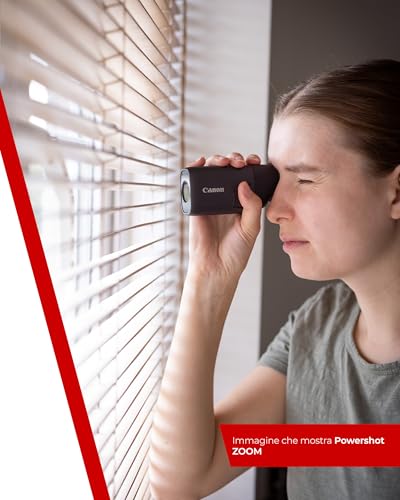
The Canon PowerShot Zoom is a unique, pocket-sized monocular camera designed for outdoor activities like hiking, birdwatching, and watching sports. Its standout features include a very light weight of just 145 grams and a highly compact, 10-centimetre body that makes it easy for the whole family to carry. The device is entirely automatic and lets users quickly switch between 100mm and 400mm optical zoom steps, with an extended 800mm digital zoom. It also features a quality 2.36 million-dot electronic viewfinder and a 4-axis optical image stabilizer that keeps handheld shots steady and enables an efficient burst shooting mode. For storage and connectivity, it supports microSD cards up to 128GB, works with the Canon Camera Connect app via Wi-Fi and Bluetooth for easy photo sharing, and recharges via a standard USB-C cable. However, the review points out several strict limitations, most notably its ISO sensitivity range of 100 to 3200, which makes it unsuitable for indoor or low-light use due to heavy image grain. While it captures decent 12-megapixel photos and Full HD videos outdoors, the image quality can suffer significantly...
The Canon PowerShot Zoom is a pocket-sized, 145-gram digital monocular designed to bridge the gap between smartphones and traditional binoculars by offering a 4X optical zoom, an 8X digital zoom, and a 12-megapixel sensor. While the device features a high-quality finish and operates with a highly responsive, fast autofocus and optical stabilization system, its overall ergonomics are heavily flawed. The poorly positioned buttons—with zoom controls on top and photo/video buttons on the bottom—make comfortable single-handed operation nearly impossible, frequently causing camera shake when capturing images. Furthermore, its usability is strictly limited to outdoor, daytime conditions, rendering it useless at night or indoors. The review highlights several functional strengths, including an excellent burst mode for capturing fast-moving distant subjects and seamless wireless data transfers via Wi-Fi and Bluetooth using the Canon Connect app. However, these pros are significantly undermined by major technical drawbacks, such as a dismal battery life that barely lasts an hour and a highly restrictive USB-C charging system that only functions with its proprietary cable. The digital zoom feature also yields pixelated, unusable imagery. Priced at 340 euros,...
Canon PowerShot Zoom Review Summary The Canon PowerShot Zoom is an innovative, pocket-sized camera resembling a miniature camcorder that weighs just 144 grams and fits in the palm of your hand. Launched at €339, its standout feature is a powerful optical zoom system offering 100mm and 400mm focal lengths, with the ability to digitally extend up to 800mm. Backed by an excellent 4-axis image stabilization system and a clear 2.36-million-pixel OLED electronic viewfinder, the device allows users to capture stable telephoto images and Full HD videos (at 24 or 30 fps) entirely handheld, without needing a tripod. It also includes a 10 fps burst shooting mode, making it useful for nature walks, architectural detailing, or keeping up with remote action at sporting events. Despite its portability and powerful focal range, the device falls short in overall performance and user experience. Its primary drawback is poor image quality; the 12.1-megapixel photos lack fine detail and sharpness, often suffering from a persistent grainy texture that fails to compete with modern smartphone photography. Low-light framing is also uncomfortable due to visibility drops in...
The Canon PowerShot Zoom is an ultra-compact, monocular-style camera weighing just 144 grams, designed for effortless one-handed use while exploring urban landscapes or nature. Tested in Paris from the Jardin du Luxembourg to La Sorbonne, this pocket-sized device features a physical 100mm and 400mm optical zoom, alongside a highly stable 800mm digital zoom. It captures 12-megapixel still photos and records Full HD video at 30 frames per second directly to a Micro-SD card. Users compose shots entirely through a built-in electronic viewfinder, as the device completely lacks a secondary display screen. It recharges in 1.5 hours via USB-C, yielding an operational battery life of roughly 200 photos plus a few brief video clips per charge. The review highlights several distinct pros and cons for prospective buyers looking for a simple "point-and-shoot" experience. On the positive side, the camera is incredibly discreet, highly portable, and boasts an impressive image stabilization system that makes the 800mm digital zoom surprisingly effective. It also delivers clean, neutral color replication and features a fast 10 fps burst mode (up to 45 continuous shots) that excels...
The RTL Info review highlights the Canon PowerShot Zoom as a pocket-sized, 145-gram digital monocular camera priced at €339, engineered to excel where traditional smartphones struggle: long-distance zooming. The device features direct-switch focal lengths of 100mm and 400mm optically, alongside a 2x digital extension reaching up to an 800mm equivalent. Key pros include its highly compact, lightweight frame that easily slips into a pocket, functional built-in optical image stabilization, and a responsive autofocus system that captures sharp far-away details during outdoor activities like sporting events or wildlife viewing. However, the reviewer emphasizes significant cons, noting that the overall image and Full HD video quality from the 12 MP sensor are distinctly mediocre. Even without zooming, it delivers less precise, less sharp results than an average mid-range smartphone, suffering heavily from blur and a complex settings menu viewed through a cramped digital viewfinder. Ultimately, it is poorly suited for any indoor usage and will only appeal to a niche audience prioritizing extreme portable zoom depth over baseline picture quality.
The Digitec review highlights the Canon PowerShot Zoom as a pocket-sized "electronic telescope" offering quick, stable, and easy tracking of distant subjects via a 100mm/400mm equivalent lens. Its key strengths include a functional viewfinder and effective image stabilization, making it a superior alternative to smartphones for capturing casual, distant, fast-moving subjects. However, the review cites significant drawbacks, noting the camera is surprisingly difficult to operate with no dedicated playback button. The 12-megapixel, 1/3-inch sensor produces disappointing image quality unsuitable for enthusiasts, and the high price point, combined with the lack of a wall charger, limits its appeal.
The Canon PowerShot Zoom is a compact standard digital camera published in March 2021 that has since been discontinued and is overall advised against by experts due to its poor performance. Priced around €339.00, this 144g lightweight device features a unique 100-400mm lens with a 4x optical zoom and electronic viewfinder, making it highly specific for capturing distant details and natural portraits. However, it completely lacks wide-angle capabilities, rendering it entirely unsuitable for standard photography like landscapes, interiors, or group shots. It is equipped with a 12-megapixel 1/3-inch sensor, built-in Wi-Fi, and microSDXC card compatibility, but it lacks essential modern functionalities like 4K video recording, touch or tilt screens, GPS, and manual focus. The product fails to deliver on key performance metrics and holds no true strengths according to the laboratory evaluation, which scored it a low 42 out of 100. While the optical image stabilization is decent and its operating speed is rated highly, its downsides heavily outweigh these minor conveniences. The camera produces disappointing image and video quality in low or artificial light, suffers from a sluggish interface...
The review explores the Canon PowerShot Zoom and PowerShot PX, two experimental compact cameras designed as distinct, lightweight smartphone companions rather than replacements for traditional mirrorless systems. The PowerShot Zoom functions like digital pocket binoculars, featuring an ultra-compact body with a 3-step teleobjective lens covering 100mm, 400mm, and an 800mm digital crop. Its main pros include an incredibly lightweight frame (145g) that fits in the palm of your hand, optical image stabilization, and effortless tracking of distant wildlife or sports fields without the burden of heavy gear. However, its cons are prominent: it lacks an external screen, works strictly in automatic mode with locked apertures, and relies on a tiny 1/3-inch sensor that suffers heavily in low-light environments, producing predictable pixelation at the 800mm digital threshold. The PowerShot PX acts as an automated, voice-controlled "personal photographer" built specifically to capture family gatherings hands-free. Its pros lie in its 340-degree horizontal panning, smart facial recognition that spontaneously tracks subjects, and an automated curation feature within the app to filter out bad shots. On the flip side, its main cons are its...
The Canon PowerShot Zoom is an ultra-compact, monocular-style camera weighing just 145 grams, designed to capture distant action at concerts, sporting events, or during wildlife watching without the bulk of heavy photographic gear. It features a 12.1-megapixel CMOS sensor and unique three-step focal adjustments at 100mm, 400mm (both optical), and a digital stretch to 800mm. The device includes a 2.36 million-dot OLED viewfinder, 4-axis optical image stabilisation, Full HD video recording, and fluid mobile connectivity via Wi-Fi and Bluetooth to seamlessly transfer photos to a smartphone. The main advantages of the camera are its extreme portability, lightweight design, and competent image quality—especially at its optical steps—making it a highly convenient, point-and-shoot alternative for casual, long-distance photography. However, the device has distinct limitations, starting with a noticeable drop in image quality once it enters the 800mm digital zoom range. Reviewers also noted a steep learning curve due to sparse physical buttons, which makes menu navigation cumbersome, alongside ergonomically awkward controls and a total lack of audio cues or shutter sounds to confirm when a photo or video has actually been captured.
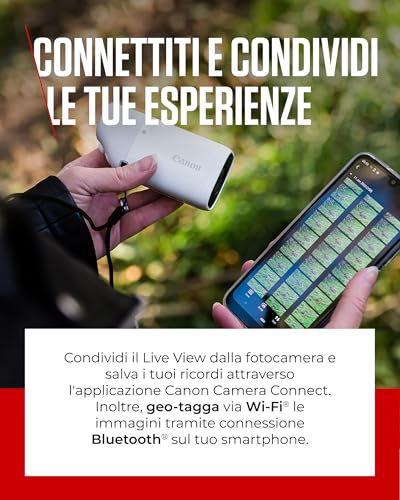
The Canon PowerShot ZOOM is an incredibly compact and lightweight, pocket-sized monocular-style camera designed specifically for outdoor activities like bird watching, travel, sports, and family outings. It features a 3-step optical zoom system that allows users to instantly switch between 100mm and 400mm focal lengths, with an additional 800mm digital extension to easily view and capture distant subjects. Operating primarily in an automatic point-and-shoot mode, the device records Full HD videos and 12-megapixel still images. It is equipped with a bright 2.36-megapixel electronic viewfinder (EVF), built-in optical image stabilization to reduce eye fatigue and blur, USB-C charging, and wireless integration via the Canon Camera Connect app for live view sharing and geotagging. Key Pros and Cons Pro: Outstanding portability with a palm-sized, lightweight chassis that slips effortlessly into a pocket. Pro: Long-range reach providing an immediate 100mm to 400mm telephoto view that exceeds typical smartphone capabilities. Pro: Highly intuitive automatic mode and simplified button configuration built for rapid eye-level operation. Pro: Optical stabilization works effectively to minimize hand tremors at long focal ranges. Con: Mediocre image clarity caused by a...
The Canon PowerShot ZOOM is a pocket-sized, hybrid "traveler's camera" that functions like a cross between a digital monocular, a video camera, and a telephoto lens. Reviewer Manu Espinosa tested the device during a 48-hour trip to La Paz, Baja California Sur, exploring wildlife and adventure sports. The device features a three-step switchable zoom that instantly cycles between 100mm and 400mm optical zoom, as well as an 800mm digital zoom. It shoots 12-megapixel JPEGs and Full HD 1080p video, utilizing an automatic image stabilization system and continuous autofocus. It connects directly to smartphones via Bluetooth or Wi-Fi using the Canon Camera Connect app, allowing users to activate a "Live View" mode to see images in real time or share files wirelessly. The camera is priced at $6,999 MXN on the official Mexican Canon website, relies on a built-in battery charged via USB-C, and stores content on a microSD card. YouTube
Wildlife photographer Marc Albiac tested the 145-gram Canon PowerShot Zoom, praising its portability and 3-step, 100mm–800mm focal range for casual wildlife viewing. The device features a 4-axis stabilizer, 10 fps burst mode, and seamless smartphone sharing, making it ideal for capturing distant memories without complex settings. Conversely, the camera lacks manual exposure controls and, due to a small sensor and narrow aperture, requires bright daylight, with performance degrading in low light. Additionally, the 800mm setting produces lower quality, and the non-swappable battery limits usage to roughly 150 photos or 60 minutes of video. YouTube
The Canon PowerShot Zoom is a unique, pocket-sized hybrid between a monocular and a digital camera, specifically designed for long-distance observation such as birdwatching, stadium sports, or architectural inspection. Weighing just 145 grams, it features a 12.1-megapixel 1/3-inch CMOS sensor, a DIGIC 8 processor, and an innovative 3-step zoom mechanism that jumps directly between 100mm, 400mm (optical), and 800mm (digital) focal lengths. Key pros highlighted in the review include its extreme compactness, lightweight body, and its high utility as an affordable, niche tool for distance viewing without the bulk of heavy telephoto lenses. However, the device suffers from several notable cons, particularly its low photo and video quality, which is comparable to a low-end action camera and highly prone to noise and motion blur in low-light conditions. It lacks RAW shooting capabilities and features a fixed, narrow aperture range (f/5.6 at 100mm and f/6.3 at 400mm). Additional physical drawbacks include the complete omission of a standard tripod screw mount on the bottom and a finicky USB Type-C charging port that often fails to work with non-original, third-party cables.
The PhotoManiaci review highlights the Canon PowerShot ZOOM as an innovative hybrid device that bridges the gap between a monocular and a compact video camera. Key pros include its ultra-compact, lightweight plastic design, weighing just 145 grams, and an incredibly sharp 0.39-inch OLED electronic viewfinder (EVF) boasting 2.36 million dots. The reviewer praised its highly intuitive, ready-to-use operation, a fast burst-shooting speed of 10 frames per second (outputting 4000x3000 JPEG images), and a 4-axis optical image stabilizer that successfully keeps shots sharp even when toggling between the 100mm and 400mm optical zoom focal lengths. Additionally, the inclusion of a USB Type-C port is noted as a major advantage, allowing users to charge the device on the go via a power bank. Conversely, the review outlines several prominent cons that limit its overall appeal. While the autofocus operates efficiently under optimal conditions, it experiences noticeable lag at the 800mm digital zoom setting and struggles significantly to focus in low-light or nighttime settings. Video recording capabilities are also restricted, maxing out at a modest 1080p at 30fps. Furthermore, the review points out...
The Canon PowerShot Zoom is a unique, pocket-sized hybrid device that functions simultaneously as a compact camera, action cam, and digital monocular. Specifically targeted at hikers, nature enthusiasts, and wildlife photographers, this 150-gram device is praised for its exceptional portability, allowing users to scout locations or quickly spot distant wildlife without carrying heavy telephoto gear. It features a 12-megapixel CMOS sensor and a stepped lens that instantly cycles between 100mm, 400mm, and a digitally cropped 800mm focal length with a simple button press. Operating entirely on automatic modes, it lacks physical dials and relies heavily on a built-in 0.39-inch electronic viewfinder (EVF) or a stable smartphone connection via the Canon Camera Connect app for image adjustments and direct photo transfers. Despite its high versatility, the review highlights several distinct compromises in performance and physical design. The main advantage is its pocketable, ultra-lightweight design that makes "seeing far" effortless, paired with excellent optical bokeh (out-of-focus background blurring) at f/5.6. However, the cons are notable: the small 1/3-inch sensor severely degrades image and video quality in low-light conditions, causing the autofocus to...
The Canon PowerShot Zoom is a pocket-sized, ultra-lightweight (145 grams) monoculer-style camera designed specifically for hikers, birdwatchers, and sports fans who want a long reach without carrying heavy gear. Driven by a Digic 8 processor, this unique gadget offers distinct step-zoom capabilities with standard focal lengths at 100mm and 400mm, alongside a 2x digital zoom that extends up to 800mm. It features a bright and smooth electronic viewfinder, 4-stop optical image stabilisation to counter shaky hands, face-detection autofocus, and the capability to capture 12-megapixel photos or Full HD video at up to 30fps. Designed for simple one-handed operation, it includes a minimalist five-button layout, charges via USB-C, and transfers media seamlessly to smartphones via Wi-Fi and Bluetooth. While reviewers praise the device for its out-of-the-box design and its utility as a highly portable, stabilised digital monocular, its photographic performance faces heavy criticism. The primary drawback is its very small 1/3-inch sensor, which results in poor image quality that is often inferior to modern smartphones and standard compact cameras, especially in low-light conditions. Additional cons highlighted by professional reviews include frustrating...
The Canon PowerShot Zoom is a pocket-sized, lightweight (145 grams) hybrid device that functions as both a digital camera and a monoculaire binocular, making it highly portable for hikers. Tested during a 6-kilometer walk in the bird-rich Duursche Waarden nature reserve, the device allowed the reviewer to easily spot, film, and photograph various bird species that would be impossible to capture closely with a regular smartphone. Key technical features highlighted in the review include a 12-megapixel sensor, 4-axis optical image stabilization, autofocus, Full HD video capabilities, USB-C charging, and wireless connectivity via Wi-Fi and Bluetooth to instantly transfer photos to a phone app. The main advantages of the device are its ultra-compact size, ease of single-button use, and its 3-step zoom system featuring 100mm and 400mm optical focal lengths alongside an 800mm digital zoom. However, extreme long-distance shots, such as a peregrine falcon on a distant chimney, lacked sharpness. A notable design drawback originally mentioned was the lack of a protective lens cap or cover, leaving the lens vulnerable when carried in a pocket. Fortunately, the reviewer noted an update...
Canon PowerShot Zoom The Canon PowerShot Zoom operates as a hybrid digital monocular and compact camera, packing a full-frame equivalent 100-400mm optical zoom range into a palm-sized device weighing just 145 grams. It features a 12-megapixel CMOS sensor, 4-axis optical image stabilization, and a 2.36 million-dot OLED viewfinder with an eye sensor. Photos are captured exclusively in JPEG format, and video is recorded in Full HD up to 30 fps via a simplified, multi-functional button layout on the top and bottom of the chassis. It connects seamlessly to smartphones via Wi-Fi and Bluetooth to append GPS metadata, and it charges easily using a built-in battery via USB-C, making it highly portable for casual outdoor activities like jogging or dog walking. The primary pros highlighted in the review are its incredibly compact design, lightweight build, and its status as an excellent gadget for nature lovers who want to view wildlife without carrying heavy binoculars. The optical stabilization keeps images sharp and colorful at the 100mm and 400mm focal lengths, yielding decent quality similar to a standard compact camera. However, the device...
The Canon PowerShot Zoom is a pocket-sized, lightweight (145g) hybrid device that functions as both a monocular verrier and a digital camera, making it highly recommended for hikers and wildlife spotters. The reviewer notes that it successfully brings distant wildlife like storks and hares into clear view using its optical focal lengths of 100mm and 400mm, supported by reliable optical image stabilisation and fast autofocus with face recognition. The device allows hikers to capture acceptable 12-megapixel photos and Full HD videos on the go, which can be quickly transferred and shared via a smartphone app. However, the reviewer highlights several limitations, pointing out that both the viewing sharpness and photo quality fall short when compared to dedicated high-end binoculars or standalone cameras. While the digital zoom extends to 800mm, the resulting images are too grainy for practical photography and are only useful for basic animal identification. Additionally, at shorter distances, modern premium smartphones actually outperform it in image quality. Finally, battery life is a notable constraint; it provides approximately 70 minutes of viewing time, 60 minutes of video recording, or...
The Canon PowerShot Zoom is a highly compact, palm-sized digital monocular and camera that weighs just 145 grams and measures slightly over ten centimetres in length. It features a small 1/3-inch 12-megapixel CMOS sensor and offers a stepped optical zoom capability equivalent to 100mm and 400mm, with an additional 800mm digital extension. Designed for easy one-handed operation during outdoor activities like hiking or birdwatching, the device includes an integrated 800 mAh battery charged via USB-C, built-in four-axis optical image stabilisation, and Full-HD video recording with a stereo microphone. It also supports wireless image sharing and GPS tagging via Bluetooth and Wi-Fi using Canon's CameraConnect app. The review highlights several specific pros and cons regarding its performance and design. On the positive side, its extreme portability makes it an excellent "always-ready" gadget for nature enthusiasts who want to observe and capture wildlife without carrying heavy equipment. Furthermore, image quality at the 100mm and 400mm focal lengths is sharp with good colour reproduction, heavily aided by its reliable image stabilisation. However, notable cons include its strict dependence on abundant lighting due to...
Compare