Scored using Vacuum Cleaners Methodology v3.0
Vacuum Cleaners Methodology v3.0
Mathematical & Unbiased Scoring
Products in this category are scored under Frontum Vacuum Cleaners Methodology v3.0: the technical score from the specifications is the base, and independent expert and video reviews (up to ±0.5 points), owner opinions (up to ±0.3) and best-of lists (up to +0.3) move it up or down.
Explore Vacuum Cleaners Methodology v3.0

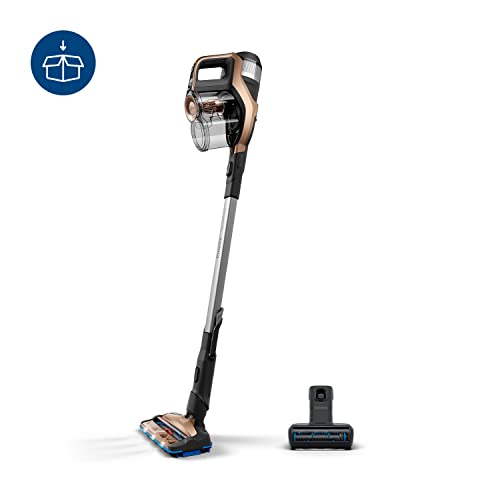
Philips SpeedPro Max FC6826/01 review: 53 specs compared

Avg. price:~£270Suction power (AW):120 AWBattery runtime:65 minutesCapacity:0.6 LWeight:2.73 kg

Philips SpeedPro Max FC6826/01 Review: Compare 53 technical specifications and 1 expert reviews to see how this product ranks in the Vacuum Cleaners category and whether it is worth buying.
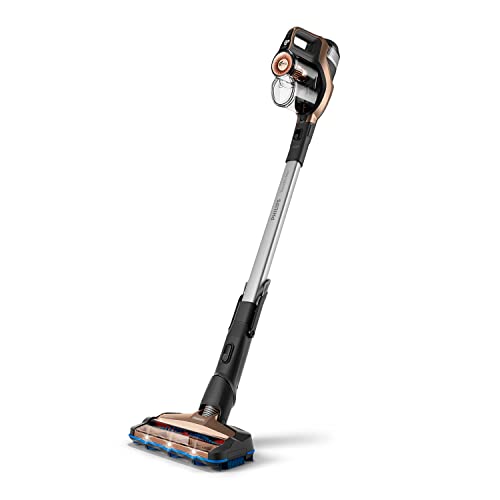
Philips SpeedPro Max FC6826/01
7.2/10

Overall score

Score
7.2/ 10
✕
What it is
Our main score for this model, 1–10. It combines specs, expert reviews, best-of lists and owners.
How we count it
Parts: Technical score 50%, Reviews score 25%, List score 20%, Sentiment score 5%
Marks: Each part gets a mark out of 10. For reviews, lists and owners, a typical model in this category gets about 8 and the best one gets 10.
No data yet: A part with no data shows "?". It counts as the mark of a weaker model in this category (4 in 5 models with data score higher). This way, models with reviews, lists and owners usually come out ahead.
Score distribution
â–¼
<55-66-77-88-99-10
Score components

50%

7.0

Technical score

25%

7.4

Reviews score

20%

?

List scoreNot enough data yet, so we use 7.5, the mark of a weaker model in this category

5%

?

Sentiment scoreNot enough data yet, so we use 7.0, the mark of a weaker model in this category

â–²Better than 60% of vacuum cleaners
7.8

Value for money

Value for money
7.8/ 10
✕
What it is
An indicator that combines the vacuum cleaner's overall score with its price.
When it matters
When you are looking for a vacuum cleaner with a good balance between quality and price.
Score distribution
â–¼
<55-66-77-88-99-10
Score components

70%

7.2

Overall score

30%

9.1

Price

â–¼Worse than 60%
7.0

Technical score

Technical score
7.0/ 10
✕
What it is
How good the specs are compared with the other models in this category, 1–10.
How we count it
Areas: We rate the specs in each area against the other models in this category.
Weighting: The areas that matter most to buyers count more. The shares are shown under Score components.
Share: The technical score is 50% of the overall score.
Score distribution
â–¼
<55-66-77-88-99-10
Score components

28%

6.0

Performance

22%

7.6

Battery

18%

7.4

Filtration

14%

7.6

Attachments

10%

7.4

Design

8%

6.1

Smart features

â–²Better than 66%
7.4

Reviews score

Reviews score
7.4/ 10
✕
What it is
Average grade from independent test sites, magazines and video reviewers, 1–10.
How we count it
Grades: Each review's own score is converted to 1–10; without one, we grade the review ourselves. Big test sites count more, short reviews half as much as full tests. A video review counts half.
Score: The average grade is 80% of the review mark; the number of reviews is the other 20% (1 review = 5, the typical number in this category = 8, the most-reviewed model = 10).
Enough data: With few reviews, the average grade is pulled toward the typical grade of this category. No reviews yet: 7.4 for now.
Share: Reviews count 25% of the overall score.
Score distribution
â–¼
<55-66-77-88-99-10

80%

8.2

Average grade

20%

5.0

Popularity

Grades by review (1)
1 review, with a printed score. Reviews count 25% of the overall score.
User ratings collected online are not part of this score.
â–¼Worse than 87%
?

Sentiment score

Sentiment score
7.0/ 10
✕
What it is
How positive owners are about this model in their comments under video reviews and on forums. We read each comment, keep only people who say they own the model, and sort them into positive, mixed or negative.
How we count it
Score: We compare how satisfied this model’s owners are with the other models in this category: the typical model gets 8, the most satisfied tenth 10, the least satisfied 4. This is 80% of the owner mark; the number of owners is the other 20%.
Enough data: A model counts with 10+ owners from 4+ different discussions. With fewer, the owner part changes nothing.
Share: Owners count 5% of the overall score (left out in categories where fewer than 10 models have enough owner comments).
Score distribution
â–¼
<55-66-77-88-99-10
Owners (0)
Not enough owner comments yet (10+ owners from 4+ discussions needed), so the owner part changes nothing.
Our own analysis of online owner opinions, not a rating from any website.
Not enough owner comments yet
?

List score

List score
7.5/ 10
✕
What it is
How often independent test sites, magazines and video reviewers put this model in their best-of lists for this category.
How we count it
Points: The model in the most lists of this category gets 10; the others get 8 to 10 in proportion. In no list yet: 7.5. Lists count 20% of the overall score.
Enough data: Every list counts, even a single one. With fewer than 5 best-of lists in the category, this part is left out.
Lists with this model (0)
Not in any best-of list yet, so this part counts as 7.5. Models in a list get 8 to 10.
Not in any best-of list yet
Loading...
Loading category ranking...

Technical Specifications of vacuum cleaner Philips SpeedPro Max FC6826/01

Technical score
Technical score
7.0/ 10
✕
What it is
How good the specs are compared with the other models in this category, 1–10.
How we count it
Areas: We rate the specs in each area against the other models in this category.
Weighting: The areas that matter most to buyers count more. The shares are shown under Score components.
Share: The technical score is 50% of the overall score.
Score distribution
â–¼
<55-66-77-88-99-10
Score components:

28%

6.0

Performance

22%

7.6

Battery

18%

7.4

Filtration

14%

7.6

Attachments

10%

7.4

Design

8%

6.1

Smart features

7.0
Reviews score
7.4
Sentiment score
?
List score
?
Value for money
Value for money
7.8/ 10
✕
What it is
An indicator that combines the vacuum cleaner's overall score with its price.
When it matters
When you are looking for a vacuum cleaner with a good balance between quality and price.
Score distribution
â–¼
<55-66-77-88-99-10
Score components:

70%

7.2

Overall score

30%

9.1

Price

7.8
Suction power (AW)
120 AW
This vacuum cleaner has a suction power of 120 AW, which is lower than that of 64.1% of vacuum cleaners and equal to that of 4.3% of vacuum cleaners.
Suction power (kPa)
22 kPa
This vacuum cleaner has a suction pressure of 22 kPa, which is higher than that of 67.1% of vacuum cleaners and equal to that of 2.9% of vacuum cleaners.
Airflow
16.67 L/s
This vacuum cleaner delivers 16.67 L/s airflow, which is lower than that of 84.6% of vacuum cleaners and equal to that of 1% of vacuum cleaners.
Motor type
digital
Power consumption
900 W
This vacuum cleaner draws 900 W, which is higher than the power consumption of 87.9% of vacuum cleaners and equal to that of 5% of vacuum cleaners.
Show more
Cordless
yes
This vacuum cleaner works cordlessly. 51.2% of vacuum cleaners offer cordless operation.
Battery runtime
65 minutes
This vacuum cleaner offers a battery runtime of 65 minutes, which is longer than that of 80.8% of vacuum cleaners and equal to that of 2.3% of vacuum cleaners.
Charging time
5 hours
This vacuum cleaner charges in 5 hours, which is slower than 74.8% of vacuum cleaners and equal to 18.3% of vacuum cleaners.
Battery capacity
2,400 mAh
This vacuum cleaner has a battery capacity of 2,400 mAh, which is smaller than that of 56% of vacuum cleaners and equal to that of 2.1% of vacuum cleaners.
Battery voltage
25.2 V
This vacuum cleaner uses a battery voltage of 25.2 V, which is higher than that of 60.8% of vacuum cleaners and equal to that of 21.7% of vacuum cleaners.
Show more
Filter class
no certified class
This vacuum cleaner uses filter class no certified class, which is less advanced than the class used by 87.6% of vacuum cleaners and the same as the class used by 10.2% of vacuum cleaners.
Minimum overall efficiency
99%
This vacuum cleaner reaches 99% minimum overall efficiency, which is lower than that of 86.3% of vacuum cleaners and equal to that of 1.8% of vacuum cleaners.
Suitable for allergy sufferers
yes
This vacuum cleaner is suitable for allergy sufferers. 83.3% of vacuum cleaners are allergy-friendly.
Capacity
0.6 L
This vacuum cleaner has a dust capacity of 0.6 L, which is smaller than that of 68.2% of vacuum cleaners and equal to that of 6.4% of vacuum cleaners.
Bagless
yes
This vacuum cleaner uses a bagless design. 78.8% of vacuum cleaners use this setup.
Show more
Main brush type
roll brush
Roller type
bristled
Anti-tangle brush
no
This vacuum cleaner does not include an anti-tangle brush. 30% of vacuum cleaners include this feature.
Mini motorized brush
yes
This vacuum cleaner includes a mini motorized brush. 25.4% of vacuum cleaners include this attachment.
Suitable for pet owners
yes
This vacuum cleaner is suitable for pet owners. 75% of vacuum cleaners handle pet hair well.
Show more
Vacuum type
stick
Weight
2.73 kg
This vacuum cleaner weighs 2.73 kg, which is lower than the weight of 70.5% of vacuum cleaners and equal to that of 0.3% of vacuum cleaners.
2-in-1 design
yes
This vacuum cleaner offers a 2-in-1 design. 51.6% of vacuum cleaners offer this flexible format.
Self-standing
no
This vacuum cleaner does not stand on its own. 19.5% of vacuum cleaners offer this convenience.
Adjustable tube height
no
This vacuum cleaner does not include adjustable tube height. 46.1% of vacuum cleaners offer this ergonomic feature.
Show more
Auto suction adjustment
no
This vacuum cleaner does not support automatic suction adjustment. 22.3% of vacuum cleaners support this feature.
Dust particle sensor
no
This vacuum cleaner does not include a dust particle sensor. 9.5% of vacuum cleaners include this feature.
LED display
yes
This vacuum cleaner includes an LED display. 25.7% of vacuum cleaners include this interface feature.
Nozzle light
yes
This vacuum cleaner includes a nozzle light. 42.7% of vacuum cleaners include this visibility feature.
Mopping support
no
This vacuum cleaner does not support mopping. 8.4% of vacuum cleaners support this multi-function feature.

Philips SpeedPro Max FC6826/01 vs the average vacuum cleaner

246810TotalPerformanceBatteryFiltrationAttachmentsDesignSmart features
  • 15 minutes longer runtime
    This vacuum cleaner offers longer battery runtime than the average vacuum cleaner (65 minutes vs 50 minutes).
    65 minutes vs 50 minutes
  • Includes mini motorized brush
    This vacuum cleaner includes a mini motorized brush, the average vacuum cleaner does not.
  • 9 minutes longer turbo runtime
    This vacuum cleaner offers longer turbo runtime than the average vacuum cleaner (21 minutes vs 12 minutes).
    21 minutes vs 12 minutes
  • Includes nozzle light
    This vacuum cleaner includes a nozzle light, the average vacuum cleaner does not.
  • Includes LED display
    This vacuum cleaner includes an LED display, the average vacuum cleaner does not.
  • 124 mm wider cleaning path
    This vacuum cleaner has a wider cleaning path than the average vacuum cleaner (384 mm vs 260 mm).
    384 mm vs 260 mm
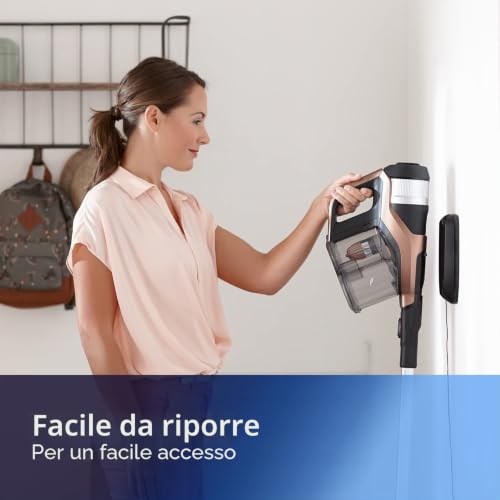
  • Includes wall bracket
    This vacuum cleaner includes a wall-mounted bracket, the average vacuum cleaner does not.
  • 2 kPa higher suction pressure
    This vacuum cleaner has higher suction pressure than the average vacuum cleaner (22 kPa vs 20 kPa).
    22 kPa vs 20 kPa
  • 124 mm wider cleaning path
    This vacuum cleaner has a wider cleaning path than the average vacuum cleaner (384 mm vs 260 mm).
    384 mm vs 260 mm
  • 2 kPa higher suction pressure
    This vacuum cleaner has higher suction pressure than the average vacuum cleaner (22 kPa vs 20 kPa).
    22 kPa vs 20 kPa
  • 1 more power levels
    This vacuum cleaner offers more speed levels than the average vacuum cleaner (3 vs 2).
    3 vs 2
  • 15 minutes longer runtime
    This vacuum cleaner offers longer battery runtime than the average vacuum cleaner (65 minutes vs 50 minutes).
    65 minutes vs 50 minutes
  • 9 minutes longer turbo runtime
    This vacuum cleaner offers longer turbo runtime than the average vacuum cleaner (21 minutes vs 12 minutes).
    21 minutes vs 12 minutes
  • Includes battery indicator
    This vacuum cleaner includes a battery level indicator, the average vacuum cleaner does not.
  • 3.2 V higher voltage
    This vacuum cleaner has a higher battery voltage than the average vacuum cleaner (25.2 V vs 22 V).
    25.2 V vs 22 V
  • Includes mini motorized brush
    This vacuum cleaner includes a mini motorized brush, the average vacuum cleaner does not.
  • Includes wall bracket
    This vacuum cleaner includes a wall-mounted bracket, the average vacuum cleaner does not.
  • 26.2% lower weight
    This vacuum cleaner is lighter than the average vacuum cleaner (2.7 kg vs 3.7 kg).
    2.73 kg vs 3.7 kg
  • 103 mm shallower body
    This vacuum cleaner is less deep than the average vacuum cleaner (165 mm vs 268 mm).
    165 mm vs 268 mm
  • Includes nozzle light
    This vacuum cleaner includes a nozzle light, the average vacuum cleaner does not.
  • Includes LED display
    This vacuum cleaner includes an LED display, the average vacuum cleaner does not.
  • Louder operation
    This vacuum cleaner is noisier than the average vacuum cleaner (84-84 dB vs 77-77 dB).
    84-84 dB vs 77-77 dB
  • 1 hours slower charging
    This vacuum cleaner charges slower than the average vacuum cleaner (5 hours vs 4 hours).
    5 hours vs 4 hours
  • 0.95 % lower filtration efficiency
    This vacuum cleaner has lower filtration efficiency than the average vacuum cleaner (99 % vs 99.95 %).
    99 % vs 99.95 %
  • Lower filter class
    This vacuum cleaner uses a lower filter class than the average vacuum cleaner (no certified class vs hepa).
    no certified class vs hepa
  • No upholstery nozzle
    This vacuum cleaner does not include an upholstery nozzle, the average vacuum cleaner does.
  • 30 AW lower suction power
    This vacuum cleaner has lower suction power than the average vacuum cleaner (120 AW vs 150 AW).
    120 AW vs 150 AW
  • 0.3 L smaller dust container
    This vacuum cleaner has a smaller dust capacity than the average vacuum cleaner (0.6 L vs 0.9 L).
    0.6 L vs 0.9 L
  • 320 W higher power consumption
    This vacuum cleaner draws more power than the average vacuum cleaner (900 W vs 580 W).
    900 W vs 580 W
  • 92.9% more expensive
    Philips SpeedPro Max FC6826/01 is more expensive than the average vacuum cleaner (£270 vs £140).
    £270 vs £140
  • 5.1% lower review score
    Reviews score
    7.4/ 10
    ✕
    What it is
    Average grade from independent test sites, magazines and video reviewers, 1–10.
    How we count it
    Grades: Each review's own score is converted to 1–10; without one, we grade the review ourselves. Big test sites count more, short reviews half as much as full tests. A video review counts half.
    Score: The average grade is 80% of the review mark; the number of reviews is the other 20% (1 review = 5, the typical number in this category = 8, the most-reviewed model = 10).
    Enough data: With few reviews, the average grade is pulled toward the typical grade of this category. No reviews yet: 7.4 for now.
    Share: Reviews count 25% of the overall score.
    Score distribution
    â–¼
    <55-66-77-88-99-10

    80%

    8.2

    Average grade

    20%

    5.0

    Popularity

    Grades by review (1)
    1 review, with a printed score. Reviews count 25% of the overall score.
    User ratings collected online are not part of this score.
    7.4 vs 7.8
  • Louder operation
    This vacuum cleaner is noisier than the average vacuum cleaner (84-84 dB vs 77-77 dB).
    84-84 dB vs 77-77 dB
  • 30 AW lower suction power
    This vacuum cleaner has lower suction power than the average vacuum cleaner (120 AW vs 150 AW).
    120 AW vs 150 AW
  • 320 W higher power consumption
    This vacuum cleaner draws more power than the average vacuum cleaner (900 W vs 580 W).
    900 W vs 580 W
  • Older release date
    This vacuum cleaner has an older release date than the average vacuum cleaner (2018 vs 2021).
    Released in April 2018.
    2018 vs 2021
  • 1 hours slower charging
    This vacuum cleaner charges slower than the average vacuum cleaner (5 hours vs 4 hours).
    5 hours vs 4 hours
  • 100 mAh smaller battery capacity
    This vacuum cleaner has a smaller battery capacity than the average vacuum cleaner (2,400 mAh vs 2,500 mAh).
    2,400 mAh vs 2,500 mAh
  • 0.95 % lower filtration efficiency
    This vacuum cleaner has lower filtration efficiency than the average vacuum cleaner (99 % vs 99.95 %).
    99 % vs 99.95 %
  • Lower filter class
    This vacuum cleaner uses a lower filter class than the average vacuum cleaner (no certified class vs hepa).
    no certified class vs hepa
  • 0.3 L smaller dust container
    This vacuum cleaner has a smaller dust capacity than the average vacuum cleaner (0.6 L vs 0.9 L).
    0.6 L vs 0.9 L
  • No upholstery nozzle
    This vacuum cleaner does not include an upholstery nozzle, the average vacuum cleaner does.
  • 118 mm wider body
    This vacuum cleaner is wider than the average vacuum cleaner (384 mm vs 266 mm).
    384 mm vs 266 mm

Video reviews

Hands-on testing, unboxing, and real-world video evaluations

Not graded

Expert reviews

In-depth analysis and verdict from leading tech publications
9.0
techadvisor.com
✓ explicit
22/11/2018
Hands-on test · Cordless stick vacuum
Verdict
The Philips SpeedPro Max is a well-built cordless vacuum that cleans well, but its main brush skips on carpets and it comes with few extra tools.

Third-party reviews

What customers like about Philips SpeedPro Max FC6826/01

  • Powerful and consistent suction performance across carpets and hard floors
  • Effective 360-degree suction nozzle that captures dirt from all sides
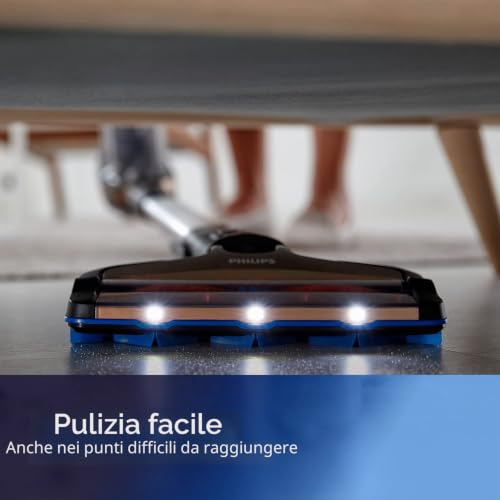
  • Highly practical integrated LED headlights that reveal hidden dust
  • Long battery life in eco mode, capable of cleaning large apartments on a single charge
  • Convenient digital display that shows real-time battery percentage
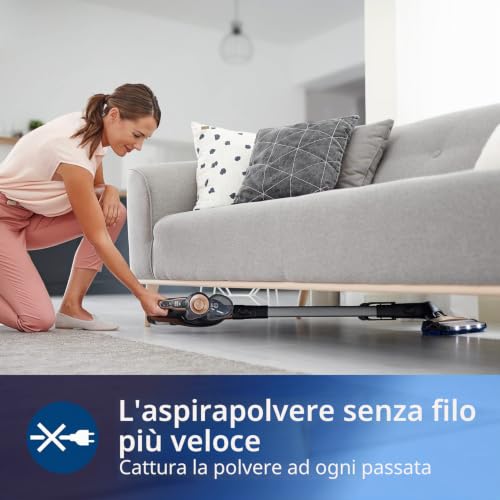
  • Flexible design that goes flat to easily clean under low furniture
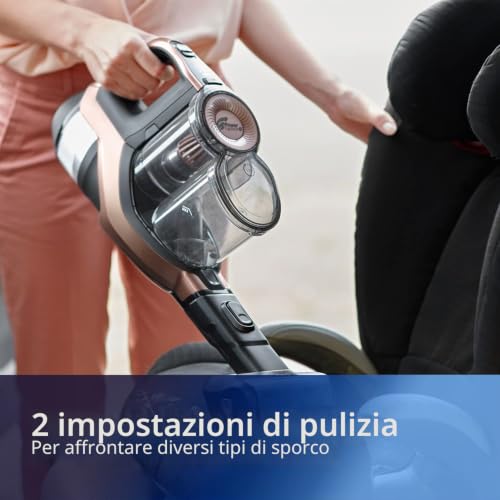
  • Seamless conversion into a lightweight handheld vacuum with integrated click-on accessories
  • Easy and hygienic emptying mechanism for the dust container

What customers don't like about Philips SpeedPro Max FC6826/01

  • The floorhead tends to judder or skip when dragged backward on carpets
  • The battery is built-in and difficult or costly to replace independently after the warranty expires
  • The 0.6-litre dust container capacity is relatively small and requires frequent emptying
  • Can feel heavy or tiring to hold during extended, hour-long cleaning sessions
  • Long charging time of over four hours to reach a full 100% charge
  • Some long-term users reported premature motor or brush failures requiring repairs
  • Premium pricing makes it a significant investment compared to standard corded models

Verdict

The Philips SpeedPro Max FC6826/01 is a cordless 2-in-1 stick and handheld vacuum cleaner powered by a 25.2V lithium-ion battery, a PowerBlade digital motor delivering over 1000 L/min of airflow, and bagless PowerCyclone 8 technology. Its standout feature is a 360-degree suction nozzle equipped with integrated LED lights that capture dirt from all sides with every stroke on both hard floors and carpets. Key pros include an impressive runtime of up to 65 minutes in Eco mode (21 minutes in Turbo mode), a smart digital display for speed and real-time battery tracking, and a lightweight 2.73 kg build that easily reaches under low furniture. However, notable cons include an unoptimized top-heavy weight distribution that can cause hand fatigue during long sessions, long hairs easily tangling around the rotating brush roll, and a relatively long 5-hour full recharge time.

Compare Philips SpeedPro Max FC6826/01 with other vacuum cleaners

1Product to compare no. 1
VS
2Product to compare no. 2
VS
3Product to compare no. 3 (optional)

Graphic comparison of Philips SpeedPro Max FC6826/01 and other vacuum cleaners

No results found