Scored using Tablets Methodology v3.0
Tablets Methodology v3.0
Mathematical & Unbiased Scoring
Products in this category are scored under Frontum Tablets Methodology v3.0: the technical score from the specifications is the base, and independent expert and video reviews (up to ±0.5 points), owner opinions (up to ±0.3) and best-of lists (up to +0.3) move it up or down.
Explore Tablets Methodology v3.0

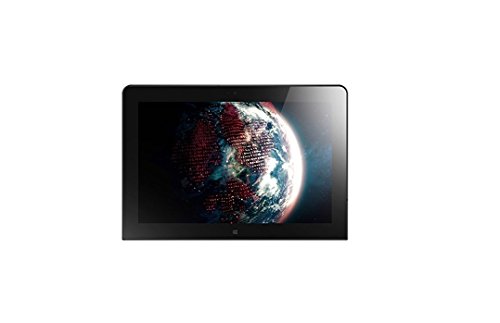
Lenovo ThinkPad 3G (1GB + 64GB) review: 168 specs compared

Avg. price:~£140RAM capacity:1 GBInternal storage:64 GBScreen size:10.1 inchesChipset:Nvidia Tegra 2

Lenovo ThinkPad 3G (1GB + 64GB) Review: Compare 168 technical specifications and 11 expert and video reviews to see how this product ranks in the Tablets category and whether it is worth buying.

6.0/10

Overall score

Score
6.0/ 10
✕
What it is
Our main score for this model, 1–10. It combines specs, best-of lists, expert reviews and owners.
How we count it
Parts: Technical score 35%, List score 30%, Reviews score 25%, Sentiment score 10%
Marks: Each part gets a mark out of 10. For reviews, lists and owners, a typical model in this category gets about 8 and the best one gets 10.
No data yet: A part with no data shows "?". It counts as the mark of a weaker model in this category (4 in 5 models with data score higher). This way, models with reviews, lists and owners usually come out ahead.
Score distribution
â–¼
<55-66-77-88-99-10
Score components

35%

5.1

Technical score

30%

?

List scoreNot enough data yet, so we use 7.5, the mark of a weaker model in this category

25%

5.1

Reviews score

10%

?

Sentiment scoreNot enough data yet, so we use 6.9, the mark of a weaker model in this category

â–¼Worse than 87% of tablets
7.1

Value for money

Value for money
7.1/ 10
✕
What it is
An indicator that combines the tablet's overall rating with its cost.
When it matters
When you are looking for a tablet with a good balance between quality and price.
Score distribution
â–¼
<55-66-77-88-99-10
Score components

70%

6.0

Overall score

30%

9.8

Price

â–¼Worse than 78%
5.1

Technical score

Technical score
5.1/ 10
✕
What it is
How good the specs are compared with the other models in this category, 1–10.
How we count it
Areas: We rate the specs in each area against the other models in this category.
Weighting: The areas that matter most to buyers count more. The shares are shown under Score components.
Share: The technical score is 35% of the overall score.
Score distribution
â–¼
<55-66-77-88-99-10
Score components

22%

4.0

Performance

20%

5.7

Display

16%

5.6

Camera

14%

3.1

Battery

12%

6.2

Connectivity

8%

7.2

Software

5%

4.6

Design

3%

5.5

Audio

â–¼Worse than 85%
5.1

Reviews score

Reviews score
5.1/ 10
✕
What it is
Average grade from independent test sites, magazines and video reviewers, 1–10.
How we count it
Grades: Each review's own score is converted to 1–10; without one, we grade the review ourselves. Big test sites count more, short reviews half as much as full tests. A video review counts half.
Score: The average grade is 80% of the review mark; the number of reviews is the other 20% (1 review = 5, the typical number in this category = 8, the most-reviewed model = 10).
Enough data: With few reviews, the average grade is pulled toward the typical grade of this category. No reviews yet: 7.4 for now.
Share: Reviews count 25% of the overall score.
Score distribution
â–¼
<55-66-77-88-99-10

5.1

Mark 7.5 is below the typical mark 7.8 of this category, so it cannot lift the score above the technical score

80%

7.4

Average grade

20%

7.8

Popularity

Grades by review (11)
10 reviews: 6 with a printed score, 4 estimated from the review. 1 video review, counting half as much as a written test. Reviews count 25% of the overall score.
User ratings collected online are not part of this score.
â–¼Worse than 88%
?

List score

List score
7.5/ 10
✕
What it is
How often independent test sites, magazines and video reviewers put this model in their best-of lists for this category.
How we count it
Points: The model in the most lists of this category gets 10; the others get 8 to 10 in proportion. In no list yet: 7.5. Lists count 30% of the overall score.
Enough data: Every list counts, even a single one. With fewer than 5 best-of lists in the category, this part is left out.
Lists with this model (0)
Not in any best-of list yet, so this part counts as 7.5. Models in a list get 8 to 10.
Not in any best-of list yet
  • No image
No image
Where to buy
    N/A~ £140
Other versions:
1GB + 64GB1GB + 32GB

What reviewers say about the Lenovo ThinkPad 3G (1GB + 64GB)

Based on 10 · 1

Reviewers like the precise stylus and useful ports, but complain about sluggish software, short battery life and noticeable weight.
Praised
Mixed views
Criticised
Pick a topic to see who said what
Loading...
Loading category ranking...

Technical Specifications of tablet Lenovo ThinkPad 3G (1GB + 64GB)

Technical score
Technical score
5.1/ 10
✕
What it is
How good the specs are compared with the other models in this category, 1–10.
How we count it
Areas: We rate the specs in each area against the other models in this category.
Weighting: The areas that matter most to buyers count more. The shares are shown under Score components.
Share: The technical score is 35% of the overall score.
Score distribution
â–¼
<55-66-77-88-99-10
Score components:

22%

4.0

Performance

20%

5.7

Display

16%

5.6

Camera

14%

3.1

Battery

12%

6.2

Connectivity

8%

7.2

Software

5%

4.6

Design

3%

5.5

Audio

5.1
Reviews score
5.1
List score
?
Value for money
Value for money
7.1/ 10
✕
What it is
An indicator that combines the tablet's overall rating with its cost.
When it matters
When you are looking for a tablet with a good balance between quality and price.
Score distribution
â–¼
<55-66-77-88-99-10
Score components:

70%

6.0

Overall score

30%

9.8

Price

7.1
RAM capacity
1 GB
This tablet has 1 GB of RAM, which is less than 78% of tablets and equal to 19.1% of tablets.
Process node
40 nm
This tablet is built on a 40 nm process, which is larger than 86.9% of tablets and equal to 8% of tablets.
Internal storage
64 GB
This tablet has 64 GB of internal storage, which is more than 39.1% of tablets and equal to 17% of tablets.
Geekbench 6 single-core score
?
Chipset
Nvidia Tegra 2
This tablet runs on Nvidia Tegra 2, which is less advanced than 73.1% of tablets and equal to 0.3% of tablets.
Show more
What reviewers say
Screen resolution
1280×800
This tablet has a 1280×800 screen, which is less sharp than 68.1% of tablets and equal to 21.7% of tablets.
Refresh rate
60 Hz
This tablet has a 60 Hz screen, which is smoother than 0.1% of tablets and equal to 73.4% of tablets.
Display type
IPS LCD
This tablet uses a IPS LCD display type. 17% of tablets use this display technology.
Pixel density
149 ppi
This tablet has a pixel density of 149 ppi, which is lower than 86.8% of tablets and equal to 9.2% of tablets.
Display glass type
Corning Gorilla Glass
This tablet protects its screen with Corning Gorilla Glass, which is more durable than 45.4% of tablets and the same as 32.8% of tablets.
Show more
What reviewers say
Optical image stabilization
no
This tablet does not support optical stabilisation. 0.4% of tablets offer this.
Main camera megapixels
?
Front camera megapixels
2 MP
This tablet has a front camera with 2 MP resolution, which is lower than 53.8% of tablets and equal to 25.5% of tablets.
Main camera aperture
N/A
Optical zoom
1xxx
This tablet has 1xx optical zoom, which is stronger than 18.2% of tablets and equal to 80.9% of tablets.
Show more
Battery capacity
3,250 mAh
This tablet has 3,250 mAh battery capacity, which is smaller than 95.1% of tablets and equal to 0.5% of tablets.
Charging speed
10 W
This tablet charges at 10 W, which is slower than 60.9% of tablets and equal to 33.3% of tablets.
Battery life
8 hours
This tablet has a battery life of 8 hours, which is shorter than that of 72.2% of tablets and equal to that of 11.9% of tablets.
Wireless charging
no
This tablet does not support wireless charging. 1.5% of tablets offer this.
Fast charging
no
This tablet does not support fast charging. 56.9% of tablets offer this.
Show more
What reviewers say
LTE support
no
This tablet does not have built-in LTE. 42.9% of tablets offer this.
Wi-Fi connectivity
yes
This tablet connects to Wi-Fi. 0.2% of tablets offer this.
GPS
yes
This tablet has built-in GPS. 17.1% of tablets offer this.
5G connectivity
no
This tablet does not support 5G. 8.1% of tablets offer this.
NFC
yes
This tablet includes NFC. 89.3% of tablets offer this.
Show more
Operating system
Windows
This tablet uses the Windows operating system, which is less advanced than the one used by 84.2%.
Update support duration
long
This tablet offers long update support, which is longer than the support period of 80% of tablets and equal to that of 20% of tablets.
Direct OS updates
yes
This tablet supports direct OS updates. 20.3% of tablets offer this.
On-device AI
no
This tablet does not support on-device AI. 28.3% of tablets support this capability.
App tracking protection
no
This tablet does not support app tracking protection. 28.4% of tablets offer this.
Show more
IP rating
not rated
This tablet's IP rating is not rated, which is less protected than 16.5% of tablets and the same as 83.6% of tablets.
Weight
730 g
This tablet weighs 730 g, which is heavier than 89.5% of tablets and equal to 0.6% of tablets.
Backlit keyboard
no
This tablet does not support a backlit keyboard. 9.7% of tablets support backlit keyboards.
Keyboard accessory
yes
This tablet supports a keyboard accessory. 15.8% of tablets support this option.
Pen latency
?
Show more
What reviewers say
Number of microphones
?
aptX Adaptive
no
This tablet does not support aptX Adaptive. 6.9% of tablets offer this.
Dolby Atmos support
no
This tablet does not support Dolby Atmos. 31.3% of tablets support Dolby Atmos.
N. of speakers
2
This tablet includes 2 speakers, which is more than in 9.8% of tablets and equal to the number in 60.8% of tablets.
FM radio
no
This tablet does not include an FM radio. 19% of tablets offer this.
Show more

Lenovo ThinkPad 3G (1GB + 64GB) vs the average tablet

246810TotalPerformanceDisplayCameraBatteryConnectivitySoftwareDesignAudio
  • Longer update support
    This tablet offers longer update support than the average tablet (long vs medium). The average tablet gets medium of update support.
    long vs medium
  • Includes NFC
    This tablet includes NFC, while the average tablet does not. 10.8% of tablets include NFC.
  • Monitors battery health
    This tablet monitors battery health, while the average tablet does not. 36.7% of tablets monitor battery health.
  • Supports cellular data
    This tablet supports cellular data, while the average tablet does not. 47.4% of tablets offer this.
  • More advanced chipset
    This tablet has a more advanced chipset than the average tablet (Nvidia Tegra 2 vs MediaTek MT8169A).
    Nvidia Tegra 2 vs MediaTek MT8169A
  • Supports HDMI output
    This tablet supports HDMI output, while the average tablet does not. 49.8% of tablets offer this.
    mini-HDMI port
  • 4 more GPU execution units
    This tablet has more GPU execution units than the average tablet (8 vs 4). The average tablet has 4 GPU execution units.
    8 vs 4
  • 85.7% cheaper
    Lenovo ThinkPad 3G (1GB + 64GB) is cheaper than the average tablet (£140 vs £260).
    £140 vs £260
  • 85.7% cheaper
    Lenovo ThinkPad 3G (1GB + 64GB) is cheaper than the average tablet (£140 vs £260).
    £140 vs £260
  • More advanced chipset
    This tablet has a more advanced chipset than the average tablet (Nvidia Tegra 2 vs MediaTek MT8169A).
    Nvidia Tegra 2 vs MediaTek MT8169A
  • 4 more GPU execution units
    This tablet has more GPU execution units than the average tablet (8 vs 4). The average tablet has 4 GPU execution units.
    8 vs 4
  • Monitors battery health
    This tablet monitors battery health, while the average tablet does not. 36.7% of tablets monitor battery health.
  • Includes NFC
    This tablet includes NFC, while the average tablet does not. 10.8% of tablets include NFC.
  • Supports cellular data
    This tablet supports cellular data, while the average tablet does not. 47.4% of tablets offer this.
  • Supports HDMI output
    This tablet supports HDMI output, while the average tablet does not. 49.8% of tablets offer this.
    mini-HDMI port
  • Longer update support
    This tablet offers longer update support than the average tablet (long vs medium). The average tablet gets medium of update support.
    long vs medium
  • 6 fewer CPU threads
    This tablet has fewer CPU threads than the average tablet (2 vs 8). The average tablet has 8 CPU threads.
    2 vs 8
  • No USB-C port
    This tablet does not have a USB Type-C port, while the average tablet does. 54% of tablets have one.
  • 27.1% lower review score
    Reviews score
    5.1/ 10
    ✕
    What it is
    Average grade from independent test sites, magazines and video reviewers, 1–10.
    How we count it
    Grades: Each review's own score is converted to 1–10; without one, we grade the review ourselves. Big test sites count more, short reviews half as much as full tests. A video review counts half.
    Score: The average grade is 80% of the review mark; the number of reviews is the other 20% (1 review = 5, the typical number in this category = 8, the most-reviewed model = 10).
    Enough data: With few reviews, the average grade is pulled toward the typical grade of this category. No reviews yet: 7.4 for now.
    Share: Reviews count 25% of the overall score.
    Score distribution
    â–¼
    <55-66-77-88-99-10

    5.1

    Mark 7.5 is below the typical mark 7.8 of this category, so it cannot lift the score above the technical score

    80%

    7.4

    Average grade

    20%

    7.8

    Popularity

    Grades by review (11)
    10 reviews: 6 with a printed score, 4 estimated from the review. 1 video review, counting half as much as a written test. Reviews count 25% of the overall score.
    User ratings collected online are not part of this score.
    5.1 vs 7.0
  • 3 GB less RAM
    This tablet has less RAM than the average tablet (1 GB vs 4 GB). The average tablet has 4 GB of RAM.
    1 GB vs 4 GB
  • 50% lower CPU speed
    This tablet has a lower CPU speed than the average tablet (1 GHz vs 2 GHz). The average tablet has CPU speed of 2 GHz.
    1 GHz vs 2 GHz
  • 50.8% smaller battery capacity
    This tablet has a smaller battery capacity than the average tablet (3,250 mAh vs 6,600 mAh). The average tablet offers 6,600 mAh of battery capacity.
    3,250 mAh vs 6,600 mAh
  • More basic graphics
    This tablet has less advanced graphics than the average tablet (ULP GeForce vs Mali-G51).
    ULP GeForce vs Mali-G51
  • No fast charging
    This tablet does not support fast charging, while the average tablet does. 56.8% of tablets support fast charging.
  • 27.1% lower review score
    Reviews score
    5.1/ 10
    ✕
    What it is
    Average grade from independent test sites, magazines and video reviewers, 1–10.
    How we count it
    Grades: Each review's own score is converted to 1–10; without one, we grade the review ourselves. Big test sites count more, short reviews half as much as full tests. A video review counts half.
    Score: The average grade is 80% of the review mark; the number of reviews is the other 20% (1 review = 5, the typical number in this category = 8, the most-reviewed model = 10).
    Enough data: With few reviews, the average grade is pulled toward the typical grade of this category. No reviews yet: 7.4 for now.
    Share: Reviews count 25% of the overall score.
    Score distribution
    â–¼
    <55-66-77-88-99-10

    5.1

    Mark 7.5 is below the typical mark 7.8 of this category, so it cannot lift the score above the technical score

    80%

    7.4

    Average grade

    20%

    7.8

    Popularity

    Grades by review (11)
    10 reviews: 6 with a printed score, 4 estimated from the review. 1 video review, counting half as much as a written test. Reviews count 25% of the overall score.
    User ratings collected online are not part of this score.
    5.1 vs 7.0
  • 6.1% worse value for money
    Lenovo ThinkPad 3G (1GB + 64GB) has worse value for money than the average tablet (7.12 vs 7.6).
    7.12 vs 7.55
  • 6 fewer CPU threads
    This tablet has fewer CPU threads than the average tablet (2 vs 8). The average tablet has 8 CPU threads.
    2 vs 8
  • 3 GB less RAM
    This tablet has less RAM than the average tablet (1 GB vs 4 GB). The average tablet has 4 GB of RAM.
    1 GB vs 4 GB
  • 50% lower CPU speed
    This tablet has a lower CPU speed than the average tablet (1 GHz vs 2 GHz). The average tablet has CPU speed of 2 GHz.
    1 GHz vs 2 GHz
  • More basic graphics
    This tablet has less advanced graphics than the average tablet (ULP GeForce vs Mali-G51).
    ULP GeForce vs Mali-G51
  • 2.86x larger process node
    This tablet has a larger process node than the average tablet (40 nm vs 14 nm). The average tablet is built on 14 nm.
    40 nm vs 14 nm
  • 1,266 MHz slower RAM speed
    This tablet has a lower RAM speed than the average tablet (600 MHz vs 1,866 MHz). The average tablet has RAM speed of 1,866 MHz.
    600 MHz vs 1,866 MHz
  • 82.1% less memory bandwidth
    This tablet has less memory bandwidth than the average tablet (2.7 GB/s vs 14.9 GB/s). The average tablet has 14.9 GB/s of memory bandwidth.
    2.66 GB/s vs 14.9 GB/s
  • No big.LITTLE architecture
    This tablet does not support big.LITTLE architecture, while the average tablet does. 51.7% of tablets support big.LITTLE architecture.
  • 48.8% slower GPU clock
    This tablet runs its GPU slower than the average tablet (333 MHz vs 650 MHz). The average tablet runs its GPU at 650 MHz.
    333 MHz vs 650 MHz
  • 8 years older
    This tablet was released earlier than the average tablet (2011 vs 2019). The average tablet was released in 2019.
    August 2011
    2011 vs 2019
  • More basic memory type
    This tablet uses less advanced memory than the average tablet (LPDDR2 vs LPDDR3).
    LPDDR2 vs LPDDR3
  • 32.6% softer screen detail
    This tablet has softer screen detail than the average tablet (149 ppi vs 221 ppi). The average tablet has a pixel density of 221 ppi.
    149 ppi vs 221 ppi
  • Less sharp display
    This tablet has a less sharp screen than the average tablet (1280×800 vs 1920×1200).
    1,280×800 vs 1,920×1,200
  • Less vivid contrast
    This tablet has less contrast than the average tablet (1000:1 vs 1015:1). The average tablet has a contrast ratio of 1015:1.
    1,000:1 vs 1,015:1
  • 3 MP lower front resolution
    This tablet has a lower-resolution front camera than the average tablet (2 MP vs 5 MP). The average tablet has a front camera of 5 MP.
    2 MP vs 5 MP
  • No continuous video AF
    This tablet does not support continuous video AF, the average tablet does. 57.7% of tablets support continuous video autofocus.
  • Worse main-camera video
    This tablet supports worse main-camera video recording than the average tablet (720x30 fps vs 1080x30 fps). The average tablet supports 1080x30 fps main-camera video recording.
    720x30 fps vs 1080x30 fps
  • No HDR photo mode
    This tablet does not have HDR photo mode, the average tablet does. 79.8% of tablets support HDR photo mode.
  • No manual white balance
    This tablet does not support manual white balance, while the average tablet does. 51.5% of tablets support manual white balance.
  • No burst mode
    This tablet does not support burst mode, the average tablet does. 60.6% of tablets support burst mode.
  • No backside-illuminated sensor
    This tablet does not have a BSI sensor, while the average tablet does. 52.6% of tablets have a BSI sensor.
  • No timelapse video
    This tablet does not support timelapse video, while the average tablet does. 57.5% of tablets support timelapse video.
  • 50.8% smaller battery capacity
    This tablet has a smaller battery capacity than the average tablet (3,250 mAh vs 6,600 mAh). The average tablet offers 6,600 mAh of battery capacity.
    3,250 mAh vs 6,600 mAh
  • No fast charging
    This tablet does not support fast charging, while the average tablet does. 56.8% of tablets support fast charging.
  • 2 hours shorter battery life
    This tablet offers shorter battery life than the average tablet (8 hours vs 10 hours). The average tablet offers 10 hours of battery life.
    8 hours vs 10 hours
  • 44.4% slower charging
    This tablet charges slower than the average tablet (10 W vs 18 W). The average tablet charges at 18 W.
    10 W vs 18 W
  • No USB-C port
    This tablet does not have a USB Type-C port, while the average tablet does. 54% of tablets have one.
  • Older Bluetooth version
    This tablet has an older Bluetooth version than the average tablet (2 vs 5).
    2 vs 5
  • Older Wi-Fi standard
    This tablet has an older Wi-Fi standard than the average tablet (Wi-Fi 4 (802.11n) vs Wi-Fi 5 (802.11ac)).
    Wi-Fi 4 (802.11n) vs Wi-Fi 5 (802.11ac)
  • No face recognition
    This tablet does not have face recognition, the average tablet does. 56.4% of tablets support face recognition.
  • Less advanced operating system
    This tablet runs on a less advanced operating system than the average tablet (Windows vs Android). Operating system choice shapes app support, updates, and ecosystem features.
    Windows vs Android
  • No split-screen
    This tablet does not support split-screen, the average tablet does. 72.8% of tablets support split-screen.
  • No camera and mic privacy
    This tablet does not support camera and mic privacy, while the average tablet does. 56.6% of tablets offer this.
  • No full-page screenshots
    This tablet does not support full-page screenshots, the average tablet does. 53% of tablets support full-page screenshots.
  • No dark mode
    This tablet does not support dark mode, while the average tablet does. 57.7% of tablets offer this.
  • No offline voice recognition
    This tablet does not support offline voice recognition, the average tablet does. 76.4% of tablets support offline voice recognition.
  • 49% heavier
    This tablet is heavier than the average tablet (730 g vs 490 g). The average tablet weighs 490 g.
    730 g vs 490 g
  • 6 mm thicker
    This tablet is thicker than the average tablet (14 mm vs 8 mm). The average tablet is 8 mm thick.
    14 mm vs 8 mm
  • 84.7 mm wider
    This tablet is wider than the average tablet (260 mm vs 175.3 mm). The average tablet is 175.3 mm wide.
    260 mm vs 175.3 mm

Video reviews

Hands-on testing, unboxing, and real-world video evaluations

Not graded yet
Not graded yet
Not graded yet
Not graded yet
Not graded yet

Expert reviews

In-depth analysis and verdict from leading tech publications
4.0
itpro.com
✓ explicit
17/11/2011
Review · Android business tablet
Verdict
The Lenovo ThinkPad Tablet is a disappointing, sluggish Android tablet with few real business extras, so the iPad 2 or big-name Android rivals are the safer bet.
9.0
slashgear.com
≈ estimated
10/08/2012
Hands-on review · Pen tablet
Verdict
The ThinkPad Tablet is a decent pen-based tablet for business and students, but its extra business features matter only if you really need them.
8.0
trustedreviews.com
✓ explicit
09/01/2012
Hands-on review · Stylus tablet
Verdict
The Lenovo ThinkPad Tablet suits artists and business users thanks to its stylus and keyboard case, but it is chunky, heavy and not cheap.
4.0
itpro.com
✓ explicit
17/11/2011
Review · Android tablet
Verdict
The ThinkPad Tablet feels sturdy, but its sluggish interface gives few reasons to pick it over the iPad 2 or big-name Android tablets.
8.0
the-gadgeteer.com
≈ estimated
16/11/2011
Experience review · Pen tablet
Verdict
The ThinkPad Tablet suits note-takers and doodlers who want a pen, with Notes Mobile and Quill, though palm rejection and OCR still need work.
8.0
statetechmagazine.com
≈ estimated
23/12/2011
Review · Business tablet
Verdict
The ThinkPad Tablet suits schools and businesses that need IT control, with a pen and remote management, but it charges slowly with the bundled charger.
8.0
laptopmag.com
✓ explicit
22/09/2011
Lab test · Pen tablet
Verdict
The ThinkPad Tablet suits mobile professionals who take notes with its accurate pen, though its faint speaker and missing note search hold it back.
7.0
pcwelt.de
✓ explicit
29/11/2011
Hands-on test · Android business tablet
Verdict
The Lenovo ThinkPad Tablet is an Android tablet for fun and work, with pen input and a Keyboard Folio Case, but touch scrolling stutters.
9.0
connect.de
≈ estimated
24/05/2012
Test · Business tablet
Verdict
The Lenovo ThinkPad Tablet is a good pick for business, with useful hardware buttons and solid handwriting recognition, though it weighs 753g and its build quality is only average.
6.0
tweakers.net
✓ explicit
21/11/2011
Hands-on review · Business tablet
Verdict
The ThinkPad Tablet is only worth buying if you need its stylus, since it is heavy, sometimes slow and pricier than similar Tegra 2 tablets.

Third-party reviews

What customers like about Lenovo ThinkPad 3G (1GB + 64GB)

  • Integrated pressure-sensitive stylus (digitiser) for accurate note-taking and sketching
  • Extensive connectivity including a full-size USB port, mini-HDMI, and SD card slot
  • Rugged and durable build quality with a soft-touch, easy-grip finish
  • Strong IPS display with wide viewing angles and Gorilla Glass protection
  • Suite of pre-loaded business tools and security features like McAfee and Citrix
  • Physical hardware buttons for orientation lock and primary navigation

What customers don't like about Lenovo ThinkPad 3G (1GB + 64GB)

  • Noticeably heavy (715g+) and bulky compared to contemporary rivals
  • Occasional software lag and UI stuttering despite the dual-core processor
  • Subpar audio quality from speakers that are easily obstructed by hands or lap
  • Relatively expensive compared to other Android-based tablets of its era
  • Proprietary charging requirements (some models do not charge via standard micro-USB)
  • Fragile screen coating reported by some long-term users

Verdict

The original Lenovo ThinkPad Tablet (Model 1838) is a business-oriented 10.1-inch Android device featuring a 1280 x 800 IPS display, 1GB of RAM, and 64GB of internal storage, further expandable via a full-sized SD card slot. Powered by an ARM NVIDIA Tegra 2 dual-core 1.0GHz processor, it stands out for its robust connectivity, including a built-in 3G radio for mobile data, a full-size USB 2.0 port, mini-HDMI, and support for an optional pressure-sensitive digitizer pen. While its durable build and extensive port selection are significant pros, its primary cons include a relatively heavy and bulky chassis weighing approximately 750g and hardware that is now considered legacy for modern, demanding applications.

Compare Lenovo ThinkPad 3G (1GB + 64GB) with other tablets

1Product to compare no. 1
VS
2Product to compare no. 2
VS
3Product to compare no. 3 (optional)

Graphic comparison of Lenovo ThinkPad 3G (1GB + 64GB) and other tablets

No results found