Scored using Smartwatches Methodology v3.0
Smartwatches Methodology v3.0
Mathematical & Unbiased Scoring
Products in this category are scored under Frontum Smartwatches Methodology v3.0: the technical score from the specifications is the base, and independent expert and video reviews (up to ±0.5 points), owner opinions (up to ±0.3) and best-of lists (up to +0.3) move it up or down.
Explore Smartwatches Methodology v3.0

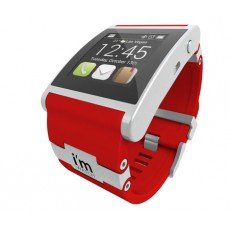
I'm Watch review: 127 specs compared

Avg. price:~£310Screen size:1.54 inchBattery life:5 daysDisplay type:TFT LCD

I'm Watch Review: Compare 127 technical specifications and 23 expert and video reviews to see how this product ranks in the Smartwatches category and whether it is worth buying.
I'm Watch
6.2/10

Overall score

Score
6.2/ 10
✕
What it is
Our main score for this model, 1–10. It combines specs, best-of lists, expert reviews and owners.
How we count it
Parts: Technical score 35%, List score 30%, Reviews score 25%, Sentiment score 10%
Marks: Each part gets a mark out of 10. For reviews, lists and owners, a typical model in this category gets about 8 and the best one gets 10.
No data yet: A part with no data shows "?". It counts as the mark of a weaker model in this category (4 in 5 models with data score higher). This way, models with reviews, lists and owners usually come out ahead.
Score distribution
▼
<55-66-77-88-99-10
Score components

35%

4.9

Technical score

30%

?

List scoreNot enough data yet, so we use 7.5, the mark of a weaker model in this category

25%

4.9

Reviews score

10%

10

Sentiment score

▼Worse than 81% of smartwatches
7.0

Value for money

Value for money
7.0/ 10
✕
What it is
An indicator that combines the smartwatch's overall rating with its cost.
When it matters
When you are looking for a smartwatch with a good balance between quality and price.
Score distribution
▼
<55-66-77-88-99-10
Score components

70%

6.2

Overall score

30%

8.9

Price

▼Worse than 90%
4.9

Technical score

Technical score
4.9/ 10
✕
What it is
How good the specs are compared with the other models in this category, 1–10.
How we count it
Areas: We rate the specs in each area against the other models in this category.
Weighting: The areas that matter most to buyers count more. The shares are shown under Score components.
Share: The technical score is 35% of the overall score.
Score distribution
▼
<55-66-77-88-99-10
Score components

24%

2.8

Health

21%

5.4

Fitness

16%

5.7

Battery

14%

4.8

Smart features

12%

6.0

Connectivity

9%

5.5

Display & Design

4%

6.0

Hardware

▼Worse than 88%
4.9

Reviews score

Reviews score
4.9/ 10
✕
What it is
Average grade from independent test sites, magazines and video reviewers, 1–10.
How we count it
Grades: Each review's own score is converted to 1–10; without one, we grade the review ourselves. Every review counts the same: written or video, short or full test.
Score: The average grade is 80% of the review mark; the number of reviews is the other 20% (1 review = 5, the typical number in this category = 8, the most-reviewed model = 10).
Enough data: With few reviews, the average grade is pulled toward the typical grade of this category. No reviews yet: 7.4 for now.
Share: Reviews count 25% of the overall score.
Score distribution
▼
<55-66-77-88-99-10

4.9

Mark 6.6 is below the typical mark 7.9 of this category, so it cannot lift the score above the technical score

80%

6.2

Average grade

20%

8.2

Popularity

Grades by review (23)
12 reviews + 11 videos, average 5.8/10. Reviews count 25% of the overall score.
User ratings collected online are not part of this score.
▼Worse than 91%
?

List score

List score
7.5/ 10
✕
What it is
How often independent test sites, magazines and video reviewers put this model in their best-of lists for this category.
How we count it
Points: The model in the most lists of this category gets 10; the others get 8 to 10 in proportion. In no list yet: 7.5. Lists count 30% of the overall score.
Enough data: Every list counts, even a single one. With fewer than 5 best-of lists in the category, this part is left out.
Lists with this model (0)
Not in any best-of list yet, so this part counts as 7.5. Models in a list get 8 to 10.
Not in any best-of list yet
  • i-m-watch
i-m-watch
Where to buy
*As an Amazon Associate, we earn from qualifying purchases.

What reviewers say about the I'm Watch

Based on 11 · 9

Reviewers like the solid build and handy call handling, but poor battery life, weak call quality and clunky messaging drag it down.
Praised
Mixed views
Criticised
Pick a topic to see who said what

What owners say about the I'm Watch

Based on 177 owners sharing their experience in online comments

69%positive9%mixed22%negative

Owners value the health alerts and everyday convenience, while limited battery life and frequent charging cause the most frustration.

What owners dislike

  • Always-on display, background health checks and sleep features drain the battery, so owners on long hikes turn always-on off or charge daily.20
  • Owners say updates often break features and take long to fix, and the watch can freeze, lag or crash.7
  • Owners say sleep data is often wrong, and metrics like training readiness and resting heart rate feel unreliable or too limited.6
  • Owners say it lacks dedicated sports features, such as heart-rate zones shown alongside pace, that serious runners want.6
  • Owners say constant heart monitoring and high or low readings cause worry, with some fixating on every reading.4
  • Owners dislike always-listening voice features, with Siri sending requests to the cloud, and feel the watch gathers too much personal data.4
  • Owners report water damage after swimming, costly repairs, and watches that wear out quickly under hard use such as construction work.4
  • Owners say topo maps are missing in some areas, a compass elevation bug appears, and following a GPX route has failed for some.3
  • Owners say advanced dive computer features in third-party apps need a paid subscription, which some find frustrating, though others call it worth it.3
  • Owners find notification controls limited, such as not being able to pick which apps notify them, and settings too complicated to change.3

Points mentioned by at least 3 owners, most mentioned first.

Loading...
Loading category ranking...

Technical Specifications of smartwatch I'm Watch

Technical score
Technical score
4.9/ 10
✕
What it is
How good the specs are compared with the other models in this category, 1–10.
How we count it
Areas: We rate the specs in each area against the other models in this category.
Weighting: The areas that matter most to buyers count more. The shares are shown under Score components.
Share: The technical score is 35% of the overall score.
Score distribution
▼
<55-66-77-88-99-10
Score components:

24%

2.8

Health

21%

5.4

Fitness

16%

5.7

Battery

14%

4.8

Smart features

12%

6.0

Connectivity

9%

5.5

Display & Design

4%

6.0

Hardware

4.9
Reviews score
4.9
List score
?
Value for money
Value for money
7.0/ 10
✕
What it is
An indicator that combines the smartwatch's overall rating with its cost.
When it matters
When you are looking for a smartwatch with a good balance between quality and price.
Score distribution
▼
<55-66-77-88-99-10
Score components:

70%

6.2

Overall score

30%

8.9

Price

7.0
Heart rate monitor
no
This smartwatch does not include a heart rate monitor. 90.7% of smartwatches include a heart rate monitor.
Blood oxygen monitoring
no
This smartwatch does not support blood oxygen monitoring. 69.7% of smartwatches support blood oxygen monitoring.
ECG
no
This smartwatch does not support ECG. 18.2% of smartwatches support ECG.
Irregular heart rate warnings
no
This smartwatch does not support irregular heart rate warnings. 50.6% of smartwatches support irregular heart rate warnings.
HRV tracking
?
Show more
Accelerometer
yes
This smartwatch includes an accelerometer. 0.5% of smartwatches include an accelerometer.
Barometer
no
This smartwatch does not include a barometer. 53.6% of smartwatches include a barometer.
Gyroscope
no
This smartwatch does not include a gyroscope. 71.3% of smartwatches include a gyroscope.
Cadence sensor
no
This smartwatch does not include a cadence sensor. 32.9% of smartwatches include a cadence sensor.
Distance tracking
yes
This smartwatch supports distance tracking. 3.7% of smartwatches support distance tracking.
Show more
Battery life
5 days
This smartwatch lasts 5 days on a charge, which is shorter than 65.9% of Smartwatches and the same as 6.1% of Smartwatches.
Up to 1-2 days standby.
Battery life in training mode
24 h
This smartwatch records workouts for 24 h on a charge, which is longer than 56.5% of Smartwatches and the same as 4.7% of Smartwatches.
Battery life with GPS on
?
Battery power
375 mAh
This smartwatch has a 375 mAh battery, which is larger than 67.6% of Smartwatches and the same as 0.1% of Smartwatches.
Charge time
60 min
This smartwatch charges from empty in 60 min, which is quicker than 83.8% of Smartwatches and the same as 12% of Smartwatches.
Show more
What reviewers say
Operating system
Android
This smartwatch runs Android, which is less advanced than the system in 96.3% of Smartwatches and equal to 1.3% of Smartwatches.
Software update frequency
ended
This smartwatch has ended software update support which is less active than that of 46.1% of smartwatches and equal to that of 53.9% of smartwatches.
Third-party app support
yes
This smartwatch supports third-party apps. 48.5% of smartwatches support third-party apps.
Notifications
yes
This smartwatch supports notifications. 0.3% of smartwatches support notifications.
Voice assistant support
no
This smartwatch does not support voice assistants. 69.3% of smartwatches support voice assistants.
Show more
What reviewers say
Cellular module
yes
This smartwatch includes a cellular module. 83.5% of smartwatches include a cellular module.
SIM cards
1
This smartwatch uses 1 for cellular connectivity which is more advanced than that of 2% of smartwatches and the same as that of 98% of smartwatches.
Nano-SIM
GPS
?
Galileo support
no
This smartwatch does not support Galileo navigation. 43.6% of smartwatches support Galileo navigation.
Dual-frequency GPS
no
This smartwatch does not support dual-frequency GPS. 15.1% of Smartwatches offer this.
Show more
What reviewers say
Screen size
1.54 inch
This smartwatch has a 1.54 inch screen, which is larger than 71.9% of Smartwatches and the same as 0.6% of Smartwatches.
Display type
TFT LCD
This smartwatch uses TFT LCD, which is less advanced than the screen in 76.5% of Smartwatches and equal to 14.5% of Smartwatches.
Resolution
240x 240
This smartwatch has a display resolution of 240x240 which is lower than that of 75.3% of smartwatches and equal to that of 14.1% of smartwatches.
Pixel density
220 ppi
This smartwatch has a pixel density of 220 ppi, which is lower than 85.9% of Smartwatches and equal to 0.7% of Smartwatches.
Display brightness
?
Show more
What reviewers say
CPU speed
0.45 GHz
This smartwatch uses a CPU configuration of 0.45 GHz which is slower than that in 73.4% of smartwatches.
Processor model
?
RAM
?
Internal storage
4 GB
This smartwatch has 4 GB of internal storage, which is more than 39.8% of Smartwatches and equal to 25.5% of Smartwatches.
External memory slot
no
This smartwatch does not include an external memory slot. 0.3% of smartwatches include an external memory slot.
Show more
What reviewers say

I'm Watch vs the average smartwatch

246810TotalHealthFitnessBatteryConnectivityDisplay & DesignSmart featuresHardware
  • 60 min quicker charging
    This smartwatch charges faster than the average smartwatch (60 min vs 120 min). The average smartwatch takes 120 min to charge from empty.
    60 min vs 120 min
  • Built-in cellular module
    This smartwatch includes a cellular module, the average smartwatch does not. 16.6% of smartwatches include a cellular module.
  • Supports Wi-Fi
    This smartwatch supports Wi-Fi, the average smartwatch does not. 43.5% of smartwatches support Wi-Fi.
  • Better case material
    This smartwatch uses aluminum, titanium for the case material, while the average smartwatch uses polycarbonate.
    aluminum, titanium vs polycarbonate
  • 50 m deeper water rating
    This smartwatch is rated for deeper water than the average smartwatch (100 m vs 50 m). The average smartwatch is rated to 50 m.
    100 m vs 50 m
  • 33.3% higher sentiment score
    10.0 vs 7.5
  • 1.7 mm slimmer
    This smartwatch is slimmer than the average smartwatch (10 mm vs 11.7 mm). The average smartwatch is 11.7 mm thick.
    10 mm vs 11.7 mm
  • 3.5 mm audio jack
    This smartwatch includes a 3.5 mm audio jack, while the average smartwatch does not include a 3.5 mm audio jack. 0.5% of smartwatches include a 3.5 mm audio jack.
  • 33.3% higher sentiment score
    10.0 vs 7.5
  • 60 min quicker charging
    This smartwatch charges faster than the average smartwatch (60 min vs 120 min). The average smartwatch takes 120 min to charge from empty.
    60 min vs 120 min
  • 70 mAh larger battery capacity
    This smartwatch has a larger battery than the average smartwatch (375 mAh vs 305 mAh). The average smartwatch has a 305 mAh battery.
    375 mAh vs 305 mAh
  • 4 h longer training battery life
    This smartwatch lasts longer in training mode than the average smartwatch (24 h vs 20 h). The average smartwatch lasts 20 h in training mode.
    24 h vs 20 h
  • Built-in cellular module
    This smartwatch includes a cellular module, the average smartwatch does not. 16.6% of smartwatches include a cellular module.
  • Supports Wi-Fi
    This smartwatch supports Wi-Fi, the average smartwatch does not. 43.5% of smartwatches support Wi-Fi.
  • More current Bluetooth version
    This smartwatch uses a more current Bluetooth version than the average smartwatch (5.1 vs 5).
    5.1 vs 5
  • Better case material
    This smartwatch uses aluminum, titanium for the case material, while the average smartwatch uses polycarbonate.
    aluminum, titanium vs polycarbonate
  • 50 m deeper water rating
    This smartwatch is rated for deeper water than the average smartwatch (100 m vs 50 m). The average smartwatch is rated to 50 m.
    100 m vs 50 m
  • 1.7 mm slimmer
    This smartwatch is slimmer than the average smartwatch (10 mm vs 11.7 mm). The average smartwatch is 11.7 mm thick.
    10 mm vs 11.7 mm
  • 0.14 inch larger display
    This smartwatch has a larger screen than the average smartwatch (1.5 inch vs 1.4 inch). The average smartwatch has a 1.4 inch screen.
    1.54 inch vs 1.4 inch
  • 3.5 mm audio jack
    This smartwatch includes a 3.5 mm audio jack, while the average smartwatch does not include a 3.5 mm audio jack. 0.5% of smartwatches include a 3.5 mm audio jack.
  • No blood oxygen monitoring
    This smartwatch does not support blood oxygen monitoring, the average smartwatch does. 69.6% of smartwatches support blood oxygen monitoring.
  • 30.0% lower review score
    Reviews score
    4.9/ 10
    ✕
    What it is
    Average grade from independent test sites, magazines and video reviewers, 1–10.
    How we count it
    Grades: Each review's own score is converted to 1–10; without one, we grade the review ourselves. Every review counts the same: written or video, short or full test.
    Score: The average grade is 80% of the review mark; the number of reviews is the other 20% (1 review = 5, the typical number in this category = 8, the most-reviewed model = 10).
    Enough data: With few reviews, the average grade is pulled toward the typical grade of this category. No reviews yet: 7.4 for now.
    Share: Reviews count 25% of the overall score.
    Score distribution
    ▼
    <55-66-77-88-99-10

    4.9

    Mark 6.6 is below the typical mark 7.9 of this category, so it cannot lift the score above the technical score

    80%

    6.2

    Average grade

    20%

    8.2

    Popularity

    Grades by review (23)
    12 reviews + 11 videos, average 5.8/10. Reviews count 25% of the overall score.
    User ratings collected online are not part of this score.
    4.9 vs 7.0
  • No irregular heart rate alerts
    This smartwatch does not support irregular heart rate warnings, the average smartwatch does. 50.6% of smartwatches support irregular heart rate warnings.
  • No stress monitoring
    This smartwatch does not support stress monitoring, the average smartwatch does. 68.7% of smartwatches support stress monitoring.
  • No heart rate monitor
    This smartwatch does not include a heart rate monitor, the average smartwatch does. 90.5% of smartwatches include a heart rate monitor.
  • More basic display
    This smartwatch uses a more basic screen than the average smartwatch (TFT LCD vs AMOLED).
    TFT LCD vs AMOLED
  • No elevation tracking
    This smartwatch does not support elevation tracking, the average smartwatch does. 67.6% of smartwatches support elevation tracking.
  • No automatic activity detection
    This smartwatch does not support automatic activity detection, the average smartwatch does. 81.8% of smartwatches support automatic activity detection.
  • 30.0% lower review score
    Reviews score
    4.9/ 10
    ✕
    What it is
    Average grade from independent test sites, magazines and video reviewers, 1–10.
    How we count it
    Grades: Each review's own score is converted to 1–10; without one, we grade the review ourselves. Every review counts the same: written or video, short or full test.
    Score: The average grade is 80% of the review mark; the number of reviews is the other 20% (1 review = 5, the typical number in this category = 8, the most-reviewed model = 10).
    Enough data: With few reviews, the average grade is pulled toward the typical grade of this category. No reviews yet: 7.4 for now.
    Share: Reviews count 25% of the overall score.
    Score distribution
    ▼
    <55-66-77-88-99-10

    4.9

    Mark 6.6 is below the typical mark 7.9 of this category, so it cannot lift the score above the technical score

    80%

    6.2

    Average grade

    20%

    8.2

    Popularity

    Grades by review (23)
    12 reviews + 11 videos, average 5.8/10. Reviews count 25% of the overall score.
    User ratings collected online are not part of this score.
    4.9 vs 7.0
  • 11.1% worse value for money
    I'm Watch has a lower value-for-money score than the average smartwatch (6.99 vs 7.8).
    6.99 vs 7.76
  • 2.82x more expensive
    I'm Watch is more expensive than the average smartwatch (£310 vs £110).
    £310 vs £110
  • No blood oxygen monitoring
    This smartwatch does not support blood oxygen monitoring, the average smartwatch does. 69.6% of smartwatches support blood oxygen monitoring.
  • No irregular heart rate alerts
    This smartwatch does not support irregular heart rate warnings, the average smartwatch does. 50.6% of smartwatches support irregular heart rate warnings.
  • No stress monitoring
    This smartwatch does not support stress monitoring, the average smartwatch does. 68.7% of smartwatches support stress monitoring.
  • No heart rate monitor
    This smartwatch does not include a heart rate monitor, the average smartwatch does. 90.5% of smartwatches include a heart rate monitor.
  • No sleep tracking
    This smartwatch does not support sleep tracking, the average smartwatch does. 93.8% of smartwatches support sleep tracking.
  • No cycle tracking
    This smartwatch does not support menstrual cycle tracking, the average smartwatch does. 66.8% of smartwatches support menstrual cycle tracking.
  • 9 years older
    This smartwatch was released earlier than the average smartwatch (2012 vs 2021). The average smartwatch was released in 2021.
    July 2012
    2012 vs 2021
  • No smart scale support
    This smartwatch does not support smart scale compatibility, the average smartwatch does. 57.1% of smartwatches support smart scale compatibility.
  • No elevation tracking
    This smartwatch does not support elevation tracking, the average smartwatch does. 67.6% of smartwatches support elevation tracking.
  • No automatic activity detection
    This smartwatch does not support automatic activity detection, the average smartwatch does. 81.8% of smartwatches support automatic activity detection.
  • No barometer
    This smartwatch does not include a barometer, the average smartwatch does. 53.6% of smartwatches include a barometer.
  • No pace tracking
    This smartwatch does not support pace tracking, the average smartwatch does. 80.6% of smartwatches support pace tracking.
  • No route tracking
    This smartwatch does not support route tracking, the average smartwatch does. 77% of smartwatches support route tracking.
  • No coaching features
    This smartwatch does not support coaching, the average smartwatch does. 58.8% of smartwatches support coaching.
  • No gyroscope
    This smartwatch does not include a gyroscope, the average smartwatch does. 71.2% of smartwatches include a gyroscope.
  • No swim mode
    This smartwatch does not include a swim sport mode, the average smartwatch does. 76.9% of smartwatches include a swim sport mode.
  • No exercise tagging
    This smartwatch does not support exercise tagging, the average smartwatch does. 94.2% of smartwatches support exercise tagging.
  • No low-power mode
    This smartwatch does not include a low power mode, the average smartwatch does. 93.1% of smartwatches include a low power mode.
  • Basic battery type
    This smartwatch uses a Li-ion battery, while the average smartwatch uses Li-Po.
    Li-ion vs Li-Po
  • 2 days shorter battery life
    This smartwatch runs for less time per charge than the average smartwatch (5 days vs 7 days). The average smartwatch runs for 7 days on a charge.
    Up to 1-2 days standby.
    5 days vs 7 days
  • More basic display
    This smartwatch uses a more basic screen than the average smartwatch (TFT LCD vs AMOLED).
    TFT LCD vs AMOLED
  • No always-on display
    This smartwatch does not have an always-on display, the average smartwatch does. 70.3% of smartwatches have an always-on display.
  • 37 g heavier
    This smartwatch is heavier than the average smartwatch (82 g vs 45 g). The average smartwatch weighs 45 g.
    82 g vs 45 g
  • No ambient light sensor
    This smartwatch does not include an ambient light sensor, the average smartwatch does. 63.5% of smartwatches include an ambient light sensor.
  • 106 ppi less sharp screen
    This smartwatch has a less sharp screen than the average smartwatch (220 ppi vs 326 ppi). The average smartwatch has a pixel density of 326 ppi.
    220 ppi vs 326 ppi
  • Lower resolution
    This smartwatch has a display resolution of 240x240, while the average smartwatch reaches 360x360.
    240x240 vs 360x360
  • Less practical form
    This smartwatch uses a rectangular form, while the average smartwatch uses round.
    rectangular vs round
  • 7.9 mm taller case
    This smartwatch has a taller case than the average smartwatch (52.9 mm vs 45 mm). The average smartwatch is 45 mm tall.
    52.9 mm vs 45 mm
  • No music playback
    This smartwatch does not support music playback, the average smartwatch does. 57.1% of smartwatches support music playback.
  • No voice assistant
    This smartwatch does not support voice assistants, the average smartwatch does. 69.2% of smartwatches support voice assistants.
  • No call answering
    This smartwatch does not support call answering, the average smartwatch does. 60% of smartwatches support call answering.
  • More basic operating system
    This smartwatch runs a more basic operating system than the average smartwatch (Android vs Proprietary OS).
    Android vs Proprietary OS
  • No widget support
    This smartwatch does not support widgets, the average smartwatch does. 84.4% of smartwatches support widgets.
  • No vibration alerts
    This smartwatch does not support vibrating alerts, the average smartwatch does. 99.5% of smartwatches support vibrating alerts.
  • No silent alarm
    This smartwatch does not support silent alarms, the average smartwatch does. 99.4% of smartwatches support silent alarms.

Video reviews

Hands-on testing, unboxing, and real-world video evaluations

5.0
Androidworld
≈ estimated
06/03/2013
Hands-on review · notifications, connection and battery
Verdict
I'm Watch is well built, but dropped connections, missed alerts and 15-minute sync intervals hold it back.
8.0
GadgetsBoy
≈ estimated
19/11/2012
Hands-on review · about a week of use
Verdict
I'm Watch is a strong phone extension for the wrist, though its battery life is disappointing.
4.0
AndroidSPIN
≈ estimated
04/03/2013
Short hands-on review · first week of use
Verdict
I'm Watch is not recommended yet; wait for software updates to fix Bluetooth calls and phone sync.
8.0
GadgetsToUse
≈ estimated
18/01/2013
First look · CES hands-on, design and basic features
Verdict
I'm Watch is a promising first-look smartwatch for Android and iPhone owners, though it is large on the wrist.
Hands-on video, no verdict
Brand video
Not graded
Hands-on video, no verdict

Expert reviews

In-depth analysis and verdict from leading tech publications

5.7
cnet.com
✓ explicit
11/03/2013
Hands-on test · Android watch
Verdict
The I'm Watch has a sturdy metal case and curved glass, but fiddly setup, choppy calls and roughly five hours of battery life in use are hard to overlook.
5.0
laptopmag.com
✓ explicit
21/01/2013
Hands-on test · Apps and sync
Verdict
The I'm Watch looks futuristic, but laggy performance and Google-only calendar and photo apps hold it back.
5.0
techradar.com
✓ explicit
26/06/2013
Hands-on test · Cloud-linked watch
Verdict
The I'm Watch is ambitious and works with iPhone, Android and BlackBerry, but its quick-sleeping screen and lack of text alerts make it a weak watch.
4.0
laptopmag.com
≈ estimated
08/01/2013
Hands-on test · Bluetooth and calls
Verdict
The I'm Watch has a bright screen and 4GB of storage, but its unstable Bluetooth and garbled calls make it hard to rely on.
6.0
trustedreviews.com
✓ explicit
14/01/2013
Hands-on test · Chunky Android watch
Verdict
The I'm Watch suits Android users who want more than notifications, though its thick body and battery under a day hold it back.
3.0
igen.fr
≈ estimated
31/08/2012
Hands-on test · Early Bluetooth watch
Verdict
The I'm Watch is a poor smartwatch, with an unreliable phone connection, a single button and a battery that barely lasts two days.
4.0
begeek.fr
≈ estimated
01/03/2013
Hands-on test · Early-adopter watch
Verdict
The I'm Watch is aimed at early adopters, but its short battery, poor calls and view-only apps make it hard to recommend.
6.0
dday.it
≈ estimated
10/09/2012
Hands-on test · Phone-linked watch
Verdict
The I'm Watch is well built and easy to use, but it mostly shows phone notifications from a few services and needs a steady phone link.
5.0
yourlifeupdated.net
≈ estimated
21/04/2013
Long-term test · Early Android watch
Verdict
The I'm Watch suits real geeks: a sturdy aluminum watch that handles calls, but its battery lasts under 3 hours of constant use.
6.0
webnews.it
≈ estimated
10/04/2013
Hands-on test · Android watch
Verdict
The I'm Watch suits anyone who wants texts and calls on the wrist, but its battery is weak and its app store is still small.
7.0
tecnophone.it
≈ estimated
25/01/2013
Video review · Android smartwatch
Verdict
The I'm Watch is a comfortable Italian Android watch with a bright, sunlight-readable screen, but its Bluetooth is unstable during calls and its app store is small.
4.0
fwd.nl
≈ estimated
07/04/2013
Daily-use test · iPhone
Verdict
The I'm Watch is a first-generation watch best left to tech enthusiasts, since texts often failed to come through on an iPhone and call sound is poor.

Third-party reviews

What customers like about I'm Watch

  • Stylish and bold industrial design with high-quality metal (aluminum, titanium, or gold) construction.
  • Vibrant, bright 1.54-inch color LCD display that remains legible outdoors.
  • Ability to view full social media updates (Facebook, Twitter) and emails directly on the wrist.
  • Includes a standard 3.5mm headphone jack for audio and music playback.
  • Platform-neutral compatibility, working with Android, iOS, and BlackBerry.
  • Lightweight feel despite its large, 'chunky' physical dimensions.

What customers don't like about I'm Watch

  • Extremely short battery life, often requiring multiple recharges per day with moderate use.
  • Unreliable and glitchy software performance, including sluggish UI and frequent app crashes.
  • Complicated, multi-step setup process involving a proprietary 'i’m Cloud' web portal.
  • Poor call quality with weak built-in speakers and microphones.
  • High retail price compared to more stable competitors like Pebble or Motorola.
  • Bulky design that can be uncomfortable or impractical with long sleeves.
  • Requires constant Bluetooth tethering and a personal hotspot, which significantly drains the connected smartphone's battery.

Verdict

The i’m Watch is a pioneering Italian-made smartwatch featuring a 1.54-inch TFT color touchscreen with a 240x240 resolution (220 ppi), an IMX233 processor, 128MB of RAM, and 4GB of internal storage. Running a customized Android-based OS called i’m Droid 2, it acts as a smartphone companion for iOS and Android, allowing users to take calls via a built-in speaker and microphone, view emails, and access social media apps like Facebook and Twitter. Its main pros include a premium design available in aluminum, titanium, or gold, a bright outdoor-legible display, and the ability to store music locally. However, significant cons include extremely short battery life (often less than 24 hours), a complex setup process requiring Bluetooth tethering for most data, and frequent software glitches.

Compare I'm Watch with other Smartwatches

1Product to compare no. 1
VS
2Product to compare no. 2
VS
3Product to compare no. 3 (optional)

Graphic comparison of I'm Watch and other Smartwatches

No results found