Scored using Smartwatches Methodology v2.0
Smartwatches Methodology v2.0
Mathematical & Unbiased Scoring
Products in this category are scored under Frontumo Smartwatches Methodology v2.0: technical specifications plus grades from 3,488 independent expert reviews and 5,192 video reviews, with 0% commercial bias.
Explore Smartwatches Methodology v2.0

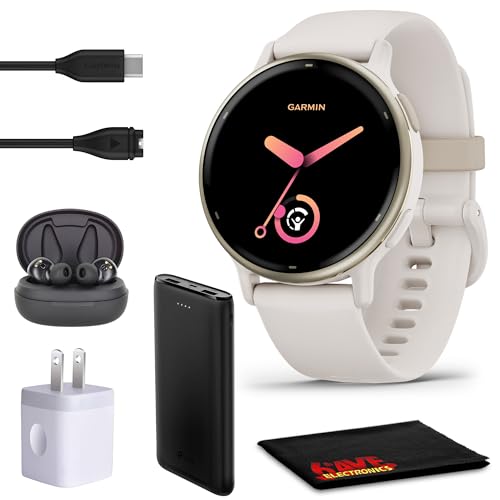
Garmin Vivoactive 4S Review | 126 Data compared

Avg. price:~£180Screen size:1.10 inchBattery life:7 daysDisplay type:MIP LCD

Garmin Vivoactive 4S Review: Compare 126 technical specifications and 15 expert and video reviews to see how this product ranks in the Smartwatches category and whether it is worth buying.

7.7

Overall score

Score
7.7/ 10
✕
What it is
An overall evaluation of the smartwatch's quality, based on technical analyses and user reviews.
When it matters
When you need a quick reference to identify the best smartwatches on the market.
Score distribution
â–¼
<55-66-77-88-99-10
Score components

70%

7.3

Technical score

30%

8.5

Review score ( 6 · 9)

Review score 30% · 8.5 · based on 15 independent reviews
Every model in this category gets the same split: reviews 30%, technical score 70%. This model has enough reviews, so its review score is the weighted average of their grades. 8 more reviews are not scored yet.
â–²Better than 79% of smartwatches
7.3

Technical score

Technical score
7.3/ 10
✕
What it is
An assessment of the smartwatchx27s technical performance, covering seven key areas: health, fitness, display & design, hardware, battery, smart features and connectivity.
When it matters
When you want to compare smartwatches based on technical performance and available features.
Score distribution
â–¼
<55-66-77-88-99-10
Score components

24%

7.4

Health

21%

9.0

Fitness

16%

5.5

Battery

14%

7.6

Smart features

12%

7.4

Connectivity

9%

6.9

Display & Design

4%

4.2

Hardware

â–²Better than 73% of smartwatches
8.5

Review score

Review score
8.5/ 10
✕
What it is
Average grade from independent test sites, magazines and video reviewers, 1–10.
How we count it
Grades: Each review's own score is converted to 1–10; without one, we grade the review ourselves.
Weighting: Big test sites count more, short reviews half as much as full tests. A video review counts half.
Share: Reviews are 30% of the overall score for every model in this category; each of the 5 needed reviews that is missing counts as 7/10.
Score distribution
â–¼
<55-66-77-88-99-10
Grades by review (15)
6 reviews: 2 with a printed score, 4 estimated from the review. 9 video reviews, each counting half as much as a written test. Share in the overall score: 30%, the same for every model in this category.
Text reviews 4
✓ explicit
1

10.8%

8.9

tek2day.net

≈ estimated
3
Video reviews 7
estimated from the review
Shop star ratings are not part of this score.
★Better than 92% of smartwatches
Loading...
Loading category ranking...

Technical Specifications of smartwatch Garmin Vivoactive 4S

Technical score
Technical score
7.3/ 10
✕
What it is
An assessment of the smartwatchx27s technical performance, covering seven key areas: health, fitness, display & design, hardware, battery, smart features and connectivity.
When it matters
When you want to compare smartwatches based on technical performance and available features.
Score distribution
â–¼
<55-66-77-88-99-10
Score components:

24%

7.4

Health

21%

9.0

Fitness

16%

5.5

Battery

14%

7.6

Smart features

12%

7.4

Connectivity

9%

6.9

Display & Design

4%

4.2

Hardware

7.3
Review score
Review score
8.5/ 10
✕
What it is
Average grade from independent test sites, magazines and video reviewers, 1–10.
How we count it
Grades: Each review's own score is converted to 1–10; without one, we grade the review ourselves.
Weighting: Big test sites count more, short reviews half as much as full tests. A video review counts half.
Share: Reviews are 30% of the overall score for every model in this category; each of the 5 needed reviews that is missing counts as 7/10.
Score distribution
â–¼
<55-66-77-88-99-10
Grades by review (15)
6 reviews: 2 with a printed score, 4 estimated from the review. 9 video reviews, each counting half as much as a written test. Share in the overall score: 30%, the same for every model in this category.
Text reviews 4
✓ explicit
1

10.8%

8.9

tek2day.net

≈ estimated
3
Video reviews 7
estimated from the review
Shop star ratings are not part of this score.
8.5
Popularity
Popularity
10.0/ 10
✕
What it is
An indicator based on the number of reviews received by the smartwatch.
When it matters
When you prefer to purchase a product chosen and reviewed by many other consumers.
Score distribution
â–¼
<55-66-77-88-99-10
Popularity:
Garmin Vivoactive 4S has a popularity of 10 points, which is higher than 93.2% of smartwatches.
10
Value for money
Value for money
8.2/ 10
✕
What it is
An indicator that combines the smartwatch's overall rating with its cost.
When it matters
When you are looking for a smartwatch with a good balance between quality and price.
Score distribution
â–¼
<55-66-77-88-99-10
Score components:

60%

7.7

Overall score

40%

9.6

Price

8.2
Brand name
Garmin
Heart rate monitor
yes
Heart rate monitor
yes
This smartwatch includes a heart rate monitor. 10.5% of smartwatches include a heart rate monitor.
Blood oxygen monitoring
yes
Blood oxygen monitoring
yes
This smartwatch supports blood oxygen monitoring. 33.4% of smartwatches support blood oxygen monitoring.
Readings are for wellness use, not medical diagnosis.
ECG
no
ECG
no
This smartwatch does not support ECG. 16.6% of smartwatches support ECG.
Irregular heart rate warnings
yes
Irregular heart rate warnings
yes
This smartwatch supports irregular heart rate warnings. 51.9% of smartwatches support irregular heart rate warnings.
Supports abnormal high/low heart-rate alerts (typically after inactivity).
Show more
What reviewers say
Accelerometer
yes
Accelerometer
yes
This smartwatch includes an accelerometer. 0.6% of smartwatches include an accelerometer.
Barometer
yes
Barometer
yes
This smartwatch includes a barometer. 50.6% of smartwatches include a barometer.
Gyroscope
yes
Gyroscope
yes
This smartwatch includes a gyroscope. 30.2% of smartwatches include a gyroscope.
Cadence sensor
yes
Cadence sensor
yes
This smartwatch includes a cadence sensor. 69% of smartwatches include a cadence sensor.
Distance tracking
yes
Distance tracking
yes
This smartwatch supports distance tracking. 4.1% of smartwatches support distance tracking.
Show more
What reviewers say
Battery life
7 days
Battery life
7 days
This smartwatch offers a battery life of 7 days which is longer than that of 38.7% of smartwatches and equal to that of 17.1% of smartwatches.
Battery life in training mode
15 h
Battery life in training mode
15 h
This smartwatch lasts 15 h in training mode which is shorter than 55% of smartwatches and equal to that of 2.7% of smartwatches.
Battery life with GPS on
16.5 h
Battery life with GPS on
16.5 h
This smartwatch lasts 16.5 h with GPS on which is shorter than 58.7% of smartwatches and equal to that of 0.3% of smartwatches.
Battery power
240 mAh
Battery power
240 mAh
This smartwatch has a battery capacity of 240 mAh which is smaller than the batteries in 73.7% of smartwatches and equal to those in 2.1% of smartwatches.
Charge time
45 min
Charge time
45 min
This smartwatch charges in 45 min which is faster than 96.1% of smartwatches and equal to the charge time of 0.8% of smartwatches.
Approximate value from reported charging range: 45 minutes.
Show more
What reviewers say
Operating system
Garmin OS
Operating system
Garmin OS
This smartwatch runs Garmin OS which is more advanced than the operating system in 71.1% of smartwatches and the same as that in 7.7% of smartwatches.
Software update frequency
occasional
Software update frequency
occasional
This smartwatch has occasional software update support which is more active than that of 57.6% of smartwatches and equal to that of 36.2% of smartwatches.
Updates are typically released about every 3 months.
Third-party app support
yes
Third-party app support
yes
This smartwatch supports third-party apps. 52.4% of smartwatches support third-party apps.
Notifications
yes
Notifications
yes
This smartwatch supports notifications. 0.3% of smartwatches support notifications.
Voice assistant support
no
Voice assistant support
no
This smartwatch does not support voice assistants. 67.8% of smartwatches support voice assistants.
Show more
What reviewers say
Cellular module
no
Cellular module
no
This smartwatch does not include a cellular module. 18% of smartwatches include a cellular module.
SIM cards
0
GPS
yes
GPS
yes
This smartwatch supports GPS. 43.9% of smartwatches support GPS.
Galileo support
yes
Galileo support
yes
This smartwatch supports Galileo navigation. 61.6% of smartwatches support Galileo navigation.
Compass
yes
Compass
yes
This smartwatch includes a compass. 47.5% of smartwatches include a compass.
Show more
What reviewers say
Screen size
1.1 inch
Screen size
1.1 inch
This smartwatch has a screen size of 1.1 inch which is smaller than the screens of 94.8% of smartwatches and equal to those of 1% of smartwatches.
Display type
MIP LCD
Display type
MIP LCD
This smartwatch uses a MIP LCD display type which is less advanced than that of 60% of smartwatches and the same as that of 5% of smartwatches.
Resolution
218x 218
Resolution
218x 218
This smartwatch has a display resolution of 218x218 which is lower than that of 89.2% of smartwatches and equal to that of 0.2% of smartwatches.
Pixel density
280 ppi
Pixel density
280 ppi
This smartwatch has a pixel density of 280 ppi which is lower than that of 70.6% of smartwatches.
Display brightness
?
Show more
What reviewers say
CPU speed
?
Processor model
?
RAM
?
Internal storage
4 GB
Internal storage
4 GB
This smartwatch uses 4 GB for internal storage which is larger than that of 40.4% of smartwatches and equal to that of 27% of smartwatches.
External memory slot
no
External memory slot
no
This smartwatch does not include an external memory slot. 0.3% of smartwatches include an external memory slot.
Show more
What reviewers say

Garmin Vivoactive 4S vs the average smartwatch

246810TotalHealthFitnessBatteryConnectivityDisplay & DesignSmart featuresHardware
  • 75 min shorter charge time
    Charge time
    45 min
    This smartwatch charges faster than the average smartwatch (45 min vs 120 min). The average smartwatch charges in 120 min.
    Approximate value from reported charging range: 45 minutes.
    45 min vs 120 min
  • Temperature sensing
    Temperature sensor
    yes
    This smartwatch includes a temperature sensor, the average smartwatch does not. 26.8% of smartwatches include a temperature sensor.
    Temperature readings may be skin/ambient trends, not core-body medical values.
  • Crash detection capability
    Crash detection
    yes
    This smartwatch supports crash detection, the average smartwatch does not. 12.6% of smartwatches support crash detection.
    Requires paired phone/network and/or specific activities for automatic alerts.
  • VO2 max measurement
    VO2 max measurement
    yes
    This smartwatch measures VO2 max, the average smartwatch does not. 47.6% of smartwatches measure VO2 max.
  • More advanced operating system
    Operating system
    Garmin OS
    This smartwatch runs a more advanced operating system than the average smartwatch (Garmin OS vs Proprietary OS).
    Garmin OS vs Proprietary OS
  • Emergency SOS
    Emergency SOS
    yes
    This smartwatch includes Emergency SOS, the average smartwatch does not. 42.8% of smartwatches include Emergency SOS.
    SOS feature has implementation limits (phone/app/subscription/activity dependent).
  • NFC functionality
    NFC
    yes
    This smartwatch supports NFC, the average smartwatch does not. 43.4% of smartwatches support NFC.
  • Third-party app support
    Third-party app support
    yes
    This smartwatch supports third-party apps, the average smartwatch does not. 47.6% of smartwatches support third-party apps.
  • 63.4% more popular
    Garmin Vivoactive 4S has a higher popularity than the average smartwatch (10 vs 6.1).
    10 vs 6.12
  • Temperature sensing
    Temperature sensor
    yes
    This smartwatch includes a temperature sensor, the average smartwatch does not. 26.8% of smartwatches include a temperature sensor.
    Temperature readings may be skin/ambient trends, not core-body medical values.
  • VO2 max measurement
    VO2 max measurement
    yes
    This smartwatch measures VO2 max, the average smartwatch does not. 47.6% of smartwatches measure VO2 max.
  • Irregular heart rate alerts
    Irregular heart rate warnings
    yes
    This smartwatch supports irregular heart rate warnings, the average smartwatch does not. 48.1% of smartwatches support irregular heart rate warnings.
    Supports abnormal high/low heart-rate alerts (typically after inactivity).
  • Calorie tracking
    Calorie tracking
    yes
    This smartwatch supports calorie tracking, the average smartwatch does not. 48.6% of smartwatches support calorie tracking.
    Food logging may require a companion or third-party app.
  • Weight tracking
    Weight tracking
    yes
    This smartwatch supports weight tracking, the average smartwatch does not. 39.1% of smartwatches support weight tracking.
    Tracked through the companion app or smart-scale sync.
  • Water intake tracking
    Water intake tracking
    yes
    This smartwatch tracks water intake, the average smartwatch does not. 44% of smartwatches track water intake.
  • Perspiration monitoring
    Perspiration monitoring
    yes
    This smartwatch tracks perspiration, the average smartwatch does not. 14.1% of smartwatches track perspiration.
    Perspiration tracking may be estimated from activity data in companion apps.
  • External heart rate monitor support
    External heart rate monitor compatibility
    yes
    This smartwatch supports external heart rate monitor compatibility, the average smartwatch does not. 42.7% of smartwatches support external heart rate monitor compatibility.
  • Barometer sensor included
    Barometer
    yes
    This smartwatch includes a barometer, the average smartwatch does not. 49.5% of smartwatches include a barometer.
  • Cadence tracking
    Cadence sensor
    yes
    This smartwatch includes a cadence sensor, the average smartwatch does not. 31.1% of smartwatches include a cadence sensor.
  • 75 min shorter charge time
    Charge time
    45 min
    This smartwatch charges faster than the average smartwatch (45 min vs 120 min). The average smartwatch charges in 120 min.
    Approximate value from reported charging range: 45 minutes.
    45 min vs 120 min
  • NFC functionality
    NFC
    yes
    This smartwatch supports NFC, the average smartwatch does not. 43.4% of smartwatches support NFC.
  • Supports Wi-Fi
    Wi-Fi support
    yes
    This smartwatch supports Wi-Fi, the average smartwatch does not. 43.3% of smartwatches support Wi-Fi.
  • Supports ANT+
    ANT+ support
    yes
    This smartwatch supports ANT+, the average smartwatch does not. 11.7% of smartwatches support ANT+.
  • Galileo satellite support
    Galileo support
    yes
    This smartwatch supports Galileo navigation, the average smartwatch does not. 38.5% of smartwatches support Galileo navigation.
  • Stronger display glass
    Display glass type
    Corning Gorilla Glass 3
    This smartwatch uses Corning Gorilla Glass 3 display glass, while the average smartwatch uses mineral glass.
    Corning Gorilla Glass 3 vs mineral glass
  • 2 mm narrower band
    Width of band
    20.0 mm
    This smartwatch has a narrower band width than the average smartwatch (20 mm vs 22 mm). The average smartwatch band is 22.0 mm wide.
    20.0 mm vs 22.0 mm
  • 15 °C higher max temperature
    Maximum operating temperature
    60.0 °C
    This smartwatch handles a higher maximum operating temperature than the average smartwatch (60 °C vs 45 °C). The average smartwatch reaches 45.0 °C.
    60.0 °C vs 45.0 °C
  • 5 mm shorter watch height
    Height
    40.0 mm
    This smartwatch is shorter than the average smartwatch (40 mm vs 45 mm). The average smartwatch height is 45 mm.
    40.0 mm vs 45 mm
  • Crash detection capability
    Crash detection
    yes
    This smartwatch supports crash detection, the average smartwatch does not. 12.6% of smartwatches support crash detection.
    Requires paired phone/network and/or specific activities for automatic alerts.
  • More advanced operating system
    Operating system
    Garmin OS
    This smartwatch runs a more advanced operating system than the average smartwatch (Garmin OS vs Proprietary OS).
    Garmin OS vs Proprietary OS
  • Emergency SOS
    Emergency SOS
    yes
    This smartwatch includes Emergency SOS, the average smartwatch does not. 42.8% of smartwatches include Emergency SOS.
    SOS feature has implementation limits (phone/app/subscription/activity dependent).
  • Third-party app support
    Third-party app support
    yes
    This smartwatch supports third-party apps, the average smartwatch does not. 47.6% of smartwatches support third-party apps.
  • More frequent updates
    Software update frequency
    occasional
    This smartwatch receives occasional software updates, while the average smartwatch receives ended updates.
    Updates are typically released about every 3 months.
    occasional vs ended
  • No multi-sport mode
    Multi-sport mode
    no
    This smartwatch does not include a multi-sport mode, the average smartwatch does. 68.4% of smartwatches include a multi-sport mode.
  • No voice assistant
    Voice assistant support
    no
    This smartwatch does not support voice assistants, the average smartwatch does. 67.7% of smartwatches support voice assistants.
  • No call answering
    Call answering
    no
    This smartwatch does not support call answering, the average smartwatch does. 58.1% of smartwatches support call answering.
  • No speaker
    Built-in speaker
    no
    This smartwatch does not include a built-in speaker, the average smartwatch does. 56.1% of smartwatches include a built-in speaker.
  • No voice command support
    Voice commands
    no
    This smartwatch does not support voice commands, the average smartwatch does. 67% of smartwatches support voice commands.
  • Basic display type
    Display type
    MIP LCD
    This smartwatch uses MIP LCD display technology, while the average smartwatch features AMOLED.
    MIP LCD vs AMOLED
  • No ambient light sensor
    Ambient light sensor
    no
    This smartwatch does not include an ambient light sensor, the average smartwatch does. 60.7% of smartwatches include an ambient light sensor.
  • 0.3 inch smaller screen size
    Screen size
    1.10 inch
    This smartwatch has a smaller screen size than the average smartwatch (1.1 inch vs 1.4 inch). The average smartwatch screen is 1.40 inch.
    1.10 inch vs 1.40 inch
  • No multi-sport mode
    Multi-sport mode
    no
    This smartwatch does not include a multi-sport mode, the average smartwatch does. 68.4% of smartwatches include a multi-sport mode.
  • 60 fewer exercise profiles
    Multi-sport mode
    20
    This smartwatch supports fewer exercise modes than the average smartwatch (20 vs 80). The average smartwatch supports 80 exercise modes.
    Reported as at least 20 exercise modes.
    20 vs 80
  • No voice feedback
    Voice feedback
    no
    This smartwatch does not support voice feedback, the average smartwatch does. 61.9% of smartwatches support voice feedback.
  • 60 mAh smaller battery capacity
    Battery life
    240 mAh days
    This smartwatch has a smaller battery capacity than the average smartwatch (240 mAh vs 300 mAh). The average smartwatch battery is 300 mAh.
    240 mAh vs 300 mAh
  • 3.5 h shorter GPS battery life
    Battery life with GPS on
    16.5 h
    This smartwatch lasts less with GPS on than the average smartwatch (16.5 h vs 20 h). The average smartwatch lasts 20 h.
    16.5 h vs 20 h
  • 4.25 h shorter training battery life
    Battery life in training mode
    15 h
    This smartwatch lasts less in training mode than the average smartwatch (15 h vs 19.25 h). The average smartwatch lasts 19.25 h.
    15 h vs 19.25 h
  • Basic display type
    Display type
    MIP LCD
    This smartwatch uses MIP LCD display technology, while the average smartwatch features AMOLED.
    MIP LCD vs AMOLED
  • No ambient light sensor
    Ambient light sensor
    no
    This smartwatch does not include an ambient light sensor, the average smartwatch does. 60.7% of smartwatches include an ambient light sensor.
  • 0.3 inch smaller screen size
    Screen size
    1.10 inch
    This smartwatch has a smaller screen size than the average smartwatch (1.1 inch vs 1.4 inch). The average smartwatch screen is 1.40 inch.
    1.10 inch vs 1.40 inch
  • Lower resolution
    Display type
    218 x 218
    This smartwatch has a display resolution of 218x218, while the average smartwatch reaches 352x430.
    218x218 vs 352x430
  • 1.1 mm thicker watch body
    Thickness
    12.70 mm
    This smartwatch is thicker than the average smartwatch (12.7 mm vs 11.6 mm). The average smartwatch thickness is 11.6 mm.
    12.70 mm vs 11.6 mm
  • 46 ppi lower pixel density
    Pixel density
    280 ppi
    This smartwatch has a lower pixel density than the average smartwatch (280 ppi vs 326 ppi). The average smartwatch display reaches 326 ppi.
    280 ppi vs 326 ppi
  • No voice assistant
    Voice assistant support
    no
    This smartwatch does not support voice assistants, the average smartwatch does. 67.7% of smartwatches support voice assistants.
  • No call answering
    Call answering
    no
    This smartwatch does not support call answering, the average smartwatch does. 58.1% of smartwatches support call answering.
  • No voice command support
    Voice commands
    no
    This smartwatch does not support voice commands, the average smartwatch does. 67% of smartwatches support voice commands.
  • No speaker
    Built-in speaker
    no
    This smartwatch does not include a built-in speaker, the average smartwatch does. 56.1% of smartwatches include a built-in speaker.
  • 1 fewer microphones
    Number of microphones
    0
    This smartwatch has fewer microphones than the average smartwatch (0 vs 1). The average smartwatch includes 1 microphones.
    0 vs 1
  • 2 year/s older release date
    Release date
    2019
    This smartwatch is an older model than the average smartwatch (2019 vs 2021). The average smartwatch was released in 2021.
    September 2019
    2019 vs 2021

Video reviews

Hands-on testing, unboxing, and real-world video evaluations

9.0
Marek Tarek
≈ estimated
01/04/2023
Long-term review · two years of daily use
Verdict
Garmin Vivoactive 4S is recommended despite its touch screen limits, and it is hard to beat as a multi-sport watch at this price.
9.0
Conveyor of Randomness with Andre
≈ estimated
11/10/2020
Hands-on review · running GPS test · oxygen sensor check
Verdict
Garmin Vivoactive 4S is a solid starting point for health and fitness tracking, though its blood oxygen readings raise doubts.
7.0
Sean Crowded In The Wings
≈ estimated
11/07/2020
Initial review · one week of use and runs
Verdict
Garmin Vivoactive 4S offers strong running performance and useful music features, but it is not intuitive for people less comfortable with technology.
9.0
Tricks Tips Fix
≈ estimated
23/02/2023
Quick review · overview of features
Verdict
Garmin Vivoactive 4S suits both sport and casual everyday wear.
Not graded yet
Not graded yet
Not graded yet
Not graded yet

What reviewers agree on

Based on 10 · 12

Reviewers love the comfortable design and workout tracking, but battery life and the dim display draw the most complaints.
Praised
Mixed views
Criticised
Pick a topic to see who said what

Expert reviews

In-depth analysis and verdict from leading tech publications

9.0
fenit.nl
≈ estimated
10/01/2023
Long-term review · Sports watch
Verdict
The Garmin Vivoactive 4S suits walkers and gym-goers who want a stylish everyday watch, though its smartwatch features are basic and it has no voice control.

Third-party reviews

What we like about Garmin Vivoactive 4S

  • Sleek and stylish design suitable for everyday and formal wear
  • Compact and lightweight 40mm size, ideal for smaller wrists
  • Comprehensive health tracking including Body Battery, Pulse Ox, and sleep monitoring
  • Transflective display is highly legible in direct sunlight and always-on
  • Wide range of 20+ preloaded sports apps and on-screen animated workouts
  • Standard music storage with support for offline Spotify and Deezer playlists

What we don't like about Garmin Vivoactive 4S

  • Battery life is shorter than the larger Vivoactive 4 and often doesn't reach the advertised 7 days
  • Display quality is often described as dull, pixelated, or low-contrast indoors
  • Frequent connectivity issues reported with Bluetooth headphones and smartphone syncing
  • GPS can sometimes take several minutes to lock or show inaccuracies over time
  • Sleep tracking accuracy is occasionally questioned by users
  • Garmin Pay has limited bank support in certain regions like the UK and Canada

Verdict

The Garmin Vivoactive 4S is a compact 40mm GPS smartwatch designed for smaller wrists, featuring a 1.1-inch sunlight-visible transflective memory-in-pixel (MIP) display with a 218 x 218 pixel resolution and a durable Corning Gorilla Glass 3 lens. It offers a comprehensive suite of health monitoring tools, including Pulse Ox blood oxygen saturation, Body Battery energy levels, respiration tracking, and over 20 preloaded sports apps with on-screen animated workouts for yoga, Pilates, cardio, and strength. Key pros include standard music storage for phone-free listening (Spotify, Deezer, Amazon Music), Garmin Pay for contactless payments, and a battery life that reaches up to 7 days in smartwatch mode or 5 hours with GPS and music. Notable cons include a display that can appear dull or pixelated compared to modern AMOLED panels and the absence of a dedicated hiking activity mode by default.

Compare Garmin Vivoactive 4S with other Smartwatches

1Product to compare no. 1
VS
2Product to compare no. 2
VS
3Product to compare no. 3 (optional)

Graphic comparison of Garmin Vivoactive 4S and other Smartwatches

No results found