Scored using Smartwatches Methodology v3.0
Smartwatches Methodology v3.0
Mathematical & Unbiased Scoring
Products in this category are scored under Frontum Smartwatches Methodology v3.0: the technical score from the specifications is the base, and independent expert and video reviews (up to ±0.5 points), owner opinions (up to ±0.3) and best-of lists (up to +0.3) move it up or down.
Explore Smartwatches Methodology v3.0

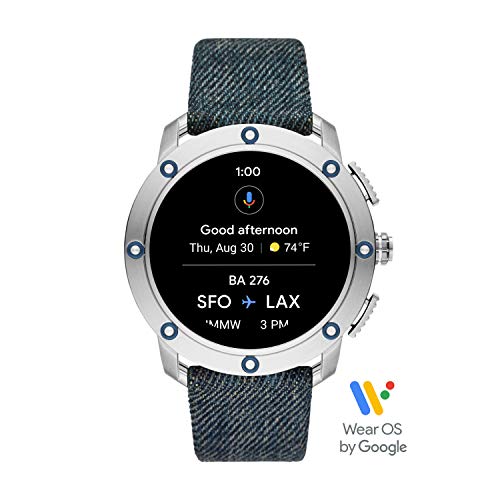
Diesel On Axial review: 127 specs compared

Avg. price:~£310Screen size:1.28 inchBattery life:1 daysDisplay type:AMOLED

Diesel On Axial Review: Compare 127 technical specifications and 8 expert and video reviews to see how this product ranks in the Smartwatches category and whether it is worth buying.
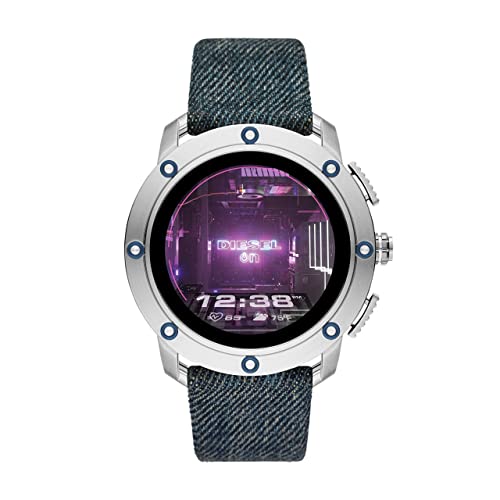
Diesel On Axial
6.7/10

Overall score

Score
6.7/ 10
✕
What it is
Our main score for this model, 1–10. It combines specs, best-of lists, expert reviews and owners.
How we count it
Parts: Technical score 35%, List score 30%, Reviews score 25%, Sentiment score 10%
Marks: Each part gets a mark out of 10. For reviews, lists and owners, a typical model in this category gets about 8 and the best one gets 10.
No data yet: A part with no data shows "?". It counts as the mark of a weaker model in this category (4 in 5 models with data score higher). This way, models with reviews, lists and owners usually come out ahead.
Score distribution
â–¼
<55-66-77-88-99-10
Score components

35%

6.3

Technical score

30%

?

List scoreNot enough data yet, so we use 7.5, the mark of a weaker model in this category

25%

6.3

Reviews score

10%

?

Sentiment scoreNot enough data yet, so we use 6.8, the mark of a weaker model in this category

â–¼Worse than 60% of smartwatches
7.4

Value for money

Value for money
7.4/ 10
✕
What it is
An indicator that combines the smartwatch's overall rating with its cost.
When it matters
When you are looking for a smartwatch with a good balance between quality and price.
Score distribution
â–¼
<55-66-77-88-99-10
Score components

70%

6.7

Overall score

30%

8.9

Price

â–¼Worse than 73%
6.3

Technical score

Technical score
6.3/ 10
✕
What it is
How good the specs are compared with the other models in this category, 1–10.
How we count it
Areas: We rate the specs in each area against the other models in this category.
Weighting: The areas that matter most to buyers count more. The shares are shown under Score components.
Share: The technical score is 35% of the overall score.
Score distribution
â–¼
<55-66-77-88-99-10
Score components

24%

4.9

Health

21%

8.2

Fitness

16%

4.1

Battery

14%

6.9

Smart features

12%

7.3

Connectivity

9%

7.5

Display & Design

4%

6.4

Hardware

â–²Better than 50%
6.3

Reviews score

Reviews score
6.3/ 10
✕
What it is
Average grade from independent test sites, magazines and video reviewers, 1–10.
How we count it
Grades: Each review's own score is converted to 1–10; without one, we grade the review ourselves. Every review counts the same: written or video, short or full test.
Score: The average grade is 80% of the review mark; the number of reviews is the other 20% (1 review = 5, the typical number in this category = 8, the most-reviewed model = 10).
Enough data: With few reviews, the average grade is pulled toward the typical grade of this category. No reviews yet: 7.4 for now.
Share: Reviews count 25% of the overall score.
Score distribution
â–¼
<55-66-77-88-99-10

6.3

Mark 7.4 is below the typical mark 7.9 of this category, so it cannot lift the score above the technical score

80%

7.4

Average grade

20%

7.1

Popularity

Grades by review (8)
7 reviews + 1 video, average 7.0/10. Reviews count 25% of the overall score.
User ratings collected online are not part of this score.
â–¼Worse than 65%
?

List score

List score
7.5/ 10
✕
What it is
How often independent test sites, magazines and video reviewers put this model in their best-of lists for this category.
How we count it
Points: The model in the most lists of this category gets 10; the others get 8 to 10 in proportion. In no list yet: 7.5. Lists count 30% of the overall score.
Enough data: Every list counts, even a single one. With fewer than 5 best-of lists in the category, this part is left out.
Lists with this model (0)
Not in any best-of list yet, so this part counts as 7.5. Models in a list get 8 to 10.
Not in any best-of list yet

What reviewers say about the Diesel On Axial

Based on 7 · 2

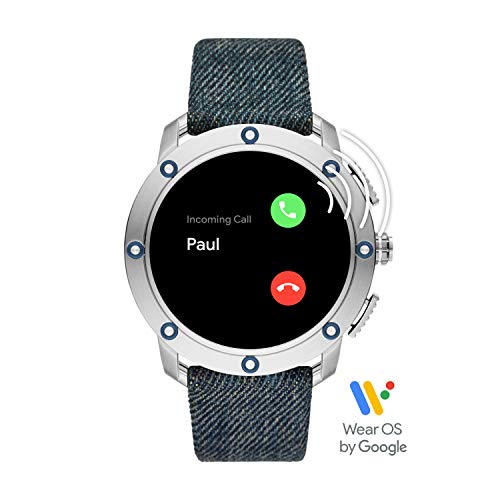
Reviewers like the bold case design and clear calls, but find it bulky and heavy, with disappointing battery life.
Praised
Mixed views
Criticised
Pick a topic to see who said what
Loading...
Loading category ranking...

Technical Specifications of smartwatch Diesel On Axial

Technical score
Technical score
6.3/ 10
✕
What it is
How good the specs are compared with the other models in this category, 1–10.
How we count it
Areas: We rate the specs in each area against the other models in this category.
Weighting: The areas that matter most to buyers count more. The shares are shown under Score components.
Share: The technical score is 35% of the overall score.
Score distribution
â–¼
<55-66-77-88-99-10
Score components:

24%

4.9

Health

21%

8.2

Fitness

16%

4.1

Battery

14%

6.9

Smart features

12%

7.3

Connectivity

9%

7.5

Display & Design

4%

6.4

Hardware

6.3
Reviews score
6.3
List score
?
Value for money
Value for money
7.4/ 10
✕
What it is
An indicator that combines the smartwatch's overall rating with its cost.
When it matters
When you are looking for a smartwatch with a good balance between quality and price.
Score distribution
â–¼
<55-66-77-88-99-10
Score components:

70%

6.7

Overall score

30%

8.9

Price

7.4
Heart rate monitor
yes
This smartwatch includes a heart rate monitor. 9.5% of smartwatches include a heart rate monitor.
Blood oxygen monitoring
yes
This smartwatch supports blood oxygen monitoring. 30.4% of smartwatches support blood oxygen monitoring.
Readings are for wellness use, not medical diagnosis.
ECG
no
This smartwatch does not support ECG. 18.2% of smartwatches support ECG.
Irregular heart rate warnings
?
HRV tracking
no
This smartwatch does not support HRV tracking. 45.2% of smartwatches support HRV tracking.
Show more
Accelerometer
yes
This smartwatch includes an accelerometer. 0.5% of smartwatches include an accelerometer.
Barometer
yes
This smartwatch includes a barometer. 46.5% of smartwatches include a barometer.
Gyroscope
yes
This smartwatch includes a gyroscope. 28.9% of smartwatches include a gyroscope.
Cadence sensor
no
This smartwatch does not include a cadence sensor. 32.9% of smartwatches include a cadence sensor.
Distance tracking
yes
This smartwatch supports distance tracking. 3.7% of smartwatches support distance tracking.
Show more
Battery life
1 day
This smartwatch lasts 1 day on a charge, which is shorter than 88.1% of Smartwatches and the same as 8.1% of Smartwatches.
Battery life in training mode
24 h
This smartwatch records workouts for 24 h on a charge, which is longer than 56.5% of Smartwatches and the same as 4.7% of Smartwatches.
Battery life with GPS on
3 h
This smartwatch lasts 3 h with GPS on, which is shorter than 98.4% of Smartwatches and the same as 0.8% of Smartwatches.
Battery power
310 mAh
This smartwatch has a 310 mAh battery, which is larger than 51% of Smartwatches and the same as 1.2% of Smartwatches.
Charge time
?
Show more
What reviewers say
Operating system
Wear OS
This smartwatch runs Wear OS, which is more advanced than the system in 80.1% of Smartwatches and equal to 15.8% of Smartwatches.
Software update frequency
ended
This smartwatch has ended software update support which is less active than that of 46.1% of smartwatches and equal to that of 53.9% of smartwatches.
Third-party app support
yes
This smartwatch supports third-party apps. 48.5% of smartwatches support third-party apps.
Notifications
yes
This smartwatch supports notifications. 0.3% of smartwatches support notifications.
Voice assistant support
yes
This smartwatch supports voice assistants. 30.8% of smartwatches support voice assistants.
Show more
What reviewers say
Cellular module
no
This smartwatch does not include a cellular module. 16.7% of smartwatches include a cellular module.
SIM cards
0
GPS
yes
This smartwatch supports GPS. 40.3% of smartwatches support GPS.
Galileo support
no
This smartwatch does not support Galileo navigation. 43.6% of smartwatches support Galileo navigation.
Dual-frequency GPS
no
This smartwatch does not support dual-frequency GPS. 15.1% of Smartwatches offer this.
Show more
Screen size
1.28 inch
This smartwatch has a 1.28 inch screen, which is smaller than 78% of Smartwatches and the same as 4.9% of Smartwatches.
Display type
AMOLED
This smartwatch uses AMOLED, which is more advanced than the screen in 46.9% of Smartwatches and equal to 53.1% of Smartwatches.
Resolution
416x 416
This smartwatch has a display resolution of 416x416 which is higher than that of 70.7% of smartwatches and equal to that of 3.5% of smartwatches.
Pixel density
460 ppi
This smartwatch has a pixel density of 460 ppi, which is higher than 80.1% of Smartwatches and equal to 4.8% of Smartwatches.
Display brightness
?
Show more
What reviewers say
CPU speed
1.2 GHz
This smartwatch uses a CPU configuration of 1.2 GHz which is faster than that in 61% of smartwatches and equal to that in 4.6% of smartwatches.
Processor model
Snapdragon Wear 3100
This smartwatch uses the Snapdragon Wear 3100 processor model.
RAM
1 GB
This smartwatch has 1 GB of RAM, which is more than 34.1% of Smartwatches and equal to 41.8% of Smartwatches.
Internal storage
8 GB
This smartwatch has 8 GB of internal storage, which is more than 65.5% of Smartwatches and equal to 11.3% of Smartwatches.
External memory slot
no
This smartwatch does not include an external memory slot. 0.3% of smartwatches include an external memory slot.
Show more
What reviewers say

Diesel On Axial vs the average smartwatch

246810TotalHealthFitnessBatteryConnectivityDisplay & DesignSmart featuresHardware
  • More advanced operating system
    This smartwatch runs a more advanced operating system than the average smartwatch (Wear OS vs Proprietary OS).
    Wear OS vs Proprietary OS
  • Maps support
    This smartwatch supports maps, the average smartwatch does not. 34.4% of smartwatches support maps.
  • NFC functionality
    This smartwatch supports NFC, the average smartwatch does not. 45.2% of smartwatches support NFC.
  • External heart rate monitor support
    This smartwatch supports external heart rate monitor compatibility, the average smartwatch does not. 46.6% of smartwatches support external heart rate monitor compatibility.
  • Supports Wi-Fi
    This smartwatch supports Wi-Fi, the average smartwatch does not. 43.5% of smartwatches support Wi-Fi.
  • 134 ppi sharper screen
    This smartwatch has a sharper screen than the average smartwatch (460 ppi vs 326 ppi). The average smartwatch has a pixel density of 326 ppi.
    460 ppi vs 326 ppi
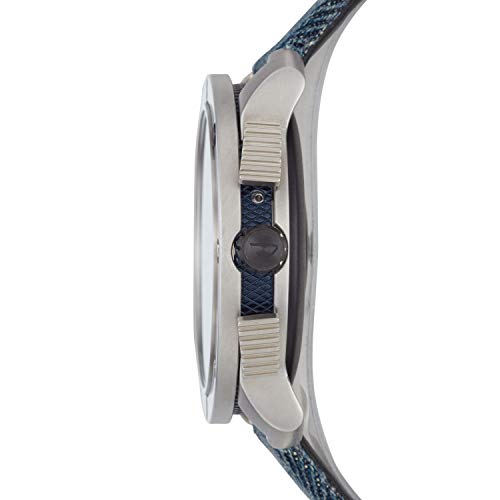
  • 1.7 mm slimmer
    This smartwatch is slimmer than the average smartwatch (10 mm vs 11.7 mm). The average smartwatch is 11.7 mm thick.
    Some sources mention variant-dependent thickness values.
    10 mm vs 11.7 mm
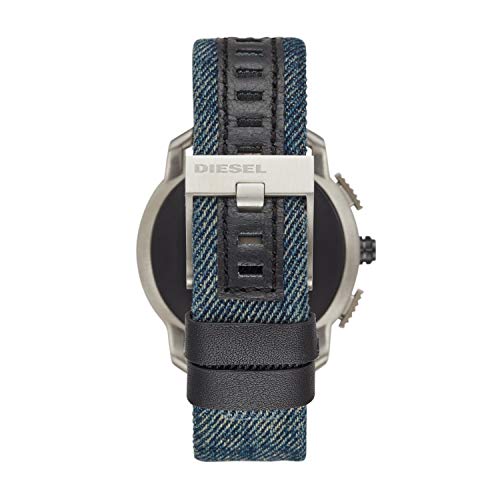
  • Better band material
    This smartwatch uses silicone, leather, fabric, stainless steel for the band material, while the average smartwatch uses silicone.
    silicone, leather, fabric, stainless steel vs silicone
  • External heart rate monitor support
    This smartwatch supports external heart rate monitor compatibility, the average smartwatch does not. 46.6% of smartwatches support external heart rate monitor compatibility.
  • 4 h longer training battery life
    This smartwatch lasts longer in training mode than the average smartwatch (24 h vs 20 h). The average smartwatch lasts 20 h in training mode.
    24 h vs 20 h
  • Maps support
    This smartwatch supports maps, the average smartwatch does not. 34.4% of smartwatches support maps.
  • NFC functionality
    This smartwatch supports NFC, the average smartwatch does not. 45.2% of smartwatches support NFC.
  • Supports Wi-Fi
    This smartwatch supports Wi-Fi, the average smartwatch does not. 43.5% of smartwatches support Wi-Fi.
  • 134 ppi sharper screen
    This smartwatch has a sharper screen than the average smartwatch (460 ppi vs 326 ppi). The average smartwatch has a pixel density of 326 ppi.
    460 ppi vs 326 ppi
  • 1.7 mm slimmer
    This smartwatch is slimmer than the average smartwatch (10 mm vs 11.7 mm). The average smartwatch is 11.7 mm thick.
    Some sources mention variant-dependent thickness values.
    10 mm vs 11.7 mm
  • Better band material
    This smartwatch uses silicone, leather, fabric, stainless steel for the band material, while the average smartwatch uses silicone.
    silicone, leather, fabric, stainless steel vs silicone
  • Better case material
    This smartwatch uses stainless steel for the case material, while the average smartwatch uses polycarbonate.
    stainless steel vs polycarbonate
  • Higher resolution
    This smartwatch has a display resolution of 416x416, while the average smartwatch reaches 360x360.
    416x416 vs 360x360
  • More advanced operating system
    This smartwatch runs a more advanced operating system than the average smartwatch (Wear OS vs Proprietary OS).
    Wear OS vs Proprietary OS
  • More advanced processor model
    This smartwatch uses the Snapdragon Wear 3100 processor model, while the average smartwatch uses Silicon Labs EFM32 Giant Gecko.
    Snapdragon Wear 3,100 vs Silicon Labs EFM32 Giant Gecko
  • 2x more internal storage
    This smartwatch has more internal storage than the average smartwatch (8 GB vs 4 GB). The average smartwatch has 4 GB of internal storage.
    8 GB vs 4 GB
  • No VO2 max measurement
    This smartwatch does not measure VO2 max, the average smartwatch does. 51.3% of smartwatches measure VO2 max.
  • 18 h shorter GPS battery life
    This smartwatch lasts less time with GPS on than the average smartwatch (3 h vs 21 h). The average smartwatch lasts 21 h with GPS on.
    3 h vs 21 h
  • No multi-sport mode
    This smartwatch does not include a multi-sport mode, the average smartwatch does. 71.7% of smartwatches include a multi-sport mode.
  • No elevation tracking
    This smartwatch does not support elevation tracking, the average smartwatch does. 67.6% of smartwatches support elevation tracking.
  • No coaching features
    This smartwatch does not support coaching, the average smartwatch does. 58.8% of smartwatches support coaching.
  • 6 days shorter battery life
    This smartwatch runs for less time per charge than the average smartwatch (1 days vs 7 days). The average smartwatch runs for 7 days on a charge.
    1 days vs 7 days
  • No cycle tracking
    This smartwatch does not support menstrual cycle tracking, the average smartwatch does. 66.8% of smartwatches support menstrual cycle tracking.
  • 98 g heavier
    This smartwatch is heavier than the average smartwatch (143 g vs 45 g). The average smartwatch weighs 45 g.
    143 g vs 45 g
  • 10.0% lower review score
    Reviews score
    6.3/ 10
    ✕
    What it is
    Average grade from independent test sites, magazines and video reviewers, 1–10.
    How we count it
    Grades: Each review's own score is converted to 1–10; without one, we grade the review ourselves. Every review counts the same: written or video, short or full test.
    Score: The average grade is 80% of the review mark; the number of reviews is the other 20% (1 review = 5, the typical number in this category = 8, the most-reviewed model = 10).
    Enough data: With few reviews, the average grade is pulled toward the typical grade of this category. No reviews yet: 7.4 for now.
    Share: Reviews count 25% of the overall score.
    Score distribution
    â–¼
    <55-66-77-88-99-10

    6.3

    Mark 7.4 is below the typical mark 7.9 of this category, so it cannot lift the score above the technical score

    80%

    7.4

    Average grade

    20%

    7.1

    Popularity

    Grades by review (8)
    7 reviews + 1 video, average 7.0/10. Reviews count 25% of the overall score.
    User ratings collected online are not part of this score.
    6.3 vs 7.0
  • 2.82x more expensive
    Diesel On Axial is more expensive than the average smartwatch (£310 vs £110).
    £310 vs £110
  • 5.5% worse value for money
    Diesel On Axial has a lower value-for-money score than the average smartwatch (7.36 vs 7.8).
    7.36 vs 7.76
  • No VO2 max measurement
    This smartwatch does not measure VO2 max, the average smartwatch does. 51.3% of smartwatches measure VO2 max.
  • No cycle tracking
    This smartwatch does not support menstrual cycle tracking, the average smartwatch does. 66.8% of smartwatches support menstrual cycle tracking.
  • 2 years older
    This smartwatch was released earlier than the average smartwatch (2019 vs 2021). The average smartwatch was released in 2021.
    October 2019
    2019 vs 2021
  • No multi-sport mode
    This smartwatch does not include a multi-sport mode, the average smartwatch does. 71.7% of smartwatches include a multi-sport mode.
  • No elevation tracking
    This smartwatch does not support elevation tracking, the average smartwatch does. 67.6% of smartwatches support elevation tracking.
  • No coaching features
    This smartwatch does not support coaching, the average smartwatch does. 58.8% of smartwatches support coaching.
  • 18 h shorter GPS battery life
    This smartwatch lasts less time with GPS on than the average smartwatch (3 h vs 21 h). The average smartwatch lasts 21 h with GPS on.
    3 h vs 21 h
  • 6 days shorter battery life
    This smartwatch runs for less time per charge than the average smartwatch (1 days vs 7 days). The average smartwatch runs for 7 days on a charge.
    1 days vs 7 days
  • Basic battery type
    This smartwatch uses a Li-ion battery, while the average smartwatch uses Li-Po.
    Hybrid design with rechargeable smart battery and separate button-cell battery.
    Li-ion vs Li-Po
  • Less current Bluetooth version
    This smartwatch uses a less current Bluetooth version than the average smartwatch (4.2 vs 5).
    4.2 vs 5
  • 98 g heavier
    This smartwatch is heavier than the average smartwatch (143 g vs 45 g). The average smartwatch weighs 45 g.
    143 g vs 45 g
  • 0.12 inch smaller display
    This smartwatch has a smaller screen than the average smartwatch (1.3 inch vs 1.4 inch). The average smartwatch has a 1.4 inch screen.
    1.28 inch vs 1.4 inch
  • 5.5 mm wider case
    This smartwatch has a wider case than the average smartwatch (48 mm vs 42.5 mm). The average smartwatch measures 42.5 mm across.
    48 mm vs 42.5 mm
  • 3 mm taller case
    This smartwatch has a taller case than the average smartwatch (48 mm vs 45 mm). The average smartwatch is 45 mm tall.
    48 mm vs 45 mm

Video reviews

Hands-on testing, unboxing, and real-world video evaluations

4.0
Tectrace-Isaí Estudillo
≈ estimated
22/05/2022
Hands-on review · design, battery and app tests
Verdict
Diesel On Axial looks great, but its battery and processing make it unusable day to day: a decorative accessory, not recommended.
8.0
Tectrace-Isaí Estudillo
≈ estimated
08/12/2020
First look · unboxing and first impressions
Verdict
Diesel On Axial has a striking premium metal design, but its performance and software are still untested.

Expert reviews

In-depth analysis and verdict from leading tech publications

7.0
techradar.com
✓ explicit
14/12/2019
Review · Bold Wear OS watch
Verdict
The Diesel On Axial is a bold, rugged watch that looks like no other, but its 48mm case only suits medium or larger wrists.
8.0
phandroid.com
≈ estimated
06/12/2019
Hands-on review · Statement smartwatch
Verdict
The Diesel On Axial is a striking alternative to Apple Watch that lasts about a day and a half, though Wear OS still has room to improve.
6.0
phonearena.com
✓ explicit
23/06/2020
Review · Stylish Wear OS watch
Verdict
The Diesel On Axial is a bold-looking watch, but its loud built-in faces, stutters and one-day battery hold it back.
7.0
wareable.com
≈ estimated
06/09/2019
First look · Brutalist-style watch
Verdict
The Diesel On Axial is a chunky, riveted smartwatch that will split opinion, though it packs a fast chipset, heart rate sensor and GPS.
7.0
freedom251.com
≈ estimated
25/05/2026
Full review · Fashion-led Wear OS
Verdict
The Diesel On Axial is a bold, oversized Wear OS watch for Android users who want style first, but it needs charging every day.
8.0
mistergadget.tech
≈ estimated
25/11/2019
Full review · Bold Wear OS design
Verdict
The Diesel On Axial is a well-rounded, distinctive Wear OS watch for Android users who like Diesel's industrial look, but Wear OS still trails Apple Watch.

Third-party reviews

What customers like about Diesel On Axial

  • Striking, rugged industrial design that appeals to those wanting a non-techy look
  • Vibrant and sharp AMOLED circular display
  • Smooth interface navigation due to 1GB of RAM on Fossil's 5th generation platform
  • Highly customisable with unique Diesel-exclusive interactive watch faces like 'Information Tunnel'
  • Includes useful hardware features like a built-in speaker for calls, GPS, and NFC for Google Pay
  • Water-resistant (3ATM/swimproof) design suitable for shallow water

What customers don't like about Diesel On Axial

  • Poor battery life, typically requiring daily charging or even multiple charges per day
  • Inconsistent GPS accuracy, especially when disconnected from a smartphone
  • Bulky and heavy 48mm case that can feel oversized on smaller wrists
  • Occasional software lag and stutters, particularly with complex animated watch faces
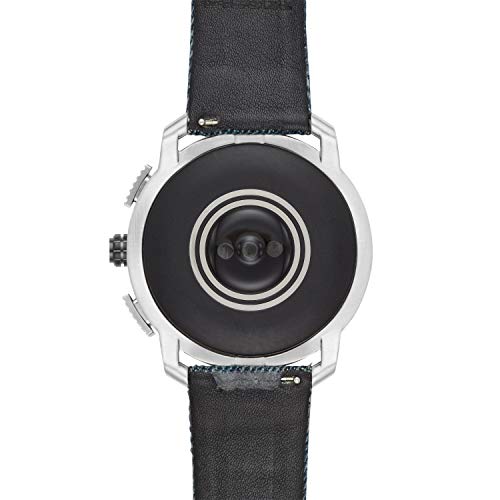
  • Charging rings on the back of the case are known to sometimes peel off or fail
  • Relatively high price point compared to competitors with similar tech specs

Verdict

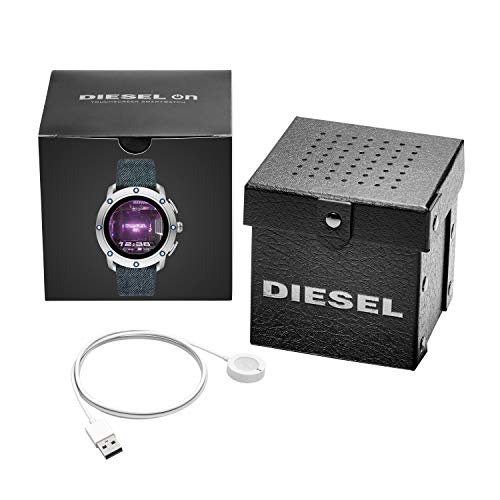
The Diesel On Axial is a bold, industrial-styled smartwatch featuring a 48mm stainless steel case and a vibrant 1.28-inch AMOLED display (416 x 416 resolution). Powered by the Qualcomm Snapdragon Wear 3100 chipset with 1GB of RAM and 8GB of internal storage, it runs on Google's Wear OS and includes essential hardware like a built-in speaker, microphone, NFC for Google Pay, and untethered GPS. Main advantages include its unique rugged aesthetic, highly customisable animated watch faces, and a rapid charging feature that reaches 80% in approximately 50–60 minutes. However, it faces common smart-wearable drawbacks such as a limited 24-hour battery life (unless using restricted battery-saving modes), a bulky profile that may be uncomfortable for smaller wrists, and occasional performance stutters during heavy animations.

Compare Diesel On Axial with other Smartwatches

1Product to compare no. 1
VS
2Product to compare no. 2
VS
3Product to compare no. 3 (optional)

Graphic comparison of Diesel On Axial and other Smartwatches

No results found