Scored using Smartphones Methodology v3.0
Smartphones Methodology v3.0
Mathematical & Unbiased Scoring
Products in this category are scored under Frontum Smartphones Methodology v3.0: the technical score from the specifications is the base, and independent expert and video reviews (up to ±0.5 points), owner opinions (up to ±0.3) and best-of lists (up to +0.3) move it up or down.
Explore Smartphones Methodology v3.0

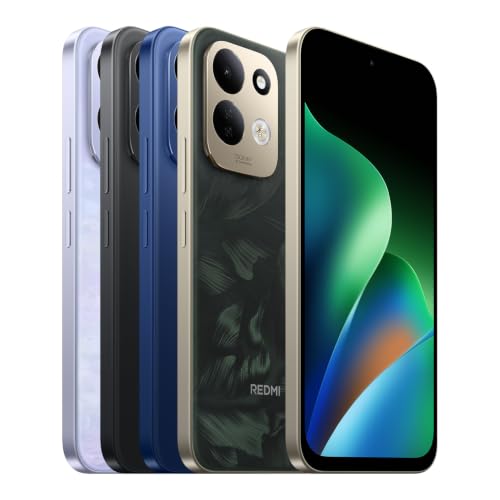
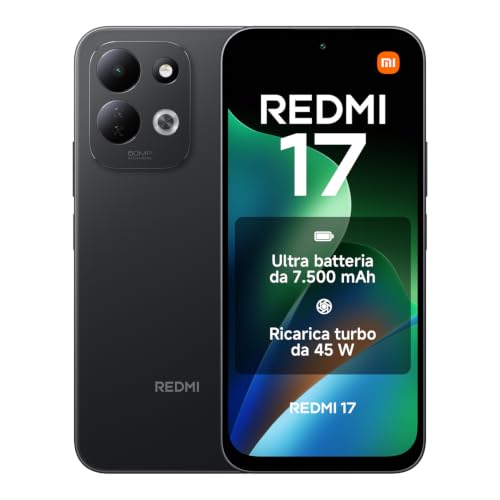
Xiaomi Redmi 17 (4GB + 256GB) review: 196 specs compared

Avg. price:~£160RAM capacity:4 GBInternal storage:256 GBScreen size:6.9 inchesMain camera megapixels:50 MP

Xiaomi Redmi 17 (4GB + 256GB) Review: Compare 196 technical specifications, 14 expert and video reviews and 76 owner opinions to see how this product ranks in the Smartphones category and whether it is worth buying.
Xiaomi Redmi 17 (4GB + 256GB)
6.8/10

Overall score

Score
6.8/ 10
✕
What it is
Our main score for this model, 1–10. It combines specs, best-of lists, expert reviews and owners.
How we count it
Parts: Technical score 40%, List score 30%, Reviews score 25%, Sentiment score 5%
Marks: Each part gets a mark out of 10. For reviews, lists and owners, a typical model in this category gets about 8 and the best one gets 10.
No data yet: A part with no data shows "?". It counts as the mark of a weaker model in this category (4 in 5 models with data score higher). This way, models with reviews, lists and owners usually come out ahead.
Score distribution
â–¼
<55-66-77-88-99-10
Score components

40%

6.5

Technical score

30%

?

List scoreNot enough data yet, so we use 7.5, the mark of a weaker model in this category

25%

6.5

Reviews score

5%

5.5

Sentiment score

â–¼Worse than 71% of smartphones
7.6

Value for money

Value for money
7.6/ 10
✕
What it is
An indicator that combines the smartphone's overall rating with its cost.
When it matters
When you are looking for a smartphone with a good balance between quality and price.
Score distribution
â–¼
<55-66-77-88-99-10
Score components

70%

6.8

Overall score

30%

9.7

Price

â–¼Worse than 58%
6.5

Technical score

Technical score
6.5/ 10
✕
What it is
How good the specs are compared with the other models in this category, 1–10.
How we count it
Areas: We rate the specs in each area against the other models in this category.
Weighting: The areas that matter most to buyers count more. The shares are shown under Score components.
Share: The technical score is 40% of the overall score.
Score distribution
â–¼
<55-66-77-88-99-10
Score components

25%

6.0

Performance

18%

6.2

Camera

15%

5.7

Display

15%

6.9

Battery

10%

8.2

Software

10%

7.3

Connectivity

4%

6.8

Audio

3%

6.5

Design

â–¼Worse than 56%
6.5

Reviews score

Reviews score
6.5/ 10
✕
What it is
Average grade from independent test sites, magazines and video reviewers, 1–10.
How we count it
Grades: Each review's own score is converted to 1–10; without one, we grade the review ourselves. Big test sites count more, short reviews half as much as full tests. A video review counts half.
Score: The average grade is 80% of the review mark; the number of reviews is the other 20% (1 review = 5, the typical number in this category = 8, the most-reviewed model = 10).
Enough data: With few reviews, the average grade is pulled toward the typical grade of this category. No reviews yet: 7.5 for now.
Share: Reviews count 25% of the overall score.
Score distribution
â–¼
<55-66-77-88-99-10

6.5

Mark 7.2 is below the typical mark 7.9 of this category, so it cannot lift the score above the technical score

80%

7.1

Average grade

20%

7.6

Popularity

Grades by review (14)
14 video reviews, each counting half as much as a written test. Reviews count 25% of the overall score.
User ratings collected online are not part of this score.
â–¼Worse than 71%
5.5

Sentiment score

Sentiment score
5.5/ 10
✕
What it is
How positive owners are about this model in their comments under video reviews and on forums. We read each comment, keep only people who say they own the model, and sort them into positive, mixed or negative.
How we count it
Score: We compare how satisfied this model’s owners are with the other models in this category: the typical model gets 8, the most satisfied tenth 10, the least satisfied 4. This is 80% of the owner mark; the number of owners is the other 20%.
Enough data: A model counts with 10+ owners from 4+ different discussions. With fewer, the owner part changes nothing.
Share: Owners count 5% of the overall score (left out in categories where fewer than 10 models have enough owner comments).
Score distribution
â–¼
<55-66-77-88-99-10

80%

5.1

Satisfaction

20%

7.2

Popularity

Owners (76)
76 owners from 19 online discussions
21% positive
5% mixed
74% negative
Category average: 51% positive
Our own analysis of online owner opinions, not a rating from any website.
â–¼Worse than 95%
?

List score

List score
7.5/ 10
✕
What it is
How often independent test sites, magazines and video reviewers put this model in their best-of lists for this category.
How we count it
Points: The model in the most lists of this category gets 10; the others get 8 to 10 in proportion. In no list yet: 7.5. Lists count 30% of the overall score.
Enough data: Every list counts, even a single one. With fewer than 5 best-of lists in the category, this part is left out.
Lists with this model (0)
Not in any best-of list yet, so this part counts as 7.5. Models in a list get 8 to 10.
Not in any best-of list yet

What reviewers say about the Xiaomi Redmi 17 (4GB + 256GB)

Based on 0 · 14

Reviewers praise the excellent battery life and fast charging, but performance feels slow, storage is limiting and the display underwhelms.
Praised
Mixed views
Criticised
Pick a topic to see who said what

What owners say about the Xiaomi Redmi 17 (4GB + 256GB)

Based on 76 owners sharing their experience in online comments

21%positive5%mixed74%negative

Owners value the long battery life, but widespread lag and weak camera quality overshadow the phone’s everyday strengths.

What owners dislike

  • Owners report lag and stutter in games like Free Fire, even at low frame rates, plus slowdowns and apps closing when several are open.30
  • Owners say photos come out blurry and unclear, like an old digital camera, and the camera is average or poor in general.17
  • Several owners regret buying it within days or weeks, and one wishes they had chosen the Redmi 15 instead.11
  • Owners say the price is too high for what the phone delivers, with several calling it a waste of money.8
  • Owners say the screen is not sharp, with resolution that does not look HD, and graphics appear unclear.6
  • Owners say service centres do not fix the faults, a camera repair took weeks without return, and customer care and complaints got no response.5
  • Owners say charging is slow, with one taking about two and a half hours to go from 30% to full, and report charging problems.4
  • Owners say the battery drains fast, even when idle, and one says it dies around 20% and is best switched off then.4
  • Owners say the phone overheats even when left unused, and sometimes gets hot during normal use.4
  • Owners say the phone switches off by itself, sometimes one or two times a day, and one says it failed after about two months.3

Points mentioned by at least 3 owners, most mentioned first.

Loading...
Loading category ranking...

Technical Specifications of smartphone Xiaomi Redmi 17 (4GB + 256GB)

Technical score
Technical score
6.5/ 10
✕
What it is
How good the specs are compared with the other models in this category, 1–10.
How we count it
Areas: We rate the specs in each area against the other models in this category.
Weighting: The areas that matter most to buyers count more. The shares are shown under Score components.
Share: The technical score is 40% of the overall score.
Score distribution
â–¼
<55-66-77-88-99-10
Score components:

25%

6.0

Performance

18%

6.2

Camera

15%

5.7

Display

15%

6.9

Battery

10%

8.2

Software

10%

7.3

Connectivity

4%

6.8

Audio

3%

6.5

Design

6.5
Reviews score
6.5
Sentiment score
5.5
List score
?
Value for money
Value for money
7.6/ 10
✕
What it is
An indicator that combines the smartphone's overall rating with its cost.
When it matters
When you are looking for a smartphone with a good balance between quality and price.
Score distribution
â–¼
<55-66-77-88-99-10
Score components:

70%

6.8

Overall score

30%

9.7

Price

7.6
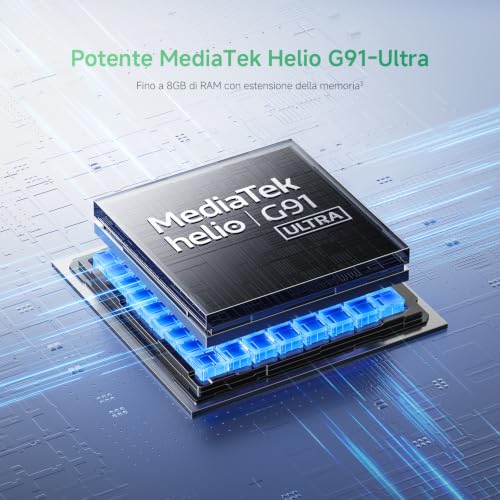
Processor model
?
Storage type
eMMC
This smartphone uses eMMC storage, which is slower than the storage in 82% of smartphones and the same as in 18% of smartphones.
RAM capacity
4 GB
This smartphone has a RAM capacity of 4 GB which is smaller than the RAM capacity of 81.6% of smartphones and equal to that of 14.5% of smartphones.
Internal storage
256 GB
This smartphone has an internal storage capacity of 256 GB which is larger than the storage of 39.5% of smartphones and equal to that of 38.3% of smartphones.
CPU boost clock speed
2 GHz
The CPU boost clock speed of this smartphone is 2 GHz which is lower than the boost speed of 83.1% of smartphones and equal to that of 8.6% of smartphones.
Show more
What reviewers say
Operating system
Android
This smartphone runs Android, which is more mainstream than the system in 4.9% of smartphones and the same as in 95.1% of smartphones.
Android version
Android 16
This smartphone runs Android version Android 16 which is newer than that found in 94.4% of smartphones and equal to that in 5.7% of smartphones.
Direct OS updates
no
This smartphone does not support direct OS updates. 19.8% of smartphones offer this.
Promised software updates
6 years
This smartphone promises 6 years of software updates, which is longer than 52.9% of smartphones and equal to 15.4% of smartphones.
Open-source OS
yes
This smartphone runs an open-source operating system. 5.3% of smartphones offer this.
Show more
What reviewers say
Multi-lens main camera
yes
This smartphone includes a multi-lens main camera system. 93.9% of smartphones include multi-lens setups.
Main camera megapixels
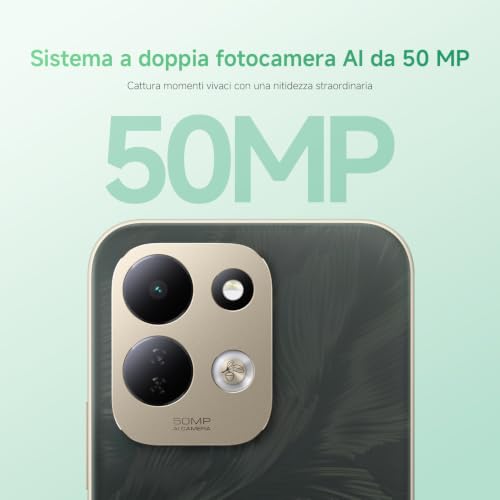
50 MP
This smartphone has a main camera resolution of 50 MP which is lower than that of 71.3% of smartphones and equal to that of 2.8% of smartphones.
Main camera aperture
f/1.8
This smartphone has a main camera aperture of f/1.8 which is narrower than that of 71.8% of smartphones and equal to that of 5.1% of smartphones.
Main camera sensor area
?
Main camera pixel size
?
Show more
What reviewers say
Number of SIM slots
2
This smartphone has 2 SIM slots, which is more than in 3.6% of smartphones and equal to the number in 96.3% of smartphones.
Cellular module
yes
This smartphone includes a cellular module. 100% of smartphones include cellular modules.
eSIM support
no
This smartphone does not have eSIM support. 20.6% of smartphones offer this.
5G connectivity
?
LTE support
yes
This smartphone supports LTE. 99.7% of smartphones include LTE connectivity.
Show more
Screen size
6.9 inches
This smartphone has a screen size of 6.9 inches which is larger than the screens of 93.4% of smartphones and equal to those of 2.9% of smartphones.
Screen resolution
720x 1600 px
This smartphone has a screen resolution of 720x1600 px which is lower than that of 86.7% of smartphones and equal to that of 8.9% of smartphones.
Pixel density
395 ppi
This smartphone has a pixel density of 395 ppi which is higher than that of 42.6% of smartphones and equal to that of 8.4% of smartphones.
Display type
IPS LCD
This smartphone uses a IPS LCD display type. 0% of smartphones use this display technology.
Refresh rate
120 Hz
This smartphone supports a refresh rate of 120 Hz which is higher than in 34.9% of smartphones and equal to that in 55.3% of smartphones.
Show more
What reviewers say
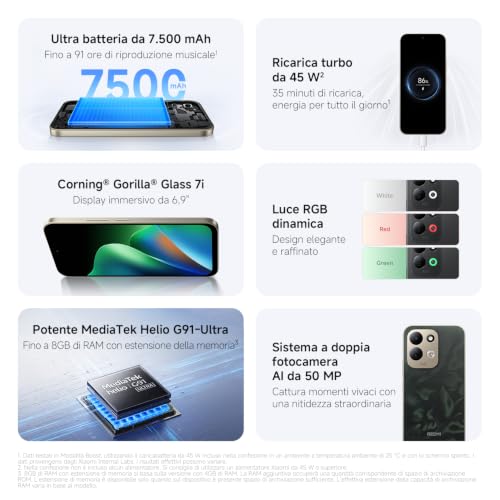
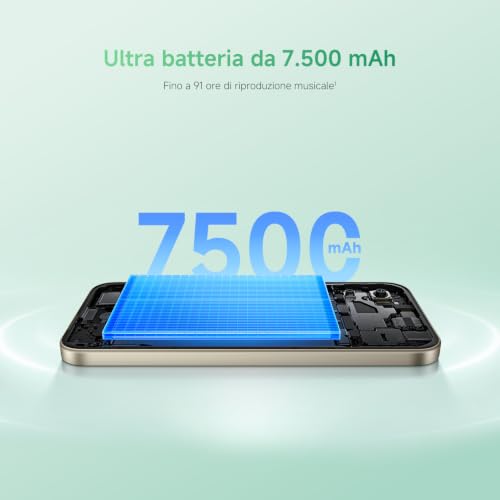
Battery capacity
7,500 mAh
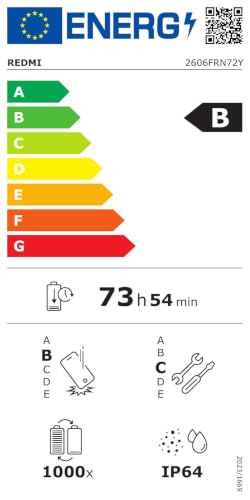
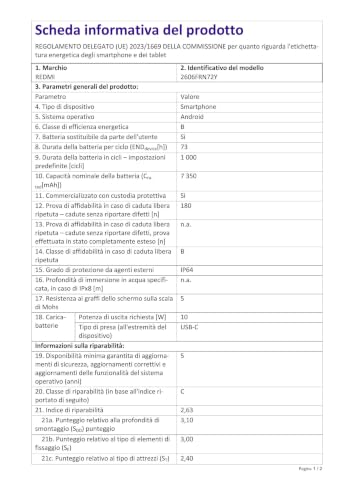
This smartphone has a battery capacity of 7,500 mAh which is larger than the batteries in 91.6% of smartphones and equal to those in 0.7% of smartphones.
Charging speed
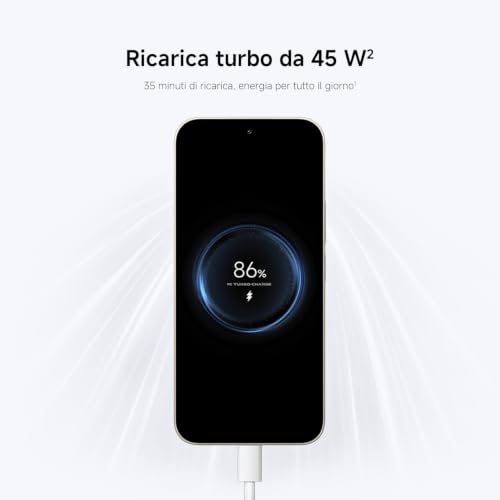
45 W
This smartphone supports charging speeds of 45 W which is faster than in 57.5% of smartphones and equal to speeds in 6.7% of smartphones.
Fast charging
yes
This smartphone supports fast charging. 93.4% of smartphones support fast charging.
GSMArena full wired charge time
96 min
This smartphone reaches a full wired charge in 96 min which is slower than 82.5% of smartphones and equal to the time of 1.2% of smartphones.
with 45W wired charging
Wireless charging
no
This smartphone does not support wireless charging. 24.8% of smartphones support wireless charging.
Show more
What reviewers say
Stereo speakers
no
This smartphone does not have stereo speakers. 63.7% of smartphones offer this.
3.5 mm headphone jack
yes
This smartphone includes a 3.5 mm headphone jack. 45.3% of smartphones offer this port.
Number of microphones
?
FM radio
yes
This smartphone includes an FM radio. 34.9% of smartphones offer FM radio functionality.
aptX Lossless
?
Show more
What reviewers say
Height
170 mm
This smartphone has a height of 170 mm which is taller than 87% of smartphones and equal to that of 0.3% of smartphones.
Width
78 mm
This smartphone has a width of 78 mm which is wider than 83% of smartphones and equal to that of 1.3% of smartphones.
Thickness
8.8 mm
This smartphone has a thickness of 8.8 mm which is thicker than 71% of smartphones and equal to that of 3.8% of smartphones.
Weight
232 g
This smartphone weighs 232 g which is heavier than 86.6% of smartphones and equal to the weight of 0.1% of smartphones.
Device volume
116,688 cm³
This smartphone has a device volume of 116,688 cm³ which is larger than 99% of smartphones.
Show more
What reviewers say

Xiaomi Redmi 17 (4GB + 256GB) vs the average smartphone

246810TotalPerformanceSoftwareCameraConnectivityDisplayBatteryAudioDesign
  • 50% larger battery capacity
    This smartphone has a larger battery capacity than the average smartphone (7,500 mAh vs 5,000 mAh). The average smartphone battery is 5,000 mAh.
    7,500 mAh vs 5,000 mAh
  • 0.23 inches inch larger screen size
    This smartphone has a larger screen size than the average smartphone (6.9 inches vs 6.67 inches). The average smartphone screen is 6.67 inches.
    6.9 inches vs 6.67 inches
  • 33.3% smaller process node
    This smartphone uses a smaller process node than the average smartphone (4 nm vs 6 nm). The average process node size is 6 nm.
    4 nm vs 6 nm
  • 16.7% lower TDP
    This smartphone has a lower TDP than the average smartphone (5 W vs 6 W). The average TDP for smartphones is 6 W.
    5 W vs 6 W
  • Newer Bluetooth version
    This smartphone supports a newer Bluetooth version than the average smartphone (5.4 vs 5.2). The average version is Bluetooth 5.2.
    5.4 vs 5.2
  • Newer Android version
    This smartphone features a newer Android version than the average smartphone (Android 16 vs Android 14). The average version is Android 14.
    Android 16 vs Android 14
  • Better display glass type
    This smartphone features a better display glass type than the average smartphone (Corning Gorilla Glass 7i vs Corning Gorilla Glass 5). The average smartphone uses Corning Gorilla Glass 5 protection.
    Corning Gorilla Glass 7i vs Corning Gorilla Glass 5
  • 2 year/s newer release date
    This smartphone has a newer release date than the average smartphone (2026 vs 2024). 2.00% of smartphones are released annually.
    August 2026
    2026 vs 2024
  • 62.5% cheaper
    Xiaomi Redmi 17 (4GB + 256GB) is cheaper than the average smartphone (£160 vs £260).
    £160 vs £260
  • 33.3% smaller process node
    This smartphone uses a smaller process node than the average smartphone (4 nm vs 6 nm). The average process node size is 6 nm.
    4 nm vs 6 nm
  • 16.7% lower TDP
    This smartphone has a lower TDP than the average smartphone (5 W vs 6 W). The average TDP for smartphones is 6 W.
    5 W vs 6 W
  • 2 year/s newer release date
    This smartphone has a newer release date than the average smartphone (2026 vs 2024). 2.00% of smartphones are released annually.
    August 2026
    2026 vs 2024
  • 5.3% faster GPU clock
    This smartphone has a higher GPU frequency than the average smartphone (1,000 MHz vs 950 MHz). The average smartphone GPU frequency is 950 MHz.
    1,000 MHz vs 950 MHz
  • Newer Android version
    This smartphone features a newer Android version than the average smartphone (Android 16 vs Android 14). The average version is Android 14.
    Android 16 vs Android 14
  • Wider front camera aperture
    This smartphone has a wider front camera aperture than the average smartphone (f/2.05 vs f/2.2). The average aperture is f/2.2.
    f/2.05 vs f/2.2
  • Newer Bluetooth version
    This smartphone supports a newer Bluetooth version than the average smartphone (5.4 vs 5.2). The average version is Bluetooth 5.2.
    5.4 vs 5.2
  • 0.23 inches inch larger screen size
    This smartphone has a larger screen size than the average smartphone (6.9 inches vs 6.67 inches). The average smartphone screen is 6.67 inches.
    6.9 inches vs 6.67 inches
  • Better display glass type
    This smartphone features a better display glass type than the average smartphone (Corning Gorilla Glass 7i vs Corning Gorilla Glass 5). The average smartphone uses Corning Gorilla Glass 5 protection.
    Corning Gorilla Glass 7i vs Corning Gorilla Glass 5
  • 50% larger battery capacity
    This smartphone has a larger battery capacity than the average smartphone (7,500 mAh vs 5,000 mAh). The average smartphone battery is 5,000 mAh.
    7,500 mAh vs 5,000 mAh
  • 36.4% faster charging speed
    This smartphone supports a faster charging speed than the average smartphone (45 W vs 33 W). The average charging speed is 33 W.
    45 W vs 33 W
  • Has a 3.5 mm headphone jack
    This smartphone features a 3.5 mm headphone jack, the average smartphone does not. 45.3% of smartphones include a standard headphone jack.
  • Has FM radio
    This smartphone features an FM radio, the average smartphone does not. 34.9% of smartphones include an FM tuner.
  • Inferior display type
    This smartphone has an inferior display type compared to the average smartphone (IPS LCD vs OLED/AMOLED). 0.00% of smartphones use the superior display type.
    IPS LCD vs OLED/AMOLED
  • Slower storage type
    This smartphone has slower storage than the average smartphone (eMMC vs UFS 3.1).
    eMMC vs UFS 3.1
  • Narrower main camera aperture
    This smartphone has a narrower main camera aperture than the average smartphone (f/1.8 vs f/1.8 & f/2.2 & f/2.4 & f/2.4). The average smartphone aperture is f/1.8 & f/2.2 & f/2.4 & f/2.4.
    f/1.8 vs f/1.8 & f/2.2 & f/2.4 & f/2.4
  • No ultrawide rear camera
    This smartphone does not have an ultrawide rear camera, while the average smartphone does. 61.9% of smartphones offer this.
  • Worse main camera video quality
    This smartphone records worse main camera video than the average smartphone. 11.80x of smartphones support 4K video recording.
    1080x30 fps vs 2160x30 fps
  • 4 GB less RAM
    This smartphone has less RAM than the average smartphone (4 GB vs 8 GB). The average smartphone has 8 GB of RAM.
    4 GB vs 8 GB
  • No stereo speakers
    This smartphone does not have stereo speakers, the average smartphone does. 63.6% of smartphones feature stereo speakers.
  • No live text recognition
    This smartphone does not support live text recognition, the average smartphone does. 52.1% of smartphones offer real-time text recognition.
  • 11.0% lower review score
    Reviews score
    6.5/ 10
    ✕
    What it is
    Average grade from independent test sites, magazines and video reviewers, 1–10.
    How we count it
    Grades: Each review's own score is converted to 1–10; without one, we grade the review ourselves. Big test sites count more, short reviews half as much as full tests. A video review counts half.
    Score: The average grade is 80% of the review mark; the number of reviews is the other 20% (1 review = 5, the typical number in this category = 8, the most-reviewed model = 10).
    Enough data: With few reviews, the average grade is pulled toward the typical grade of this category. No reviews yet: 7.5 for now.
    Share: Reviews count 25% of the overall score.
    Score distribution
    â–¼
    <55-66-77-88-99-10

    6.5

    Mark 7.2 is below the typical mark 7.9 of this category, so it cannot lift the score above the technical score

    80%

    7.1

    Average grade

    20%

    7.6

    Popularity

    Grades by review (14)
    14 video reviews, each counting half as much as a written test. Reviews count 25% of the overall score.
    User ratings collected online are not part of this score.
    6.5 vs 7.3
  • 29.5% lower sentiment score
    Sentiment score
    5.5/ 10
    ✕
    What it is
    How positive owners are about this model in their comments under video reviews and on forums. We read each comment, keep only people who say they own the model, and sort them into positive, mixed or negative.
    How we count it
    Score: We compare how satisfied this model’s owners are with the other models in this category: the typical model gets 8, the most satisfied tenth 10, the least satisfied 4. This is 80% of the owner mark; the number of owners is the other 20%.
    Enough data: A model counts with 10+ owners from 4+ different discussions. With fewer, the owner part changes nothing.
    Share: Owners count 5% of the overall score (left out in categories where fewer than 10 models have enough owner comments).
    Score distribution
    â–¼
    <55-66-77-88-99-10

    80%

    5.1

    Satisfaction

    20%

    7.2

    Popularity

    Owners (76)
    76 owners from 19 online discussions
    21% positive
    5% mixed
    74% negative
    Category average: 51% positive
    Our own analysis of online owner opinions, not a rating from any website.
    5.5 vs 7.8
  • Slower storage type
    This smartphone has slower storage than the average smartphone (eMMC vs UFS 3.1).
    eMMC vs UFS 3.1
  • 4 GB less RAM
    This smartphone has less RAM than the average smartphone (4 GB vs 8 GB). The average smartphone has 8 GB of RAM.
    4 GB vs 8 GB
  • 57.3% lower Geekbench 6 single-core benchmark score
    This smartphone performs worse in Geekbench 6 single-core than the average smartphone (402 vs 942). The average smartphone scores 942 in the Geekbench 6 single-core test.
    402 vs 942
  • 42.9% lower maximum RAM capacity
    This smartphone supports less maximum RAM than the average smartphone (8 GB vs 14 GB). The average smartphone supports 14 GB of RAM.
    8 GB vs 14 GB
  • 16.7% lower CPU boost clock speed
    This smartphone has a lower CPU boost clock speed than the average smartphone (2 GHz vs 2.4 GHz). The average smartphone has a boost clock speed of 2.4 GHz.
    2 GHz vs 2.4 GHz
  • 34.5% slower memory speed
    This smartphone has a lower memory speed than the average smartphone (1,800 MHz vs 2,750 MHz). The average smartphone has a memory speed of 2,750 MHz.
    1,800 MHz vs 2,750 MHz
  • 45% lower Geekbench 6 multi-core benchmark score
    This smartphone performs worse in Geekbench 6 multi-core than the average smartphone (1,399 vs 2,545). The average smartphone scores 2,545 in the Geekbench 6 multi-core test.
    1,399 vs 2,545
  • 43.8% lower memory bandwidth
    This smartphone has lower memory bandwidth than the average smartphone (14.4 GB/s vs 25.6 GB/s). The average smartphone has a bandwidth of 25.6 GB/s.
    14.4 GB/s vs 25.6 GB/s
  • Lower CPU base clock speed
    This smartphone has a lower CPU base clock speed than the average smartphone (2x2 GHz & 6x1.8 GHz vs 2x2.2 GHz & 6x2 GHz). The average smartphone has a base clock speed of 2x2.2 GHz & 6x2 GHz.
    2x2 GHz & 6x1.8 GHz vs 2x2.2 GHz & 6x2 GHz
  • No live text recognition
    This smartphone does not support live text recognition, the average smartphone does. 52.1% of smartphones offer real-time text recognition.
  • Lacks instant markup
    This smartphone does not support instant markup, the average smartphone does. 52.5% of smartphones include instant markup tools.
  • Narrower main camera aperture
    This smartphone has a narrower main camera aperture than the average smartphone (f/1.8 vs f/1.8 & f/2.2 & f/2.4 & f/2.4). The average smartphone aperture is f/1.8 & f/2.2 & f/2.4 & f/2.4.
    f/1.8 vs f/1.8 & f/2.2 & f/2.4 & f/2.4
  • No ultrawide rear camera
    This smartphone does not have an ultrawide rear camera, while the average smartphone does. 61.9% of smartphones offer this.
  • Worse main camera video quality
    This smartphone records worse main camera video than the average smartphone. 11.80x of smartphones support 4K video recording.
    1080x30 fps vs 2160x30 fps
  • Lower front camera megapixels
    This smartphone has lower front camera megapixels than the average smartphone (8 MP vs 16 MP). The average smartphone has a 16 MP front camera.
    8 MP vs 16 MP
  • Lower-resolution main camera
    This smartphone has a lower-resolution main camera than the average smartphone (50 MP vs 50 MP & 8 MP). The average smartphone has a 50 MP & 8 MP main camera.
    50 MP vs 50 MP & 8 MP
  • Inferior display type
    This smartphone has an inferior display type compared to the average smartphone (IPS LCD vs OLED/AMOLED). 0.00% of smartphones use the superior display type.
    IPS LCD vs OLED/AMOLED
  • Lower screen resolution
    This smartphone has a lower screen resolution than the average smartphone (720x1600 px vs 1080x2400 px). The average smartphone has a resolution of 1080x2400 px.
    720x1600 px vs 1080x2400 px
  • Lower contrast ratio
    This smartphone has a lower contrast ratio than the average smartphone (1400:1 vs 1000000:1). The average smartphone has a contrast ratio of 1000000:1.
    1,400:1 vs 1,000,000:1
  • 175 nits lower peak brightness
    This smartphone has a lower peak brightness than the average smartphone (825 nits vs 1,000 nits). The average smartphone peak brightness is 1,000 nits.
    in HBM mode, 675 nits typical
    825 nits vs 1,000 nits
  • 34 min slower full wired charge time
    This smartphone has a slower full wired charge time than the average smartphone (96 min vs 62 min). The average smartphone takes 62 min to charge.
    with 45W wired charging
    96 min vs 62 min
  • No stereo speakers
    This smartphone does not have stereo speakers, the average smartphone does. 63.6% of smartphones feature stereo speakers.
  • 17.9% heavier
    This smartphone is heavier than the average smartphone (232 g vs 196.8 g). The average smartphone weighs 196.8 g.
    232 g vs 196.8 g
  • 1,132.89x larger volume
    This smartphone has a larger volume than the average smartphone (116,688 cm³ vs 103 cm³). The average smartphone volume is 103 cm³.
    116,688 cm³ vs 103 cm³
  • 2 mm wider
    This smartphone is wider than the average smartphone (78 mm vs 76 mm). The average smartphone has a width of 76 mm.
    78 mm vs 76 mm
  • 6.4 mm taller
    This smartphone is taller than the average smartphone (170 mm vs 163.6 mm). The average smartphone has a height of 163.6 mm.
    170 mm vs 163.6 mm
  • Lower IP rating
    This smartphone has a lower IP rating than the average smartphone (IP64 vs IP67). 0.00% of smartphones have a higher IP rating.
    IP64 vs IP67
  • 0.5 mm thicker
    This smartphone is thicker than the average smartphone (8.8 mm vs 8.3 mm). The average smartphone has a thickness of 8.3 mm.
    8.8 mm vs 8.3 mm

Video reviews

Hands-on testing, unboxing, and real-world video evaluations

7.0
AllRoundReview
≈ estimated
10/09/2026
Hands-on review · battery, camera, gaming and performance tests
Verdict
Xiaomi Redmi 17 is worth considering for battery-focused buyers, but its weaker screen and performance hold it back.
9.0
Eufracio López 502
≈ estimated
10/09/2026
Hands-on review · photo, video and sound tests
Verdict
Xiaomi Redmi 17 is recommended for now given its price class, with strong photos for a budget phone.
5.0
Audu Buba
≈ estimated
06/09/2026
Hands-on review · comparison with previous model, battery and performance
Verdict
Xiaomi Redmi 17 is not a real upgrade over the Redmi 15; it is only worth it if battery life is your top priority.
7.0
Unbox With Adaora
≈ estimated
04/09/2026
Hands-on review · 3-day battery test and daily use
Verdict
Xiaomi Redmi 17 has strong battery life, but its 4GB RAM holds it back; the 6GB version is the one to choose.
7.0
Izzi Boye
≈ estimated
04/09/2026
Hands-on review · gaming, battery and camera tests
Verdict
Xiaomi Redmi 17 is fine as a backup or first phone with a great battery, but not for upgrading from the previous model.
7.0
Valor Reviews
≈ estimated
01/09/2026
Hands-on review · battery, charging, display and performance tests
Verdict
Xiaomi Redmi 17 is a budget phone that covers everyday tasks, with battery and charging as its main strengths.
8.0
Miah Does Tech
≈ estimated
21/08/2026
Hands-on review · several days of use
Verdict
Xiaomi Redmi 17 suits buyers who want a phone that lasts from one day to the next without hunting for a charger.
6.0
TechSimple
≈ estimated
18/08/2026
Hands-on review · battery, camera and design tests
Verdict
Xiaomi Redmi 17 has a strong battery and fast charging, but its weak processor and cameras hold it back.
8.0
Nicole Yahaya
≈ estimated
17/09/2026
One-month review · features, battery, display and gaming
Verdict
Xiaomi Redmi 17 is worth buying if its features suit you, though the 720p screen may disappoint.
Not graded
Hands-on video, no verdict
Not graded

Third-party reviews

What customers like about Xiaomi Redmi 17 (4GB + 256GB)

  • A 7500 mAh battery gives very long running time between charges.
  • 45 W charging speeds up a flat battery.
  • The 6.9 inch screen at 120 Hz suits video and games.
  • 825 nits peak brightness keeps the screen readable in sunlight.
  • 395 ppi pixel density makes text and images sharp.
  • A 50 MP main camera with f/1.8 aperture takes good photos in daylight.

What customers don't like about Xiaomi Redmi 17 (4GB + 256GB)

  • 4 GB of RAM slows down when many apps stay open.
  • A full charge takes about 96 min.
  • There is no wireless charging.
  • No optical image stabilization, so handheld video shakes more.
  • The processor is modest for demanding games.

Verdict

A 7500 mAh battery and 45 W charging are the main reasons to look at the Xiaomi Redmi 17 (4GB + 256GB). The 6.9 inch screen runs at 120 Hz and reaches 825 nits, so it stays easy to read outdoors. A 50 MP main camera with f/1.8 aperture takes detailed photos in good light. The 256 GB of storage holds a large library of films and apps. The 4 GB of RAM and a modest processor mean heavy multitasking will feel slow. A full charge takes about 96 min, so plug it in at night. It has no wireless charging and no optical image stabilization. It suits a buyer who watches a lot of video, cares about battery life and does not need fast multitasking.

Compare Xiaomi Redmi 17 (4GB + 256GB) with other smartphones

1Product to compare no. 1
VS
2Product to compare no. 2
VS
3Product to compare no. 3 (optional)

Graphic comparison of Xiaomi Redmi 17 (4GB + 256GB) and other smartphones

No results found