Scored using Smartphones Methodology v3.0
Smartphones Methodology v3.0
Mathematical & Unbiased Scoring
Products in this category are scored under Frontum Smartphones Methodology v3.0: the technical score from the specifications is the base, and independent expert and video reviews (up to ±0.5 points), owner opinions (up to ±0.3) and best-of lists (up to +0.3) move it up or down.
Explore Smartphones Methodology v3.0

DOOGEE V Max 5G (20GB + 256GB) review: 196 specs compared

Avg. price:~£300RAM capacity:20 GBInternal storage:256 GBScreen size:6.58 inchesMain camera megapixels:108 MP & 20 MP & 16 MP

DOOGEE V Max 5G (20GB + 256GB) Review: Compare 196 technical specifications and 6 expert and video reviews to see how this product ranks in the Smartphones category and whether it is worth buying.
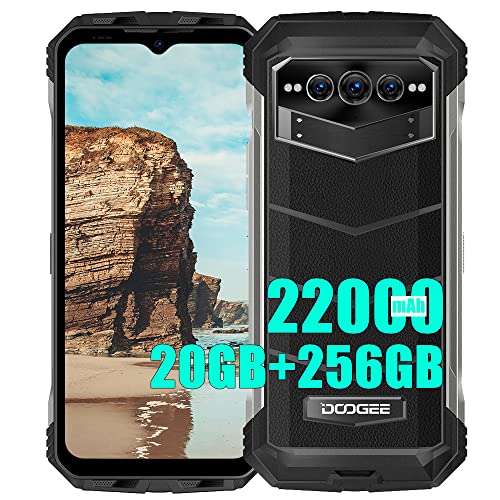
DOOGEE V Max 5G (20GB + 256GB)
6.9/10

Overall score

Score
6.9/ 10
✕
What it is
Our main score for this model, 1–10. It combines specs, best-of lists, expert reviews and owners.
How we count it
Parts: Technical score 35%, List score 30%, Reviews score 25%, Sentiment score 10%
Marks: Each part gets a mark out of 10. For reviews, lists and owners, a typical model in this category gets about 8 and the best one gets 10.
No data yet: A part with no data shows "?". It counts as the mark of a weaker model in this category (4 in 5 models with data score higher). This way, models with reviews, lists and owners usually come out ahead.
Score distribution
▼
<55-66-77-88-99-10
Score components

35%

6.6

Technical score

30%

?

List scoreNot enough data yet, so we use 7.5, the mark of a weaker model in this category

25%

6.6

Reviews score

10%

?

Sentiment scoreNot enough data yet, so we use 7.0, the mark of a weaker model in this category

▼Worse than 68% of smartphones
7.5

Value for money

Value for money
7.5/ 10
✕
What it is
An indicator that combines the smartphone's overall rating with its cost.
When it matters
When you are looking for a smartphone with a good balance between quality and price.
Score distribution
▼
<55-66-77-88-99-10
Score components

70%

6.9

Overall score

30%

8.9

Price

▼Worse than 70%
6.6

Technical score

Technical score
6.6/ 10
✕
What it is
How good the specs are compared with the other models in this category, 1–10.
How we count it
Areas: We rate the specs in each area against the other models in this category.
Weighting: The areas that matter most to buyers count more. The shares are shown under Score components.
Share: The technical score is 35% of the overall score.
Score distribution
▼
<55-66-77-88-99-10
Score components

25%

6.9

Performance

18%

6.9

Camera

15%

5.2

Display

15%

6.8

Battery

10%

7.8

Software

10%

7.5

Connectivity

4%

4.2

Audio

3%

5.4

Design

▼Worse than 53%
6.6

Reviews score

Reviews score
6.6/ 10
✕
What it is
Average grade from independent test sites, magazines and video reviewers, 1–10.
How we count it
Grades: Each review's own score is converted to 1–10; without one, we grade the review ourselves. Big test sites count more, short reviews half as much as full tests. A video review counts half.
Score: The average grade is 80% of the review mark; the number of reviews is the other 20% (1 review = 5, the typical number in this category = 8, the most-reviewed model = 10).
Enough data: With few reviews, the average grade is pulled toward the typical grade of this category. No reviews yet: 7.5 for now.
Share: Reviews count 25% of the overall score.
Score distribution
▼
<55-66-77-88-99-10

6.6

Mark 7.7 is below the typical mark 7.9 of this category, so it cannot lift the score above the technical score

80%

7.9

Average grade

20%

6.8

Popularity

Grades by review (6)
2 reviews: 1 with a printed score, 1 estimated from the review. 4 video reviews, each counting half as much as a written test. Reviews count 25% of the overall score.
User ratings collected online are not part of this score.
▼Worse than 70%
?

List score

List score
7.5/ 10
✕
What it is
How often independent test sites, magazines and video reviewers put this model in their best-of lists for this category.
How we count it
Points: The model in the most lists of this category gets 10; the others get 8 to 10 in proportion. In no list yet: 7.5. Lists count 30% of the overall score.
Enough data: Every list counts, even a single one. With fewer than 5 best-of lists in the category, this part is left out.
Lists with this model (0)
Not in any best-of list yet, so this part counts as 7.5. Models in a list get 8 to 10.
Not in any best-of list yet

What reviewers say about the DOOGEE V Max 5G (20GB + 256GB)

Based on 2 · 4

Reviewers praise the long battery life, strong performance and tough build, but everyone finds it heavy and bulky, with a dim screen.
Praised
Criticised
Pick a topic to see who said what
Loading...
Loading category ranking...

Technical Specifications of smartphone DOOGEE V Max 5G (20GB + 256GB)

Technical score
Technical score
6.6/ 10
✕
What it is
How good the specs are compared with the other models in this category, 1–10.
How we count it
Areas: We rate the specs in each area against the other models in this category.
Weighting: The areas that matter most to buyers count more. The shares are shown under Score components.
Share: The technical score is 35% of the overall score.
Score distribution
▼
<55-66-77-88-99-10
Score components:

25%

6.9

Performance

18%

6.9

Camera

15%

5.2

Display

15%

6.8

Battery

10%

7.8

Software

10%

7.5

Connectivity

4%

4.2

Audio

3%

5.4

Design

6.6
Reviews score
6.6
List score
?
Value for money
Value for money
7.5/ 10
✕
What it is
An indicator that combines the smartphone's overall rating with its cost.
When it matters
When you are looking for a smartphone with a good balance between quality and price.
Score distribution
▼
<55-66-77-88-99-10
Score components:

70%

6.9

Overall score

30%

8.9

Price

7.5
Processor model
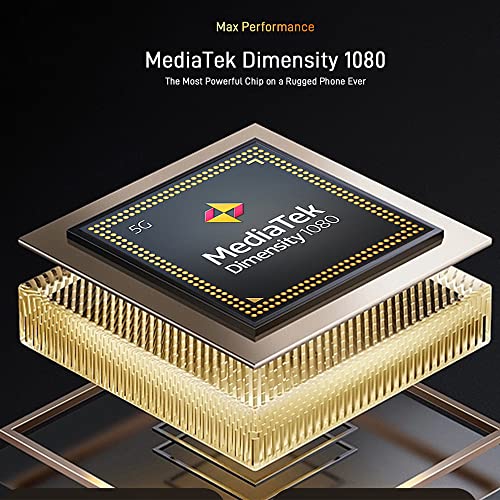
MediaTek Dimensity 1080
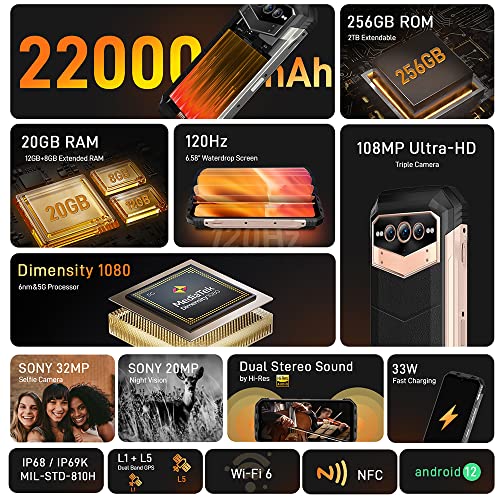
This smartphone uses the MediaTek Dimensity 1080 processor which is faster than processors in 57% of smartphones and equal to processors in 0.5% of smartphones.
Storage type
?
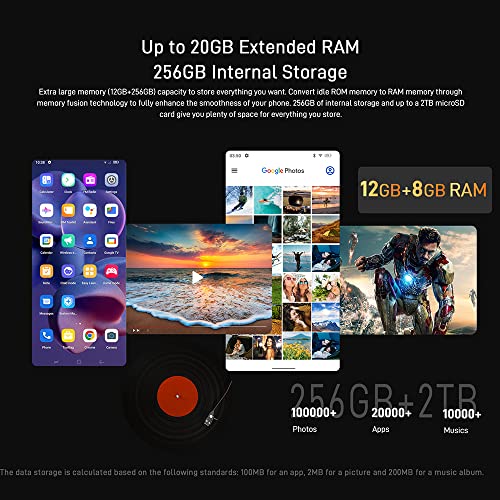
RAM capacity
20 GB
This smartphone has a RAM capacity of 20 GB which is larger than the RAM capacity of 96.1% of smartphones and equal to that of 0.7% of smartphones.
Internal storage
256 GB
This smartphone has an internal storage capacity of 256 GB which is larger than the storage of 38.9% of smartphones and equal to that of 38.4% of smartphones.
CPU boost clock speed
2.6 GHz
The CPU boost clock speed of this smartphone is 2.6 GHz which is higher than the boost speed of 57.3% of smartphones and equal to that of 3.8% of smartphones.
Show more
What reviewers say
Operating system
Android
This smartphone runs Android, which is more mainstream than the system in 4.8% of smartphones and the same as in 95.2% of smartphones.
Android 12
Android version
Android 12
This smartphone runs Android version Android 12 which is older than that found in 67.1% of smartphones and equal to that in 13.1% of smartphones.
Direct OS updates
no
This smartphone does not support direct OS updates. 20.1% of smartphones offer this.
Promised software updates
?
Open-source OS
yes
This smartphone runs an open-source operating system. 5.2% of smartphones offer this.
Show more
Multi-lens main camera
yes
This smartphone includes a multi-lens main camera system. 93.7% of smartphones include multi-lens setups.
Main camera megapixels
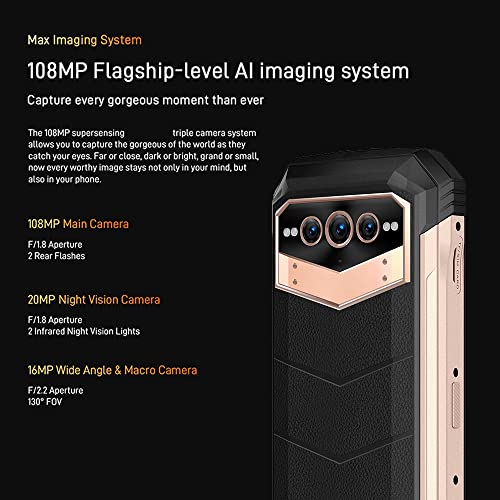
108 MP & 20 MP & 16 MP
This smartphone has a main camera resolution of 108 MP & 20 MP & 16 MP which is higher than that of 96.3% of smartphones and equal to that of 0.1% of smartphones.
Main camera aperture
f/1.8 & f/1.8 & f/2.2
This smartphone has a main camera aperture of f/1.8 & f/1.8 & f/2.2 which is wider than that of 69% of smartphones and equal to that of 0.9% of smartphones.
Main camera sensor area
52.9 mm²
This smartphone has a main camera sensor area of 52.9 mm² which is larger than the main camera sensor area of 82.3% of smartphones and equal to that of 2.8% of smartphones.
Main camera pixel size
0.7 µm
This smartphone has a main camera pixel size of 0.7 µm which is smaller than in 64.6% of smartphones and equal to the size in 10.4% of smartphones.
2.1 binned
Show more
What reviewers say
Number of SIM slots
2
This smartphone has 2 SIM slots, which is more than in 3.7% of smartphones and equal to the number in 96.2% of smartphones.
Cellular module
yes
This smartphone includes a cellular module. 100% of smartphones include cellular modules.
eSIM support
no
This smartphone does not have eSIM support. 19.9% of smartphones offer this.
5G connectivity
yes
This smartphone supports 5G connectivity. 66.6% of smartphones support 5G.
LTE support
yes
This smartphone supports LTE. 99.7% of smartphones include LTE connectivity.
Show more
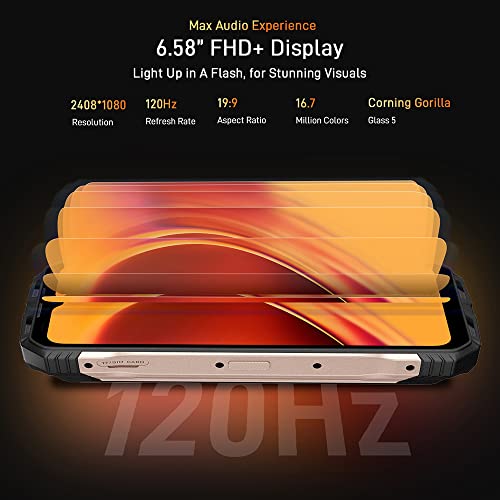
Screen size
6.58 inches
This smartphone has a screen size of 6.58 inches which is smaller than the screens of 68.6% of smartphones and equal to those of 2.3% of smartphones.
Screen resolution
1080x 2408 px
This smartphone has a screen resolution of 1080x2408 px which is higher than that of 56.9% of smartphones and equal to that of 4.2% of smartphones.
Pixel density
401 ppi
This smartphone has a pixel density of 401 ppi which is higher than that of 58.7% of smartphones and equal to that of 2.9% of smartphones.
Display type
IPS LCD
This smartphone uses a IPS LCD display type. 0% of smartphones use this display technology.
Refresh rate
120 Hz
This smartphone supports a refresh rate of 120 Hz which is higher than in 34.4% of smartphones and equal to that in 55.6% of smartphones.
Show more
What reviewers say
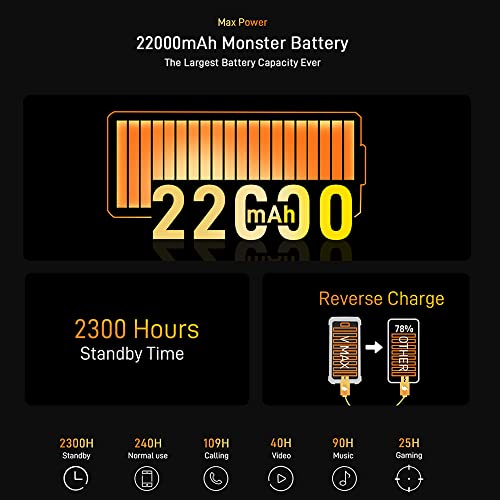
Battery capacity
22,000 mAh
This smartphone has a battery capacity of 22,000 mAh which is larger than the batteries in 99.4% of smartphones and equal to those in 0.4% of smartphones.
Charging speed
33 W
This smartphone supports charging speeds of 33 W which is faster than in 38.9% of smartphones and equal to speeds in 12% of smartphones.
Fast charging
yes
This smartphone supports fast charging. 93.2% of smartphones support fast charging.
GSMArena full wired charge time
?
Wireless charging
no
This smartphone does not support wireless charging. 25.1% of smartphones support wireless charging.
Show more
What reviewers say
Stereo speakers
yes
This smartphone includes stereo speakers. 64.3% of smartphones provide stereo audio.
3.5 mm headphone jack
no
This smartphone does not have a headphone jack. 45.1% of smartphones offer this.
Number of microphones
2
This smartphone includes 2 microphones, which is more than in 10.3% of smartphones and equal to the number in 66.9% of smartphones.
FM radio
yes
This smartphone includes an FM radio. 34.3% of smartphones offer FM radio functionality.
aptX Lossless
no
This smartphone does not support aptX Lossless Bluetooth audio. 12.5% of smartphones offer this.
Show more
Height
178.5 mm
This smartphone has a height of 178.5 mm which is taller than 97.3% of smartphones and equal to that of 0.7% of smartphones.
Width
83.1 mm
This smartphone has a width of 83.1 mm which is wider than 94% of smartphones and equal to that of 0.7% of smartphones.
Thickness
27.3 mm
This smartphone has a thickness of 27.3 mm which is thicker than 99.3% of smartphones.
Weight
533 g
This smartphone weighs 533 g which is heavier than 98.9% of smartphones.
Device volume
405 cm³
This smartphone has a device volume of 405 cm³ which is larger than 99.3% of smartphones.
Show more
What reviewers say

DOOGEE V Max 5G (20GB + 256GB) vs the average smartphone

246810TotalPerformanceSoftwareCameraConnectivityDisplayBatteryAudioDesign
  • 12 GB more RAM
    This smartphone has more RAM capacity than the average smartphone (20 GB vs 8 GB). The average smartphone has 8 GB of RAM.
    20 GB vs 8 GB
  • 4.4x larger battery capacity
    This smartphone has a larger battery capacity than the average smartphone (22,000 mAh vs 5,000 mAh). The average smartphone battery is 5,000 mAh.
    22,000 mAh vs 5,000 mAh
  • 65.3% larger main camera sensor area
    This smartphone has a larger main camera sensor area than the average smartphone (52.9 mm² vs 32 mm²). The average main camera sensor area is 32 mm².
    52.9 mm² vs 32 mm²
  • Higher-resolution main camera
    This smartphone has a higher main camera resolution than the average smartphone (108 MP & 20 MP & 16 MP vs 50 MP & 8 MP). The average smartphone main camera has 50 MP & 8 MP megapixels.
    108 MP & 20 MP & 16 MP vs 50 MP & 8 MP
  • 2.74x higher PCMark Work 3.0 battery benchmark
    This smartphone has a higher PCMark Work 3.0 battery benchmark score than the average smartphone (2,153 min vs 786 min). The average score is 786 min.
    2,153 min vs 786 min
  • Newer DDR memory version
    This smartphone supports a newer DDR version than the average smartphone (5 vs 4). The average DDR version is 4.
    5 vs 4
  • Wider front camera aperture
    This smartphone has a wider front camera aperture than the average smartphone (f/1.8 vs f/2.2). The average aperture is f/2.2.
    f/1.8 vs f/2.2
  • 2x more L2 cache
    This smartphone has more L2 cache than the average smartphone (2048 KB vs 1,024 KB). The average L2 cache is 1,024 KB.
    2,048 KB vs 1,024 KB
  • 12 GB more RAM
    This smartphone has more RAM capacity than the average smartphone (20 GB vs 8 GB). The average smartphone has 8 GB of RAM.
    20 GB vs 8 GB
  • Newer DDR memory version
    This smartphone supports a newer DDR version than the average smartphone (5 vs 4). The average DDR version is 4.
    5 vs 4
  • 2x more L2 cache
    This smartphone has more L2 cache than the average smartphone (2048 KB vs 1,024 KB). The average L2 cache is 1,024 KB.
    2,048 KB vs 1,024 KB
  • 2 more memory channels
    This smartphone has more memory channels than the average smartphone (4 vs 2). The average smartphone has 2 memory channels.
    4 vs 2
  • 2x higher memory bandwidth
    This smartphone has higher memory bandwidth than the average smartphone (51.2 GB/s vs 25.6 GB/s). The average memory bandwidth is 25.6 GB/s.
    51.2 GB/s vs 25.6 GB/s
  • 16.7% lower TDP
    This smartphone has a lower TDP than the average smartphone (5 W vs 6 W). The average TDP for smartphones is 6 W.
    5 W vs 6 W
  • Higher CPU base clock speed
    This smartphone has a higher CPU base clock speed than the average smartphone (4x2.6 GHz & 4x2 GHz vs 2x2.2 GHz & 6x2 GHz). The average smartphone has a base clock speed of 2x2.2 GHz & 6x2 GHz.
    4x2.6 GHz & 4x2 GHz vs 2x2.2 GHz & 6x2 GHz
  • 8.3% higher CPU boost clock speed
    This smartphone has a higher CPU boost clock speed than the average smartphone (2.6 GHz vs 2.4 GHz). The average smartphone has a boost clock speed of 2.4 GHz.
    2.6 GHz vs 2.4 GHz
  • 2x more L1
    This smartphone has more L1 cache than the average smartphone (64 KB vs 32 KB). The average L1 cache is 32 KB.
    64 KB vs 32 KB
  • 14.3% higher maximum RAM
    This smartphone supports more maximum RAM than the average smartphone (16 GB vs 14 GB). The average smartphone supports 14 GB RAM.
    16 GB vs 14 GB
  • 16.4% faster memory speed
    This smartphone supports faster memory speed than the average smartphone (3,200 MHz vs 2,750 MHz). The average smartphone supports 2,750 MHz memory speed.
    3,200 MHz vs 2,750 MHz
  • 65.3% larger main camera sensor area
    This smartphone has a larger main camera sensor area than the average smartphone (52.9 mm² vs 32 mm²). The average main camera sensor area is 32 mm².
    52.9 mm² vs 32 mm²
  • Higher-resolution main camera
    This smartphone has a higher main camera resolution than the average smartphone (108 MP & 20 MP & 16 MP vs 50 MP & 8 MP). The average smartphone main camera has 50 MP & 8 MP megapixels.
    108 MP & 20 MP & 16 MP vs 50 MP & 8 MP
  • Wider front camera aperture
    This smartphone has a wider front camera aperture than the average smartphone (f/1.8 vs f/2.2). The average aperture is f/2.2.
    f/1.8 vs f/2.2
  • Has a dual-tone LED flash
    This smartphone features a dual-tone LED flash, the average smartphone does not. 40.8% of smartphones include dual-tone flash.
  • Higher front camera megapixels
    This smartphone has more front camera megapixels than the average smartphone (32 MP vs 16 MP). The average front camera has 16 MP megapixels.
    32 MP vs 16 MP
  • Newer Wi-Fi version
    This smartphone has more advanced Wi-Fi than the average smartphone (Wi-Fi 6 (802.11ax), Wi-Fi 5 (802.11ac), Wi-Fi 4 (802.11n) vs Wi-Fi 5 (802.11ac), Wi-Fi 4 (802.11n)).
    Wi-Fi 6 (802.11ax), Wi-Fi 5 (802.11ac), Wi-Fi 4 (802.11n) vs Wi-Fi 5 (802.11ac), Wi-Fi 4 (802.11n)
  • Higher screen resolution
    This smartphone has a higher screen resolution than the average smartphone (1080x2408 px vs 1080x2400 px). The average smartphone resolution is 1080x2400 px.
    1080x2408 px vs 1080x2400 px
  • 1.5% higher pixel density
    This smartphone has a higher pixel density than the average smartphone (401 ppi vs 395 ppi). The average smartphone has a pixel density of 395 ppi.
    401 ppi vs 395 ppi
  • 4.4x larger battery capacity
    This smartphone has a larger battery capacity than the average smartphone (22,000 mAh vs 5,000 mAh). The average smartphone battery is 5,000 mAh.
    22,000 mAh vs 5,000 mAh
  • 2.74x higher PCMark Work 3.0 battery benchmark
    This smartphone has a higher PCMark Work 3.0 battery benchmark score than the average smartphone (2,153 min vs 786 min). The average score is 786 min.
    2,153 min vs 786 min
  • Has FM radio
    This smartphone features an FM radio, the average smartphone does not. 34.3% of smartphones include an FM tuner.
  • 18.8% higher French repairability index
    This smartphone has a higher French repairability index score than the average smartphone (9.5 vs 8). The average score is 8.
    9.5 vs 8
  • 1.5 m deeper water resistance
    This smartphone has a deeper water resistance rating than the average smartphone (1.5 m vs 0 m). The average depth rating is 0 m.
    1.5 m vs 0 m
  • Better IP rating
    This smartphone has a better IP rating than the average smartphone (IP68 vs IP67). The average IP rating is IP67.
    IP68 vs IP67
  • Inferior display type
    This smartphone has an inferior display type compared to the average smartphone (IPS LCD vs OLED/AMOLED). 0.00% of smartphones use the superior display type.
    IPS LCD vs OLED/AMOLED
  • No live text recognition
    This smartphone does not support live text recognition, the average smartphone does. 51.3% of smartphones offer real-time text recognition.
  • Lacks multithreading support
    This smartphone does not support multithreading, the average smartphone does. 81.4% of smartphones support multithreading.
  • 39.4% lower screen brightness
    This smartphone has a lower screen brightness than the average smartphone (400 nits vs 660 nits). The average smartphone has a brightness of 660 nits.
    400 nits vs 660 nits
  • No LDAC support
    This smartphone does not support LDAC, the average smartphone does. 60.1% of smartphones support LDAC.
  • Lacks app tracking protection
    This smartphone does not have app tracking protection, the average smartphone does. 71.1% of smartphones include app tracking protection.
  • 2.72x heavier
    This smartphone is heavier than the average smartphone (533 g vs 196.2 g). The average smartphone weighs 196.2 g.
    533 g vs 196.2 g
  • No aptX HD
    This smartphone does not support aptX HD, the average smartphone does. 50.2% of smartphones support aptX HD.
  • 9.6% lower review score
    Reviews score
    6.6/ 10
    ✕
    What it is
    Average grade from independent test sites, magazines and video reviewers, 1–10.
    How we count it
    Grades: Each review's own score is converted to 1–10; without one, we grade the review ourselves. Big test sites count more, short reviews half as much as full tests. A video review counts half.
    Score: The average grade is 80% of the review mark; the number of reviews is the other 20% (1 review = 5, the typical number in this category = 8, the most-reviewed model = 10).
    Enough data: With few reviews, the average grade is pulled toward the typical grade of this category. No reviews yet: 7.5 for now.
    Share: Reviews count 25% of the overall score.
    Score distribution
    ▼
    <55-66-77-88-99-10

    6.6

    Mark 7.7 is below the typical mark 7.9 of this category, so it cannot lift the score above the technical score

    80%

    7.9

    Average grade

    20%

    6.8

    Popularity

    Grades by review (6)
    2 reviews: 1 with a printed score, 1 estimated from the review. 4 video reviews, each counting half as much as a written test. Reviews count 25% of the overall score.
    User ratings collected online are not part of this score.
    6.6 vs 7.3
  • 1.9% worse value for money
    DOOGEE V Max 5G (20GB + 256GB) has worse value for money than the average smartphone (7.52 vs 7.7).
    7.52 vs 7.66
  • Lacks multithreading support
    This smartphone does not support multithreading, the average smartphone does. 81.4% of smartphones support multithreading.
  • 50% less L3 cache
    This smartphone has a smaller L3 cache than the average smartphone (2048 KB vs 4,096 KB). The average smartphone has an L3 cache of 4,096 KB.
    2,048 KB vs 4,096 KB
  • Worse processor
    This smartphone uses a worse processor than the average smartphone (MediaTek Dimensity 1080 vs Qualcomm Snapdragon 7 Gen 3).
    MediaTek Dimensity 1,080 vs Qualcomm Snapdragon 7 Gen 3
  • Lacks NX Bit security
    This smartphone does not support NX Bit, the average smartphone does. 94.8% of smartphones support NX Bit.
  • Lacks ARM TrustZone
    This smartphone does not support ARM TrustZone, the average smartphone does. 98.1% of smartphones support ARM TrustZone.
  • 60.7% lower 3DMark Steel Nomad benchmark
    This smartphone performs worse in 3DMark Steel Nomad than the average smartphone (239 vs 608). The average smartphone scores 608.
    239 vs 608
  • 48.5% lower 3DMark Wild Life Extreme benchmark
    This smartphone scores lower in 3DMark Wild Life Extreme than the average smartphone (631 vs 1,224.5). The average smartphone scores 1,224.5.
    631 vs 1,224.5
  • 27.2% lower 3DMark Wild Life benchmark
    This smartphone performs worse in the 3DMark Wild Life benchmark than the average smartphone (2,268 vs 3,115). The average smartphone scores 3,115 in this benchmark.
    2,268 vs 3,115
  • 1 year/s older release date
    This smartphone is an older model than the average smartphone (2023 vs 2024). 1.00% of smartphones were released more recently.
    February 2023
    2023 vs 2024
  • No live text recognition
    This smartphone does not support live text recognition, the average smartphone does. 51.3% of smartphones offer real-time text recognition.
  • Lacks app tracking protection
    This smartphone does not have app tracking protection, the average smartphone does. 71.1% of smartphones include app tracking protection.
  • Older Android version
    This smartphone runs an older Android version than the average smartphone (Android 12 vs Android 14). The average smartphone runs Android version Android 14.
    Android 12 vs Android 14
  • 0.1 µm smaller main camera pixel size
    This smartphone has a smaller main camera pixel size than the average smartphone (0.7 µm vs 0.8 µm). The average smartphone has a pixel size of 0.8 µm.
    2.1 binned
    0.7 µm vs 0.8 µm
  • Inferior display type
    This smartphone has an inferior display type compared to the average smartphone (IPS LCD vs OLED/AMOLED). 0.00% of smartphones use the superior display type.
    IPS LCD vs OLED/AMOLED
  • 39.4% lower screen brightness
    This smartphone has a lower screen brightness than the average smartphone (400 nits vs 660 nits). The average smartphone has a brightness of 660 nits.
    400 nits vs 660 nits
  • 520 nits lower peak brightness
    This smartphone has a lower peak brightness than the average smartphone (480 nits vs 1,000 nits). The average smartphone peak brightness is 1,000 nits.
    480 nits vs 1,000 nits
  • 0.09 inches inch smaller screen size
    This smartphone has a smaller screen size than the average smartphone (6.6 inches vs 6.67 inches). The average smartphone has a screen size of 6.67 inches.
    6.58 inches vs 6.67 inches
  • No LDAC support
    This smartphone does not support LDAC, the average smartphone does. 60.1% of smartphones support LDAC.
  • No aptX HD
    This smartphone does not support aptX HD, the average smartphone does. 50.2% of smartphones support aptX HD.
  • 2.72x heavier
    This smartphone is heavier than the average smartphone (533 g vs 196.2 g). The average smartphone weighs 196.2 g.
    533 g vs 196.2 g
  • 19 mm thicker
    This smartphone is thicker than the average smartphone (27.3 mm vs 8.3 mm). The average smartphone has a thickness of 8.3 mm.
    27.3 mm vs 8.3 mm
  • 3.97x larger volume
    This smartphone has a larger volume than the average smartphone (405 cm³ vs 102 cm³). The average smartphone volume is 102 cm³.
    405 cm³ vs 102 cm³
  • 7.1 mm wider
    This smartphone is wider than the average smartphone (83.1 mm vs 76 mm). The average smartphone has a width of 76 mm.
    83.1 mm vs 76 mm
  • 14.9 mm taller
    This smartphone is taller than the average smartphone (178.5 mm vs 163.6 mm). The average smartphone has a height of 163.6 mm.
    178.5 mm vs 163.6 mm

Video reviews

Hands-on testing, unboxing, and real-world video evaluations

9.0
korguenkomodo
≈ estimated
28/05/2023
Hands-on review · gaming, battery and outdoor use
Verdict
DOOGEE V Max 5G is a solid phone, with its big battery and tough build as the main draws.
7.0
TechTablets
≈ estimated
17/05/2023
Long-term use · off-grid battery and rugged build
Verdict
DOOGEE V Max 5G is great for off-grid or trade use, but it is bulky, with weak video and a hard-to-read outdoor screen.
8.0
Redskull
≈ estimated
08/02/2023
Hands-on review · battery life, speed, cameras and video
Verdict
DOOGEE V Max 5G is strong for long trips and fast enough, though its heavy body and dim screen are the main drawbacks.
Not graded

Expert reviews

In-depth analysis and verdict from leading tech publications
8.0
techradar.com
✓ explicit
22/02/2023
Hands-on review · Huge-battery rugged phone
Verdict
The DOOGEE V Max 5G is a rugged phone with a 22000mAh battery that can last a week or more, but its size and weight make it hard to pocket.
7.0
smartzone.de
≈ estimated
23/03/2023
Hands-on test · Giant-battery phone
Verdict
The DOOGEE V Max is a capable, sturdy phone with a 120Hz screen and good cameras, but it is huge and hard to use one-handed.

Third-party reviews

What customers like about DOOGEE V Max 5G (20GB + 256GB)

  • Exceptional battery life (22,000mAh) lasting 6–10 days on a single charge.
  • High-performance Dimensity chipset coupled with massive RAM (up to 32GB) for smooth multitasking.
  • Extreme durability with IP68, IP69K, and MIL-STD-810H certifications for harsh environments.
  • Versatile camera system including a high-resolution 108MP/200MP main sensor and 20MP night vision.
  • Smooth 120Hz display refresh rate providing a responsive user experience.
  • Practical outdoor features like reverse charging to power other devices and custom action buttons.

What customers don't like about DOOGEE V Max 5G (20GB + 256GB)

  • Excessive weight (over 530g) and bulk, making it uncomfortable for long-term handheld use or pocket carry.
  • Slow charging speeds, taking up to 4.5–6 hours for a full charge despite fast-charging support.
  • Underwhelming screen brightness (peak ~480 nits) that struggles in direct sunlight.
  • Poor audio quality from built-in speakers, noted as quiet or lacking bass.
  • Inconsistent software support with limited Android OS updates and security patches.
  • Mediocre call and microphone quality, with reports of muffled voices in some environments.

Verdict

The Doogee V Max is a rugged smartphone built for extreme endurance, featuring an enormous 22,000mAh battery that can last for days on a single charge and even act as a power bank via OTG. It boasts a powerful MediaTek Dimensity 1080 octa-core processor, a substantial 20GB of RAM (via virtual expansion from 12GB), and 256GB of internal storage expandable up to 2TB, ensuring smooth performance and ample space. The device is designed for durability with an IP68/IP69K and MIL-STD-810H rating for water, dust, and shock resistance, and features a 6.58-inch FHD+ IPS display with a smooth 120Hz refresh rate. Its camera system includes a versatile 108MP main sensor, a 20MP night vision camera, and a 16MP ultra-wide lens. The main pros are its phenomenal battery life, robust build quality, and solid performance for a rugged phone. The main cons include its significant weight and bulk (over 500g) which makes it unpocketable, a relatively slow 33W charging speed given the battery size, and the lack of high-resolution support (Widevine L1) for streaming services like Netflix.

Compare DOOGEE V Max 5G (20GB + 256GB) with other smartphones

1Product to compare no. 1
VS
2Product to compare no. 2
VS
3Product to compare no. 3 (optional)

Graphic comparison of DOOGEE V Max 5G (20GB + 256GB) and other smartphones

No results found