Scored using Smartphones Methodology v3.0
Smartphones Methodology v3.0
Mathematical & Unbiased Scoring
Products in this category are scored under Frontum Smartphones Methodology v3.0: the technical score from the specifications is the base, and independent expert and video reviews (up to ±0.5 points), owner opinions (up to ±0.3) and best-of lists (up to +0.3) move it up or down.
Explore Smartphones Methodology v3.0

DOOGEE S88 Plus (8GB + 128GB) review: 196 specs compared

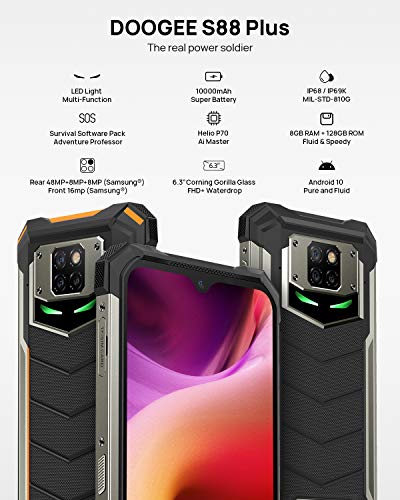
Avg. price:~£210RAM capacity:8 GBInternal storage:128 GBScreen size:6.3 inchesMain camera megapixels:48 MP & 8 MP & 8 MP

DOOGEE S88 Plus (8GB + 128GB) Review: Compare 196 technical specifications and 11 expert and video reviews to see how this product ranks in the Smartphones category and whether it is worth buying.
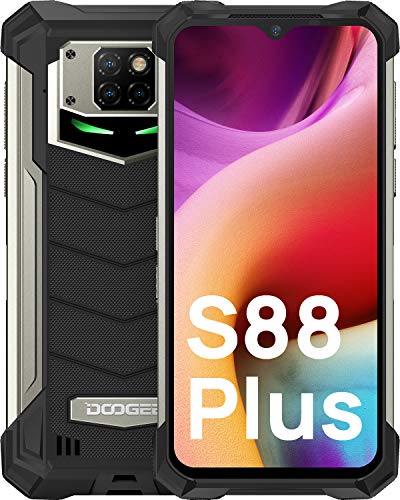
DOOGEE S88 Plus (8GB + 128GB)
6.1/10

Overall score

Score
6.1/ 10
✕
What it is
Our main score for this model, 1–10. It combines specs, best-of lists, expert reviews and owners.
How we count it
Parts: Technical score 35%, List score 30%, Reviews score 25%, Sentiment score 10%
Marks: Each part gets a mark out of 10. For reviews, lists and owners, a typical model in this category gets about 8 and the best one gets 10.
No data yet: A part with no data shows "?". It counts as the mark of a weaker model in this category (4 in 5 models with data score higher). This way, models with reviews, lists and owners usually come out ahead.
Score distribution
â–¼
<55-66-77-88-99-10
Score components

35%

5.5

Technical score

30%

?

List scoreNot enough data yet, so we use 7.5, the mark of a weaker model in this category

25%

5.5

Reviews score

10%

5.5

Sentiment score

â–¼Worse than 95% of smartphones
7.1

Value for money

Value for money
7.1/ 10
✕
What it is
An indicator that combines the smartphone's overall rating with its cost.
When it matters
When you are looking for a smartphone with a good balance between quality and price.
Score distribution
â–¼
<55-66-77-88-99-10
Score components

70%

6.1

Overall score

30%

9.4

Price

â–¼Worse than 92%
5.5

Technical score

Technical score
5.5/ 10
✕
What it is
How good the specs are compared with the other models in this category, 1–10.
How we count it
Areas: We rate the specs in each area against the other models in this category.
Weighting: The areas that matter most to buyers count more. The shares are shown under Score components.
Share: The technical score is 35% of the overall score.
Score distribution
â–¼
<55-66-77-88-99-10
Score components

25%

4.6

Performance

18%

6.0

Camera

15%

4.1

Display

15%

7.6

Battery

10%

5.0

Software

10%

6.6

Connectivity

4%

4.4

Audio

3%

5.2

Design

â–¼Worse than 90%
5.5

Reviews score

Reviews score
5.5/ 10
✕
What it is
Average grade from independent test sites, magazines and video reviewers, 1–10.
How we count it
Grades: Each review's own score is converted to 1–10; without one, we grade the review ourselves. Big test sites count more, short reviews half as much as full tests. A video review counts half.
Score: The average grade is 80% of the review mark; the number of reviews is the other 20% (1 review = 5, the typical number in this category = 8, the most-reviewed model = 10).
Enough data: With few reviews, the average grade is pulled toward the typical grade of this category. No reviews yet: 7.5 for now.
Share: Reviews count 25% of the overall score.
Score distribution
â–¼
<55-66-77-88-99-10

5.5

Mark 7.8 is below the typical mark 7.9 of this category, so it cannot lift the score above the technical score

80%

7.9

Average grade

20%

7.4

Popularity

Grades by review (11)
3 reviews: 1 with a printed score, 2 estimated from the review. 8 video reviews, each counting half as much as a written test. Reviews count 25% of the overall score.
User ratings collected online are not part of this score.
â–¼Worse than 93%
?

List score

List score
7.5/ 10
✕
What it is
How often independent test sites, magazines and video reviewers put this model in their best-of lists for this category.
How we count it
Points: The model in the most lists of this category gets 10; the others get 8 to 10 in proportion. In no list yet: 7.5. Lists count 30% of the overall score.
Enough data: Every list counts, even a single one. With fewer than 5 best-of lists in the category, this part is left out.
Lists with this model (0)
Not in any best-of list yet, so this part counts as 7.5. Models in a list get 8 to 10.
Not in any best-of list yet

What reviewers say about the DOOGEE S88 Plus (8GB + 128GB)

Based on 3 · 10

Reviewers praise the long battery, fast charging and reliable unlocking, but nearly all find it heavy and bulky.
Praised
Criticised
Pick a topic to see who said what

What owners say about the DOOGEE S88 Plus (8GB + 128GB)

Based on 84 owners sharing their experience in online comments

44%positive6%mixed50%negative

Owners praise long battery life and rugged protection, while fragile screens, unreliable calls, poor GPS, and software faults cause frustration.

What owners dislike

  • Owners report weak signal indoors, calls that drop or fail to connect, and GPS that drifts or loses position, with some needing to redial several times.8
  • Owners report the glass cracked or shattered after a drop from waist height or after a few weeks of use, even with a screen protector fitted.7
  • Owners say the phone is very heavy, which is tiring to hold for long periods and noticeable in a pocket.6
  • Owners say the speaker crackles, distorts, or goes silent within weeks or months, sometimes after water exposure or dust.6
  • Owners report the phone stopped turning on after about 45 days or failed within months, with repairs or replacements needed.6
  • Owners say GPS is inaccurate and loses position during navigation, and one owner reported Bluetooth disconnecting every one to two minutes.5
  • Owners say the rear cameras are poor, especially at night, with noise and fogging, and one owner's camera froze until restart.5
  • Owners say the software is slow and buggy, with freezes, camera lock-ups needing a full restart, and background music or antivirus apps stopping.5
  • Owners say the phone was damaged by water even though it is rated IP68, with one losing it after less than a minute submerged.4
  • Owners say the plastic frame around the screen and the back scratch quickly, even with a case, after bumps or everyday carrying.4

Points mentioned by at least 3 owners, most mentioned first.

Loading...
Loading category ranking...

Technical Specifications of smartphone DOOGEE S88 Plus (8GB + 128GB)

Technical score
Technical score
5.5/ 10
✕
What it is
How good the specs are compared with the other models in this category, 1–10.
How we count it
Areas: We rate the specs in each area against the other models in this category.
Weighting: The areas that matter most to buyers count more. The shares are shown under Score components.
Share: The technical score is 35% of the overall score.
Score distribution
â–¼
<55-66-77-88-99-10
Score components:

25%

4.6

Performance

18%

6.0

Camera

15%

4.1

Display

15%

7.6

Battery

10%

5.0

Software

10%

6.6

Connectivity

4%

4.4

Audio

3%

5.2

Design

5.5
Reviews score
5.5
List score
?
Value for money
Value for money
7.1/ 10
✕
What it is
An indicator that combines the smartphone's overall rating with its cost.
When it matters
When you are looking for a smartphone with a good balance between quality and price.
Score distribution
â–¼
<55-66-77-88-99-10
Score components:

70%

6.1

Overall score

30%

9.4

Price

7.1
Processor model
MediaTek Helio P70
This smartphone uses the MediaTek Helio P70 processor model which is slower than processors in 82.7% of smartphones and equal to processors in 0.1% of smartphones.
Storage type
?
RAM capacity
8 GB
This smartphone has a RAM capacity of 8 GB which is larger than the RAM capacity of 28.7% of smartphones and equal to that of 30.5% of smartphones.
Internal storage
128 GB
This smartphone has an internal storage capacity of 128 GB which is smaller than the storage of 61.1% of smartphones and equal to that of 28.4% of smartphones.
CPU boost clock speed
2.1 GHz
The CPU boost clock speed of this smartphone is 2.1 GHz which is lower than the boost speed of 82.4% of smartphones and equal to that of 0.4% of smartphones.
Show more
What reviewers say
Operating system
Android
This smartphone runs Android, which is more mainstream than the system in 4.8% of smartphones and the same as in 95.2% of smartphones.
Android 10
Android version
Android 10
This smartphone runs Android version Android 10 which is older than that found in 88.8% of smartphones and equal to that in 5.1% of smartphones.
Direct OS updates
no
This smartphone does not support direct OS updates. 20.1% of smartphones offer this.
Promised software updates
?
Open-source OS
yes
This smartphone runs an open-source operating system. 5.2% of smartphones offer this.
Show more
What reviewers say
Multi-lens main camera
yes
This smartphone includes a multi-lens main camera system. 93.7% of smartphones include multi-lens setups.
Main camera megapixels
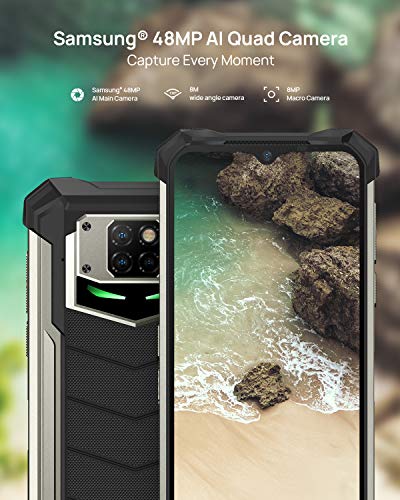
48 MP & 8 MP & 8 MP
This smartphone has a main camera resolution of 48 MP & 8 MP & 8 MP which is lower than that of 78.5% of smartphones and equal to that of 0.1% of smartphones.
Main camera aperture
f/1.8 & f/2.4
This smartphone has a main camera aperture of f/1.8 & f/2.4 which is narrower than that of 58% of smartphones and equal to that of 12.5% of smartphones.
Main camera sensor area
30.7 mm²
This smartphone has a main camera sensor area of 30.7 mm² which is smaller than the main camera sensor area of 63.6% of smartphones and equal to that of 6.4% of smartphones.
Main camera pixel size
0.8 µm
This smartphone has a main camera pixel size of 0.8 µm which is larger than in 35.5% of smartphones and equal to the size in 21.9% of smartphones.
1.6 binned
Show more
What reviewers say
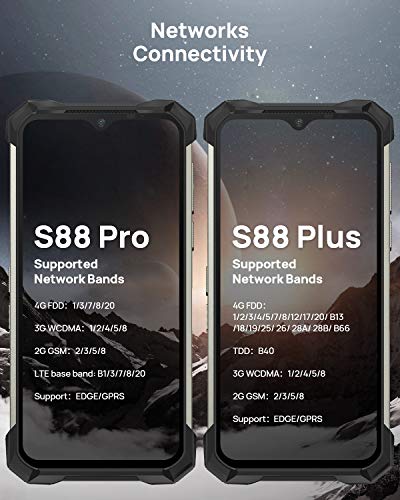
Number of SIM slots
2
This smartphone has 2 SIM slots, which is more than in 3.7% of smartphones and equal to the number in 96.2% of smartphones.
Cellular module
yes
This smartphone includes a cellular module. 100% of smartphones include cellular modules.
eSIM support
no
This smartphone does not have eSIM support. 19.9% of smartphones offer this.
5G connectivity
no
This smartphone does not have 5G connectivity. 66.7% of smartphones offer this.
LTE support
yes
This smartphone supports LTE. 99.7% of smartphones include LTE connectivity.
Show more
What reviewers say
Screen size
6.3 inches
This smartphone has a screen size of 6.3 inches which is smaller than the screens of 88.9% of smartphones and equal to those of 1.8% of smartphones.
Screen resolution
1080x 2340 px
This smartphone has a screen resolution of 1080x2340 px which is lower than that of 68.4% of smartphones and equal to that of 6.1% of smartphones.
Pixel density
409 ppi
This smartphone has a pixel density of 409 ppi which is higher than that of 66.6% of smartphones and equal to that of 2.4% of smartphones.
Display type
IPS LCD
This smartphone uses a IPS LCD display type. 0% of smartphones use this display technology.
Refresh rate
60 Hz
This smartphone supports a refresh rate of 60 Hz which is lower than in 84.3% of smartphones and equal to that in 15.7% of smartphones.
Show more
What reviewers say
Battery capacity
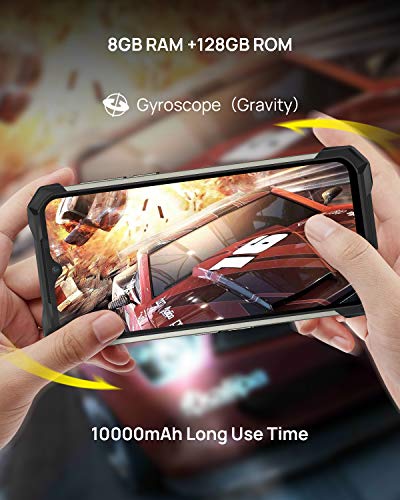
10,000 mAh
This smartphone has a battery capacity of 10,000 mAh which is larger than the batteries in 94.6% of smartphones and equal to those in 0.4% of smartphones.
Charging speed
24 W
This smartphone supports charging speeds of 24 W which is slower than in 72.2% of smartphones and equal to speeds in 0.2% of smartphones.
Fast charging
yes
This smartphone supports fast charging. 93.2% of smartphones support fast charging.
GSMArena full wired charge time
?
Wireless charging
yes
This smartphone supports wireless charging. 25.1% of smartphones support wireless charging.
Show more
What reviewers say
Stereo speakers
no
This smartphone does not have stereo speakers. 64.3% of smartphones offer this.
3.5 mm headphone jack
no
This smartphone does not have a headphone jack. 45.1% of smartphones offer this.
Number of microphones
2
This smartphone includes 2 microphones, which is more than in 10.3% of smartphones and equal to the number in 66.9% of smartphones.
FM radio
yes
This smartphone includes an FM radio. 34.3% of smartphones offer FM radio functionality.
aptX Lossless
no
This smartphone does not support aptX Lossless Bluetooth audio. 12.5% of smartphones offer this.
Show more
What reviewers say
Height
171.6 mm
This smartphone has a height of 171.6 mm which is taller than 90.2% of smartphones and equal to that of 0.2% of smartphones.
Width
85.5 mm
This smartphone has a width of 85.5 mm which is wider than 97.1% of smartphones and equal to that of 0.1% of smartphones.
Thickness
18.7 mm
This smartphone has a thickness of 18.7 mm which is thicker than 96.8% of smartphones and equal to that of 0.3% of smartphones.
Weight
372 g
This smartphone weighs 372 g which is heavier than 95.3% of smartphones and equal to the weight of 0.1% of smartphones.
Device volume
274 cm³
This smartphone has a device volume of 274 cm³ which is larger than 97.3% of smartphones and equal to that of 0.1% of smartphones.
Show more
What reviewers say

DOOGEE S88 Plus (8GB + 128GB) vs the average smartphone

246810TotalPerformanceSoftwareCameraConnectivityDisplayBatteryAudioDesign
  • 2x larger battery capacity
    This smartphone has a larger battery capacity than the average smartphone (10,000 mAh vs 5,000 mAh). The average smartphone battery is 5,000 mAh.
    10,000 mAh vs 5,000 mAh
  • Supports wireless charging
    This smartphone supports wireless charging, the average smartphone does not. 25.1% of smartphones are wireless charging compatible.
  • Supports reverse wireless charging
    This smartphone supports reverse wireless charging, the average smartphone does not. 23.4% of smartphones offer reverse wireless charging.
  • Uses a BSI sensor
    This smartphone uses a BSI sensor, the average smartphone does not. 40% of smartphones include BSI sensors.
  • 2x more L2 cache
    This smartphone has more L2 cache than the average smartphone (2048 KB vs 1,024 KB). The average L2 cache is 1,024 KB.
    2,048 KB vs 1,024 KB
  • 1 more flash LEDs
    This smartphone has more flash LEDs than the average smartphone (2 vs 1). The average smartphone has 1 flash LEDs.
    2 vs 1
  • Has a dual-tone LED flash
    This smartphone features a dual-tone LED flash, the average smartphone does not. 40.8% of smartphones include dual-tone flash.
  • 16.7% lower TDP
    This smartphone has a lower TDP than the average smartphone (5 W vs 6 W). The average TDP for smartphones is 6 W.
    5 W vs 6 W
  • 2x more L2 cache
    This smartphone has more L2 cache than the average smartphone (2048 KB vs 1,024 KB). The average L2 cache is 1,024 KB.
    2,048 KB vs 1,024 KB
  • 16.7% lower TDP
    This smartphone has a lower TDP than the average smartphone (5 W vs 6 W). The average TDP for smartphones is 6 W.
    5 W vs 6 W
  • 2x more L1
    This smartphone has more L1 cache than the average smartphone (64 KB vs 32 KB). The average L1 cache is 32 KB.
    64 KB vs 32 KB
  • Uses a BSI sensor
    This smartphone uses a BSI sensor, the average smartphone does not. 40% of smartphones include BSI sensors.
  • 1 more flash LEDs
    This smartphone has more flash LEDs than the average smartphone (2 vs 1). The average smartphone has 1 flash LEDs.
    2 vs 1
  • Has a dual-tone LED flash
    This smartphone features a dual-tone LED flash, the average smartphone does not. 40.8% of smartphones include dual-tone flash.
  • Wider front camera aperture
    This smartphone has a wider front camera aperture than the average smartphone (f/2 vs f/2.2). The average aperture is f/2.2.
    f/2.0 vs f/2.2
  • Has a barometer
    This smartphone features a barometer, the average smartphone does not. 19.7% of smartphones include a barometer.
  • 3.5% higher pixel density
    This smartphone has a higher pixel density than the average smartphone (409 ppi vs 395 ppi). The average smartphone has a pixel density of 395 ppi.
    409 ppi vs 395 ppi
  • 2x larger battery capacity
    This smartphone has a larger battery capacity than the average smartphone (10,000 mAh vs 5,000 mAh). The average smartphone battery is 5,000 mAh.
    10,000 mAh vs 5,000 mAh
  • Supports wireless charging
    This smartphone supports wireless charging, the average smartphone does not. 25.1% of smartphones are wireless charging compatible.
  • Supports reverse wireless charging
    This smartphone supports reverse wireless charging, the average smartphone does not. 23.4% of smartphones offer reverse wireless charging.
  • Has FM radio
    This smartphone features an FM radio, the average smartphone does not. 34.3% of smartphones include an FM tuner.
  • 1.5 m deeper water resistance
    This smartphone has a deeper water resistance rating than the average smartphone (1.5 m vs 0 m). The average depth rating is 0 m.
    1.5 m vs 0 m
  • Better IP rating
    This smartphone has a better IP rating than the average smartphone (IP68 vs IP67). The average IP rating is IP67.
    IP68 vs IP67
  • Worse processor
    This smartphone uses a worse processor than the average smartphone (MediaTek Helio P70 vs Qualcomm Snapdragon 7 Gen 3).
    MediaTek Helio P70 vs Qualcomm Snapdragon 7 Gen 3
  • Inferior display type
    This smartphone has an inferior display type compared to the average smartphone (IPS LCD vs OLED/AMOLED). 0.00% of smartphones use the superior display type.
    IPS LCD vs OLED/AMOLED
  • 50% lower refresh rate
    This smartphone has a lower refresh rate than the average smartphone (60 Hz vs 120 Hz). The average smartphone has a refresh rate of 120 Hz.
    60 Hz vs 120 Hz
  • 24.7% lower review score
    Reviews score
    5.5/ 10
    ✕
    What it is
    Average grade from independent test sites, magazines and video reviewers, 1–10.
    How we count it
    Grades: Each review's own score is converted to 1–10; without one, we grade the review ourselves. Big test sites count more, short reviews half as much as full tests. A video review counts half.
    Score: The average grade is 80% of the review mark; the number of reviews is the other 20% (1 review = 5, the typical number in this category = 8, the most-reviewed model = 10).
    Enough data: With few reviews, the average grade is pulled toward the typical grade of this category. No reviews yet: 7.5 for now.
    Share: Reviews count 25% of the overall score.
    Score distribution
    â–¼
    <55-66-77-88-99-10

    5.5

    Mark 7.8 is below the typical mark 7.9 of this category, so it cannot lift the score above the technical score

    80%

    7.9

    Average grade

    20%

    7.4

    Popularity

    Grades by review (11)
    3 reviews: 1 with a printed score, 2 estimated from the review. 8 video reviews, each counting half as much as a written test. Reviews count 25% of the overall score.
    User ratings collected online are not part of this score.
    5.5 vs 7.3
  • 2x larger process node
    This smartphone is manufactured on a larger process node than the average smartphone (12 nm vs 6 nm). The average smartphone uses a 6 nm process.
    12 nm vs 6 nm
  • No 5G connectivity
    This smartphone does not support 5G connectivity, the average smartphone does. 66.6% of smartphones are 5G compatible.
  • 50% less storage
    This smartphone offers less internal storage than the average smartphone (128 GB vs 256 GB). The average smartphone includes 256 GB of internal storage.
    128 GB vs 256 GB
  • Narrower main camera aperture
    This smartphone has a narrower main camera aperture than the average smartphone (f/1.8 & f/2.4 vs f/1.8 & f/2.2 & f/2.4 & f/2.4). The average smartphone aperture is f/1.8 & f/2.2 & f/2.4 & f/2.4.
    f/1.8 & f/2.4 vs f/1.8 & f/2.2 & f/2.4 & f/2.4
  • 24.7% lower review score
    Reviews score
    5.5/ 10
    ✕
    What it is
    Average grade from independent test sites, magazines and video reviewers, 1–10.
    How we count it
    Grades: Each review's own score is converted to 1–10; without one, we grade the review ourselves. Big test sites count more, short reviews half as much as full tests. A video review counts half.
    Score: The average grade is 80% of the review mark; the number of reviews is the other 20% (1 review = 5, the typical number in this category = 8, the most-reviewed model = 10).
    Enough data: With few reviews, the average grade is pulled toward the typical grade of this category. No reviews yet: 7.5 for now.
    Share: Reviews count 25% of the overall score.
    Score distribution
    â–¼
    <55-66-77-88-99-10

    5.5

    Mark 7.8 is below the typical mark 7.9 of this category, so it cannot lift the score above the technical score

    80%

    7.9

    Average grade

    20%

    7.4

    Popularity

    Grades by review (11)
    3 reviews: 1 with a printed score, 2 estimated from the review. 8 video reviews, each counting half as much as a written test. Reviews count 25% of the overall score.
    User ratings collected online are not part of this score.
    5.5 vs 7.3
  • 29.5% lower sentiment score
    5.5 vs 7.8
  • 8.3% worse value for money
    DOOGEE S88 Plus (8GB + 128GB) has worse value for money than the average smartphone (7.08 vs 7.7).
    7.08 vs 7.66
  • Worse processor
    This smartphone uses a worse processor than the average smartphone (MediaTek Helio P70 vs Qualcomm Snapdragon 7 Gen 3).
    MediaTek Helio P70 vs Qualcomm Snapdragon 7 Gen 3
  • 2x larger process node
    This smartphone is manufactured on a larger process node than the average smartphone (12 nm vs 6 nm). The average smartphone uses a 6 nm process.
    12 nm vs 6 nm
  • 50% less storage
    This smartphone offers less internal storage than the average smartphone (128 GB vs 256 GB). The average smartphone includes 256 GB of internal storage.
    128 GB vs 256 GB
  • 65.1% lower Geekbench 6 single-core benchmark score
    This smartphone performs worse in Geekbench 6 single-core than the average smartphone (329 vs 942). The average smartphone scores 942 in the Geekbench 6 single-core test.
    329 vs 942
  • 34.5% lower PCMark Work 3.0 Performance benchmark
    This smartphone performs worse in PCMark Work 3.0 than the average smartphone (7,069 vs 10,791). The average smartphone scores 10,791 in PCMark Work 3.0.
    7,069 vs 10,791
  • 42.9% lower maximum RAM capacity
    This smartphone supports less maximum RAM than the average smartphone (8 GB vs 14 GB). The average smartphone supports 14 GB of RAM.
    8 GB vs 14 GB
  • 77.1% lower 3DMark Wild Life benchmark
    This smartphone performs worse in the 3DMark Wild Life benchmark than the average smartphone (714 vs 3,115). The average smartphone scores 3,115 in this benchmark.
    714 vs 3,115
  • 34.5% slower memory speed
    This smartphone has a lower memory speed than the average smartphone (1,800 MHz vs 2,750 MHz). The average smartphone has a memory speed of 2,750 MHz.
    1,800 MHz vs 2,750 MHz
  • 57.9% lower Geekbench 6 multi-core benchmark score
    This smartphone performs worse in Geekbench 6 multi-core than the average smartphone (1,066 vs 2,533). The average smartphone scores 2,533 in the Geekbench 6 multi-core test.
    1,066 vs 2,533
  • 12.5% lower CPU boost clock speed
    This smartphone has a lower CPU boost clock speed than the average smartphone (2.1 GHz vs 2.4 GHz). The average smartphone has a boost clock speed of 2.4 GHz.
    2.1 GHz vs 2.4 GHz
  • 84.1% lower 3DMark Wild Life Extreme benchmark
    This smartphone scores lower in 3DMark Wild Life Extreme than the average smartphone (195 vs 1,224.5). The average smartphone scores 1,224.5.
    195 vs 1,224.5
  • 49.2% lower memory bandwidth
    This smartphone has lower memory bandwidth than the average smartphone (13 GB/s vs 25.6 GB/s). The average smartphone has a bandwidth of 25.6 GB/s.
    13 GB/s vs 25.6 GB/s
  • 3 year/s older release date
    This smartphone is an older model than the average smartphone (2021 vs 2024). 3.00% of smartphones were released more recently.
    January 2021
    2021 vs 2024
  • 87.5% fewer shader units
    This smartphone includes fewer shader units than the average smartphone (32 vs 256). The average smartphone has 256 shader units.
    32 vs 256
  • 5.3% slower GPU clock
    This smartphone has a lower GPU frequency than the average smartphone (900 MHz vs 950 MHz). The average smartphone has a GPU frequency of 950 MHz.
    900 MHz vs 950 MHz
  • Lower CPU base clock speed
    This smartphone has a lower CPU base clock speed than the average smartphone (4x2.1 GHz & 4x2 GHz vs 2x2.2 GHz & 6x2 GHz). The average smartphone has a base clock speed of 2x2.2 GHz & 6x2 GHz.
    4x2.1 GHz & 4x2 GHz vs 2x2.2 GHz & 6x2 GHz
  • No live text recognition
    This smartphone does not support live text recognition, the average smartphone does. 51.3% of smartphones offer real-time text recognition.
  • No location privacy controls
    This smartphone does not offer location privacy controls, the average smartphone does. 88.4% of smartphones include location privacy features.
  • No camera/mic privacy toggles
    This smartphone lacks camera and microphone privacy toggles, the average smartphone includes them. 87.5% of smartphones offer these toggles.
  • Lacks app tracking protection
    This smartphone does not have app tracking protection, the average smartphone does. 71.1% of smartphones include app tracking protection.
  • Lacks focus mode
    This smartphone does not have a focus mode, the average smartphone does. 60.8% of smartphones include a dedicated focus mode.
  • Older Android version
    This smartphone runs an older Android version than the average smartphone (Android 10 vs Android 14). The average smartphone runs Android version Android 14.
    Android 10 vs Android 14
  • No Wi-Fi password sharing
    This smartphone does not support Wi-Fi password sharing, the average smartphone does. 58.3% of smartphones allow easy Wi-Fi sharing.
  • No battery health monitoring
    This smartphone lacks battery health monitoring, the average smartphone includes it. 67.2% of smartphones provide battery health stats.
  • Lacks instant markup
    This smartphone does not support instant markup, the average smartphone does. 52.5% of smartphones include instant markup tools.
  • No scrolling screenshot support
    This smartphone does not support scrolling screenshots, the average smartphone does. 81.7% of smartphones allow scrolling screenshots.
  • Does not allow app offloading
    This smartphone does not support app offloading, the average smartphone does. 52.5% of smartphones support app offloading to save space.
  • No theme customization
    This smartphone does not support theme customization, the average smartphone does. 91.3% of smartphones allow theme customization.
  • No offline voice commands
    This smartphone does not support offline voice commands, the average smartphone does. 90.7% of smartphones offer offline voice control.
  • Does not allow play while downloading
    This smartphone cannot play games while downloading, the average smartphone can. 78.2% of smartphones support play-while-downloading.
  • No dynamic theme support
    This smartphone does not support dynamic themes, the average smartphone does. 82.5% of smartphones support dynamic theming.
  • Lacks extra dim mode
    This smartphone does not have extra dim mode, the average smartphone does. 83.1% of smartphones offer extra dimming features.
  • Narrower main camera aperture
    This smartphone has a narrower main camera aperture than the average smartphone (f/1.8 & f/2.4 vs f/1.8 & f/2.2 & f/2.4 & f/2.4). The average smartphone aperture is f/1.8 & f/2.2 & f/2.4 & f/2.4.
    f/1.8 & f/2.4 vs f/1.8 & f/2.2 & f/2.4 & f/2.4
  • Lower-resolution main camera
    This smartphone has a lower-resolution main camera than the average smartphone (48 MP & 8 MP & 8 MP vs 50 MP & 8 MP). The average smartphone has a 50 MP & 8 MP main camera.
    48 MP & 8 MP & 8 MP vs 50 MP & 8 MP
  • No slow-motion recording
    This smartphone does not support slow-motion recording, the average smartphone does. 90.4% of smartphones offer slow-mo features.
  • No timelapse video
    This smartphone does not support timelapse video, the average smartphone does. 92.5% of smartphones include timelapse modes.
  • 4.1% smaller main camera sensor area
    This smartphone has a smaller main camera sensor area than the average smartphone (30.7 mm² vs 32 mm²). The average smartphone sensor area is 32 mm².
    30.7 mm² vs 32 mm²
  • No 5G connectivity
    This smartphone does not support 5G connectivity, the average smartphone does. 66.6% of smartphones are 5G compatible.
  • Older Bluetooth version
    This smartphone uses an older Bluetooth version than the average smartphone (4 vs 5.2). The average smartphone uses Bluetooth 5.2.
    4 vs 5.2
  • Inferior display type
    This smartphone has an inferior display type compared to the average smartphone (IPS LCD vs OLED/AMOLED). 0.00% of smartphones use the superior display type.
    IPS LCD vs OLED/AMOLED
  • 50% lower refresh rate
    This smartphone has a lower refresh rate than the average smartphone (60 Hz vs 120 Hz). The average smartphone has a refresh rate of 120 Hz.
    60 Hz vs 120 Hz
  • 0.37 inches inch smaller screen size
    This smartphone has a smaller screen size than the average smartphone (6.3 inches vs 6.67 inches). The average smartphone has a screen size of 6.67 inches.
    6.3 inches vs 6.67 inches
  • Worse display glass type
    This smartphone uses a worse display glass type than the average smartphone (Corning Gorilla Glass vs Corning Gorilla Glass 5). 0.00% of smartphones use the better glass type.
    Corning Gorilla Glass vs Corning Gorilla Glass 5
  • 470 nits lower peak brightness
    This smartphone has a lower peak brightness than the average smartphone (530 nits vs 1,000 nits). The average smartphone peak brightness is 1,000 nits.
    530 nits vs 1,000 nits
  • Lower contrast ratio
    This smartphone has a lower contrast ratio than the average smartphone (1500:1 vs 1000000:1). The average smartphone has a contrast ratio of 1000000:1.
    1,500:1 vs 1,000,000:1
  • Lower screen resolution
    This smartphone has a lower screen resolution than the average smartphone (1080x2340 px vs 1080x2400 px). The average smartphone has a resolution of 1080x2400 px.
    1080x2340 px vs 1080x2400 px
  • 19.7% lower screen brightness
    This smartphone has a lower screen brightness than the average smartphone (530 nits vs 660 nits). The average smartphone has a brightness of 660 nits.
    530 nits vs 660 nits
  • 50% slower wireless charging speed
    This smartphone has a slower wireless charging speed than the average smartphone (10 W vs 20 W). The average smartphone wireless charging speed is 20 W.
    10 W vs 20 W
  • 27.3% slower charging speed
    This smartphone has a slower charging speed than the average smartphone (24 W vs 33 W). The average smartphone charges at 33 W.
    24 W vs 33 W
  • No stereo speakers
    This smartphone does not have stereo speakers, the average smartphone does. 64.3% of smartphones feature stereo speakers.
  • No aptX HD
    This smartphone does not support aptX HD, the average smartphone does. 50.2% of smartphones support aptX HD.
  • 89.6% heavier
    This smartphone is heavier than the average smartphone (372 g vs 196.2 g). The average smartphone weighs 196.2 g.
    372 g vs 196.2 g
  • 10.4 mm thicker
    This smartphone is thicker than the average smartphone (18.7 mm vs 8.3 mm). The average smartphone has a thickness of 8.3 mm.
    18.7 mm vs 8.3 mm
  • 9.5 mm wider
    This smartphone is wider than the average smartphone (85.5 mm vs 76 mm). The average smartphone has a width of 76 mm.
    85.5 mm vs 76 mm
  • 2.69x larger volume
    This smartphone has a larger volume than the average smartphone (274 cm³ vs 102 cm³). The average smartphone volume is 102 cm³.
    274 cm³ vs 102 cm³
  • 8 mm taller
    This smartphone is taller than the average smartphone (171.6 mm vs 163.6 mm). The average smartphone has a height of 163.6 mm.
    171.6 mm vs 163.6 mm

Video reviews

Hands-on testing, unboxing, and real-world video evaluations

8.0
OSReviews
≈ estimated
19/04/2021
Hands-on review · battery, camera, speakers and gaming tests
Verdict
DOOGEE S88 Plus is a decent option for its price, with a strong battery but average speakers and night photos.
9.0
Frankie Tech
≈ estimated
02/03/2021
Unboxing and review · ice and drop test · several days of use
Verdict
DOOGEE S88 Plus is among the toughest phones you can buy, but its cameras fog up and it is heavy.
8.0
Ab113 Tech
≈ estimated
13/07/2021
Unboxing · first look and quick camera and fingerprint tests
Verdict
DOOGEE S88 Plus is an impressive tough phone, though night photos and video recording hold it back.
8.0
OSReviews
≈ estimated
30/03/2021
First look · unboxing, setup and first impressions
Verdict
DOOGEE S88 Plus is a competitive rugged phone for buyers who value utility and battery over a slim design.
Not graded
Not graded

Expert reviews

In-depth analysis and verdict from leading tech publications

7.5
smartzone.de
✓ explicit
11/06/2021
Hands-on test · Outdoor smartphone
Verdict
The Doogee S88 Plus is a tough outdoor phone with a bright screen, but its bulk, occasional stutters and Dutch-language settings hold it back.
7.0
sotactile.fr
≈ estimated
14/06/2021
Hands-on test · Outdoor smartphone
Verdict
The Doogee S88 Plus is a durable outdoor phone with a bright screen and a reliable fingerprint reader, but it is heavy, thick and limited to 4G.
6.0
today.it
≈ estimated
17/05/2021
Full review · Outdoor phone
Verdict
The Doogee S88 Plus is a rugged phone whose battery lasts three days of heavy use, but it is bulky and its night photos are weak.

Third-party reviews

What customers like about DOOGEE S88 Plus (8GB + 128GB)

  • Massive 10,000mAh battery providing exceptional multi-day endurance
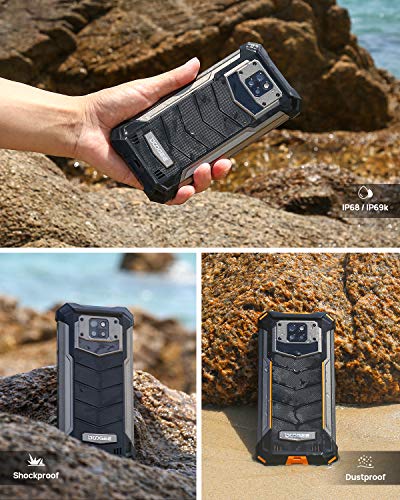
  • Highly durable build with IP68/IP69K waterproofing and military-grade drop protection
  • Customizable 'Iron Man' style LED notification lights on the back
  • Clean, near-stock Android 10 experience with minimal bloatware
  • Supports reverse wireless charging to power other devices
  • Excellent value for money given its ruggedness and large RAM (8GB)

What customers don't like about DOOGEE S88 Plus (8GB + 128GB)

  • Extremely heavy (372g) and bulky, making it difficult to fit in standard pockets
  • Mediocre camera performance, especially in low light conditions
  • Lackluster speaker quality and volume, with some reports of issues after water exposure
  • Slow charging speeds relative to the massive battery capacity
  • Limited software support and uncertain future OS updates from the manufacturer
  • Inconsistent GPS and compass accuracy reported by some users

Verdict

The Doogee S88 Plus is a rugged smartphone designed for durability, featuring an IP68/IP69K rating and military standard MIL-STD-810G certification, paired with a substantial 8GB of RAM and 128GB of internal storage. Its standout features are the massive 10,000mAh battery for extended use and a distinctive LED notification light design on the rear shell that mimics "iron man" eyes. It boasts a 6.3-inch Full HD+ display and is powered by a MediaTek Helio P70 octa-core processor, capable of handling daily tasks and moderate gaming. The phone includes a capable AI-powered 48MP main triple-camera setup and supports reverse wireless charging, making it a strong choice for outdoor enthusiasts. Potential cons include its heavy and bulky design due to the large battery and rugged casing, and the use of the slightly older Android 10 operating system at launch.

Compare DOOGEE S88 Plus (8GB + 128GB) with other smartphones

1Product to compare no. 1
VS
2Product to compare no. 2
VS
3Product to compare no. 3 (optional)

Graphic comparison of DOOGEE S88 Plus (8GB + 128GB) and other smartphones

No results found