Scored using Smartphones Methodology v3.0
Smartphones Methodology v3.0
Mathematical & Unbiased Scoring
Products in this category are scored under Frontum Smartphones Methodology v3.0: the technical score from the specifications is the base, and independent expert and video reviews (up to ±0.5 points), owner opinions (up to ±0.3) and best-of lists (up to +0.3) move it up or down.
Explore Smartphones Methodology v3.0

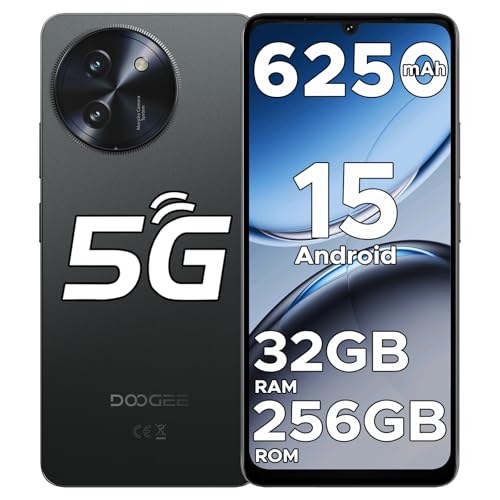
DOOGEE Blade 10 Ultra (36GB + 256GB) review: 196 specs compared

Avg. price:~£160RAM capacity:36 GBInternal storage:256 GBScreen size:6.56 inchesMain camera megapixels:50 MP

DOOGEE Blade 10 Ultra (36GB + 256GB) Review: Compare 196 technical specifications and 6 expert and video reviews to see how this product ranks in the Smartphones category and whether it is worth buying.
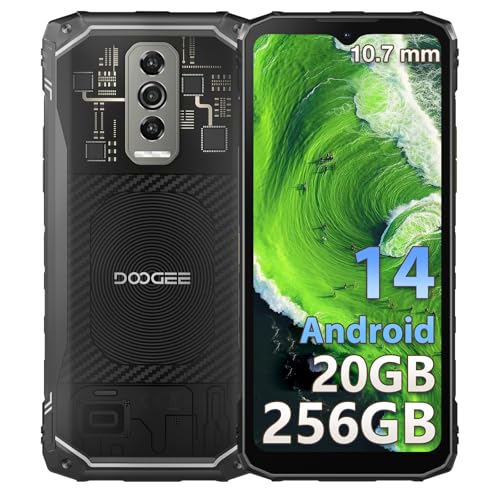
DOOGEE Blade 10 Ultra (36GB + 256GB)
6.1/10

Overall score

Score
6.1/ 10
✕
What it is
Our main score for this model, 1–10. It combines specs, best-of lists, expert reviews and owners.
How we count it
Parts: Technical score 35%, List score 30%, Reviews score 25%, Sentiment score 10%
Marks: Each part gets a mark out of 10. For reviews, lists and owners, a typical model in this category gets about 8 and the best one gets 10.
No data yet: A part with no data shows "?". It counts as the mark of a weaker model in this category (4 in 5 models with data score higher). This way, models with reviews, lists and owners usually come out ahead.
Score distribution
â–¼
<55-66-77-88-99-10
Score components

35%

5.4

Technical score

30%

?

List scoreNot enough data yet, so we use 7.5, the mark of a weaker model in this category

25%

5.4

Reviews score

10%

5.4

Sentiment score

â–¼Worse than 96% of smartphones
7.1

Value for money

Value for money
7.1/ 10
✕
What it is
An indicator that combines the smartphone's overall rating with its cost.
When it matters
When you are looking for a smartphone with a good balance between quality and price.
Score distribution
â–¼
<55-66-77-88-99-10
Score components

70%

6.1

Overall score

30%

9.7

Price

â–¼Worse than 92%
5.4

Technical score

Technical score
5.4/ 10
✕
What it is
How good the specs are compared with the other models in this category, 1–10.
How we count it
Areas: We rate the specs in each area against the other models in this category.
Weighting: The areas that matter most to buyers count more. The shares are shown under Score components.
Share: The technical score is 35% of the overall score.
Score distribution
â–¼
<55-66-77-88-99-10
Score components

25%

5.4

Performance

18%

5.4

Camera

15%

3.9

Display

15%

5.3

Battery

10%

7.9

Software

10%

6.5

Connectivity

4%

1.0

Audio

3%

8.0

Design

â–¼Worse than 91%
5.4

Reviews score

Reviews score
5.4/ 10
✕
What it is
Average grade from independent test sites, magazines and video reviewers, 1–10.
How we count it
Grades: Each review's own score is converted to 1–10; without one, we grade the review ourselves. Big test sites count more, short reviews half as much as full tests. A video review counts half.
Score: The average grade is 80% of the review mark; the number of reviews is the other 20% (1 review = 5, the typical number in this category = 8, the most-reviewed model = 10).
Enough data: With few reviews, the average grade is pulled toward the typical grade of this category. No reviews yet: 7.5 for now.
Share: Reviews count 25% of the overall score.
Score distribution
â–¼
<55-66-77-88-99-10

5.4

Mark 7.7 is below the typical mark 7.9 of this category, so it cannot lift the score above the technical score

80%

7.9

Average grade

20%

6.8

Popularity

Grades by review (6)
3 reviews: 2 with a printed score, 1 estimated from the review. 3 video reviews, each counting half as much as a written test. Reviews count 25% of the overall score.
User ratings collected online are not part of this score.
â–¼Worse than 95%
?

List score

List score
7.5/ 10
✕
What it is
How often independent test sites, magazines and video reviewers put this model in their best-of lists for this category.
How we count it
Points: The model in the most lists of this category gets 10; the others get 8 to 10 in proportion. In no list yet: 7.5. Lists count 30% of the overall score.
Enough data: Every list counts, even a single one. With fewer than 5 best-of lists in the category, this part is left out.
Lists with this model (0)
Not in any best-of list yet, so this part counts as 7.5. Models in a list get 8 to 10.
Not in any best-of list yet

What reviewers say about the DOOGEE Blade 10 Ultra (36GB + 256GB)

Based on 3 · 3

Reviewers like the compact size and rugged features, but performance splits opinion and low-light photos are weak.
Praised
Mixed views
Criticised
Pick a topic to see who said what
Loading...
Loading category ranking...

Technical Specifications of smartphone DOOGEE Blade 10 Ultra (36GB + 256GB)

Technical score
Technical score
5.4/ 10
✕
What it is
How good the specs are compared with the other models in this category, 1–10.
How we count it
Areas: We rate the specs in each area against the other models in this category.
Weighting: The areas that matter most to buyers count more. The shares are shown under Score components.
Share: The technical score is 35% of the overall score.
Score distribution
â–¼
<55-66-77-88-99-10
Score components:

25%

5.4

Performance

18%

5.4

Camera

15%

3.9

Display

15%

5.3

Battery

10%

7.9

Software

10%

6.5

Connectivity

4%

1.0

Audio

3%

8.0

Design

5.4
Reviews score
5.4
List score
?
Value for money
Value for money
7.1/ 10
✕
What it is
An indicator that combines the smartphone's overall rating with its cost.
When it matters
When you are looking for a smartphone with a good balance between quality and price.
Score distribution
â–¼
<55-66-77-88-99-10
Score components:

70%

6.1

Overall score

30%

9.7

Price

7.1
Processor model
Unisoc T606
This smartphone uses the Unisoc T606 processor model which is slower than processors in 84.8% of smartphones and equal to processors in 3.3% of smartphones.
Storage type
?
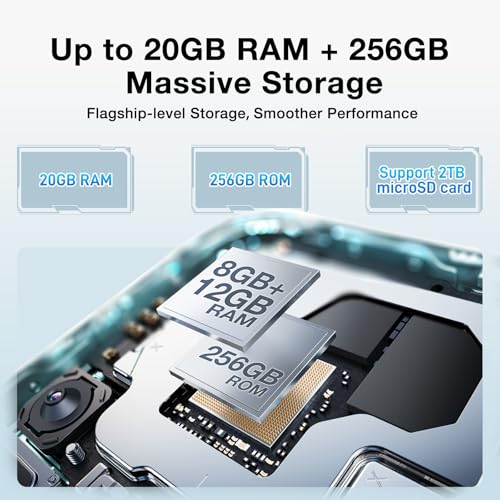
RAM capacity
36 GB
This smartphone has a RAM capacity of 36 GB which is larger than the RAM capacity of 99.7% of smartphones and equal to that of 0.3% of smartphones.
Internal storage
256 GB
This smartphone has an internal storage capacity of 256 GB which is larger than the storage of 38.9% of smartphones and equal to that of 38.4% of smartphones.
CPU boost clock speed
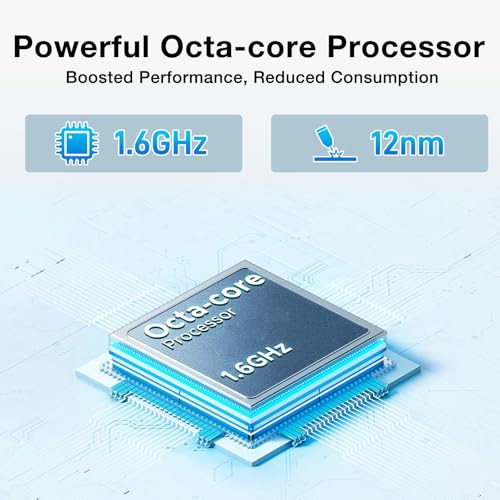
1.6 GHz
The CPU boost clock speed of this smartphone is 1.6 GHz which is lower than the boost speed of 95% of smartphones and equal to that of 4.5% of smartphones.
Show more
What reviewers say
Operating system
Android
This smartphone runs Android, which is more mainstream than the system in 4.8% of smartphones and the same as in 95.2% of smartphones.
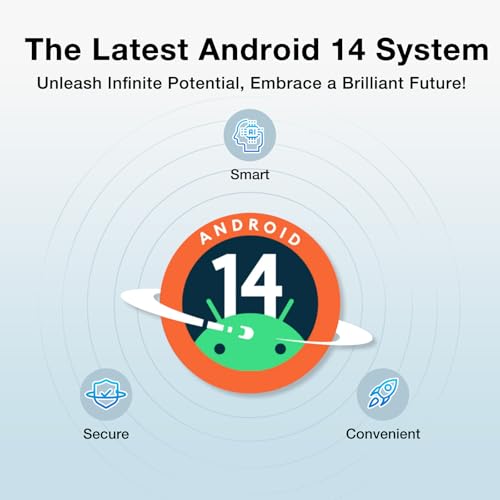
Android 14
Android version
Android 14
This smartphone runs Android version Android 14 which is newer than that found in 49.5% of smartphones and equal to that in 21% of smartphones.
Direct OS updates
no
This smartphone does not support direct OS updates. 20.1% of smartphones offer this.
Promised software updates
?
Open-source OS
yes
This smartphone runs an open-source operating system. 5.2% of smartphones offer this.
Show more
Multi-lens main camera
no
This smartphone does not have a multi-lens main camera. 93.8% of smartphones offer this.
Main camera megapixels
50 MP
This smartphone has a main camera resolution of 50 MP which is lower than that of 71.8% of smartphones and equal to that of 2.8% of smartphones.
Main camera aperture
?
Main camera sensor area
?
Main camera pixel size
?
Show more
What reviewers say
Number of SIM slots
2
This smartphone has 2 SIM slots, which is more than in 3.7% of smartphones and equal to the number in 96.2% of smartphones.
Cellular module
yes
This smartphone includes a cellular module. 100% of smartphones include cellular modules.
eSIM support
no
This smartphone does not have eSIM support. 19.9% of smartphones offer this.
5G connectivity
no
This smartphone does not have 5G connectivity. 66.7% of smartphones offer this.
LTE support
yes
This smartphone supports LTE. 99.7% of smartphones include LTE connectivity.
Show more
Screen size
6.56 inches
This smartphone has a screen size of 6.56 inches which is smaller than the screens of 72.3% of smartphones and equal to those of 3.9% of smartphones.
Screen resolution
720x 1612 px
This smartphone has a screen resolution of 720x1612 px which is lower than that of 78.9% of smartphones and equal to that of 5.3% of smartphones.
Pixel density
269 ppi
This smartphone has a pixel density of 269 ppi which is lower than that of 79.9% of smartphones and equal to that of 5.4% of smartphones.
Display type
IPS LCD
This smartphone uses a IPS LCD display type. 0% of smartphones use this display technology.
Refresh rate
90 Hz
This smartphone supports a refresh rate of 90 Hz which is lower than in 65.7% of smartphones and equal to that in 18.6% of smartphones.
Show more
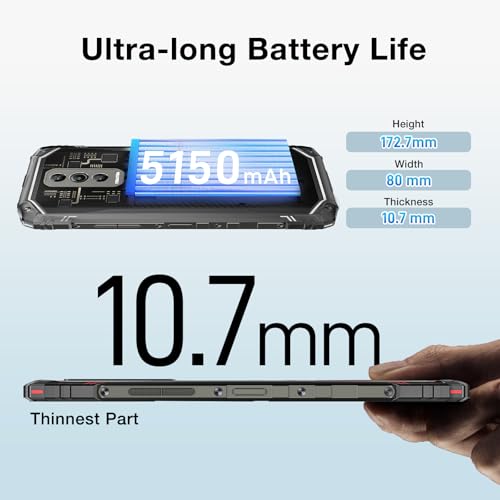
Battery capacity
5,150 mAh
This smartphone has a battery capacity of 5,150 mAh which is larger than the batteries in 61.9% of smartphones and equal to those in 0.9% of smartphones.
Charging speed
18 W
This smartphone supports charging speeds of 18 W which is slower than in 76% of smartphones and equal to speeds in 11.7% of smartphones.
Fast charging
no
This smartphone does not support fast charging. 93.3% of smartphones support fast charging.
GSMArena full wired charge time
?
Wireless charging
no
This smartphone does not support wireless charging. 25.1% of smartphones support wireless charging.
Show more
Stereo speakers
no
This smartphone does not have stereo speakers. 64.3% of smartphones offer this.
3.5 mm headphone jack
no
This smartphone does not have a headphone jack. 45.1% of smartphones offer this.
Number of microphones
1
This smartphone has 1 microphones, which is fewer than in 89.8% of smartphones and equal to the number in 10.2% of smartphones.
FM radio
no
This smartphone does not have an FM radio. 34.3% of smartphones offer this.
aptX Lossless
no
This smartphone does not support aptX Lossless Bluetooth audio. 12.5% of smartphones offer this.
Show more
Height
?
Width
?
Thickness
10.7 mm
This smartphone has a thickness of 10.7 mm which is thicker than 89.9% of smartphones and equal to that of 0.1% of smartphones.
Weight
240 g
This smartphone weighs 240 g which is heavier than 88.8% of smartphones and equal to the weight of 0.5% of smartphones.
Device volume
?
Show more
What reviewers say

DOOGEE Blade 10 Ultra (36GB + 256GB) vs the average smartphone

246810TotalPerformanceSoftwareCameraConnectivityDisplayBatteryAudioDesign
  • 28 GB more RAM
    This smartphone has more RAM capacity than the average smartphone (36 GB vs 8 GB). The average smartphone has 8 GB of RAM.
    36 GB vs 8 GB
  • 2x more L2 cache
    This smartphone has more L2 cache than the average smartphone (2048 KB vs 1,024 KB). The average L2 cache is 1,024 KB.
    2,048 KB vs 1,024 KB
  • 3% larger battery capacity
    This smartphone has a larger battery capacity than the average smartphone (5,150 mAh vs 5,000 mAh). The average smartphone battery is 5,000 mAh.
    5,150 mAh vs 5,000 mAh
  • 1.5 m deeper water resistance
    This smartphone has a deeper water resistance rating than the average smartphone (1.5 m vs 0 m). The average depth rating is 0 m.
    1.5 m vs 0 m
  • Wider front camera aperture
    This smartphone has a wider front camera aperture than the average smartphone (f/2 vs f/2.2). The average aperture is f/2.2.
    f/2.0 vs f/2.2
  • 62.5% cheaper
    DOOGEE Blade 10 Ultra (36GB + 256GB) is cheaper than the average smartphone (£160 vs £260).
    £160 vs £260
  • 62.5% cheaper
    DOOGEE Blade 10 Ultra (36GB + 256GB) is cheaper than the average smartphone (£160 vs £260).
    £160 vs £260
  • 28 GB more RAM
    This smartphone has more RAM capacity than the average smartphone (36 GB vs 8 GB). The average smartphone has 8 GB of RAM.
    36 GB vs 8 GB
  • 2x more L2 cache
    This smartphone has more L2 cache than the average smartphone (2048 KB vs 1,024 KB). The average L2 cache is 1,024 KB.
    2,048 KB vs 1,024 KB
  • Wider front camera aperture
    This smartphone has a wider front camera aperture than the average smartphone (f/2 vs f/2.2). The average aperture is f/2.2.
    f/2.0 vs f/2.2
  • 3% larger battery capacity
    This smartphone has a larger battery capacity than the average smartphone (5,150 mAh vs 5,000 mAh). The average smartphone battery is 5,000 mAh.
    5,150 mAh vs 5,000 mAh
  • 1.5 m deeper water resistance
    This smartphone has a deeper water resistance rating than the average smartphone (1.5 m vs 0 m). The average depth rating is 0 m.
    1.5 m vs 0 m
  • Worse processor
    This smartphone uses a worse processor than the average smartphone (Unisoc T606 vs Qualcomm Snapdragon 7 Gen 3).
    Unisoc T606 vs Qualcomm Snapdragon 7 Gen 3
  • Inferior display type
    This smartphone has an inferior display type compared to the average smartphone (IPS LCD vs OLED/AMOLED). 0.00% of smartphones use the superior display type.
    IPS LCD vs OLED/AMOLED
  • 26.0% lower review score
    Reviews score
    5.4/ 10
    ✕
    What it is
    Average grade from independent test sites, magazines and video reviewers, 1–10.
    How we count it
    Grades: Each review's own score is converted to 1–10; without one, we grade the review ourselves. Big test sites count more, short reviews half as much as full tests. A video review counts half.
    Score: The average grade is 80% of the review mark; the number of reviews is the other 20% (1 review = 5, the typical number in this category = 8, the most-reviewed model = 10).
    Enough data: With few reviews, the average grade is pulled toward the typical grade of this category. No reviews yet: 7.5 for now.
    Share: Reviews count 25% of the overall score.
    Score distribution
    â–¼
    <55-66-77-88-99-10

    5.4

    Mark 7.7 is below the typical mark 7.9 of this category, so it cannot lift the score above the technical score

    80%

    7.9

    Average grade

    20%

    6.8

    Popularity

    Grades by review (6)
    3 reviews: 2 with a printed score, 1 estimated from the review. 3 video reviews, each counting half as much as a written test. Reviews count 25% of the overall score.
    User ratings collected online are not part of this score.
    5.4 vs 7.3
  • 2x larger process node
    This smartphone is manufactured on a larger process node than the average smartphone (12 nm vs 6 nm). The average smartphone uses a 6 nm process.
    12 nm vs 6 nm
  • No ultrawide rear camera
    This smartphone does not have an ultrawide rear camera, while the average smartphone does. 62.6% of smartphones offer this.
  • No 5G connectivity
    This smartphone does not support 5G connectivity, the average smartphone does. 66.6% of smartphones are 5G compatible.
  • Worse main camera video quality
    This smartphone records worse main camera video than the average smartphone. 11.80x of smartphones support 4K video recording.
    1080x30 fps vs 2160x30 fps
  • 25% lower refresh rate
    This smartphone has a lower refresh rate than the average smartphone (90 Hz vs 120 Hz). The average smartphone has a refresh rate of 120 Hz.
    90 Hz vs 120 Hz
  • 26.0% lower review score
    Reviews score
    5.4/ 10
    ✕
    What it is
    Average grade from independent test sites, magazines and video reviewers, 1–10.
    How we count it
    Grades: Each review's own score is converted to 1–10; without one, we grade the review ourselves. Big test sites count more, short reviews half as much as full tests. A video review counts half.
    Score: The average grade is 80% of the review mark; the number of reviews is the other 20% (1 review = 5, the typical number in this category = 8, the most-reviewed model = 10).
    Enough data: With few reviews, the average grade is pulled toward the typical grade of this category. No reviews yet: 7.5 for now.
    Share: Reviews count 25% of the overall score.
    Score distribution
    â–¼
    <55-66-77-88-99-10

    5.4

    Mark 7.7 is below the typical mark 7.9 of this category, so it cannot lift the score above the technical score

    80%

    7.9

    Average grade

    20%

    6.8

    Popularity

    Grades by review (6)
    3 reviews: 2 with a printed score, 1 estimated from the review. 3 video reviews, each counting half as much as a written test. Reviews count 25% of the overall score.
    User ratings collected online are not part of this score.
    5.4 vs 7.3
  • 30.8% lower sentiment score
    5.4 vs 7.8
  • 7.2% worse value for money
    DOOGEE Blade 10 Ultra (36GB + 256GB) has worse value for money than the average smartphone (7.15 vs 7.7).
    7.15 vs 7.66
  • Worse processor
    This smartphone uses a worse processor than the average smartphone (Unisoc T606 vs Qualcomm Snapdragon 7 Gen 3).
    Unisoc T606 vs Qualcomm Snapdragon 7 Gen 3
  • 2x larger process node
    This smartphone is manufactured on a larger process node than the average smartphone (12 nm vs 6 nm). The average smartphone uses a 6 nm process.
    12 nm vs 6 nm
  • 66.7% higher TDP (less efficient)
    This smartphone has a higher TDP than the average smartphone (10 W vs 6 W). The average smartphone has a TDP of 6 W.
    10 W vs 6 W
  • 31.6% slower GPU clock
    This smartphone has a lower GPU frequency than the average smartphone (650 MHz vs 950 MHz). The average smartphone has a GPU frequency of 950 MHz.
    650 MHz vs 950 MHz
  • 60.6% lower Geekbench 6 single-core benchmark score
    This smartphone performs worse in Geekbench 6 single-core than the average smartphone (371 vs 942). The average smartphone scores 942 in the Geekbench 6 single-core test.
    371 vs 942
  • 33.3% lower CPU boost clock speed
    This smartphone has a lower CPU boost clock speed than the average smartphone (1.6 GHz vs 2.4 GHz). The average smartphone has a boost clock speed of 2.4 GHz.
    1.6 GHz vs 2.4 GHz
  • 75% less L3 cache
    This smartphone has a smaller L3 cache than the average smartphone (1,024 KB vs 4,096 KB). The average smartphone has an L3 cache of 4,096 KB.
    1,024 KB vs 4,096 KB
  • 41.8% slower memory speed
    This smartphone has a lower memory speed than the average smartphone (1,600 MHz vs 2,750 MHz). The average smartphone has a memory speed of 2,750 MHz.
    1,600 MHz vs 2,750 MHz
  • 50% lower memory bandwidth
    This smartphone has lower memory bandwidth than the average smartphone (12.8 GB/s vs 25.6 GB/s). The average smartphone has a bandwidth of 25.6 GB/s.
    12.8 GB/s vs 25.6 GB/s
  • 45.1% lower Geekbench 6 multi-core benchmark score
    This smartphone performs worse in Geekbench 6 multi-core than the average smartphone (1,391 vs 2,533). The average smartphone scores 2,533 in the Geekbench 6 multi-core test.
    1,391 vs 2,533
  • Lower CPU base clock speed
    This smartphone has a lower CPU base clock speed than the average smartphone (2x1.6 GHz & 6x1.6 GHz vs 2x2.2 GHz & 6x2 GHz). The average smartphone has a base clock speed of 2x2.2 GHz & 6x2 GHz.
    2x1.6 GHz & 6x1.6 GHz vs 2x2.2 GHz & 6x2 GHz
  • 1 fewer memory channels
    This smartphone supports fewer memory channels than the average smartphone (1 vs 2). The average smartphone supports 2 channels.
    1 vs 2
  • Lacks focus mode
    This smartphone does not have a focus mode, the average smartphone does. 60.8% of smartphones include a dedicated focus mode.
  • No Wi-Fi password sharing
    This smartphone does not support Wi-Fi password sharing, the average smartphone does. 58.3% of smartphones allow easy Wi-Fi sharing.
  • Lacks instant markup
    This smartphone does not support instant markup, the average smartphone does. 52.5% of smartphones include instant markup tools.
  • Does not allow app offloading
    This smartphone does not support app offloading, the average smartphone does. 52.5% of smartphones support app offloading to save space.
  • No ultrawide rear camera
    This smartphone does not have an ultrawide rear camera, while the average smartphone does. 62.6% of smartphones offer this.
  • Worse main camera video quality
    This smartphone records worse main camera video than the average smartphone. 11.80x of smartphones support 4K video recording.
    1080x30 fps vs 2160x30 fps
  • Single-lens main camera
    This smartphone has a single-lens main camera, while the average smartphone has a multi-lens setup. 93.7% of smartphones use multiple lenses.
  • Lower front camera megapixels
    This smartphone has lower front camera megapixels than the average smartphone (8 MP vs 16 MP). The average smartphone has a 16 MP front camera.
    8 MP vs 16 MP
  • No slow-motion recording
    This smartphone does not support slow-motion recording, the average smartphone does. 90.4% of smartphones offer slow-mo features.
  • No timelapse video
    This smartphone does not support timelapse video, the average smartphone does. 92.5% of smartphones include timelapse modes.
  • Lower-resolution main camera
    This smartphone has a lower-resolution main camera than the average smartphone (50 MP vs 50 MP & 8 MP). The average smartphone has a 50 MP & 8 MP main camera.
    50 MP vs 50 MP & 8 MP
  • No 5G connectivity
    This smartphone does not support 5G connectivity, the average smartphone does. 66.6% of smartphones are 5G compatible.
  • Older Bluetooth version
    This smartphone uses an older Bluetooth version than the average smartphone (5 vs 5.2). The average smartphone uses Bluetooth 5.2.
    5 vs 5.2
  • Inferior display type
    This smartphone has an inferior display type compared to the average smartphone (IPS LCD vs OLED/AMOLED). 0.00% of smartphones use the superior display type.
    IPS LCD vs OLED/AMOLED
  • 25% lower refresh rate
    This smartphone has a lower refresh rate than the average smartphone (90 Hz vs 120 Hz). The average smartphone has a refresh rate of 120 Hz.
    90 Hz vs 120 Hz
  • 31.9% lower pixel density
    This smartphone has a lower pixel density than the average smartphone (269 ppi vs 395 ppi). The average smartphone has a pixel density of 395 ppi.
    269 ppi vs 395 ppi
  • 47% lower screen brightness
    This smartphone has a lower screen brightness than the average smartphone (350 nits vs 660 nits). The average smartphone has a brightness of 660 nits.
    350 nits vs 660 nits
  • 600 nits lower peak brightness
    This smartphone has a lower peak brightness than the average smartphone (400 nits vs 1,000 nits). The average smartphone peak brightness is 1,000 nits.
    400 nits vs 1,000 nits
  • Lower screen resolution
    This smartphone has a lower screen resolution than the average smartphone (720x1612 px vs 1080x2400 px). The average smartphone has a resolution of 1080x2400 px.
    720x1612 px vs 1080x2400 px
  • Lower contrast ratio
    This smartphone has a lower contrast ratio than the average smartphone (1500:1 vs 1000000:1). The average smartphone has a contrast ratio of 1000000:1.
    1,500:1 vs 1,000,000:1
  • 0.11 inches inch smaller screen size
    This smartphone has a smaller screen size than the average smartphone (6.6 inches vs 6.67 inches). The average smartphone has a screen size of 6.67 inches.
    6.56 inches vs 6.67 inches
  • No fast charging support
    This smartphone does not support fast charging, the average smartphone does. 93.2% of smartphones feature fast charging.
  • 45.5% slower charging speed
    This smartphone has a slower charging speed than the average smartphone (18 W vs 33 W). The average smartphone charges at 33 W.
    18 W vs 33 W
  • No stereo speakers
    This smartphone does not have stereo speakers, the average smartphone does. 64.3% of smartphones feature stereo speakers.
  • No LDAC support
    This smartphone does not support LDAC, the average smartphone does. 60.1% of smartphones support LDAC.
  • No aptX HD
    This smartphone does not support aptX HD, the average smartphone does. 50.2% of smartphones support aptX HD.
  • 1 fewer microphone/s
    This smartphone has fewer microphones than the average smartphone (1 vs 2). The average smartphone has 2 microphones.
    1 vs 2
  • 22.3% heavier
    This smartphone is heavier than the average smartphone (240 g vs 196.2 g). The average smartphone weighs 196.2 g.
    240 g vs 196.2 g
  • 2.4 mm thicker
    This smartphone is thicker than the average smartphone (10.7 mm vs 8.3 mm). The average smartphone has a thickness of 8.3 mm.
    10.7 mm vs 8.3 mm

Video reviews

Hands-on testing, unboxing, and real-world video evaluations

Not graded yet
Not graded yet
Not graded yet

Expert reviews

In-depth analysis and verdict from leading tech publications
7.3
itc.ua
✓ explicit
21/03/2025
Hands-on review · Budget rugged phone
Verdict
The DOOGEE Blade 10 Ultra is a slim, affordable rugged phone with clean Android 14 and a cool-running chip, but its weak sound and small battery hold it back.
8.0
ibtimes.co.uk
≈ estimated
03/02/2026
Review · Rugged smartphone
Verdict
The DOOGEE Blade 10 Ultra is a slim rugged phone with good battery life and storage, but its display and night photos are only reasonable.
7.3
itc.ua
✓ explicit
21/03/2025
Hands-on test · Budget rugged phone
Verdict
The DOOGEE Blade 10 Ultra is a thin, budget rugged phone with pure Android 14 and a cool-running chip, though its weak speaker and small battery disappoint.

Third-party reviews

What customers like about DOOGEE Blade 10 Ultra (36GB + 256GB)

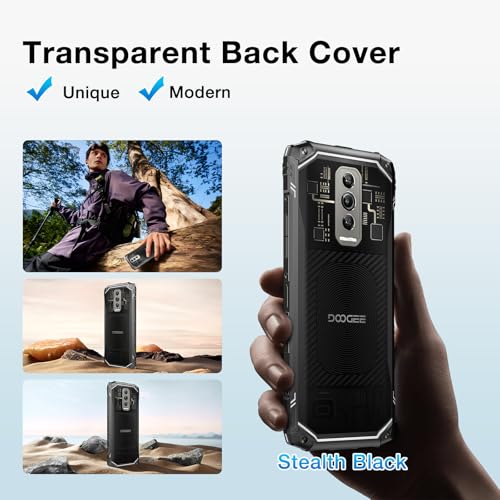
  • Exceptionally thin and lightweight design (10.7mm) for a rugged device
  • High durability with IP68, IP69K, and MIL-STD-810H certifications
  • Clean Android 14 operating system with no pre-installed bloatware or ads
  • Smooth 90Hz refresh rate on the 6.56-inch HD+ IPS display
  • Generous 256GB internal storage with support for up to 1TB microSD expansion
  • Adequate battery life for daily use, despite the slim profile sacrificing some capacity

What customers don't like about DOOGEE Blade 10 Ultra (36GB + 256GB)

  • Mediocre single-speaker audio quality described as 'deaf' or having an echo
  • Weak Unisoc T606 processor that struggles with high-end gaming and heavy multitasking
  • Lack of a 3.5mm headphone jack despite some initial marketing suggestions
  • Poor low-light camera performance with significant digital noise
  • Slow 10W charging speed for a 5150mAh battery
  • Display viewing angles can cause the screen to dim

Verdict

The Doogee Blade 10 Ultra (36GB + 256GB) is a rugged, yet ultra-thin, budget-friendly 4G smartphone designed for outdoor use. Its main characteristics include an IP68/IP69K and MIL-STD-810H certified durable body at just 10.7mm thick, a 6.56-inch HD+ 90Hz IPS display with Gorilla Glass protection, and a substantial 6150mAh battery in the "Energy" variant. The device operates on Android 15 (or 14 depending on the specific version) and is powered by an octa-core Unisoc T7250 processor, offering 36GB of RAM (via 8GB physical + 28GB virtual expansion) and 256GB of UFS 2.2 internal storage (expandable up to 2TB). Key pros are its impressive durability combined with a slim and lightweight design for a rugged phone, a decent 64MP AI main camera with an underwater mode, and useful features like NFC for Google Pay, side fingerprint recognition, and dual-SIM 4G connectivity. A few cons include the relatively weak processor, a single, mediocre-quality speaker, a standard HD+ screen resolution, and slow 18W (or 10W) charging speeds.

Compare DOOGEE Blade 10 Ultra (36GB + 256GB) with other smartphones

1Product to compare no. 1
VS
2Product to compare no. 2
VS
3Product to compare no. 3 (optional)

Graphic comparison of DOOGEE Blade 10 Ultra (36GB + 256GB) and other smartphones

No results found