Are Roomba robot vacuums good?
Roomba robot vacuums have an average overall score of 6.4, ranking #20 among comparable robot vacuum brands, and a user rating of 8.7, placing them at #7 based on user reviews.
Roomba robot vacuums are strongest when you value proven floor-cleaning hardware, app controls and a choice of vacuum-only, Combo and automated-dock models. Rubber multi-surface rollers handle hair well, while newer Plus and Max machines add LiDAR, object recognition and fuller dock automation.
Roomba robot vacuums are less consistent as one family because features change sharply by generation. Older entry models may lack saved maps, obstacle recognition, mopping or self-emptying; premium Combo systems can cost more than similarly automated rivals. Compare the exact model code, not the Roomba name alone.
The chart below compares robot vacuum brands by average overall score.
[horizontal-chart-15406096130061009453140888914513010987580044587466]
What are the main advantages of Roomba robot vacuums?
The main advantages of Roomba robot vacuums are as follows:
- Hair-friendly cleaning rollers: Many Roomba 900, e, i, j, s and current upper-tier models use paired rubber multi-surface rollers instead of a conventional bristle-only brush. The rollers counter-rotate to lift debris and are easier to strip of wrapped hair, although entry models must still be checked individually.
- Mature mapping and app controls: Roomba generations cover camera-based Smart Maps, room selection, keep-out zones and current ClearView LiDAR that can navigate without room lighting. The iRobot Home app also supports scheduling and targeted cleaning on compatible models, making repeated maintenance runs easy to automate.
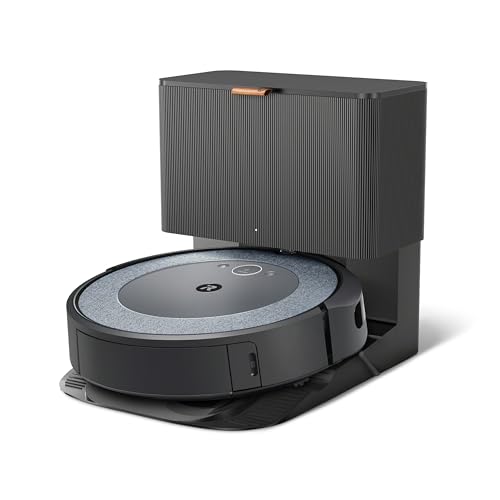
- A broad dock ecosystem: Clean Base and AutoEmpty docks reduce direct bin handling, while AutoWash versions add mop washing and other wet-cleaning maintenance on selected Combo models. Buyers can choose a simple charging base, onboard DustCompactor storage or a fuller service dock instead of paying for one fixed system.
- Useful features for pet homes: Dirt Detect, repeated passes, carpet sensing and regular scheduled cleaning help control tracked litter and daily fur before it accumulates. Models with rubber rollers, obstacle recognition and self-emptying are especially practical, provided pet waste and loose cords are still removed before a run.
- Long model history and support material: Roomba has been sold since 2002, so iRobot maintains extensive official care articles, compatibility guidance and replacement consumables for many current and legacy families. That makes brushes, filters, bags and troubleshooting information easier to identify than with short-lived robot brands, though the full model code remains essential.
What are the main disadvantages of Roomba robot vacuums?
The main disadvantages of Roomba robot vacuums are as follows:
- The naming system is difficult to decode: A 600, i, j, Combo j, 105, 205, Plus 500 and Max 700 can represent very different navigation, brush, mop and dock platforms. A plus sign historically indicated a Clean Base on several older families, while “Plus” is now also a product tier, so compare the complete name and model number.
- Navigation quality varies by generation: Older entry Roombas may clean with random or gyroscope-led routes and can lack persistent room maps, while i, j and newer numeric families use different camera or LiDAR systems. Mapping capability therefore cannot be inferred from the badge alone, and obstacle recognition is separate from knowing where the robot is.
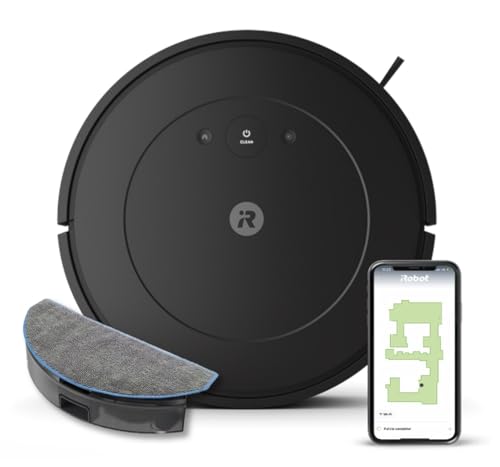
- Mopping is not consistent across Combo models: Some older Combo machines drag a basic damp pad, whereas higher current models wash pads at the dock or use more active wet-cleaning hardware. Carpet avoidance, mop lifting and edge reach differ, so a “Combo” label does not guarantee hands-free mixed-floor cleaning.
- Premium automation can be expensive: Roomba prices extend well beyond the midrange once self-emptying, AutoWash or flagship obstacle-recognition hardware is included. Bags, filters, rollers, mop pads and cleaning solution add recurring costs, and proprietary parts should be priced before choosing a docked model.
- Docks and connected features add upkeep: Auto-emptying and washing stations need floor space, clear approach paths and periodic cleaning, while evacuation cycles are much louder than routine vacuuming. Advanced maps, remote controls and updates also depend on app and network support, so buyers wanting fully offline operation should confirm what remains available without the cloud.
Who makes Roomba robot vacuums?
Roomba robot vacuums are made by iRobot Corporation, a consumer-robotics company founded in 1990 by roboticists from the Massachusetts Institute of Technology. iRobot introduced the first Roomba floor-vacuuming robot in 2002 and has since developed the robot hardware, navigation software, iRobot Home app and branded accessories around the range.
In January 2026, Picea completed its acquisition of 100% of iRobot. The transaction made iRobot a privately held company wholly owned by Picea, while iRobot retained its name and its headquarters in Bedford, Massachusetts.
iRobot says its engineering, product development, marketing and customer-facing operations remain anchored in the United States, with Picea supporting the manufacturing and supply chain as its parent. Roomba buyers should therefore use iRobot's regional store and support channels for warranty, consumables and model compatibility rather than treating Picea as a separate consumer-facing robot brand.
What are the main Roomba robot vacuum series?
The main Roomba robot vacuum series are as follows:
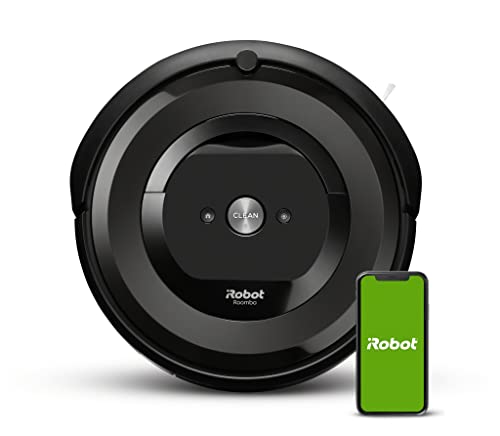
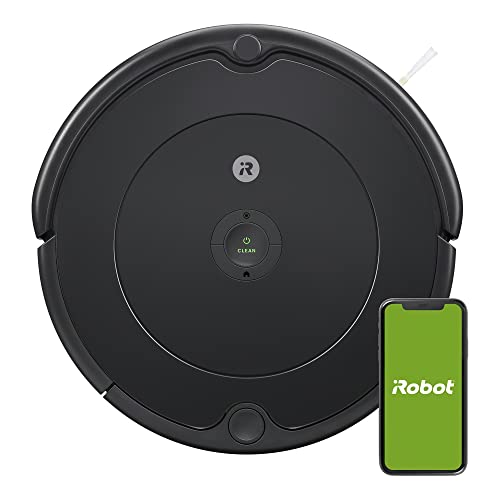
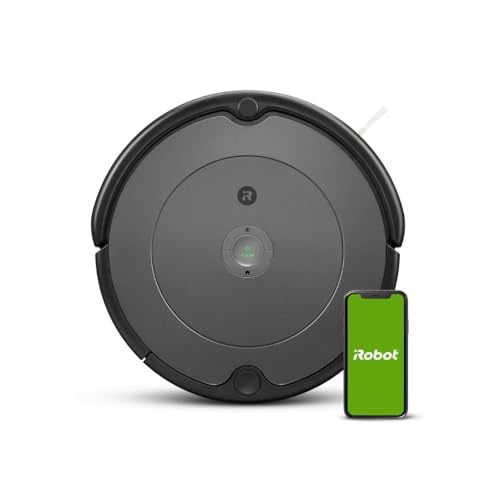
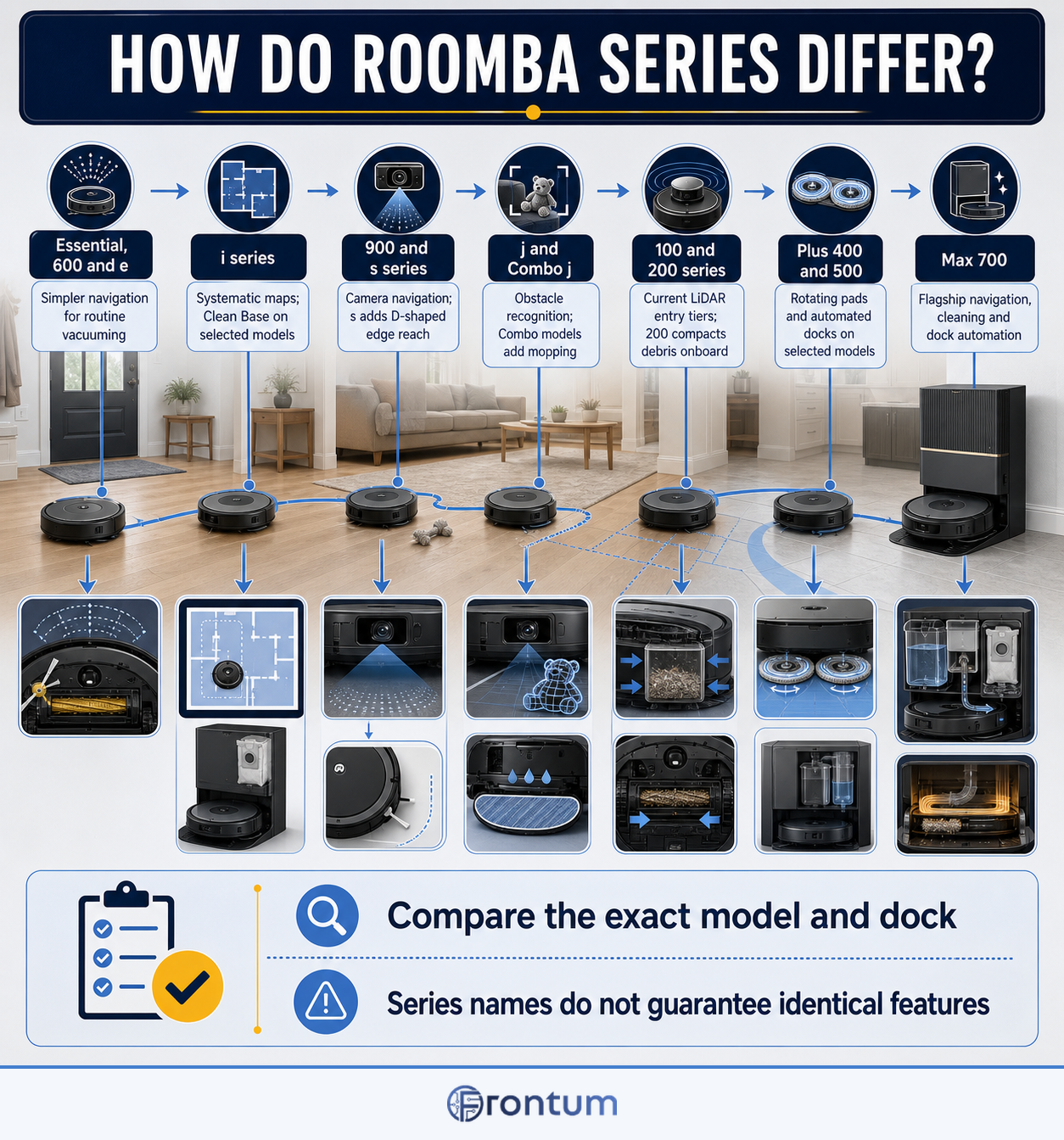
- Essential, 600 and e series: These are the simpler current or legacy Roombas for routine vacuuming, with 600-series models generally using sensor-led navigation and e-series models adding more modern dual-rubber cleaning hardware. They are best for uncluttered floors when low purchase price matters more than editable maps, object recognition or an automated dock.
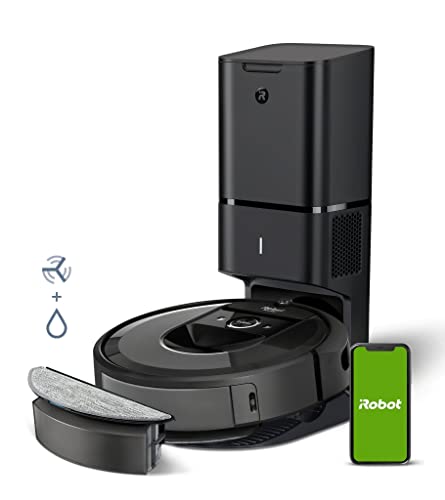
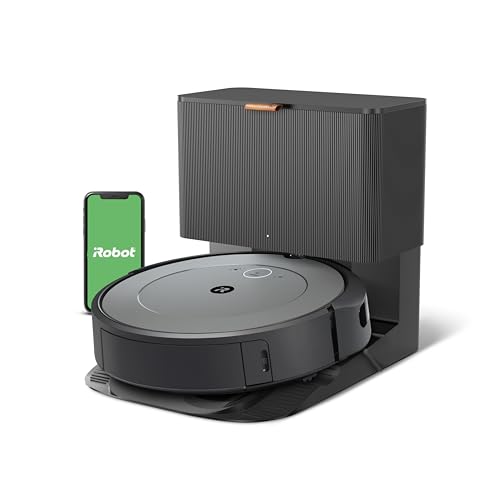
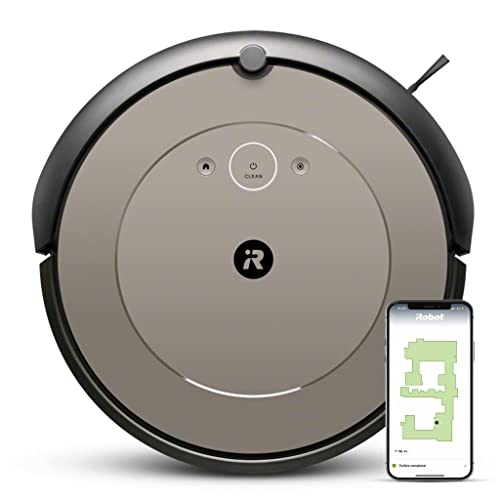
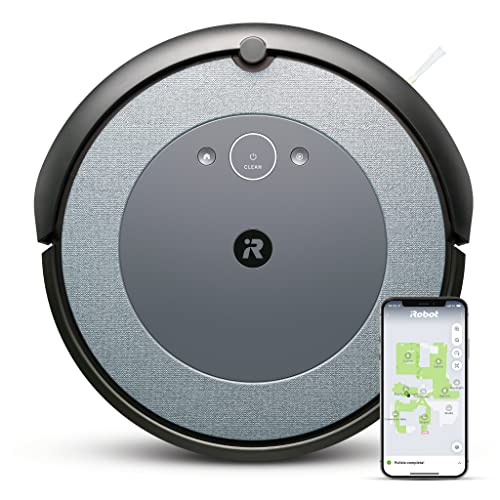
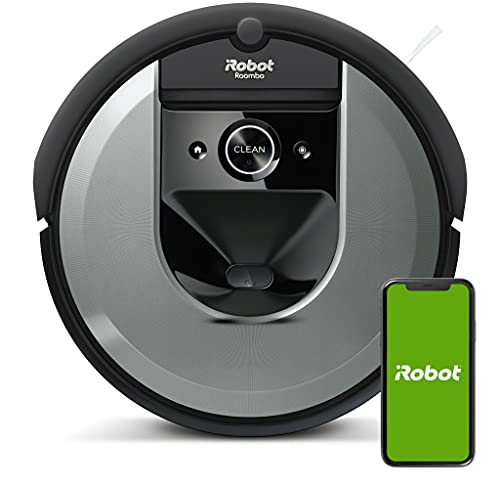
- i series: The i1, i3, i5 and i7 generations brought systematic cleaning, Imprint Smart Mapping on selected models and broad Clean Base self-emptying availability. Capability rises substantially within the family, so verify whether the exact i model can save rooms, clean by room and recharge and resume rather than assuming every i-series robot works like an i7.
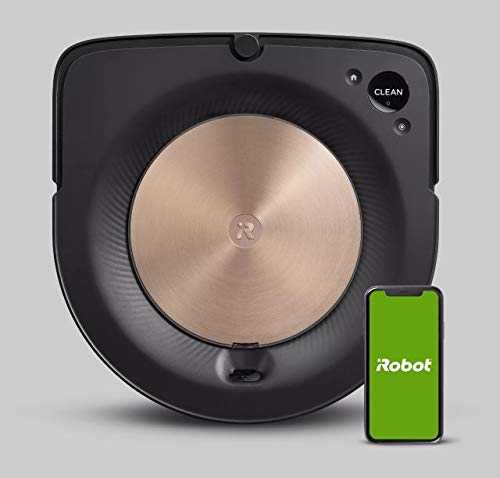
- 900 and s series: The 900 family introduced camera-based visual navigation and stronger connected mapping, while the D-shaped s9 and s9+ focused on edge reach, carpet pickup and premium suction. These remain capable vacuum-only choices, but they are legacy platforms and their camera navigation, body shape and parts are distinct from current LiDAR models.
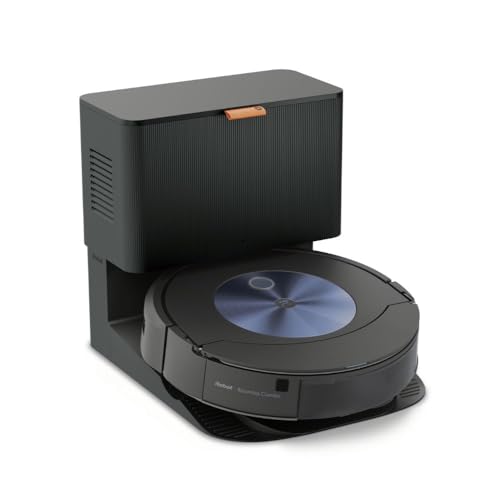
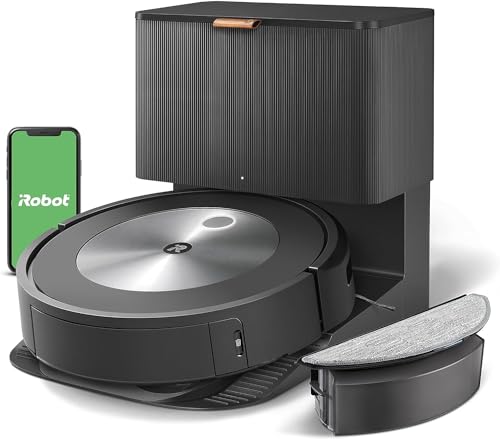
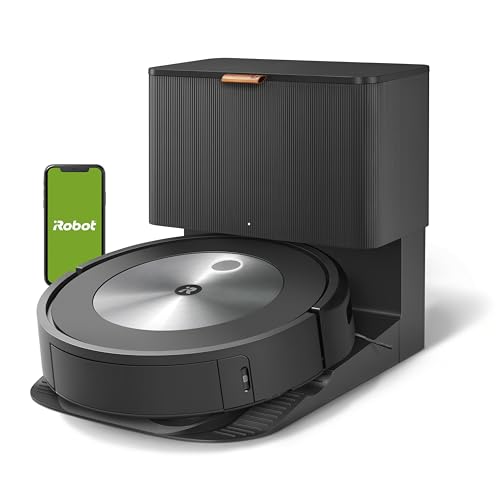
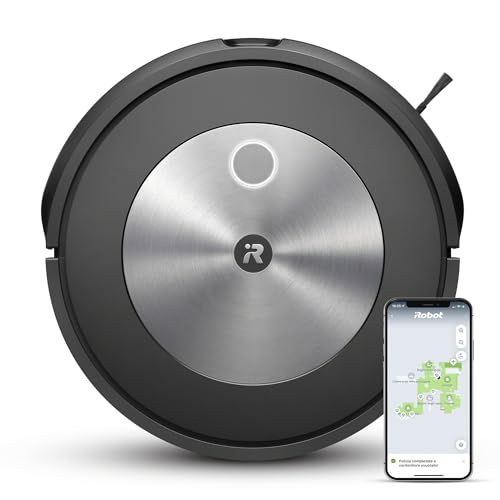
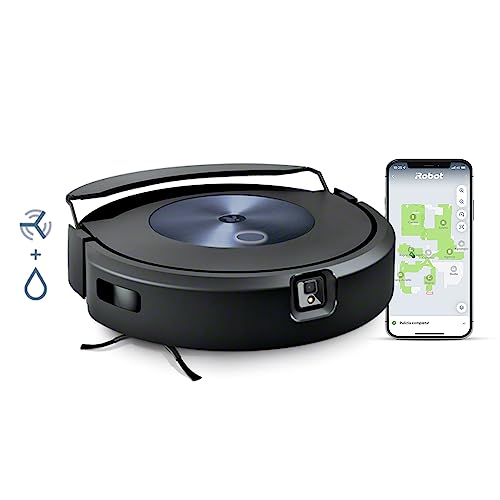
- j and Combo j series: The j7 and later j models centre on front-camera PrecisionVision obstacle recognition, a useful upgrade in homes with cords, shoes or pets. Combo j models add mopping; higher Combo j7 and j9 variants retract the mop away from carpet, while dock capability and pad handling vary by suffix.
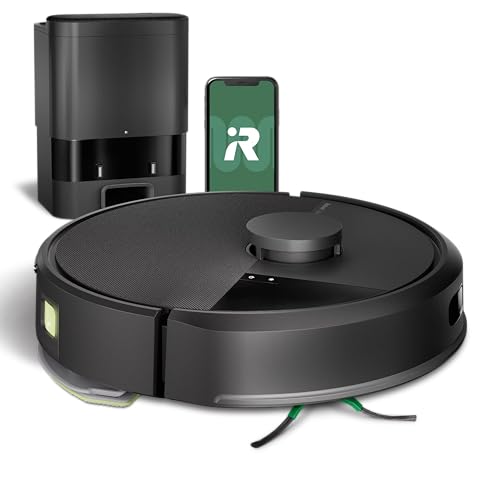
- 100/105 and 200/205 series: The 100/105 generation is the modern entry platform with ClearView LiDAR and vacuum-only or Combo configurations, with AutoEmpty available on selected packages. The 200/205 family moves debris into an onboard DustCompactor, reducing reliance on a tall self-empty dock while retaining current mapping and app functions.
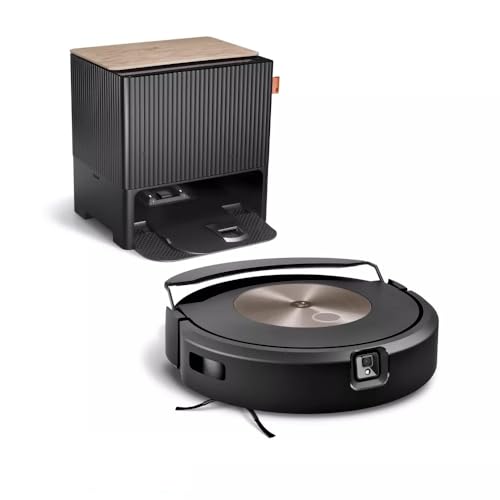
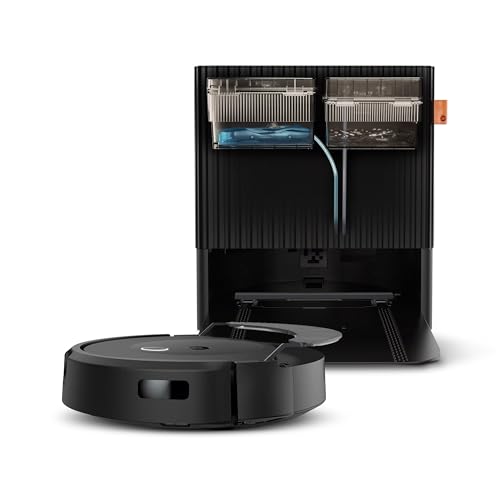
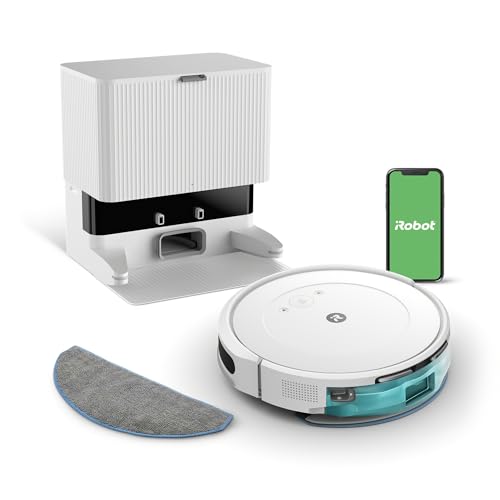
- Plus 400 and 500 series: Plus models such as the 405, 415, 505, 515 and 575 occupy the automated mid-to-premium Combo tier. Depending on generation and package, they combine LiDAR navigation with spinning mop pads, object detection and AutoWash docks, so the precise dock and avoidance system should be checked.
- Max 700 series: Max models such as the 705, 715 and 775 form iRobot's flagship current tier, with the most advanced suction, AI-assisted navigation or obstacle handling and higher-spec AutoEmpty or AutoWash stations. The 715 is a vacuum-focused option, while Combo variants add more complete wet cleaning and carry the highest prices.
How much do Roomba robot vacuums cost?
Roomba robot vacuums generally cost about £130-£1,400, with many capable models between roughly £260 and £600. Older 600 or e models and basic Essential, i1 or entry Combo configurations commonly occupy the £130-£300 range, where buyers should expect simpler navigation, manual bin emptying or a basic mop rather than every current automation feature.
From about £340 to £600, saved mapping, better object handling, Combo cleaning and AutoEmpty packages become easier to find. Models around £700-£1,400 include premium j, s and fully automated Combo or Max configurations, where the extra money should buy a meaningfully better dock, carpet protection, obstacle recognition or wet-cleaning system; compare included bags, pads and maintenance parts because similarly named robot-only and dock bundles can differ sharply in price.
The chart below shows the price distribution of Roomba robot vacuums.
[vertical-chart-10779423905322483480121433405620167281871668689921]
What should you consider when choosing a Roomba robot vacuum?
Before choosing a Roomba, compare the following details:
- Series: The 600 and e families are the simpler Roomba platforms, while i and j models introduced different generations of smart mapping and obstacle avoidance. The current 100, 200, Plus and Max ranges use newer navigation and dock designs, and Combo, + and Plus identify different cleaning or station packages.
- Mapping: Choose persistent room maps if you want room selection, keep-out zones or targeted cleaning. ClearView LiDAR can navigate without room lighting, while camera-based i and j models differ in map editing and object recognition, so check the controls offered by the exact model.
- Rollers: The e, i, j and s generations use dual rubber rollers that shed hair more easily than the bristle-led cleaning heads found on many 600-series and newer entry models. Carpet-heavy or pet homes should therefore favour an i, j, s9 or suitably equipped Max model, while buyers with mainly hard floors can accept the simpler heads used lower in the range.
- Mopping: Lower Combo models provide basic pad wiping, Combo j7 and j9 models retract the mop above carpet, and current Plus 405 or 505 packages move to rotating pads with fuller AutoWash support. Vacuum-only 105, 205 and Max 715 models avoid wet-cleaning maintenance entirely, so the right branch depends on whether rugs or hard-floor stains matter more.
- Obstacle avoidance: Mapping does not guarantee that a robot will avoid cords, socks, toys or pet waste. A j-series or newer AI-assisted Roomba is a better fit for a floor that cannot always be cleared, although hazardous and delicate objects should still be picked up.
- Runtime and bin: Older 600 and e models sit toward the shorter end of Roomba's roughly 60–120-minute runtime range, while mapped i, j and current LiDAR families are more likely to combine longer runs with recharge-and-resume. A 205 DustCompactor or a self-emptying i, j, Plus or Max package can matter more than extra battery time when pet hair fills the onboard bin first.
- Dock and parts: The 600 and e families usually rely on a compact charger, i and j plus packages add a bagged Clean Base, and the 205 stores compressed debris onboard instead of using a tall emptying dock. Plus 405 or 505 and selected Max Combo packages add AutoWash water and mop care, bringing larger tanks, more consumables and a much bigger footprint.