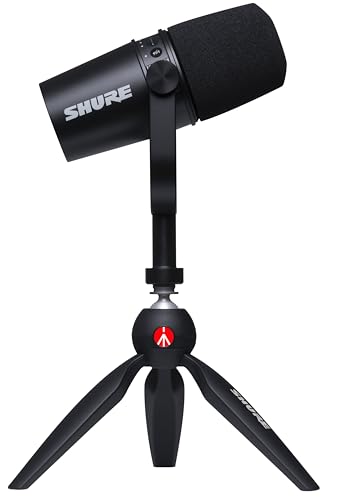
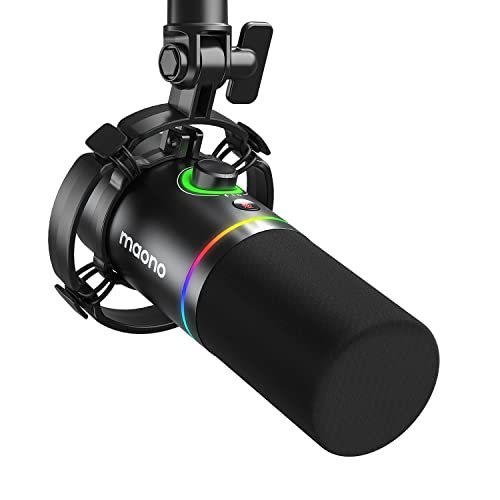
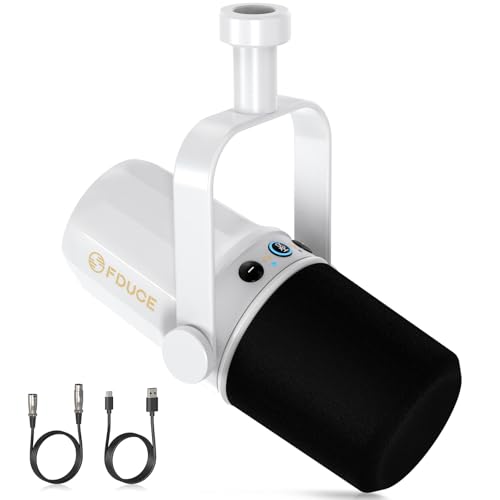
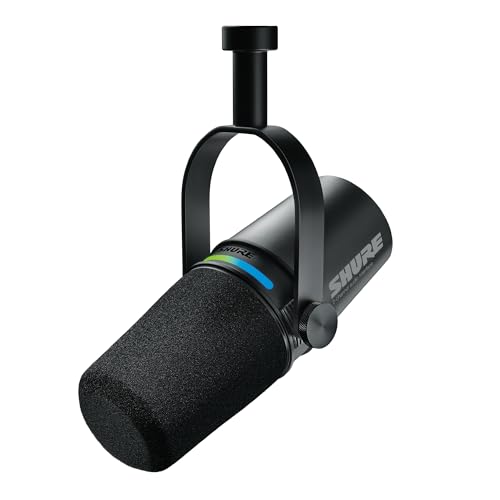
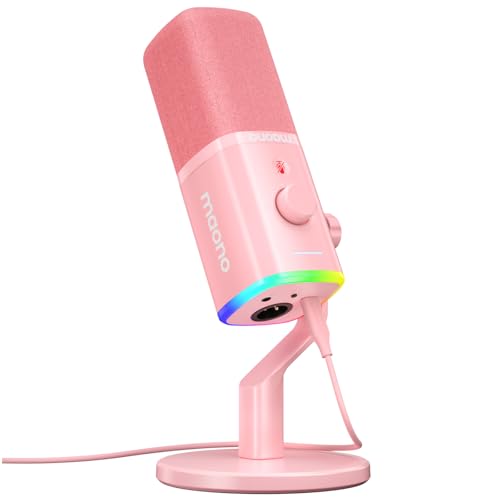
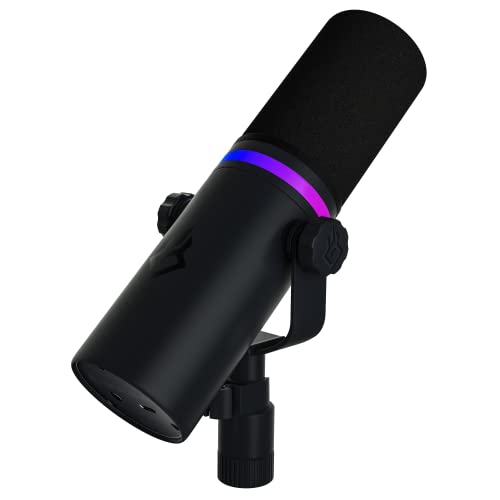
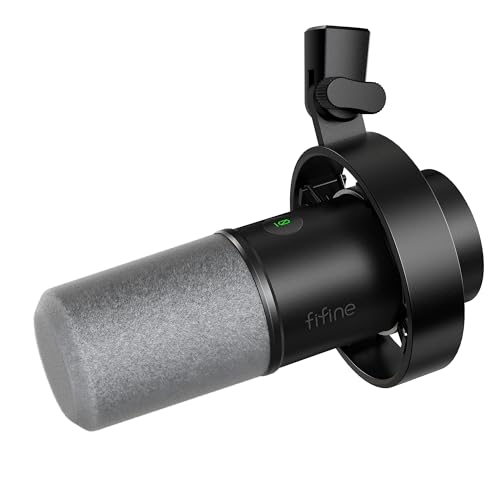
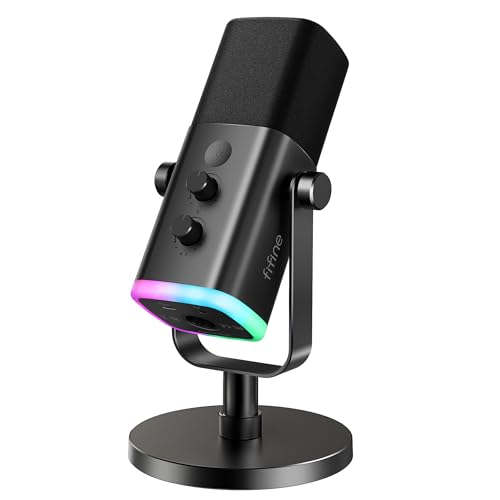
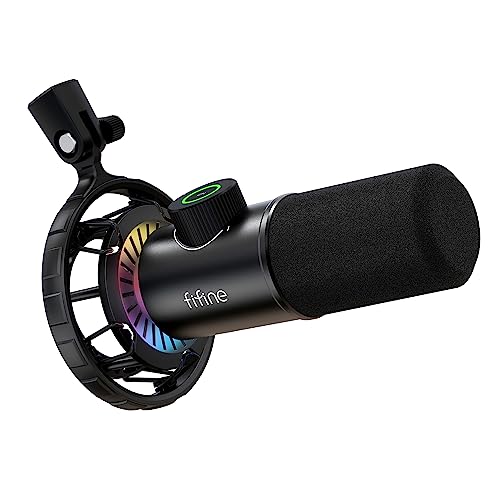
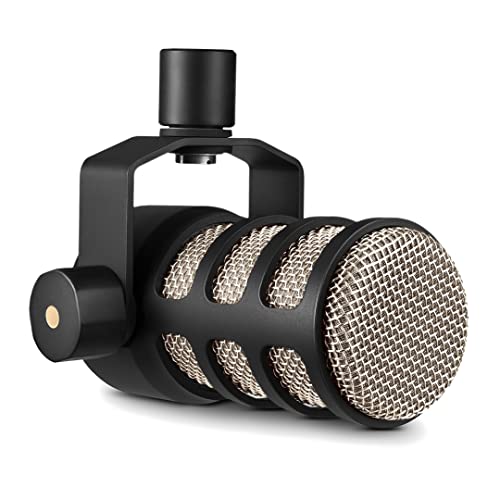
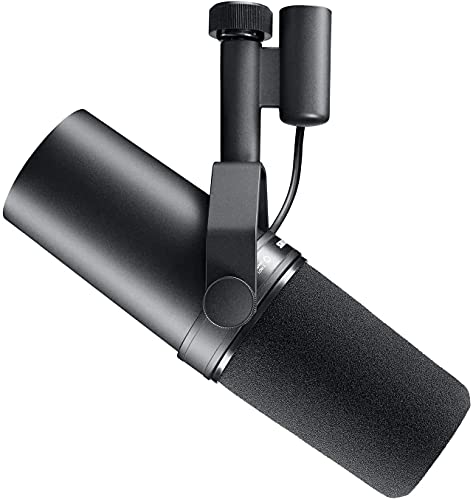
Which brands make the best dynamic microphones?
The dynamic microphone brands with the highest average overall scores are as follows.
- Audio-Technica (Average overall score: 7.4)
- FIFINE (Average overall score: 7.3)
- Shure (Average overall score: 6.9)
The chart below compares dynamic microphone brands by average overall score.
[horizontal-chart-03492589595747865008100194751772404465772739311774]
What is a dynamic microphone?
A dynamic microphone converts sound through electromagnetic induction: a diaphragm moves a coil inside a magnetic field and generates the audio signal without active capsule electronics. The simple moving-coil construction is durable, tolerant of loud sources, and well suited to repeated handling.
Its lower sensitivity encourages close placement, which improves the balance between the wanted source and distant room sound without making background noise disappear. Most passive models need no phantom power, but broadcast-oriented dynamics can demand 55-65 dB of clean preamp gain, so microphone output, interface noise, and working distance must be considered together.
How do dynamic microphones differ from condenser microphones?
Dynamic microphones are usually tougher and less sensitive to room ambience; condenser microphones usually provide a higher output and reveal more fine detail.
The difference begins with the capsule. A dynamic moving coil has more mass than a condenser diaphragm, which contributes to durability and high-SPL tolerance but normally reduces sensitivity and upper-frequency extension.
That trade-off shapes the best uses. Close-address dynamics often work better for live vocals, untreated-room podcasting, drums, and guitar cabinets. Condensers are frequently stronger for detailed studio vocals, acoustic instruments, stereo recording, and quiet sources where transient response and low self-noise matter.
Power requirements reverse the apparent simplicity: passive dynamics need no phantom power but can demand substantial clean gain, whereas most XLR condensers require 48 V and deliver a stronger signal.
Neither technology is automatically better. Choose the design that fits the source level, room, placement, and available preamp rather than treating capsule type as a quality grade.
What are dynamic microphones best suited for?
Dynamic microphones are best suited to the following applications:
- Live vocals: Handheld cardioid and supercardioid models tolerate rough handling and help control monitor spill when positioned correctly. Check handling noise, grille strength, rear pickup behavior, and how closely the singer must work the capsule.
- Podcasting and broadcasting: Close-address broadcast dynamics can reduce the prominence of room reflections, keyboard noise, and distant household sound. They often need a sturdy boom arm and enough clean preamp gain to avoid hiss.
- Guitar amplifiers and drums: High SPL tolerance and compact placement make dynamics a standard choice on guitar cabinets, snare drums, toms, and kick drums. Different frequency shaping is useful for each source, so an instrument-specific model may outperform a general vocal microphone.
- Untreated rooms: A dynamic microphone used 5-15 cm from the source usually produces a better wanted-sound-to-room ratio than a sensitive condenser placed farther away. Acoustic treatment still helps, but close technique makes the setup more forgiving.
- Touring, rehearsal, and shared equipment: Simple passive construction and replaceable grilles suit repeated setup, transport, and sanitising. A good dynamic can remain serviceable for years even when cosmetic wear accumulates.
How much do dynamic microphones cost?
Dynamic microphones commonly cost about £70-£220, with useful handheld models starting near £40 and premium broadcast or specialist stage designs reaching roughly £340-£470.
Below £90, expect straightforward vocal and general-purpose microphones that can be excellent for rehearsal, karaoke, calls, and occasional recording. The £90-£220 range adds many established vocal, broadcast, and instrument families with stronger internal isolation, more consistent polar behavior, easier access to replacement grilles, and better long-term support.
Above £260, the price should buy a clear specialist advantage such as refined broadcast mechanics, active output electronics, controlled rejection, or source-specific voicing. Include the interface, boom arm, cable, wind or pop protection, and any required inline gain booster when comparing the real system cost.
The chart below shows the price distribution of dynamic microphones.

[vertical-chart-13326894680161833034116022428078071410661239645220]
How good is sound quality on dynamic microphones?
Sound quality on a good dynamic microphone is focused, natural, and fully professional when the capsule suits the source.
Speech and vocal models often use a presence rise for intelligibility and controlled bass to reduce muddiness. Instrument dynamics are voiced differently: guitar-cabinet designs may emphasize midrange attack, while kick and tom microphones shape low-frequency weight and reject spill. One model rarely excels at every job.
Gain and placement can matter more than the nominal frequency range. A low-output broadcast microphone may need 55-65 dB of clean gain or an inline booster, and unstable close distance can turn useful proximity warmth into boom.
Treat placement as the final tone control. Moving the capsule a few centimetres across a speaker, drum head, or speaking axis can change brightness, body, and leakage more than a small specification difference between two microphones.
What power and connection options do dynamic microphones need?
The main dynamic microphone power and connection options are as follows:
- Passive XLR: Most moving-coil dynamics use a balanced XLR output and need no electrical power. They do need an interface, mixer, recorder, or preamp with enough clean gain, plus a balanced XLR cable.
- High-gain broadcast chains: Low-sensitivity broadcast microphones can require 50-60 dB or more of gain. Check interface noise and maximum gain; an inline booster may help, but many boosters need phantom power even though the microphone itself does not.
- Active dynamic designs: Some microphones add an internal preamp or switchable output boost and therefore require phantom power. These can simplify gain staging while retaining dynamic-capsule behavior, but the active mode and passive fallback should be checked.
- USB and hybrid models: USB dynamics include conversion and often add headphone monitoring, gain, mute, and mix controls. Hybrid USB/XLR models are useful for beginners who may later add an interface, although the digital and analog outputs can have different available controls.
- Wireless systems: A dynamic handheld capsule may be built into a wireless transmitter or attached to a compatible body. Check the operating band, receiver connection, battery runtime, regional legality, latency, and whether replacement capsules or transmitters are supported.
What should you check before buying a dynamic microphone?
The main points to check before buying a dynamic microphone are as follows:
- Intended source and voicing: Vocal, broadcast, kick-drum, snare, and guitar-cabinet dynamics are tuned differently. Choose the frequency balance, grille, and body shape for the real source instead of assuming every dynamic is general purpose.
- Pickup pattern and monitor placement: Cardioid is versatile, while supercardioid and hypercardioid patterns provide stronger side rejection but usually add a rear pickup lobe. Position stage monitors, speakers, and room noise around the pattern's actual nulls.
- Sensitivity and required gain: Low-output broadcast dynamics can require roughly 55–65 dB of clean gain for quiet speech. Compare microphone sensitivity with interface gain and equivalent input noise before deciding whether an inline booster is necessary.
- Working distance and proximity effect: Many dynamics are designed for close use, often about 5–15 cm from the mouth or source. Check whether the resulting bass boost suits the voice and whether the performer can maintain consistent distance and angle.
- Handling and mechanical noise: Handheld use demands good internal shock isolation, a strong grille, and low handling noise. Desk and broadcast use instead require a mount or yoke, boom arm, and isolation that can support the microphone's weight without transmitting vibration.
- Frequency and off-axis response: A vocal presence rise can improve clarity but emphasize harshness or sibilance, while a dark broadcast tuning can need equalization on some voices. Listen to off-axis coloration as well as the on-axis curve because nearby room and monitor sound reaches the capsule from other angles.
- Connector, power, and signal chain: Passive XLR is simple, while active, USB, hybrid, and wireless dynamics add their own power, conversion, monitoring, and compatibility requirements. Confirm interface gain, phantom-power behavior where relevant, and which onboard controls work in every connection mode.