
Are Sennheiser microphones good?
Sennheiser microphones have an average overall score of 6.3, ranking #25 among comparable microphone brands, and a user rating of 9.3, placing them at #8 based on user reviews.
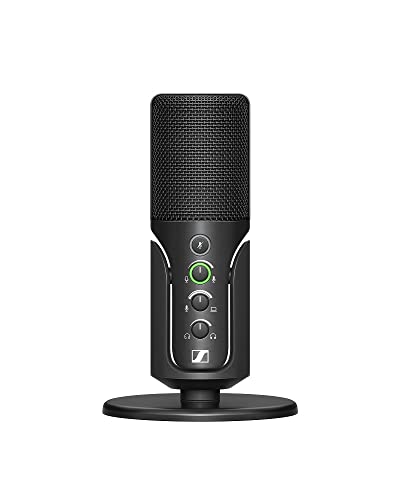
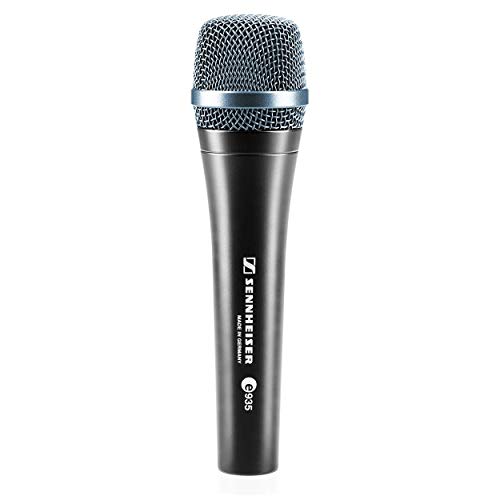
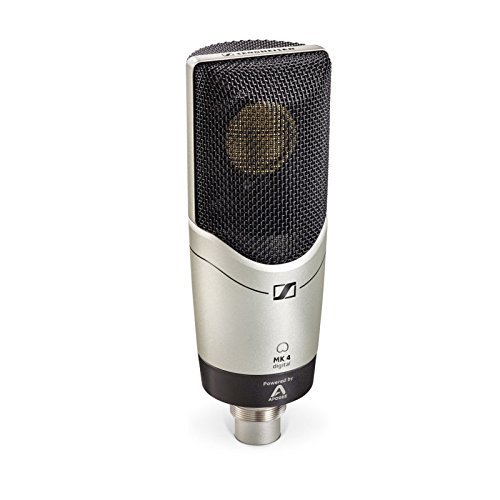
Sennheiser microphones are good when the model is matched to a clearly defined job. Profile is convenient for podcasts, streams, calls, and voice-over because the USB audio path and monitoring controls are built in. E 935 is a focused stage vocal tool with a 40 Hz–18 kHz response and high sound-pressure tolerance, while MK 4 Digital is the more revealing studio choice, extending from 20 Hz to 20 kHz and supporting up to 24-bit/96 kHz conversion.
The range is less suitable for buyers who want one microphone to switch freely between every workflow. E 935 has no USB or onboard monitoring, Profile is not an XLR stage microphone, and MK 4 Digital depends on its digital connection ecosystem. Sennheiser makes most sense when vocal use, desktop recording, or detailed condenser capture has already been chosen before the model.
The chart below ranks microphone brands by average overall score.
[horizontal-chart-17722261969187988942009596606811630445561412665918]
Who should consider buying Sennheiser microphones?
The following users are especially well suited to Sennheiser microphones:
- Podcasters, streamers, and remote workers: Profile combines a cardioid condenser, USB-C audio, direct headphone monitoring, mute, gain, headphone level, and playback-mix control in one desktop microphone.
- Live singers and presenters: E 935 is a handheld cardioid dynamic built for close vocal use, strong rejection around a stage, and sound-pressure levels up to 150 dB without requiring phantom power.
- Home-studio vocalists and musicians: MK 4 Digital provides the wider bandwidth and sensitivity of a large-diaphragm condenser for voices and instruments in a controlled room. Its digital conversion avoids choosing a separate analogue interface.
- Mobile musicians using compatible devices: MK 4 Digital supports both USB and Lightning cable paths, making high-resolution condenser recording possible without a traditional XLR chain when the required cable and application are available.
- Buyers who value purpose-specific controls: Sennheiser is a strong fit when the desired workflow is already clear—hands-on USB operation, durable live vocals, or detailed digital studio capture—rather than when one universal microphone is expected to cover all three.

How do Sennheiser microphones differ from other microphones?
Sennheiser differs from many microphone brands by applying different engineering priorities to live, studio, broadcast, camera, and wireless work instead of centring the range on one popular desktop format. That broader professional-audio background is visible even in these three models: E 935 keeps the signal path conventional and stage-ready, Profile puts the complete USB control surface at the user's fingertips, and MK 4 Digital integrates a studio condenser with dedicated high-resolution conversion.
The live-vocal approach is particularly distinct. E 935 is a cardioid dynamic designed to be held close, tolerate up to 150 dB SPL, and feed a balanced XLR system without batteries or phantom power. It trades the extra detail and sensitivity of a condenser for predictable handling on loud stages, where feedback control and vocal focus matter more than capturing the room.
Profile takes the opposite route: it is a computer-facing condenser with 24-bit/48 kHz audio, direct monitoring, mute, gain, headphone volume, and a mix control. Its value is operational speed rather than expandability; it avoids an interface for a solo desk, but it does not replace the multiple inputs and hardware routing of an XLR mixer.
MK 4 Digital is unusual because it combines Sennheiser's studio condenser platform with Apogee conversion and USB/Lightning connectivity. It supports sample rates up to 96 kHz and captures more room and source detail than E 935, so it rewards controlled acoustics and careful placement. The proprietary digital path is less universal than ordinary XLR, which makes cable and device compatibility a more important purchasing check.
How do the main Sennheiser microphone models differ?
The main Sennheiser microphone models in this comparison differ as follows:
- Sennheiser Profile: This cardioid USB-C condenser is the practical desktop model for podcasts, streaming, calls, and voice-over. It records at up to 24-bit/48 kHz and includes direct headphone monitoring, microphone gain, mute, headphone volume, and microphone/computer mix controls; choose it when a complete one-person USB workflow matters more than XLR expansion.
- Sennheiser E 935: This handheld cardioid dynamic is the live-performance model. Its 40 Hz–18 kHz response, 150 dB maximum SPL, balanced XLR output, and lack of phantom-power requirement suit close vocals, speeches, rehearsal, and stage systems; it needs a mixer, interface, or PA input and does not provide digital controls.
- Sennheiser MK 4 Digital: This large-diaphragm cardioid condenser is the detailed studio and mobile-recording model. It covers 20 Hz–20 kHz, supports 16- or 24-bit conversion and sample rates up to 96 kHz, and connects through its dedicated USB or Lightning cable path; choose it for controlled vocal or instrument capture rather than noisy rooms or handheld stage use.
How much do Sennheiser microphones cost?
Sennheiser microphones in this comparison cost about £90-£340. Profile is the entry point at roughly £90 and includes the complete USB-C recording path, desk stand, direct monitoring, and hands-on controls, making it the most economical choice for a solo computer setup.
E 935 sits around £140. The microphone itself is straightforward, but it requires a suitable XLR input, cable, stand or clip, and monitoring through the mixer, interface, or PA. It is better value than Profile for regular live vocals, yet less complete for someone starting a computer-recording setup from nothing.
MK 4 Digital costs about £340 and occupies the premium position because it combines a large-diaphragm studio condenser with Apogee conversion and digital device connectivity. The price makes sense for detailed vocals or instruments when that integrated path is specifically useful; otherwise, compare it with a conventional XLR condenser plus an interface, especially if several microphones or inputs will be added later.
What should you consider while choosing Sennheiser microphones?
The main points to consider while choosing a Sennheiser microphone are as follows:
- Intended source and working distance: Choose Profile for close desktop speech, E 935 for close handheld vocals, and MK 4 Digital for detailed studio vocals or instruments. A stage dynamic held a few centimetres away behaves very differently from a condenser used in a quiet room.
- Connection and complete signal path: Profile uses USB-C and contains its own audio interface, E 935 needs a balanced XLR preamp or mixer, and MK 4 Digital relies on its compatible USB or Lightning cable system. Confirm the physical cable, device support, available input, and monitoring route before buying.
- Room and transducer type: E 935's dynamic capsule is the easiest option around loud stages and reflective spaces, while the two condenser models capture more detail and more room sound. Keep any model close enough that the wanted source dominates background noise.
- Gain, headroom, and power: E 935 handles up to 150 dB SPL and does not need phantom power, but its interface must provide enough clean gain. Profile manages gain internally, while MK 4 Digital handles conversion and device power through its digital connection.
- Monitoring and controls: Profile is the only model here with a headphone output, zero-latency monitoring, mute, gain, headphone volume, and playback-mix controls. With E 935 or MK 4 Digital, monitoring and level control depend on the connected mixer, interface, device, and application.
- Mounting and acoustic control: Profile needs stable desktop placement and pop control, E 935 needs a suitable clip or handheld technique, and MK 4 Digital benefits from a stand, shock isolation, pop filter, and controlled acoustics. Check included hardware and thread compatibility for the intended setup.