
Are Samson microphones good?
Samson microphones have an average overall score of 7.6, ranking #7 among comparable microphone brands, and a user rating of 9.2, placing them at #10 based on user reviews.
Samson microphones are good when practical versatility matters more than a tightly uniform premium range. Q2U and Q9U provide unusually useful USB/XLR migration paths for podcasting and speech, G-Track Pro can record a microphone and instrument through one desktop unit, and Satellite brings multi-pattern 24-bit/96 kHz capture to compatible mobile or computer setups. The smaller Go Mic and Meteor models trade advanced controls and modern connectors for portability and low cost, while sensitive condensers still require close placement, pop control, and a reasonably quiet room.
The chart below ranks microphone brands by average overall score.
[horizontal-chart-17722261969187988942009596606811630445561412665918]
Who should consider buying Samson microphones?
The following users are especially well suited to Samson microphones:
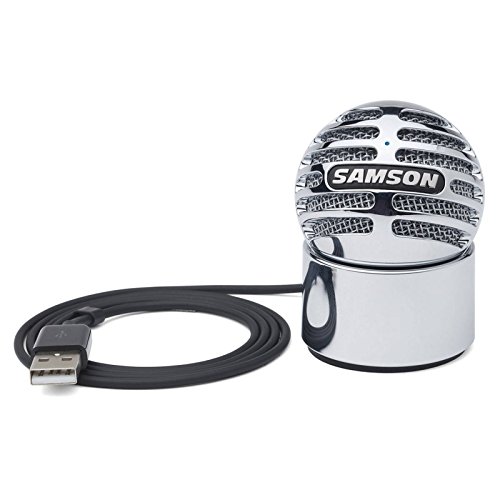
- Travelling callers and compact-workspace users: Go Mic clips to a laptop or sits on a small desk, while Meteorite offers an even simpler cardioid USB capsule for calls and quick voice recording.
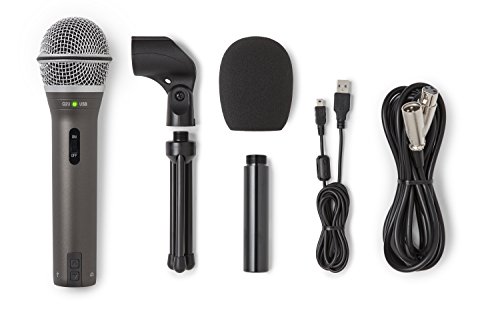
- Beginner podcasters: Q2U combines a close-talk dynamic capsule, headphone monitoring, USB operation, and XLR expansion at a moderate price, making it easier to start without committing to one signal path.
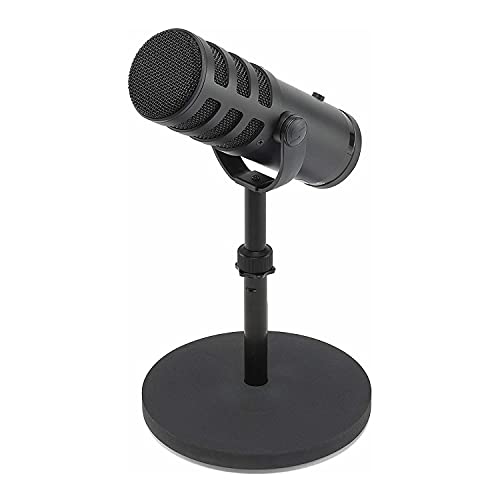
- Established podcasters and streamers: Q9U adds 24-bit/96 kHz USB recording, broadcast-style dynamic voicing, monitoring, mute, and USB-C plus XLR connectivity for a more permanent speech setup.
- Singer-songwriters and solo musicians: G-Track Pro combines a multi-pattern condenser with an instrument input and onboard mixing controls, allowing voice and guitar or keyboard to enter one computer connection.
- Home-studio vocalists and instrument recordists: C01U Pro and Meteor Mic provide conventional cardioid condenser capture with direct monitoring for sources that benefit from more detail than a close dynamic.
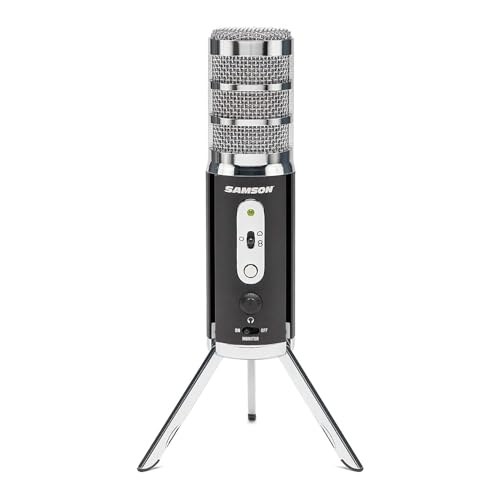
- Mobile interviewers and musicians: Satellite supports USB and Lightning workflows, 24-bit/96 kHz recording, direct monitoring, and cardioid, bidirectional, or omnidirectional patterns for portable single- or two-person sessions.

How do Samson microphones differ from other microphones?
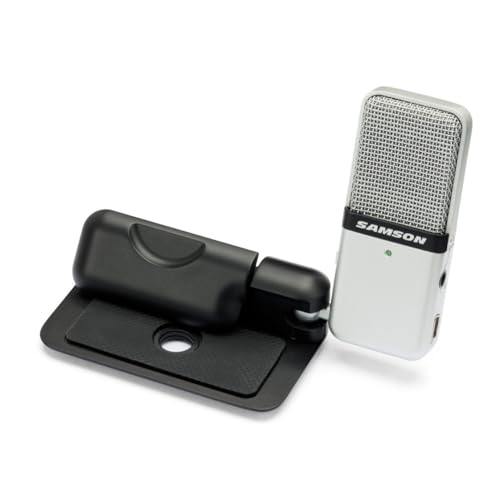
Samson differs from many microphone brands by covering the gap between a tiny travel accessory and a small recording system. Go Mic folds into its own clip, Meteorite reduces the idea to a compact USB capsule, and Satellite extends portable recording to Lightning-compatible devices. These models suit users who value a microphone that can move with a laptop or phone rather than a heavy permanent desk rig.
The Q-series hybrids take a different route. Q2U and Q9U are dynamics intended for close speech, so they are easier than sensitive condensers around keyboards, hard walls, and household noise. USB makes either model usable without an interface, while XLR preserves a path to a mixer or multi-microphone recorder; that dual connection is still uncommon among inexpensive speech microphones.
G-Track Pro is closer to an integrated production station. Alongside its condenser capsule and selectable patterns, it provides an instrument input and hardware mixing functions, allowing a singer-songwriter to record microphone and instrument through one USB device. It occupies more desk space and demands more room control, but it removes the need for a separate basic interface in the intended one-person workflow.
Samson also retains straightforward studio USB condensers such as C01U Pro and Meteor Mic. They emphasise direct computer recording and monitoring rather than software ecosystems, lighting, or complex DSP. That simplicity is useful, although several models use older USB connector formats and modest 16-bit/48 kHz conversion, so cable availability and platform support deserve more attention than with a new USB-C-only design.
What are the main series of Samson microphones?
The main Samson microphone series and families are as follows:
- Go Mic family: Go Mic is the folding travel model with cardioid and omnidirectional pickup, direct monitoring, and a laptop-friendly clip. Go Mic Connect keeps the compact desktop concept but adds mute, wider 20 Hz–20 kHz coverage, and more communication-focused processing and control.
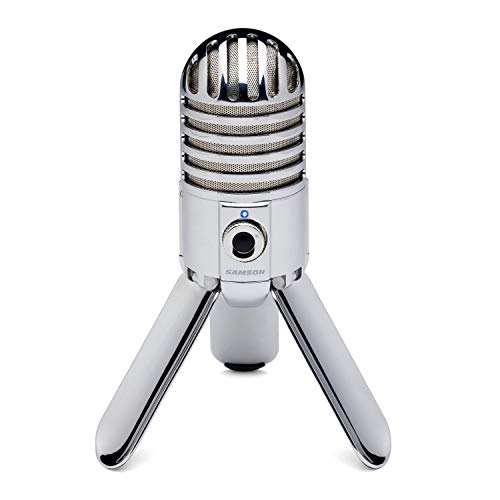
- Meteor family: Meteorite is the smallest, least expensive cardioid USB condenser and omits headphone monitoring and onboard controls. Meteor Mic adds a larger capsule, fold-out desktop legs, mute, and direct headphone monitoring for calls, voice-over, and simple music recording.
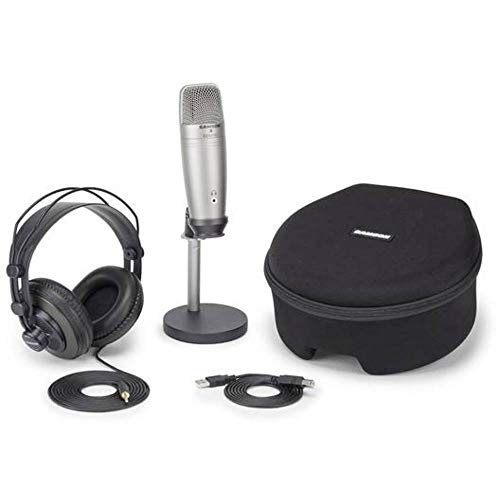
- Studio USB condensers: C01U Pro is the conventional side-address studio model, with a 20 Hz–18 kHz response, 130 dB maximum SPL, and direct monitoring. It suits vocals and instruments when a fixed stand, pop filter, and quieter room are available.
- G-Track family: G-Track Pro combines a multi-pattern condenser, headphone output, gain and mute controls, 24-bit/96 kHz recording, and an instrument input with mixing functions. It is the Samson choice for one-person music production or streaming that needs an extra source without a separate interface.
- Q2U and Q9U: These cardioid dynamics support both USB and XLR. Q2U is the lower-cost handheld-style entry for podcasts and speech, while Q9U is the larger broadcast-style model with USB-C, 24-bit/96 kHz conversion, higher-frequency extension, mute, and monitoring.
- Satellite mobile family: Satellite is a portable USB/Lightning condenser with cardioid, bidirectional, and omnidirectional patterns, direct monitoring, and up to 24-bit/96 kHz recording. It is the most flexible Samson option for mobile interviews, field music, and two-person table recording.
How much do Samson microphones cost?
Samson microphones cost about £30-£170. Meteorite starts near £30, while Go Mic and Meteor Mic sit around £50. These entry models favour compactness and direct USB use; Meteor Mic adds monitoring and mute, whereas Meteorite is intentionally minimal.
Around £70-£90, Go Mic Connect, Q2U, Satellite, and C01U Pro cover four distinct jobs: compact communications, USB/XLR spoken word, mobile multi-pattern recording, and fixed studio condenser work. Q2U is particularly strong value when XLR expansion matters, while Satellite costs more for its Lightning path, selectable patterns, and 24-bit/96 kHz capability.
G-Track Pro costs roughly £150, and Q9U reaches about £170. G-Track Pro earns its premium through multi-pattern condenser recording, an instrument input, and integrated mixing; Q9U charges for a more controlled dynamic speech design, USB-C and XLR connectivity, monitoring, and 24-bit/96 kHz conversion. Choose between them by source and room, not price alone: G-Track Pro suits music and flexible desk production, while Q9U suits close podcast or broadcast-style voice.
What should you consider while choosing Samson microphones?
The main points to consider while choosing a Samson microphone are as follows:
- Source, room, and working distance: Choose Q2U or Q9U for close speech in a noisy or reflective room, and a condenser for vocals, instruments, or broader detail in a quieter space. Keep portable condensers close enough that the wanted voice dominates laptop fans and room echo.
- Connection and expansion: Go Mic, Meteor, C01U Pro, and G-Track Pro are USB workflows; Satellite adds Lightning support; Q2U and Q9U add balanced XLR. Select USB/XLR when a future mixer or multi-host interface is likely, rather than buying a USB-only microphone twice.
- Monitoring and controls: Meteorite lacks a headphone output, while most other models provide monitoring. Mute, gain, mix, and instrument controls vary sharply, so confirm which adjustments are available on the hardware and which depend on the computer or recording application.
- Pickup pattern: Cardioid is appropriate for one close speaker. Go Mic and Go Mic Connect add omnidirectional capture, G-Track Pro and Satellite add several patterns, and Satellite includes bidirectional pickup for two people facing each other; extra patterns should serve a planned recording arrangement.
- Digital format and platform age: Several portable and early USB models top out at 16-bit/48 kHz and use Mini-USB or USB-B connectors, while Satellite, G-Track Pro, and Q9U support 24-bit/96 kHz. Check cable availability, operating-system recognition, mobile power, and application routing on the actual device.
- Instrument and multi-source needs: G-Track Pro is the relevant model when a microphone and guitar, bass, or keyboard must share one USB device. For several microphones or independent headphone mixes, move to an XLR interface rather than forcing a single integrated microphone to act as a full mixer.
- Mounting and acoustic control: Travel models use clips or tiny stands, desktop condensers need stable positioning and pop control, and Q9U requires a boom arm capable of holding a larger broadcast body. Verify thread adapters, stand load, cable clearance, and shock isolation for the intended distance.