Scored using Graphics cards Methodology v1.0
Graphics cards Methodology v1.0
Mathematical & Unbiased Scoring
Products in this category are scored under Frontum Graphics cards Methodology v1.0: technical specifications plus authentic consumer ratings, with 0% commercial bias.
Explore Graphics cards Methodology v1.0

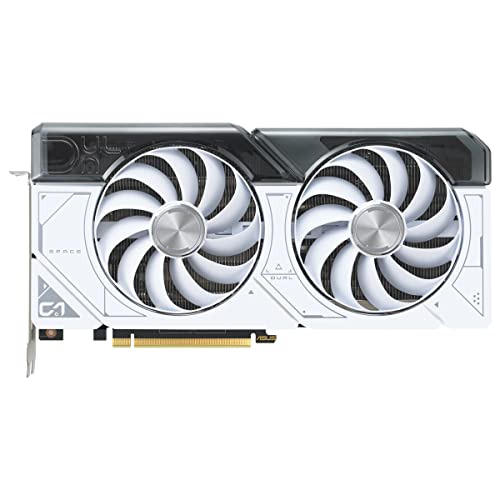
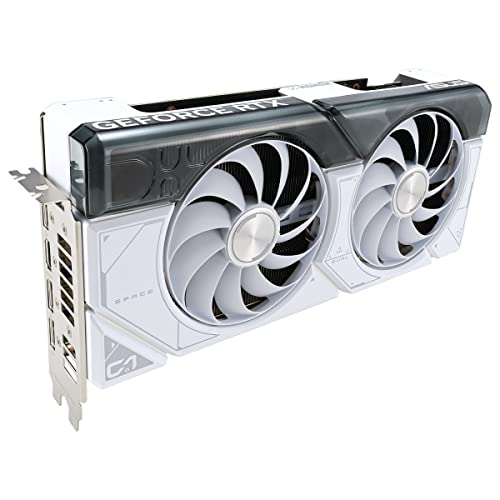
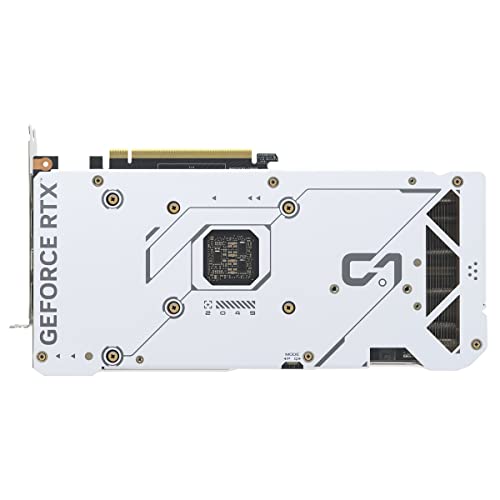
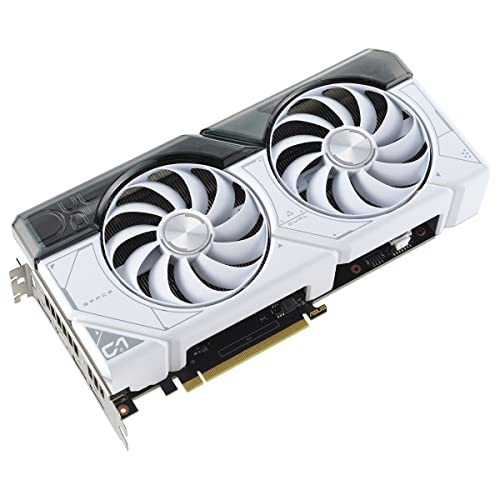
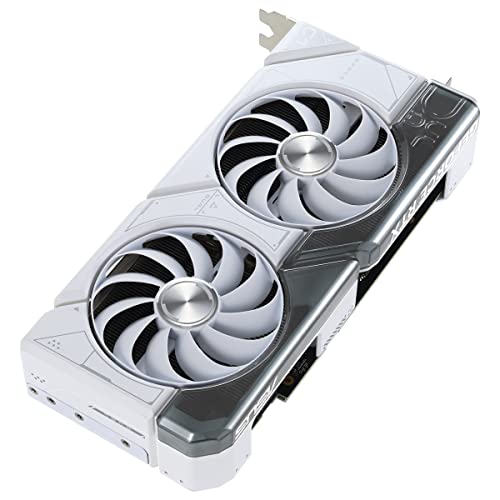
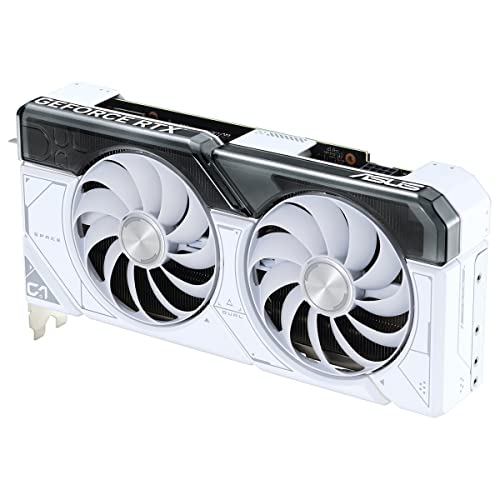
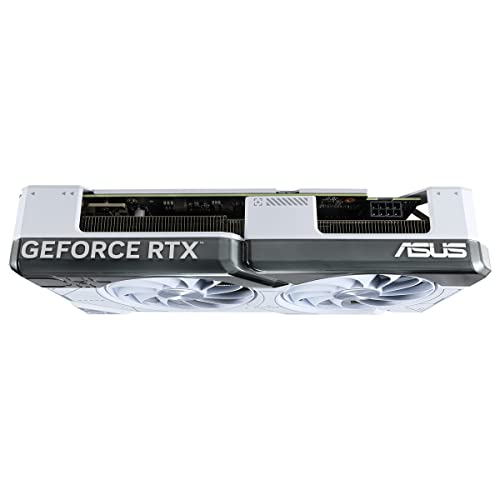
ASUS Dual GeForce RTX 4070 White OC Edition Review | 118 Data compared

Avg. price:~£580VRAM:12 GBMemory bus width:192 bitThermal Design Power (TDP):200 W

ASUS Dual GeForce RTX 4070 White OC Edition Review: Compare 118 technical specifications and user reviews to see how this product ranks in the Graphics cards category and whether it is worth buying.
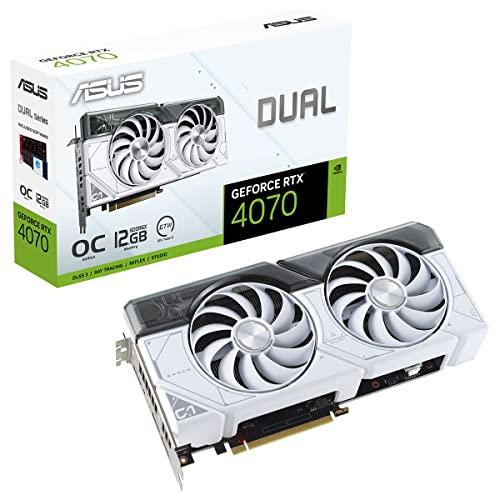
ASUS Dual GeForce RTX 4070 White OC Edition
7.5/10

Overall score

Score
7.5/ 10
✕
What it is
An overall evaluation of the graphics card's quality, based on technical analyses and user reviews.
When it matters
When you need a quick reference to identify the best graphics cards on the market.
Score distribution
▼
<55-66-77-88-99-10
Score components

90%

7.3

Technical score

10%

9.4

User score

▲Better than 58% of graphics cards
7.5

Value for money

Value for money
7.5/ 10
✕
What it is
An indicator that combines the graphics card's overall rating with its cost.
When it matters
When you are looking for a graphics card that offers a strong balance of performance, features, and price.
Score distribution
▼
<55-66-77-88-99-10
Score components

70%

7.5

Overall score

30%

7.5

Price

▲Better than 64%
7.3

Technical score

Technical score
7.3/ 10
✕
What it is
An assessment of technical performance for products in the Graphics cards category across these key areas: Performance, Memory, Platform & Features, Connectivity & Media, Power & Cooling, Design.
When it matters
When you want to compare graphics cards based on technical performance and available features.
Score distribution
▼
<55-66-77-88-99-10
Score components

44%

6.9

Performance

24%

6.3

Memory

12%

8.2

Power & Cooling

11%

9.8

Platform & Features

5%

7.2

Design

4%

9.5

Connectivity & Media

▲Better than 55%
9.4

User score

User score
9.4/ 10
✕
What it is
A rating that combines user reviews and the total number of reviews received by the graphics card.
When it matters
When you want to understand how a graphics card performs in real use and how reliable it is in terms of performance, temperatures, noise, stability, and long-term ownership.
Score distribution
▼
<55-66-77-88-99-10
Score components

70%

9.3

User ratings

30%

9.7

Number of reviews

Based on ratings from across the web.
★Better than 94%
Loading...
Loading category ranking...

Technical Specifications of graphics card ASUS Dual GeForce RTX 4070 White OC Edition

Technical score
Technical score
7.3/ 10
✕
What it is
An assessment of technical performance for products in the Graphics cards category across these key areas: Performance, Memory, Platform & Features, Connectivity & Media, Power & Cooling, Design.
When it matters
When you want to compare graphics cards based on technical performance and available features.
Score distribution
▼
<55-66-77-88-99-10
Score components:

44%

6.9

Performance

24%

6.3

Memory

12%

8.2

Power & Cooling

11%

9.8

Platform & Features

5%

7.2

Design

4%

9.5

Connectivity & Media

7.3
User score
User score
9.4/ 10
✕
What it is
A rating that combines user reviews and the total number of reviews received by the graphics card.
When it matters
When you want to understand how a graphics card performs in real use and how reliable it is in terms of performance, temperatures, noise, stability, and long-term ownership.
Score distribution
▼
<55-66-77-88-99-10
Score components

70%

9.3

User ratings

30%

9.7

Number of reviews

Based on ratings from across the web.
9.4
Popularity
Popularity
9.7/ 10
✕
What it is
An indicator based on the number of reviews received by the graphics card.
When it matters
When you prefer a graphics card that has already been chosen and reviewed by many other users.
Score distribution
▼
<55-66-77-88-99-10
Popularity:
ASUS Dual GeForce RTX 4070 White OC Edition has a popularity score of 9.7 points, which is higher than that of 89.7% of products in this category.
9.7
Value for money
Value for money
7.5/ 10
✕
What it is
An indicator that combines the graphics card's overall rating with its cost.
When it matters
When you are looking for a graphics card that offers a strong balance of performance, features, and price.
Score distribution
▼
<55-66-77-88-99-10
Score components:

70%

7.5

Overall score

30%

7.5

Price

7.5
3DMark Time Spy benchmark score
19,403 points
This graphics card scores 19,403 points in 3DMark Time Spy, which is higher than 63.1% of graphics cards.
3DMark Port Royal score
12,500 points
This graphics card scores 12,500 points in 3DMark Port Royal, which is higher than 61.9% of graphics cards and equal to 0.6% of graphics cards.
PassMark (G3D) result
26,919 points
This graphics card scores 26,919 points in PassMark G3D, which is higher than 63.1% of graphics cards and equal to 0.5% of graphics cards.
PassMark (DirectCompute) result
14,609 points
This graphics card scores 14,609 points in PassMark DirectCompute, which is higher than 56.9% of graphics cards and equal to 1% of graphics cards.
Floating-point performance
30.03 TFLOPS
This graphics card delivers 30.03 TFLOPS floating-point performance, which is higher than that of 58.6% of graphics cards and equal to that of 0.3% of graphics cards.
Show more
VRAM
12 GB
This graphics card has 12 GB of VRAM, which is more than 45.5% of graphics cards and equal to 16% of graphics cards.
Memory type
GDDR6X
GDDR version
GDDR6X
This graphics card uses GDDR6X memory, which is newer than on 56.7% of graphics cards and equal to 22.7% of graphics cards.
Memory bus width
192 bit
This graphics card uses a 192 bit memory bus, which is narrower than that of 50.3% of graphics cards and equal to that of 18.8% of graphics cards.
Maximum memory bandwidth
504.2 GB/s
This graphics card reaches 504.2 GB/s memory bandwidth, which is higher than that of 55.9% of graphics cards and equal to that of 4.3% of graphics cards.
Show more
PCI Express (PCIe) version
4
This graphics card supports PCIe 4, which is newer than on 22.3% of graphics cards and equal to 52.1% of graphics cards.
PCIe lanes
x16
This graphics card uses x16 PCIe lanes, which is more than 23.4% of graphics cards and equal to 76.6% of graphics cards.
DirectX version
12 Ultimate
This graphics card supports DirectX 12 Ultimate, which is more advanced than on 22.6% of graphics cards and equal to 77.4% of graphics cards.
Vulkan version
1.4
This graphics card supports Vulkan 1.4, which is more advanced than on 20.7% of graphics cards and equal to 79.3% of graphics cards.
OpenGL version
4.6
This graphics card supports OpenGL 4.6, which is more advanced than on 1.9% of graphics cards and equal to 98.1% of graphics cards.
Show more
Max displays supported
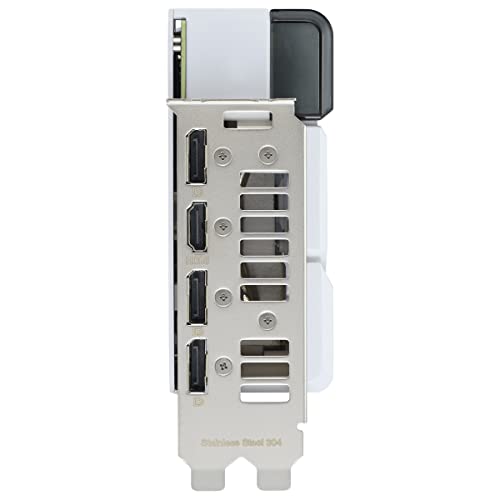
4
This graphics card supports up to 4 displays, which is more than 8.3% of graphics cards and equal to 88.9% of graphics cards.
Max digital resolution
7680x4320
This graphics card supports a maximum digital resolution of 7680x4320, which is higher than that of 9% of graphics cards and equal to that of 91% of graphics cards.
DisplayPort outputs
3
This graphics card offers 3 DisplayPort outputs, which is more than 21% of graphics cards and equal to 76.8% of graphics cards.
DisplayPort version
1.4a
This graphics card supports DisplayPort 1.4a, which is more advanced than on 19.5% of graphics cards and equal to 47.1% of graphics cards.
DisplayPort link rates
1.4 Gbps
This graphics card supports DisplayPort link rates up to 1.4 Gbps, which is slower than on 96.4% of graphics cards and equal to 3.7% of graphics cards.
Show more
Thermal Design Power (TDP)
200 W
This graphics card has a TDP of 200 W, which is lower than that of 51.4% of graphics cards and equal to that of 3.9% of graphics cards.
Power consumption while under peak load
200 W
This graphics card draws 200 W under peak load, which is lower than 54% of graphics cards and equal to 3.6% of graphics cards.
Recommended PSU wattage
650 W
This graphics card recommends a 650 W PSU, which is lower than that of 40.3% of graphics cards and equal to that of 13.9% of graphics cards.
Board power limit
200 W
This graphics card has a board power limit of 200 W, which is lower than that of 55.9% of graphics cards and equal to that of 2.5% of graphics cards.
PCIe power spec
200 W
Show more
Size
267.01x 133.94x 51.13 mm
This graphics card measures 267.01x133.94x 51.13 mm, which is more compact than 52.1% of graphics cards and equal in size to 0.7% of graphics cards.
Length
267 mm
This graphics card is 267 mm long, which is shorter than 59.7% of graphics cards and equal in length to 3.5% of graphics cards.
Height
133.9 mm
This graphics card is 133.9 mm tall, which is taller than 67.3% of graphics cards and equal in height to 0.1% of graphics cards.
Slot width
2.56 slot/s
This graphics card occupies 2.56 slot/s, which is wider than 64.1% of graphics cards and equal in width to 0.5% of graphics cards.
Weight
968 g
This graphics card weighs 968 g, which is lighter than 58.1% of graphics cards and equal in weight to 0.2% of graphics cards.
Show more

ASUS Dual GeForce RTX 4070 White OC Edition vs the average graphics card

246810TotalPerformanceMemoryPlatform & FeaturesConnectivity & MediaPower & CoolingDesign
  • 1.8% higher boost clock speed
    This graphics card has a higher boost GPU clock than the average graphics card (2550 MHz vs 2505 MHz). The average graphics card has a boost GPU clock of 2505 MHz.
    2,550 MHz vs 2,505 MHz
  • 17.6% higher user score
    User score
    9.4/ 10
    ✕
    What it is
    A rating that combines user reviews and the total number of reviews received by the graphics card.
    When it matters
    When you want to understand how a graphics card performs in real use and how reliable it is in terms of performance, temperatures, noise, stability, and long-term ownership.
    Score distribution
    ▼
    ▼
    <55-66-77-88-99-10
    ASUS Dual GeForce RTX 4070 White OC Edition
    the average graphics card
    ASUS Dual GeForce RTX 4070 White OC Edition has a higher user score than the average graphics card (9.41 vs 8.000).
    9.41 vs 8
  • 10.5% faster memory speed
    This graphics card has a higher effective memory speed than the average graphics card (21000 MHz vs 19000 MHz). The average graphics card reaches an effective memory speed of 19000 MHz.
    21,000 MHz vs 19,000 MHz
  • 12.5% higher memory bandwidth
    This graphics card has a higher memory bandwidth than the average graphics card (504.2 GB/s vs 448 GB/s). The average graphics card has a memory bandwidth of 448 GB/s.
    504.2 GB/s vs 448 GB/s
  • 9x more Infinity Cache
    This graphics card has more Infinity Cache than the average graphics card (36 MB vs 4 MB). The average graphics card has 4 MB Infinity Cache.
    36 MB vs 4 MB
  • 21.6% higher texture rate
    This graphics card has a higher texture rate than the average graphics card (463.7 GTexel/s vs 381.2 GTexel/s). The average graphics card has a texture rate of 381.2 GTexel/s.
    463.7 GTexel/s vs 381.2 GTexel/s
  • 50% larger L2 cache
    This graphics card has more L2 cache than the average graphics card (36 MB vs 24 MB). The average graphics card has 24 MB L2 cache.
    36 MB vs 24 MB
  • 2.31x more popular
    ASUS Dual GeForce RTX 4070 White OC Edition is more popular than the average graphics card (9.73 vs 4.2).
    9.73 vs 4.22
  • 17.6% higher user score
    User score
    9.4/ 10
    ✕
    What it is
    A rating that combines user reviews and the total number of reviews received by the graphics card.
    When it matters
    When you want to understand how a graphics card performs in real use and how reliable it is in terms of performance, temperatures, noise, stability, and long-term ownership.
    Score distribution
    ▼
    ▼
    <55-66-77-88-99-10
    ASUS Dual GeForce RTX 4070 White OC Edition
    the average graphics card
    ASUS Dual GeForce RTX 4070 White OC Edition has a higher user score than the average graphics card (9.41 vs 8.000).
    9.41 vs 8
  • 2.31x more popular
    ASUS Dual GeForce RTX 4070 White OC Edition is more popular than the average graphics card (9.73 vs 4.2).
    9.73 vs 4.22
  • 1.8% higher boost clock speed
    This graphics card has a higher boost GPU clock than the average graphics card (2550 MHz vs 2505 MHz). The average graphics card has a boost GPU clock of 2505 MHz.
    2,550 MHz vs 2,505 MHz
  • 21.6% higher texture rate
    This graphics card has a higher texture rate than the average graphics card (463.7 GTexel/s vs 381.2 GTexel/s). The average graphics card has a texture rate of 381.2 GTexel/s.
    463.7 GTexel/s vs 381.2 GTexel/s
  • 40 more AI cores
    This graphics card has more AI cores than the average graphics card (184 vs 144). The average graphics card has 144 AI cores.
    184 vs 144
  • 29.2% higher FP32 performance
    This graphics card has a higher FP32 performance than the average graphics card (29.2 TFLOPS vs 22.57 TFLOPS). The average graphics card has FP32 performance of 22.57 TFLOPS.
    29.15 TFLOPS vs 22.57 TFLOPS
  • 6 more compute units
    This graphics card has more compute units than the average graphics card (46 vs 40). The average graphics card has 40 compute units.
    46 vs 40
  • 10.5% faster memory speed
    This graphics card has a higher effective memory speed than the average graphics card (21000 MHz vs 19000 MHz). The average graphics card reaches an effective memory speed of 19000 MHz.
    21,000 MHz vs 19,000 MHz
  • 12.5% higher memory bandwidth
    This graphics card has a higher memory bandwidth than the average graphics card (504.2 GB/s vs 448 GB/s). The average graphics card has a memory bandwidth of 448 GB/s.
    504.2 GB/s vs 448 GB/s
  • 9x more Infinity Cache
    This graphics card has more Infinity Cache than the average graphics card (36 MB vs 4 MB). The average graphics card has 4 MB Infinity Cache.
    36 MB vs 4 MB
  • 50% larger L2 cache
    This graphics card has more L2 cache than the average graphics card (36 MB vs 24 MB). The average graphics card has 24 MB L2 cache.
    36 MB vs 24 MB
  • More NVENC sessions
    This graphics card has more concurrent NVENC sessions than the average graphics card (12 vs 8). The average graphics card has 8 concurrent NVENC sessions.
    12 vs 8
  • More compact card size
    This graphics card is more compact than the average graphics card (267.01x133.94 x 51.13 mm vs 285x127 x 52 mm). The average graphics card has a size of 285x127 x 52 mm.
    267.01x133.94 x 51.13 mm vs 285x127 x 52 mm
  • 64 bit narrower memory bus
    This graphics card has a narrower memory bus than the average graphics card (192 bit vs 256 bit). The average graphics card has a memory bus width of 256 bit.
    192 bit vs 256 bit
  • 1 fewer fans
    This graphics card has fewer fans than the average graphics card (2 vs 3).
    2 vs 3
  • No RGB lighting
    This graphics card does not include RGB lighting, the average graphics card does.
  • 25% slower VRAM clock
    This graphics card has a lower VRAM clock than the average graphics card (1313 MHz vs 1750 MHz). The average graphics card runs its VRAM at 1750 MHz.
    1,313 MHz vs 1,750 MHz
  • 8.9 mm higher card profile
    This graphics card is taller than the average graphics card (133.9 mm vs 125 mm). The average graphics card has a height of 125 mm.
    133.9 mm vs 125 mm
  • Older shader model
    This graphics card supports an older shader model than the average graphics card (6.7 vs 6.8).
    6.7 vs 6.8
  • 93% lower DisplayPort bandwidth
    This graphics card has a lower DisplayPort bandwidth than the average graphics card (1.4 Gbps vs 20 Gbps). The average graphics card has DisplayPort bandwidth of 20 Gbps.
    1.4 Gbps vs 20 Gbps
  • 7 °C higher idle temperature
    This graphics card has a higher idle temperature than the average graphics card (44 °C vs 37 °C). The average graphics card has an idle temperature of 37 °C.
    44 °C vs 37 °C
  • 64 bit narrower memory bus
    This graphics card has a narrower memory bus than the average graphics card (192 bit vs 256 bit). The average graphics card has a memory bus width of 256 bit.
    192 bit vs 256 bit
  • 25% slower VRAM clock
    This graphics card has a lower VRAM clock than the average graphics card (1313 MHz vs 1750 MHz). The average graphics card runs its VRAM at 1750 MHz.
    1,313 MHz vs 1,750 MHz
  • Older shader model
    This graphics card supports an older shader model than the average graphics card (6.7 vs 6.8).
    6.7 vs 6.8
  • 93% lower DisplayPort bandwidth
    This graphics card has a lower DisplayPort bandwidth than the average graphics card (1.4 Gbps vs 20 Gbps). The average graphics card has DisplayPort bandwidth of 20 Gbps.
    1.4 Gbps vs 20 Gbps
  • Older NVDEC generation
    This graphics card has a lower NVDEC generation than the average graphics card (5 vs 6). The average graphics card offers NVDEC generation 6.
    5 vs 6
  • 1 fewer fans
    This graphics card has fewer fans than the average graphics card (2 vs 3).
    2 vs 3
  • 5 °C lower thermal ceiling
    This graphics card has a lower thermal ceiling than the average graphics card (100 °C vs 95 °C). The average graphics card has a thermal ceiling of 95 °C.
    100 °C vs 95 °C
  • 7 °C higher idle temperature
    This graphics card has a higher idle temperature than the average graphics card (44 °C vs 37 °C). The average graphics card has an idle temperature of 37 °C.
    44 °C vs 37 °C
  • No RGB lighting
    This graphics card does not include RGB lighting, the average graphics card does.
  • 8.9 mm higher card profile
    This graphics card is taller than the average graphics card (133.9 mm vs 125 mm). The average graphics card has a height of 125 mm.
    133.9 mm vs 125 mm

Video reviews

Hands-on testing, unboxing, and real-world video evaluations

Expert reviews

In-depth analysis and verdict from leading tech publications

G
guru3d.com
12/04/2023
Summary of the review
T
techpowerup.com
12/04/2023
Summary of the review
C
custompc.com
06/11/2023
Summary of the review
T
tweaktown.com
29/06/2023
Summary of the review

Third-party reviews

Based on ratings from across the web.
Reviews last updated: June 2026 · How we calculate this

What we like about ASUS Dual GeForce RTX 4070 White OC Edition

  • Exceptional power efficiency, delivering RTX 3080-level performance while using approximately 40% less power.
  • Clean and stylish white aesthetic that is highly sought after for themed PC builds.
  • Compact 2.56-slot and dual-fan design (26.7 cm length) offers excellent compatibility with smaller cases.
  • Whisper-quiet operation and low temperatures (often staying below 60°C under load) thanks to efficient Axial-tech fans and 0dB technology.
  • Support for DLSS 3 and Frame Generation significantly boosts frame rates in compatible AAA titles.
  • Features a standard 8-pin PCIe power connector, avoiding the need for 12VHPWR adapters required by some other 40-series cards.
  • Includes a dual BIOS switch for toggling between Performance and Quiet modes.

What we don't like about ASUS Dual GeForce RTX 4070 White OC Edition

  • Presence of noticeable coil whine reported by some users, which can be particularly distracting in quiet builds.
  • Higher price point compared to similar mid-range alternatives, with some users questioning the overall value compared to the 'Super' variant.
  • Limited 4K performance due to the 192-bit memory bus, making it more suited for 1440p gaming.
  • Occasional reports of inconsistent fan behavior, such as fans briefly ramping up to high speeds before settling down.
  • Concerns about long-term future-proofing due to the 12GB VRAM capacity as modern games become more memory-intensive.

Verdict

The Asus Dual GeForce RTX 4070 White OC Edition is a compact 2.56-slot graphics card built on the NVIDIA Ada Lovelace architecture, featuring 5,888 CUDA cores and 12GB of GDDR6X memory on a 192-bit interface. This factory-overclocked model delivers a boost clock of 2,520 MHz in default mode and up to 2,550 MHz in OC mode, supporting advanced features like DLSS 3 frame generation and 3rd-generation ray tracing. Its primary pros include exceptional power efficiency (drawing around 200W), a quiet dual Axial-tech fan cooling system with 0dB technology for silent low-load operation, and a sleek white aesthetic with a protective aluminum backplate. On the downside, some users have reported potential fan noise spikes under extreme heavy loads, and its raw 4K performance shows significant limitations compared to 1440p gaming.

Compare ASUS Dual GeForce RTX 4070 White OC Edition with other products in the Graphics cards category

1Product to compare no. 1
VS
2Product to compare no. 2
VS
3Product to compare no. 3 (optional)

Graphic comparison of ASUS Dual GeForce RTX 4070 White OC Edition and other products in the Graphics cards category

No results found