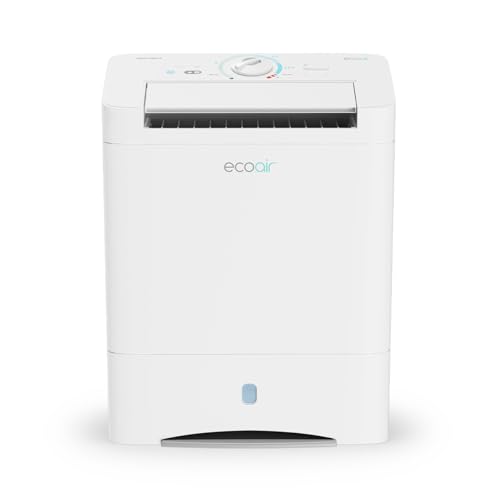

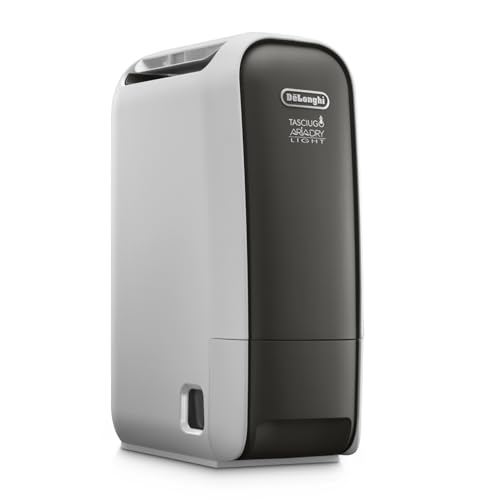
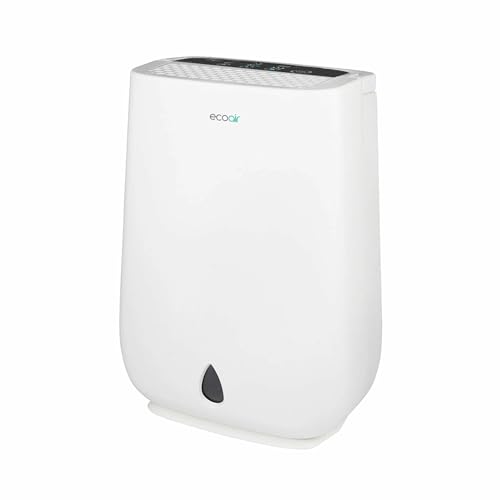
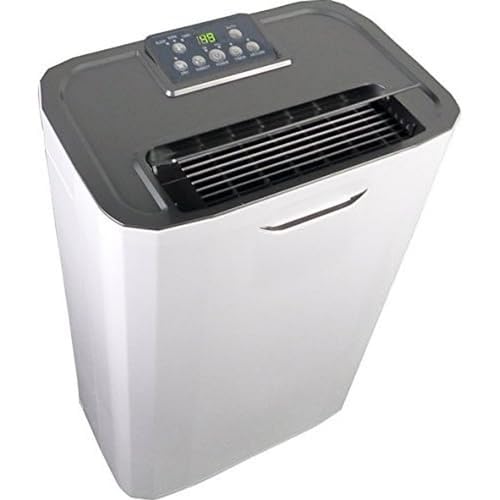


How do desiccant dehumidifiers work?
A desiccant dehumidifier removes water by passing damp air over a moisture-adsorbing wheel or rotor, then heating a separate airflow to regenerate the material and carry the water into a tank or drain. This process does not depend on a cold evaporator coil, so extraction remains more consistent as room temperature falls.
The heater makes desiccant units different from compressor models. They usually use more electricity and release useful heat into the room, but they can continue working where a compressor machine cycles frequently or loses extraction. A fan, rotor, heater, hygrostat, and drainage system all contribute to the final capacity and noise level.
Desiccant technology is not automatically better for every room. In a warm home, a compressor model may remove the same amount of moisture with lower power use, while a desiccant unit is more valuable in cold spaces, intermittent winter use, or rooms where the added heat is useful.
Are desiccant dehumidifiers suitable for cold rooms?
Desiccant dehumidifiers are often suitable for cold rooms because their moisture-removal process does not rely on a cold evaporator coil. Several powered models are rated to continue operating at around 1°C, making the technology useful in unheated basements, garages, workshops, and winter storage areas.
The trade-off is energy use and heat. A desiccant unit commonly draws about 300–750 W and warms the discharge air, whereas a compressor model may use less electricity in a heated room. Check whether the added heat is helpful or whether it could make a small occupied room uncomfortable, and compare extraction at the actual room temperature rather than at a warm laboratory condition.
Cold-room performance still depends on airflow, frost-free operation, humidity control, and drainage. A tank that freezes, a blocked hose, or a unit placed against a wall can defeat the technology, so keep air openings clear and use continuous drainage only when the route is protected from freezing.