
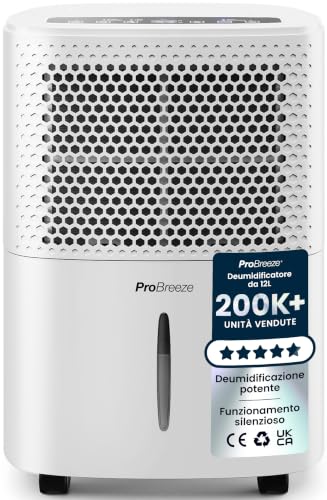
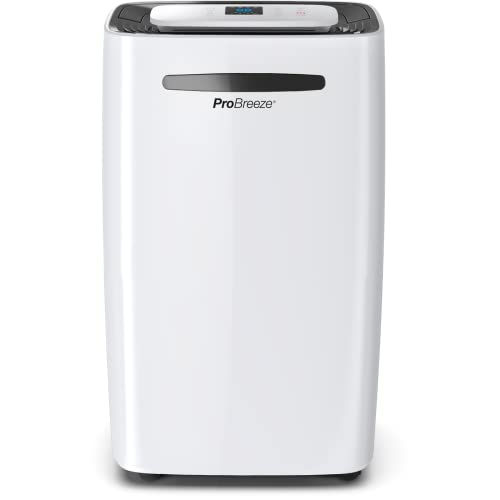
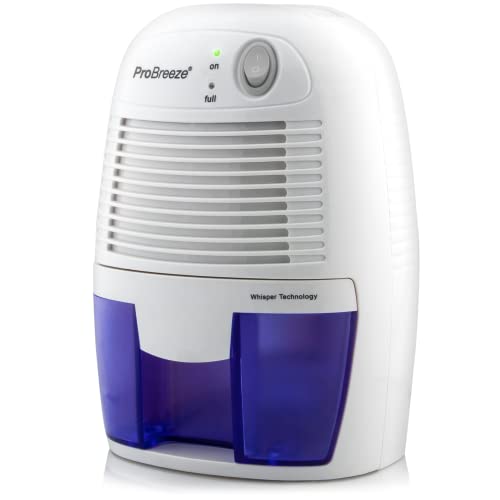


Are Pro Breeze dehumidifiers good?
Pro Breeze dehumidifiers have an average overall score of 5.7, ranking #7 among dehumidifier brands with at least five products, and an average user rating of 8.5, placing Pro Breeze at #15 for user ratings.
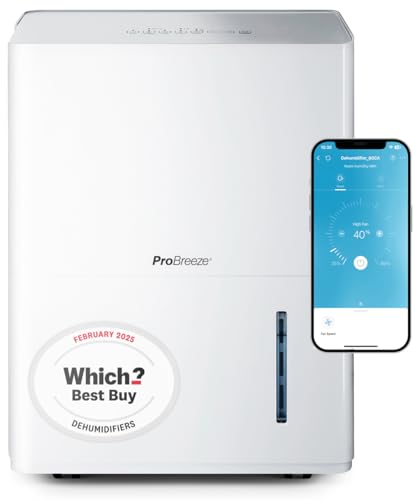
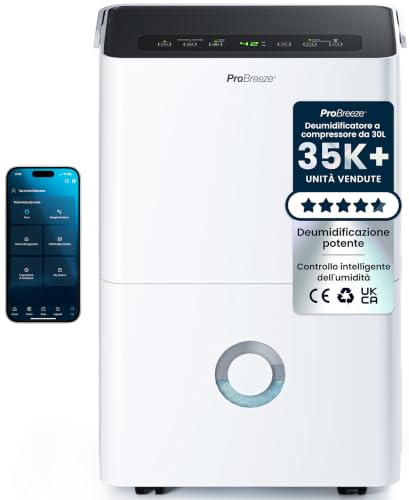
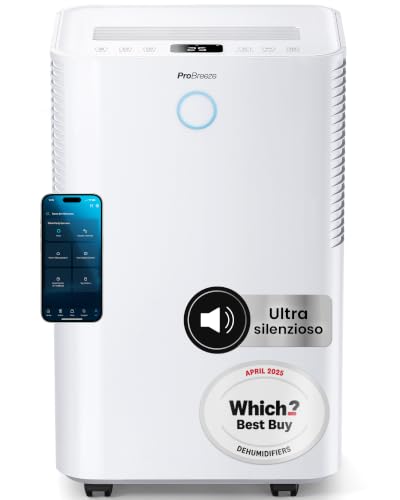
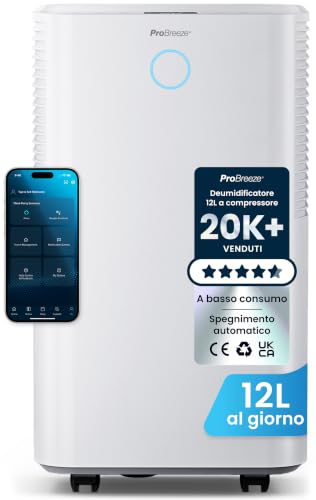
Pro Breeze offers a broad consumer range rather than one uniform design. The PB-02 covers very small thermoelectric use, PB-06 is a compact compressor model, PB-15 and PB-20-UK move toward larger household cabinets, and the OmniDry 12L Smart and 20L Smart names add connected options.
The main limitation is the large spread in extraction, tank size, noise, power, and controls between models. A PB-02 cannot replace a larger compressor cabinet for laundry or persistent damp, while a PB-15-class unit can be unnecessarily heavy and power-hungry for an occasional condensation problem.
The chart below compares dehumidifier brands by average overall score, considering brands with at least five products.
[horizontal-chart-06721595269236553795095882766739878991281023478224]What are the main advantages of Pro Breeze dehumidifiers?
The main advantages of Pro Breeze dehumidifiers are as follows:
- Broad size range: Pro Breeze covers a very small PB-02, compact PB-06, larger PB cabinets, and OmniDry Smart models. That gives buyers several starting points instead of forcing a single capacity and footprint on every room.
- Low entry price: The PB-02 and PB-06 provide lower-cost ways to address isolated condensation or a small room. The trade-off is that the smallest unit removes much less water than the compressor models.
- Continuous drainage: The documented compressor models support a drain connection, which is useful for laundry, basements, and long unattended runs. A hose route and suitable fall are still needed, and the small PB-02 is not a substitute for this arrangement.
- Humidity and drying controls: Several compressor models include an adjustable hygrostat, automatic shut-off, and a dedicated drying mode. Those controls let the machine respond to changing moisture instead of running at one fixed setting.
- Connected choices: The OmniDry 12L Smart and 20L Smart names give the range an app-oriented branch, while the PB models retain simpler conventional options. This helps buyers choose between remote control and a less connected setup.
What are the main disadvantages of Pro Breeze dehumidifiers?
Pro Breeze dehumidifiers have the following main disadvantages:
- Uneven extraction: The PB-02 is a small thermoelectric unit, while the compressor range is designed for much heavier moisture. Buyers who select by brand alone can easily end up with a unit that is too small for laundry or persistent damp.
- Different operating costs: The larger PB-15 and PB-20-UK models use substantially more power than the compact PB-06, and they are heavier to move. The extra capacity is useful only when the room and moisture load justify it.
- Noise and footprint vary: Documented maximum noise levels range from the mid-40s to nearly 49 dB, and the larger cabinets take more floor space. Check the actual model rather than assuming that every Pro Breeze appliance is bedroom-quiet or equally portable.
- Smart features are model-specific: The OmniDry products form a connected branch, but conventional PB models do not offer the same app-oriented experience. Remote monitoring also does not replace local full-tank shut-off, safe drainage, or a usable humidity control.