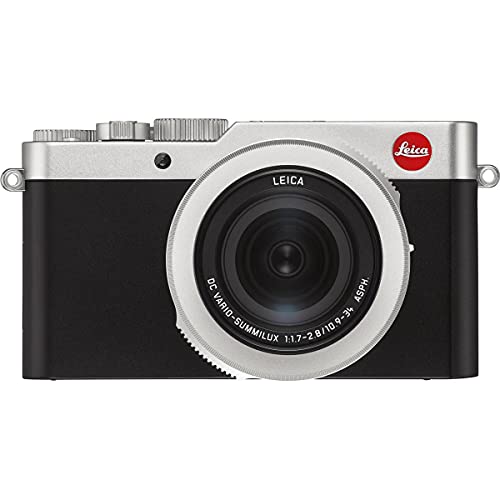
Leica Q Typ 116 review. Compare 108 technical specifications and user reviews to see how it ranks among cameras and if it is worth buying.
Overall score
What it is: An overall evaluation of the camera's quality, based on technical analyses and user reviews.
When it matters: When you need a quick reference to identify the best cameras on the market.
Score components:
90.0%
Technical Score
10.0%
User score
Technical Score
What it is: An assessment of the camera's technical performance, covering eight key areas: image quality, autofocus, video features, stabilization, lens compatibility, connectivity, battery, and design.
When it matters: When you want to compare cameras based on technical performance and available features.
Score components:
28.0%
Sensor & Image
25.0%
Photo Features
18.0%
Video & Audio
14.0%
Display & Design
8.0%
Battery & Power
7.0%
Connectivity & Storage
User score
What it is: A rating that combines user reviews and the total number of reviews received by the camera.
When it matters: When real-world owner satisfaction and review volume matter to your decision.
Score components:
70.0%
User reviews
30.0%
Popularity
Score components:
25.0%
Sensor size
20.0%
Main camera megapixels
20.0%
Dual card slots
15.0%
N. of focus points
10.0%
RAW photo capture
10.0%
Phase-detection autofocus (photos)
Score components:
35.0%
Weight
30.0%
Battery life (CIPA)
20.0%
Sensor-shift stabilization
15.0%
GPS
Score components:
30.0%
Price
20.0%
Weight
20.0%
AF tracking
20.0%
Battery life (CIPA)
10.0%
Touchscreen
Score components:
30.0%
Main camera megapixels
25.0%
Sensor size
20.0%
Main camera pixel size
15.0%
Sensor-shift stabilization
10.0%
RAW photo capture
Score components:
30.0%
Weight
25.0%
Thickness
20.0%
AF low-light sensitivity
15.0%
Sensor-shift stabilization
10.0%
Eye detection AF (human)
Score components:
30.0%
Sensor size
25.0%
Main camera pixel size
20.0%
Eye detection AF (human)
15.0%
Main camera megapixels
10.0%
Sensor-shift stabilization
Score components:
30.0%
Weight
25.0%
Battery life (CIPA)
20.0%
Min operating temperature
15.0%
Sensor-shift stabilization
10.0%
GPS
Available: ranking among products currently available (including other versions of this product).
All: ranking among all products in the database.
#18 in Best Leica Cameras
#38 in Best Compact Cameras
#38 in Best Point & Shoot Cameras
#103 in Best Low Light Cameras
#327 in Best Cameras
#327 in Best Digital Cameras
#919 in Best Travel Cameras
#919 in Best Cameras for Hiking
What it is: An assessment of the camera's technical performance, covering eight key areas: image quality, autofocus, video features, stabilization, lens compatibility, connectivity, battery, and design.
When it matters: When you want to compare cameras based on technical performance and available features.
Score components:
28.0%
Sensor & Image
25.0%
Photo Features
18.0%
Video & Audio
14.0%
Display & Design
8.0%
Battery & Power
7.0%
Connectivity & Storage
What it is: A rating that combines user reviews and the total number of reviews received by the camera.
When it matters: When real-world owner satisfaction and review volume matter to your decision.
Score components:
70.0%
User reviews
30.0%
Popularity
What it is: An indicator that combines the camera's overall rating with its cost.
When it matters: When you want to know how much overall quality you get for the price.
Score components:
60.0%
Overall score
40.0%
Price
Importance: HIGH
Good value: Full frame or larger
Importance: HIGH
Good value: At least 20 MP
Importance: HIGH
Good value: At least 3.5 µm
Importance: LOW
Importance: MEDIUM
Good value: At least ISO 25,600
Importance: MEDIUM
Importance: MEDIUM
Good value: At least 14-bit
Importance: LOW
Importance: LOW
Importance: LOW
Importance: LOW
Importance: LOW
Importance: LOW
Importance: LOW
Importance: LOW
Importance: MEDIUM
Importance: LOW
Importance: LOW
Importance: LOW
Importance: LOW
Importance: LOW
Importance: HIGH
Good value: At least 200 points
Importance: HIGH
Importance: MEDIUM
Importance: LOW
Importance: LOW
Importance: MEDIUM
Importance: MEDIUM
Importance: HIGH
Good value: At least 5 stops
Importance: LOW
Importance: MEDIUM
Good value: At least 10 fps
Importance: LOW
Importance: LOW
Importance: LOW
Importance: LOW
Importance: LOW
Importance: LOW
Importance: LOW
Importance: LOW
Importance: LOW
Importance: LOW
Importance: LOW
Importance: LOW
Importance: LOW
Importance: LOW
Importance: LOW
Importance: LOW
Good value: At least 200,000 actuations
Importance: LOW
Good value: At least 10x
Importance: HIGH
Good value: At least 3840 px
Importance: MEDIUM
Good value: At least 200 Mbps
Importance: MEDIUM
Good value: At least 10-bit
Importance: LOW
Importance: LOW
Importance: LOW
Importance: LOW
Importance: LOW
Importance: LOW
Importance: LOW
Good value: At least 30 min
Importance: LOW
Importance: LOW
Importance: LOW
Importance: LOW
Importance: LOW
Good value: At least 2 microphones
Importance: LOW
Importance: LOW
Importance: LOW
Importance: LOW
Importance: MEDIUM
Good value: 500 g or less
Importance: LOW
Importance: LOW
Importance: LOW
Importance: MEDIUM
Importance: MEDIUM
Good value: At least 2.36 million dots
Importance: LOW
Good value: 100%
Importance: LOW
Importance: LOW
Good value: At least 120 Hz
Importance: MEDIUM
Good value: At least 3 in
Importance: LOW
Importance: LOW
Importance: LOW
Importance: LOW
Importance: LOW
Importance: LOW
Importance: LOW
Good value: At least 10 m
Importance: LOW
Importance: LOW
Importance: LOW
Importance: LOW
Importance: MEDIUM
Good value: At least 400 shots
Importance: LOW
Good value: At least 1,500 mAh
Importance: LOW
Importance: LOW
Importance: LOW
Importance: LOW
Importance: LOW
Importance: LOW
Importance: LOW
Importance: LOW
Importance: LOW
Importance: LOW
Importance: LOW
Importance: LOW
Importance: LOW
Importance: LOW
Importance: LOW
Importance: LOW
Importance: LOW
Importance: LOW
Importance: MEDIUM
Good value: At least ISO 25,600
Importance: HIGH
Good value: At least 3.5 µm
Importance: MEDIUM
Importance: MEDIUM
Good value: At least 10 fps
Importance: HIGH
Good value: Full frame or larger
Importance: LOW
Importance: HIGH
Good value: At least 20 MP
Importance: MEDIUM
Good value: At least 2.36 million dots
Importance: MEDIUM
Importance: LOW
Importance: MEDIUM
Good value: 500 g or less
Importance: LOW
Importance: LOW
Importance: MEDIUM
Good value: At least 400 shots
The DPReview in-depth review of the Leica Q (Typ 116) highlights the full-frame compact as a responsive, well-built tool featuring a 24MP CMOS sensor and a high-quality, stabilized 28mm F1.7 lens. Strengths include exceptional, sharp image quality, excellent low-light performance, and a highly praised, tactile manual focusing experience. However, limitations include a lackluster JPEG engine with mediocre skin tones, issues with raw dynamic range and noise banding, and a lack of weather sealing. Performance drawbacks noted are slow card writing speeds and an unreliable continuous autofocus system, making it better suited to deliberate shooting rather than action.
The Leica Q (Type 116) is a high-end, full-frame compact camera featuring a fixed 28mm f/1.7 lens that delivers exceptional performance and a sharp aesthetic aesthetic reminiscent of traditional Leica build quality without ignoring modern features. Priced heavily at $4,250, the camera powers on, focuses, and shoots in less than a second, featuring a 24.2-megapixel sensor that generates images with broad dynamic range and stunning bokeh. Its physical design consists of a solid magnesium-and-aluminum body, complete with a responsive fixed touchscreen, a bright electronic viewfinder, and built-in Wi-Fi and NFC connectivity. The camera performs surprisingly well for its class in continuous shooting, clocking in at 4.7 frames per second for JPEGs. Despite its excellent performance, the camera carries notable drawbacks, primarily a significant amount of moire in the images that requires heavy post-processing to clean up due to the lack of built-in reduction filter processing. While low-light video and photos hold detail remarkably well up to high ISO limits, JPEGs look visibly grainy starting around ISO 6400 because Leica opts out of noise smoothing. On the design front, the premium...
Leica Q Review Summary The Leica Q (Typ 116) is a landmark 24-megapixel full-frame fixed-lens mirrorless camera that closely mirrors the classic Leica M design but incorporates modern capabilities. Priced at $4,250, it is celebrated as an exceptional travel and street photography camera due to its superb German build quality, simple menu layout, and vibrant, punchy colour performance that mimics slide film. Its headline features include an incredibly fast and accurate autofocus system, 10 frames-per-second continuous burst shooting, a highly responsive rear touchscreen, integrated Wi-Fi connectivity, and a truly quiet mechanical leaf shutter. A major standout is the highly praised manual focusing mechanism, which relies on a beautifully geared mechanical focus ring and a dedicated macro mode selector rather than a sluggish focus-by-wire system. Despite its high praise, the camera presents distinct limitations. The fixed 28mm f/1.7 Summilux lens proves to be a polarizing specialty focal length that is wider than the traditional 35mm or 50mm standards. While the camera offers 35mm and 50mm digital crop frame lines, using them significantly drops resolution from 24 megapixels down to 16 and...
The Leica Q (Typ 116) is a highly responsive full-frame compact camera that features a fixed 28mm f/1.7 Summilux lens and an updated 24-megapixel CMOS sensor. The review highlights several major pros, including an exceptionally fast and accurate 49-point contrast-detection autofocus system that far outperforms Leica's previous X and T models. It delivers excellent image quality with very usable results up to ISO 12800, offers high-speed shooting at 10 fps with an impressive buffer, and boasts a market-leading, high-resolution electronic viewfinder alongside a responsive touchscreen. Additionally, users benefit from an innovative digital zoom crop mode (simulating 35mm and 50mm frames), integrated optical image stabilisation, and an electronic shutter reaching speeds up to 1/16000s. However, the camera comes with notable cons, primarily its lack of weatherproof sealing and a high retail price of $4250/€3995/£2900, which makes it an expensive option for a fixed-lens compact. In terms of performance, extreme low-light shooting at its maximum ISO 50000 produces heavy noise and banding, while the automatic white balance lacks precision in the RAW files. When switching to macro mode, the lens physically limits...
The Leica Q (Typ 116) is a fixed-lens, full-frame compact camera featuring a 28mm f/1.7 Summilux lens that delivers exceptional build quality, intuitive handling, and fast autofocus performance. The reviewer praises its minimalist yet functional design, outstanding image sharpness and contrast even wide open, and an incredibly quiet leaf shutter capable of flash sync speeds up to 1/2000s. Additional highlights include a high-resolution electronic viewfinder that reproduces natural colours, a smooth mechanical manual focus ring with a dedicated focusing tab, and an integrated macro mode allowing close-up focusing down to 17cm. However, the camera has several functional limitations, notably the lack of a RAW-only shooting mode, which forces users into space-consuming RAW+JPEG capture. While low-light autofocus performs reliably, the sensor exhibits noticeable banding in pushed RAW shadow areas at ISO levels above 6400. The reviewer also reports that the image buffer clears slowly, causing capture lockouts during continuous single shots at weddings. Minor design drawbacks include an easily bumped diopter knob, restricted image magnification limited strictly to the centre during manual focus, and a video mode that is virtually useless...
The Leica Q (Typ 116) is a premium, niche compact camera that pairs a 24-megapixel full-frame CMOS sensor with a fixed 28mm f/1.7 Summilux lens. The review praises the camera as a "speed demon" due to its quick 1.4-second startup, instantaneous autofocus locking (0.02 seconds in bright light), and rapid 10fps burst shooting mode. Standout features include an exceptionally sharp, wide-aperture lens capable of producing smooth bokeh, a high-resolution 3.68-million-dot integrated electronic viewfinder (EVF), and a highly functional macro ring that shifts the close-focus limit down to 6.7 inches. Additionally, it features solid anodized aluminum ergonomics with a helpful thumb rest, built-in optical stabilization, and strong Wi-Fi remote app integration. It even includes a unique digital crop frame-line mode simulating 35mm and 50mm perspectives while maintaining uncropped Raw files. Despite these stellar attributes, the review points out several definitive drawbacks. Most notably, the camera carries a steep premium price tag and lacks any form of a built-in flash or weather sealing. The implementation of the touch-screen focus is also criticized because the system forces you into the menu to switch...
Amateur Photographer awarded the Leica Q (Typ 116) a five-star rating, highlighting its exceptional 3.68-million-dot electronic viewfinder, premium build quality, and fast, responsive touchscreen autofocus. The review praised the camera's superb image quality, particularly noting a rich dedicated black and white mode, alongside a design that echoes traditional Leica rangefinders. Key drawbacks identified include the camera's high price point and the complete omission of an external microphone socket, which limits its utility for professional videography. Despite these limitations, the combination of superior optics and robust construction was seen as a major success.
The Leica Q Typ 116 is an exceptionally well-made, blazingly fast full-frame compact mirrorless camera that sets a new standard for its class. The camera features a robust aluminum and magnesium build, a near-silent mechanical leaf shutter, and an incredibly fast and accurate autofocus system that excels even in low-light environments. Its standout physical attributes include a beautiful 3-inch touch LCD screen and a class-leading, lag-free 3.68 MP electronic viewfinder (EVF). The integrated 24.2MP sensor paired with a fixed 28mm Summilux F1.7 ASPH lens delivers natural, three-dimensional color rendering and exceptional, tack-sharp image quality even when shooting wide open at F1.7. Additionally, it features a highly intuitive menu layout, smooth manual focus controls with physical distance markings, a clever mechanical ring for macro mode, and a useful Digital Zoom feature that offers 35mm and 50mm bright-line frame cropping capabilities. Despite its stellar performance, the camera has a few minor drawbacks and design limitations. While its low-light capability easily handles ranges up to ISO 3200 and 6400, shooting at its extreme maximum ISO of 50,000 introduces noticeable image noise, a loss...
The Leica Q is a highly praised, professional full-frame travel camera featuring a fixed 28mm f1.7 Summilux lens and a 24.2 megapixel CMOS sensor. The reviewer heavily commends its outstanding autofocus, exceptional electronic viewfinder, and superb high-ISO capabilities that deliver fully usable images even at ISO 10,000. Its standout feature is an ingenious manual focus mechanism featuring a physical tab and hard stops that build dependable muscle memory. The camera's interface is elegantly minimalist, placing 99% of the controls directly on the lens, which facilitates an intuitive, discrete, and joyful shooting experience. Furthermore, its reliable Wi-Fi connectivity and rapid remote application make file transfers to mobile devices seamless. Despite the high praise, the reviewer outlines several distinct drawbacks, most notably the baffling omission of weather sealing on a dedicated adventure camera. The hardware also suffers from cheap-feeling plastic port and battery doors, alongside an internal rattle from the optical image stabilizer when powered down. Usability quirks include a laggy, imprecise touch screen, an unremapable video record button on the top plate, and a loose ON/OFF switch that easily overshoots single-shot...
The Leica Q (Typ 116) stands out for its exceptional build quality, relatively small form factor (weighing 1.4 lbs / 640g), and its outstanding fixed 28mm f/1.7 Summilux lens. Reviewer Liam Gordon praises the lens for its corner-to-corner sharpness, soft bokeh, and contrasty, beautiful colours. The 24-megapixel sensor delivers highly recoverable shadows and adequate performance up to ISO 6400. Additionally, the single-shot autofocus is sufficient for daily use and tracking fast children, while the dedicated video record button and built-in image stabilisation allow for quick, casual video clips. However, the camera has notable limitations, particularly its laggy EVF, which overexposes the view and can cause missed shots. The manual focus ring is overly tight and lacks a hard stop at infinity due to the autofocus mechanism, making zone focusing feel unnatural. Gordon also notes that the lens suffers from heavy distortion correction and shoots wider than a true 28mm focal length. Further gripes include a fiddly power switch that frequently freezes the camera when accidentally moved into continuous mode, a clunky menu system, an unresponsive touchscreen inside menus, and a...
The Leica Q (Typ 116) is a premium fixed-lens camera featuring a 24-megapixel full-frame sensor and a 28mm f/1.7 Summilux lens, delivering exceptional sharpness, fast autofocus, and a 10fps burst mode. It combines a 3.68MP electronic viewfinder, touch screen, and Wi-Fi within a robust, 1/16,000-second shutter-equipped body. While offering stellar performance, the camera is constrained by a high price, a bulky, heavy design compared to competitors like the Sony RX1, and the lack of a built-in flash. Additional drawbacks include lackluster touch-screen focus implementation and the absence of a 24fps video recording option.
The ePHOTOzine review of the Leica Q (Typ 116) highlights a premium compact camera featuring a 24.2-megapixel full-frame sensor and a fixed 28mm f/1.7 Summilux lens, offering rapid 0.15s autofocus and excellent handling with a 3.68m-dot EVF. Key advantages include exceptional image sharpness, impressive low-light capability, a useful dedicated macro mode, and superior battery life compared to rivals like the Sony RX1. Notable drawbacks, however, include a lack of weather sealing, a slippery grip, and a tendency to underexpose images with somewhat muted out-of-camera JPEGs.
The Leica Q (Typ 116) is a premium, ruggedly built full-frame compact camera featuring an excellent electronic viewfinder, fast autofocus, and a 24-megapixel sensor delivering high-quality images, according to a review by What Digital Camera. While praised for its performance and handling, the camera lacks a microphone socket, has a high price point, and requires diving into menus for basic settings due to a lack of quick-access controls.
Despite being considered "the closest to perfection" by the reviewer, the camera has a few notable limitations. On the hardware side, the physical back button next to the thumb rest is locked exclusively to shifting between 35mm and 50mm digital crop lines rather than being user-assignable. The camera is structurally large compared to true pocket options like the Ricoh GR, and its fixed 28mm lens might not appeal to photographers who prefer 35mm or 50mm focal lengths. Finally, it is a highly specialized "photo-only" tool lacking creative filters or robust movie-making features, and it comes with a steep $4,500 price tag that remains a significant financial barrier for the average working-class photographer.
The Leica Typ 116 Q (and its stealthier Q-P variant) is a full-frame, fixed-lens compact camera featuring a 24-megapixel sensor and a sharp 28mm f/1.7 Summilux lens. The reviewer praises its exceptionally intuitive handling, featuring an aperture ring and tactile lens tabs that allow the user to easily toggle between macro and manual focusing modes without digging into the menu system. Image quality is highly lauded for striking an elusive, beautiful balance between sharpness, bokeh, and color rendition. Additionally, the camera boasts a beautiful electronic viewfinder (EVF), a surprisingly fast 10 frames-per-second (FPS) burst rate, and a highly accurate 49-point autofocus system for standard daily shooting. However, the camera reveals its age through several key drawbacks. Its autofocus tracking, eye-detection, and video capabilities fall short compared to modern competitors, and its face-detection feature is described as terrible. Due to the lack of modern UHS-II or XQD card support, users will experience slow file writing times and long buffer clearance pauses when shooting at maximum burst speed. Furthermore, the straight-out-of-camera (SOOC) JPEGs are weak compared to brands like Fujifilm, making it...
The Shutterbug review praises the Leica Q (Typ 116) for its exceptional German build quality, pairing a 24-megapixel full-frame sensor with a sharp 28mm f/1.7 Summilux lens for excellent image clarity, especially at ISO 3200 and below. Key highlights include a 3.68MP electronic viewfinder, fast autofocus, and user-friendly Wi-Fi connectivity via a dedicated smartphone app. Conversely, the review notes significant image noise and horizontal banding at extreme sensitivities of ISO 12,500 and above. Additionally, the camera's lens hood design is criticized for requiring the removal of a separate ring, which prevents the standard lens cap from being used. The review concludes that despite a high $4,250 price, the Q is a brilliant entry into premium Leica photography. Shutterbug.com
Alongside these strengths, the camera has notable drawbacks that require user compromise. A prominent downside is its image noise, which displays visible noise artifacts starting at ISO 1,600 due to minimal software smoothing. While the regular ISO range remains highly usable up to 12,500, the extended boost modes of 25,000 and 50,000 suffer from significant color errors and are only recommended for emergencies. Additionally, battery life is weak, capping at 136 minutes of video or a below-average 460 still shots, making a spare battery essential. Video functionality also shows mixed results; while it captures Full HD at 60 fps and offers easy manual focus via focus peaking, the camera lacks a touchscreen autofocus select feature in video mode, relying instead on automatic tracking.
The Leica Q is a premium full-frame compact camera featuring a 24-megapixel sensor paired with a fast, optically stabilized Summilux 28mm f/1.7 fixed prime lens. The review highlights its exceptional image quality and high detail retention, which is aided by the absence of an anti-aliasing filter and a very conservative approach to noise reduction. Performance is a standout feature; driven by the Maestro II processor, the camera achieves a swift continuous shooting speed of up to 10.4 frames per second for up to 45 JPEGs, alongside a remarkably fast autofocus acquisition time of 0.23 seconds and a near-instantaneous 0.01-second shutter lag. Users will also benefit from its beautifully constructed magnesium and aluminum chassis, an incredibly sharp 3.68-million-subpixel electronic viewfinder, and a responsive 3.0-inch touchscreen. Despite its premium design, the review points out several notable drawbacks. Image performance is slightly compromised during heavy shadow recovery in post-processing, which can expose a distinct banding or striping noise pattern in the dark areas. While continuous shooting is excellent in JPEG, the camera's buffer capacity drops significantly to just 12 shots when capturing combined...
The Leica Q (Typ 116) is a high-end compact camera featuring a 24 MP full-frame sensor and a fixed 28 mm f/1.7 Summilux lens that delivers razor-sharp images even wide open. The reviewer describes purchasing the camera as an emotional, impulsive decision rather than a purely logical calculation, especially given its hefty price tag of nearly €4,000. Despite departing from traditional Leica minimalism by including modern "gimmicks" like an incredibly fast contrast autofocus system, a touch-screen with an intuitive "iPhone-like" tap-to-shoot mode, and built-in Wi-Fi with a functional companion app, the camera retains the classic tactile controls, premium build quality, and distinct image look that the brand is known for. Pros and Cons Breakdown Image Quality: Rasiermesserscharf (razor-sharp) lens performance at f/1.7 and 13 stops of dynamic range. Autofocus: Blazing fast contrast AF that matches Olympus OM-D benchmarks. Usability Features: Optical image stabilization enabling handheld shots down to 1/15s, a leaf shutter allowing 1/2000s flash sync, and good performance up to ISO 6400. Fixed Focal Length Constraint: The 28 mm focal length requires physically getting close to subjects and might...
The Leica Q (Typ 116) is a full-frame compact digital camera paired with a fixed, high-speed Summilux 28mm f/1.7 ASPH lens, making it ideal for reportage and landscape photography. The camera stands out for its high-quality construction featuring a magnesium housing, a solid aluminum top plate, and a classic, timeless design heavily inspired by the Leica M series. On the performance side, the Maestro II processor enables exceptionally fast autofocus (quoted at 150 ms) and a rapid continuous shooting rate of up to 10 frames per second. Furthermore, its 3.7-megapixel electronic viewfinder (EVF) is highly praised for its massive, detailed, and lag-free image delivery, seamlessly bridging the gap between digital operation and traditional physical handling. Despite its high praise, the review highlights several usability and technical drawbacks. The mechanical main power switch is poorly designed, making it too easy to overshoot the standard single-shot mode and accidentally activate continuous shooting or switch the camera off. Additionally, the small lever for swapping between AF and MF is hidden from top-down views, offering no immediate physical feedback on the active focus mode....
by Matthias Endlich: Review Summary In this review, professional wedding and portrait photographer Matthias Endlich shares his experiences after one year of using the original Leica Q (Typ 116) as a personal and secondary reportage camera. On the positive side, he praises its world-class image quality and exceptional auto-white balance, which outperforms his modern Sony bodies under artificial light. The camera's ultra-quiet leaf shutter and lightweight, compact build make it an ideal, discreet choice for public shooting and travel. Furthermore, its RAW files offer incredible dynamic range in the shadows, delivering a beautifully soft, "film-like" look rather than clinical modern sharpness. He also highlights that buying it used (for around €2,200) offers excellent value stability. However, the reviewer details several critical limitations and downsides. The Leica Q is not suited for fast action or primary wedding photography due to its poor tracking autofocus, mediocre burst-mode capabilities, lack of a dual memory card slot for backup, and occasional software crashes. Its video functions are severely subpar, plagued by lagging autofocus, poor sound, and a total lack of external microphone inputs. Ergonomically,...
The reviewed Leica Q (Typ 116) is highly praised as a compact, lightweight full-frame camera that fits easily into a handbag or backpack, making it an ideal companion for travel and spontaneous photography. The author highlights several significant advantages, including its exceptional, built-in 28mm Summilux f/1.7 lens that supports both autofocus and manual control, integrated optical stabilization, and a seamless macro mode that requires no external accessories. Furthermore, its electronic shutter allows for shooting wide open in bright sunlight with speeds up to 1/16,000s, while its quiet, unobtrusive design allows the photographer to blend into crowds and capture natural, candid moments without drawing unwanted attention. On the downside, the reviewer notes a few prominent limitations, particularly a weak battery life that yields fewer than 300 images per charge, making spare batteries an absolute necessity in cold weather. Additionally, the camera is constrained by its fixed 28mm focal length, which requires the user to adapt their shooting style, and its older sensor is not ISO-invariant, struggling somewhat in extremely low-light environments. Despite these technical constraints, the review concludes that after five...
The long-term review of the Leica Q (Typ 116) highlights the camera as a highly capable and portable full-frame compact camera that reignites the joy of photography, often serving as a gateway to the broader Leica ecosystem. Photographers praise its small, unobtrusive body and its fixed 28mm f/1.7 Summilux lens, which excels in "Leica light" (low-light conditions) by producing razor-sharp images with beautiful background separation. Key strengths include a dedicated macro mode that drops the minimum focus distance from 30cm to 17cm, an ultra-fast electronic shutter reaching 1/16,000 sec for shooting wide-open in bright daylight, and intuitive manual focus-peaking. However, the camera comes with notable limitations, particularly its poor battery life, which maxes out at around 300 shots and causes the camera to shut down abruptly—especially in cold weather. Users also note that pushing the sensor's dynamic range or exposure settings in very dark environments creates noticeable horizontal line banding because the older 24MP sensor is not ISO-invariant. Additionally, the camera occasionally freezes—requiring a hard battery reset—and features a diopter adjustment wheel on the electronic viewfinder that is easily bumped...
The Leica Q (Typ 116) is a highly capable full-frame compact camera featuring a fixed 24.2-megapixel CMOS sensor paired with a stabilized Summilux 28 mm f/1.7 lens. Built with Leica’s signature minimalism and exceptional German manufacturing quality, the camera offers intuitive handling through dedicated physical aperture and focus rings, alongside a unique mechanical macro ring switch. The review highlights its remarkable, fast autofocus system—developed in collaboration with Panasonic—and an impressive battery life that yields up to 500 shots. Image quality is a major strength, delivering excellent sharpness across all apertures and smooth, film-like grain performance up to ISO 6400. Photographers also benefit from a bright 3.6-million-dot electronic viewfinder and a multitouch screen. However, the camera has notable drawbacks, particularly regarding its underpowered video features. Video capture is capped at 20-minute segments in Full HD, suffers from oversaturated colours, lacks dedicated microphone or headphone jacks, and struggles with sluggish continuous autofocus. On the hardware side, the camera lacks any built-in internal storage, does not include a built-in flash, lacks a tilting screen, and its touchscreen functionality is under-utilised within the main...
The Phototrend review highlights the Leica Q (Typ 116) as a premium, full-frame expert compact camera that stands out as one of the best bodies in the brand's history, despite its steep barrier to entry. The camera pairs a 24-megapixel CMOS full-frame sensor with a fixed Summilux 28mm f/1.7 wide-angle lens, making it a direct competitor to the Sony RX1 series. Reviewers from partner outlets like Les Numériques praise its inclusion of modern technologies—such as optical image stabilization and focus peaking—which were entirely new for Leica at the time of release. The major pros identified in the review focus on its exceptional image quality and top-tier construction, with experts concluding it is a highly capable camera that delivers outstanding results. However, the overwhelming cons revolve around its extreme retail price of €3,990, which user comments criticize as exorbitant, out of reach for the average worker, and prone to promoting "show" over actual photography. Additionally, the fixed-lens design means a lack of flexibility compared to interchangeable systems, and community feedback notes that Leica's customer service in certain regions can be disappointing.
The Leica Q (Typ 116) is a highly capable full-frame compact camera inspired by the classic M series, featuring a retro, streamlined design that is both lighter and smaller than its predecessors. It is built around a superb 24-megapixel sensor (likely produced by Sony) paired with a high-performing, stabilized Summilux 28mm f/1.7 lens that delivers exceptional sharpness and smooth bokeh. The camera boasts a dual shutter system (mechanical up to 1/2000s and electronic up to 1/16000s) and an incredibly fast autofocus system that performs reliably even in low light. A standout feature is its innovative "tri-focal" digital crop system, which allows street photographers to switch quickly to 35mm or 50mm frame lines via a dedicated button, saving the cropped view while retaining the full 28mm RAW file data. On the positive side, the review highlights the camera's exemplary German build quality, an industry-leading high-definition electronic viewfinder (EVF), an excellent touchscreen display that accurately reproduces colours, and an entirely silent shutter ideal for candid shooting. Furthermore, it has a solid battery life of around 500 shots, impressive ISO performance up to...
The Leica Q (Typ 116) is a fixed-lens, full-frame compact camera featuring a 24.2 MP CMOS sensor and a stabilized Summilux 28 mm f/1.7 lens, serving as a primary travel and street photography camera due to its impressive image quality and speed. A key strength highlighted in the review is the camera's lightning-fast and highly accurate autofocus system, which allows the user to reliably capture fleeting moments on the street even when shooting wide open. Additional major benefits include an exceptionally bright, high-resolution electronic viewfinder, a near-silent leaf shutter, and an integrated optical image stabilizer that enables handheld shooting at shutter speeds as slow as 1/4 second. The 1/16000s electronic shutter is also highly praised for allowing wide-open shooting under bright daylight without needing ND filters. However, the review points out several notable limitations, particularly the fixed 28 mm focal length, which makes the camera less versatile and "almost prohibitive" for portrait photography. While the camera can simulate 35 mm and 50 mm focal lengths through digital cropping, doing so drastically drops the resolution down from 24 MP to 15...
The reviewed Leica Q Titanium Gray is a visually refined, high-performance expert compact camera that retains the core technical specifications of the original black model while introducing a striking premium aesthetic. It is equipped with a powerful 24-megapixel full-frame CMOS sensor paired with a fixed Summilux 28 mm f/1.7 ASPH lens, ensuring exceptional, fast, and stabilized optical performance. The camera is noted for its highly intuitive and ergonomic user experience, featuring a snappy Maestro processor that enables high-speed burst shooting at up to 10 frames per second, a fast autofocus system that performs reliably even in low light, integrated Wi-Fi connectivity for seamless image transfers, and a crisp 3.68 MP built-in electronic viewfinder that activates automatically when raised to the eye. Despite its exemplary capabilities and elegant design update—which pairs the classic black body with a lacquered titanium gray finish and a coordinated rope carrying strap—the review highlights a few notable design limitations. On the downside, the camera lacks a built-in flash and features a fixed, non-articulated rear touch screen, which may restrict creative shooting angles. Nevertheless, the Leica Q...
The Leica Q (Typ 116) is a premium full-frame compact expert camera featuring a 24-megapixel sensor and a fixed 28mm f/1.7 stabilized lens. A major technical highlight is the groundbreaking 3.68-million-dot electronic viewfinder (EVF), which stands out for offering the highest definition available in its category. The camera’s physical design stays true to the traditional Leica aesthetic, boasting highly tactical, dedicated physical rings on the lens for aperture, manual focus, and a clever macro selector that physically shifts the distance scale from standard (30 cm to infinity) down to a dedicated macro range of 17 cm to 30 cm. It also features the Maestro II image processor, focus peaking, 1080p Full HD video capture at 60 fps, built-in Wi-Fi and NFC, and a 1200 mAh battery capable of delivering up to 500 photos. Watch the comprehensive video review to see how the camera's manual focus dials and high-definition viewfinder perform in real-world scenarios: 1m Leica Q Review - Six Months Later? FeralGinger YouTube · 27 Apr 2025
The Leica Q (Typ 116) is a premium full-frame, fixed-lens compact camera designed to deliver classic Leica image quality with modern technological conveniences. It features a high-resolution 24.1-megapixel full-frame sensor paired with a fast, built-in 28 mm f/1.7 grand angle lens. Built with an aesthetic heavily reminiscent of the company’s legendary M-series rangefinders, the Leica Q breaks tradition by embracing contemporary performance standards. These advancements include a highly responsive automatic focus system, fast burst-shooting capabilities, a sharp electronic viewfinder boasting over 3 million dots, and a bright, highly detailed touchscreen interface. The camera stands out for its exceptional performance, offering several distinct advantages alongside a couple of clear drawbacks. Pros: Excellent image quality matching equivalent M-series setups. Fast and reliable autofocus system. High-resolution electronic viewfinder with over 3 million dots. Bright touchscreen display. Good value compared to a Leica M240 body and lens combination. Cons: Fixed 0x optical zoom limiting focal flexibility to the native 28 mm lens. High price tag of approximately 4,000 euros.
The Leica Q (Typ 116) is a premium compact digital camera designed to combine professional-grade performance with intuitive simplicity. It is equipped with a 24.2 MP full-frame CMOS sensor capable of capturing images at a 6000 x 4000 pixel resolution, alongside 4K video recording capabilities. Built with a robust aluminium and magnesium chassis weighing 590 grams, the camera features a bright, fixed Leica Summilux 28mm f/1.7 ASPH lens, making it highly regarded as an exceptional tool for street and travel photography. The user interface is remarkably clean and user-friendly, stripping away overly complex menus so photographers can focus strictly on shooting. The review highlights several key advantages, including its timeless design, outstanding low-light image quality, beautiful bokeh effects, and a highly responsive 121-point autofocus system. Users will also benefit from sensor-shift image stabilisation and a highly intuitive, mechanical switch to macro mode. However, the camera does have notable drawbacks, such as its very high price tag, a lack of weather-sealing (tropicalisation), and the technical limitation of having a fixed focal length lens. Despite these constraints, the review concludes that its...
The Leica Q (Typ 116) is a high-end compact mirrorless camera featuring a 24-megapixel full-frame sensor and a fixed Summilux 28mm f/1.7 ASPH lens. Designed after direct feedback from photographers, it balances retro aesthetics with premium modern features like an incredibly fast hybrid shutter (mechanical up to 1/2,000s and electronic up to 1/16,000s) and an integrated 3.7-million-pixel electronic viewfinder. The camera is highly praised for its exceptional build quality (magnesium and aluminum body built in Wetzlar), rapid autofocus, integrated optical stabilization, and intuitive, clutter-free software menu that uses a powerful Maestro II processor. Performance-wise, it delivers outstanding image quality, rich bokeh, and clean low-light results with an impressive ISO range up to 150,000. Despite its stellar performance, the review outlines specific drawbacks. The primary disadvantage is its very high price tag of €3,995, making it an exclusive luxury item rather than a mainstream choice. Additionally, the fixed 28mm wide-angle focal length is a niche choice that requires a specific shooting style, meaning it will not appeal to users who prefer zoom or telephoto capabilities. Finally, its slightly trendy, "antique" design...
The Leica Q (Typ 116) is a high-end, 24-megapixel full-frame compact camera featuring a fixed 28mm Summilux f/1.7 lens, praised for its exceptional image quality, fast 0.15s autofocus, and an integrated 3.7-megapixel EVF. The review highlights its robust, intuitive design with dedicated macro mode and efficient image stabilization, making it an excellent, yet expensive, tool for street photography. However, the fixed 28mm lens limits versatility for subjects requiring zoom, and the 35mm/50mm digital crop modes reduce overall resolution. Additionally, the camera is constrained by 1080p video recording, limited button customization, and a high luxury price point. YouTube
The Leica Q (Typ 116) is a fixed-lens full-frame compact camera produced between 2015 and 2019, highly praised by users for its exceptional image quality and robust construction. It features a 24.2-megapixel sensor paired with a permanently attached, ultra-sharp Summilux 28mm f/1.7 stabilized lens, which also offers a dedicated macro mode lowering the minimum focus distance to 0.17 meters. Reviewers consistently highlight its streamlined, essential menu system, highly tactile physical dials (aperture, shutter speed, and manual focus rings), and the convenience of shooting in standard DNG RAW format. Its quiet leaf shutter makes it highly discreet and an exceptional choice for street, travel, and reportage photography. However, the camera has notable design limitations and missing modern functionalities. Its primary disadvantages include a complete lack of weather sealing (weatherproofing) and weak battery life. Users report that the continuous autofocus performance is poor, the electronic viewfinder suffers from slow refresh rates in low light, and the video mode is virtually useless due to high flickering and no external microphone support. Furthermore, reviewers criticize several ergonomic flaws, such as a tiny joystick that...
The Leica Q Typ 116 is a premium compact digital camera featuring a 24.2-megapixel full-frame CMOS sensor paired with a fixed Leica Summilux 28mm f/1.7 ASPH lens. Built with a magnesium alloy chassis and an aluminium top plate, it bridges the gap between portability and professional-grade performance. The camera offers highly intuitive physical controls with aperture and manual focus rings placed directly on the lens barrel, complemented by a dedicated shutter speed selector dial on top. Key operational highlights include a exceptionally sharp 3.68-million-dot electronic viewfinder (EVF), a responsive 3-inch touchscreen LCD, built-in Wi-Fi and NFC connectivity, and a swift contrast-based autofocus system capable of firing continuous bursts up to 10 frames per second. Reviewers praise the camera's superb image quality, highlighting its excellent low-light performance across a 100–50,000 ISO range, which delivers virtually noise-free results up to ISO 800 and highly usable images up to ISO 6400. The primary advantages (pros) include its top-tier optical engineering, outstanding physical ergonomics, lightning-fast focusing, and a high-speed electronic shutter reaching up to 1/16,000 seconds, which enables shooting wide-open at f/1.7 in bright...
Based on the Dutch review from Shoot.be, the Leica Q (Typ 116) is highlighted as an innovative full-frame compact camera that expertly bridges classic German design with modern photographic technology. The review praises its outstanding image quality and exceptional detail, powered by a 24-megapixel sensor and an incredibly sharp, optically stabilized Summilux 28mm f/1.7 lens. A major pro is its blazing-fast speed; the camera features highly responsive autofocus and a rapid 10 fps burst mode, making it an excellent tool for street photography. Additionally, the review commends its physical ergonomics, noting the rock-solid magnesium alloy build, traditional tactile control dials, and a class-leading, high-resolution electronic viewfinder (EVF) that provides immediate feedback. However, the review points out several notable limitations and cons. Its fixed 28mm lens cannot be changed, meaning photographers who want a narrower field of view must rely on a digital cropping feature that significantly reduces file resolution. While the camera features a crisp, touch-sensitive LCD screen, the touch capabilities are frustratingly disabled when navigating the internal menu system. Video recording is another weak spot, as it maxes out...
The Leica Q (Typ 116) is a high-end compact camera featuring a 24-megapixel full-frame CMOS sensor paired with a fixed, high-quality Summilux 28mm f/1.7 ASPH lens. Designed with a durable, lightweight magnesium alloy body and solid aluminium top plate, it weighs 640 grams and captures a classic Leica style while remaining much more compact than traditional M-series rangefinders. Performance highlights include a fast autofocus speed of 0.15 seconds across 49 focus fields, continuous shooting up to 10 frames per second powered by the Maestro II processor, and a highly responsive 3-inch touchscreen alongside an impressive 3.68-million-dot LCoS electronic viewfinder. Several key pros and cons define the camera's real-world utility: Pros: Exceptionally sharp image quality at the maximum f/1.7 aperture with excellent control over chromatic aberrations and vignetting. It features true mechanical manual focusing with dedicated distance scales, built-in optical image stabilisation, and useful 35mm and 50mm digital cropping "frame lines" that retain full-resolution DNG raw backups. Connectivity is highly flexible via Wi-Fi, NFC, and a comprehensive smartphone remote app. Furthermore, a built-in electronic shutter allows shooting wide-open in bright sunlight...
The Leica Q is a premium, compact camera featuring a 24-megapixel full-frame sensor and a fixed Summilux 28mm f/1.7 wide-angle lens, positioning it as an impressive tool for street photography. During real-world testing in Antwerp, the camera excelled in build quality, offering a robust magnesium alloy body and a functional thumb cutout that improves handling despite its somewhat slippery leatherette coating. Key performance strengths include its exceptionally fast 49-point contrast autofocus system, highly accurate manual focusing aided by effective focus peaking, and a virtually silent shutter click that allows for discreet shooting. Additionally, the high-resolution 3.68-megapixel electronic viewfinder provides clear exposure previews, and the final image output delivers spectacular sharpness, vibrant color rendering, and deep contrast directly out of the camera. However, the review highlights several practical drawbacks that buyers should consider. The included leather neck strap is too short for comfortable side-carrying, making the expensive device overly conspicuous unless altered. A notable software annoyance is the auto-review feature; the camera freezes the shot inside the viewfinder after exposure, which disrupts continuous monitoring of a scene unless the setting is...
Compare