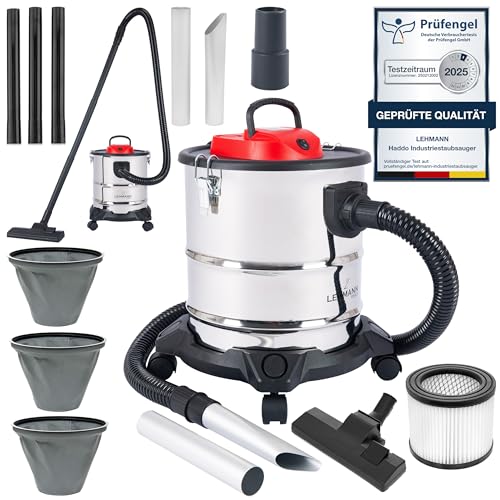
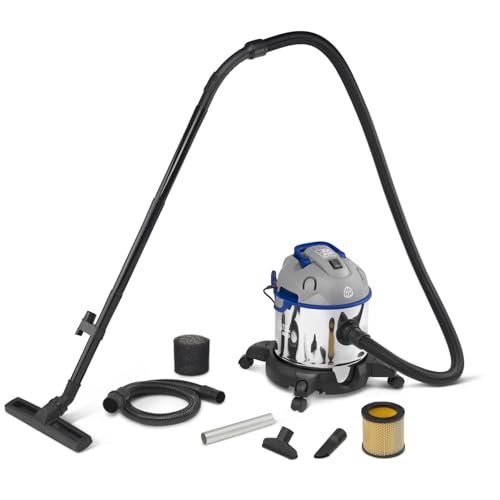
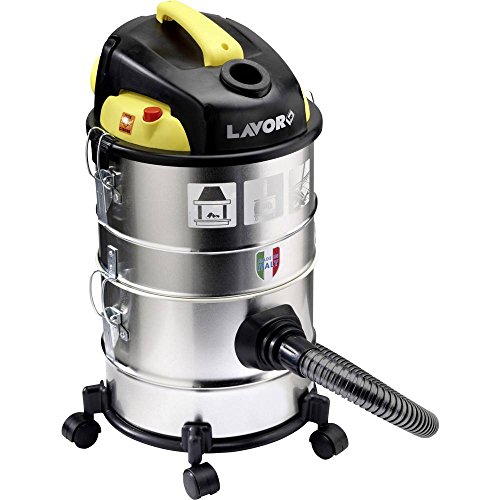
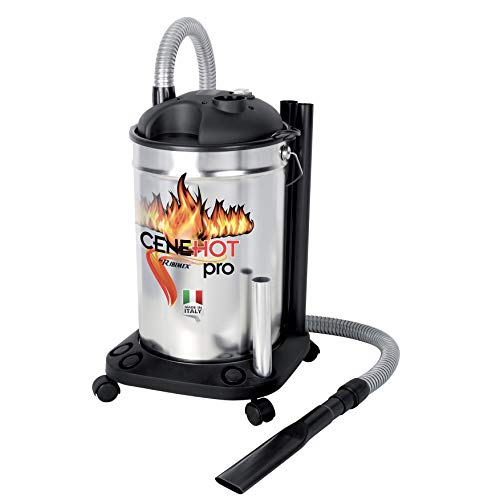
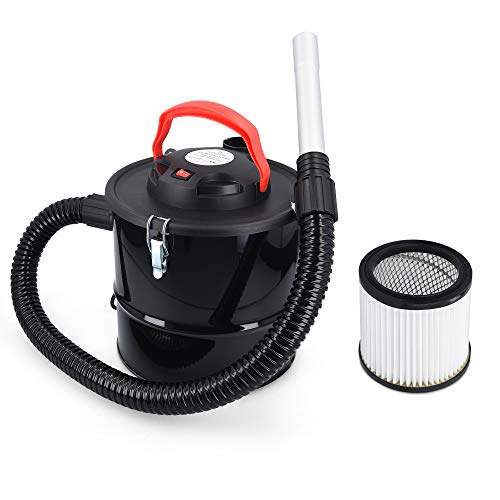
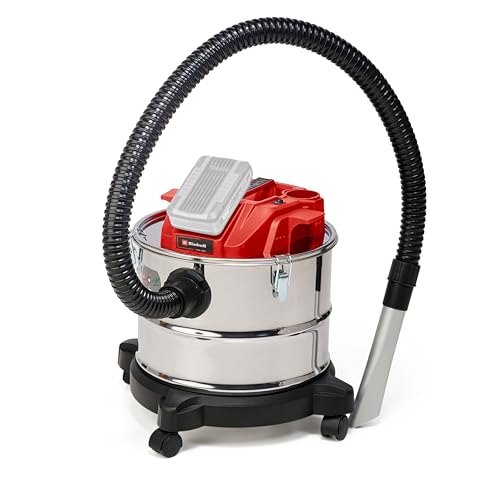
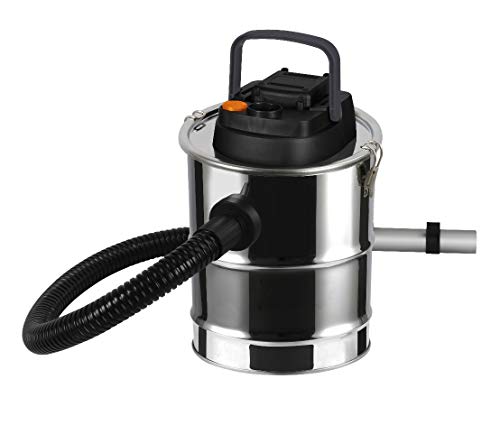
Usually no: an ash vacuum should not collect hot ash unless its exact instructions explicitly allow the measured temperature. Metal tanks and hoses tolerate abrasion and incidental warmth, but they do not make glowing embers, red coals, or hidden heat pockets safe for the filter, motor, battery, or surrounding materials.
Treat a hot-ash guide as a residual-heat safety question, not as permission to vacuum a live fire. A product may advertise heat-tolerant components while still requiring ash to cool below a stated ceiling. If the manual is missing, unclear, or contradictory, use the conservative rule and wait until the ash is fully cold.
Before cleaning, extinguish the appliance, separate any visible embers with a metal tool, and inspect the ash bed for glowing material. Never use an ordinary household vacuum as a substitute for an ash-specific machine, and never rely on a metal nozzle alone to make warm debris safe.
What do manufacturer ash-temperature limits mean in practice?
A manufacturer temperature limit is a hard upper boundary for a specific test condition, not a target operating temperature. It may refer to the ash entering the hose, the material in the tank, or a short-duration use case, so the surrounding instructions matter as much as the number.
Do not transfer a 40 °C limit from one brand to another or assume that a metal tank raises the limit. A loaded filter, blocked hose, damaged seal, or battery pack can behave differently from an empty test machine. If the product provides no measurable limit, wait for fully cold ash rather than estimating by colour or touch.
How long should ash cool before vacuuming?
There is no universal cooling time for ash because the amount, fuel, airflow, insulation, and appliance design all change how long embers remain hot. A shallow layer in a small pellet-stove drawer may cool faster than a deep fireplace bed, but neither should be judged by elapsed time alone.
Switch off the appliance and stop adding fuel. Spread the ash carefully with a metal tool to expose hidden hot spots, and keep combustible materials away while it cools. Do not stir aggressively if sparks or glowing pieces are still visible.
Use the vacuum only after the ash is below the exact temperature allowed by its manual, or fully cold when no measurable limit is supplied. A grey surface can conceal heat underneath, and a warm-looking smell, smoke, or crackle is a reason to wait longer.
After cleaning, empty the tank outdoors into a suitable non-combustible container and monitor it before disposal. Residual heat can remain dangerous after suction stops, especially when fine ash insulates a small ember.