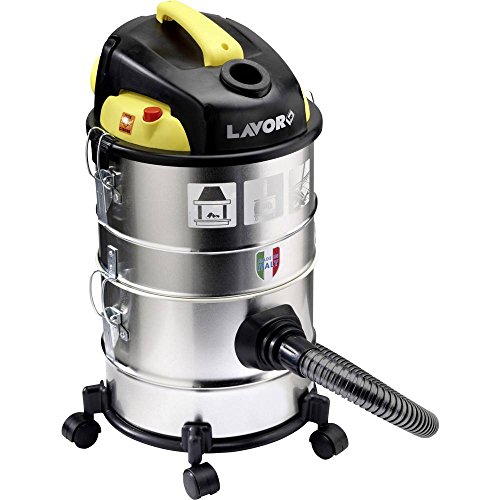

Are Lavor ash vacuums good?
Yes, Lavor ash vacuums are generally good value when the exact Ashley model matches the intended job. The range covers very compact ash-only cleaners, conventional 18 L fireplace vacuums, models with filter shakers, and larger multifunction machines that add wet-and-dry pickup, floor tools, wheels, or a blower function.
Lavor is particularly competitive for buyers who want a metal ash path and washable filtration without paying premium-brand prices. Compact versions suit small stoves and ash drawers, while the Ashley Kombo format is closer to a wheeled workshop vacuum that can also handle cold ash when fitted correctly.
The range requires more careful checking than Kärcher because Ashley names, product codes, tank sizes, filters, and included accessories vary across countries and generations. Not every model has the same suction, filter shaker, HEPA-labelled filter, wet-pickup setup, or spare-part support, so the exact manual and product code matter more than the family name alone.
What are the main advantages of Lavor ash vacuums?
The main advantages of Lavor ash vacuums are as follows:
- Wide choice of formats: The Ashley family ranges from a 4 L handheld ash cleaner to 18 L canisters and a larger multifunction Kombo model. Buyers can choose portability or broader utility instead of one fixed design.
- Competitive pricing: Entry-level Ashley machines are often among the least expensive branded ash vacuums, while mid-range models add filter cleaning, more power, or better accessories without reaching premium-brand prices.
- Metal ash path: Steel tanks, metal hoses, and metal nozzles are common across the range and suit abrasive cold ash better than ordinary domestic-vacuum parts.
- Washable filtration options: Many models combine a washable cartridge or HEPA-labelled filter with a prefilter, and selected versions add a pneumatic filter shaker to restore airflow.
- Multifunction choices: Ashley Kombo and related versions can add wet-and-dry pickup, floor nozzles, rigid tubes, wheels, and blower operation for garage or workshop cleaning.
- Compact models for small appliances: Ashley 4.0 and similar light machines are easier to store and position beside pellet stoves, small fireplaces, or barbecue ash drawers.
What are the main disadvantages of Lavor ash vacuums?
Lavor ash vacuums have the following disadvantages:
- Confusing model names and codes: Ashley 4.0, 110, 112, 412, 416, 901, 1000 Premium Evo, and Kombo versions can differ substantially. Listings that omit the full code make comparison difficult.
- Uneven feature availability: A filter shaker, HEPA-labelled filter, power regulator, wet pickup, floor kit, wheels, or blower function may appear on one version but not another.
- More complex filter setup: Multifunction models can require different cartridge, prefilter, or foam-filter arrangements for ash, dry dust, and liquids. Incorrect configuration can reduce airflow or expose the motor.
- Variable documentation and spare-part supply: Manuals, filters, and accessories are easier to find for some markets and product codes than others. Confirm availability before buying an older or discounted model.
- Bulkier premium versions: The Kombo format provides more functions but occupies more storage space and can weigh about 9 kg before debris or liquid is added.
- Cold-ash restriction: Lavor manuals exclude soot, glowing material, and objects above the stated temperature limit. A steel tank or metal hose does not make hot-ash collection safe.

What are the main Lavor Ashley models and how do they differ?
The main Lavor Ashley models and their differences are as follows:
- Ashley 4.0: The smallest format uses a 4 L steel tank and compact handheld body. It is intended for light, frequent cleaning around pellet stoves, small fireplaces, ovens, and ash drawers where storage space matters most.
- Ashley 110 and 112: These conventional 18 L canisters target domestic fireplace and stove cleaning. The 110 uses simpler filtration, while the 112 adds a washable HEPA-labelled cartridge filter and prefilter; exact motor and filter specifications should be checked by product code.
- Ashley 412 and 416: These 18 L models add more control and mobility. The 412 includes suction regulation, while the 416 uses a wheeled trolley layout; both are designed around double filtration and a metal ash hose.
- Ashley 901 and 1000 Premium Evo: These are higher-specification 18 L ash vacuums with a washable cartridge filter, prefilter, and pneumatic filter-shaker system. They suit frequent fine-ash cleaning where maintaining airflow is more important than minimum price.
- Ashley Kombo 4 in 1: The large multifunction version combines a 28 L steel tank with ash pickup, wet-and-dry vacuuming, floor tools, wheels, and blower operation. It is more versatile but also substantially larger and heavier than the ash-only models.
How much do Lavor ash vacuums cost?
New Lavor Ashley ash vacuums generally cost about £40-£170 in Europe. Compact Ashley 4.0 models are commonly £40-£60, making them suitable for light stove or ash-drawer cleaning on a small budget.
Conventional 18 L models such as the 110, 112, 412, 416, and 901 usually cost £50-£90. Prices rise with washable cartridge filters, prefilters, filter shakers, suction control, wheels, and extra nozzles. Check filter availability before buying an older code.
Large Ashley Kombo and premium multifunction packages generally cost £90-£170. The higher price makes sense when wet-and-dry pickup, floor tools, wheels, and blower operation will be used. Compare the full product code and included kit because similarly named Ashley listings can describe very different machines.
What should you consider while choosing the best Lavor ash vacuum?
Consider the following points while choosing the best Lavor ash vacuum:
- Exact model and product code: Match the full Ashley name and code on the machine, manual, filter, and retailer listing. Do not transfer tank, motor, filter, or accessory specifications from another Ashley version.
- Ash-only or multifunction design: Choose a compact ash-only model for fireplaces, pellet stoves, ovens, and ash drawers. Choose Kombo or another wet-and-dry version only when floor, garage, liquid, or blower duties justify the extra size and setup.
- Tank size and portability: A 4 L handheld tank prioritises storage and quick emptying, an 18 L canister balances domestic capacity and cost, and a 28 L wheeled machine suits broader utility work. Check weight and dimensions as well as litres.
- Filter system and cleaning method: Confirm whether the model uses a cloth filter, washable cartridge, HEPA-labelled cartridge, prefilter, foam filter, or pneumatic shaker. Follow the exact dry-ash and wet-pickup configuration in the manual.
- Suction and airflow controls: Compare suction pressure, motor input, hose diameter, and any regulator rather than watts alone. A filter shaker is especially useful for frequent fine ash, while simple models need more manual cleaning.
- Hose, nozzle, and accessories: Check metal-hose length, metal nozzle shape, rigid tubes, crevice tools, floor head, wheels, and blower outlet. Pay only for accessories that fit the intended appliance and storage space.
- Safety, spares, and total price: Use only fully cooled material within the stated limit and never collect soot or glowing debris. Add replacement filters, hoses, seals, and delivery to the purchase price, and confirm that parts remain available for the exact code.