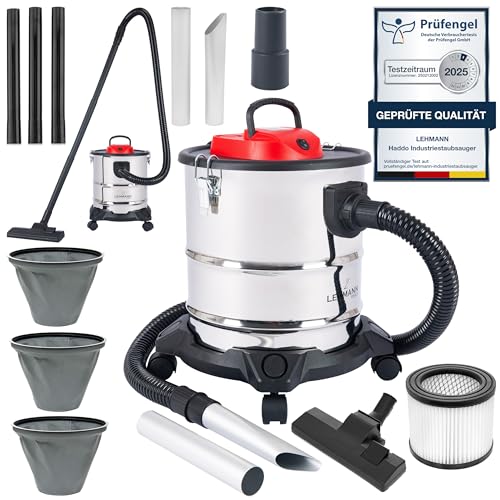
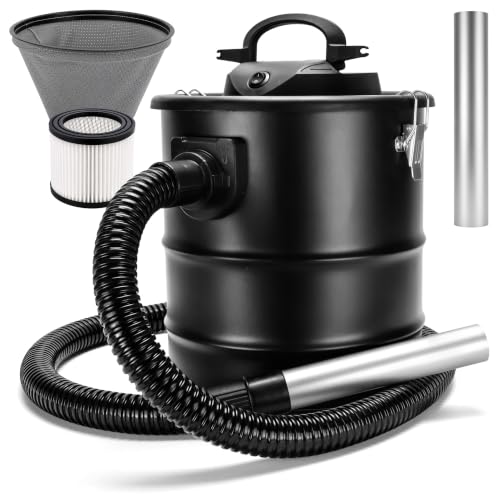
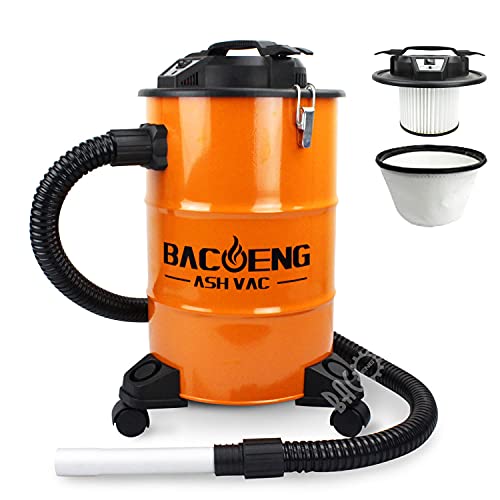
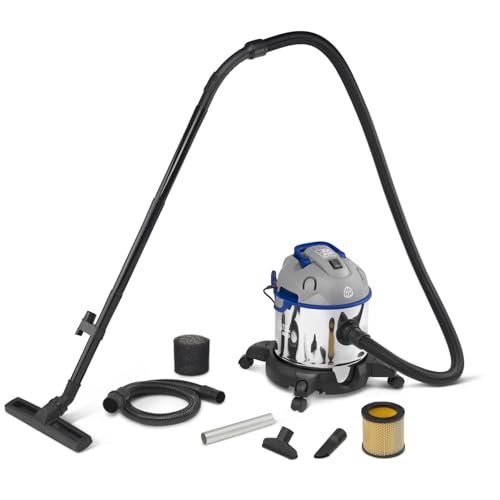
Which brands make the best professional ash vacuums?
The following ranking compares established ash-vacuum brands by category-wide average overall score; suitability for professional-style, frequent use still depends on the durability, filtration, suction, and serviceability of the individual model:
- Sellnet (Average overall score: 7.9)
- Kaminer (Average overall score: 7.6)
- Kärcher (Average overall score: 7.3)
The chart below compares established ash-vacuum brands by category-wide average overall score.
[horizontal-chart-17495554516316705543147502528947893099530784932573]
What makes an ash vacuum professional-grade?
The following qualities make an ash vacuum suitable for professional-style, frequent use:
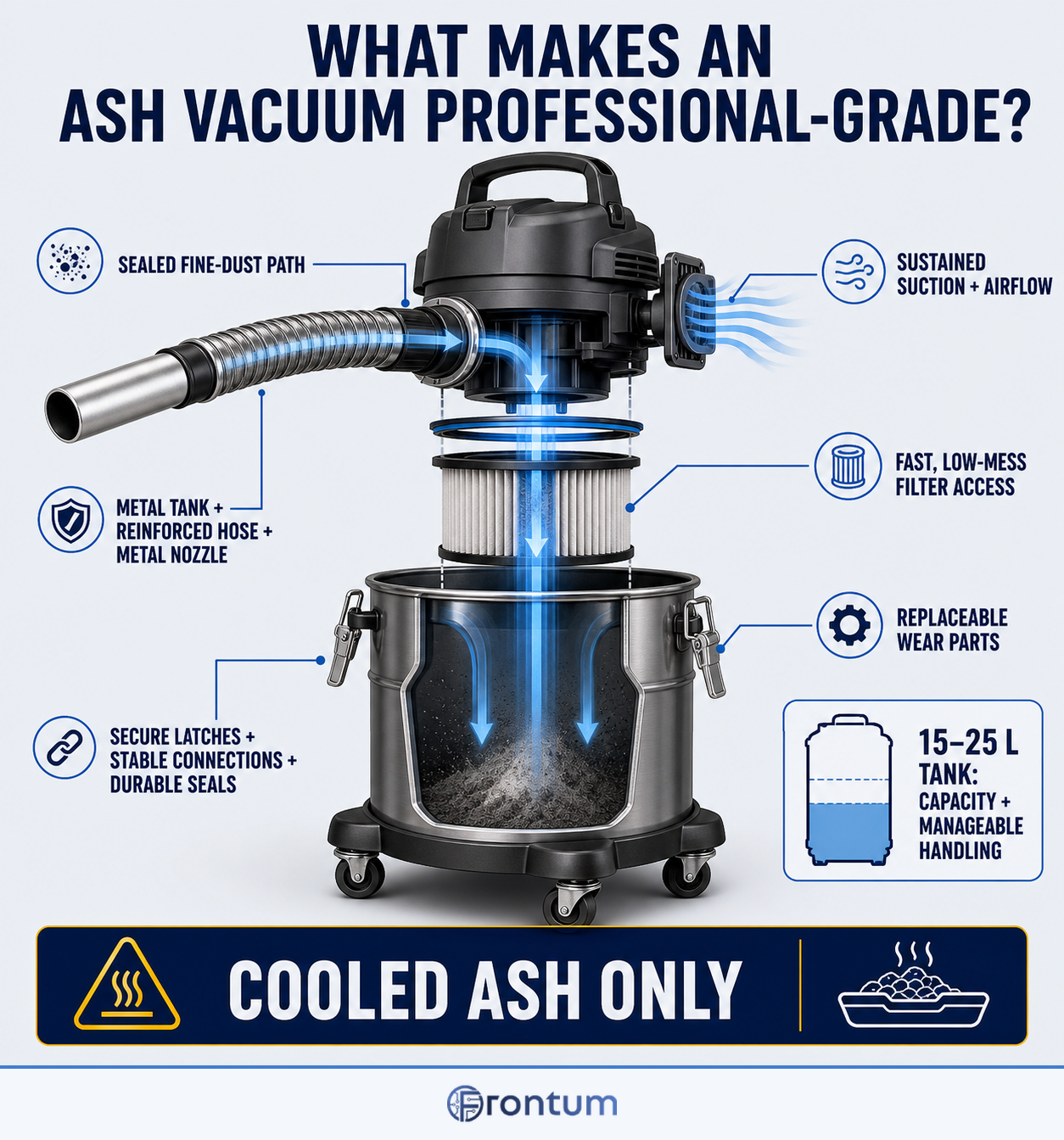
- A sealed fine-dust path and an ash-rated filter system that limit leakage and preserve airflow as dust accumulates.
- A metal tank, reinforced metal hose, and metal end nozzle that tolerate abrasive debris better than lightweight household fittings.
- Sustained suction and airflow rather than an impressive motor-watt figure alone; compare pressure and airflow only when test methods are alike.
- A practical 15–25 L tank that balances useful working capacity with manageable carrying and emptying.
- Fast, low-mess filter access or cleaning, because fine ash can reduce performance quickly during repeated jobs.
- Secure latches, stable hose connections, durable seals, and replaceable wear parts for longer service life.

How durable are professional ash vacuums under frequent use?
Professional ash vacuums can withstand frequent use well when the dust path, tank, hose, latches, and filters are designed as one durable system. A metal tank alone is not enough; inspect the reinforced metal hose, metal end nozzle, seal quality, and the way the motor head locks onto the container.
Fine ash is the main durability challenge because it loads filters, increases resistance, and can escape through weak seals. Easy filter access and cleaning reduce strain on the motor, while readily available replacement filters, hoses, and nozzles make the machine easier to keep working over several seasons.
Frequent-use durability still depends on correct operation. Collect only fully cooled ash within the maker instructions, avoid overfilling the tank, clean or replace filters at the specified interval, and check the hose and seals for damage before a demanding job.
What power, suction pressure, and capacity do professional ash vacuums need?
For demanding ash cleanup, a useful target is roughly 1,000–1,200 W or more, 15–22 kPa of comparable suction pressure, and a 15–25 L tank. These are practical reference points rather than a formal professional standard, and the best balance depends on job duration, debris load, and how often the machine must be carried.
Motor input does not directly measure pickup performance. Published ash-vacuum motors span roughly 110–1,800 W, but hose diameter, seals, filter resistance, and airflow determine how effectively that power moves debris; compare kilopascals with kilopascals and litres per second with litres per second under similar conditions.
Suction pressure helps lift dense material, while airflow carries loosened particles through the hose. Across this category, published figures can range from about 8–24 kPa and 10–58 L/s, so consistent performance as the filter loads is often more valuable than the highest isolated number.
Capacity should match the work without making emptying awkward. Ash-vacuum tanks range from compact 4 L units to about 30 L, but 15–25 L is a practical frequent-use range; also account for machine weights of roughly 1.35–9 kg, because a large full tank can be inconvenient even when it reduces emptying stops.
How much do the best professional ash vacuums cost?
Professional-style ash vacuums commonly cost about £40-£130, although the wider ash-vacuum market ranges from roughly £10 for basic separators or very compact units to around £290 for premium machines. A budget near £50 reaches many mainstream models, but sustained performance, construction, and included equipment matter more than proximity to the average price.


Higher prices can buy a larger metal tank, stronger fittings, greater reach, wheels, better filter-cleaning features, or a broader accessory set, but they do not automatically prove professional durability. Compare the reinforced metal hose, metal end nozzle, seals, replacement-filter cost, warranty support, and the complete supplied package before paying extra.
The chart below shows the price distribution of ash vacuums considered for professional-style use.
[vertical-chart-02049192578767447811094619216221561833603614642741]
What else should you consider when choosing a professional ash vacuum?
Consider the following checks before choosing an ash vacuum for frequent, demanding work:
- Confirm that the manual permits the exact material you plan to collect, and use the machine only for fully cooled ash within its stated limits.
- Inspect the full dust path: metal tank, reinforced metal hose, metal end nozzle, secure latches, seals, and an ash-rated filtration system.
- Compare suction pressure and airflow only against figures measured in the same units; motor watts alone do not establish cleaning performance.
- Choose a 15–25 L tank for a practical balance of working capacity and manageable emptying, adjusting for the actual job size.
- Check hose length, cable length or battery runtime, wheels, handles, and total weight so the machine can move through the intended work area.
- Prefer quick filter access and low-mess cleaning, and confirm the price and availability of replacement filters, hoses, and nozzles.
- Compare the complete package and warranty support, including included accessories, battery and charger where relevant, and local servicing options.