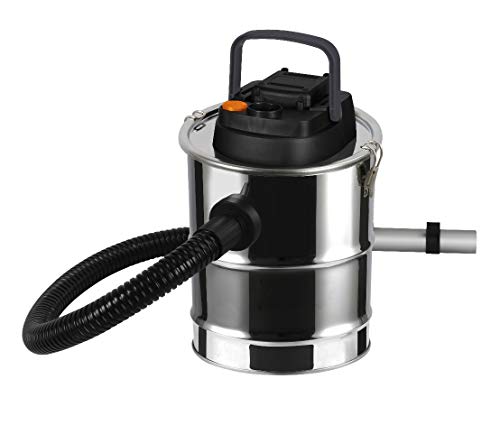
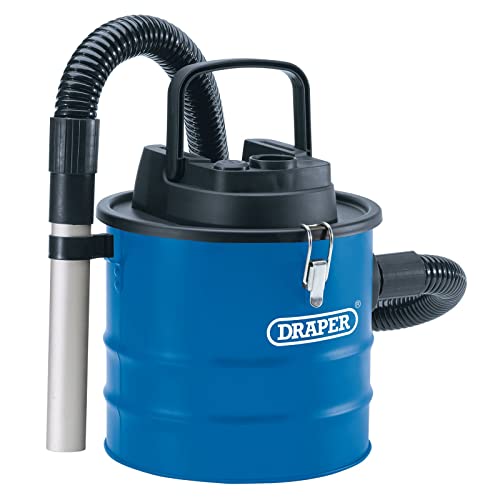
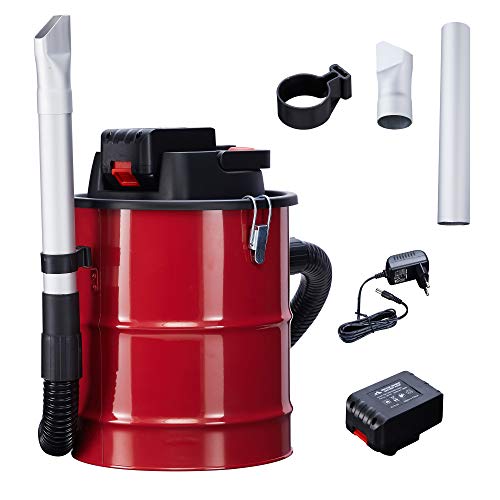
Which brands make the best cordless ash vacuums?
The following ranking compares established ash-vacuum brands by category-wide average overall score; cordless suitability still depends on the individual model, battery platform, and supplied battery-and-charger package:
- Sellnet (Average overall score: 7.9)
- Kaminer (Average overall score: 7.6)
- Kärcher (Average overall score: 7.3)
The chart below compares established ash-vacuum brands by category-wide average overall score.
[horizontal-chart-17495554516316705543147502528947893099530784932573]
Are cordless ash vacuums worth buying?
Cordless ash vacuums are worth buying when portability and quick setup matter more than unlimited operating time. They remove the need to find a nearby socket or trail a cable across a hearth, and the better models provide enough suction and 12–20 L capacity for routine stove, fireplace, or barbecue cleanup.
Their value depends heavily on the battery system. A bare tool is attractive if you already own compatible packs and a charger, but a complete kit can cost much more; runtime also falls as the filter loads with fine ash. Choose corded power for long, repeated cleanups, and use any cordless model only for fully cooled ash within its maker's instructions.
When does a cordless ash vacuum make more sense than a corded model?
A cordless ash vacuum makes more sense than a corded model for short, mobile cleanups where sockets are inconvenient or a cable would obstruct the work area. It is especially useful for moving between a fireplace, pellet stove, barbecue, and outdoor emptying point without repeatedly unplugging the machine.
Cordless power is also a sensible choice when you already own compatible batteries and a charger. In that case, a bare tool can be economical and several charged packs can extend a job, but compatibility must include the exact voltage platform and battery generation rather than the brand name alone.
A corded model remains the better option for large fireboxes, multiple appliances, or frequent workshop-style cleaning because it does not impose a charging pause. It may also deliver stronger sustained airflow as the filter loads, so compare like-for-like suction and airflow figures instead of judging either type from motor watts alone.
How do battery runtime and charging time affect ash cleanup?
Battery runtime determines whether a cordless ash vacuum can finish the intended cleanup without a pack change, while charging time determines how quickly the tool is ready again. Both figures depend on battery capacity, power mode, filter loading, temperature, and the charger used, so a headline runtime measured in a light mode may not represent sustained fine-ash pickup.
Match the pack to the job rather than relying on voltage alone: a higher-capacity compatible battery usually extends runtime but adds weight and cost. Check whether the quoted runtime includes the supplied battery, whether the charger is standard or rapid, and whether you can swap packs; for repeated large cleanups, a corded model avoids this planning altogether.
How much suction do cordless ash vacuums provide?
Cordless ash vacuums commonly provide enough suction for routine fireplace and stove cleanup, but published figures vary greatly by model and measurement method. Comparable models in this class often quote roughly 8–10 kPa, while some stronger designs reach higher; airflow, air watts, and kilopascals describe different aspects of performance and should not be treated as interchangeable.
Pressure helps lift dense debris through the nozzle, whereas airflow carries loosened ash through the hose. Real pickup also depends on hose diameter, seals, tank design, and filter resistance, so a clean fine-dust filter can matter more than a small difference in a headline number.
For frequent or deeper cleaning, compare pressure with pressure and airflow with airflow under similar test conditions. A cordless model that maintains suction and provides easy filter cleaning is usually more useful than one with a high peak claim but rapid performance loss as fine ash accumulates.
What ash-temperature limits apply to cordless ash vacuums?
Cordless ash vacuums should normally be used only for fully cooled ash unless the manufacturer states a precise permissible temperature for the exact model. A metal tank, reinforced hose, or metal nozzle does not make the battery, motor, seals, or filter safe for glowing embers, and residual heat can damage components or start a fire after the tool is stored.
Do not infer a temperature limit from similar-looking corded models or from marketing phrases such as heat resistant. Follow the manual, allow generous cooling time, check beneath the ash surface for retained heat, and empty the tank into a non-combustible container kept away from buildings and combustible material.
How much do cordless ash vacuums cost?
Cordless ash vacuums generally cost about £30-£150, with many compact tools around £30-£70 and better-equipped kits near £90-£150. The lower prices often apply to bare tools or simpler 12–18 L models, while the upper end can include a battery, charger, stronger accessory set, or a more established service network.
Compare the complete working package rather than the tool price alone. A £40 bare unit may be excellent value if its battery platform is already in your workshop, but costly if a compatible pack and charger must be added; also check replacement filters, hose construction, tank capacity, and whether the published price includes the exact battery shown.
The chart below shows the price distribution of cordless ash vacuums.
[vertical-chart-11462710588163532919058398871493690308631312246150]