
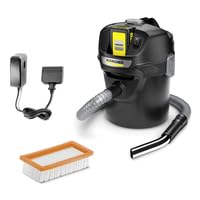


Are Kärcher ash vacuums good?
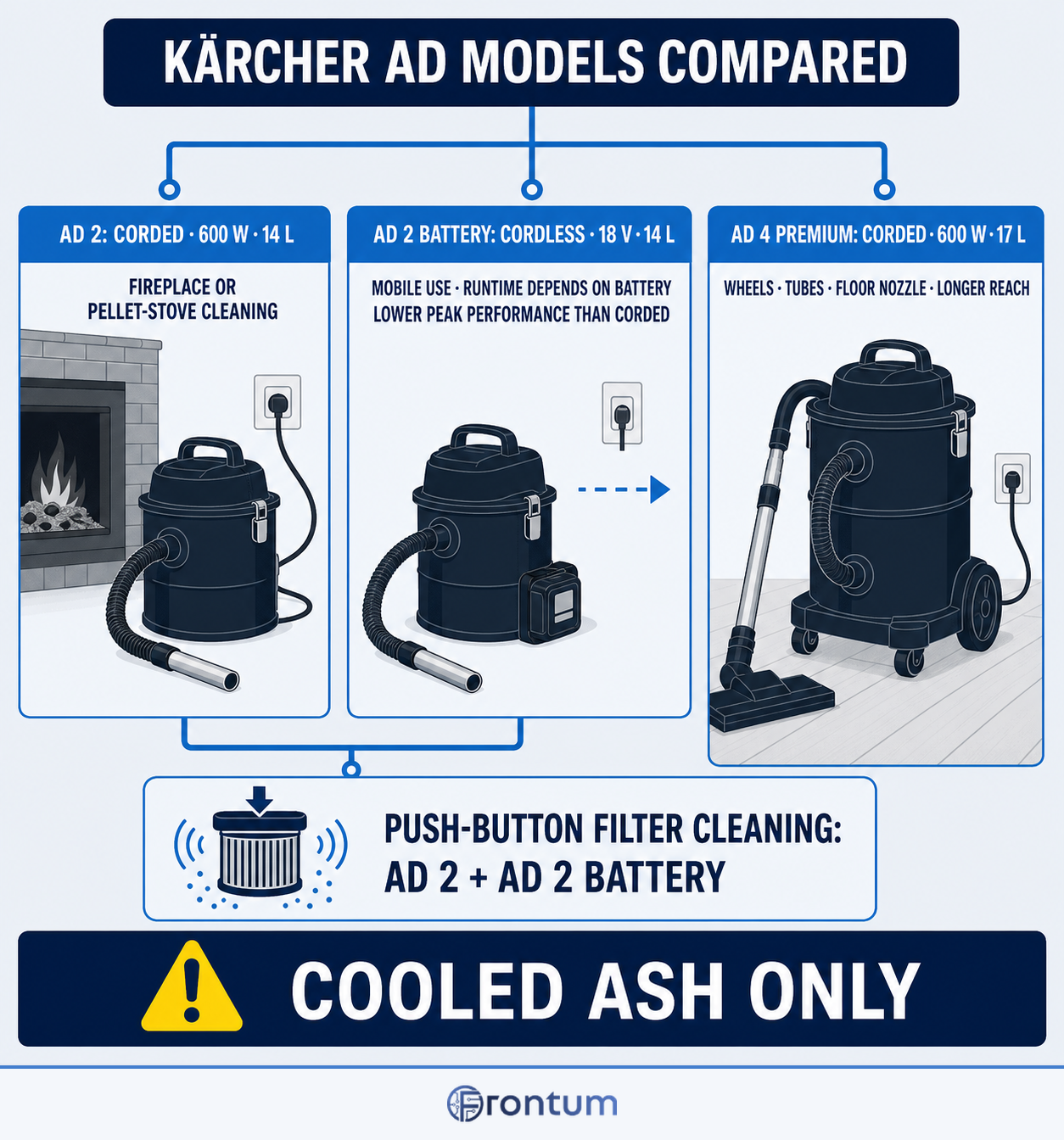
Yes, Kärcher ash vacuums are generally good choices for buyers who value ash-specific filtration, durable metal components, and clearly differentiated corded and cordless models. The AD range uses metal containers and jacketed metal hoses, while integrated filter cleaning helps restore airflow as fine ash loads the filter.
The brand is strongest when the job matches one of its three main formats: the compact corded AD 2, the mobile AD 2 Battery, or the larger AD 4 Premium with floor-cleaning accessories. This makes the range easier to understand than brands with many nearly identical models, and replacement filters and manuals are usually straightforward to identify by order number.
The main trade-offs are price and specialisation. Kärcher models often cost more than basic ash vacuums, their 14–17 L tanks are not intended for industrial volumes, and the cordless version sacrifices peak airflow and runtime for mobility. They remain cold-ash appliances, so flame-resistant parts do not make glowing embers safe.
What are the main advantages of Kärcher ash vacuums?
The main advantages of Kärcher ash vacuums are as follows:
- Ash-specific construction: Metal containers, jacketed metal hoses, metal coarse-dirt filters, and flame-resistant filter materials are designed for abrasive fine ash. They still require fully cooled debris.
- Integrated filter cleaning: AD models use a push-button cleaning function to dislodge dust from the filter and restore suction without opening the tank during every interruption.
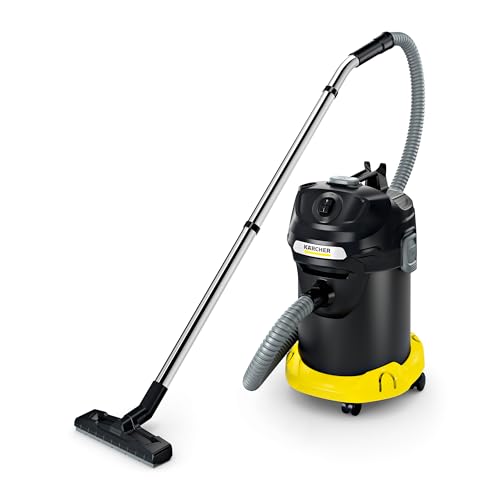
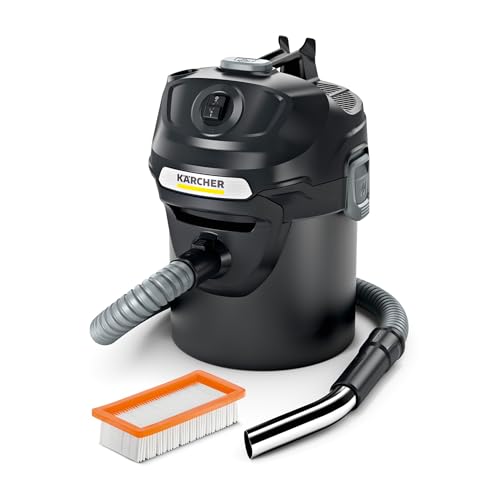
- Clear model choices: The AD 2 covers compact corded cleaning, the AD 2 Battery provides cable-free access, and the AD 4 Premium adds capacity, wheels, longer reach, and dry-floor tools.
- Controlled emptying and maintenance: The one-piece filter arrangement and container handle reduce direct contact with loose ash, while model-specific filters can be removed for inspection or cleaning.
- Useful accessory design: Angled hand tubes reach fireplace corners, and the AD 4 Premium includes rigid tubes and a floor nozzle for wider dry-vacuum duties.
- Battery-platform option: The AD 2 Battery works with Kärcher 18 V Battery Power packs, which can be useful for buyers already using compatible garden or cleaning tools.
What are the main disadvantages of Kärcher ash vacuums?
Kärcher ash vacuums have the following disadvantages:
- Higher purchase price: The AD range usually costs more than simple metal-canister ash vacuums, especially when a cordless set includes a battery and charger.
- Limited capacity range: The main models use 14 L or 17 L containers. That is practical for domestic fireplaces and pellet stoves but less suitable for repeated high-volume cleanup.
- Cordless runtime and output trade-offs: The AD 2 Battery is convenient away from sockets, but runtime depends on battery size and its peak suction and airflow are lower than the corded AD models.
- Model-specific accessories: Filters, hoses, floor kits, batteries, and chargers are not interchangeable across every AD configuration. Buyers need the exact order number before purchasing parts.
- No universal HEPA claim: The range uses robust flat pleated filters and coarse-dirt filters, but buyers who require a certified HEPA class should verify the exact filter documentation rather than assume it from general fine-dust wording.
- Cold-ash restriction: Flame-resistant materials improve durability but do not make any AD model suitable for glowing embers, burning fuel, or ash outside the stated manual limit.