Scored using Wi-Fi extenders Methodology v3.0
Wi-Fi extenders Methodology v3.0
Mathematical & Unbiased Scoring
Products in this category are scored under Frontum Wi-Fi extenders Methodology v3.0: the technical score from the specifications is the base, and independent expert and video reviews (up to ±0.5 points), owner opinions (up to ±0.3) and best-of lists (up to +0.3) move it up or down.
Explore Wi-Fi extenders Methodology v3.0

TP-Link RE365 review: 64 specs compared

Avg. price:~£?Wi-Fi version:Wi-Fi 5 (802.11ac)Wi-Fi speed:1200 MbpsCoverage area:?

TP-Link RE365 Review: Compare 64 technical specifications, 2 expert and video reviews and 2 best-of lists to see how this product ranks in the Wi-Fi extenders category and whether it is worth buying.
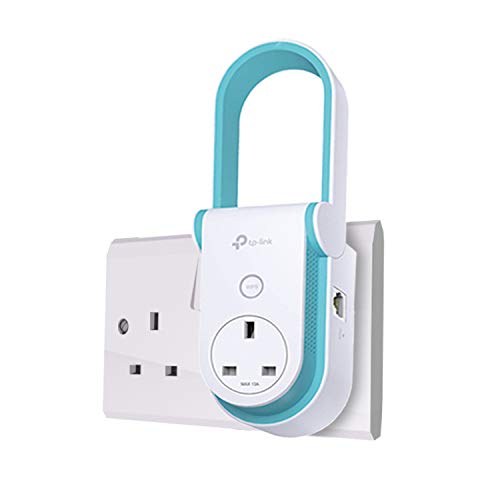
TP-Link RE365
6.9/10

Overall score

Score
6.9/ 10
✕
What it is
Our main score for this model, 1–10. It combines specs, best-of lists, expert reviews and ratings from across the web.
How we count it
Parts: Technical score 45%, List score 30%, Reviews score 15%, User score 10%
Marks: Each part gets a mark out of 10. For reviews, lists and owners, a typical model in this category gets about 8 and the best one gets 10.
No data yet: A part with no data shows "?". It counts as the mark of a weaker model in this category (4 in 5 models with data score higher). This way, models with reviews, lists and owners usually come out ahead.
Score distribution
▼
<55-66-77-88-99-10
Score components

45%

6.9

Technical score

30%

6.9

List score

15%

6.9

Reviews score

10%

6.9

User score

▼Worse than 75% of wi fi extenders
?

Value for money

Value for money
✕
What it is
An indicator that combines the Wi-Fi extender's overall rating with its cost.
When it matters
When you are looking for a Wi‑Fi extender with a good balance between performance and price.
Score distribution
▼
<55-66-77-88-99-10
Score components

70%

6.9

Overall score

30%

?

Price

Price not known yet
6.9

Technical score

Technical score
6.9/ 10
✕
What it is
How good the specs are compared with the other models in this category, 1–10.
How we count it
Areas: We rate the specs in each area against the other models in this category.
Weighting: The areas that matter most to buyers count more. The shares are shown under Score components.
Share: The technical score is 45% of the overall score.
Score distribution
▼
<55-66-77-88-99-10
Score components

40%

6.2

Wi-Fi Performance

30%

8.0

Network

12%

8.7

Setup

10%

6.6

Hardware

8%

3.3

Ports

▼Worse than 58%
6.9

Reviews score

Reviews score
6.9/ 10
✕
What it is
Average grade from independent test sites, magazines and video reviewers, 1–10.
How we count it
Grades: Each review's own score is converted to 1–10; without one, we grade the review ourselves. Big test sites count more, short reviews half as much as full tests. A video review counts half.
Score: The average grade is 80% of the review mark; the number of reviews is the other 20% (1 review = 5, the typical number in this category = 8, the most-reviewed model = 10).
Enough data: With few reviews, the average grade is pulled toward the typical grade of this category. No reviews yet: 7.5 for now.
Share: Reviews count 15% of the overall score.
Score distribution
▼
<55-66-77-88-99-10

6.9

Mark 7.8 is below the typical mark 7.9 of this category, so it cannot lift the score above the technical score

80%

8.0

Average grade

20%

6.9

Popularity

Grades by review (2)
1 review, with a printed score. 1 video review, counting half as much as a written test. Reviews count 15% of the overall score.
Ratings from across the web count in the User score, not in this score.
▼Worse than 76%
6.9

User score

User score
6.9/ 10
✕
What it is
How happy buyers are with this model, based on ratings from across the web.
How we count it
Enough data: A model needs at least 1 rating from across the web. Without one, it counts as 7.6, the mark of a weaker rated model in this category.
Share: User score counts 10% of the overall score.
Score distribution
▼
<55-66-77-88-99-10

6.9

Mark 7.9 is below the typical mark 8.1 of this category, so it cannot lift the score above the technical score

70%

7.8

Rating

30%

8.0

Popularity

▼Worse than 78%
6.9

List score

List score
6.9/ 10
✕
What it is
How often independent test sites, magazines and video reviewers put this model in their best-of lists for this category.
How we count it
Points: The model in the most lists of this category gets 10; the others get 8 to 10 in proportion. In no list yet: 7.5. Lists count 30% of the overall score.
Enough data: Every list counts, even a single one. With fewer than 5 best-of lists in the category, this part is left out.
Lists with this model (2)
List score: in 2 of 47 lists (4%)
▲Better than 67%
  • tp-link-re365
  • tp-link-re365
  • tp-link-re365
  • tp-link-re365
  • tp-link-re365
  • tp-link-re365
  • tp-link-re365
  • tp-link-re365
  • tp-link-re365
tp-link-re365
tp-link-re365
tp-link-re365
tp-link-re365
tp-link-re365
tp-link-re365
tp-link-re365
tp-link-re365
tp-link-re365
Where to buy
*As an Amazon Associate, we earn from qualifying purchases.
Loading...
Loading category ranking...

Technical Specifications of Wi-Fi extender TP-Link RE365

Technical score
Technical score
6.9/ 10
✕
What it is
How good the specs are compared with the other models in this category, 1–10.
How we count it
Areas: We rate the specs in each area against the other models in this category.
Weighting: The areas that matter most to buyers count more. The shares are shown under Score components.
Share: The technical score is 45% of the overall score.
Score distribution
▼
<55-66-77-88-99-10
Score components:

40%

6.2

Wi-Fi Performance

30%

8.0

Network

12%

8.7

Setup

10%

6.6

Hardware

8%

3.3

Ports

6.9
Reviews score
6.9
User score
6.9
List score
6.9
Value for money
Value for money
7.8/ 10
✕
What it is
An indicator that combines the Wi-Fi extender's overall rating with its cost.
When it matters
When you are looking for a Wi‑Fi extender with a good balance between performance and price.
Score distribution
▼
<55-66-77-88-99-10
Score components:

70%

6.9

Overall score

30%

?

Price

7.8
Wi-Fi version
Wi-Fi 5 (802.11ac)
This Wi-Fi extender supports Wi-Fi 5 (802.11ac), more advanced than 14.3% of Wi-Fi extenders and equal to 38.3% of Wi-Fi extenders.
Wi-Fi bands
Dual-band
This Wi-Fi extender supports Dual-band, more versatile than 15% of Wi-Fi extenders and equal to 74.5% of Wi-Fi extenders.
6 GHz band support
no
This Wi-Fi extender does not support the 6 GHz band. 3.9% of Wi-Fi extenders support the 6 GHz band.
Wi-Fi speed
1,200 Mbps
This Wi-Fi extender reaches 1,200 Mbps Wi-Fi speed, slower than 62.5% of Wi-Fi extenders and equal to 10.5% of Wi-Fi extenders.
Max speed 2.4 GHz
300 Mbps
This Wi-Fi extender reaches 300 Mbps on the 2.4 GHz band, which is slower than 55.8% of Wi-Fi extenders and equal to 42.9% of Wi-Fi extenders.
Show more
Ethernet backhaul
?
Mesh compatibility
?
Mesh standard
EasyMesh
Roaming feature
yes
This Wi-Fi extender supports roaming. 11.8% of Wi-Fi extenders support roaming.
802.11k support
yes
This Wi-Fi extender supports 802.11k. 24.3% of Wi-Fi extenders support 802.11k.
Show more
N. of LAN ports
1
This Wi-Fi extender has 1 LAN port/s, more than 7.4% of Wi-Fi extenders and equal to 79.1% of Wi-Fi extenders.
Ethernet port speed
0.1 Gbps
This Wi-Fi extender offers 0.1 Gbps Ethernet speed, slower than 70.6% of Wi-Fi extenders and equal to 26.7% of Wi-Fi extenders.
N. of USB ports
0
This Wi-Fi extender has 0 USB port/s, fewer than 2% of Wi-Fi extenders and equal to 98.1% of Wi-Fi extenders.
PoE standard
N/A
Dedicated smartphone app
yes
This Wi-Fi extender comes with a dedicated smartphone app. 10.4% of Wi-Fi extenders come with a dedicated smartphone app.
Web UI management
yes
This Wi-Fi extender has a web management interface. 1.3% of Wi-Fi extenders have a web management interface.
Automatic firmware updates
no
This Wi-Fi extender does not have automatic firmware updates. 45.5% of Wi-Fi extenders have automatic firmware updates.
LED control
yes
This Wi-Fi extender has LED control. 9.7% of Wi-Fi extenders have LED control.
Buttons present
?
Show more
Mounting type
wall-plug
Portable design
yes
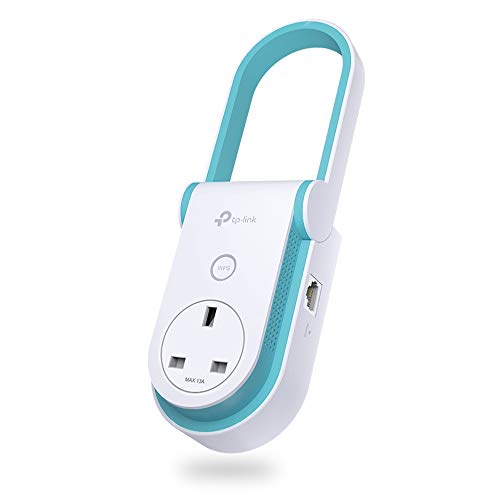
This Wi-Fi extender has a portable design. 24.5% of Wi-Fi extenders have a portable design.
Height
?
Width
?
Thickness
?
Show more

TP-Link RE365 vs the average Wi-Fi extender

246810TotalWi-Fi PerformanceNetworkPortsSetupHardware
  • 90% slower Ethernet speed
    This Wi-Fi extender offers slower Ethernet speed than the average Wi-Fi extender (0.1 Gbps vs 1 Gbps). The average Wi-Fi extender offers 1 Gbps Ethernet speed.
    0.1 Gbps vs 1 Gbps
  • 13.8% lower list score
    List score
    6.9/ 10
    ✕
    What it is
    How often independent test sites, magazines and video reviewers put this model in their best-of lists for this category.
    How we count it
    Points: The model in the most lists of this category gets 10; the others get 8 to 10 in proportion. In no list yet: 7.5. Lists count 30% of the overall score.
    Enough data: Every list counts, even a single one. With fewer than 5 best-of lists in the category, this part is left out.
    Lists with this model (2)
    List score: in 2 of 47 lists (4%)
    6.9 vs 8.0
  • 25% slower 2.4 GHz speed
    This Wi-Fi extender delivers slower 2.4 GHz speeds than the average Wi-Fi extender (300 Mbps vs 400 Mbps). The average Wi-Fi extender reaches 400 Mbps on 2.4 GHz.
    300 Mbps vs 400 Mbps
  • 31.4% slower Wi-Fi speed
    This Wi-Fi extender reaches slower Wi-Fi speed than the average Wi-Fi extender (1,200 Mbps vs 1,750 Mbps). The average Wi-Fi extender reaches 1,750 Mbps Wi-Fi speed.
    1,200 Mbps vs 1,750 Mbps
  • 27.8% slower 5 GHz speed
    This Wi-Fi extender delivers slower 5 GHz speeds than the average Wi-Fi extender (867 Mbps vs 1,201 Mbps). The average Wi-Fi extender reaches 1,201 Mbps on 5 GHz.
    867 Mbps vs 1,201 Mbps
  • 5.7% worse value for money
    TP-Link RE365 has a lower value-for-money score than the average Wi-Fi extender (7.8 vs 8.2).
    7.8 vs 8.25
  • 5.5% lower review score
    Reviews score
    6.9/ 10
    ✕
    What it is
    Average grade from independent test sites, magazines and video reviewers, 1–10.
    How we count it
    Grades: Each review's own score is converted to 1–10; without one, we grade the review ourselves. Big test sites count more, short reviews half as much as full tests. A video review counts half.
    Score: The average grade is 80% of the review mark; the number of reviews is the other 20% (1 review = 5, the typical number in this category = 8, the most-reviewed model = 10).
    Enough data: With few reviews, the average grade is pulled toward the typical grade of this category. No reviews yet: 7.5 for now.
    Share: Reviews count 15% of the overall score.
    Score distribution
    ▼
    <55-66-77-88-99-10

    6.9

    Mark 7.8 is below the typical mark 7.9 of this category, so it cannot lift the score above the technical score

    80%

    8.0

    Average grade

    20%

    6.9

    Popularity

    Grades by review (2)
    1 review, with a printed score. 1 video review, counting half as much as a written test. Reviews count 15% of the overall score.
    Ratings from across the web count in the User score, not in this score.
    6.9 vs 7.3
  • 8.0% lower user score
    User score
    6.9/ 10
    ✕
    What it is
    How happy buyers are with this model, based on ratings from across the web.
    How we count it
    Enough data: A model needs at least 1 rating from across the web. Without one, it counts as 7.6, the mark of a weaker rated model in this category.
    Share: User score counts 10% of the overall score.
    Score distribution
    ▼
    <55-66-77-88-99-10

    6.9

    Mark 7.9 is below the typical mark 8.1 of this category, so it cannot lift the score above the technical score

    70%

    7.8

    Rating

    30%

    8.0

    Popularity

    6.9 vs 7.5
  • 13.8% lower list score
    List score
    6.9/ 10
    ✕
    What it is
    How often independent test sites, magazines and video reviewers put this model in their best-of lists for this category.
    How we count it
    Points: The model in the most lists of this category gets 10; the others get 8 to 10 in proportion. In no list yet: 7.5. Lists count 30% of the overall score.
    Enough data: Every list counts, even a single one. With fewer than 5 best-of lists in the category, this part is left out.
    Lists with this model (2)
    List score: in 2 of 47 lists (4%)
    6.9 vs 8.0
  • 5.7% worse value for money
    TP-Link RE365 has a lower value-for-money score than the average Wi-Fi extender (7.8 vs 8.2).
    7.8 vs 8.25
  • 5.5% lower review score
    Reviews score
    6.9/ 10
    ✕
    What it is
    Average grade from independent test sites, magazines and video reviewers, 1–10.
    How we count it
    Grades: Each review's own score is converted to 1–10; without one, we grade the review ourselves. Big test sites count more, short reviews half as much as full tests. A video review counts half.
    Score: The average grade is 80% of the review mark; the number of reviews is the other 20% (1 review = 5, the typical number in this category = 8, the most-reviewed model = 10).
    Enough data: With few reviews, the average grade is pulled toward the typical grade of this category. No reviews yet: 7.5 for now.
    Share: Reviews count 15% of the overall score.
    Score distribution
    ▼
    <55-66-77-88-99-10

    6.9

    Mark 7.8 is below the typical mark 7.9 of this category, so it cannot lift the score above the technical score

    80%

    8.0

    Average grade

    20%

    6.9

    Popularity

    Grades by review (2)
    1 review, with a printed score. 1 video review, counting half as much as a written test. Reviews count 15% of the overall score.
    Ratings from across the web count in the User score, not in this score.
    6.9 vs 7.3
  • 8.0% lower user score
    User score
    6.9/ 10
    ✕
    What it is
    How happy buyers are with this model, based on ratings from across the web.
    How we count it
    Enough data: A model needs at least 1 rating from across the web. Without one, it counts as 7.6, the mark of a weaker rated model in this category.
    Share: User score counts 10% of the overall score.
    Score distribution
    ▼
    <55-66-77-88-99-10

    6.9

    Mark 7.9 is below the typical mark 8.1 of this category, so it cannot lift the score above the technical score

    70%

    7.8

    Rating

    30%

    8.0

    Popularity

    6.9 vs 7.5
  • 25% slower 2.4 GHz speed
    This Wi-Fi extender delivers slower 2.4 GHz speeds than the average Wi-Fi extender (300 Mbps vs 400 Mbps). The average Wi-Fi extender reaches 400 Mbps on 2.4 GHz.
    300 Mbps vs 400 Mbps
  • 31.4% slower Wi-Fi speed
    This Wi-Fi extender reaches slower Wi-Fi speed than the average Wi-Fi extender (1,200 Mbps vs 1,750 Mbps). The average Wi-Fi extender reaches 1,750 Mbps Wi-Fi speed.
    1,200 Mbps vs 1,750 Mbps
  • 27.8% slower 5 GHz speed
    This Wi-Fi extender delivers slower 5 GHz speeds than the average Wi-Fi extender (867 Mbps vs 1,201 Mbps). The average Wi-Fi extender reaches 1,201 Mbps on 5 GHz.
    867 Mbps vs 1,201 Mbps
  • 90% slower Ethernet speed
    This Wi-Fi extender offers slower Ethernet speed than the average Wi-Fi extender (0.1 Gbps vs 1 Gbps). The average Wi-Fi extender offers 1 Gbps Ethernet speed.
    0.1 Gbps vs 1 Gbps

Video reviews

Hands-on testing, unboxing, and real-world video evaluations

8.0
TOUKIWANTI
≈ estimated
03/11/2020
Hands-on review · several days of use and speed test
Verdict
TP-Link RE365 is a very good extender that stayed stable over several days of use, though it is pricey for what it does.

Expert reviews

In-depth analysis and verdict from leading tech publications

8.0
trustedreviews.com
✓ explicit
25/11/2020
Hands-on test · Wi-Fi 5 extender
Verdict
The TP-Link RE365 is a practical, great-value extender with a front power socket and big speed gains, but it trails some pricier models and has a basic interface.

Third-party reviews

What customers like about TP-Link RE365

  • Mesh support lets it join a TP-Link mesh with other units.
  • Support for 80, 40 and 20 channel widths lets it use wider channels.
  • 802.11k and 802.11v help phones switch between units smoothly.
  • WPA3 security protects the network.
  • MU-MIMO lets it serve several devices at once.
  • The dedicated app handles setup.

What customers don't like about TP-Link RE365

  • Only one wired port, so only one device can plug in by cable.
  • The wired port runs at 0.1 Gbps, which is slow for a fast cable link.
  • It is for indoor use only.
  • No 802.11r support, so phones may switch between units a bit slower.
  • No guest network, so visitors share your main Wi-Fi password.

Verdict

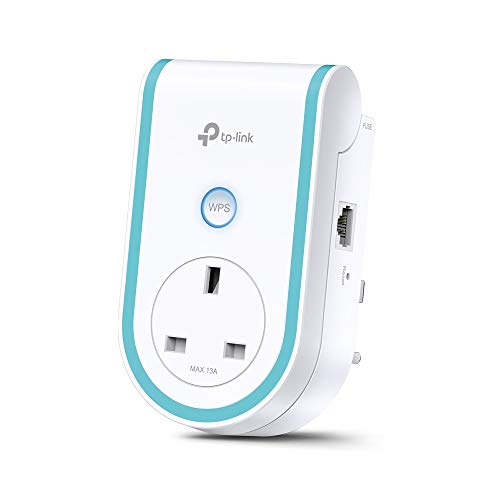
When the hall gets a good signal but the back bedroom does not, the TP-Link RE365 is built for that gap. It is a dual-band Wi-Fi 5 unit rated at 1200 Mbps, and it can join a mesh with other TP-Link devices. It handles channel widths of 80, 40 and 20, and it helps phones hand over with 802.11k and 802.11v. WPA3 covers the security side, and MU-MIMO lets several devices use it at once. Its single wired port runs at 0.1 Gbps, which is slow for a fast cable link. It is for indoor rooms only, so a house with the dead spot inside the walls is the right fit. It suits a household with a few far rooms that streams video over Wi-Fi rather than by cable.

Compare TP-Link RE365 with other products in the Wi-Fi extenders category

1Product to compare no. 1
VS
2Product to compare no. 2
VS
3Product to compare no. 3 (optional)

Graphic comparison of TP-Link RE365 and other products in the Wi-Fi extenders category

No results found