Scored using Tablets Methodology v1.0
Tablets Methodology v1.0
Mathematical & Unbiased Scoring
Products in this category are scored under Frontum Tablets Methodology v1.0: technical specifications plus authentic consumer ratings, with 0% commercial bias.
Explore Tablets Methodology v1.0

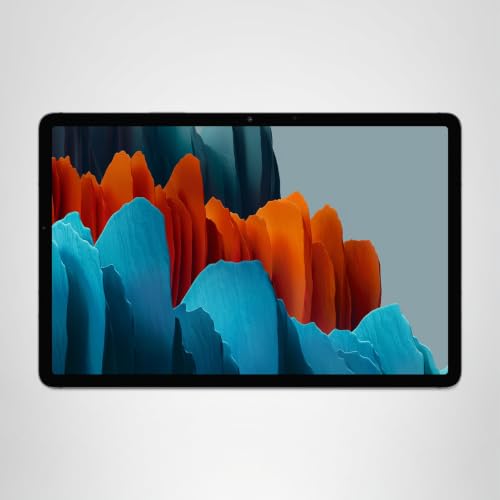
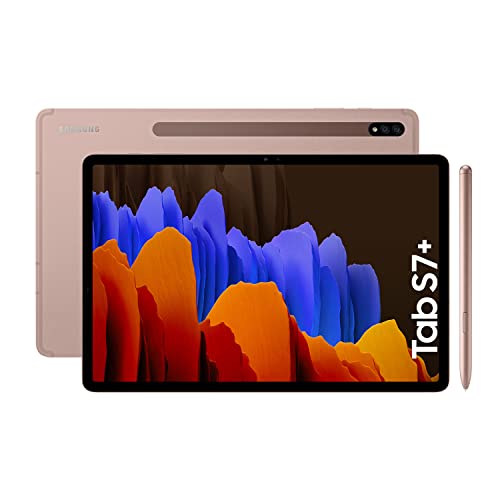
Samsung Galaxy Tab S7 Plus WiFi (6GB + 128GB) Review | 168 Data compared

Avg. price:~£790RAM capacity:6 GBInternal storage:128 GBScreen size:12.4 inchesChipset:Qualcomm Snapdragon 865+

Samsung Galaxy Tab S7 Plus WiFi (6GB + 128GB) Review: Compare 168 technical specifications and user reviews to see how this product ranks in the Tablets category and whether it is worth buying.

Samsung Galaxy Tab S7 Plus WiFi (6GB + 128GB)
8.3/10

Overall score

Score
8.3/ 10
✕
What it is
An overall evaluation of the smartphone's quality, based on technical analyses and user reviews.
When it matters
When you need a quick reference to identify the best Tablets on the market.
Score distribution
▼
<55-66-77-88-99-10
Score components

90%

8.1

Technical score

10%

9.6

User score

▲Better than 87% of tablets
7.7

Value for money

Value for money
7.7/ 10
✕
What it is
An indicator that combines the smartphone's overall rating with its cost.
When it matters
When you are looking for a smartphone with a good balance between quality and price.
Score distribution
▼
<55-66-77-88-99-10
Score components

70%

8.3

Overall score

30%

6.3

Price

▲Better than 71%
8.1

Technical score

Technical score
8.1/ 10
✕
What it is
An assessment of the smartphone's technical performance, covering eight key areas: performance & hardware, software, camera, connectivity, display, battery, audio, and design.
When it matters
When you want to compare Tablets based on technical performance and available features.
Score distribution
▼
<55-66-77-88-99-10
Score components

22%

7.9

Performance

20%

8.2

Display

16%

9.2

Camera

14%

6.6

Battery

12%

8.7

Connectivity

8%

9.1

Software & Features

5%

7.0

Design

3%

7.8

Audio & Multimedia

▲Better than 85%
9.6

User score

User score
9.6/ 10
✕
What it is
A rating that combines user reviews and the total number of reviews received by the smartphone
When it matters
When you want to know how a smartphone handles daily tasks and how reliable it remains over time according to user feedback.
Score distribution
▼
<55-66-77-88-99-10
Score components

70%

9.4

User ratings

30%

10

Number of reviews

Based on ratings from across the web.
★Better than 99%
  • samsung-galaxy-tab-s7-plus-6gb-128gb-wifi
  • samsung-galaxy-tab-s7-plus-6gb-128gb-wifi
  • samsung-galaxy-tab-s7-plus-6gb-128gb-wifi
  • samsung-galaxy-tab-s7-plus-6gb-128gb-wifi
samsung-galaxy-tab-s7-plus-6gb-128gb-wifi
Where to buy
*As an Amazon Associate, we earn from qualifying purchases.
Available versions:
Loading...
Loading category ranking...

Technical Specifications of tablet Samsung Galaxy Tab S7 Plus WiFi (6GB + 128GB)

Technical score
Technical score
8.1/ 10
✕
What it is
An assessment of the smartphone's technical performance, covering eight key areas: performance & hardware, software, camera, connectivity, display, battery, audio, and design.
When it matters
When you want to compare Tablets based on technical performance and available features.
Score distribution
▼
<55-66-77-88-99-10
Score components:

22%

7.9

Performance

20%

8.2

Display

16%

9.2

Camera

14%

6.6

Battery

12%

8.7

Connectivity

8%

9.1

Software & Features

5%

7.0

Design

3%

7.8

Audio & Multimedia

8.1
User score
User score
9.6/ 10
✕
What it is
A rating that combines user reviews and the total number of reviews received by the smartphone
When it matters
When you want to know how a smartphone handles daily tasks and how reliable it remains over time according to user feedback.
Score distribution
▼
<55-66-77-88-99-10
Score components

70%

9.4

User ratings

30%

10

Number of reviews

Based on ratings from across the web.
9.6
Popularity
Popularity
10/ 10
✕
What it is
An indicator based on the number of reviews received by the smartphone.
When it matters
When you prefer to purchase a product chosen and reviewed by many other consumers.
Score distribution
▼
<55-66-77-88-99-10
Popularity:
Samsung Galaxy Tab S7 Plus WiFi (6GB + 128GB) has a user popularity of 10 points, which is lower than 91.8% of Tablets.
10
Value for money
Value for money
7.7/ 10
✕
What it is
An indicator that combines the smartphone's overall rating with its cost.
When it matters
When you are looking for a smartphone with a good balance between quality and price.
Score distribution
▼
<55-66-77-88-99-10
Score components:

70%

8.3

Overall score

30%

6.3

Price

7.7
RAM capacity
6 GB
This tablet has a RAM capacity of 6 GB which is larger than the RAM capacity of 65.3% of tablets and equal to that of 7% of tablets.
Process node
7 nm
This tablet is built on a 7 nm process node, which is smaller than the node size used in 70.2% of tablets and equal to the node used in 6.1% of tablets.
Internal storage
128 GB
This tablet has an internal storage capacity of 128 GB which is larger than the storage of 56.7% of tablets and equal to that of 19.6% of tablets.
Geekbench 6 single-core benchmark score
1,210 points
This tablet scored 1,210 points in Geekbench 6 (single-core) which is higher than the score of 68.6% of tablets and equal to the score of 0.3% of tablets.
Chipset
Qualcomm Snapdragon 865+
This tablet uses the Qualcomm Snapdragon 865+ chipset, which is more advanced than the chipsets in 68.7% of tablets and equal to those in 0.4% of tablets.
Show more
Screen resolution
2800×1752
This tablet has a screen resolution of 2800×1752 which is higher than that of 88.1% of tablets and equal to that of 0.6% of tablets.
Refresh rate
120 Hz
This tablet supports a refresh rate of 120 Hz which is higher than in 80.4% of tablets and equal to that in 10.8% of tablets.
Display type
OLED/AMOLED
This tablet uses a OLED/AMOLED display type. 92.5% of tablets use this display technology.
Pixel density
266 ppi
This tablet has a pixel density of 266 ppi which is higher than that of 76.9% of tablets and equal to that of 0.6% of tablets.
Display glass type
Corning Gorilla Glass
This tablet uses Corning Gorilla Glass display glass which is stronger than that on 45.4% of tablets and equal to that on 32.7% of tablets.
Show more
Optical image stabilization
no
This tablet does not support optical image stabilization. 0.4% of tablets include OIS.
Main camera megapixels
13 MP
This tablet has a main camera resolution of 13 MP which is higher than that of 74% of tablets and equal to that of 21.6% of tablets.
Front camera megapixels
8 MP
This tablet has a front camera resolution of 8 MP which is higher than in 69.7% of tablets and equal to that in 19.5% of tablets.
Main camera aperture
f/2.0
This tablet has a main camera aperture of f/2.0 which is wider than that of 57.5% of tablets and equal to that of 24.5% of tablets.
Optical zoom
1xxx
This tablet supports 1xx optical zoom which is higher than in 18.4% of tablets and equal to that in 80.7% of tablets.
Show more
Battery capacity
10,090 mAh
This tablet has a battery capacity of 10,090 mAh which is larger than the batteries in 91% of tablets and equal to those in 1% of tablets.
Charging speed
45 W
This tablet supports charging speeds of 45 W which is faster than in 83.8% of tablets and equal to speeds in 6.7% of tablets.
Battery life
7 hours
This tablet has a battery life of 7 hours, which is shorter than that of 85.4% of tablets and equal to that of 5.5% of tablets.
Wireless charging
no
This tablet does not support wireless charging. 1.5% of tablets support wireless charging.
Fast charging
yes
This tablet supports fast charging. 50.4% of tablets support fast charging.
Show more
LTE support
yes
This tablet supports LTE. 36.8% of tablets include LTE connectivity.
Wi-Fi connectivity
yes
This tablet supports Wi-Fi connectivity. 0.2% of tablets offer Wi-Fi support.
GPS
yes
This tablet supports GPS. 17.3% of tablets include GPS functionality.
5G connectivity
yes
This tablet supports 5G connectivity. 89% of tablets support 5G.
NFC
no
This tablet does not support NFC. 10.9% of tablets support NFC.
Show more
Operating system
Android
This tablet uses the Android operating system, which is more advanced than the one used by 23.3%.
Update support duration
medium
This tablet offers medium update support, which is longer than the support period of 47.3% of tablets and equal to that of 32.6% of tablets.
Direct OS updates
yes
This tablet receives direct OS updates. 20.3% of tablets receive direct updates.
On-device AI
?
App tracking protection
yes
This tablet includes app tracking protection. 71.8% of tablets include app tracking protection.
Show more
IP rating
not rated
This tablet has an IP rating of not rated which is lower than that of 16.3% of tablets and equal to that of 83.7% of tablets.
Weight
575 g
This tablet weighs 575 g which is heavier than 69.8% of tablets and equal to the weight of 0.2% of tablets.
Backlit keyboard
no
This tablet does not support a backlit keyboard. 9.8% of tablets support backlit keyboards.
Keyboard accessory
yes
This tablet supports a keyboard accessory. 15.8% of tablets support this option.
Pen latency
9 ms
This tablet has a pen latency of 9 ms, which is lower than that of 43.3% of tablets and equal to that of 26.7% of tablets.
Show more
Number of microphones
?
aptX Adaptive
no
This tablet does not support aptX Adaptive. 6.9% of tablets offer this codec.
Dolby Atmos support
yes
This tablet supports Dolby Atmos. 68.6% of tablets support Dolby Atmos.
N. of speakers
4
This tablet includes 4 speakers, which is more than in 70.9% of tablets and equal to the number in 22.7% of tablets.
FM radio
no
This tablet does not include an FM radio. 19% of tablets offer FM radio functionality.
Show more

Samsung Galaxy Tab S7 Plus WiFi (6GB + 128GB) vs the average tablet

246810TotalPerformanceDisplayCameraBatteryConnectivitySoftware & FeaturesDesignAudio & Multimedia
  • 2x higher refresh rate
    This tablet has a higher refresh rate than the average tablet (120 Hz vs 60 Hz). The average tablet has refresh rate of 60 Hz.
    120 Hz vs 60 Hz
  • Better display type
    This tablet features a better display type than the average tablet (OLED/AMOLED vs IPS LCD). The average tablet uses IPS LCD display technology.
    OLED/AMOLED vs IPS LCD
  • More capable chipset
    This tablet uses the Qualcomm Snapdragon 865+ chipset, while the average tablet uses MediaTek MT8169A.
    Qualcomm Snapdragon 865+ vs MediaTek MT8169A
  • Faster storage type
    This tablet uses UFS storage, while the average tablet uses eMMC. Storage technology still varies widely across tablets.
    UFS vs eMMC
  • 53.3% larger battery capacity
    This tablet has a higher battery capacity than the average tablet (10,090 mAh vs 6,580 mAh). The average tablet battery has capacity of 6,580 mAh.
    10,090 mAh vs 6,580 mAh
  • Better GPU
    This tablet uses the Adreno 650 GPU, while the average tablet uses Mali-G51. GPU choice is one of the main performance differences between tablets.
    Adreno 650 vs Mali-G51
  • 2.5x faster charging speed
    This tablet supports faster charging than the average tablet (45 W vs 18 W). The average tablet supports charging speed of 18 W.
    45 W vs 18 W
  • Higher screen resolution
    This tablet has a higher screen resolution than the average tablet (2800×1752 vs 1920×1200). The average tablet resolution is 1920×1200.
    2800×1752 vs 1920×1200
  • 19.8% higher user score
    User score
    9.6/ 10
    ✕
    What it is
    A rating that combines user reviews and the total number of reviews received by the smartphone
    When it matters
    When you want to know how a smartphone handles daily tasks and how reliable it remains over time according to user feedback.
    Score distribution
    ▼
    ▼
    <55-66-77-88-99-10
    Samsung Galaxy Tab S7 Plus WiFi
    the average tablet
    Samsung Galaxy Tab S7 Plus WiFi (6GB + 128GB) has a higher user score than the average tablet (9.58 vs 8.000).
    9.58 vs 8
  • 2.08x more popular
    Samsung Galaxy Tab S7 Plus WiFi (6GB + 128GB) is more popular than the average tablet (10 vs 4.8).
    10 vs 4.81
  • More capable chipset
    This tablet uses the Qualcomm Snapdragon 865+ chipset, while the average tablet uses MediaTek MT8169A.
    Qualcomm Snapdragon 865+ vs MediaTek MT8169A
  • Faster storage type
    This tablet uses UFS storage, while the average tablet uses eMMC. Storage technology still varies widely across tablets.
    UFS vs eMMC
  • Better GPU
    This tablet uses the Adreno 650 GPU, while the average tablet uses Mali-G51. GPU choice is one of the main performance differences between tablets.
    Adreno 650 vs Mali-G51
  • Newer DDR memory version
    This tablet supports a newer DDR version than the average tablet (LPDDR5 vs LPDDR3). The average DDR version is LPDDR3.
    LPDDR5 vs LPDDR3
  • 2.95x higher memory bandwidth
    This tablet has a higher memory bandwidth than the average tablet (44 GB/s vs 14.9 GB/s). The average tablet has memory bandwidth of 14.9 GB/s.
    44 GB/s vs 14.9 GB/s
  • 2x more storage
    This tablet has more internal storage than the average tablet (128 GB vs 64 GB). The average tablet provides 64 GB of internal storage.
    128 GB vs 64 GB
  • 2 GB more RAM
    This tablet has more RAM capacity than the average tablet (6 GB vs 4 GB). The average tablet has 4 GB of RAM.
    6 GB vs 4 GB
  • 50% smaller process node
    This tablet uses a smaller process node than the average tablet (7 nm vs 14 nm). The average tablet uses a process node of 14 nm.
    7 nm vs 14 nm
  • 2 more CPU threads
    This tablet has more CPU threads than the average tablet (8 vs 6). The average tablet has 6 CPU threads.
    8 vs 6
  • Includes neural engine
    This tablet includes a neural engine, the average tablet does not. 25.7% of tablets include a neural engine.
  • 66% higher Geekbench 6 single-core benchmark score
    This tablet achieves a higher Geekbench 6 single-core benchmark score than the average tablet (1,210 points vs 729 points). The average tablet scores 729 points in Geekbench 6 single-core.
    1,210 points vs 729 points
  • 884 MHz faster RAM speed
    This tablet has a higher RAM speed than the average tablet (2,750 MHz vs 1,866 MHz). The average tablet has RAM speed of 1,866 MHz.
    2,750 MHz vs 1,866 MHz
  • 2x higher refresh rate
    This tablet has a higher refresh rate than the average tablet (120 Hz vs 60 Hz). The average tablet has refresh rate of 60 Hz.
    120 Hz vs 60 Hz
  • Better display type
    This tablet features a better display type than the average tablet (OLED/AMOLED vs IPS LCD). The average tablet uses IPS LCD display technology.
    OLED/AMOLED vs IPS LCD
  • Higher screen resolution
    This tablet has a higher screen resolution than the average tablet (2800×1752 vs 1920×1200). The average tablet resolution is 1920×1200.
    2800×1752 vs 1920×1200
  • 2.3 inches larger screen size
    This tablet has a higher screen size than the average tablet (12.4 inches vs 10.1 inches). The average tablet has screen size of 10.1 inches.
    12.4 inches vs 10.1 inches
  • Higher contrast ratio
    This tablet has a higher contrast ratio than the average tablet (1,000,000:1 vs 1015:1). The average tablet contrast ratio is 1015:1.
    1,000,000:1 vs 1,015:1
  • Wider color gamut
    This tablet supports a wider color gamut than the average tablet (DCI-P3 vs sRGB). The average tablet covers sRGB color gamut.
    90% DCI-P3 coverage reported.
    DCI-P3 vs sRGB
  • 18.8% higher pixel density
    This tablet has a higher pixel density than the average tablet (266 ppi vs 224 ppi). The average tablet has pixel density of 224 ppi.
    266 ppi vs 224 ppi
  • 86 nits higher peak brightness
    This tablet has a higher peak brightness than the average tablet (487 nits vs 401 nits). The average tablet reaches 401 nits peak brightness.
    487 nits vs 401 nits
  • Supports HDR10+ support
    This tablet supports HDR10+, the average tablet does not. 8% of tablets include HDR10+ support.
  • Supports HDR10 support
    This tablet supports HDR10, the average tablet does not. 21.8% of tablets are HDR10 compatible.
  • 45 ppi higher screen sharpness
    This tablet has a higher screen sharpness than the average tablet (266 ppi vs 221 ppi). The average tablet has screen sharpness of 221 ppi.
    266 ppi vs 221 ppi
  • 2x higher touch sampling rate
    This tablet has a higher touch sampling rate than the average tablet (240 Hz vs 120 Hz). The average tablet has touch sampling rate of 120 Hz.
    240 Hz vs 120 Hz
  • Better main-camera video
    This tablet supports better main-camera video recording than the average tablet (2160x30 fps vs 1080x30 fps). The average tablet supports 1080x30 fps main-camera video recording.
    2160x30 fps vs 1080x30 fps
  • 5 MP higher main camera megapixels
    This tablet has a higher main camera resolution than the average tablet (13 MP vs 8 MP). The average tablet main camera has 8 MP megapixels.
    13 MP vs 8 MP
  • 3 MP higher front camera megapixels
    This tablet has more front camera megapixels than the average tablet (8 MP vs 5 MP). The average tablet has 5 MP front camera resolution.
    8 MP vs 5 MP
  • Supports PDAF
    This tablet supports PDAF, the average tablet does not. 28.1% of tablets support PDAF.
  • Allows manual shutter speed
    This tablet allows manual shutter speed control, the average tablet does not. 21.9% of tablets offer manual shutter speed control.
  • Allows manual focus
    This tablet allows manual focus control, the average tablet does not. 37.2% of tablets include manual focus.
  • Wider front camera aperture
    This tablet has a better front camera aperture than the average tablet (f/2 vs f/2.2). The average tablet uses f/2.2 front camera aperture.
    f/2.0 vs f/2.2
  • Allows manual ISO
    This tablet allows manual ISO adjustment, the average tablet does not. 46% of tablets feature manual ISO.
  • Wider main camera aperture
    This tablet has a better main camera aperture than the average tablet (f/2 vs f/2.2). The average tablet uses f/2.2 main camera aperture.
    f/2.0 vs f/2.2
  • Includes flash
    This tablet features a built-in flash, the average tablet does not. 45.2% of tablets include a flash.
  • 53.3% larger battery capacity
    This tablet has a higher battery capacity than the average tablet (10,090 mAh vs 6,580 mAh). The average tablet battery has capacity of 6,580 mAh.
    10,090 mAh vs 6,580 mAh
  • 2.5x faster charging speed
    This tablet supports faster charging than the average tablet (45 W vs 18 W). The average tablet supports charging speed of 18 W.
    45 W vs 18 W
  • Supports fast charging
    This tablet supports fast charging, the average tablet does not. 49.7% of tablets feature fast charging.
  • Supports 5G connectivity
    This tablet supports 5G connectivity, the average tablet does not. 11.1% of tablets are 5G compatible.
  • Supports DisplayPort over USB-C
    This tablet supports DisplayPort over USB-C, the average tablet does not. 21.5% of tablets support DisplayPort over USB-C.
  • Supports eSIM
    This tablet supports eSIM, the average tablet does not. 11.5% of tablets support eSIM.
  • Newer Wi-Fi version
    This tablet supports a newer Wi-Fi version than the average tablet (Wi-Fi 6 (802.11ax) vs Wi-Fi 5 (802.11ac)). The average tablet uses Wi-Fi Wi-Fi 5 (802.11ac).
    Wi-Fi 6 (802.11ax) vs Wi-Fi 5 (802.11ac)
  • Newer USB version
    This tablet supports a newer USB version than the average tablet (USB 3.2 Gen 1 vs USB 2). The average tablet uses USB USB 2.0.
    USB 3.2 Gen 1 vs USB 2.0
  • Includes fingerprint scanner
    This tablet offers a better fingerprint scanner setup than the average tablet (yes vs no). Fingerprint scanner quality still varies a lot between tablets.
    Under-display fingerprint scanner.
  • Supports live text recognition
    This tablet supports live text recognition, the average tablet does not. 34.9% of tablets can recognize text from images.
  • Includes app tracking protection
    This tablet includes app tracking protection, the average tablet does not. 28.3% of tablets offer app tracking protection.
  • Supports dynamic theme
    This tablet features dynamic themes, the average tablet does not. 29% of tablets offer dynamic theming.
  • Supports extra dim mode
    This tablet features extra dim mode, the average tablet does not. 35.4% of tablets support extra diming.
  • Includes clipboard warnings
    This tablet has clipboard warnings, the average tablet does not. 39.9% of tablets include clipboard warnings.
    paste warning
  • Includes stylus
    This tablet includes a stylus, the average tablet does not. 16.9% of tablets come with a stylus.
  • 2.3 mm thinner
    This tablet is thinner than the average tablet (5.7 mm vs 8 mm). The average tablet is 8.0 mm thick.
    5.7 mm vs 8.0 mm
  • Suitable for drawing
    This tablet is suitable for drawing, the average tablet is not. 41% of tablets are suitable for drawing.
  • Supports stylus tilt
    This tablet supports stylus tilt, the average tablet does not. 33.6% of tablets support stylus tilt.
  • 2 more speakers
    This tablet has more speakers than the average tablet (4 vs 2). The average tablet has 2 speakers.
    4 vs 2
  • Supports Dolby Atmos
    This tablet supports Dolby Atmos, the average tablet does not. 31.5% of tablets support Dolby Atmos.
  • Supports LDAC
    This tablet supports LDAC, the average tablet does not. 25.2% of tablets support LDAC.
  • 3 hours shorter battery life
    This tablet offers shorter battery life than the average tablet (7 hours vs 10 hours). The average tablet offers 10 hours of battery life.
    7 hours vs 10 hours
  • No 3.5 mm headphone jack
    This tablet does not have a 3.5 mm headphone jack, the average tablet does. 72.9% of tablets include a headphone jack.
  • 17.3% heavier
    This tablet is heavier than the average tablet (575 g vs 490 g). The average tablet weighs 490 g.
    575 g vs 490 g
  • 3.04x more expensive
    Samsung Galaxy Tab S7 Plus WiFi (6GB + 128GB) is more expensive than the average tablet (£790 vs £260).
    £790 vs £260
  • 109.7 mm wider
    This tablet is wider than the average tablet (285 mm vs 175.3 mm). The average tablet is 175.3 mm wide.
    285.0 mm vs 175.3 mm
  • 85 mm taller
    This tablet is taller than the average tablet (285 mm vs 200 mm). The average tablet is 200.0 mm tall.
    285.0 mm vs 200.0 mm
  • 3.04x more expensive
    Samsung Galaxy Tab S7 Plus WiFi (6GB + 128GB) is more expensive than the average tablet (£790 vs £260).
    £790 vs £260
  • 3 hours shorter battery life
    This tablet offers shorter battery life than the average tablet (7 hours vs 10 hours). The average tablet offers 10 hours of battery life.
    7 hours vs 10 hours
  • 17.3% heavier
    This tablet is heavier than the average tablet (575 g vs 490 g). The average tablet weighs 490 g.
    575 g vs 490 g
  • 109.7 mm wider
    This tablet is wider than the average tablet (285 mm vs 175.3 mm). The average tablet is 175.3 mm wide.
    285.0 mm vs 175.3 mm
  • 85 mm taller
    This tablet is taller than the average tablet (285 mm vs 200 mm). The average tablet is 200.0 mm tall.
    285.0 mm vs 200.0 mm
  • No 3.5 mm headphone jack
    This tablet does not have a 3.5 mm headphone jack, the average tablet does. 72.9% of tablets include a headphone jack.

Video reviews

Hands-on testing, unboxing, and real-world video evaluations

9.0
TechOdyssey
≈ estimated
03/03/2021
Long-term review · six months of daily use
Verdict
Samsung Galaxy Tab S7 Plus WiFi is still a strong flagship Android tablet, though its battery is only okay and could be better.
9.0
Ivan Kam
≈ estimated
29/01/2021
Full review · performance, battery and display
Verdict
Samsung Galaxy Tab S7 Plus WiFi is the best Android tablet if you can afford it and like AMOLED screens.
9.0
Dad.0
≈ estimated
25/11/2020
Long-term test · one month of daily use
Verdict
Samsung Galaxy Tab S7 Plus WiFi is good for anyone not tied to Apple, especially for laptop-style work.
9.0
Thao Huynh
≈ estimated
09/10/2020
Hands-on review · Dex mode, keyboard and battery test
Verdict
Samsung Galaxy Tab S7 Plus WiFi is the best large high-end tablet available right now, though app optimisation and the keyboard have flaws.
8.0
My Next Tablet
≈ estimated
07/10/2020
Hands-on review · daily use and iPad comparison
Verdict
Samsung Galaxy Tab S7 Plus WiFi is the best Android tablet for many, but the iPad Pro remains the better overall choice.
7.0
ETA PRIME
≈ estimated
24/09/2020
Hands-on review · benchmarks, gaming, DeX and emulation
Verdict
Samsung Galaxy Tab S7 Plus WiFi is the best Android tablet so far, but not worth its price.
9.0
Mr. Phone
≈ estimated
19/09/2020
Hands-on review · gaming, battery and iPad comparison
Verdict
Samsung Galaxy Tab S7 Plus WiFi is the best Android tablet and second-best overall, though Apple's app ecosystem remains stronger.
8.0
MobileTechReview
≈ estimated
19/09/2020
Long-term review · several weeks of use and final verdict
Verdict
Samsung Galaxy Tab S7 Plus WiFi has strong hardware and build, but Android's app choice and the price make it a hard sell.
9.0
TechTablets
≈ estimated
25/08/2020
In-depth review · performance, battery, charging and DeX tests
Verdict
Samsung Galaxy Tab S7 Plus WiFi is the best Android tablet in regular use, with strong screen and gaming, but battery life and charging disappoint.
9.5
GSMArena Official
≈ estimated
17/08/2020
Hands-on review · battery, camera, display and Dex tests
Verdict
Samsung Galaxy Tab S7 Plus WiFi is the best Android tablet available, an easy pick unless you are already invested in Apple.
8.0
TheUnlockr
≈ estimated
07/08/2020
Real-world day test · battery and early impressions
Verdict
Samsung Galaxy Tab S7 Plus WiFi shows positive early impressions, with the keyboard and DeX setup standing out, though it is still very early.
8.0
TheDigitalDigest
≈ estimated
18/09/2020
First look · unboxing and early impressions
Verdict
Samsung Galaxy Tab S7 Plus WiFi is a strong tablet and one of the best money can buy, though its RAM and price are drawbacks.
More graded video reviews (2)
creator’s own scoreestimated by us

Expert reviews

In-depth analysis and verdict from leading tech publications

T
theverge.com
18/09/2020
Summary of the review
P
pcmag.com
22/12/2020
Summary of the review
W
wired.com
10/10/2020
Summary of the review
T
tomsguide.com
18/09/2020
Summary of the review
T
techradar.com
12/01/2022
Summary of the review
E
engadget.com
18/09/2020
Summary of the review
T
theverge.com
06/08/2020
Summary of the review
T
theguardian.com
28/09/2020
Summary of the review
E
expertreviews.co.uk
29/11/2022
Summary of the review
M
moorinsightsstrategy.com
22/10/2020
Summary of the review
R
radiotimes.com
21/05/2021
Summary of the review
T
trustedreviews.com
26/08/2020
Summary of the review
T
techadvisor.com
19/11/2020
Summary of the review
W
whathifi.com
27/10/2020
Summary of the review
A
androidcentral.com
13/09/2021
Summary of the review
Z
zimmergren.net
03/02/2021
Summary of the review
L
lesnumeriques.com
21/08/2020
Summary of the review
F
frandroid.com
10/05/2021
Summary of the review
P
phonandroid.com
16/11/2020
Summary of the review
J
journaldugeek.com
14/12/2020
Summary of the review

Third-party reviews

Based on ratings from across the web.
Reviews last updated: November 2026 · How we calculate this

What customers like about Samsung Galaxy Tab S7 Plus WiFi (6GB + 128GB)

  • Stunning 12.4-inch Super AMOLED display with 120Hz refresh rate and deep blacks
  • High-end performance powered by the Snapdragon 865 Plus processor for lag-free multitasking
  • Low-latency S Pen included in the box, providing a natural writing and sketching experience
  • Impressive quad-speaker system tuned by AKG with Dolby Atmos support
  • Premium, slim aluminum build that feels solid and well-distributed
  • Samsung DeX mode offers a functional desktop-like interface for productivity
  • Supports 45W fast charging for quicker power-ups

What customers don't like about Samsung Galaxy Tab S7 Plus WiFi (6GB + 128GB)

  • Android app ecosystem is not fully optimized for large tablet screens compared to iPadOS
  • Optional Book Cover Keyboard is expensive and can feel flimsy or unstable on a lap
  • Magnetic S Pen attachment on the back is considered awkward and easy to dislodge
  • Battery life can drain significantly when using 120Hz mode or heavy DeX multitasking
  • Only a 15W charger is included in the box despite supporting 45W speeds
  • Lacks a 3.5mm headphone jack and an official IP rating for water resistance
  • In-screen fingerprint sensor can sometimes be inconsistent or slow

Verdict

The Samsung Galaxy Tab S7 Plus WiFi (6GB + 128GB) is a high-performance Android tablet featuring a 12.4-inch Super AMOLED display with a 2800 x 1752 resolution and a smooth 120Hz refresh rate. It is powered by the Qualcomm Snapdragon 865 Plus processor, offering 128GB of internal storage (expandable via microSD) and 6GB of RAM, all housed in a slim 5.7mm aluminum chassis. Key pros include the included low-latency S Pen, deep black levels typical of OLED technology, immersive quad AKG-tuned speakers, and a large 10,090mAh battery that supports 45W fast charging. However, notable cons include the lack of a 3.5mm headphone jack, the absence of an included 45W charger in the box (only 15W is provided), and the fact that it has reached the end of its official software update support cycle as of late 2024.

Compare Samsung Galaxy Tab S7 Plus WiFi (6GB + 128GB) with other tablets

1Product to compare no. 1
VS
2Product to compare no. 2
VS
3Product to compare no. 3 (optional)

Graphic comparison of Samsung Galaxy Tab S7 Plus WiFi (6GB + 128GB) and other tablets

No results found