Scored using Tablets Methodology v1.0
Tablets Methodology v1.0
Mathematical & Unbiased Scoring
Products in this category are scored under Frontum Tablets Methodology v1.0: technical specifications plus authentic consumer ratings, with 0% commercial bias.
Explore Tablets Methodology v1.0

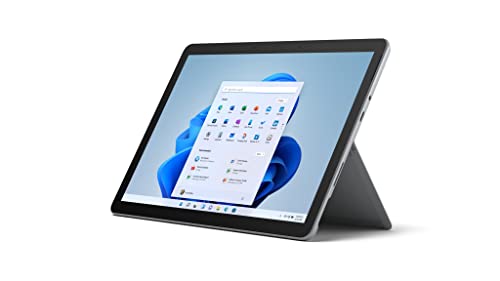
Microsoft Surface Go 3 4G (4GB + 64GB) Review | 168 Data compared

Avg. price:~£440RAM capacity:4 GBInternal storage:64 GBScreen size:10.5 inchesChipset:Qualcomm Snapdragon X16

Microsoft Surface Go 3 4G (4GB + 64GB) Review: Compare 168 technical specifications and user reviews to see how this product ranks in the Tablets category and whether it is worth buying.
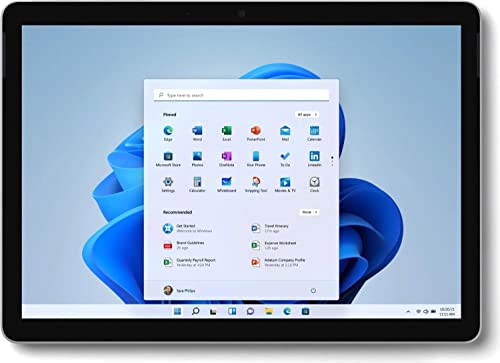
Microsoft Surface Go 3 4G (4GB + 64GB)
6.7/10

Overall score

Score
6.7/ 10
✕
What it is
An overall evaluation of the smartphone's quality, based on technical analyses and user reviews.
When it matters
When you need a quick reference to identify the best Tablets on the market.
Score distribution
▼
<55-66-77-88-99-10
Score components

90%

6.6

Technical score

10%

7.4

User score

▲Better than 61% of tablets
7.1

Value for money

Value for money
7.1/ 10
✕
What it is
An indicator that combines the smartphone's overall rating with its cost.
When it matters
When you are looking for a smartphone with a good balance between quality and price.
Score distribution
▼
<55-66-77-88-99-10
Score components

70%

6.7

Overall score

30%

8.2

Price

▼Worse than 52%
6.6

Technical score

Technical score
6.6/ 10
✕
What it is
An assessment of the smartphone's technical performance, covering eight key areas: performance & hardware, software, camera, connectivity, display, battery, audio, and design.
When it matters
When you want to compare Tablets based on technical performance and available features.
Score distribution
▼
<55-66-77-88-99-10
Score components

22%

6.0

Performance

20%

5.4

Display

16%

7.0

Camera

14%

5.6

Battery

12%

8.5

Connectivity

8%

8.8

Software & Features

5%

7.1

Design

3%

5.7

Audio & Multimedia

▲Better than 61%
7.4

User score

User score
7.4/ 10
✕
What it is
A rating that combines user reviews and the total number of reviews received by the smartphone
When it matters
When you want to know how a smartphone handles daily tasks and how reliable it remains over time according to user feedback.
Score distribution
▼
<55-66-77-88-99-10
Score components

70%

8.1

User ratings

30%

5.9

Number of reviews

Based on ratings from across the web.
▼Worse than 78%
  • microsoft-surface-go-3-4gb-64gb-4g
  • microsoft-surface-go-3-4gb-64gb-4g
  • microsoft-surface-go-3-4gb-64gb-4g
  • microsoft-surface-go-3-4gb-64gb-4g
microsoft-surface-go-3-4gb-64gb-4g
Where to buy
*As an Amazon Associate, we earn from qualifying purchases.
Loading...
Loading category ranking...

Technical Specifications of tablet Microsoft Surface Go 3 4G (4GB + 64GB)

Technical score
Technical score
6.6/ 10
✕
What it is
An assessment of the smartphone's technical performance, covering eight key areas: performance & hardware, software, camera, connectivity, display, battery, audio, and design.
When it matters
When you want to compare Tablets based on technical performance and available features.
Score distribution
▼
<55-66-77-88-99-10
Score components:

22%

6.0

Performance

20%

5.4

Display

16%

7.0

Camera

14%

5.6

Battery

12%

8.5

Connectivity

8%

8.8

Software & Features

5%

7.1

Design

3%

5.7

Audio & Multimedia

6.6
User score
User score
7.4/ 10
✕
What it is
A rating that combines user reviews and the total number of reviews received by the smartphone
When it matters
When you want to know how a smartphone handles daily tasks and how reliable it remains over time according to user feedback.
Score distribution
▼
<55-66-77-88-99-10
Score components

70%

8.1

User ratings

30%

5.9

Number of reviews

Based on ratings from across the web.
7.4
Popularity
Popularity
5.9/ 10
✕
What it is
An indicator based on the number of reviews received by the smartphone.
When it matters
When you prefer to purchase a product chosen and reviewed by many other consumers.
Score distribution
▼
<55-66-77-88-99-10
Popularity:
Microsoft Surface Go 3 4G (4GB + 64GB) has a user popularity of 5.9 points, which is lower than 58.1% of Tablets.
5.9
Value for money
Value for money
7.1/ 10
✕
What it is
An indicator that combines the smartphone's overall rating with its cost.
When it matters
When you are looking for a smartphone with a good balance between quality and price.
Score distribution
▼
<55-66-77-88-99-10
Score components:

70%

6.7

Overall score

30%

8.2

Price

7.1
RAM capacity
4 GB
This tablet has a RAM capacity of 4 GB which is larger than the RAM capacity of 47.6% of tablets and equal to that of 17.6% of tablets.
Process node
14 nm
This tablet is built on a 14 nm process node, which is smaller than the node size used in 45% of tablets and equal to the node used in 8.6% of tablets.
Internal storage
64 GB
This tablet has an internal storage capacity of 64 GB which is larger than the storage of 39.5% of tablets and equal to that of 17.1% of tablets.
Geekbench 6 single-core benchmark score
961 points
This tablet scored 961 points in Geekbench 6 (single-core) which is higher than the score of 57.6% of tablets and equal to the score of 0.1% of tablets.
Chipset
Qualcomm Snapdragon X16
This tablet uses the Qualcomm Snapdragon X16 chipset, which is less advanced than the chipsets in 100% of tablets.
Show more
Screen resolution
1920×1280
This tablet has a screen resolution of 1920×1280 which is higher than that of 66.4% of tablets and equal to that of 1.1% of tablets.
Refresh rate
60 Hz
This tablet supports a refresh rate of 60 Hz which is equal to that in 73.8% of tablets.
Display type
IPS LCD
This tablet uses a IPS LCD display type. 17% of tablets use this display technology.
Pixel density
220 ppi
This tablet has a pixel density of 220 ppi which is lower than that of 50.2% of tablets and equal to that of 1.6% of tablets.
Display glass type
Corning Gorilla Glass 3
This tablet uses Corning Gorilla Glass 3 display glass which is stronger than that on 80.1% of tablets and equal to that on 11.2% of tablets.
Show more
Optical image stabilization
no
This tablet does not support optical image stabilization. 0.4% of tablets include OIS.
Main camera megapixels
8 MP
This tablet has a main camera resolution of 8 MP which is higher than that of 36.5% of tablets and equal to that of 31.8% of tablets.
Front camera megapixels
5 MP
This tablet has a front camera resolution of 5 MP which is higher than in 48.8% of tablets and equal to that in 19.6% of tablets.
Main camera aperture
f/1.8
This tablet has a main camera aperture of f/1.8 which is wider than that of 85.9% of tablets and equal to that of 14.1% of tablets.
Optical zoom
1xxx
This tablet supports 1xx optical zoom which is higher than in 18.4% of tablets and equal to that in 80.7% of tablets.
Show more
Battery capacity
8,000 mAh
This tablet has a battery capacity of 8,000 mAh which is larger than the batteries in 70.6% of tablets and equal to those in 3.9% of tablets.
Charging speed
24 W
This tablet supports charging speeds of 24 W which is faster than in 69% of tablets and equal to speeds in 1.4% of tablets.
Battery life
7 hours
This tablet has a battery life of 7 hours, which is shorter than that of 85.4% of tablets and equal to that of 5.5% of tablets.
Wireless charging
no
This tablet does not support wireless charging. 1.5% of tablets support wireless charging.
Fast charging
yes
This tablet supports fast charging. 50.4% of tablets support fast charging.
Show more
LTE support
yes
This tablet supports LTE. 36.8% of tablets include LTE connectivity.
Wi-Fi connectivity
yes
This tablet supports Wi-Fi connectivity. 0.2% of tablets offer Wi-Fi support.
GPS
yes
This tablet supports GPS. 17.3% of tablets include GPS functionality.
5G connectivity
no
This tablet does not support 5G connectivity. 11.1% of tablets support 5G.
NFC
yes
This tablet supports NFC. 89.1% of tablets support NFC.
Show more
Operating system
Windows
This tablet uses the Windows operating system, which is less advanced than the one used by 84.1%.
Update support duration
long
This tablet offers long update support, which is longer than the support period of 80% of tablets and equal to that of 20% of tablets.
Direct OS updates
yes
This tablet receives direct OS updates. 20.3% of tablets receive direct updates.
On-device AI
no
This tablet does not support on-device AI. 28.3% of tablets support this capability.
App tracking protection
yes
This tablet includes app tracking protection. 71.8% of tablets include app tracking protection.
Show more
IP rating
not rated
This tablet has an IP rating of not rated which is lower than that of 16.3% of tablets and equal to that of 83.7% of tablets.
Weight
553 g
This tablet weighs 553 g which is heavier than 65.7% of tablets and equal to the weight of 0.1% of tablets.
Backlit keyboard
yes
This tablet supports a backlit keyboard. 90.3% of tablets support backlit keyboards.
Keyboard accessory
yes
This tablet supports a keyboard accessory. 15.8% of tablets support this option.
Pen latency
?
Show more
Number of microphones
2
This tablet includes 2 microphones, which is more than in 55.1% of tablets and equal to the number in 32.7% of tablets.
aptX Adaptive
no
This tablet does not support aptX Adaptive. 6.9% of tablets offer this codec.
Dolby Atmos support
no
This tablet does not support Dolby Atmos. 31.5% of tablets support Dolby Atmos.
N. of speakers
2
This tablet includes 2 speakers, which is more than in 9.8% of tablets and equal to the number in 60.9% of tablets.
FM radio
no
This tablet does not include an FM radio. 19% of tablets offer FM radio functionality.
Show more

Microsoft Surface Go 3 4G (4GB + 64GB) vs the average tablet

246810TotalPerformanceDisplayCameraBatteryConnectivitySoftware & FeaturesDesignAudio & Multimedia
  • 95% higher CPU speed
    This tablet has a higher CPU speed than the average tablet (3.9 GHz vs 2 GHz). The average tablet has CPU speed of 2 GHz.
    3.9 GHz vs 2 GHz
  • Wider main camera aperture
    This tablet has a better main camera aperture than the average tablet (f/1.8 vs f/2.2). The average tablet uses f/2.2 main camera aperture.
    f/1.8 vs f/2.2
  • Supports DisplayPort over USB-C
    This tablet supports DisplayPort over USB-C, the average tablet does not. 21.5% of tablets support DisplayPort over USB-C.
  • Supports fast charging
    This tablet supports fast charging, the average tablet does not. 49.7% of tablets feature fast charging.
  • Longer update support
    This tablet offers longer update support than the average tablet (long vs medium). The average tablet gets medium of update support.
    long vs medium
  • Supports eSIM
    This tablet supports eSIM, the average tablet does not. 11.5% of tablets support eSIM.
  • Supports NFC
    This tablet has NFC support, the average tablet does not. 10.9% of tablets include NFC.
  • Wider front camera aperture
    This tablet has a better front camera aperture than the average tablet (f/2 vs f/2.2). The average tablet uses f/2.2 front camera aperture.
    f/2.0 vs f/2.2
  • 95% higher CPU speed
    This tablet has a higher CPU speed than the average tablet (3.9 GHz vs 2 GHz). The average tablet has CPU speed of 2 GHz.
    3.9 GHz vs 2 GHz
  • Supports multithreading
    This tablet supports multithreading, the average tablet does not. 0.00% of tablets support multithreading.
  • 19 more GPU execution units
    This tablet has more GPU execution units than the average tablet (23 vs 4). The average tablet has 4 GPU execution units.
    23 vs 4
  • 2x higher memory bandwidth
    This tablet has a higher memory bandwidth than the average tablet (29.8 GB/s vs 14.9 GB/s). The average tablet has memory bandwidth of 14.9 GB/s.
    29.8 GB/s vs 14.9 GB/s
  • 30.8% faster GPU clock
    This tablet has a higher GPU frequency than the average tablet (850 MHz vs 650 MHz). The average tablet has GPU frequency of 650 MHz.
    850 MHz vs 650 MHz
  • 31.8% higher Geekbench 6 single-core benchmark score
    This tablet achieves a higher Geekbench 6 single-core benchmark score than the average tablet (961 points vs 729 points). The average tablet scores 729 points in Geekbench 6 single-core.
    961 points vs 729 points
  • Higher contrast ratio
    This tablet has a higher contrast ratio than the average tablet (1500:1 vs 1015:1). The average tablet contrast ratio is 1015:1.
    1,500:1 vs 1,015:1
  • Higher screen resolution
    This tablet has a higher screen resolution than the average tablet (1920×1280 vs 1920×1200). The average tablet resolution is 1920×1200.
    1920×1280 vs 1920×1200
  • 0.4 inches larger screen size
    This tablet has a higher screen size than the average tablet (10.5 inches vs 10.1 inches). The average tablet has screen size of 10.1 inches.
    10.5 inches vs 10.1 inches
  • More durable display glass
    This tablet uses better display glass than the average tablet (Corning Gorilla Glass 3 vs Corning Gorilla Glass). Display glass choice still varies across tablets.
    Corning Gorilla Glass 3 vs Corning Gorilla Glass
  • 2 nits higher typical brightness
    This tablet has a higher typical brightness than the average tablet (402 nits vs 400 nits). The average tablet reaches 400 nits typical brightness.
    402 nits vs 400 nits
  • Wider main camera aperture
    This tablet has a better main camera aperture than the average tablet (f/1.8 vs f/2.2). The average tablet uses f/2.2 main camera aperture.
    f/1.8 vs f/2.2
  • Wider front camera aperture
    This tablet has a better front camera aperture than the average tablet (f/2 vs f/2.2). The average tablet uses f/2.2 front camera aperture.
    f/2.0 vs f/2.2
  • Allows manual ISO
    This tablet allows manual ISO adjustment, the average tablet does not. 46% of tablets feature manual ISO.
  • Supports fast charging
    This tablet supports fast charging, the average tablet does not. 49.7% of tablets feature fast charging.
  • Includes battery health monitoring
    This tablet features battery health monitoring, the average tablet does not. 37% of tablets include battery health tools.
  • 21.6% larger battery capacity
    This tablet has a higher battery capacity than the average tablet (8,000 mAh vs 6,580 mAh). The average tablet battery has capacity of 6,580 mAh.
    8,000 mAh vs 6,580 mAh
  • 33.3% faster charging speed
    This tablet supports faster charging than the average tablet (24 W vs 18 W). The average tablet supports charging speed of 18 W.
    24 W vs 18 W
  • Supports DisplayPort over USB-C
    This tablet supports DisplayPort over USB-C, the average tablet does not. 21.5% of tablets support DisplayPort over USB-C.
  • Supports eSIM
    This tablet supports eSIM, the average tablet does not. 11.5% of tablets support eSIM.
  • Supports NFC
    This tablet has NFC support, the average tablet does not. 10.9% of tablets include NFC.
  • Newer Wi-Fi version
    This tablet supports a newer Wi-Fi version than the average tablet (Wi-Fi 6 (802.11ax) vs Wi-Fi 5 (802.11ac)). The average tablet uses Wi-Fi Wi-Fi 5 (802.11ac).
    Wi-Fi 6 (802.11ax) vs Wi-Fi 5 (802.11ac)
  • Longer update support
    This tablet offers longer update support than the average tablet (long vs medium). The average tablet gets medium of update support.
    long vs medium
  • Includes app tracking protection
    This tablet includes app tracking protection, the average tablet does not. 28.3% of tablets offer app tracking protection.
  • Allows app offloading
    This tablet allows app offloading, the average tablet does not. 26.4% of tablets support app offloading.
  • Supports dynamic theme
    This tablet features dynamic themes, the average tablet does not. 29% of tablets offer dynamic theming.
  • Includes clipboard warnings
    This tablet has clipboard warnings, the average tablet does not. 39.9% of tablets include clipboard warnings.
  • Suitable for drawing
    This tablet is suitable for drawing, the average tablet is not. 41% of tablets are suitable for drawing.
  • Includes backlit keyboard
    This tablet has a backlit keyboard, the average tablet does not. 9.8% of tablets offer a backlit keyboard.
  • Supports stylus tilt
    This tablet supports stylus tilt, the average tablet does not. 33.6% of tablets support stylus tilt.
  • Designed for kids
    This tablet is suitable for kids, the average tablet is not. 23.7% of tablets are suitable for kids.
  • 1 more microphone/s
    This tablet has more microphones than the average tablet (2 vs 1). The average tablet has 1 microphones.
    2 vs 1
  • 3 hours shorter battery life
    This tablet offers shorter battery life than the average tablet (7 hours vs 10 hours). The average tablet offers 10 hours of battery life.
    7 hours vs 10 hours
  • Less advanced operating system
    This tablet runs on a less advanced operating system than the average tablet (Windows vs Android). Operating system choice shapes app support, updates, and ecosystem features.
    Windows vs Android
  • 81 nits lower peak brightness
    This tablet has a lower peak brightness than the average tablet (320 nits vs 401 nits). The average tablet reaches 401 nits peak brightness.
    320 nits vs 401 nits
  • No HDR photo mode
    This tablet does not have HDR photo mode, the average tablet does. 79.6% of tablets support HDR photo mode.
  • No manual white balance
    This tablet does not allow manual white balance adjustments, the average tablet does. 51.6% of tablets include white balance controls.
  • No burst mode
    This tablet does not support burst mode, the average tablet does. 60.5% of tablets support burst mode.
  • 2 fewer CPU threads
    This tablet has less CPU threads than the average tablet (4 vs 6). The average tablet has 6 CPU threads.
    4 vs 6
  • No big.LITTLE architecture
    This tablet does not use a big.LITTLE architecture, the average tablet does. 51.3% of tablets use a big.LITTLE architecture.
  • 69.2% more expensive
    Microsoft Surface Go 3 4G (4GB + 64GB) is more expensive than the average tablet (£440 vs £260).
    £440 vs £260
  • 8% lower user score
    User score
    7.4/ 10
    ✕
    What it is
    A rating that combines user reviews and the total number of reviews received by the smartphone
    When it matters
    When you want to know how a smartphone handles daily tasks and how reliable it remains over time according to user feedback.
    Score distribution
    ▼▼
    <55-66-77-88-99-10
    Microsoft Surface Go 3 4G
    the average tablet
    Microsoft Surface Go 3 4G (4GB + 64GB) has a lower user score than the average tablet (7.41 vs 8.000).
    7.41 vs 8
  • 2 fewer CPU threads
    This tablet has less CPU threads than the average tablet (4 vs 6). The average tablet has 6 CPU threads.
    4 vs 6
  • No big.LITTLE architecture
    This tablet does not use a big.LITTLE architecture, the average tablet does. 51.3% of tablets use a big.LITTLE architecture.
  • Less capable chipset
    This tablet uses the Qualcomm Snapdragon X16 chipset, while the average tablet uses the newer MediaTek MT8169A.
    Qualcomm Snapdragon X16 vs MediaTek MT8169A
  • 81 nits lower peak brightness
    This tablet has a lower peak brightness than the average tablet (320 nits vs 401 nits). The average tablet reaches 401 nits peak brightness.
    320 nits vs 401 nits
  • 1.8% lower pixel density
    This tablet has a lower pixel density than the average tablet (220 ppi vs 224 ppi). The average tablet has pixel density of 224 ppi.
    220 ppi vs 224 ppi
  • No HDR photo mode
    This tablet does not have HDR photo mode, the average tablet does. 79.6% of tablets support HDR photo mode.
  • No manual white balance
    This tablet does not allow manual white balance adjustments, the average tablet does. 51.6% of tablets include white balance controls.
  • No burst mode
    This tablet does not support burst mode, the average tablet does. 60.5% of tablets support burst mode.
  • 3 hours shorter battery life
    This tablet offers shorter battery life than the average tablet (7 hours vs 10 hours). The average tablet offers 10 hours of battery life.
    7 hours vs 10 hours
  • Less advanced operating system
    This tablet runs on a less advanced operating system than the average tablet (Windows vs Android). Operating system choice shapes app support, updates, and ecosystem features.
    Windows vs Android
  • No full-page screenshots
    This tablet does not support full-page screenshots, the average tablet does. 52.5% of tablets support full-page screenshots.
  • 12.9% heavier
    This tablet is heavier than the average tablet (553 g vs 490 g). The average tablet weighs 490 g.
    553 g vs 490 g

Video reviews

Hands-on testing, unboxing, and real-world video evaluations

8.0
ITEACH Skillz
≈ estimated
31/07/2024
Hands-on review · pen, keyboard and everyday use
Verdict
Microsoft Surface Go 3 4G is a good choice for everyday users who want full Windows in a tablet form.
7.0
Silence Tech Reviews
≈ estimated
07/07/2023
Follow-up test · Windows 10 install and benchmarks
Verdict
Microsoft Surface Go 3 4G runs Windows 10 well, though its write speeds are a bit lackluster.
7.0
Silence Tech Reviews
≈ estimated
30/06/2023
Hands-on review · benchmarks and multitasking tests
Verdict
Microsoft Surface Go 3 4G is a good light-use travel companion, but a steep price for limited power.
8.0
innoiso
≈ estimated
11/04/2022
Long-term review · two months of use
Verdict
Microsoft Surface Go 3 4G is a great mobile Windows tablet, but its limited performance rules it out as a sole student device.
8.0
Silence Tech Reviews
≈ estimated
25/01/2022
Hands-on review · video playback and side-by-side tests
Verdict
Microsoft Surface Go 3 4G is a very useful tablet we recommend, though it's not a big upgrade over older Go models.
7.0
SoulOfTech
≈ estimated
24/10/2021
Hands-on review · battery, display and performance tests
Verdict
Microsoft Surface Go 3 4G is a mixed bag: premium build and display, but weak battery and performance for heavier tasks.
5.0
The Tech Chap
≈ estimated
22/10/2021
Hands-on review · performance, battery and design tests
Verdict
Microsoft Surface Go 3 4G isn't worth it over the Go 2; a regular laptop is better for most people.
Not graded yet
Not graded yet
Not graded yet
Not graded yet
Not graded yet

Expert reviews

In-depth analysis and verdict from leading tech publications

Z
zdnet.com
15/11/2021
Summary of the review
T
tomsguide.com
12/10/2021
Summary of the review
T
theguardian.com
25/10/2021
Summary of the review
R
rtings.com
09/02/2022
Summary of the review
L
laptopmag.com
12/04/2022
Summary of the review
T
t3.com
13/09/2022
Summary of the review
R
reviewed.com
11/10/2021
Summary of the review
U
uk.pcmag.com
05/10/2021
Summary of the review
P
pcmag.com
05/10/2021
Summary of the review
I
itpro.com
21/02/2022
Summary of the review
T
techadvisor.com
09/12/2021
Summary of the review
T
theverge.com
07/10/2021
Summary of the review
E
expertreviews.co.uk
14/07/2022
Summary of the review
L
lesnumeriques.com
18/11/2021
Summary of the review
F
frandroid.com
19/11/2021
Summary of the review
0
01net.com
15/11/2021
Summary of the review
P
phonandroid.com
22/11/2021
Summary of the review
C
cnetfrance.fr
10/02/2022
Summary of the review
N
notebookcheck.biz
21/10/2021
Summary of the review
L
lesnumeriques.com
22/09/2021
Summary of the review

Third-party reviews

Based on ratings from across the web.
Reviews last updated: November 2026 · How we calculate this

What customers like about Microsoft Surface Go 3 4G (4GB + 64GB)

  • Extreme portability and lightweight design (approx. 1.2 lbs), making it ideal for travel and fieldwork.
  • Seamless 4G LTE connectivity provides 'digital freedom' for remote work without relying on Wi-Fi.
  • High-quality 10.5-inch PixelSense display with vivid colors and sharp 1920 x 1280 resolution.
  • Excellent 1080p front-facing webcam and clear microphones, considered best-in-class for video calls.
  • Premium build quality with a sturdy, highly adjustable integrated kickstand.
  • Windows Hello facial recognition is fast, reliable, and convenient for secure logins.

What customers don't like about Microsoft Surface Go 3 4G (4GB + 64GB)

  • Disappointing battery life, often lasting only 5–7 hours, which is a regression from the Surface Go 2.
  • Underwhelming performance on the base Pentium model; experts strongly recommend the Core i3 version for basic multitasking.
  • Essential accessories like the Type Cover keyboard and Surface Pen must be purchased separately, significantly increasing the total cost.
  • Limited port selection with only one USB-C port, often requiring additional dongles or docks.
  • 4GB RAM configuration is widely considered inadequate for a smooth Windows 11 experience in 2025.
  • Slow charging times, with a full charge taking over three hours using the included adapter.

Verdict

The Microsoft Surface Go 3 with 4G LTE Advanced is a highly portable 2-in-1 tablet featuring a 10.5-inch PixelSense touchscreen with a 1920 x 1280 resolution and 3:2 aspect ratio. This specific model is powered by the dual-core Intel Pentium Gold 6500Y processor, paired with 4GB of LPDDR3 RAM and 64GB of eMMC storage, housed in a premium magnesium alloy chassis with a built-in adjustable kickstand. Main pros include its exceptionally lightweight design (starting at 544g), high-quality 1080p front and 8MP rear cameras for video conferencing, and the flexibility of on-the-go cellular connectivity. However, notable cons include sluggish performance for multitasking due to the limited 4GB of RAM and slower eMMC storage, a relatively short real-world battery life compared to competitors, and the fact that essential accessories like the Type Cover and Surface Pen are typically sold separately.

Compare Microsoft Surface Go 3 4G (4GB + 64GB) with other tablets

1Product to compare no. 1
VS
2Product to compare no. 2
VS
3Product to compare no. 3 (optional)

Graphic comparison of Microsoft Surface Go 3 4G (4GB + 64GB) and other tablets

No results found