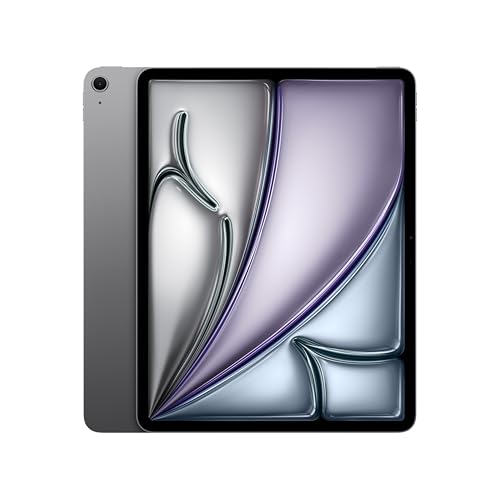
Apple iPad Air 13 2024 (8GB + 128GB) review. Compare 168 technical specifications and user reviews to see how this product ranks in the Tablets category and whether it is worth buying.
Overall score
What it is: An overall evaluation of the smartphone's quality, based on technical analyses and user reviews.
When it matters: When you need a quick reference to identify the best Tablets on the market.
Score components:
90.0%
Technical Score
10.0%
User score
Technical Score
What it is: An assessment of the smartphone's technical performance, covering eight key areas: performance & hardware, software, camera, connectivity, display, battery, audio, and design.
When it matters: When you want to compare Tablets based on technical performance and available features.
Score components:
22.0%
Performance
20.0%
Display
16.0%
Camera
14.0%
Battery
12.0%
Connectivity
8.0%
Software & Features
5.0%
Design
3.0%
Audio & Multimedia
User score
What it is: A rating that combines user reviews and the total number of reviews received by the smartphone
When it matters: When you want to know how a smartphone handles daily tasks and how reliable it remains over time according to user feedback.
Score components:
70.0%
User reviews
30.0%
Popularity
Score components:
25.0%
RAM capacity
20.0%
Refresh rate
20.0%
GPU frequency
20.0%
Chipset
15.0%
Battery capacity
Score components:
20.0%
Chipset
20.0%
Battery life
20.0%
RAM capacity
10.0%
Weight
10.0%
Internal storage
10.0%
Keyboard accessory
10.0%
Screen size
Score components:
30.0%
RAM capacity
25.0%
Chipset
20.0%
Internal storage
15.0%
Screen size
5.0%
Keyboard accessory
5.0%
Stylus included
Score components:
20.0%
Screen size
20.0%
Battery life
20.0%
Weight
20.0%
RAM capacity
20.0%
Chipset
Score components:
25.0%
Battery capacity
25.0%
RAM capacity
15.0%
Weight
15.0%
Internal storage
10.0%
Screen size
10.0%
Price
Score components:
20.0%
RAM capacity
20.0%
Battery life
15.0%
Chipset
15.0%
Weight
10.0%
Cellular module
10.0%
5G connectivity
5.0%
GPS
5.0%
Internal storage
Available: ranking among products currently available (including other versions of this product).
All: ranking among all products in the database.
#8 in Best 13-inch Tablets
#8 in Best Apple Tablets
#14 in Best Tablets For Work
#30 in Best Tablets With SIM Card
#32 in Best Large Screen Tablets
#36 in Best 5G Tablets
#53 in Best Tablets For Drawing
#53 in Best Tablets With Keyboard
#54 in Best Tablets
What it is: An assessment of the smartphone's technical performance, covering eight key areas: performance & hardware, software, camera, connectivity, display, battery, audio, and design.
When it matters: When you want to compare Tablets based on technical performance and available features.
Score components:
22.0%
Performance
20.0%
Display
16.0%
Camera
14.0%
Battery
12.0%
Connectivity
8.0%
Software & Features
5.0%
Design
3.0%
Audio & Multimedia
What it is: A rating that combines user reviews and the total number of reviews received by the smartphone
When it matters: When you want to know how a smartphone handles daily tasks and how reliable it remains over time according to user feedback.
Score components:
70.0%
User reviews
30.0%
Popularity
What it is: An indicator that combines the smartphone's overall rating with its cost.
When it matters: When you are looking for a smartphone with a good balance between quality and price.
Score components:
60.0%
Overall score
40.0%
Price
Importance: MEDIUM
Good value: >=8 GB
Importance: LOW
Good value: <7 nm
Importance: MEDIUM
Good value: >=128 GB
Importance: MEDIUM
Good value: >1300
Importance: MEDIUM
Importance: MEDIUM
Importance: MEDIUM
Importance: MEDIUM
Good value: >3500
Importance: LOW
Good value: >=8 GB
Importance: LOW
Good value: 5
Importance: LOW
Good value: >20 GB/s
Importance: LOW
Importance: LOW
Good value: >7 W
Importance: LOW
Good value: >2500
Importance: LOW
Good value: >800
Importance: LOW
Good value: >8
Importance: LOW
Good value: >900 MHz
Importance: LOW
Importance: LOW
Good value: >3000
Importance: LOW
Good value: >1200
Importance: LOW
Good value: >3200 MHz
Importance: LOW
Good value: >400
Importance: LOW
Importance: LOW
Good value: 8+
Importance: LOW
Importance: LOW
Good value: >800 MHz
Importance: MEDIUM
Importance: LOW
Importance: LOW
Good value: >10000 million
Importance: LOW
Good value: >=4 MB
Importance: LOW
Good value: >64 KB
Importance: LOW
Good value: >=1 MB
Importance: LOW
Importance: LOW
Good value: 4
Importance: LOW
Good value: >=512 GB
Importance: LOW
Good value: 2.0/3.0
Importance: LOW
Good value: 3.2
Importance: LOW
Good value: 3.3
Importance: LOW
Importance: MEDIUM
Importance: MEDIUM
Good value: >=120 Hz
Importance: HIGH
Importance: MEDIUM
Good value: >250 ppi
Importance: LOW
Importance: MEDIUM
Good value: >500 nits
Importance: MEDIUM
Good value: >=11 inches
Importance: LOW
Importance: LOW
Good value: >120 Hz
Importance: LOW
Importance: LOW
Importance: LOW
Importance: LOW
Good value: >200 Hz
Importance: LOW
Good value: >250 ppi
Importance: MEDIUM
Good value: >400 nits
Importance: LOW
Importance: LOW
Importance: LOW
Importance: LOW
Importance: LOW
Importance: MEDIUM
Importance: HIGH
Good value: >=8 MP
Importance: LOW
Importance: LOW
Importance: MEDIUM
Importance: MEDIUM
Importance: LOW
Importance: LOW
Importance: LOW
Importance: LOW
Importance: LOW
Importance: LOW
Importance: LOW
Importance: LOW
Importance: LOW
Importance: LOW
Importance: LOW
Importance: LOW
Importance: LOW
Importance: LOW
Importance: LOW
Importance: LOW
Importance: LOW
Importance: LOW
Importance: LOW
Importance: LOW
Importance: LOW
Importance: LOW
Importance: LOW
Importance: LOW
Importance: LOW
Importance: MEDIUM
Good value: >8000 mAh
Importance: MEDIUM
Good value: >30 W
Importance: HIGH
Good value: >10 hours
Importance: LOW
Importance: LOW
Importance: LOW
Importance: LOW
Importance: LOW
Importance: MEDIUM
Importance: LOW
Importance: LOW
Importance: LOW
Importance: LOW
Importance: LOW
Importance: LOW
Importance: LOW
Importance: LOW
Importance: LOW
Importance: LOW
Importance: LOW
Importance: LOW
Good value: >5.2
Importance: LOW
Importance: LOW
Importance: LOW
Good value: 3.1/3.2
Importance: LOW
Importance: LOW
Importance: LOW
Importance: LOW
Importance: LOW
Importance: LOW
Importance: LOW
Importance: LOW
Importance: LOW
Importance: MEDIUM
Importance: MEDIUM
Importance: LOW
Importance: LOW
Importance: LOW
Importance: LOW
Importance: LOW
Importance: LOW
Importance: LOW
Importance: LOW
Importance: LOW
Importance: LOW
Importance: LOW
Importance: LOW
Importance: LOW
Importance: LOW
Importance: LOW
Importance: LOW
Importance: LOW
Importance: LOW
Importance: LOW
Importance: LOW
Importance: LOW
Good value: <500 g
Importance: LOW
Importance: LOW
Importance: LOW
Good value: <10 ms
Importance: LOW
Good value: >7
Importance: LOW
Importance: LOW
Importance: LOW
Good value: <7 mm
Importance: LOW
Importance: LOW
Importance: LOW
Importance: LOW
Importance: LOW
Importance: LOW
Good value: >=2
Importance: LOW
Importance: LOW
Importance: LOW
Good value: >=4
Importance: LOW
Importance: LOW
Importance: LOW
Importance: LOW
Importance: LOW
Importance: LOW
Importance: MEDIUM
Importance: MEDIUM
Importance: MEDIUM
Importance: MEDIUM
Importance: MEDIUM
Importance: MEDIUM
Good value: >3500
Importance: MEDIUM
Importance: HIGH
Good value: >=8 MP
Importance: MEDIUM
Importance: LOW
Importance: LOW
Good value: <500 g
Importance: LOW
Importance: LOW
Importance: LOW
Importance: LOW
(Reviews last updated: May 2026)
(Reviews last updated: May 2026)
(Reviews last updated: May 2026)
(Reviews last updated: May 2026)
The 2024 iPad Air M2 expands Apple’s mid-range lineup with a new 13-inch model, offering a large, laptop-like display and "ludicrously fast" performance via the M2 chip. Key improvements highlighted in The Guardian’s review include the relocated 12MP landscape webcam, compatibility with the Apple Pencil Pro, and a robust 10-hour battery life. While the device is praised for its high-quality Liquid Retina screen and sustainable, recycled aluminum design, it lacks the 120Hz ProMotion and OLED technology found in the more expensive Pro models. Additional compromises mentioned include the reliance on Touch ID rather than Face ID, and the limitations of iPadOS as a full laptop replacement.
The Apple iPad Air 13-inch (2024) offers a "fresh and familiar" large-screen experience, acting as a more affordable alternative to the M4 Pro model while featuring a svelte 6.1mm design and a new landscape-oriented front camera. Driven by the powerful M2 chip, this model doubles the base storage to 128GB and provides a 600-nit, 13-inch Liquid Retina display that is brighter than its 11-inch counterpart. Key pros include the immersive display, high-level performance for creative apps, and improved base storage value, though it is limited by a 60Hz screen refresh rate, the lack of ProMotion/OLED, no Face ID, and a lack of Wi-Fi 7 support.
The 2024 iPad Air, particularly the new 13-inch model, offers a high-performance, cost-effective alternative to the Pro line with 30% more screen space and a faster M2 chip. Notable improvements include a landscape-positioned front camera, extended battery life surpassing 13 hours, and support for the Apple Pencil Pro. However, the device maintains a 60Hz LCD screen rather than OLED, lacks FaceID, and offers limited upgrades for existing M1 users.
The 2024 Apple iPad Air, deemed a top choice for casual users by PCMag, introduces a new 13-inch model alongside the 11-inch version and upgrades to the M2 chip for improved performance, starting at 128GB of storage. The design features a relocated 12MP landscape-oriented camera for better video calls and supports the new Apple Pencil Pro, enhancing its creative capabilities. While it offers exceptional speed for its price point, the display remains a 60Hz LCD rather than ProMotion OLED, and battery life can drop significantly during heavy usage, notes the review. For more details, visit PCMag.
The 2024 Apple iPad Air, available in 11-inch and 13-inch sizes, bridges the gap between base and Pro models by offering the M2 chip in a familiar design, featuring 128GB base storage and a landscape front camera. Pros include high-end performance, improved storage, and an added size option, while cons consist of restricted 60Hz screen refresh rates, continued use of Touch ID instead of Face ID, and incompatibility with older Apple Pencils. Despite the lack of an OLED panel, the M2 chip ensures excellent performance for demanding tasks and future Apple Intelligence features, with battery life lasting through a full day of mixed use.
The 2024 iPad Air (6th Gen), featuring a new 13-inch option and a landscape-oriented front camera, offers a Pro-like, premium experience at a more accessible price point. Pros include the powerful M2 chip, support for the Apple Pencil Pro, and increased base storage (128GB), while cons include the lack of Face ID and a 60Hz screen refresh rate. The device is deemed an excellent all-around tablet, although it remains constrained by iPadOS and accessory compatibility compared to the iPad Pro line.
The Apple iPad Air 13-inch (M2, 2024) is identified as the premier "pro-level" tablet for most users, delivering a large 13-inch Liquid Retina display and powerful M2 chip performance similar to the 2022 iPad Pro, but at a more competitive price point. Key advantages include the landscape-oriented front camera, support for the Apple Pencil Pro, improved dual-speaker audio, and a welcome increase to 128GB base storage. However, the device lacks a high-refresh-rate ProMotion display (limited to 60Hz), uses LCD instead of OLED technology, features Touch ID instead of Face ID, and offers shorter battery life than the M4 Pro.
The 2024 M2 iPad Air is positioned by CNET as the superior value "Pro" model for most users, offering high-end performance with options for a 13-inch screen and a landscape front-facing camera. Key advantages include the powerful M2 chip, Apple Intelligence compatibility, and a more accessible price point compared to the top-tier Pro models. However, notable compromises include the lack of ProMotion (120Hz) or OLED technology, a Touch ID sensor instead of Face ID, and slightly heavier weight. Additionally, the device requires the new Apple Pencil Pro and can reach premium prices when fully configured. Copy
The 13-inch Apple iPad Air (2024) offers a large-screen experience with M2-powered "Pro-like" performance, including Apple Pencil Pro support and a landscape-oriented camera, all at a more accessible price point than the Pro model. Key strengths include excellent construction, reliable battery life, and a bright 600-nit IPS display that is flicker-free. However, users lose out on ProMotion 120Hz, Tandem OLED technology, Face ID, and Thunderbolt speeds, sticking to a 60Hz display and Touch ID. While the 128GB starting storage is a welcomed update, the cost increases significantly with accessories, making it a powerful yet compromising alternative to the M4 iPad Pro. Copy
Paul Thurrott’s review of the 13-inch iPad Air M2 highlights the device as a powerful, more affordable alternative to the Pro line, offering the M2 chip's "snappy" performance for creators and impressive, long-lasting battery life. While the 13-inch display provides expansive screen real estate for media consumption, it lacks the 120Hz ProMotion technology and superior brightness found in higher-end models. Ultimately, the review suggests that while the large form factor is great for productivity, its weight and potential cost with accessories—which can rival a MacBook Air—make it best suited for those specifically needing a large-screen tablet over a traditional laptop. Copy
The Android Authority review of the 2024 Apple 13-inch iPad Air characterizes it as a new, high-value standard for large-screen tablets, featuring a 600-nit Liquid Retina display and a repositioned landscape camera that enhances utility. Powered by the M2 chip, the device provides "pro-level" performance, including improved speakers and a doubled 128GB base storage, without the higher cost of the Pro lineup. However, key drawbacks include the absence of a 120Hz ProMotion display, limited brightness in direct sunlight, and a heavy, unwieldy form factor for extended handheld use. Copy
The 13-inch iPad Air (M2, 2024) provides a large, 12.9-inch Liquid Retina display and powerful M2 performance as a cost-effective alternative to the Pro models. Key advantages include its vibrant display and support for the Apple Pencil Pro, though it lacks 120Hz ProMotion, limiting it to 60Hz. While highly capable, the device can become hot under heavy loads, and the 12MP rear camera produces lackluster results in low light. For the full, detailed review, visit IGN. Copy
The 2024 Apple iPad Air (M2) bridges the gap between base and Pro models, offering a new 13-inch display option and powerful, smooth performance for multitasking via the M2 chip. Notable improvements include a landscape-oriented front camera, though the design is now heavier and thicker than the current iPad Pro. While praised for its speed, the device lacks a 120Hz ProMotion screen, sticking with a 60Hz LCD panel rather than OLED. Furthermore, compatibility is limited to the new, pricier Apple Pencil Pro, excluding older accessories. Ultimately deemed an incremental update, the M2 iPad Air is recommended for users needing a large screen without the Pro's high cost, though high accessory prices can push it toward MacBook Air cost territory. Copy
The Ars Technica review positions the M2 iPad Air as the "everything iPad," highlighting the new 13-inch model, significantly faster M2 chip, and doubled 128GB base storage as major upgrades that make it the most practical choice for most users. Pros include high-quality build, support for the Apple Pencil Pro, and a redesigned landscape front-facing camera, though the display remains LCD rather than OLED. Cons center on the lack of 120Hz ProMotion, incompatibility with the new Magic Keyboard, and iPadOS limitations that prevent the powerful hardware from fully replacing a laptop. Ars Technica Copy
The 2024 Apple iPad Air, featuring the M2 chip and available in 11-inch and 13-inch sizes, serves as a high-performance "Goldilocks" tablet balancing price with pro-level capabilities. Key advantages highlighted by Reviewed include the landscape-oriented front camera, support for the Apple Pencil Pro, and a vibrant Liquid Retina display. Limitations include the high cost of accessories, 128GB base storage, and iPadOS restrictions in multitasking compared to a traditional laptop. Overall, the device offers excellent, future-proof performance for most users, though it lacks the 120Hz display and Face ID found on the Pro model. Reviewed Copy
The 2024 Apple iPad Air (M2) is positioned as a high-performance, accessible tablet, featuring a significant power boost from the M2 chip, a new 13-inch model option, and a redesigned landscape front-facing camera. Key pros include greatly increased speed for creative tasks, support for the Apple Pencil Pro, and a base storage upgrade to 128GB, all within a high-quality, bright Liquid Retina display, say T3. However, the device is held back by a 60Hz LCD screen lacking ProMotion, the reliance on Touch ID rather than Face ID, and inherent iPadOS limitations, with T3 noting it is actually heavier and thicker than the current M4 iPad Pro. Copy
The 2024 Apple iPad Air, available in 11-inch and 13-inch models, offers a significant performance boost with the M2 chip, which is roughly 50% faster than its predecessor. Key pros include 128GB of base storage, superior Liquid Retina displays, and a redesigned landscape front camera for better video calls. The 13-inch variant further features improved audio, while both models support the new Apple Pencil Pro. Notable cons include the limitation of a 60Hz refresh rate, lacking the ProMotion technology of Pro models. Additionally, the devices feature Touch ID instead of Face ID and are not compatible with the older Apple Pencil 2. Finally, the 13-inch model is the heaviest in the current lineup despite its thin design. More information can be found in the reviews from Trusted Reviews and Wired.
The Apple iPad Air 13-inch (M2) provides a large, high-performance display and efficient processing power, positioning it as a value-driven alternative to the Pro series. Highlights include a bright (approx. 569-600 nits) and sharp Liquid Retina display that is PWM-free, offering 128GB of base storage, and support for the Apple Pencil Pro. Performance is a key strength, with the M2 chip delivering smooth multitasking and creative capabilities paired with a strong 12-hour battery life. However, drawbacks include a limited 60Hz refresh rate lacking ProMotion, the absence of OLED technology, and continued reliance on Touch ID over Face ID. While offering excellent performance, the device lacks Thunderbolt support on its USB-C port, and the total cost with accessories (Magic Keyboard, Pencil) approaches that of a MacBook Air. Despite these limitations, it is a recommended, modern, large-screen tablet option. For more details, visit the CHIP.de review at
The 13-inch iPad Air (2024), reviewed by Allround-PC, provides a powerful M2 chip and a large 13-inch Liquid Retina display as a more affordable alternative to the iPad Pro, featuring a new landscape-oriented 12MP front camera. While offering strong performance and Apple Pencil Pro support, it omits premium features like a 120Hz ProMotion display and Face ID to reduce costs. Overall, the device is considered an excellent choice for users needing a large screen without the high-end iPad Pro price. Pros and Cons Pros: Large 13-inch display, fast M2 chip, improved front camera placement, and Apple Pencil Pro support.Cons: 60Hz LCD screen (no 120Hz), Touch ID instead of Face ID, and no Thunderbolt support.
The 13-inch Apple iPad Air (2024) delivers high-end M2 chip performance and a large, bright LCD display, offering a more accessible alternative to the Pro series. Key advantages highlighted include excellent performance, Apple Pencil Pro support, and improved speakers, though it lacks the 120Hz ProMotion and superior contrast of OLED panels found in higher-end models. The review notes the absence of Face ID and, despite its premium build, concludes the device is a practical, albeit incremental, update that acts as the best "Pro" value for most users.
The 2024 iPad Air with the M2 chip, reviewed by GameStar, is positioned as a powerful, high-quality "middle ground" for users who do not need the extreme features of the Pro model. A significant 50% performance boost over its predecessor and the introduction of a new 13-inch model provide a larger, capable workspace. Additionally, the front-facing camera has been moved to a landscape orientation for more natural video conferencing. The device excels with the M2 chip offering "glorious overkill" power, capable of handling demanding multitasking, high-end gaming, and creative apps with ease. Key strengths include doubled base storage (128GB) at the same starting price, support for the Apple Pencil Pro, excellent speakers on the 13-inch model, and robust, all-day battery life. However, the display is limited to a 60Hz LCD, lacking the 120Hz ProMotion smoothness and OLED quality of the Pro line. It also lacks Face ID, relying on Touch ID, and is not compatible with older Pencil 2 or the newest M4-specific Magic Keyboard.
The 13-inch Apple iPad Air (M2) review by CHIP.de highlights the device as a powerful "Pro-light" alternative, emphasizing its expansive 12.9-inch IPS Liquid Retina display and the high-speed performance of the M2 chip. Key pros include the improved, bright display ideal for creatives, the repositioned landscape camera for better video calls, and a premium aluminum chassis. However, the review identifies significant compromises compared to the Pro line, notably the absence of a 120Hz ProMotion display, which limits the screen to 60Hz. Further disadvantages include the lack of Face ID, with reliance on Touch ID, and the lack of Thunderbolt support. While the base storage has improved to 128GB, it may still feel limited to heavy users, and the M2 processor is now considered a previous-generation chip. Ultimately, the 13-inch iPad Air is deemed a compelling choice for users requiring a large-screen experience, solid 10-hour battery life, and Apple Pencil Pro compatibility without the premium Pro cost. It balances high-end performance with specific feature omissions to maintain a lower price point.
The 2024 iPad Pro features a record-thin design with a Tandem OLED display and the high-performance M4 chip. While praised for its screen quality, the Pro's high cost and removal of the ultra-wide rear camera are notable downsides. The 2024 iPad Air offers a practical alternative with M2 performance in 11 and 13-inch sizes, though it lacks the 120Hz ProMotion display and Face ID. Both models benefit from a new landscape camera, with the Air serving as the better choice for mainstream users despite the screen limitation.
The Notebookcheck review of the Apple iPad Air 13 (2025) highlights it as a powerful device bridging the gap between standard and Pro models, driven by an M3 chip offering 30% faster performance, hardware-accelerated ray tracing, and Apple Intelligence support. Its 13-inch Liquid Retina display hits 600 nits, and it features a landscape 12MP camera with Center Stage for improved video conferencing. Key pros include the large, bright display and overall performance, though it remains a 60Hz IPS panel, lacking the 120Hz ProMotion of the Pro line. While considered a premium option, the price rises significantly when adding accessories like the Apple Pencil Pro and Magic Keyboard. For more details, visit Notebookcheck.
The NextPit review characterizes the 2024 Apple iPad Air as a "price-performance feat" that balances features for most users by introducing both 11-inch and 13-inch models powered by the M2 chip. Key improvements highlighted include a landscape-oriented 12MP front camera, a 128GB base storage configuration, and compatibility with the Apple Pencil Pro, all maintained within a solid aluminum design. However, the device is limited by a 60Hz screen refresh rate, the absence of Face ID, and a high total cost when bundled with premium accessories. For more details, visit NextPit.
The 13-inch iPad Air M2 brings a large-screen experience to a more accessible price point, featuring the powerful M2 chip and a redesigned landscape front camera for improved video calls. It supports the Apple Pencil Pro, enhancing usability for creative tasks and note-taking, making it a compelling, practical choice over the more expensive Pro models. However, compromises include a 60Hz LCD screen instead of 120Hz ProMotion, no Face ID (using Touch ID instead), and a design that is slightly heavier than the M4 iPad Pro.
The 13-inch iPad Air M2 offers a "Pro-like" experience by adopting the design and power of previous Pro models at a more accessible price point, serving as an ideal device for creative tasks. Key strengths include the high-performance M2 chip, a bright 13-inch Liquid Retina display, landscape camera orientation, and support for the Apple Pencil Pro. However, compromises include a 60Hz screen refresh rate, the absence of Face ID, limited compatibility with the newest Magic Keyboard, and a 128GB base storage.
The 2024 iPad Air, featuring the M2 chip and available in 11-inch and 13-inch sizes, bridges the gap between standard and Pro models, offering high-level performance for tasks like 4K video editing. Key pros include increased base storage, landscape-oriented front camera, support for the Apple Pencil Pro, and a superior price-to-performance ratio compared to the Pro line. However, the device lacks a 120Hz ProMotion display, OLED technology, Face ID, and Thunderbolt speeds, limiting it to a 60Hz LCD screen and Touch ID.
The 2024 13-inch Apple iPad Air (M2) offers a large-screen "Pro" experience, featuring a spacious display, improved M2 performance, and landscape-oriented 12MP front camera, according to Les Numériques. Pros include doubled 128GB base storage, support for the Apple Pencil Pro, and superior speakers on the 13-inch model compared to the 11-inch version. However, the device is limited by a 60Hz LCD screen lacking ProMotion, 600-nit brightness, and a lack of Face ID/Thunderbolt, with high accessory costs.
According to Tom's Guide, the 2024 iPad Air M2 is the most balanced Apple tablet, offering high-end, "Pro-like" performance with the M2 chip. It is available in 11 and 13-inch sizes, featuring a landscape-oriented front camera and support for the Apple Pencil Pro. While offering excellent, "beastly" performance for intensive tasks, the tablet still uses a 60Hz LCD screen instead of ProMotion and lacks Face ID.
The Apple iPad Air 13 (2024) offers a "pro-lite" experience with a large 12.9-inch IPS display, powered by the M2 chip for high performance. Key pros include excellent build quality, a PWM-free screen with 600-nits brightness, and improved battery life over the 11-inch model. Ergonomic enhancements include a 12MP landscape front camera, support for the Apple Pencil Pro, and modern connectivity like Wi-Fi 6E. Limitations include a 60Hz screen refresh rate, the absence of Face ID, and a standard USB-C port lacking Thunderbolt support. While starting at 128GB, the total cost can approach MacBook prices with accessories.
The 13-inch iPad Air offers a larger, brighter 600-nit Liquid Retina display, bringing pro-level screen real estate to the mid-range with excellent multitasking capabilities via Stage Manager. While the M2 chip provides powerful performance for most users, it lacks premium features like a 120Hz ProMotion display and deeper OLED blacks, which are reserved for the Pro models. Although the device boasts a high-quality, durable design with strong battery life, the 13-inch model is heavier, with a 617g weight and an angular design that can make it uncomfortable for prolonged handheld use, such as reading. galaxus.fr
The 2024 iPad Air M2, particularly the new 13-inch model, is positioned as a high-performance "Pro-lite" alternative offering increased screen real estate for multitasking without the Pro model's premium cost. Key advantages include the powerful M2 chip, a repositioned landscape camera, and support for the Apple Pencil Pro. However, the review notes significant drawbacks, including a 60Hz screen refresh rate that feels outdated, lack of ProMotion technology, and limited base storage. The device's potential is further restricted by iPadOS limitations, making it best suited for users wanting a large screen without requiring top-tier display technologies.
The 13-inch iPad Air (M2, 2024) introduced a larger screen size and the powerful M2 chip, offering improved performance, increased 128GB base storage, and a more natural landscape camera placement. Despite the performance boost, the device retains a 60Hz Liquid Retina display, lacking the smoother 120Hz ProMotion or OLED technology, and continues to use Touch ID instead of Face ID. Positioned as a "Goldilocks" tablet between the base iPad and Pro models, it provides premium performance and long battery life, though it requires the new Apple Pencil Pro, which is not compatible with older accessories.
The 2024 M2 iPad Air offers a balanced "Goldilocks" option with significant performance boosts (up to 50% faster than the M1 model) and a new 13-inch size option. Key benefits include 128GB base storage, a landscape-oriented camera, and Apple Pencil Pro support, while retaining a high-quality, albeit non-OLED, display. However, the device lacks a 120Hz ProMotion screen, relies on Touch ID instead of Face ID, and, surprisingly, is heavier and thicker than the M4 Pro model, according to the GQ review and other assessments.
The 2024 iPad Air M2, reviewed by Zoom Tecnológico, serves as a versatile, more accessible alternative to the Pro models, now featuring both 11-inch and 13-inch sizes for increased screen real estate. Key updates include the M2 chip for improved performance with Stage Manager and Apple Intelligence, alongside a 12MP landscape-oriented front camera, base 128GB storage, and Pencil Pro support. While praising the Liquid Retina display, long battery life, and premium build, the review notes limitations like a 60Hz refresh rate, reliance on Touch ID, and the lack of compatibility with the newest Magic Keyboard.
The Letem světem Applem review describes the 2024 iPad Air M2 as a "strange" release, offering incremental updates rather than a major overhaul, featuring a premium design with a new 13-inch option but keeping older, thick bezels. While highlighting the power of the M2 chip for demanding tasks and the improved landscape camera placement, the review notes negligible performance gains over the M1 for average users and retains Touch ID over Face ID. Key pros include increased base storage, Pencil Pro support, and the larger screen option, while cons highlight the lack of 120Hz ProMotion and, ultimately, it is deemed a skip for M1 Air owners.
The Apple iPad Air 13-inch (2024) features a large 13-inch Liquid Retina display and the powerful M2 chip, offering a significant, performance-driven alternative to the iPad Pro, notes TechRadar. Key pros include the improved landscape front-facing camera, double the base storage (128GB), and exceptional performance for creative tasks. However, cons include a 60Hz LCD screen lacking ProMotion, the absence of Face ID, and a lack of backward compatibility with older Apple Pencils. The high price tag, especially with the costly Magic Keyboard, makes this tablet a major investment. Critics suggest that for some, a MacBook Air may offer better value for a laptop-like experience. Nevertheless, it remains the top choice for users desiring a large screen and high-end power without the premium cost of the M4 iPad Pro.
Andrea Galeazzi defines the 2024 iPad Pro 13 as a, "no-compromise" device, praising its ultra-thin 5.1 mm chassis and the "best ever" Tandem OLED display combined with the powerful M4 chip. The review highlights the display's 1,600-nit brightness and perfect blacks, alongside improved M4 efficiency, while noting the high cost as the primary drawback. Conversely, the iPad Air 13 (2024) is identified as the balanced "best-buy" for most users, offering a large 13-inch screen with the M2 chip at a more accessible price point. Although the Air misses out on the OLED, ProMotion 120Hz display, and extreme thinness of the Pro, it remains an excellent choice for general use and productivity. In conclusion, Galeazzi recommends the Pro for professionals needing maximum performance and the Air for consumers seeking a large display without the high-end cost.
The Tweakers review highlights the Apple iPad Pro (2024) as a top-tier tablet featuring an ultra-thin design and a high-end Tandem OLED "Ultra Retina XDR" display. The M4 chip delivers industry-leading performance, though reviewers note that the restrictive iPadOS limits its potential, and the high cost is a significant drawback. Conversely, the iPad Air (2024) is identified as the better value, now offering a 13-inch option with a capable M2 chip, a improved landscape camera, but it lacks the Pro's 120Hz ProMotion display and is surprisingly heavier. Ultimately, both devices support the new, well-received Apple Pencil Pro, with the Pro model recommended for ultimate performance and the Air for everyday, professional usage.
The 2024 iPad Air positions itself as a practical "middle child" in Apple's lineup, featuring a new 13-inch model, the M2 chip, and increased 128GB base storage. Key improvements include a landscape-oriented front camera and compatibility with the Apple Pencil Pro, delivering performance near the 2022 iPad Pro at a lower price point. However, the device lacks Face ID and ProMotion (60Hz limit), utilizes LCD rather than OLED technology, and introduces non-backward-compatible pencil support, with the 13-inch model potentially exceeding a MacBook Air in weight. For more details, visit iCulture.
The 2024 iPad Air brings Pro-level features to a lower price point, featuring the M2 chip, a 13-inch screen option, and a redesigned landscape camera. The device is described as an excellent, albeit "boring" and iterative, choice for users needing high performance without the cost of the iPad Pro. Pros include the faster M2 chip and competitive pricing, while cons include a 60Hz LCD screen lacking ProMotion, the absence of Face ID, and no Thunderbolt support. For more details, visit ID.nl. ID.nl
The Apple iPad Air 13-inch (M2, 2024) provides a large-screen, cost-effective alternative to the Pro models, featuring a expansive Liquid Retina display and a landscape-oriented front camera. Driven by the powerful M2 chip, it offers robust performance for creative tasks, gaming, and multitasking, while expanding base storage to 128GB. Compatibility with the Apple Pencil Pro enhances its functionality, though it lacks the 120Hz ProMotion display, Face ID, and compatibility with the new 2024 Magic Keyboard found on higher-end models.
According to Notebookcheck, the Apple iPad Air 13 (2024) brings a large-format 13-inch display to the midrange market, featuring a 600-nit, PWM-free IPS panel. While offering an expansive screen, it lacks the 120Hz ProMotion technology and OLED display found in the Pro series. The device is powered by the Apple M2 chip, providing top-tier performance for tasks ranging from multitasking to demanding video editing, while also introducing a more functional landscape-oriented front camera. Despite these strengths, the iPad Air 13 lacks high-speed Thunderbolt support and relies on a side-mounted Touch ID sensor instead of Face ID. The 13-inch model boasts excellent battery life of over 13 hours and, with its rigid aluminum build, serves as a high-performance alternative to the more expensive Pro models, though added accessories can significantly raise the final price. Pros include the M2 chip's speed, the high-quality 13-inch IPS display, and improved ergonomics with the new camera placement. Major drawbacks consist of the standard 60Hz refresh rate, lack of biometric Face ID, and expensive optional accessories. For full details, read the review at Notebookcheck.
The 2024 13-inch iPad Air brings M2-powered performance and a landscape-oriented front camera to a larger, 6.1mm thin aluminum chassis. It features a 12.9-inch Liquid Retina display with 600 nits brightness and P3 color, which is notably PWM-free for reduced eye strain. Key advantages include doubled base storage (128GB) and support for the new Apple Pencil Pro. Limitations highlighted include the 60Hz screen refresh rate, lacking ProMotion, and the absence of OLED technology found on premium models. The device also lacks Face ID, relying on Touch ID, and features a slower 10Gbps USB-C port rather than Thunderbolt. Additionally, the tablet can run warm during heavy loads, and accessories like the Magic Keyboard significantly increase the total cost. Despite the drawbacks, the 13-inch Air is positioned as a powerful, more affordable alternative to the iPad Pro for creatives. It offers improved portability compared to the 12.9-inch Pro, with comparable daily performance.
The Notebookcheck review of the Apple iPad Air 13 (2024) highlights it as a significant, high-performance "Pro-light" alternative, leveraging the M2 chip for a 50% performance increase over its predecessor while offering a 13-inch display at a lower price point than the Pro series. Pros include a bright, 100% P3 color-accurate Liquid Retina panel that is completely PWM-free, alongside a more practical landscape front camera and robust battery life. However, notable cons include a limited 60Hz refresh rate (lacking ProMotion), the absence of OLED, no Thunderbolt support, and reliance on Touch ID rather than Face ID. While offering immense power, the device is slightly thicker and heavier than the 13-inch iPad Pro, and the added cost of accessories like the Pencil Pro or Magic Keyboard can quickly bring the total price into higher, less competitive territory. Despite these compromises, the combination of a large screen, excellent performance, and overall build quality makes it a strong contender for those needing pro-level screen real estate without the top-tier price. Copy
The 2024 iPad Air brings a significant performance boost with the M2 chip and introduces a new 13-inch model, effectively offering Pro-level power for everyday users. Key pros include the landscape-oriented front camera for better video calls and a doubled base storage capacity of 128GB without a price hike. However, the device retains older features, such as Touch ID in the power button rather than Face ID, which feels dated. Additionally, the display remains a 60Hz Liquid Retina panel, lacking ProMotion, and the unit is only compatible with the new Apple Pencil Pro, not the 2nd-gen version. Ultimately, the iPad Air 2024 is considered a solid, "Goldilocks" choice that provides 95% of the Pro experience, making it an excellent upgrade for users with older, non-M-series tablets. It bridges the gap between casual and professional use cases very effectively. Copy
The Apple iPad Pro (2024), reviewed by iPhoned.nl, is characterized by its exceptionally fast M4 chip and a remarkably thin design. The 13-inch model, measuring just 5.1mm, is touted as a sturdy device despite its slim profile. A standout feature is the Tandem OLED display, which offers superior brightness and contrast, alongside a relocated landscape camera and compatibility with the new Apple Pencil Pro. While the display is considered a massive upgrade over previous models, the 4:3 aspect ratio remains a drawback for watching widescreen content, according to the analysis. The review also highlights that while the hardware is incredibly powerful, the device is severely limited by the capabilities of iPadOS. Additionally, the iPad Pro (2024) is noted for being extremely expensive, especially when paired with the new, heavy, and stain-prone Magic Keyboard. Ultimately, the review suggests that the iPad Pro (2024) offers more power than most users need, making it hard to justify the high cost. For a better balance of price and performance, the review recommends the Apple iPad Air (2024). Copy

Compare