Which brands make the best cheap steam cleaners?
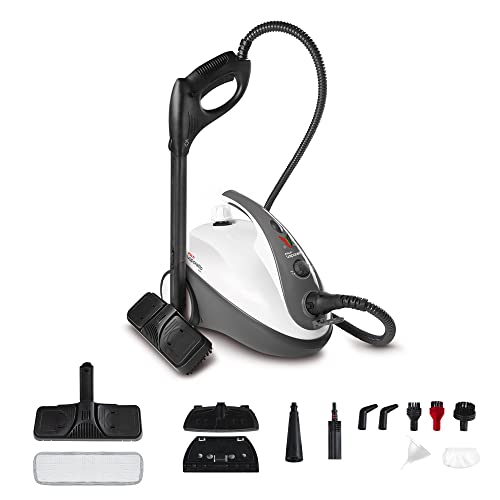
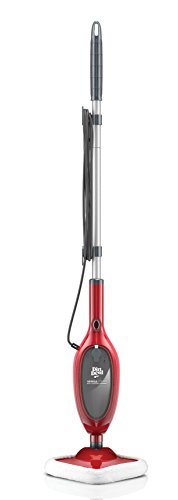
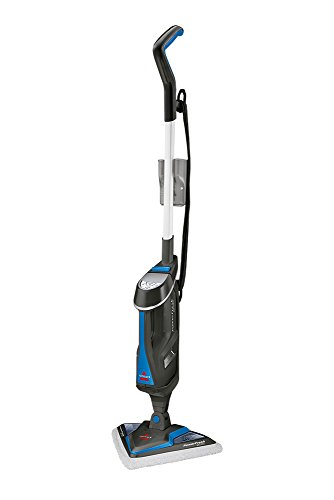
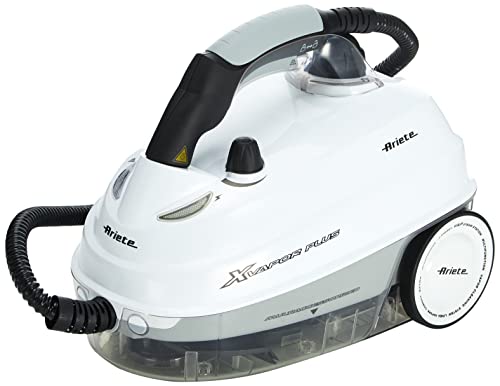
The best cheap steam cleaner brands by overall score are as follows:
- Polti (Average overall score: 8)
- Black+Decker (Average overall score: 7.2)
- Karcher (Average overall score: 7.2)
The chart below compares cheap steam cleaner brands by average overall score.
[horizontal-chart-08953606381856224079039526236873306014402860259758]
Are cheap steam cleaners worth buying?
Cheap steam cleaners can be worth buying when the job is short, the surfaces are compatible and the included tools match what you actually need. A £30-£60 handheld can be a sensible choice for a few grout lines, taps, a shower screen or kitchen spills because its small tank and light body are not a serious limitation for those tasks. The same machine becomes poor value if you expect it to clean several floors, hold steady steam for a long session or replace a full canister cleaner.
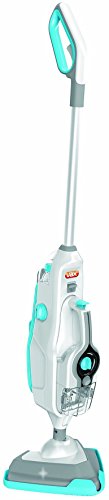
Before choosing the cheapest option, compare the working format rather than the wattage printed on the box. Around £90-£130 may buy a floor-oriented design with more capacity, a longer reach and a better pad or brush set. The low price is attractive only when the cleaner heats reliably, has safe tank handling, supports the intended surfaces and has usable replacement tools; otherwise a slightly more expensive model may cost less over repeated use.
What compromises are common with cheap steam cleaners?
The common compromises in cheap steam cleaners are as follows:
- Small tanks: many inexpensive handhelds hold about 200–500 ml, which may provide only one short detail-cleaning session before a refill. Floor-oriented models with roughly 700 ml–1.5 litres are less interruption-prone; check whether the tank detaches, whether it can be filled without handling a hot pressurised body and whether a water gauge is provided.
- Shorter steam runtime: a small handheld may give around 5–15 minutes of useful steam before refilling or pressure recovery becomes necessary, while a larger floor or canister machine can work for longer. That difference is minor for a sink or a few grout lines but frustrating when covering several rooms, so compare usable continuous steam rather than the advertised wattage.
- Limited control: a single steam setting can be too wet for upholstery, painted surfaces or some flooring even if it is strong enough for tile and grout. Adjustable output or an on-demand trigger lets you use a lower setting and shorter passes; a cheap fixed-output model is best restricted to surfaces that explicitly tolerate its moisture and heat.
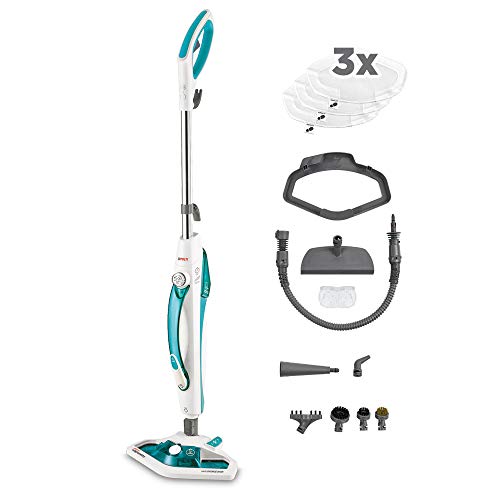
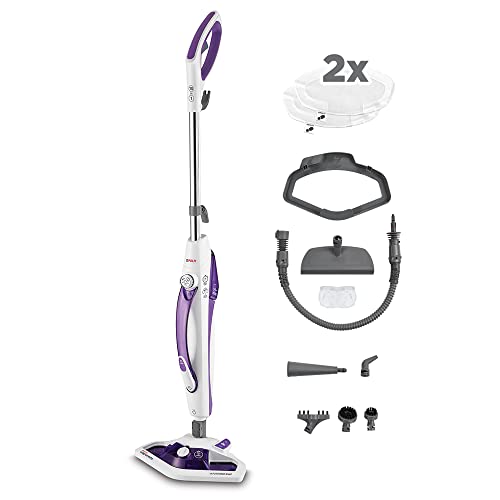
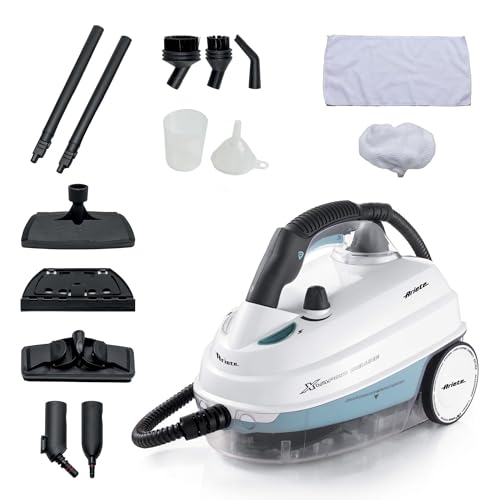
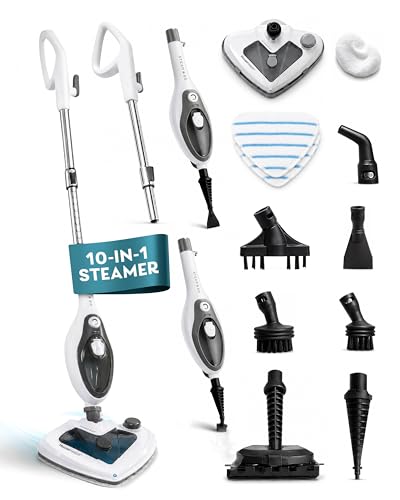
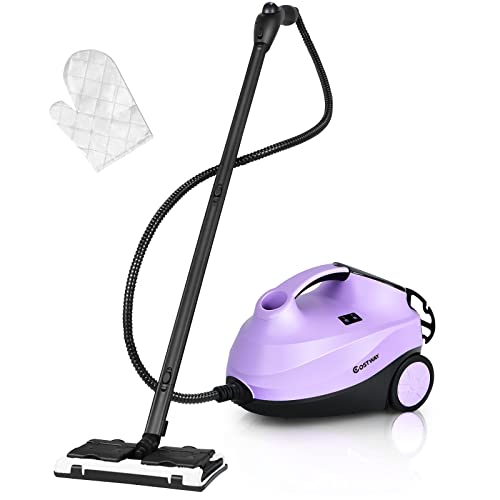
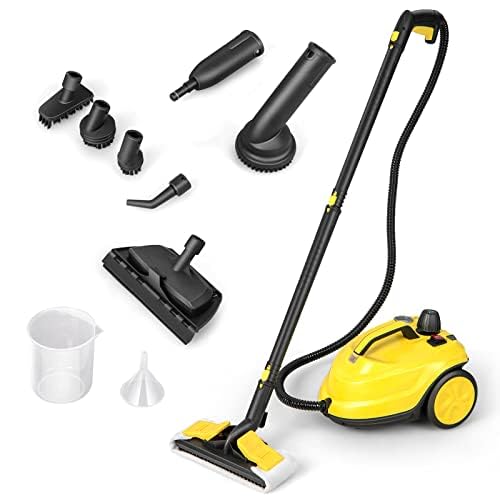
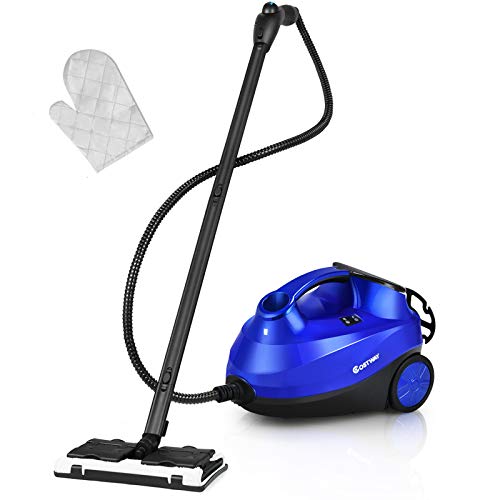
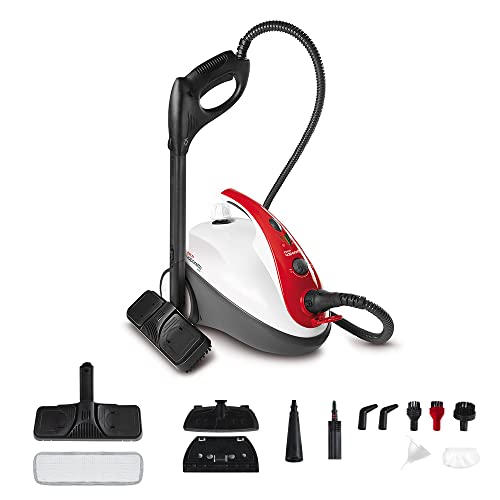
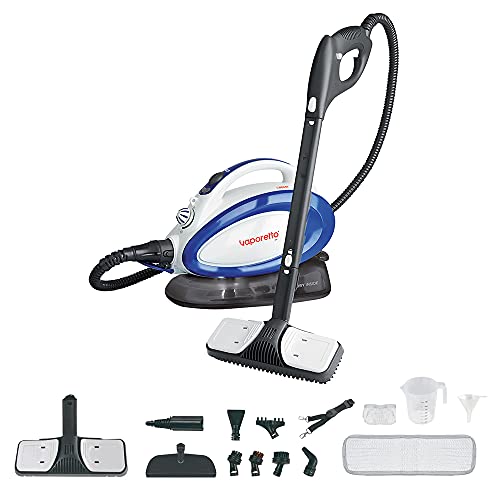
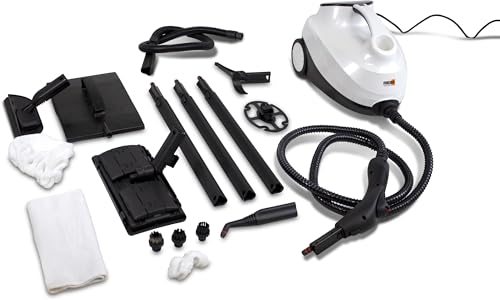
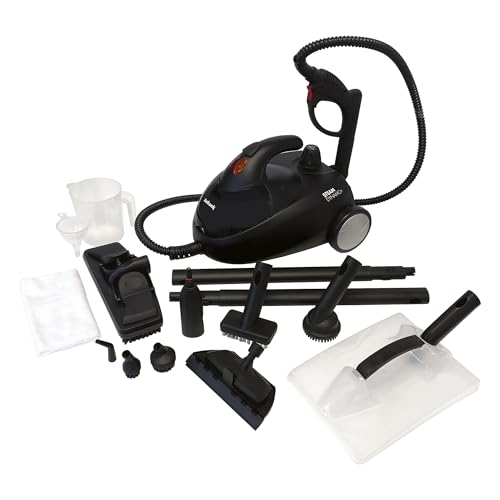
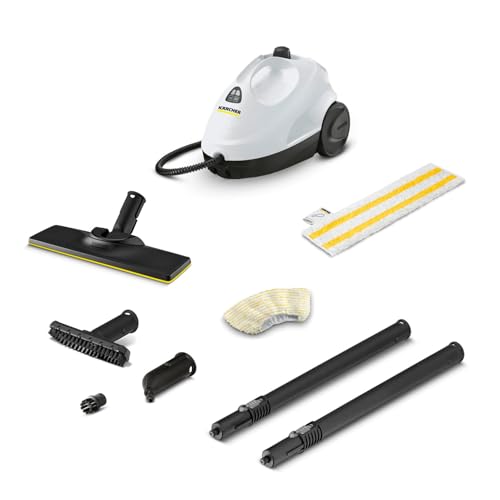
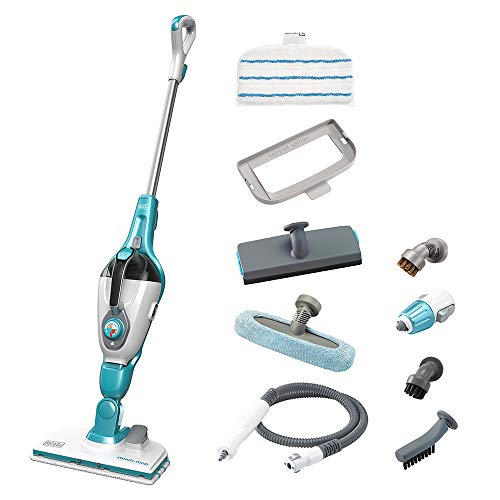
- Fewer attachments: a low-cost package may include only a jet nozzle and one basic brush, while a fabric tool, squeegee, extension hose or floor head may cost another £15-£30 if bought separately. Match the accessory list to the job before buying, because a £50 cleaner can become more expensive than a £80-£90 bundle once the missing tools are added.
- Lighter construction: cheaper housings and fittings may mean a shorter cord, a less stable handle, a hose that kinks or brushes that wear quickly. Check the cord or hose reach, tank-lock mechanism, trigger safety, warranty length and availability of replacement pads or brushes; those details reveal whether the low price is a useful saving or a false economy.
How much should you spend on a cheap steam cleaner?
Cheap steam cleaners generally cost about £40-£130. Models around £40-£70 are usually basic handheld or compact units for short jobs, while the £70-£100 range more often adds a larger tank, better steam control, more brushes or a floor-oriented design. Around £100-£130 can bring a broader accessory set or stronger construction, but it is still important to check what is actually included.
Spend enough to get the tools and surface compatibility you need rather than paying for a badge or a high wattage number. If the machine will clean several rooms regularly, compare it with a midrange steam mop or canister model before assuming a cheap purchase will be the lowest long-term cost.
The chart below shows the price distribution of cheap steam cleaners.
[vertical-chart-09629838636925777334030939309990064887361041464986]
What else should you consider when choosing a cheap steam cleaner?
Consider the following when choosing a cheap steam cleaner:
- Intended jobs: match the machine to occasional detail cleaning, sealed floors or larger areas. A £30-£60 handheld can be enough for grout and glass, but it may be frustrating as the only cleaner for a whole home; a £90-£130 floor or canister-style model usually offers more reach and capacity.
- Steam output: check pressure, adjustable levels and whether the steam stays stable after the first few minutes. Around 3–4 bar is a useful reference for general hard-surface cleaning, while high wattage such as 1,300–1,600 W cannot compensate for weak steam control or a small boiler.

- Tank and runtime: compact tanks around 200–500 ml keep the price and weight down but increase refills, while larger floor-oriented tanks can be around 700 ml to 1.5 litres. For a few grout lines, a short runtime is acceptable; for bathrooms or floors, compare the stated continuous-steam time and refill process.

- Heat-up and controls: about 15–30 seconds is convenient for quick jobs, but inexpensive canister-style machines may take several minutes to heat. An on-demand trigger or two steam levels gives you more control over fabrics and laminate than a single high-output setting.
- Included tools: verify the exact package for a jet nozzle, brushes, fabric tool, squeegee, floor head or hose. A £40 machine that needs £30-£40 of extra tools may be worse value than a £90 model with the accessories already included, and replacement pads or brushes should be easy to find.
- Safety and handling: look for a secure cap, pressure protection, stable grip and a cord or hose long enough for the job. A 1–2 kg handheld is easier to hold for detail work, while a 3–5 kg floor or canister unit may be more comfortable for floors but tiring on stairs.
- Surface compatibility and total value: confirm that your floors, fabrics, glass and stone tolerate steam, then test an unseen area and avoid unsealed wood, damaged laminate, heat-sensitive plastics and electrical controls. Compare warranty, descaling needs and spare parts as well as the purchase price, because a slightly more expensive model can cost less if it lasts longer.