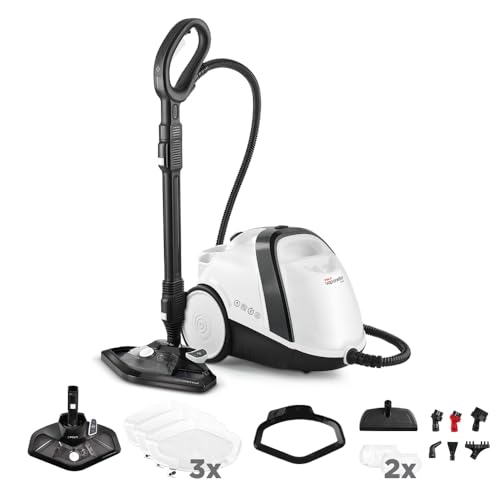
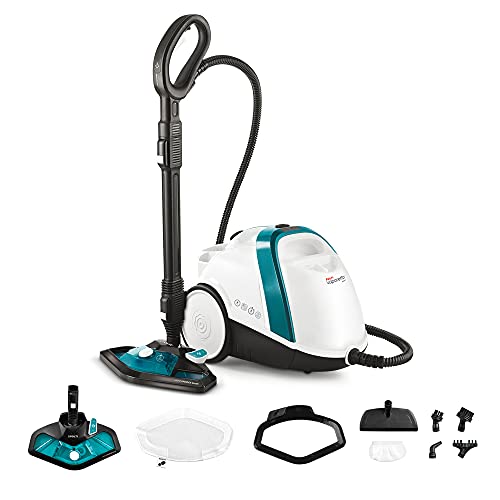
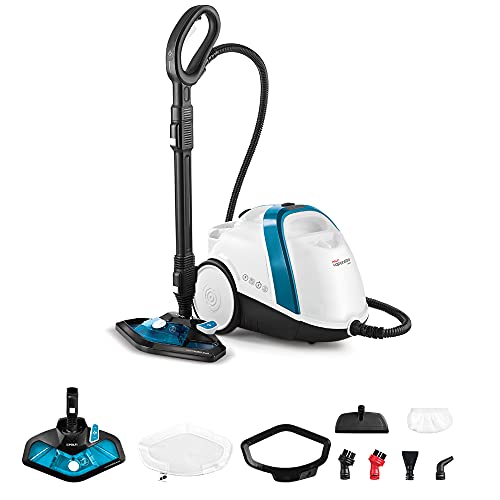
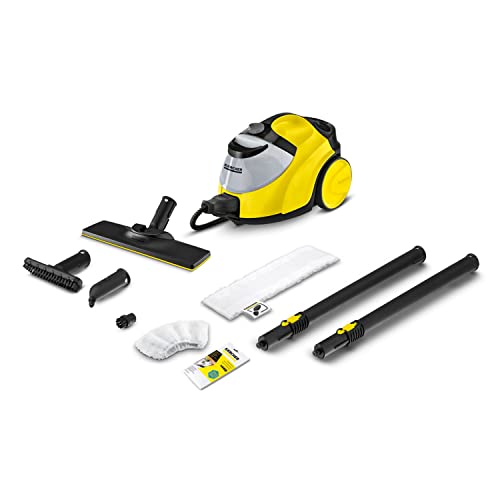
Which brands make the best steam cleaners for mattresses?
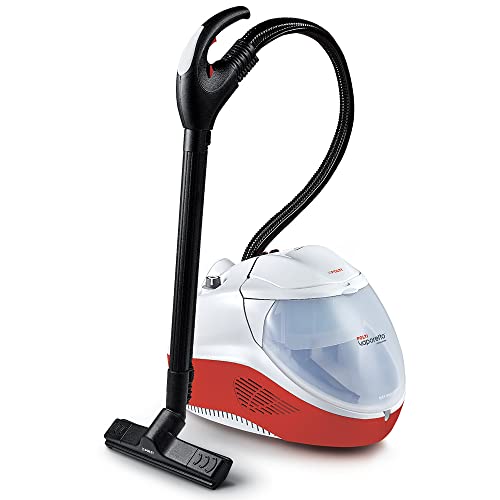
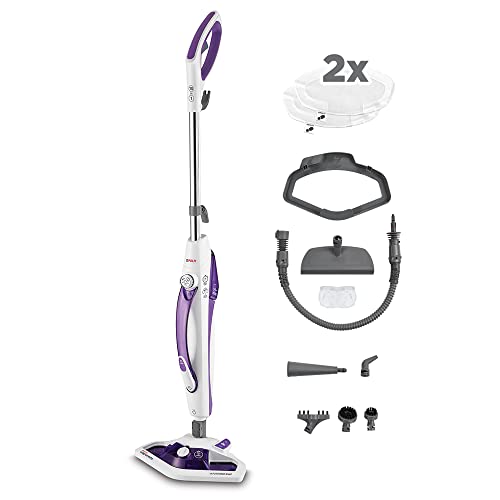
The best steam cleaner brands for mattresses by overall score are as follows:
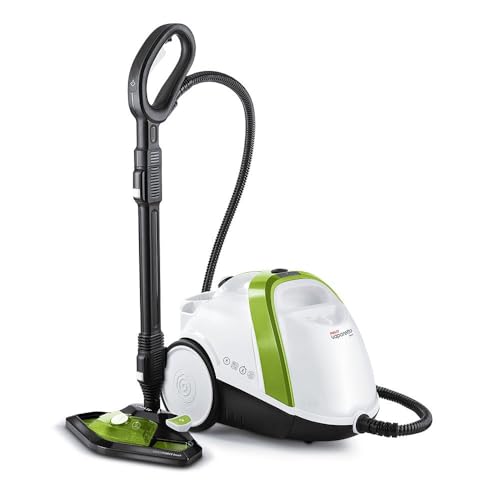
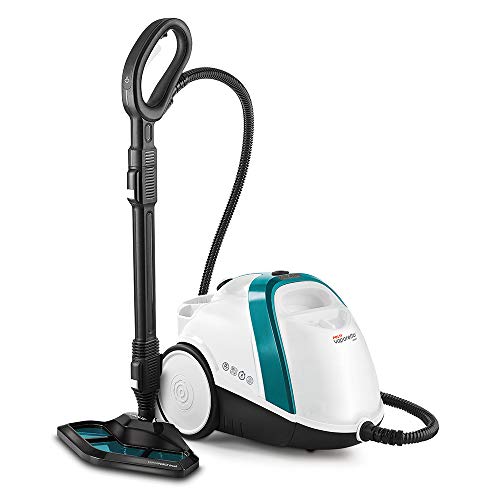
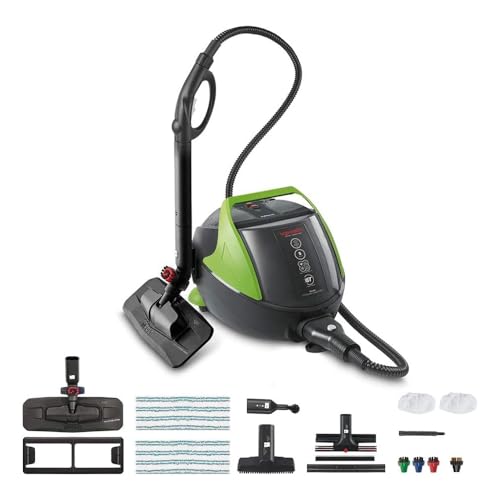
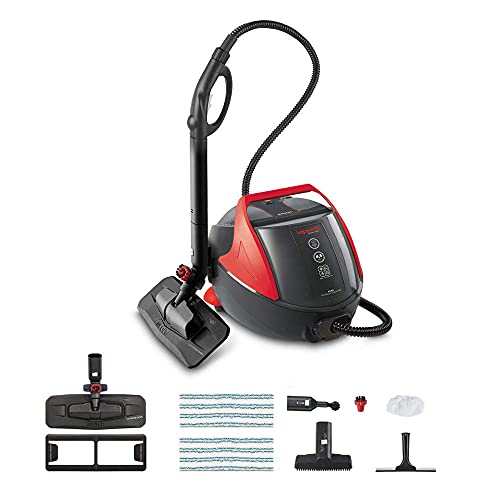
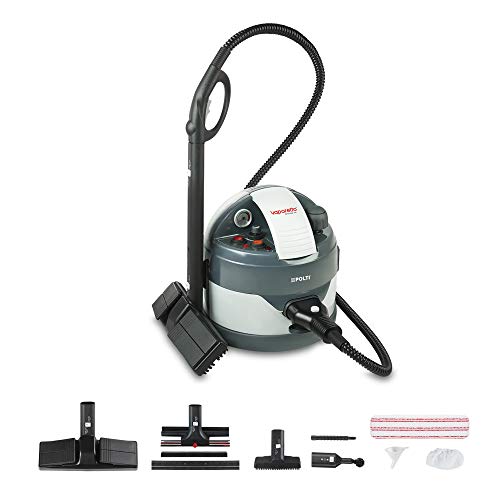
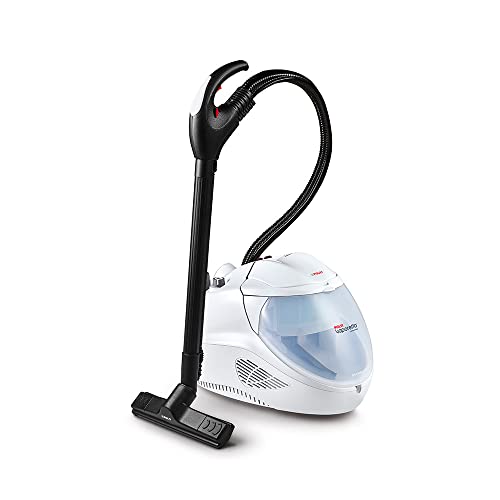
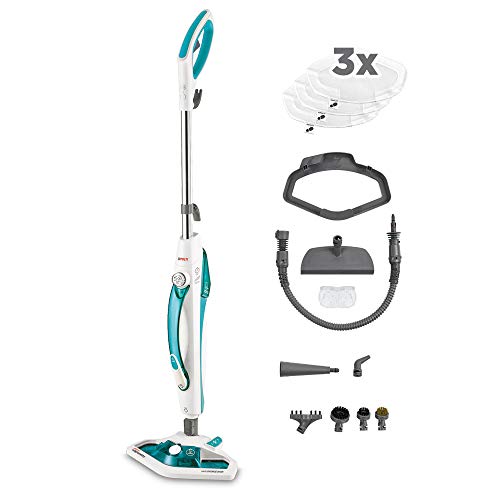
- Polti (Average overall score: 8.3)
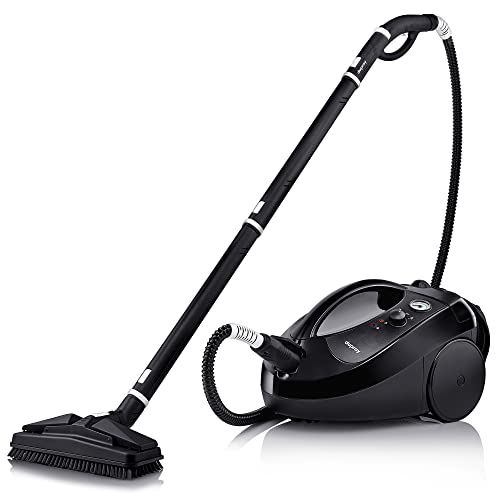
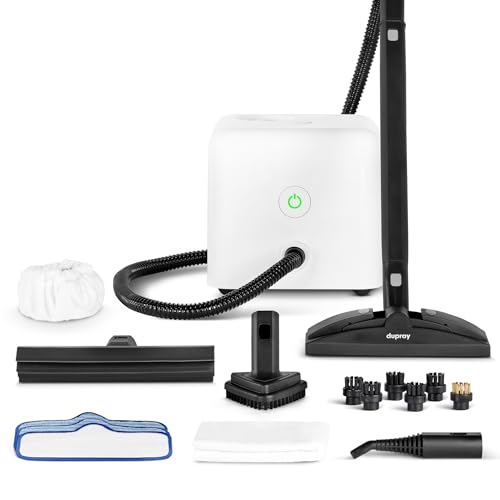
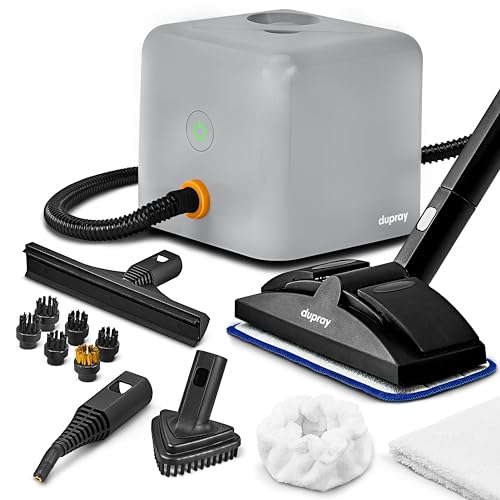
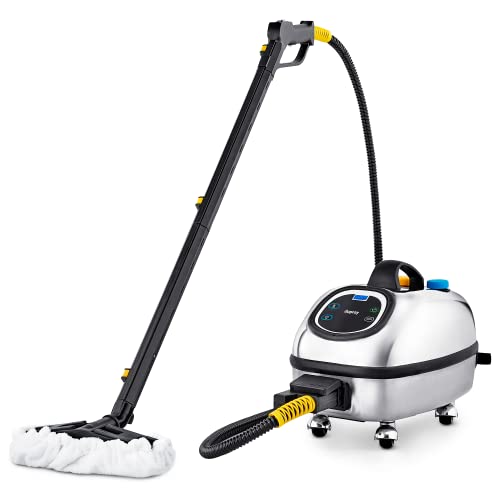
- Dupray (Average overall score: 8.3)
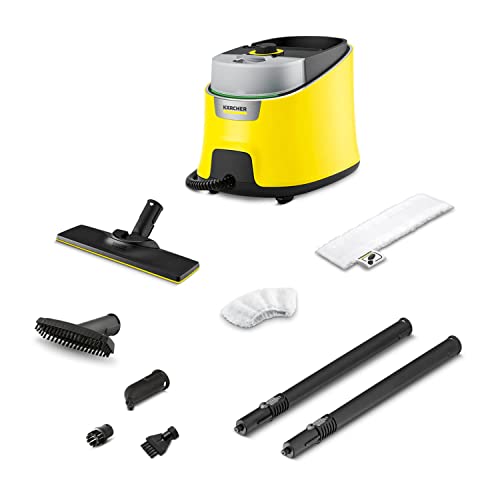
- Karcher (Average overall score: 7.8)
The chart below ranks steam cleaner brands for mattress cleaning by their overall scores.
[horizontal-chart-08520155611826026659080901318979314166062824269476]
What makes a steam cleaner safe for mattresses?
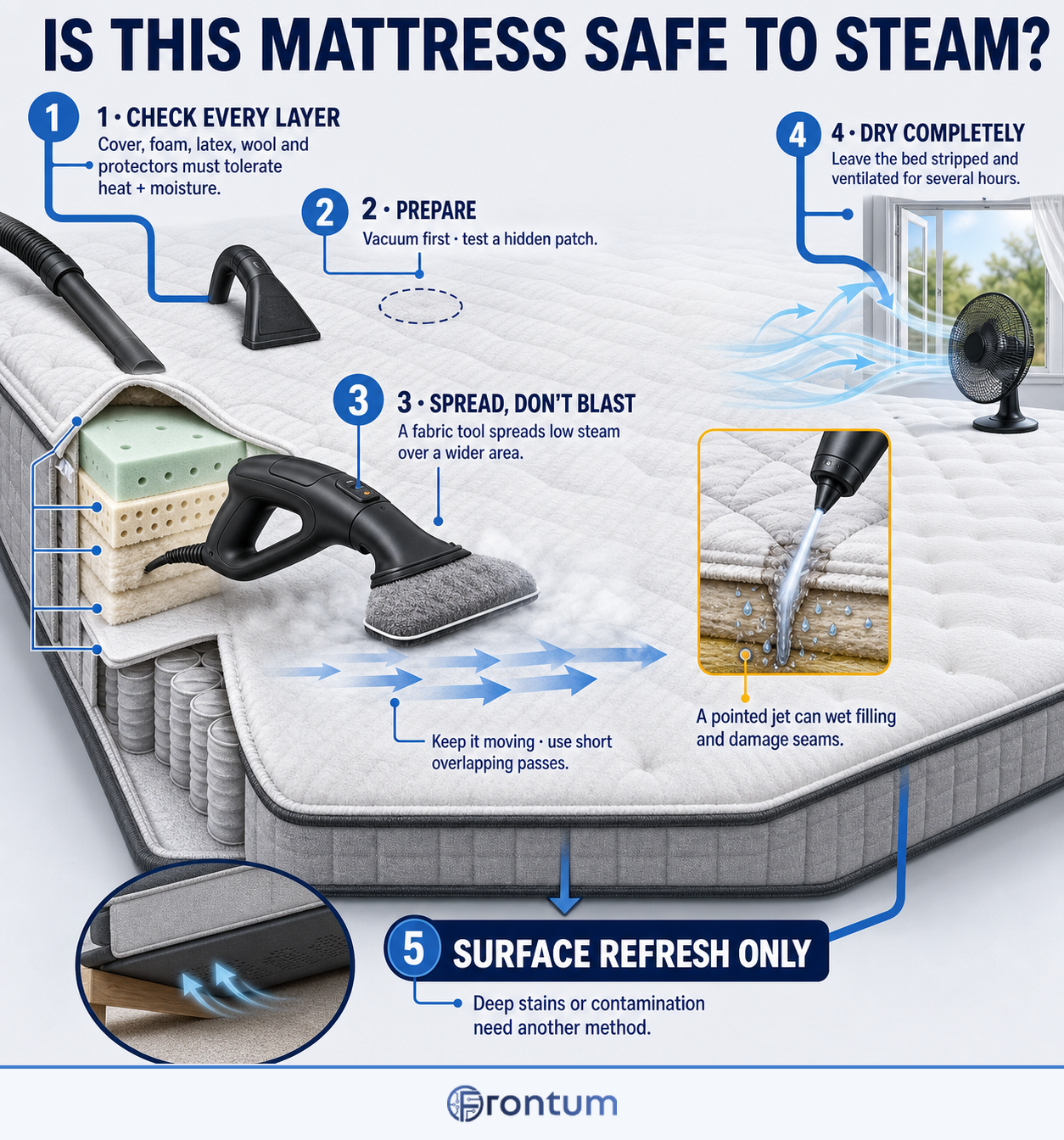
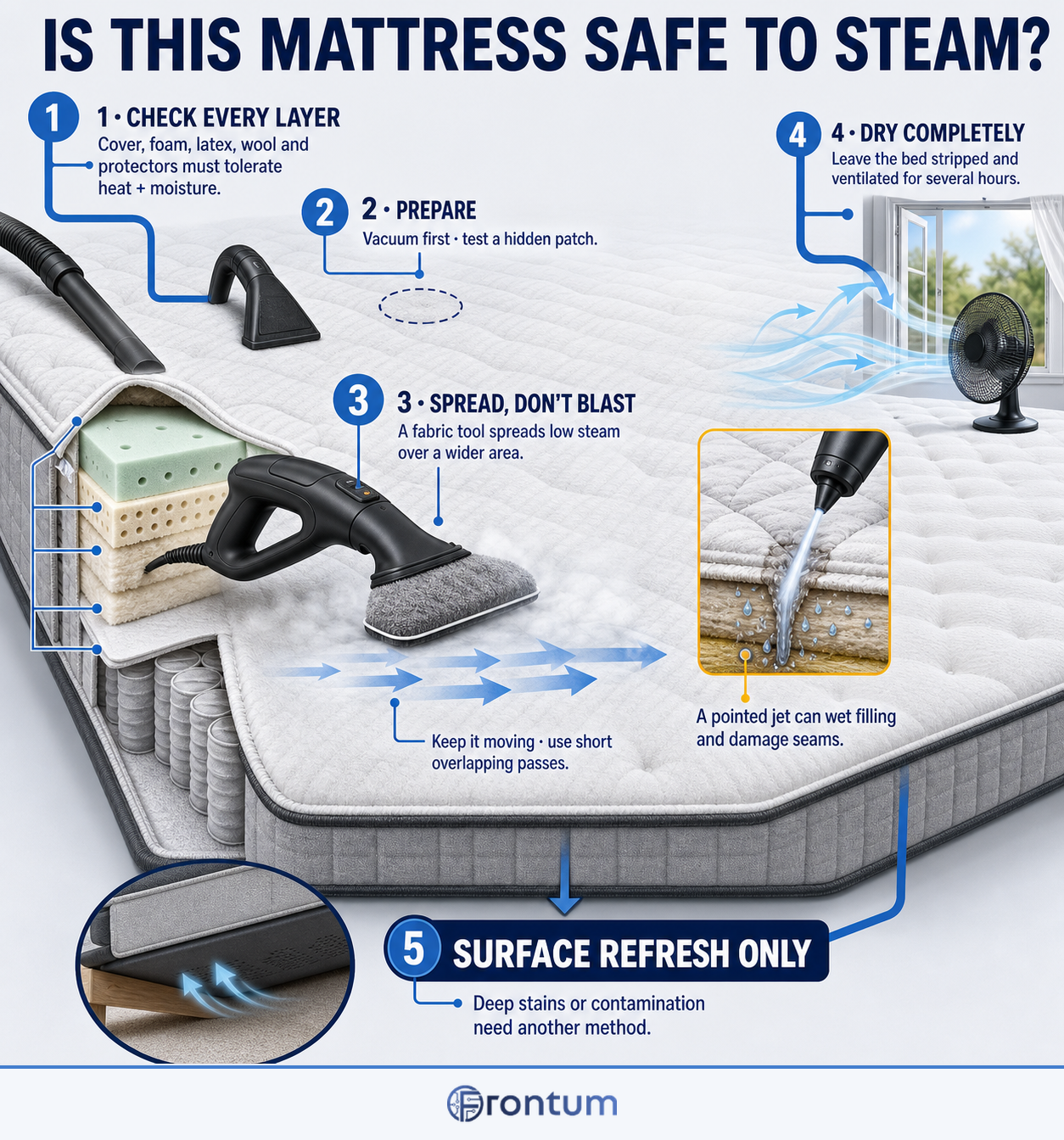
A steam cleaner is safe for a mattress only when the manufacturer permits heat and moisture and the machine can spread low, controlled steam through a fabric tool. Vacuum the cover first, test a hidden patch and start at the lowest useful output; a pointed jet can concentrate heat, wet the filling and damage stitching or adhesive layers.
Technique matters as much as the specification. Keep the covered tool moving in short overlapping passes, avoid repeated treatment of seams and do not press down to force steam deeper. Foam, latex, wool, memory-foam toppers and waterproof protectors may tolerate moisture differently, so approval for an outer fabric does not automatically cover every layer beneath it.
Drying is part of safe cleaning, not an optional final step. Strip the bed, open windows or use active ventilation and leave the surface uncovered until it is dry throughout; this can take several hours and longer in a cool or humid room. Steam is suitable for a light surface refresh, but staining, biological contamination or moisture inside the mattress may require a different cleaning method or professional advice.
Which features matter most for mattress cleaning?
The most important mattress-cleaning features are as follows:
- Fabric tool and cover: A wide upholstery head spreads steam more evenly than a jet nozzle and should use a clean, washable cloth cover to catch loosened residue. Prefer a head that can move over seams without snagging and has replacement covers available.


- Adjustable output and trigger: Multiple steam levels or an on-demand trigger make it easier to use brief controlled passes instead of continuous maximum output. Around 3–4 bar is ample for many general cleaning tasks, but mattress safety depends on reducing moisture at the tool rather than chasing the highest pressure figure.
- Steam quality and condensation control: A stable supply of relatively dry steam is preferable to spurting water when the hose first warms. Look for a ready indicator, purge initial condensation into a sink or towel, and avoid a model that releases a large wet burst whenever it restarts.
- Hose length and handling: A hose around 1.5–2 m provides useful reach across a double mattress while the machine stays on the floor. If choosing a handheld model, a weight around 1–2 kg is easier to control; heavier canisters should have a carry handle and a stable base.
- Tank, heat-up and refill design: A 200–500 ml tank can be enough for one lightly treated mattress, whereas several beds are easier with roughly 1 litre or more or a continuous-refill system. Heat-up below about 2 minutes is convenient for spot work, but safe depressurisation and refill procedure matter more than shaving a few seconds from preparation.
How much do steam cleaners for mattresses cost?
Steam cleaners suitable for mattress surfaces generally cost about £40-£430. Handheld models around £40-£130 are practical for occasional refreshing when they include a genuine fabric tool and controllable output. Canister cleaners around £130-£300 usually add a hose, a larger tank and steadier steam, while better-equipped domestic systems can reach about £430.
Commercial machines can cost considerably more, but higher pressure and tank capacity do not make mattress cleaning safer by themselves. Spend first on output control, a washable fabric attachment, condensation management and comfortable reach; these features influence moisture delivery more directly than a long accessory list or a high headline wattage.
The chart below shows the price distribution of steam cleaners suitable for mattresses.
[vertical-chart-14417900448640940510017373525539979978250589008064]
What else should you consider when choosing a steam cleaner for mattresses?
Consider the following when choosing a steam cleaner for mattresses:
- Mattress construction: Confirm that the care label permits steam and identify the cover, comfort layer and protector separately. Foam, latex, wool, glued layers and waterproof membranes can respond differently, so test a hidden patch and stop if the surface changes colour, texture or odour.
- Moisture delivery: Use a covered fabric tool, the lowest effective steam level and one moving pass before deciding whether another is needed. A narrow jet or repeated hovering can drive water into seams and filling, where it is much harder to remove.
- Drying plan: Clean early enough to leave the mattress uncovered for several hours, with windows open or a fan moving air across the room. Do not remake the bed until the cover and seams feel completely dry; cool or humid conditions can extend drying well beyond the initial surface-dry stage.
- Reach and weight: For a double or king-size mattress, a hose around 1.5–2 m lets the base remain safely on the floor and reduces lifting over the bed. A 1–2 kg handheld is easier for quick areas, while a heavier canister is preferable only if its hose, wheels and handle make the full surface easier to reach.
- Tank and session length: A 200–500 ml handheld tank suits a light pass on one mattress, but roughly 1 litre or a continuous-refill design is more efficient for several beds. Compare usable steam time and the safe refill procedure, because a sealed boiler may need to cool before it can be opened.
- Cleaning objective: Steam can freshen compatible covers and loosen light surface residue, but it does not extract dissolved dirt or wash the mattress filling. Treat stains with an approved method, and use professional remediation for deep moisture, mould, bodily fluids or contamination rather than adding more steam.
- Maintenance and hygiene: Use a clean fabric cover for each mattress and wash it after the job so residue is not transferred between beds. Empty and descale the machine as directed, purge condensation before touching fabric and let the hose and tools dry before storage.