Which brands make the best handheld steam cleaners?
The best handheld steam cleaner brands by overall score are as follows:
- Polti (Average overall score: 7.9)
- Black+Decker (Average overall score: 7.6)
- Karcher (Average overall score: 6.9)
The chart below compares handheld steam cleaner brands by average overall score.
[horizontal-chart-16831532121460137342040451045061166019821236849120]
What cleaning jobs are handheld steam cleaners best for?
Handheld steam cleaners are most useful for the following jobs:
- Grout and detail cleaning: a jet nozzle and small brushes concentrate steam in narrow joints, taps and corners. Work slowly and wipe away loosened dirt rather than simply spreading it.
- Kitchen and bathroom surfaces: handheld steam loosens soap film and grease on sealed sinks, hobs and tiles. It is not suitable for unsealed stone, heat-sensitive plastic or electrical controls.
- Glass and windows: a squeegee attachment can remove fingerprints and condensation from glass. Keep the nozzle moving and avoid applying sudden heat to cold panes.
- Upholstery and car interiors: a fabric tool can refresh compatible seats, curtains and upholstery with short passes. Check the care label, use the lowest effective output and allow the material to dry fully; steam loosens surface soil but does not extract deep spills from padding.
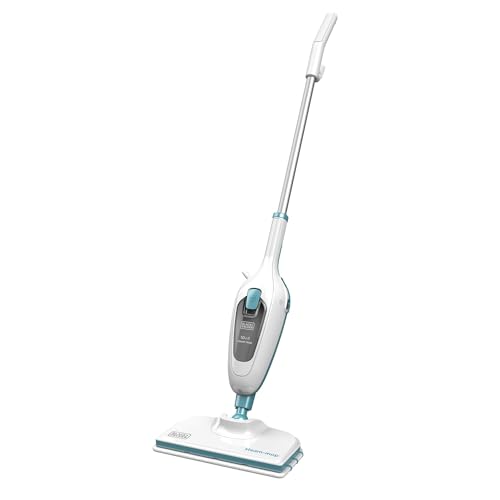
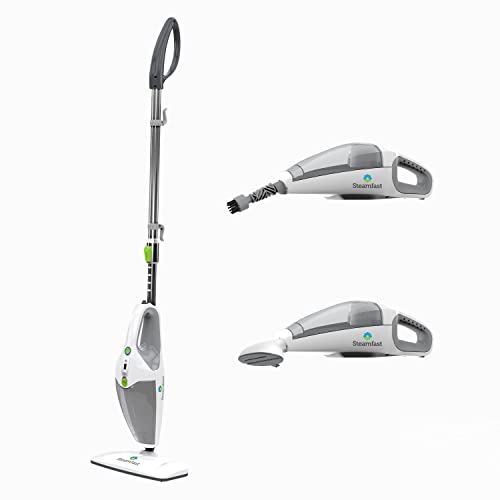
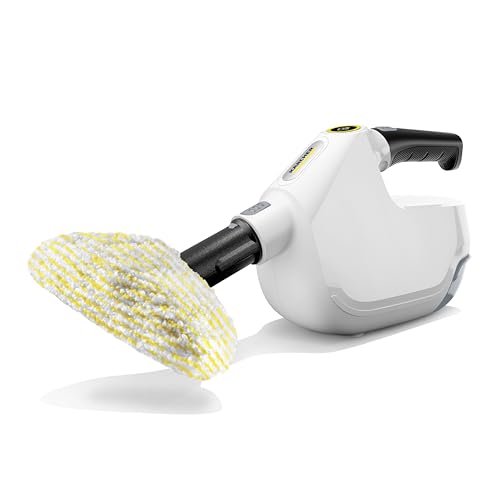
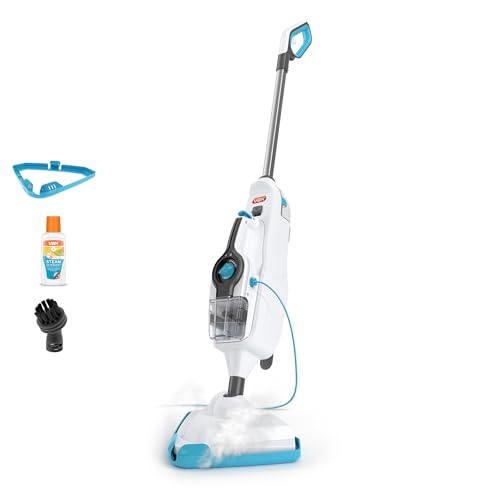
- Small floor spills: a 2-in-1 model can handle quick sealed-floor touch-ups. It is less comfortable than a steam mop for large areas because the handheld body and smaller tank require more effort.
What attachments matter most on a handheld steam cleaner?
The most useful handheld attachments are as follows:
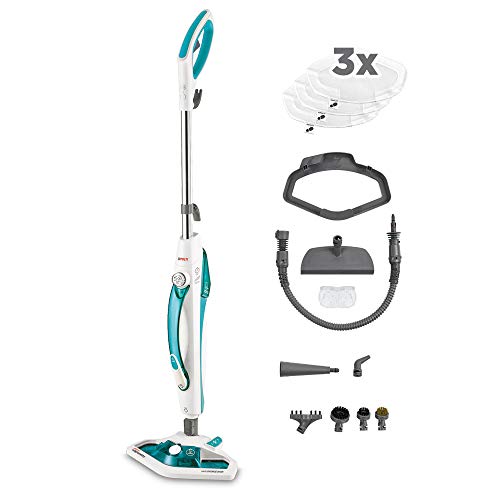
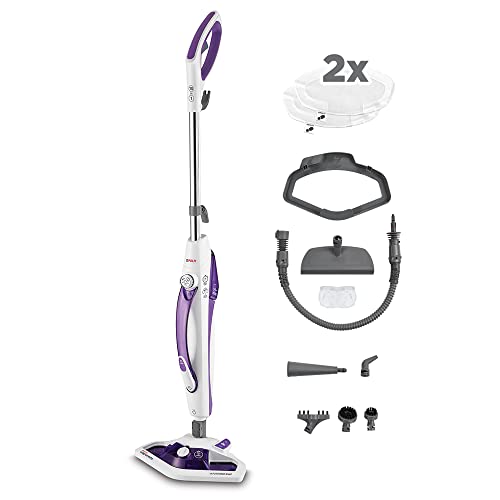
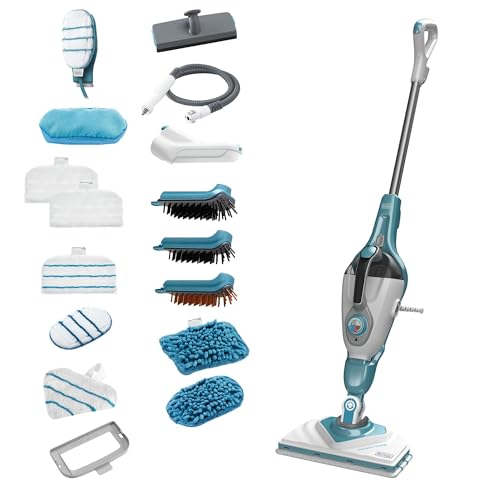
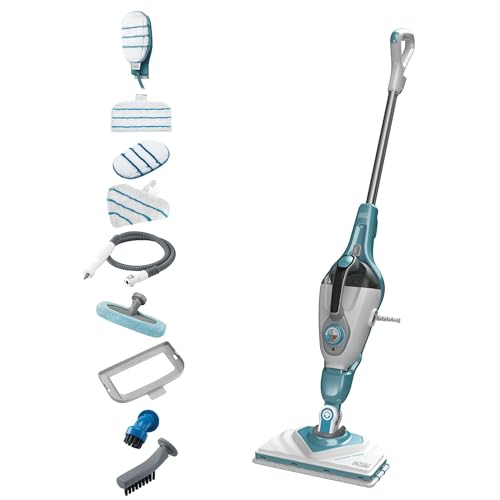
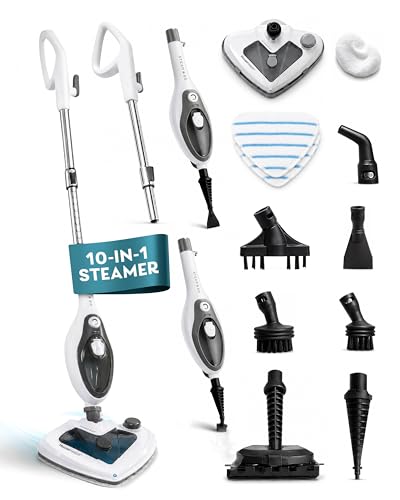
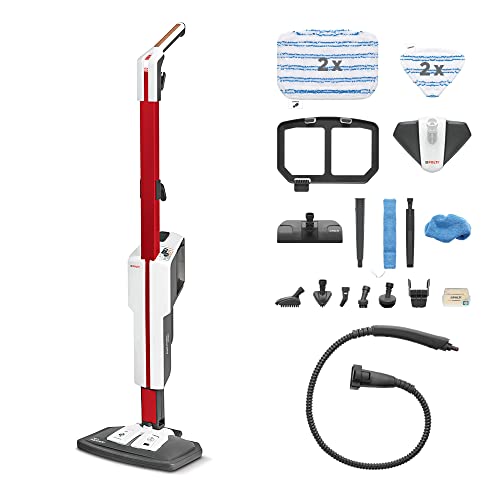
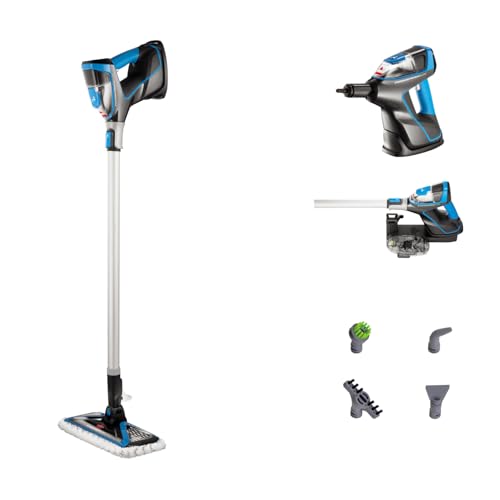
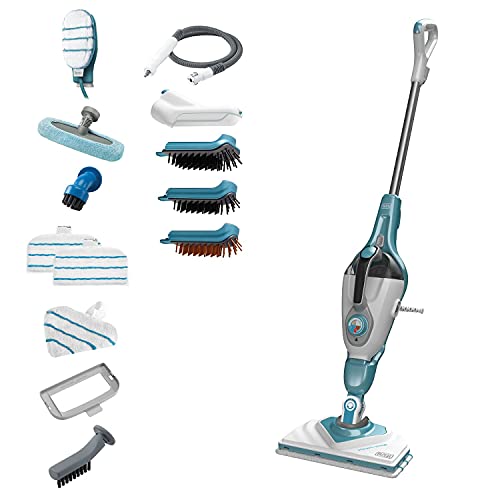
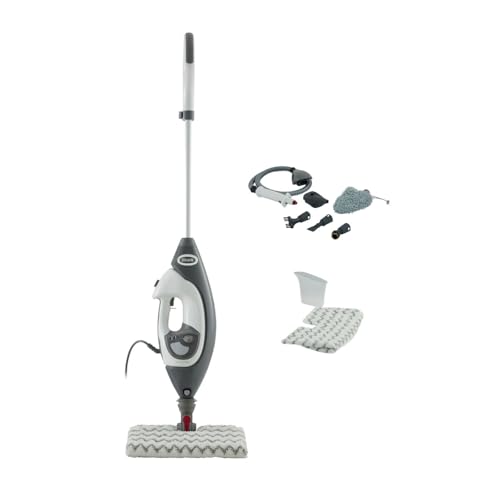
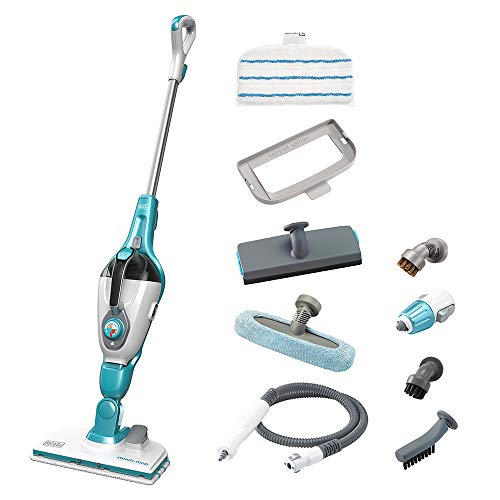
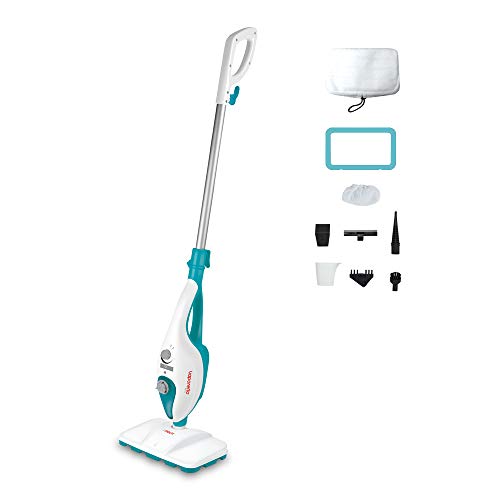
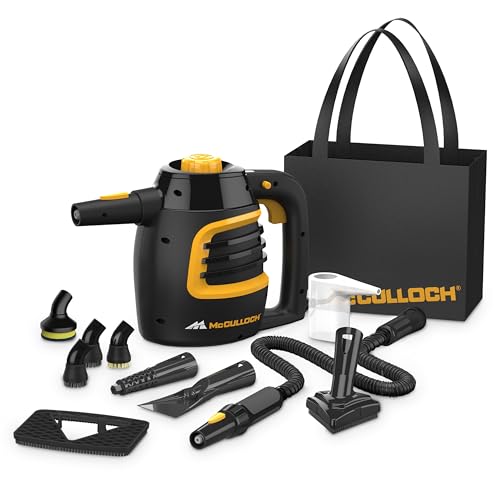
- Jet nozzle and detail brushes: concentrate steam for grout, taps and corners. These attachments are useful for narrow areas, but brush quality and quantity still vary between models.
- Upholstery or fabric tool: spreads steam over sofas, curtains, car seats and other compatible fabrics. Use low output and short passes, and follow the material care label.
- Window squeegee: removes moisture from glass after steam loosens marks. A clean rubber edge and a moving pass reduce streaks.
- Scraper or grout tool: lifts stuck-on deposits from hard, sealed surfaces. Test first because scraping and heat can mark soft plastic, coatings or polished finishes.
- Extension hose or wand: keeps the hot nozzle farther from your hand and improves reach around sinks or shower screens. It is useful when the handheld unit itself is awkward to hold close to the surface.
How much do handheld steam cleaners cost?
Handheld steam cleaners generally cost about £40-£170. Basic models around £40-£70 suit occasional grout, glass and kitchen jobs but often have fixed output and a smaller tool set. Around £70-£110 buys better controls, a larger tank, a hose or useful fabric and window tools, while £110-£170 increasingly includes 2-in-1 floor hardware or stronger construction.
For occasional detail cleaning, an entry model can be enough. For weekly use, compare 10–20 minutes of practical steam time, 200–500 ml capacity, wrist weight, cord or hose reach and replacement-brush availability. Paying £20-£30 more for the attachments you will actually use is often better value than buying the cheapest unit and sourcing tools separately.

The chart below shows the price distribution of handheld steam cleaners.
[vertical-chart-11625247289589526725113143346236350437660026164194]
What else should you consider when choosing a handheld steam cleaner?
Consider the following when choosing a handheld steam cleaner:
- Main jobs: choose a handheld-only model for grout, taps, glass, worktops and short detail tasks, or a 2-in-1 if you also need sealed-floor cleaning. A 2-in-1 is more versatile, but its detachable unit may be heavier and less powerful than a dedicated handheld cleaner.
- Weight and handling: a dedicated unit around 1–2 kg is easier to hold around a sink, shower, car interior or window. Check the weight of the detachable module rather than only the complete 2-in-1 machine, and add water plus the chosen attachment when judging wrist strain.
- Steam control: adjustable output, multiple steam levels or an on-demand trigger help reduce moisture on fabrics, painted surfaces and heat-sensitive plastics. Fixed high output can work well on grout and sealed hard surfaces, but it gives you less margin for delicate materials.
- Tank, runtime and heat-up: about 200–500 ml normally supports roughly 10–20 minutes of detail work. A 15–60 second start is convenient for quick jobs, while some larger 2-in-1 models take 2–4 minutes; favor capacity for longer bathroom sessions and faster start-up for frequent spot cleaning.
- Attachments: check for a jet nozzle, detail brushes, fabric tool, squeegee and scraper if those jobs matter to you. Count the tools actually included and confirm that replacement brushes are sold, because a long marketing list is not useful if the key accessory is optional or disposable.
- Reach and power: a cord around 5 m or longer is a useful starting point for moving around a bathroom or kitchen, while a 0.5–1.2 m hose reduces the weight held close to the surface. Around 1,000–1,600 W is common, but pressure, steam stability and nozzle design matter more than input wattage alone.
- Surface limits: confirm that each floor, fabric, glass, stone or car material tolerates heat and moisture before using steam. Test an unseen area, keep the nozzle moving and never direct steam into electrical controls, unsealed finishes, damaged joints or materials that the manufacturer excludes.